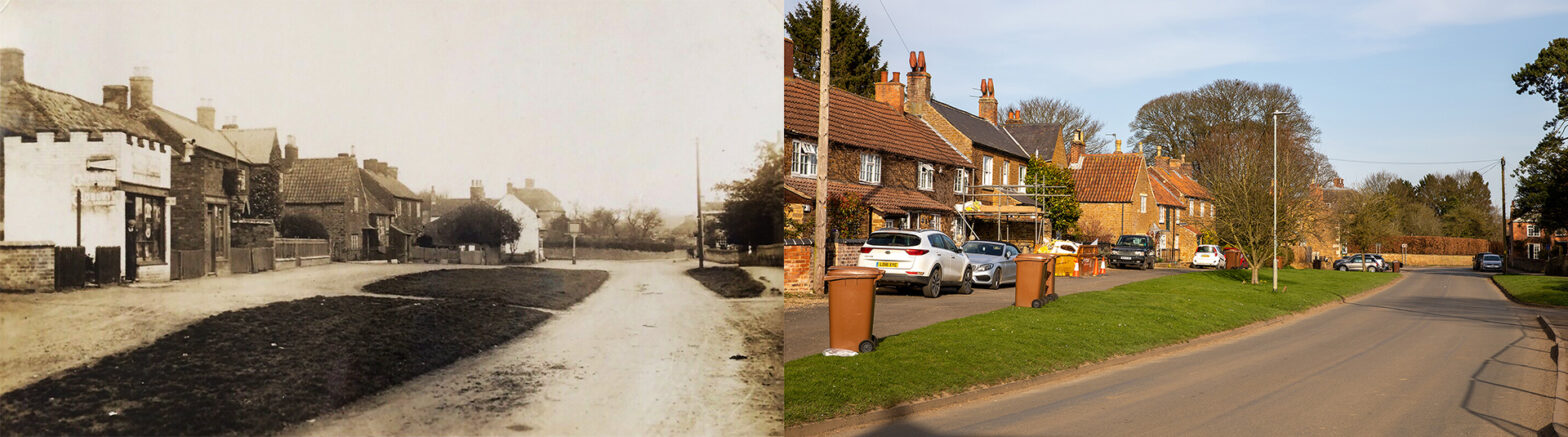
Main Street – 1904
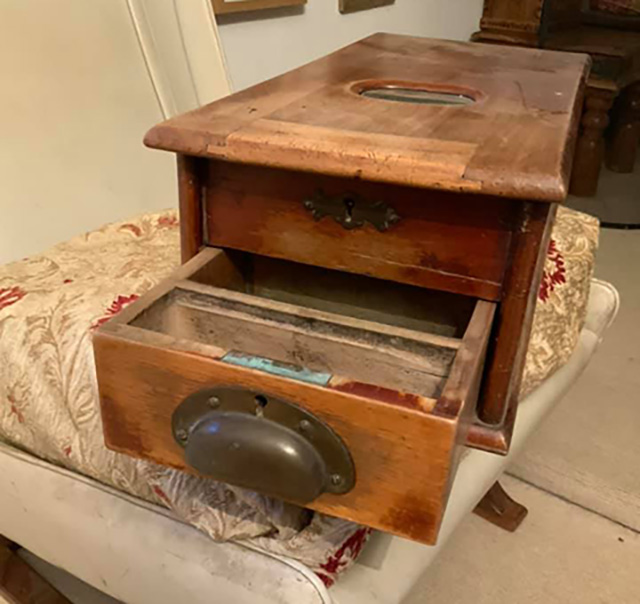
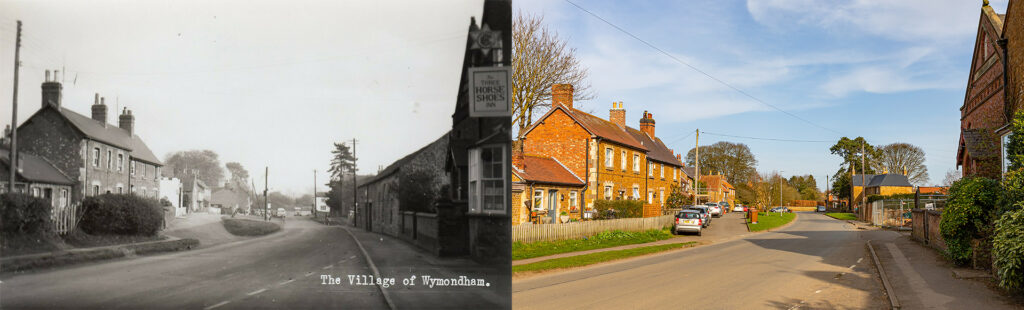
Two shops, the square buildings with castle-like battlements catch my eye. In the white-painted store, a young man is standing in the doorway, eyes focussed on the photographer. Fading advertisements indicate the famous Cadbury’s chocolates, made in Birmingham, are on sale. From the 1940s consecutively the Johnsons, the Bradburys and the Cartwrights ran the shops. Rita Staniforth’s husband, now 80, grew up in Wymondham and he remembers the Johnsons were there in the 1940s when he was a kid. “The first shop one was a grocer and the second one a draper.” Dorothy O’Neill remarks, “In the 1960s I used to walk from Saxby to buy National dried milk and orange juice for my children, and only remember the shop being Bradbury Groceries.” “The white painted square building was still there in the early 1970s, owned by the Cartwright family, being a Veevo general store,” remembers Christian Semmens. Helen Whitfield adds: “I’m sure my Nan spoke about there being hats for sale in one of the shops.” Probably demolished in the late 1970s, Simon Ellis shows me a picture of a cash-till from one of the shops, he holds as a treasure.
“The attached houses were home to whoever owned the shops”, says Martin Welbourn. “The adjoining houses belonged to the Hill family and a bit further along you see the Post Office run by Ivy Cox in the 1960s and 70s.” Jenny Laider: “I used to buy an ice cream at the Post Office [it was also a shop] after school. My mum was a teacher there.
Before the bend to the right, a pub sign indicates the Angel Inn, now the Berkeley Arms. It is the one remaining pub in the village, named after the Berkeley family, who owned land in Wymondham and Edmondthorpe from the 14th to the 17th century, 11 generations in all. The cellar is reputedly occupied by a ghost named George. Rumour says the pub once had an underground tunnel leading to the Priory on Chapel Lane and from there to the village church. Behind the pub, on the other side of Butt Lane, the roof of Manor House is visible, now hidden by large trees.
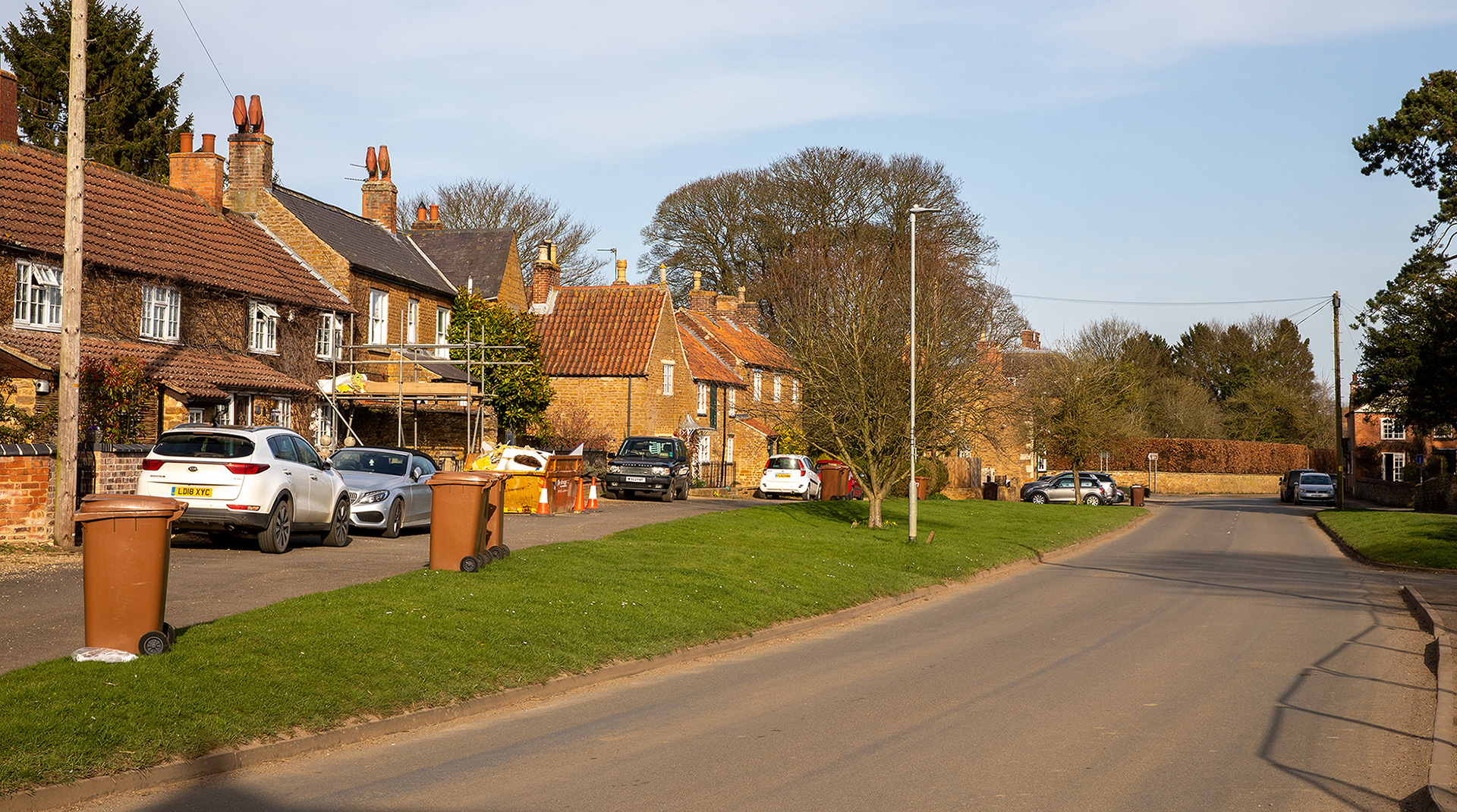
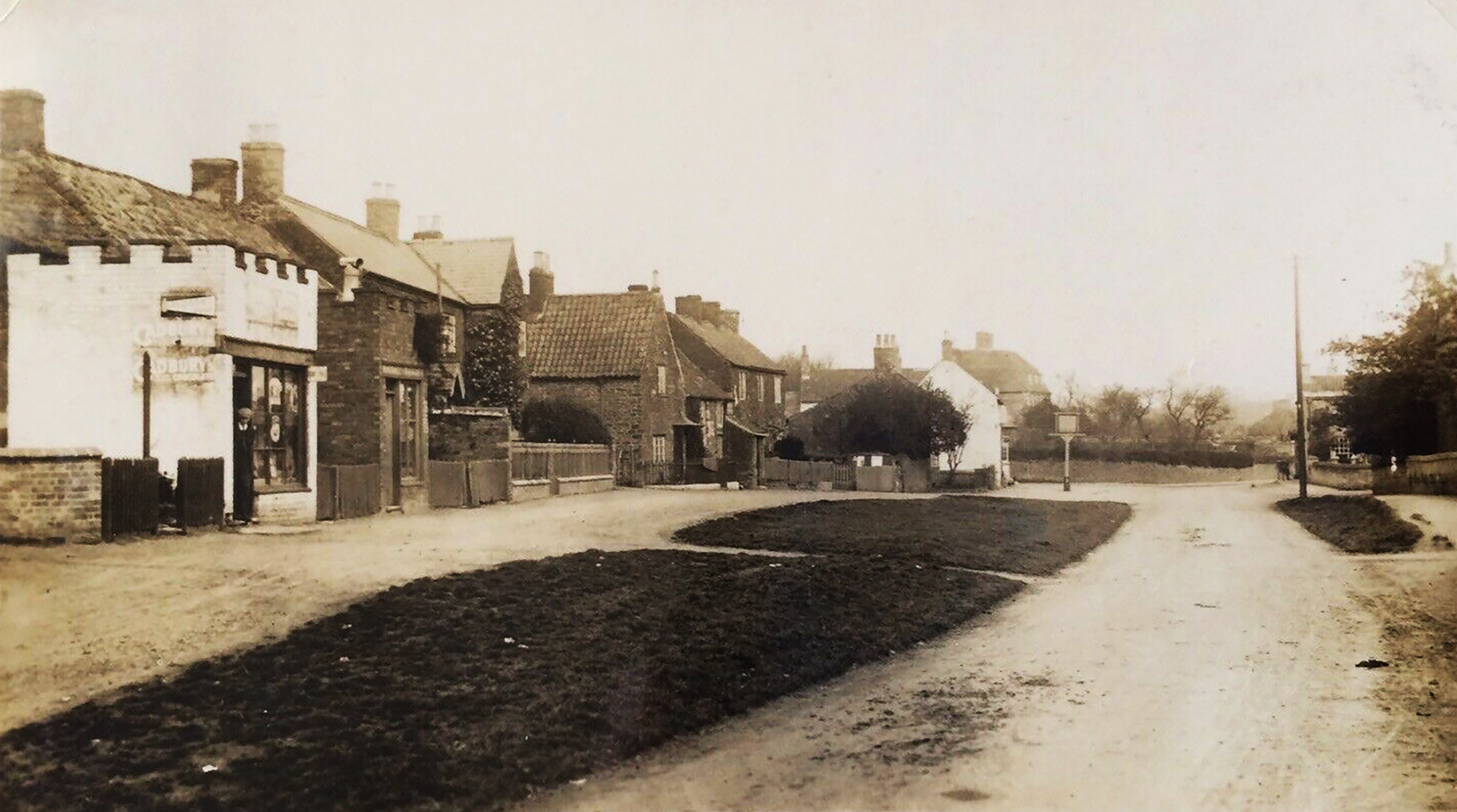
Main Street – 1950s
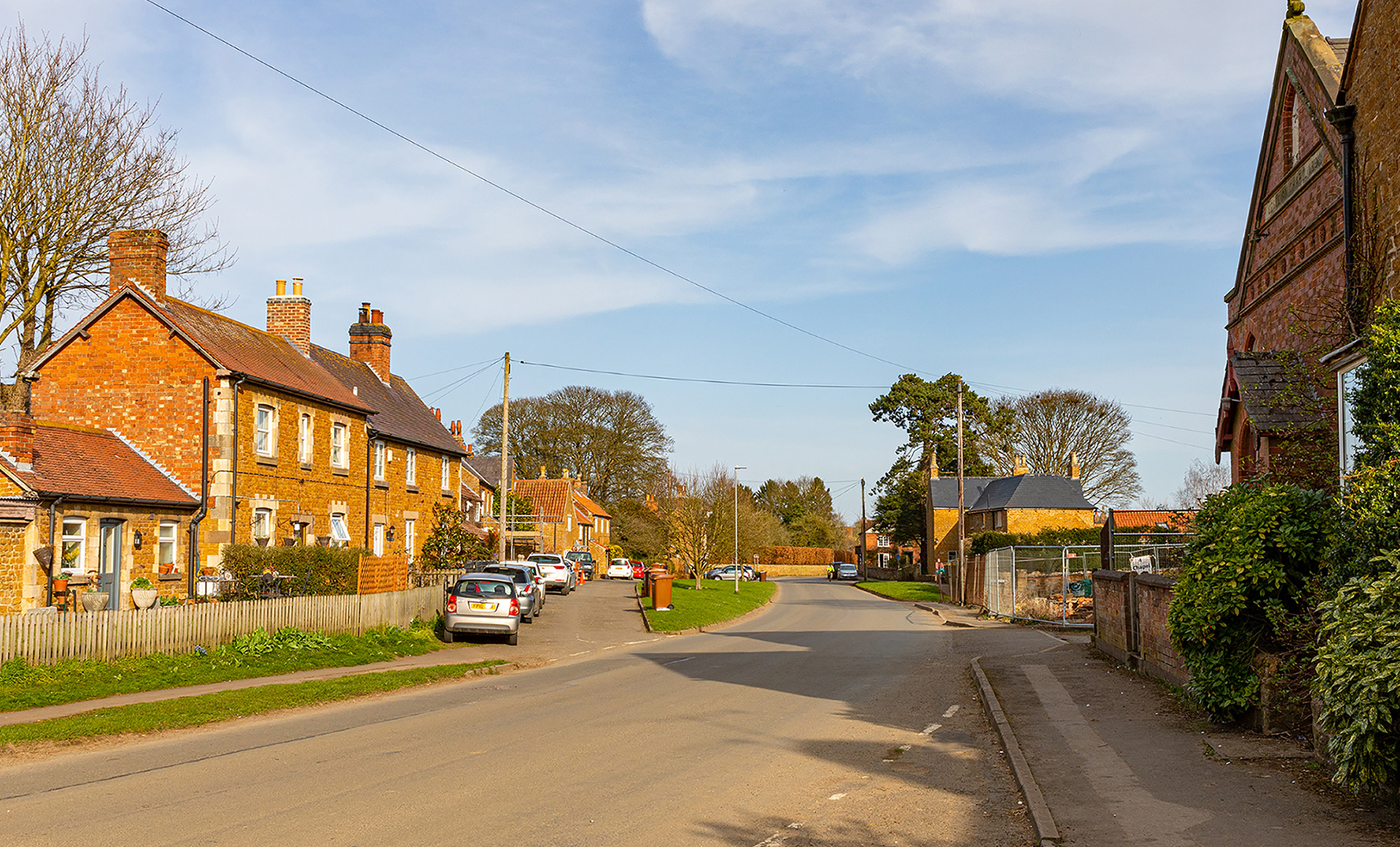
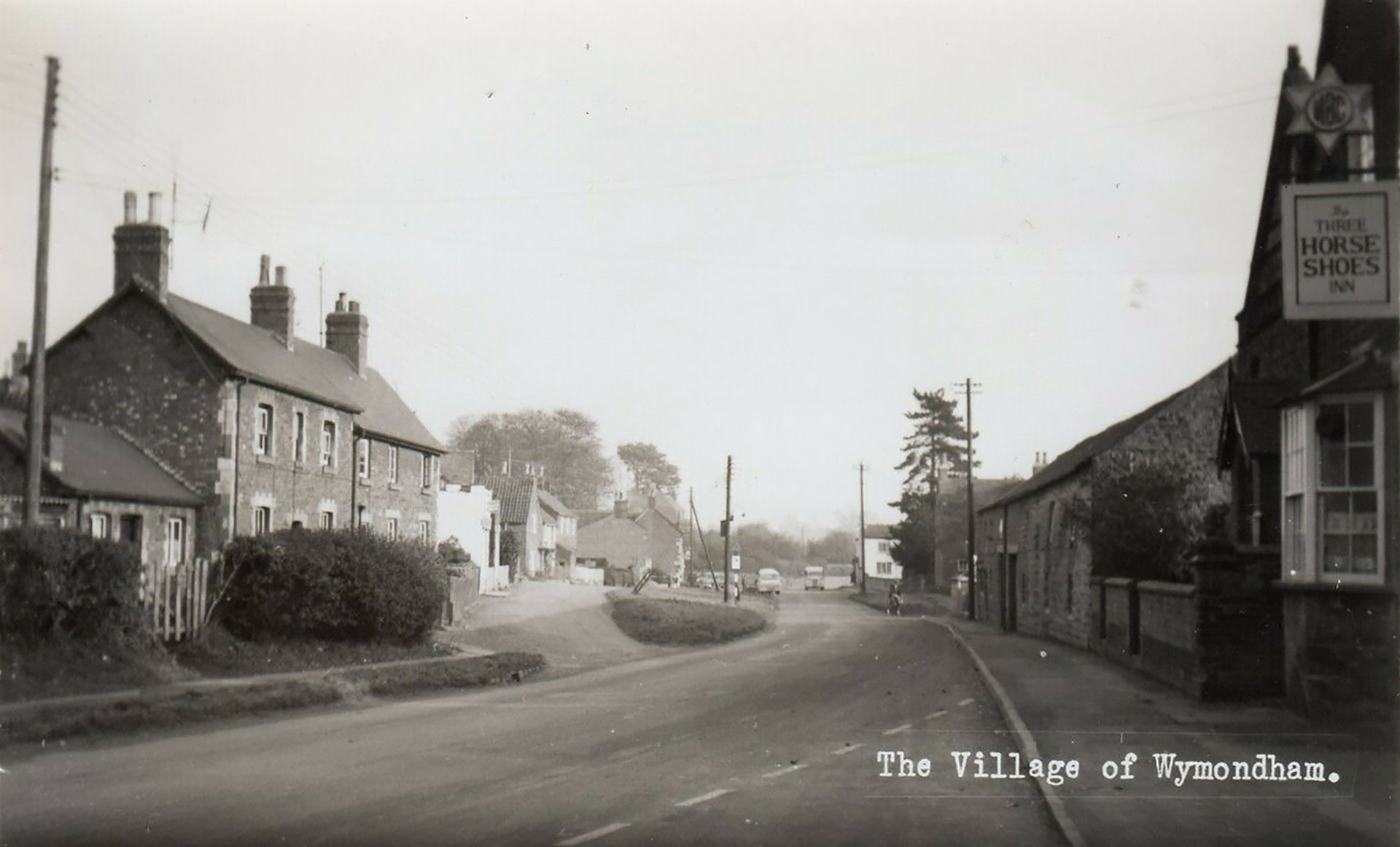
“The house on the left was owned by my dad, and my gran, Bess Roythorne lived there. It is currently owned by the Hills”, says David Bailey
“My dad worked at Gollings Builders, the building on the right that is no longer there”, knows Jenny Laidler. “It collapsed in July 2004”, adds Lorraine Watkins. “I only remember because it was the day before we were due to go on a big holiday and I got involved in the press coverage whilst trying to pack. It was announced on the local news that morning that the road was blocked through Wymondham. I went out to look and the stone from the Gollings collapse had spilt into the road. It was quickly cleared up but in the process, large machinery had driven all over it and crushed a lot of the stone. The Melton Times came and they took a pic of my husband holding a lump of stone and also did a report.”
Jenny Laidler: “I remember The Three Horseshoes on the right was closed in the early or mid 1950s. There was a blacksmith next door [further up the street]. Between Gollings and the pub is the old chapel, in the 1960s an antique shop ran by my father.
Windmill – 1910s
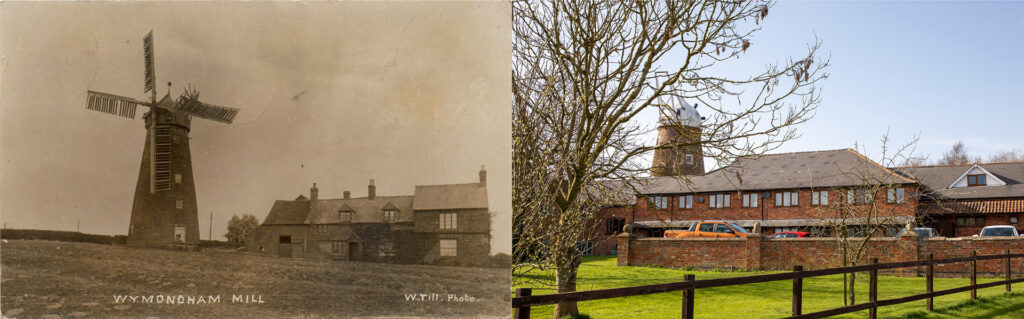
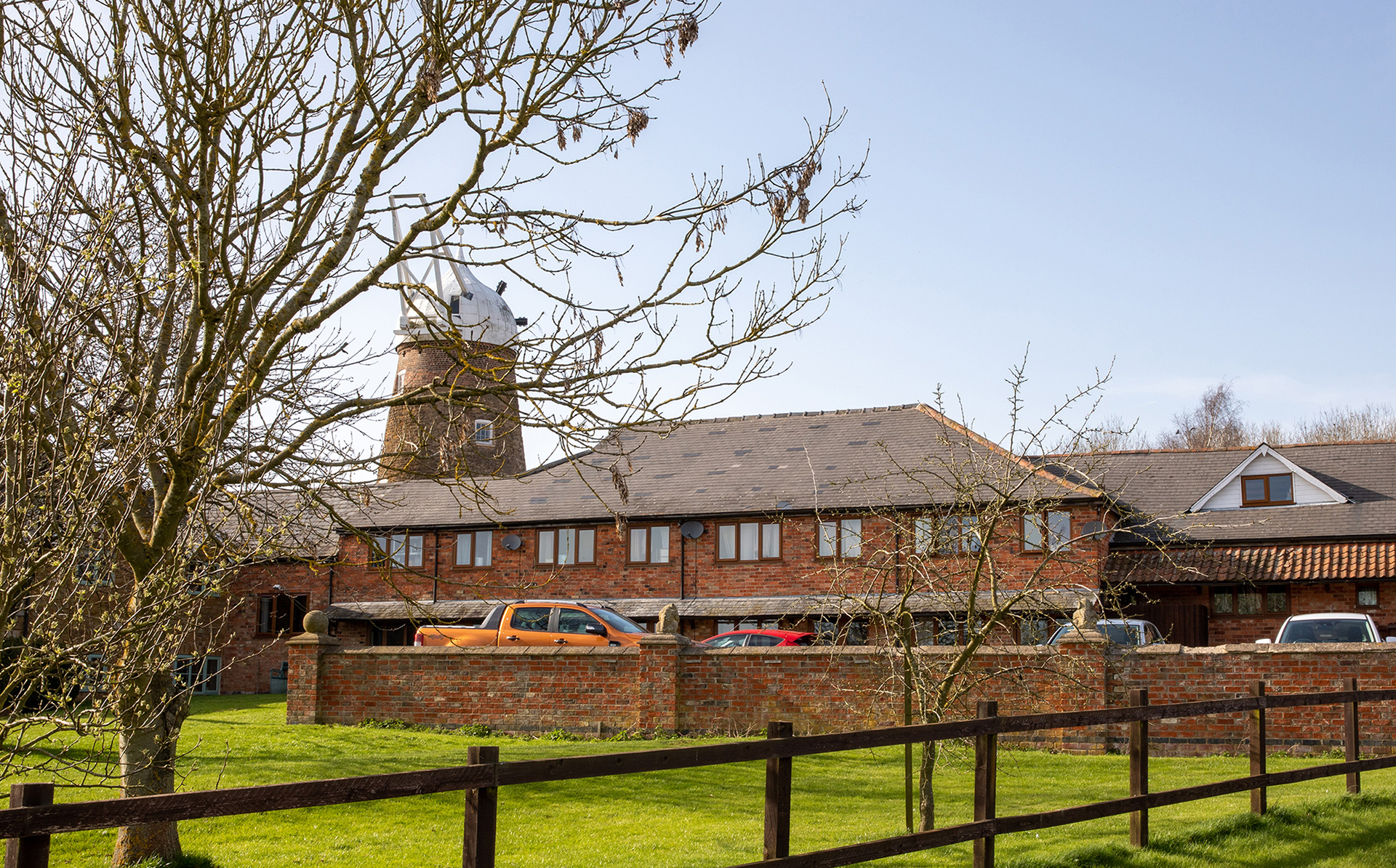
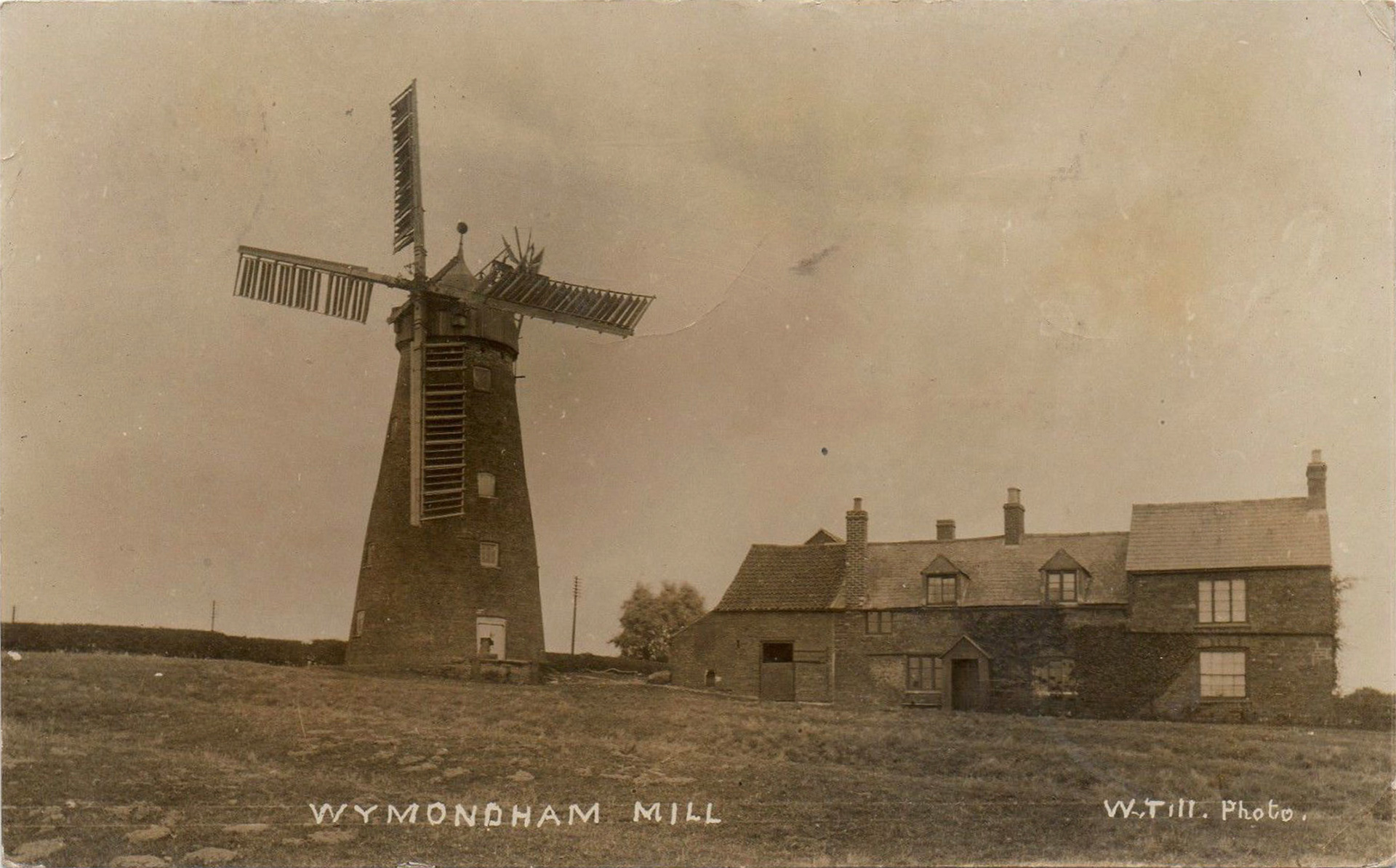
The Wymondham windmill was built around 1813, as a battered round tower with five stages. The cap has a fantail and a cross for six sails. The picture old picture is taken by William Till. Jake Young: “He was a photographer and framer, who had a shop on Burton Street in Melton Mowbray. By the time of the 1911 Census, he described his occupation as a picture framer and had dropped photographer. Till died in 1912.” That gives a bit of a mystery because originally the mill had six sails. Jake continues: “In 1919 there was a report in the Grantham Journal of two sails being lost. They came off when struck by lightning on 18th December 1919.” So how come there are only four sails on a picture taken several years before 1919? Jake: “Maybe in 1919 the mill was left with only two of its six sails?” The buildings in the old picture were a bakehouse and a barn. Now there are shops, flats and a tea room.
Jake Young: “In a 1975 interview, Bill Naylor said he last ground corn there, using an engine for power, in the early 1950s.”
Links to this article and Wymondham’s history