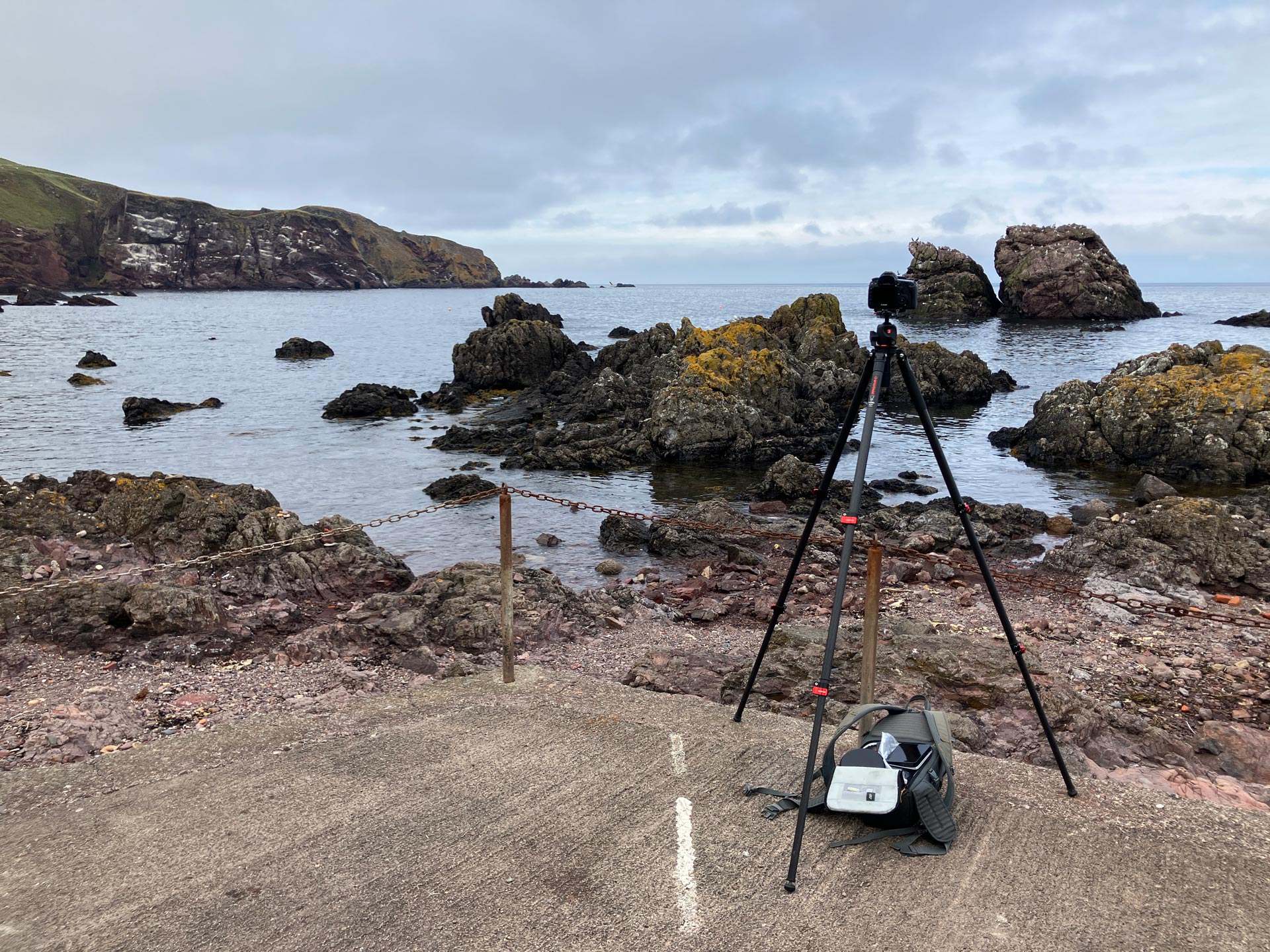
Seascapes
A wonderful night at the campsite near Foulden. The more I read about their principles and policies and explore the campsite, the more I like the place. In the huge wooden barn – open on the opposite side – Alison has created a recreation room with books, tables where you can charge your mobile and an honesty box for the hungry campers without food or snacks.
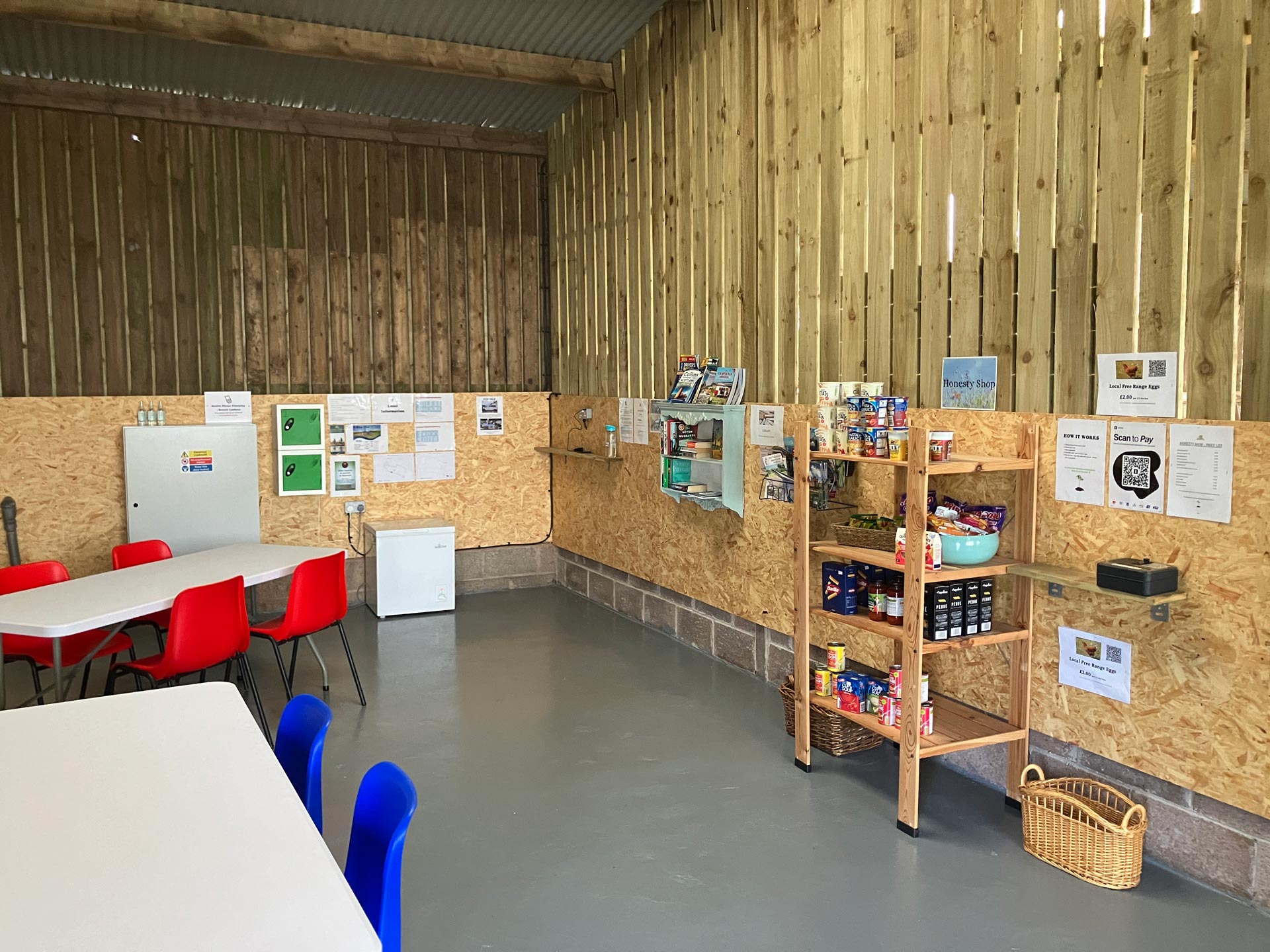
Besides three shepherd’s huts, they also provide two clamping tents. The weather is drizzly in the morning, so I decide to stay at the campsite and write yesterday’s/Sunday’s travelogue. Writing in English is no longer a struggle, but I must confess that my writing is not that excellent. There is not enough time to carve my sentences. I just write what comes to my mind. English grammar is fairly difficult, and I still struggle with prepositions and tenses. Yes, I mostly still think in Dutch while writing in English, which will be evident to a native English-speaking person. The two primary purposes for writing the travelogue are keeping people informed and keeping a record of my wanderings. Let me know your thoughts, especially if you are a native English speaker…
Around noon, I have lunch: cheese sandwiches… Yummy! As the weather will improve in the afternoon, I am determined to make a few more seascapes. No Thomson remakes today, but there are a few places to visit in the next few days.
First, I drive to a small village, Burnmouth, south of Eyemouth. I park my car at the top of the village and walk down the steep road to the harbour, which continues for half a mile with houses and cottages along the road.
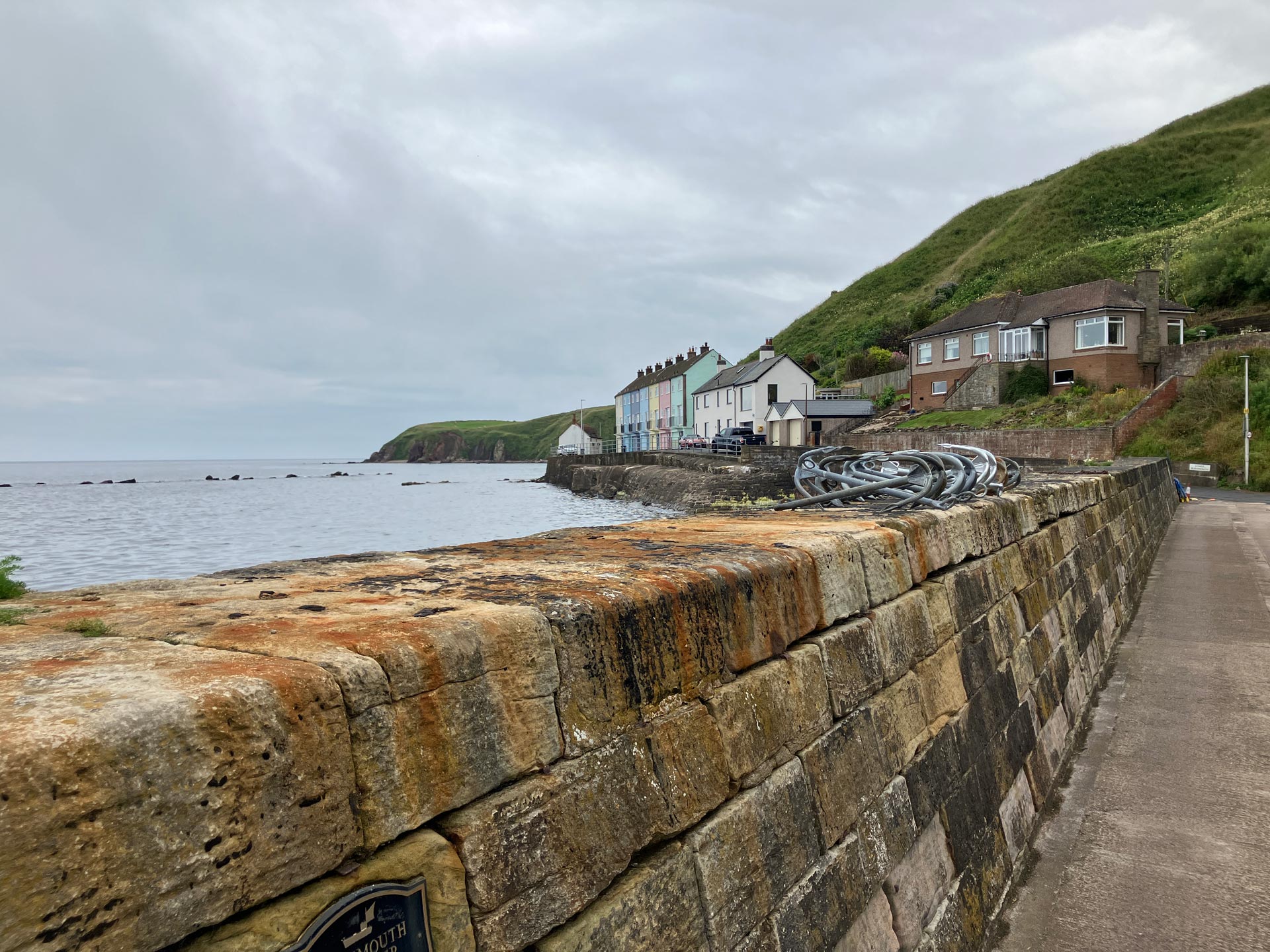
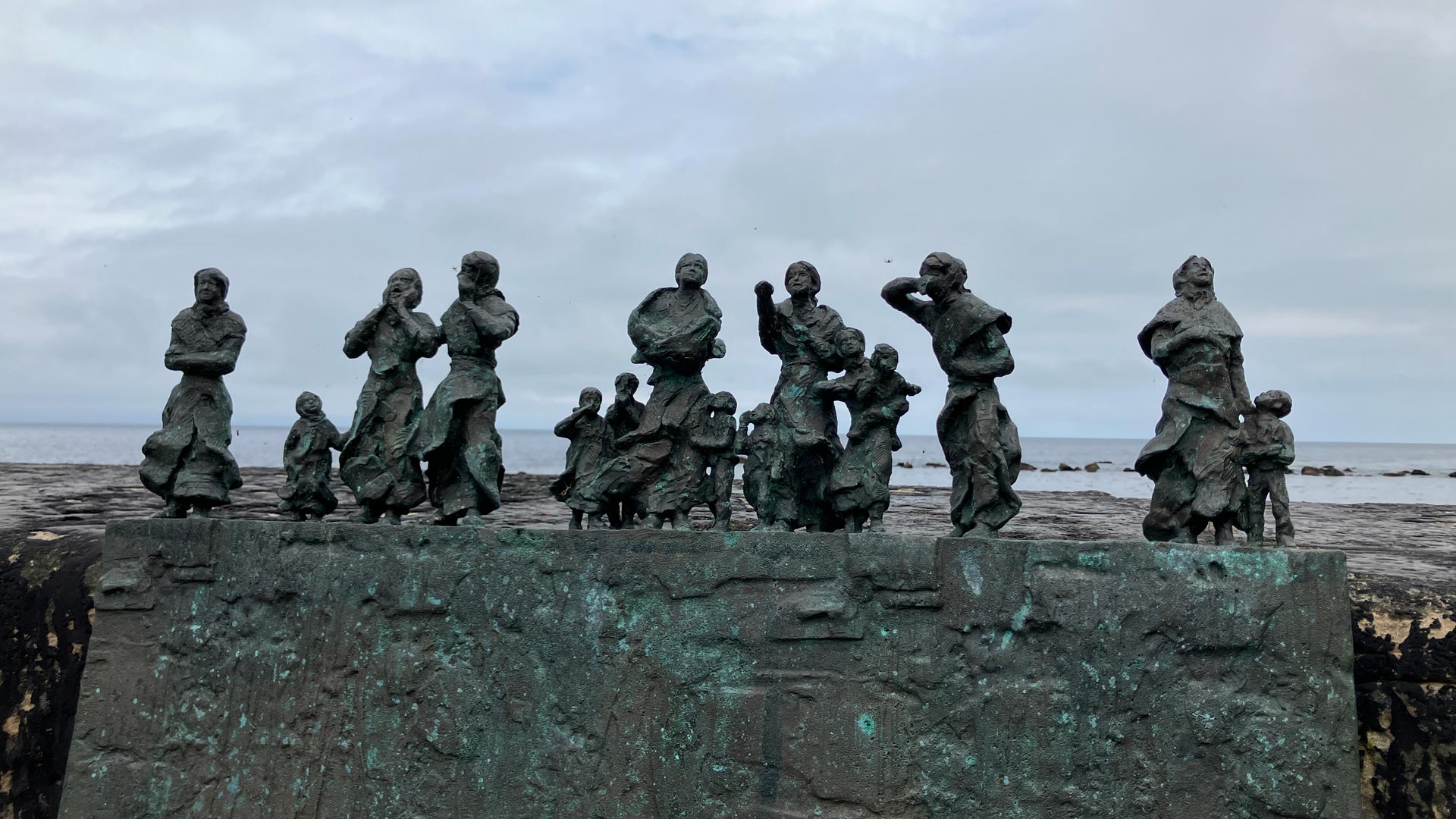
The sea is very calm, just as the days before. I try to imagine what it would look like when a storm hits the shore. In some places, a four-foot wall protects the houses from the waves. At the harbour I spot another part of Jill Watson’s bronze sculpture of the 1881 disaster.
I briefly talk to a local. He is getting ready to fish from the quay. He asks if I am here to spot the dolphins. I explain I just take “boring” photographs of the sea. I wish him luck and bid for a good catch. After I have taken my seascape near The Old Smoke House, I walk back up the cliff on the tarmac street.
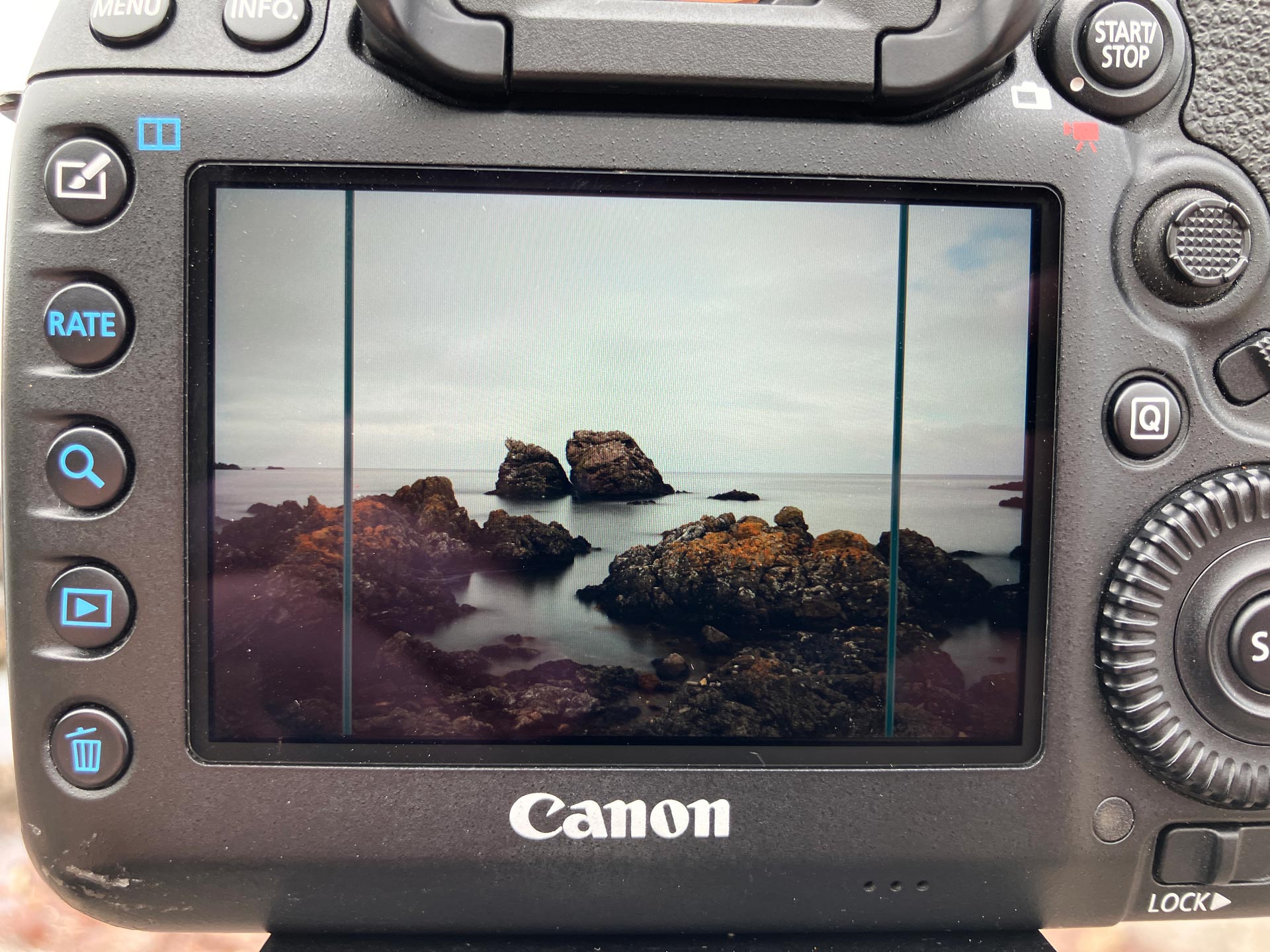
I continue my trip to Coldingham and St Abbs, the nearby small fishing village north of Eyemouth. Suddenly, the splashes light on the settlement.
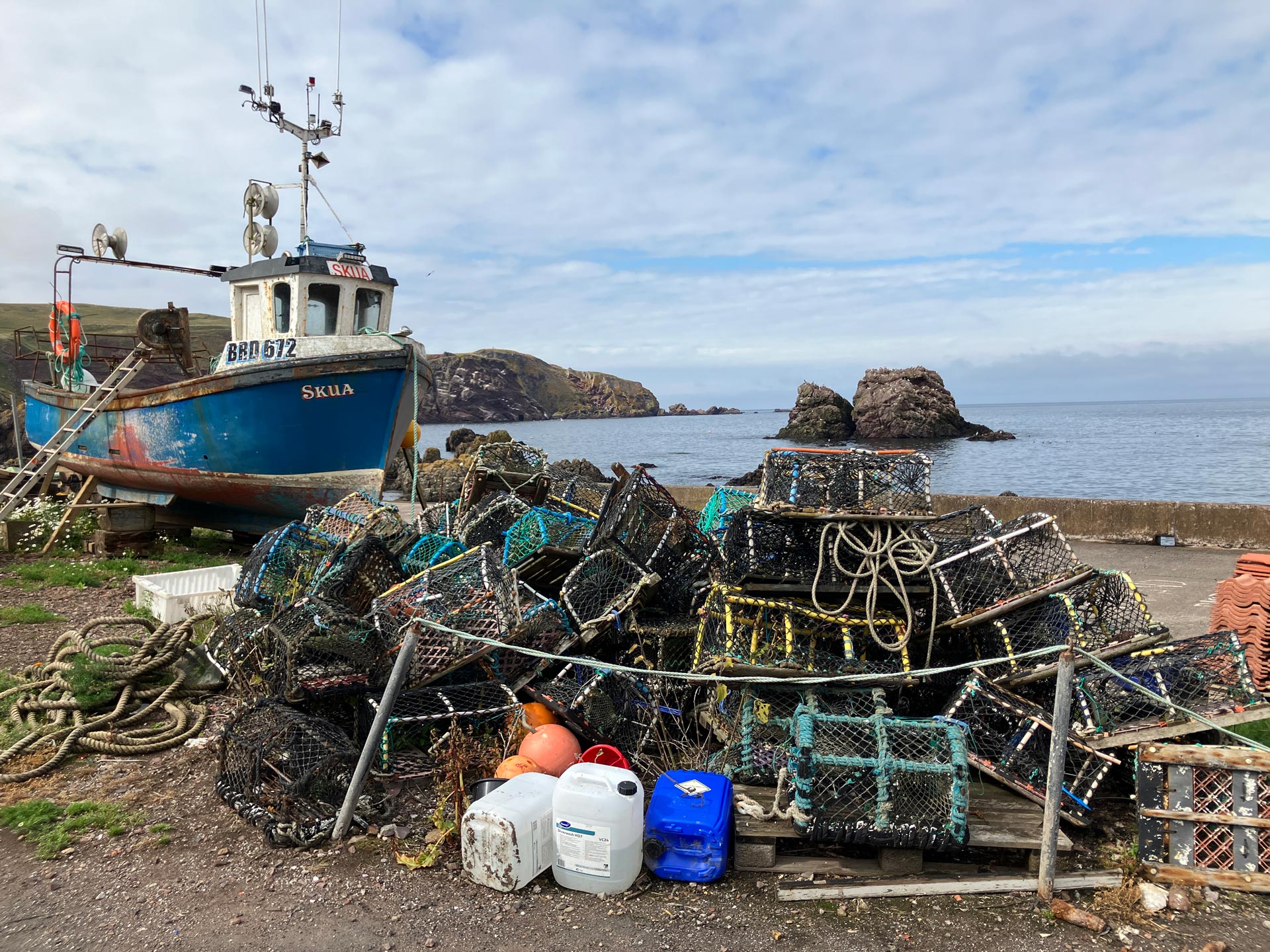
I count five or six cars in the harbour car park five or six. On the left, the seashore is scattered with small rocky islands. Further to the left, I see the 300 feet/100 metres high rugged rocks, a seabird-nesting paradise called St Abbs Head, a National Nature Reserve. The village was originally known as Coldingham Shore, and the name St Abbs was adopted in the 1890s. The new name was derived from St Abb’s Head, itself named after the 7th-century saint Æbbe of Coldingham. I look for a composition of the high rocks – the biggest one is inhabited by dozens of screaming gulls and a few cormorants – avoiding the islands from touching one another.
Back at the campsite, I also have seen it in the morning and the day before – fog is covering the upper part of the Lamberton Hills to the northeast. It is sea fog.
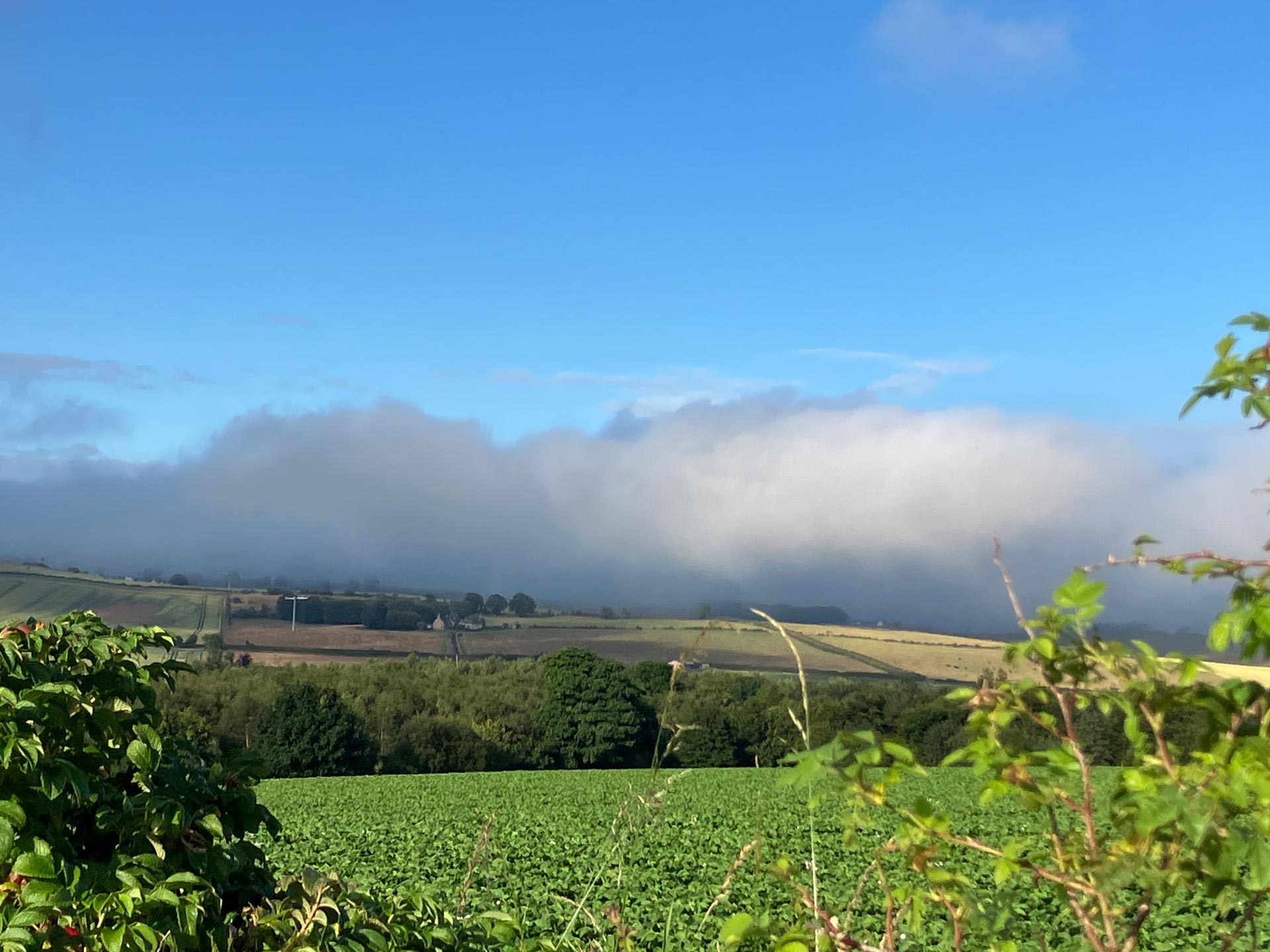
In Sea Fever I read: “Sea fog – known as haar in Scotland and fret in the north of England – is most common in Britain’s northeast coast between the Humber Estuary and Aberdeen. […/…] Just as the sea warms more slowly than the land over the course of a day, so it takes longer to shake off winter chill. If land-warmed air moves out over the still chilly North Sea, it cools rapidly, meaning the moisture in the air condenses to become fog, which can roll back over the land…” Most of the time, the Lamberton Hills prevent the sea fog from going inland, but if it rolls over the hills, more land is covered in grey.
After campsite dinner and tidying up the tent, I just do nothing…