Tuesday 21 June 2022 | No glorious sunset on summer solstice day. Sleeping in a dormitory did feel strange after all these years. All the people in my room could have been my sons or daughters. But also older men and a French-speaking family with grown-up kids stayed for the night. The morning is somewhat a routine: breakfast, writing and checking emails and website updates. I wonder if I could manage larger chunks of my work without being wirelessly connected to the world. Probably not, feeling to have a proper thought for ongoing engagements as a digital nomad. Trying to escape life as a rat race – I already stopped following the news for a few months, with no intention to catch up – the life-changing and even obliged digital connection keeps you busy. It is a double-edged sword because I need this connection to properly deliver my other work and send this daily travelog.
So after the morning routine on the road again for another extra day, trying to fill some gaps in the Thomson’s Lochaber Series. I have no intention of making remakes of all his photos, but I need a few as a start to tell a story about specific places. First some petrol for my car – £58 for 30 litres of unleaded fuel – and then to the Glenfinnan Station Museum to meet Hege Hernes. There I get word the railway drivers are on strike. Even The Jacobite steam train isn’t running because communication lines and signals are also dead. A disappointment for many tourists who like to gasp at the steam train crossing the Glenfinnan Viaduct. Along with a climb to the top of Glen Nevis, both are the major goals for the casual tourist visiting the Fort William area and make both places far too busy for me. For sure the area needs the tourists, and give the required employment. But there are probably too many tourists.
Hege wrote an exciting book on the history of the West Highland Railway based on a series of more than 100 photos taken during the railway’s construction between Fort William and Mallaig in the late 1890s. The negatives were unearthed at an auction in Cornwall in 2019. Hege was contacted by the person who bought the collection. We talk about the book, share some ideas and go by car for a scout to one of Thomson’s places he photographed on the road to the isles. We have bad luck because the view is mainly covered with full-grown pine trees, and contractors are working on the power line which runs along the road. The old power line is also in Thomson’s picture.
After dropping off Hege at the museum, I drive back to Fort William to have a look at Glen Nevis for a remake of a Thomson postcard. On my way, I see the Ben Nevis becomes could-free, unfortunately not so with the mountains of the Upper Glen Nevis.
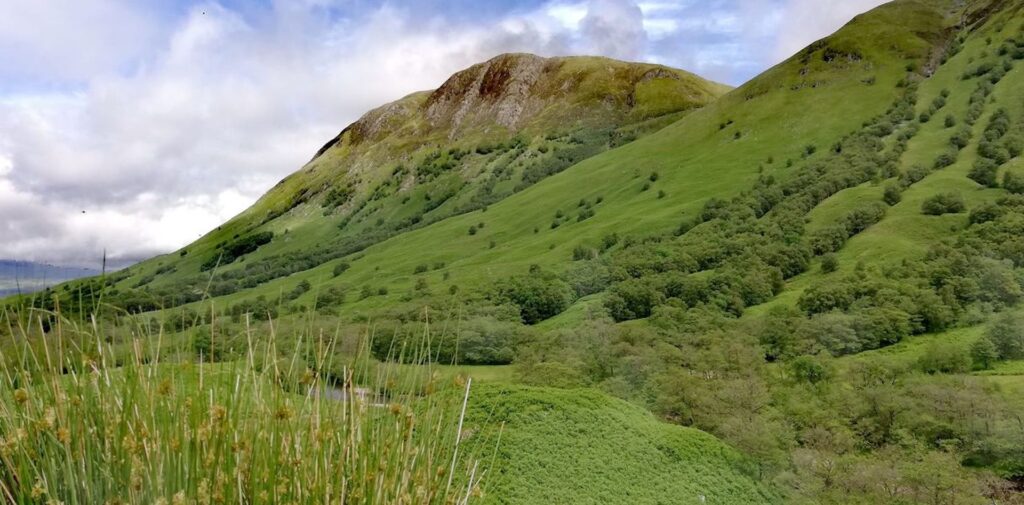
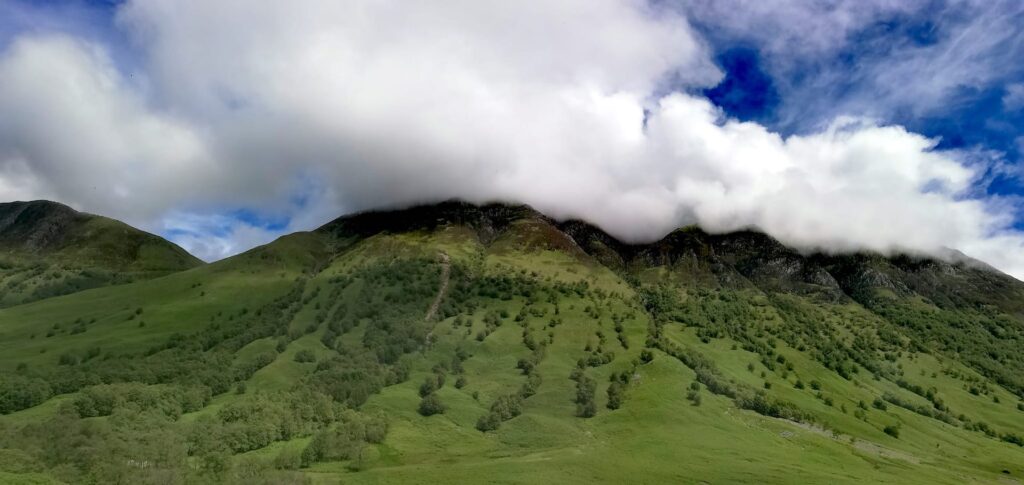
But the weather is fair enough to stay for a few hours hoping the clouds would dilute, which happens partly.
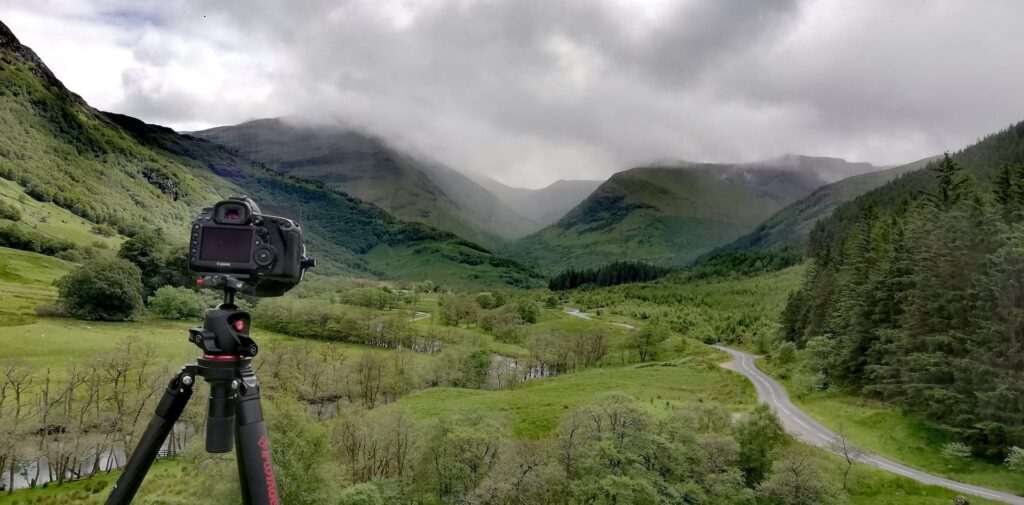
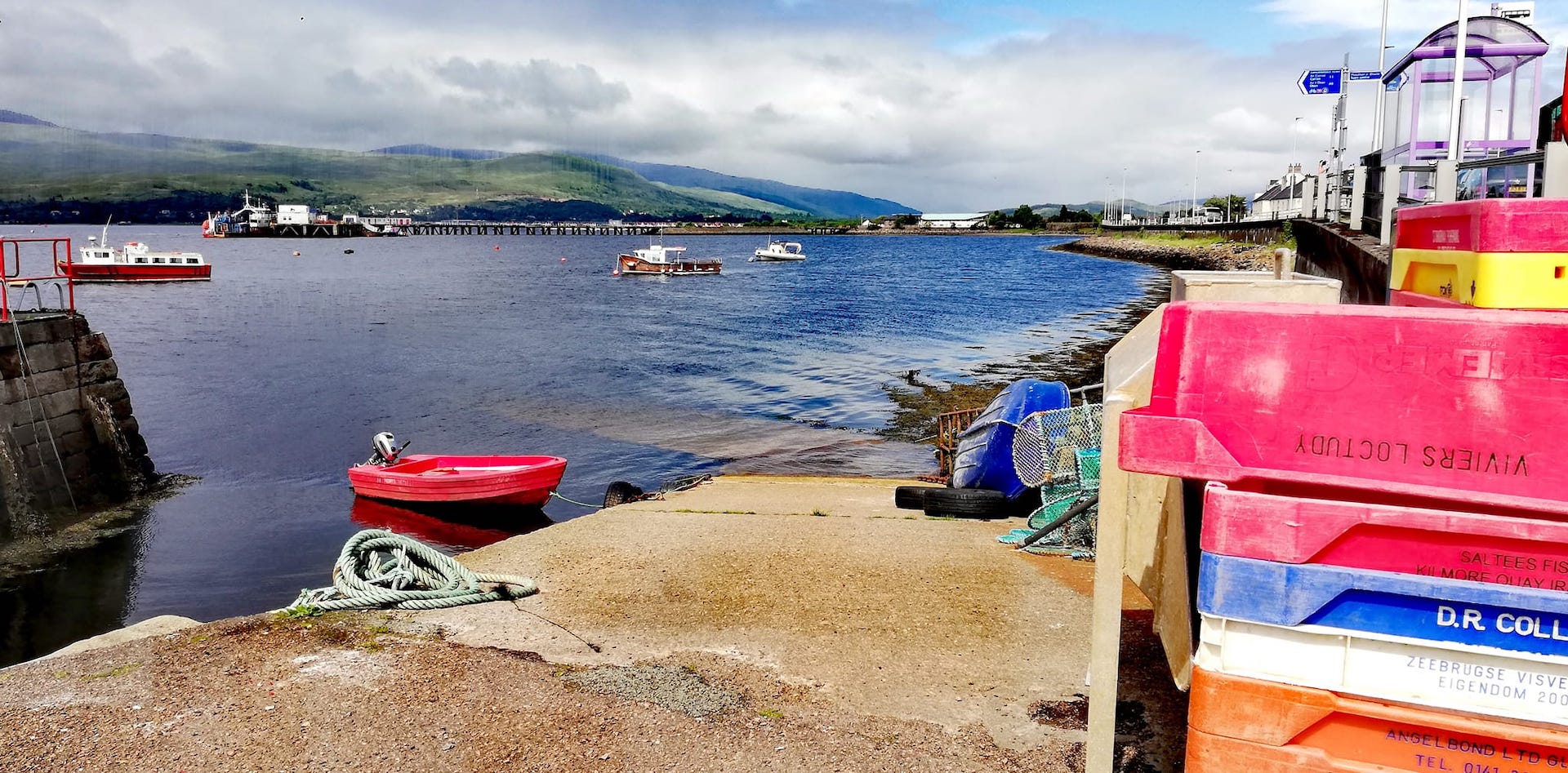
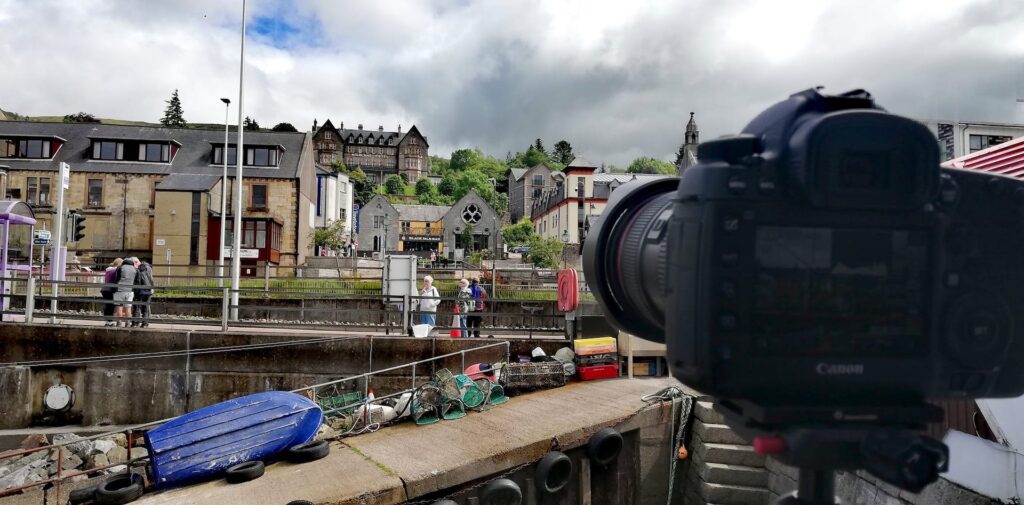
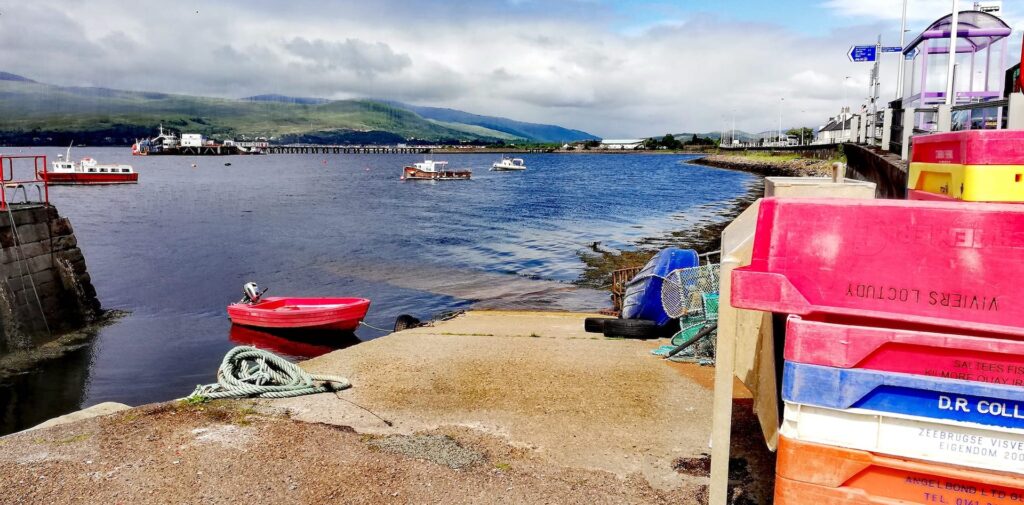
While waiting, I search for a place to stay for the night and decide to go for a proper bed for the last two days. I have to admit I get a bit tired. Driving back To Fort William, I take some time for a remake of the old Fort William Pier, where in 1989, a seafood restaurant was built. The view up the hill, as a part of the town. Older buildings, such as the Highland Hotel, didn’t change much.
I have a brief meeting with Vanessa, the curator at the West Highland Museum. We talk about the project’s progress. After getting the keys to where I will stay for the night, I drive to the town centre again for a good meal at The Geographer, a restaurant on High Street. Back uptown, I have to finish my weekly feature on the Melton Borough Villages Series. Summer solstice day comes to an end without a visible sunset.