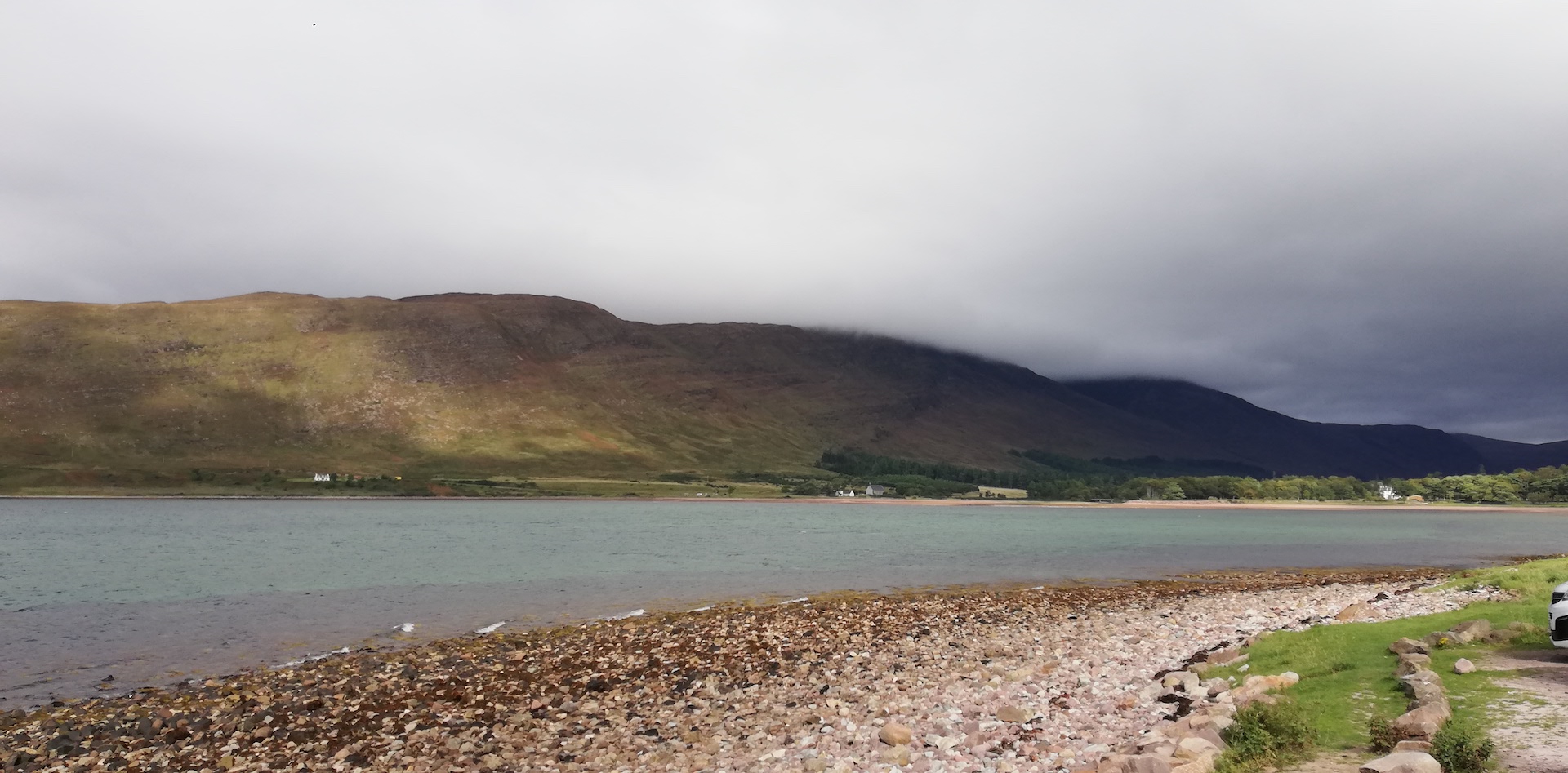
Applecross Peninsula
I love camping. It gives you lots of freedom in planning and getting around, especially in an area where most of the bed and breakfasts and hotels are booked well in advance. Last-minute vacancies are sparse or unavailable. For this trip, the main goal is scouting places where Thomson took photographs at the Wester Ross coast. I have been here a few times, focussing on the Gairloch area. The scope is also more south and north, from the Applecross Peninsula to Ullapool and the Summer Isles.
My stay in Applecross is planned for four nights, and I survive the first night. Okay, this sounds dramatic, but it wasn’t that bad. As long as it doesn’t rain when pitching the tent by arrival or packing when leaving, I don’t mind. The other fun thing is that you meet all kinds of people, some interesting, some a bit strange, some just “normal”. It’s up to you to put me in a box. I try to behave normally, do interesting stuff, and act strange now and then.
Most campers, whether staying in a tent, a van or a motorhome, only stay for one night. The campsite was as good as full last night, and by 10 am, only a few tents are left. After a late breakfast, I moved my tent and a snail dragging its house from the second row to the first row of camping spots. Being impressed by a tipi tent and a Land Rover Defender, I started to talk with the couple that stayed in the tipi after I moved up front. They were packing slowly but took time for a chat. They live in a croft house at Little Loch Broom, where I will be in about a week. Taking their details, I promised to visit.
My plan for the day is to find two Thomson places and visit the Applecross Heritage Centre. I first look over the sea from The Shore, the main street in Applecross, a terrace with about 15 cottages. It is in one of the Thomson photographs. I decide to wait for a remake towards the end of the afternoon because then the sun will be far enough to the west to brighten up the cottages. If the sun comes out, of course. A thick cloud is hanging above the Isle of Skye. I settle in the Applecross Inn to write and have a coffee and a soup, followed by some writing. I need to catch up.
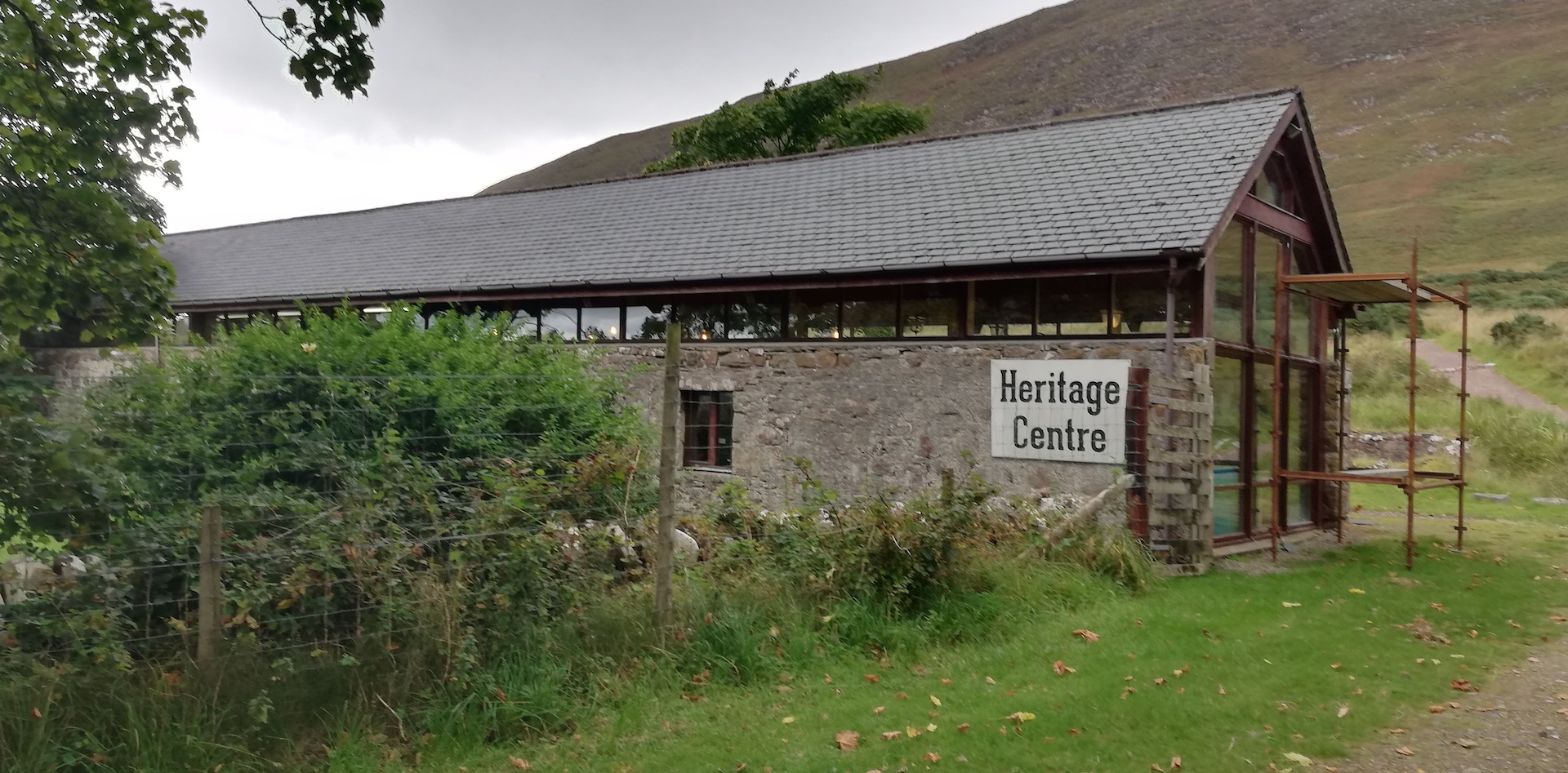
Two hours later, I drive half a mile north to the Applecross Heritage Centre, where the couple I spoke to at the campsite are just leaving. When going inside, I introduce myself and explain the reason for my visit. I often say I am on a “mission”, which immediately catches people’s interest. The volunteer at the centre is very helpful, and she provides a few telephone numbers of the heritage centre board members. A renovated barn at the back of the Old Manse hosts an exciting collection of artefacts, and lots of text explains a lot of aspects of Applecross’ history.
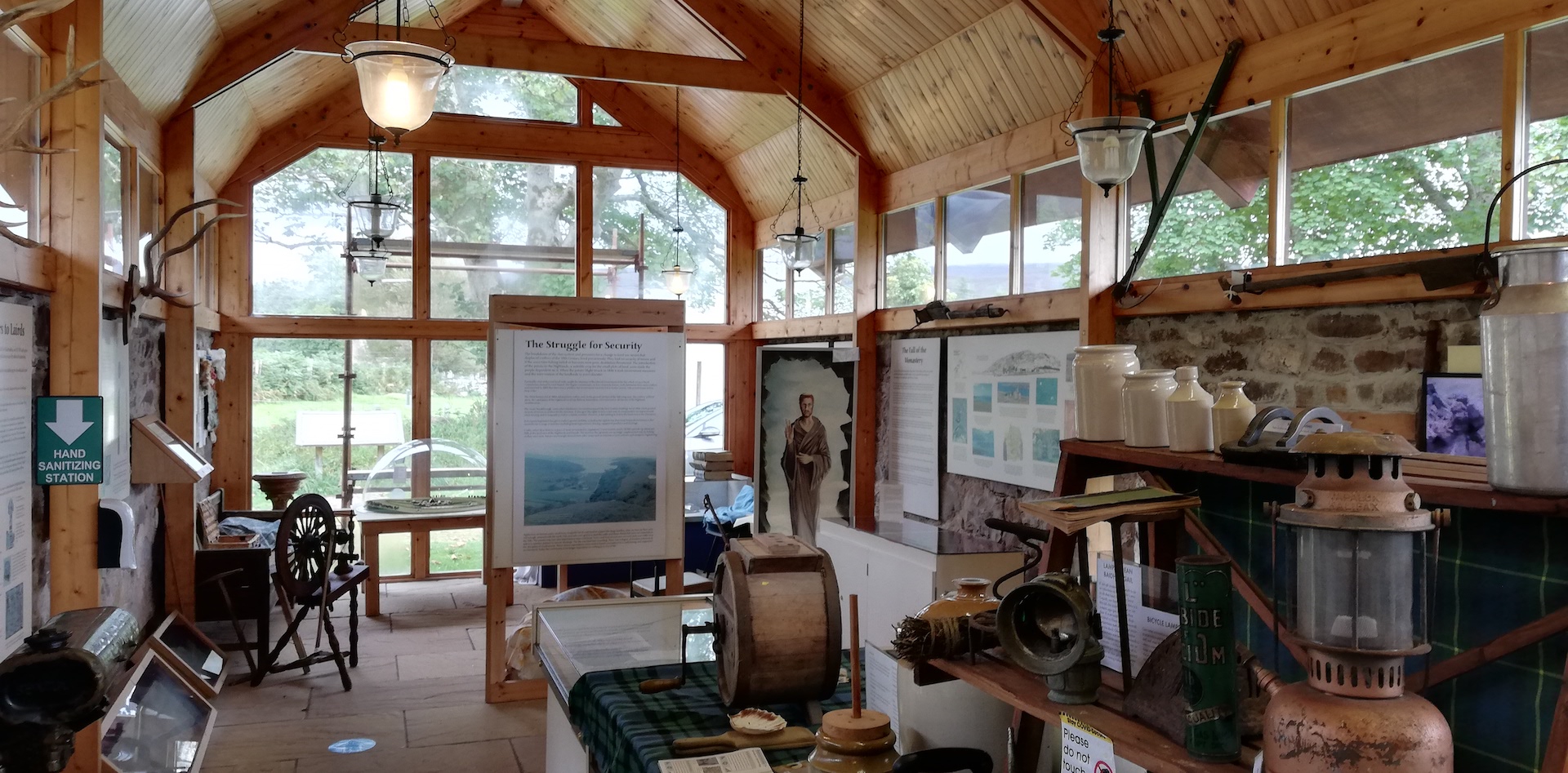
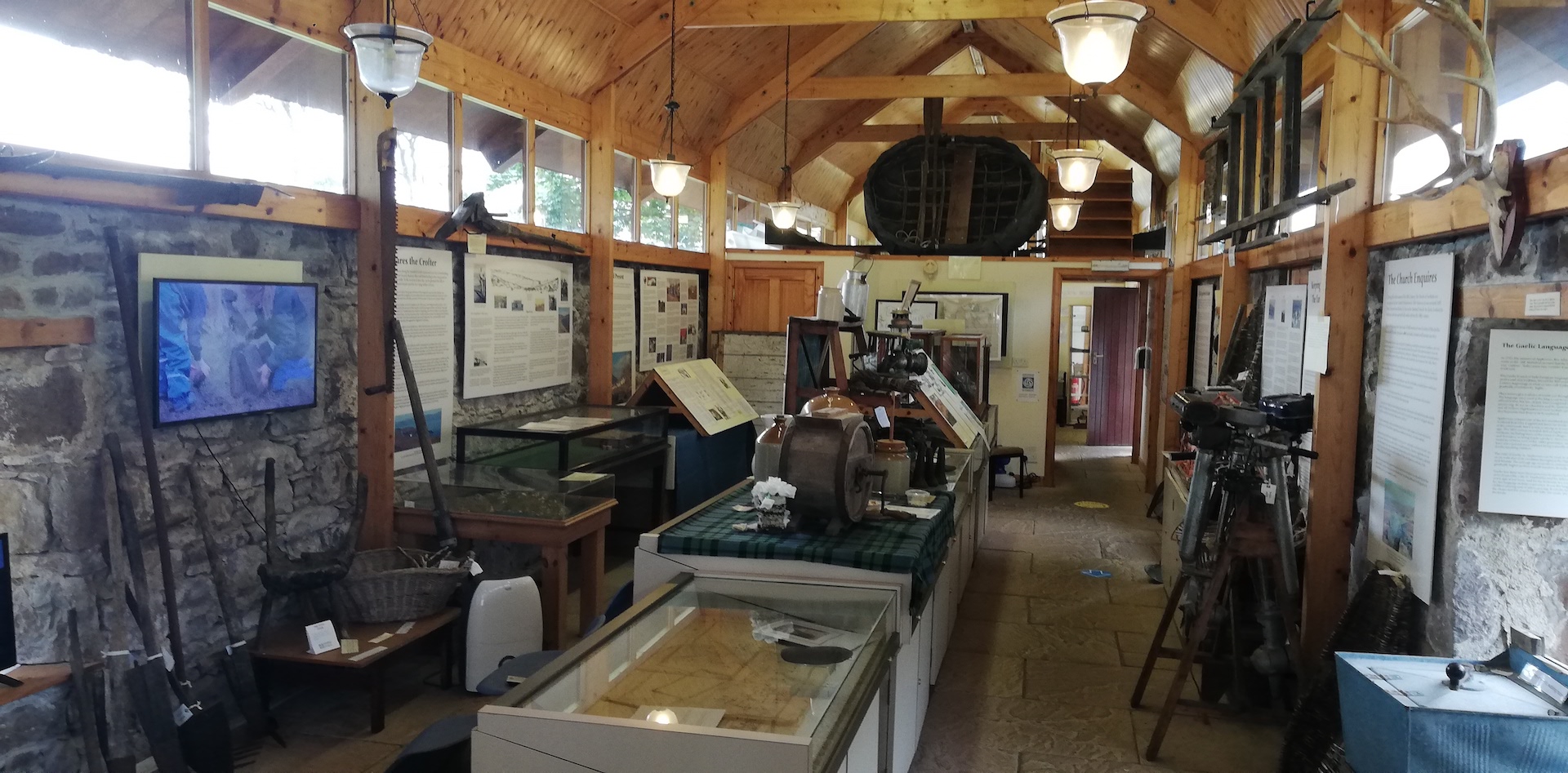
I digest it all. People are already living on the peninsula for about 8,000 years. On the site – there is also a church – was a settlement with monks in the 7th century, the same timeframe when Cuthbert (I just read a book about his history) travelled in the Scottish Borders to end up on Lindisfarne, the title island at the Northumbrian coast.
On an Applecross website, I read: “Applecross was one of the earliest Christian settlements in Scotland, second only to Iona. In the year 673 the Irish Monk Maelrubha founded the Christian settlement on the land between the river and Benin A’Chlachain. He declared the surrounding area a Sanctuary, and even today, Applecross is known as A’Chromraich, translated The Sanctuary.”
It takes about two hours to read everything and study the objects. In a presentation of old images, a few more old postcards of Shore Street pop up and several other postcards, probably all Valentine’s. Because there is still some time, I browse the books In their library. Just before closing, I am back at my car and plan to drive to the shop to buy groceries. The shop (and post office) is on the south side of Applecross, so I have to go back through the village. At a junction, I follow the sign to a photography gallery for a brief stop. Remote, but with a fantastic view west, I chat with the lady who keeps the gallery open when the photographer – Jack Marris – has other business or is out taking photographs. I like his work, partly shot with a drone, and the large formats are printed on canvas and smaller formats on paper and mounted. I hesitate to buy a smaller format, but eventually leave empty-handed.
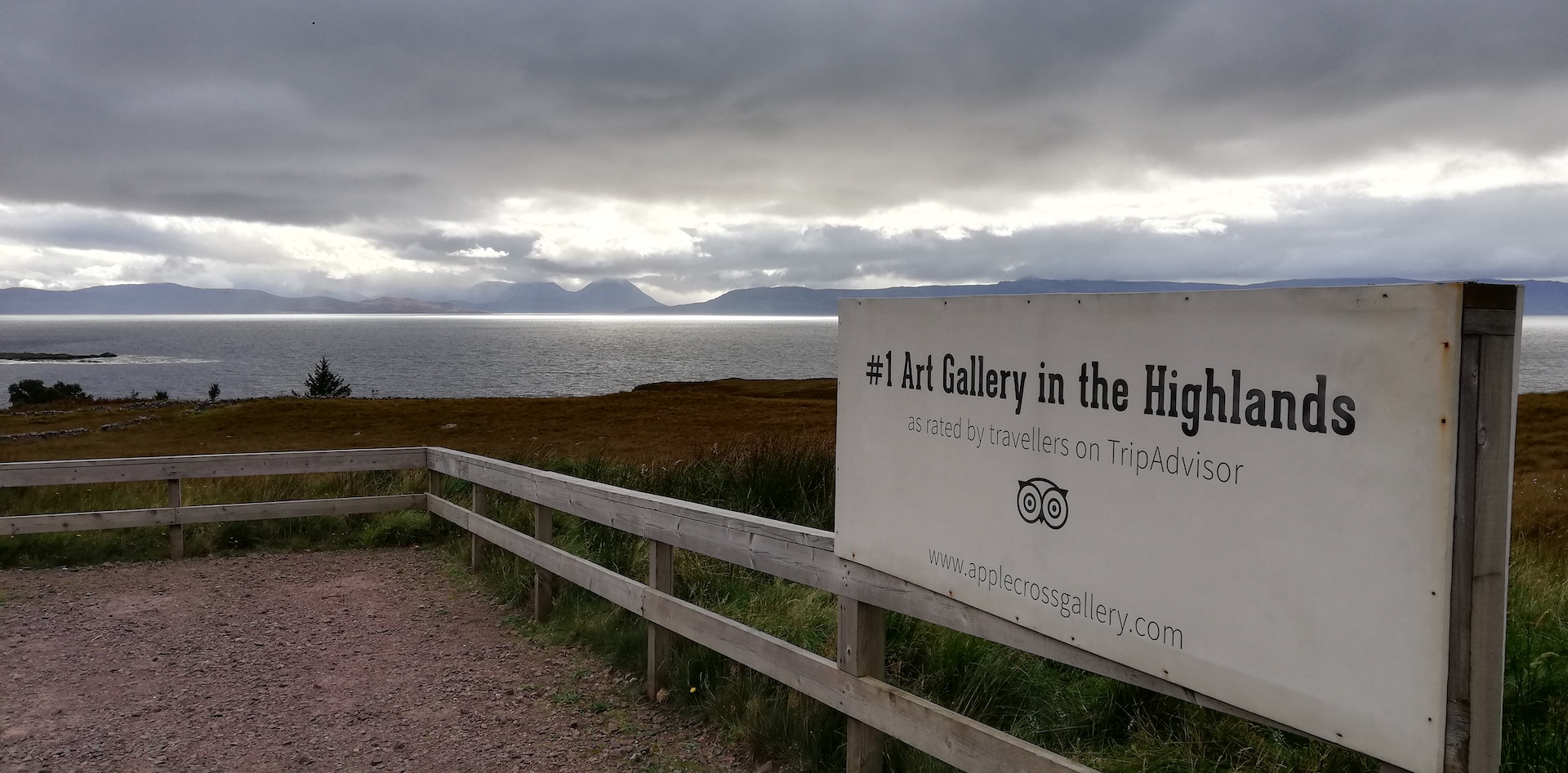
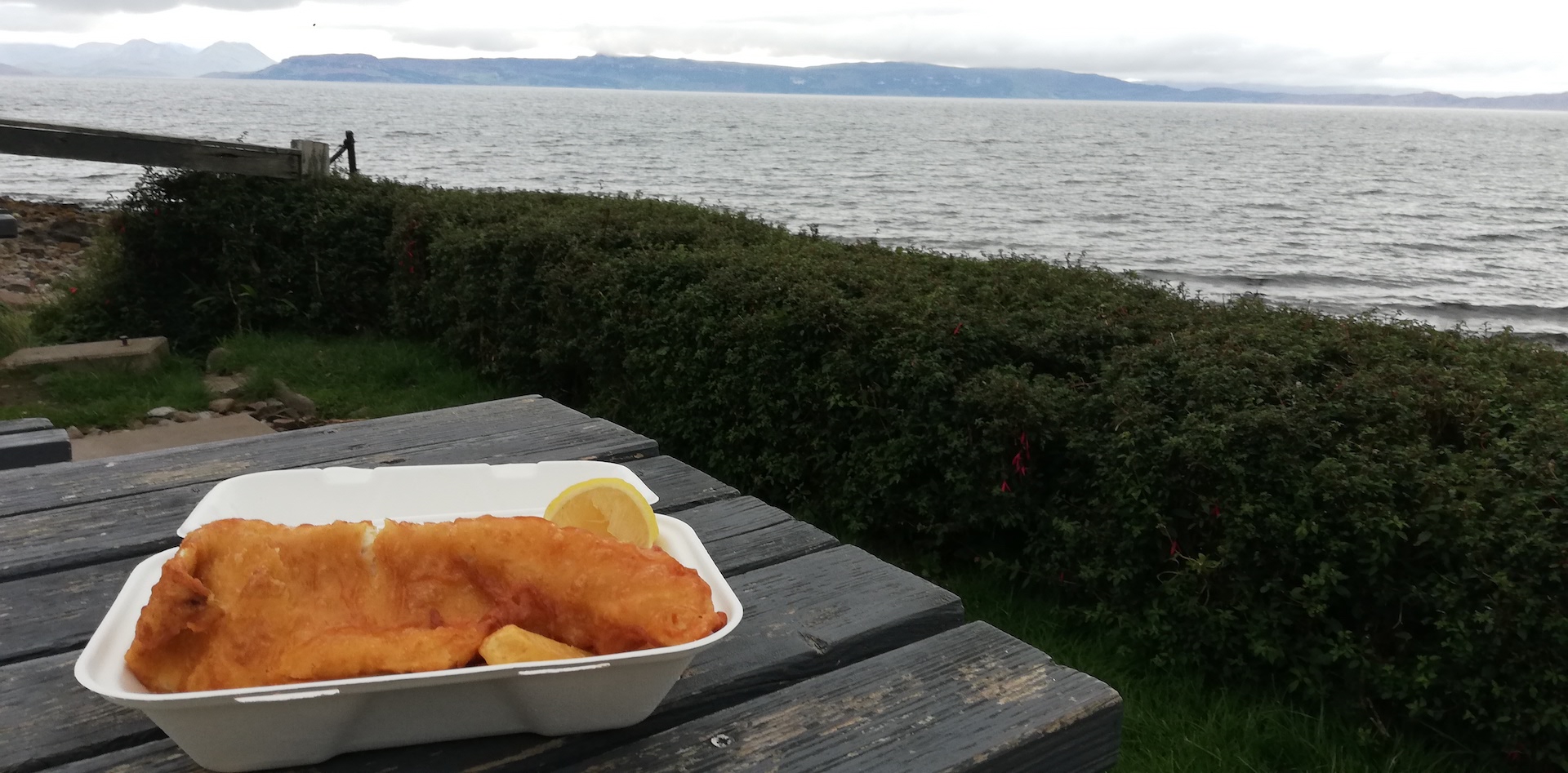
After a visit to the shop to buy some vegetables and noodles, I drive back to the main street and have a fish and chips with an incredible view.
I still hope the sun will be out for the remake of the Shore Street photograph, but the clouds spoil the fun. So, it’s still a job to do tomorrow.
At the campsite, I help my new neighbour pitch an addition to her tent, but although skilled in this job, the essentials are missing to do it right. She has an impressive tool to hammer the pegs in the ground. Her boyfriend suggested taking a rubber mallet, but she has a tool which looks like an ice axe. She explains it is a geologist hammer, on one side an impressive sharp point and on the other a flat hammer-like tool. With some writing and reading in the tent, I close the day.