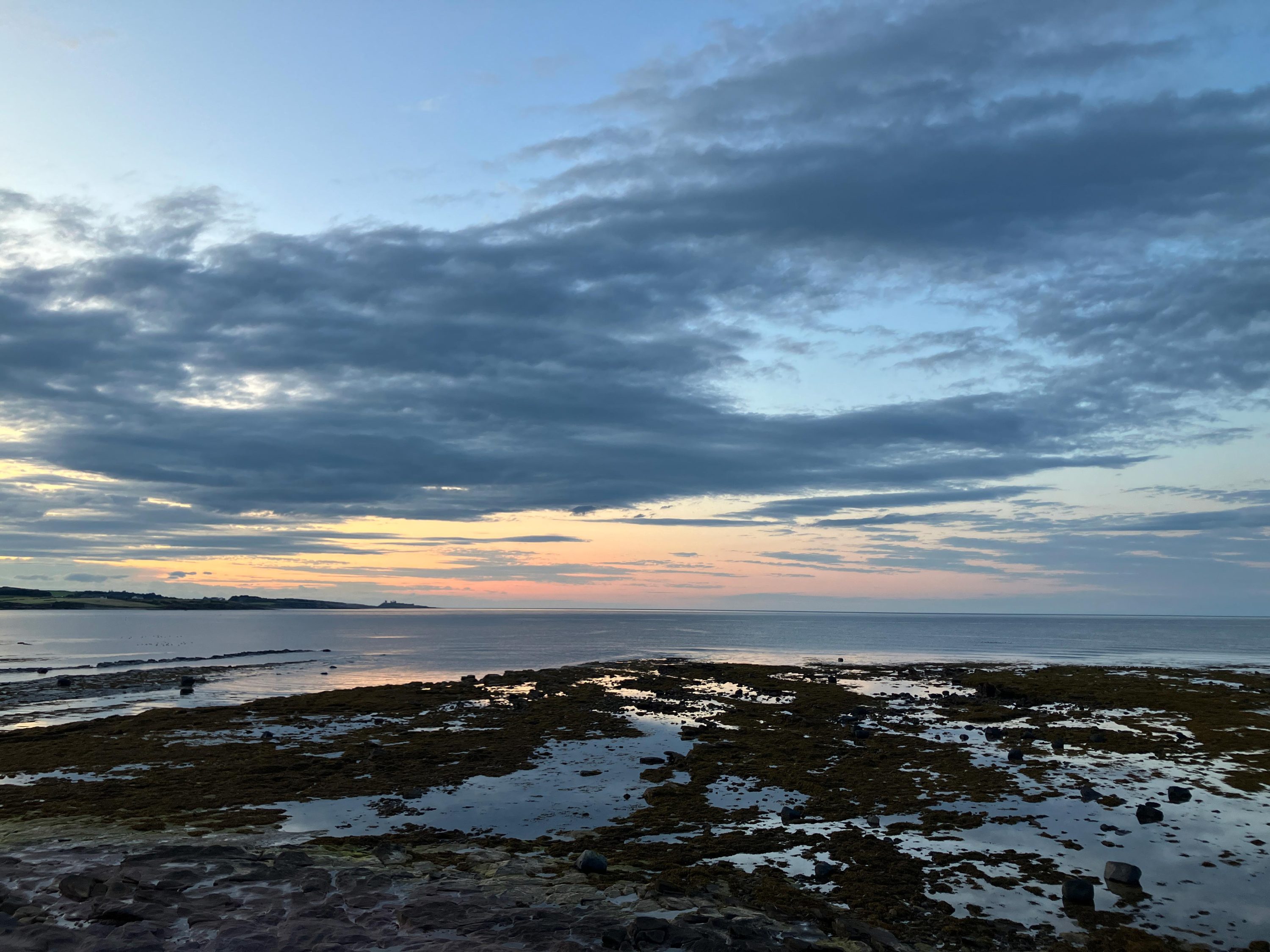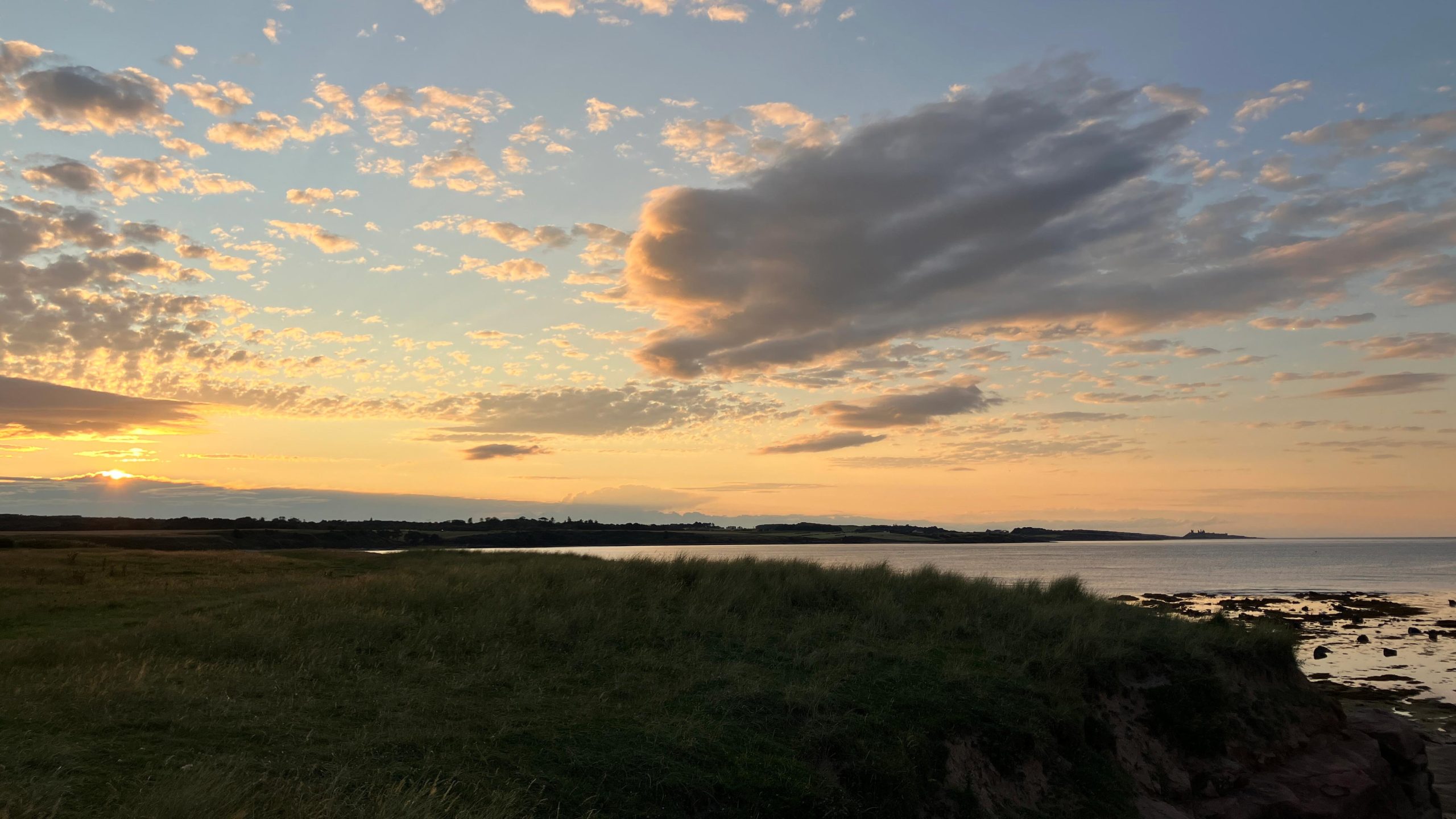
Dunbar, Berwick-upon-Tweed and Spittal
After breakfast, it is time to pack in North Berwick and drive south again. I briefly stop at the Tantallon Castle ticket shop to say thank you for yesterday’s guidance and buy the book Who Built Scotland, written by Kathleen Jamie and Alistair Moffat, amongst three other authors. I continue to Dunbar to visit John Muir’s Birthplace, now a museum where an exhibition tells the story of his life in Dunbar as a child and a young teenager, his voyage to the US, his academic life, his mountaineering and his dedication to protecting nature in the Wild West and co-founding the Sierra Club.
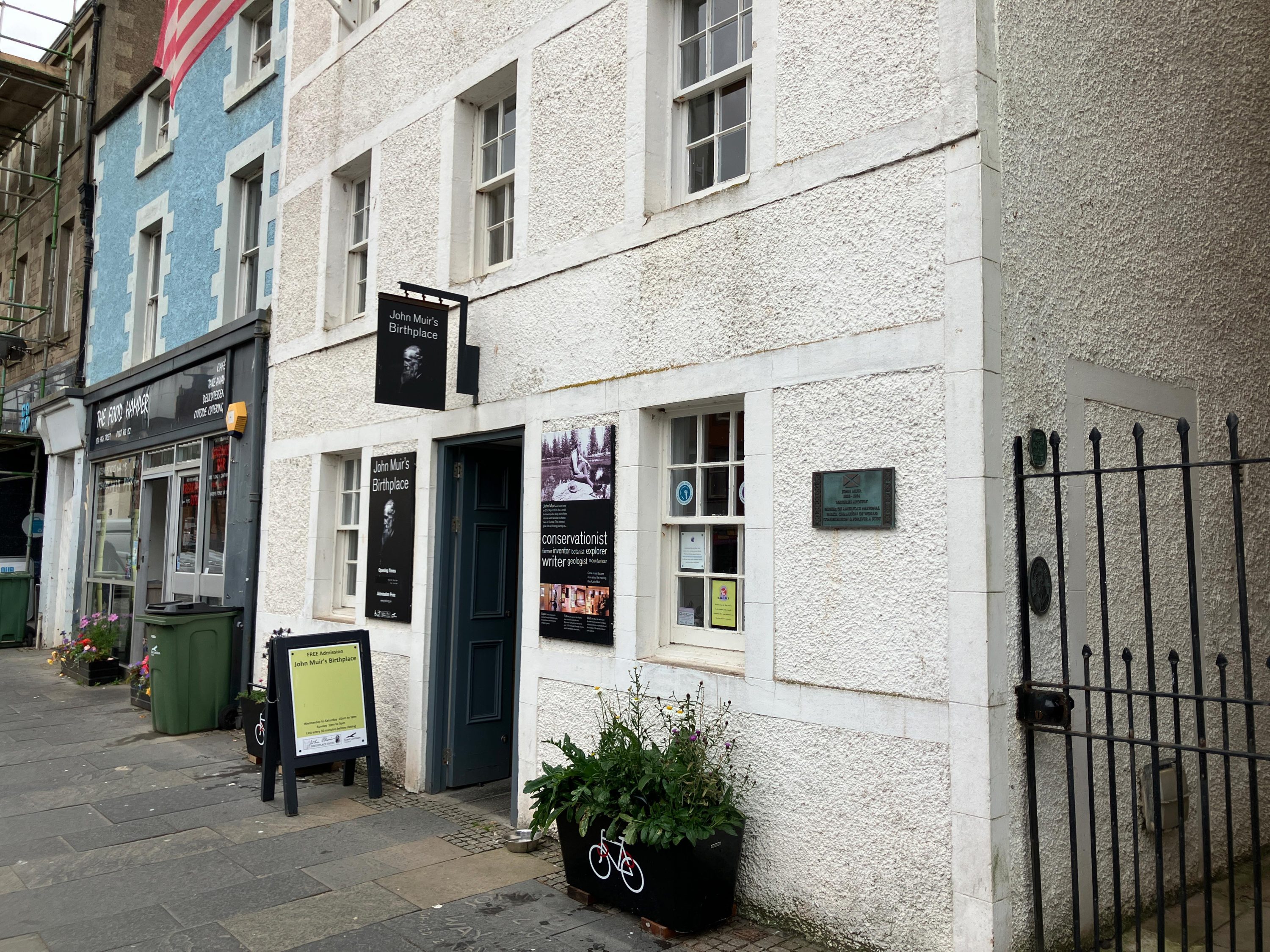
The visit is a memory-refreshing experience. In the early 19th century, Dunbar was a town of fisherfolk and farmers. In the exhibition, I read: “The town was divided into “streeties” and “shories”—the townspeople and the fisherfolk. The “shories” lived down towards the sea, in narrow cobbled streets. John, as the son of a successful businessman, was definitely one of the “streeties”. Pitched battles between the children of each group were a fine way to pass a Saturday.”
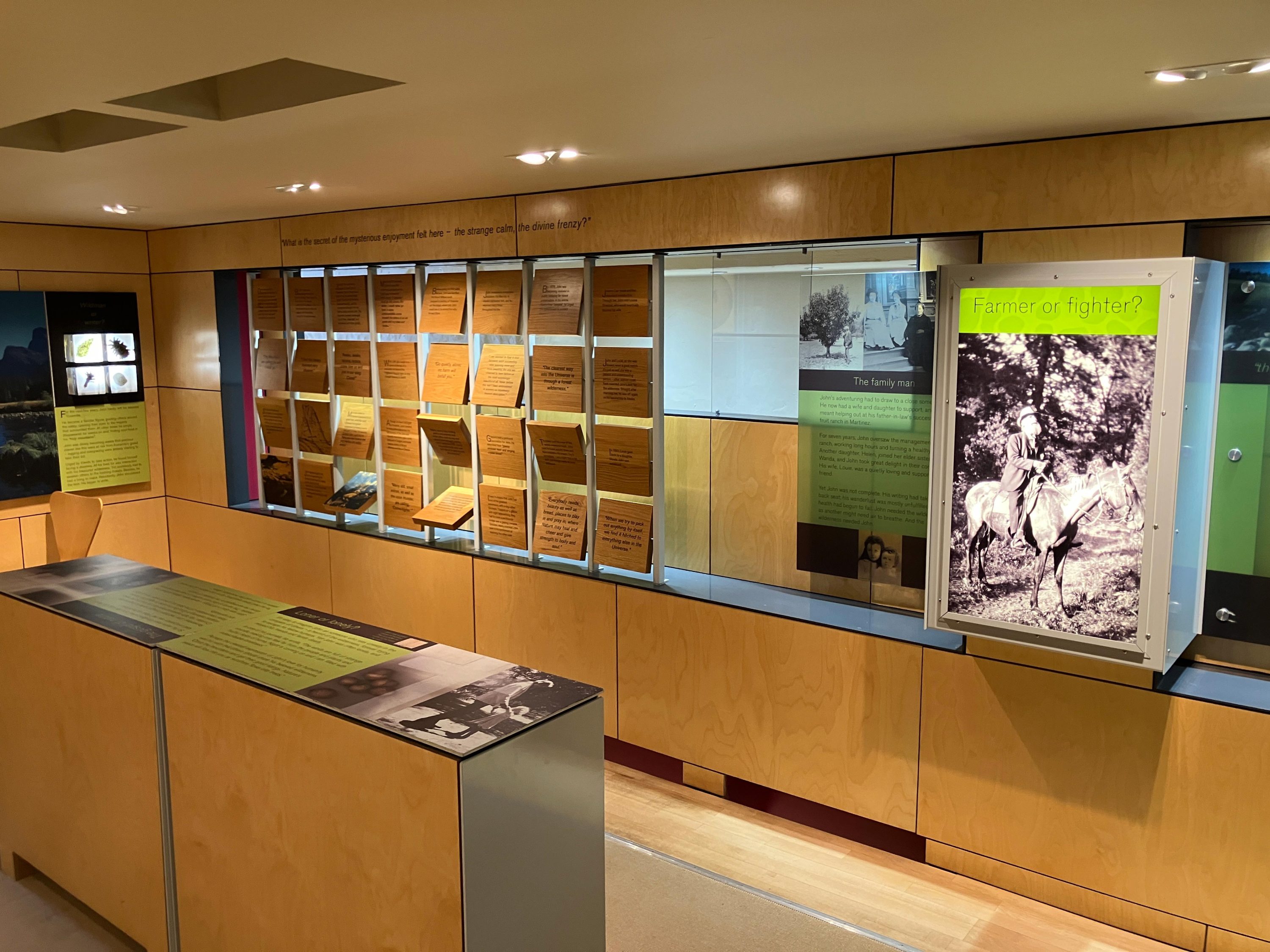
Reading the following part, titled A seed is sown, triggers my thoughts to reflect on my youth and how it defined my future. “All his days, John sought the high and wild places. His endurance and stamina, his quest for the ultimate challenge, had their roots in the adventures of his boyhood. And the spiritual solace he found in every flower, every creature, was born in the delight he took in escaping to the woods and shores around Dunbar. A seed had indeed planted in the boy, and would blossom in ways he could never have imagined.”
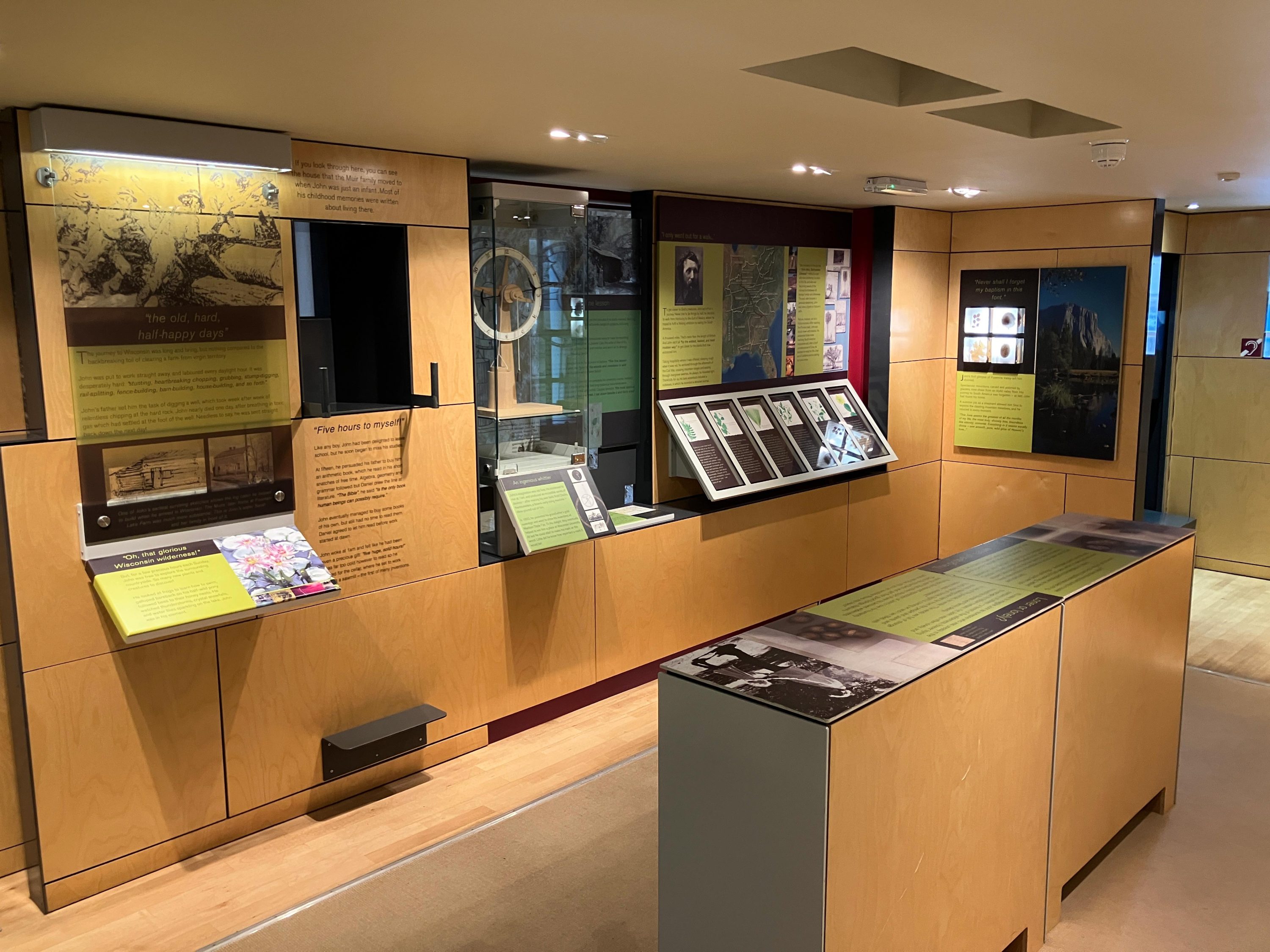
I wonder which events in my life as a child and teenager led to what I have become doing. As the eldest of the grandchildren, uncles and aunts took me on their adventures during their twenty-some years in the late 1960s and early 1970s. I was told I was an easy-to-go, never-complaining child. These journeys, which unfortunately vanished in the ocean of forgetfulness, possibly paved the way to becoming a wanderer. Or were it the many solitary days in my room on my knees, bent over a world atlas, flipping through the pages, discovering countries and capitals, being fascinated about the colour of elevation, from yellow to green, to orange, to red, to brown and even to white where glaciers and ice covered the land, from light to dark blue to mark the depth of the seas. While playing hide and seek, I was lying in cover for hours in the high grass or scrub – I became a master in discovering ideal hiding places – and motionlessly observed the insects and butterflies and stared at the ever-changing clouds, forgetting about the game. During my teens, I was part of a nature study and environmental action group, learning how to organise activities and manage projects from scratch locally and later on an international level. There, I found my drive to take care of our world as an example and asking people to join. I am puzzled about why I am interested in people’s daily life in the past and now and what caused my fascination for the aspect of time and how objects, features and scenery change within a second, an hour, a day, a season, a year, a generation, a lifetime… What made me try so many different feats in life, changing directions and occupations, never really choosing one specific goal? And why did I become a hoarder, collecting stories (as a journalist), collecting objects (as a museum director), collecting books (most of them I gave away), collecting images (bits and bytes do not take much space)? Why am I collecting questions right now?
When watching a few short films about Muir’s life, his fondness for Yosemite, the wilderness and the wild throws me back to the 1990s when I often visited the US, especially the Rocky Mountains and the West, gasping at the magic and overwhelming landscapes in the national parks of the Rockies and mind-blowing places along the west coast states. “The Mountains are calling me, and I must go,” wrote Muir. Another quote that caught my attention: “John wanted to get to the heart of everything. He climbed a pine tree in a raging storm, purely for the experience—to see how it felt to be a tree in a storm, “rocking and swirling in wild ecstasy.”” It is like J.M.W. Turner, who asked to be attached to a ship’s mast, while the ship was stuck in a storm on the British Channel to experience the storm and study the colours to create a painting with a storm at sea when safely back home.
I eat cheese sandwiches on the grass slope near the leisure centre, with a lovely view of the harbour and the North Sea. A seagull keeps a close, by the look of it evil, eye on me and other picnickers, ready to strike when possible.
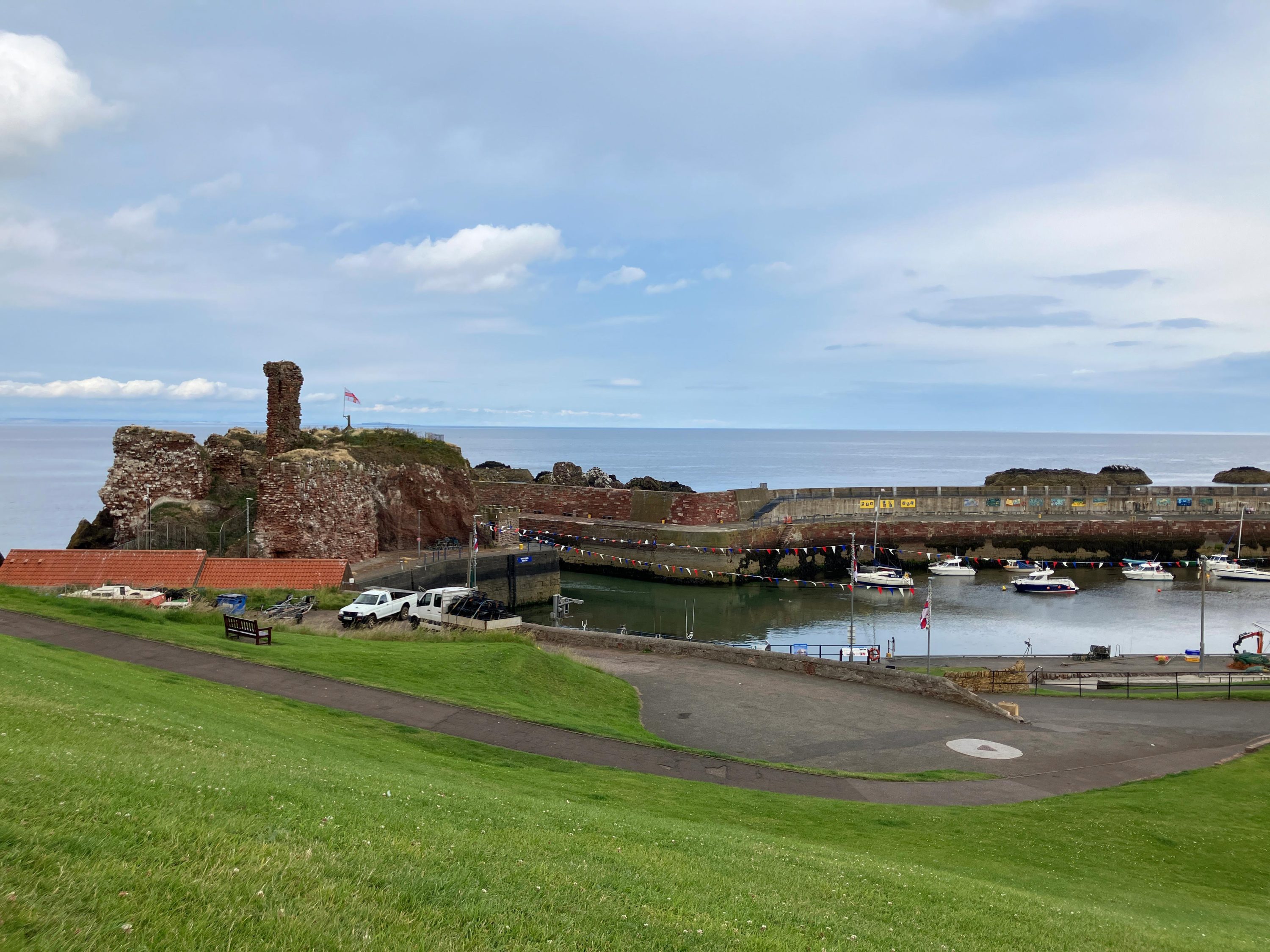
In my aspiration to create a few more seascapes, I take my next break in Berwick-upon-Tweed, where I walk to the Berwick Lighthouse at the end of the north pier of the Tweed.
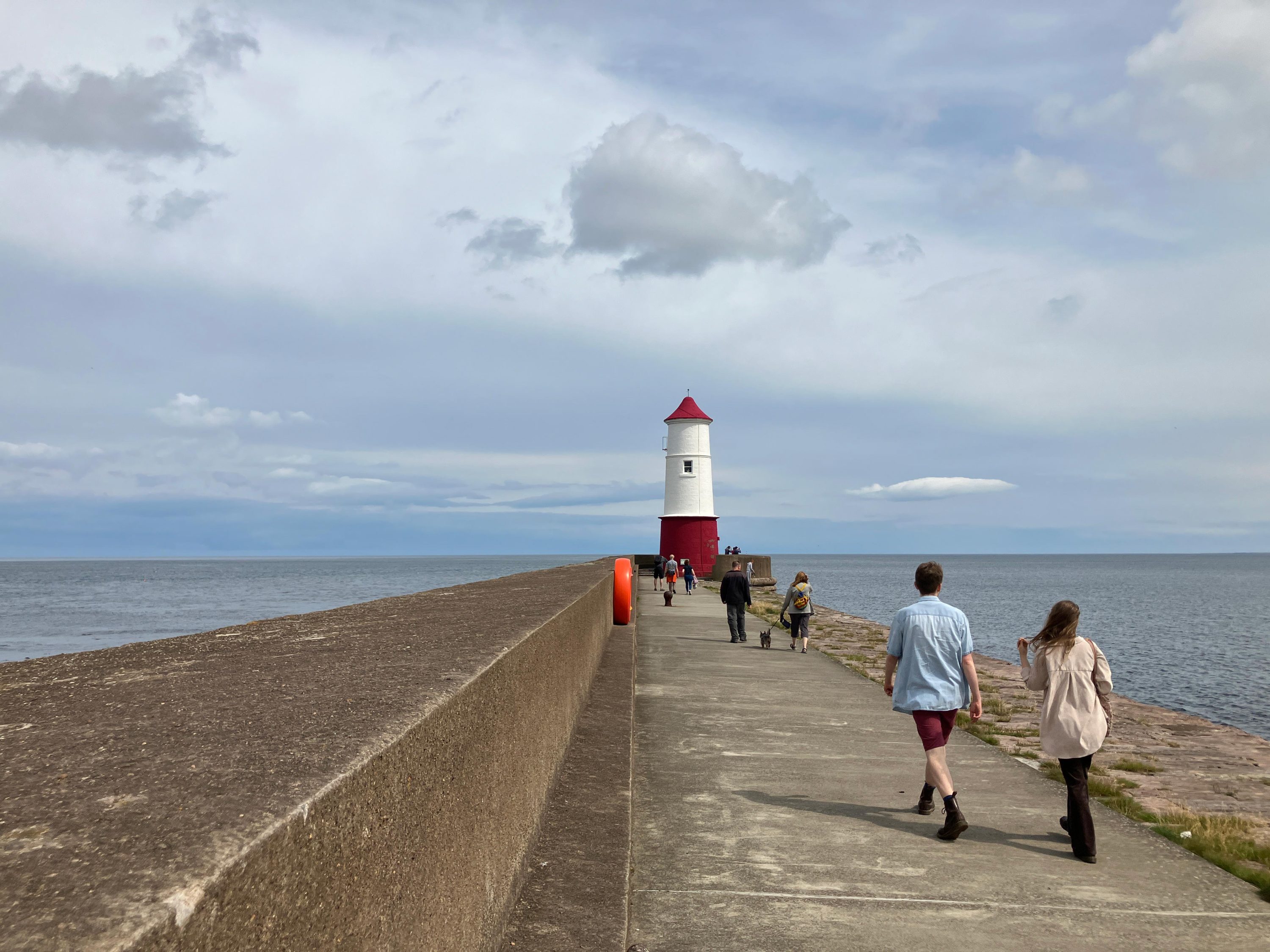
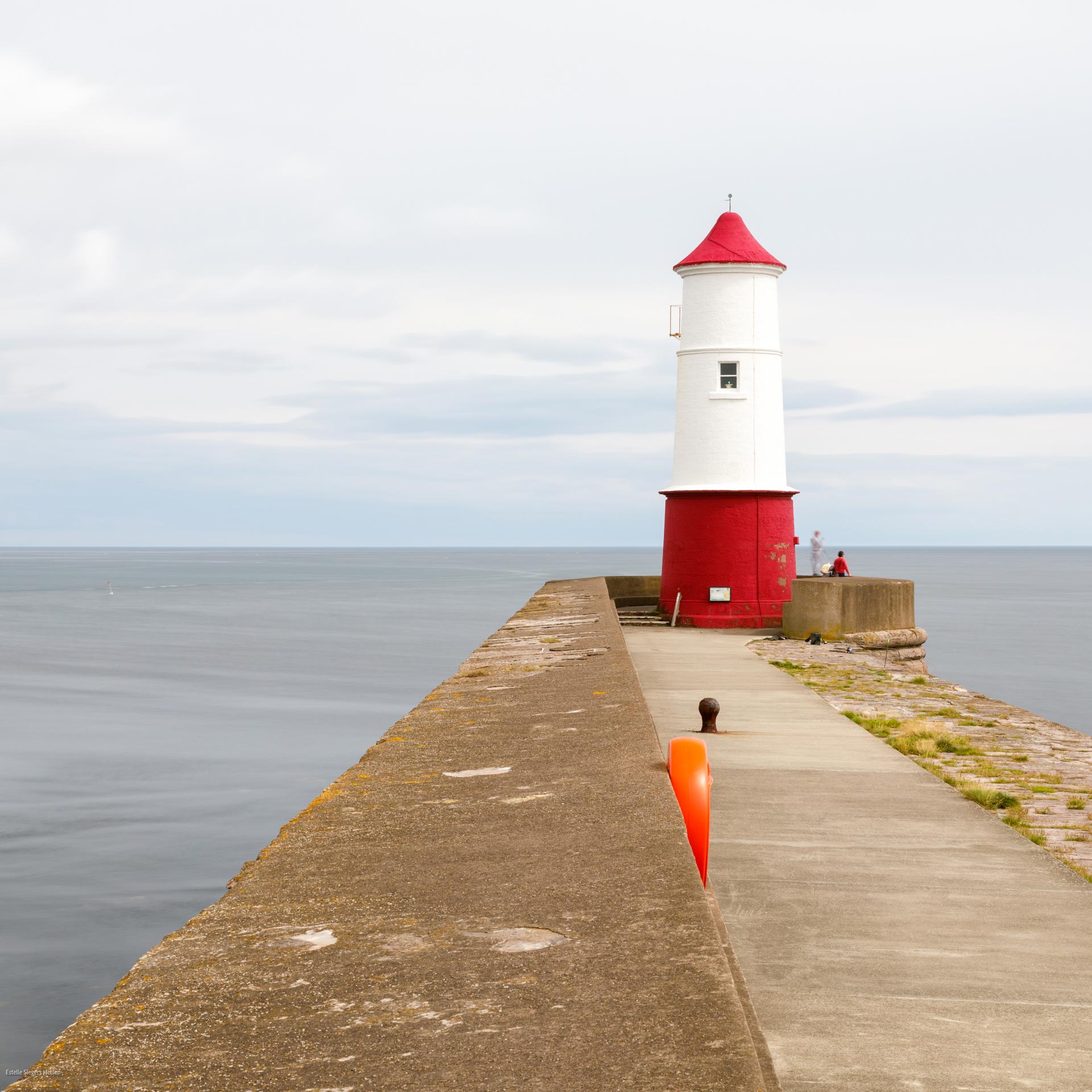
Here, the frame is predominantly not about the colours, although the white and red match fine with the grey of the sky and the sea, but about the lines in the image, the pier leading to the lighthouse, the position of the lighthouse in the frame, applying the rule of thirds, and the horizon in the centre.
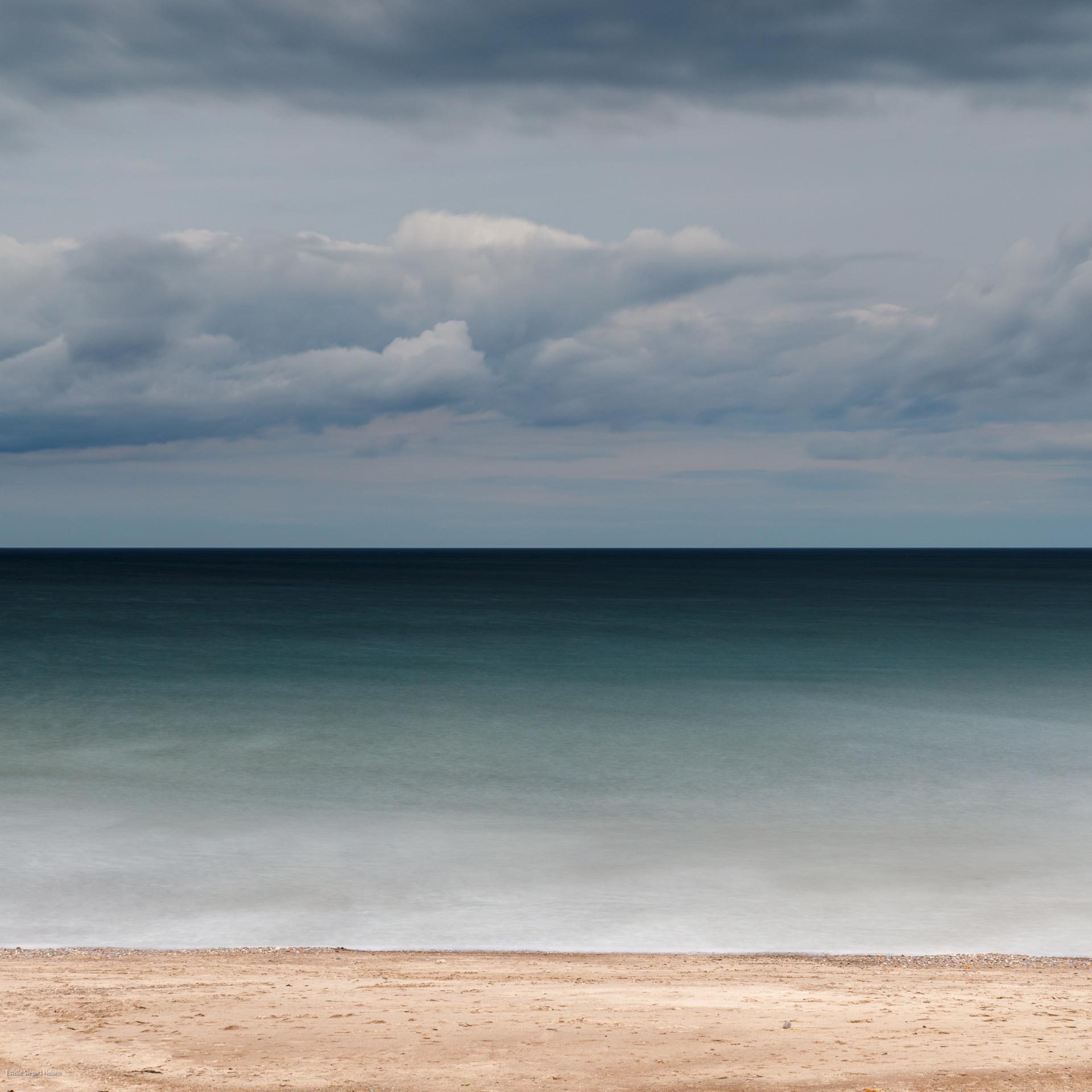
Then I cross the river in the town centre and drive to Spittal, a town on the opposite shore of the Tweed and with a view towards the North Sea. The sky is darkening because of the heavy rain clouds, and the sun, nearly behind me, creates some dramatic light on the beach sand and sea. I can not be bothered by the raindrops…
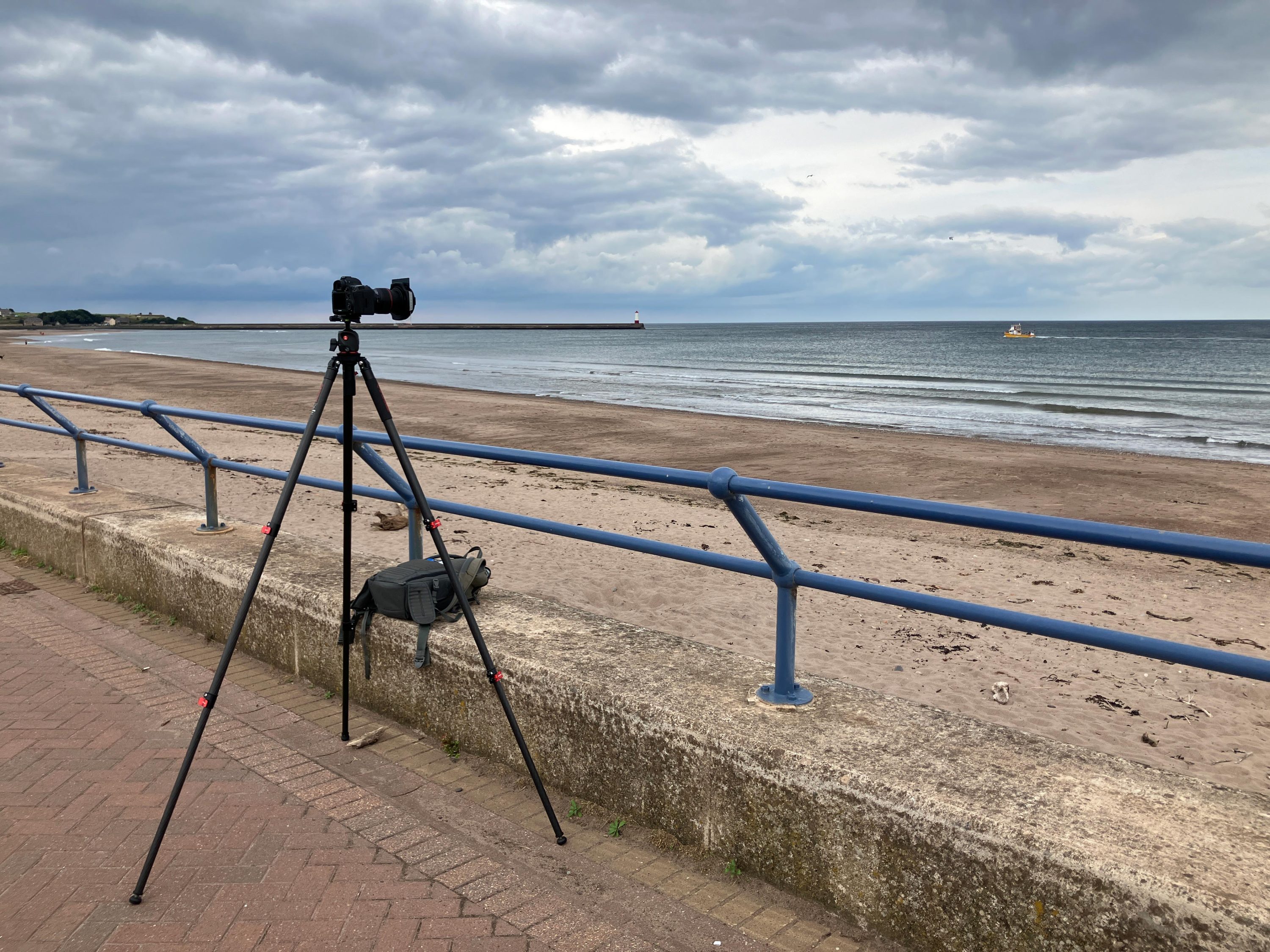
I am delighted to catch this scene.
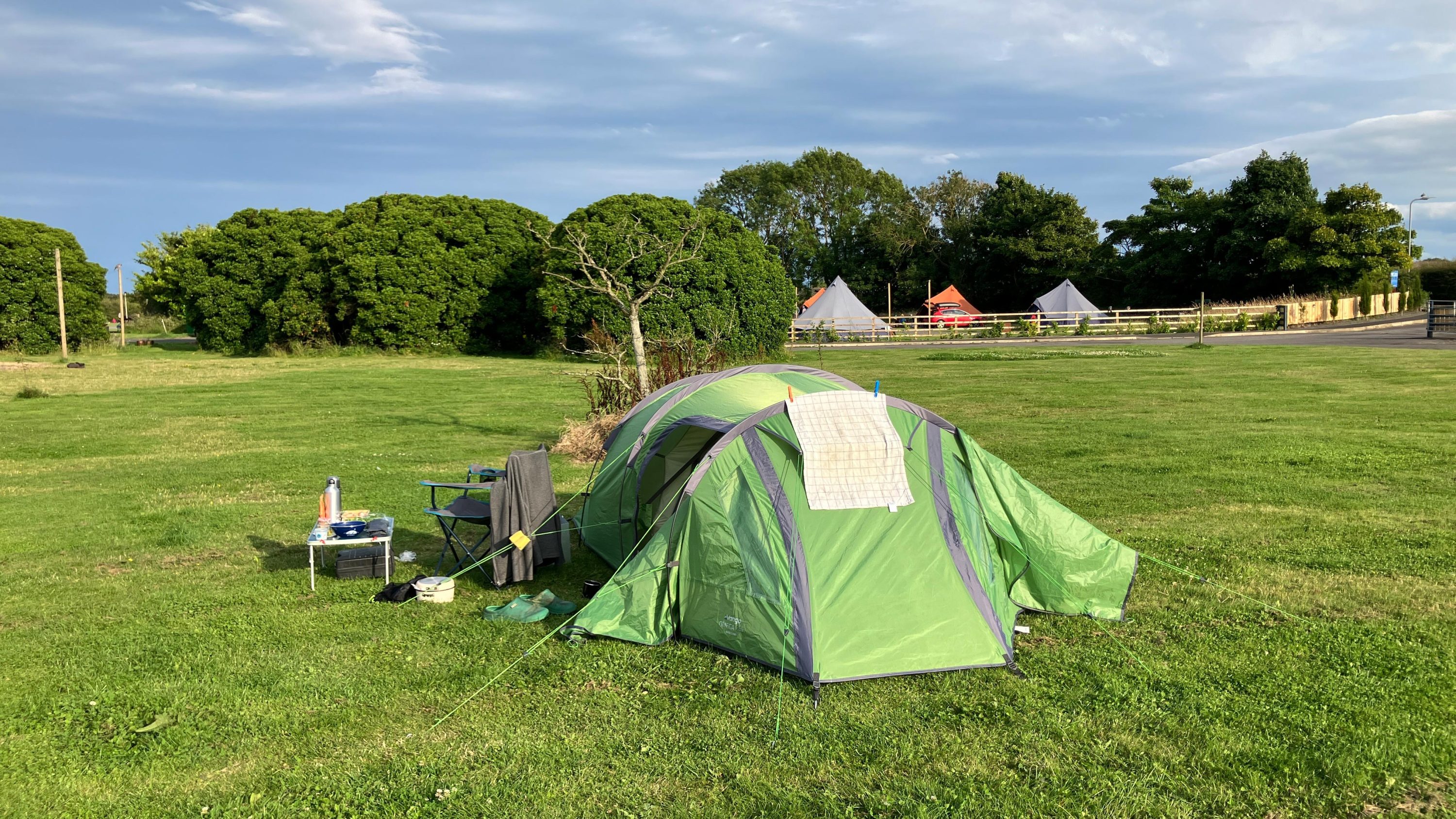
I still have some miles to cover to reach Coast and Castles Camping near Boulmer (pronounced ‘Boomer’), about a mile from the beach, where I pitch my tent for the night.
After cooking dinner, I scout a few places at the Northumberland cliffs and shores for tomorrow morning’s sunrise.