
To Edinburgh and Glasgow
The morning is nearly awake, with some gleaming pastel colours covered by lower grey clouds.
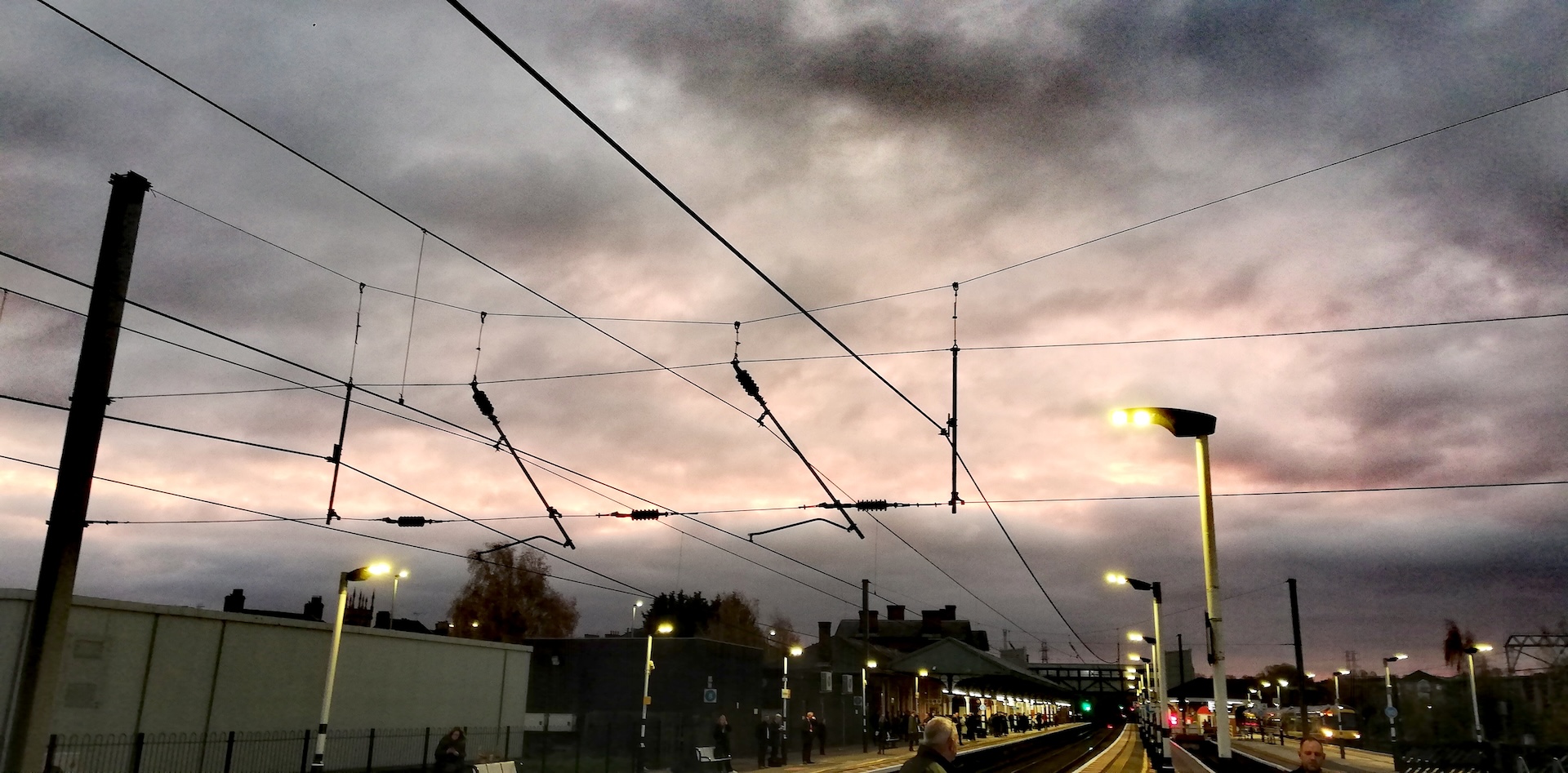
In Grantham, I board a train to Edinburgh for a ten-day trip to Glasgow and Edinburgh. My main goal is to dive into archives to continue my search on the work and life of the Scottish photographer W.S. Thomson. I focus on his connection to the Scottish Mountaineering Club members because I received a small grant from the Scottish Mountaineering Trust earlier this year. Further, I explore Thomson’s business adventure with the printer Robert MacLehose & Co. in Glasgow and Thomson’s life in the 1920s and 30s in Glasgow. I plan to spend time at the National Library of Scotland in Edinburgh for further research. I keep finding intriguing files in their Special Collections. I also hope to scout some places in Glasgow that were photographed by Thomson in the 1950s.
I love going by train because a car in the city is just a nuisance, and you can relax and just stare outside while the landscape passes. Most oak trees are still full of leaves, most in shades of yellow and orange, some even summer green, only a bit overdue. Within a few hours, the weather improves, and with the sun out, the landscape looks like magic with bright colours. From Durham, my heart starts to beat faster. Trees that have lost their leaves have a silver-green shining because they are generously covered with lichen. The open space of the Northumberland Coast looks sparkling bright.
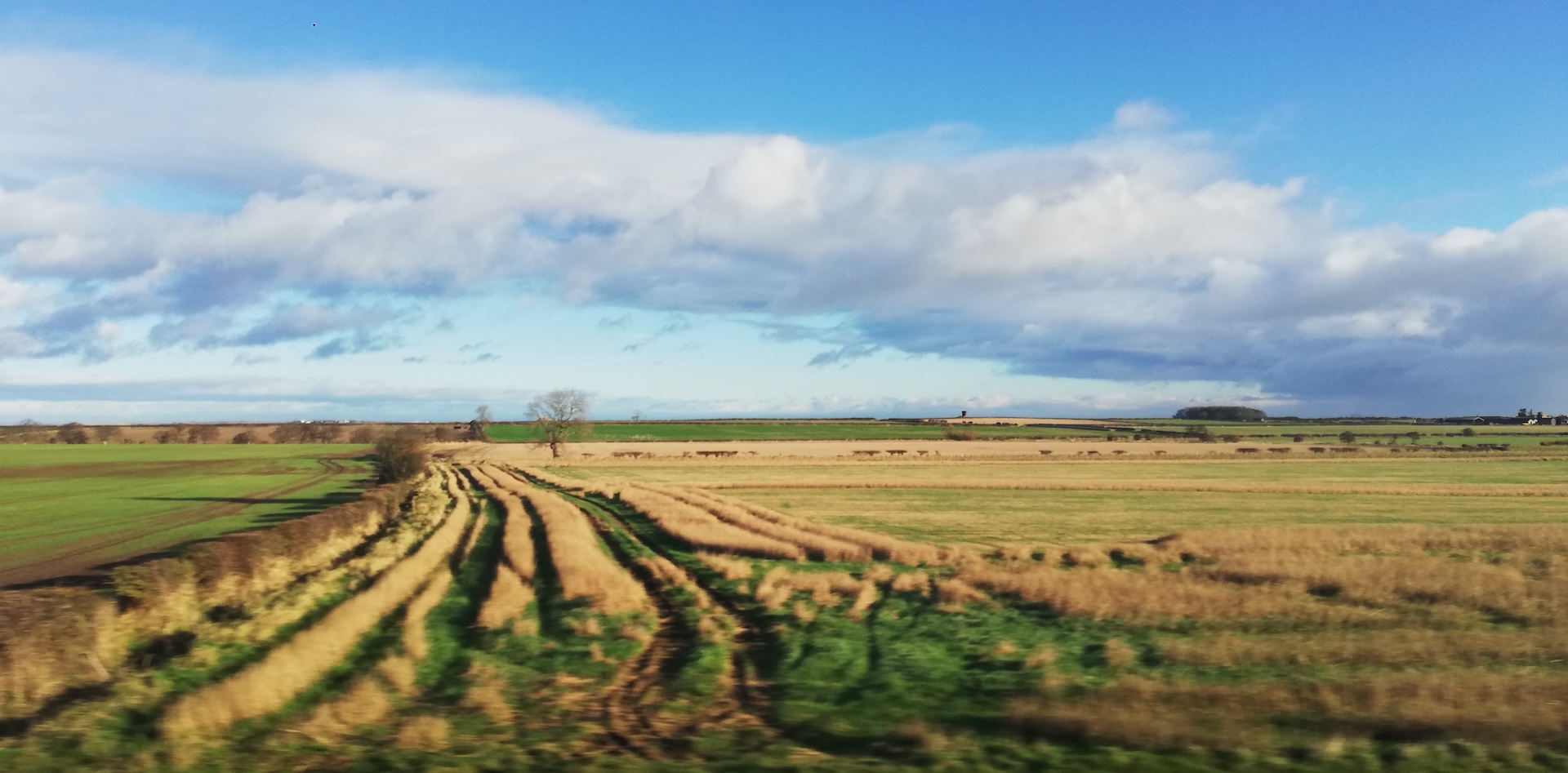
The train rushes through rain sprays a few times, displaying a rainbow. Lindisfarne Isle rushes by. Berwick upon Tweed is covered in clouds. From the English/Scottish border – I see an old sign along the train track for less than a second – the sun is out again. I have a peak of Bass Rock in the Firth of Forth, and before I am aware, Edinburgh Waverley is reached.
From the station, I reach the Royal Mile, taking Fleshmarket Close. With the St. Giles Cathedral in sight, The National Library Scotland is just around the corner.I requested a series of files in the Special Collections Reading Room a few days ago. It feels good to be back. It feels like I was here yesterday, although I last visited the NLS in February.
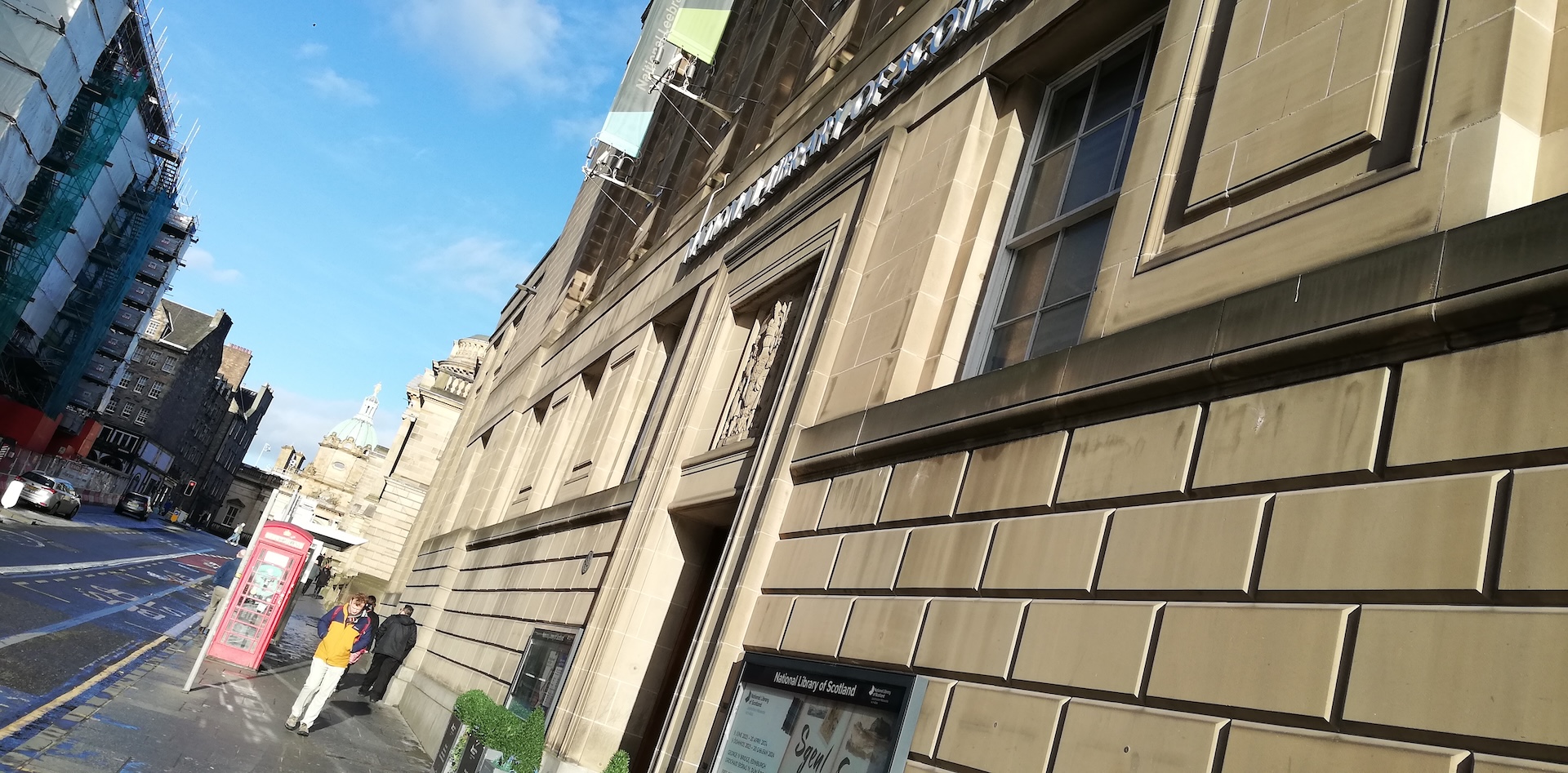
On my plate is correspondence between J. H. B Bell, writer of the book A Progress in Mountaineering and the publisher Oliver and Boyd. Seven Thomson black and white photographs are among the illustrations. Bell was a distinguished member of the Scottish Mountaineering Club and a long-time editor of the SMC journal. Thomson knew Bell personally. Occasionally, they climbed and hiked together in the 1940s. The Progress book was published in 1950, but at the beginning of 1948, even at the end of 1947, Bell contacted Oliver and Boyd, presenting a first manuscript. Two years was the minimum it took to get a book on the market.
Next were a few files of the Scottish independent nationalist Wendy Wood – quite a character – who wrote the story for one of Thomson’s Let’s See booklets, and Thomson also illustrated at least two of Wood’s books. There were no Thomson letters in the consulted files. In between, I took a late lunch break.
At the end of the afternoon, I started reading the diaries of Alex Small, a Glaswegian contemporary of Thomson. On the few pages I tried to read – it is tiny handwriting, and each time it takes a while before you are used to it – Thomson, also referred to as Bill was mentioned a few times, just as Thomson’s future wife Elizabeth “Tizzy” Frame. I sighed deeply because this would take ages to read and transcribe. Taking research photographs of the files is not permitted. I planned to contact Noel in Fort William, my most friendly and always helpful connection at the SMC.
I left the library on time, not having to rush to catch the scheduled train to Glasgow, where I will stay until Thursday morning next week. Unfortunately, I booked a train that would stop at least twenty times between the two cities, which was a waste of time, but it gave me enough time to reflect on the day. Two guys who rushed into the train at Haymarket, only the first stop, discovered after a few minutes they were on the “slow” train. Bloody hell, we are taking the scenic route, they said, realising they would only arrive in Glasgow just before 8 pm, and they had tickets for a gig that started at 8. Scenic route or not, outside it was pitch-black, except when the train stopped at a station.
In Glasgow, I caught the metro, a circular track with an inner and outer circle. So, you only have to figure out the best direction: clockwise or counterclockwise. Glaswegian people are probably short because the coaches are low and uncomfortable for tall people. The room I booked for the week is just a one-minute walk from the metro, and I was relieved I reached my destination.
During my train ride, I thought about a solution to speed up the consultation of Alex Small’s diaries. One phone call to Noel of the SMC, and it was fixed because he holds a digital copy of the 400+ pages, and because of the modern technology, I had them ten minutes later on my computer. I still have to read them and transcribe what I need. It won’t make the job less labour-intensive, but I can at least do it at home and not in the library. So, extra time for other research.