Berwich-upon-Tweed and Eyemouth
A sea breeze fills the air when I leave the car in Berwick-upon-Tweed. As a coincidence, I read about it this morning in the book Sea Fever: A Seaside Companion by Meg and Chris Clothier. ‘In the summer, the maximum sea temperature in the UK is around 14-19 ℃. It warms gently over the day, but the land gets hotter, quicker. The temperature increase causes the air above the land to rise, creating an area of low pressure, which the cooler air above the sea rushes in to fill, causing an onshore wind: a sea breeze.’ It is much warmer a few miles inland, where I stay on an environmentally friendly campsite, Shepherd’s Rest near Foulden. I arrived here yesterday evening after a slow travel up north by car. Alison, who manages the campsite, makes me feel welcome right away. The campsite is just across the English-Scottish border in Berwickshire. It is rather strange there is hardly any place where you can pitch your tent. Most of the holiday parks – not a place I would like to stay – provide only places for camper vans and no tents. Although this is Scotland, I am not in the mood for wild camping, so Shepherd’s Rest is a small gem in the hilly countryside, a ten-minute drive from the sea.
Berwick-upon-Tweed feels like the best place to have a Sunday brunch and to get some groceries for the following days. I stroll into town and find the Northern Soul Kitchen on West Street.
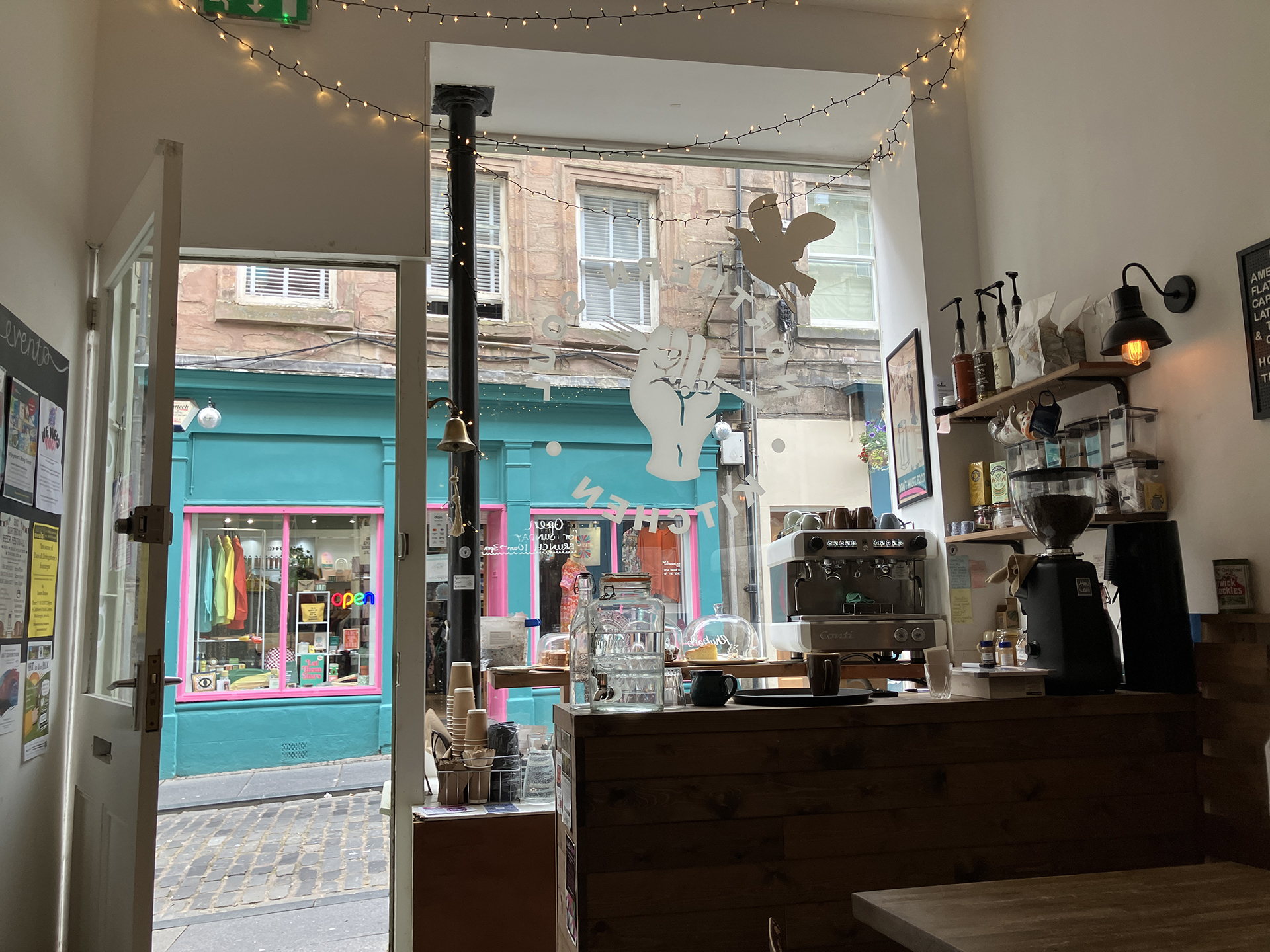
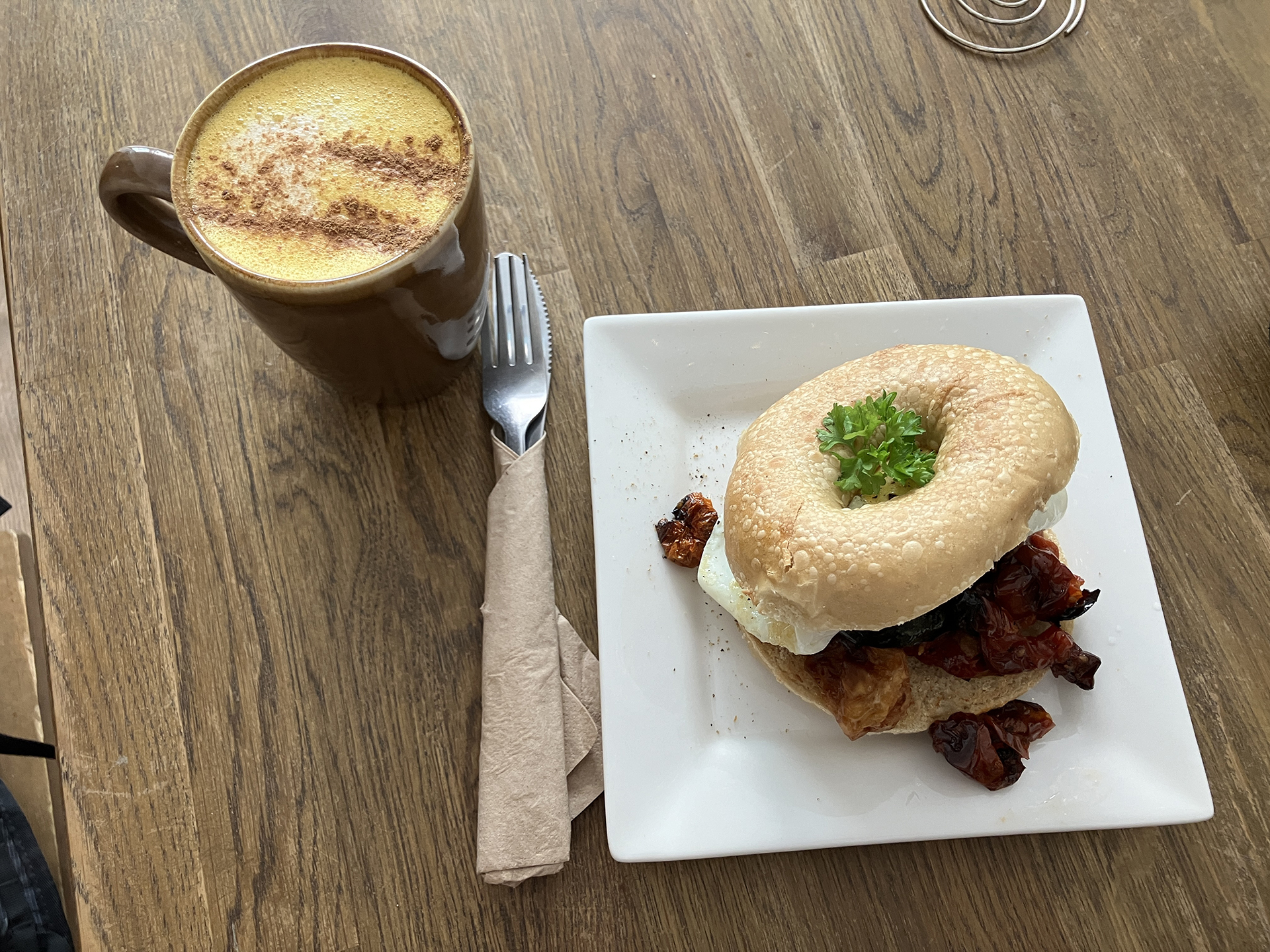
Their brunch menu, and dishes in general, ‘are created spontaneously from surplus food.’ Fabulous! They have an advised price, but you can pay what you can afford. My Mediterranean vegetable bagel with halloumi and a fried egg is very tasty.
Some funky soul music creates a sonic atmosphere. The man at the bar gives a thumbs-up and asks, ‘Happy belly?’ People who can’t afford a meal or drink can take a prepaid ticket from the notice board. When I pay, I add a coffee to the bill. Yes, my belly is happy.
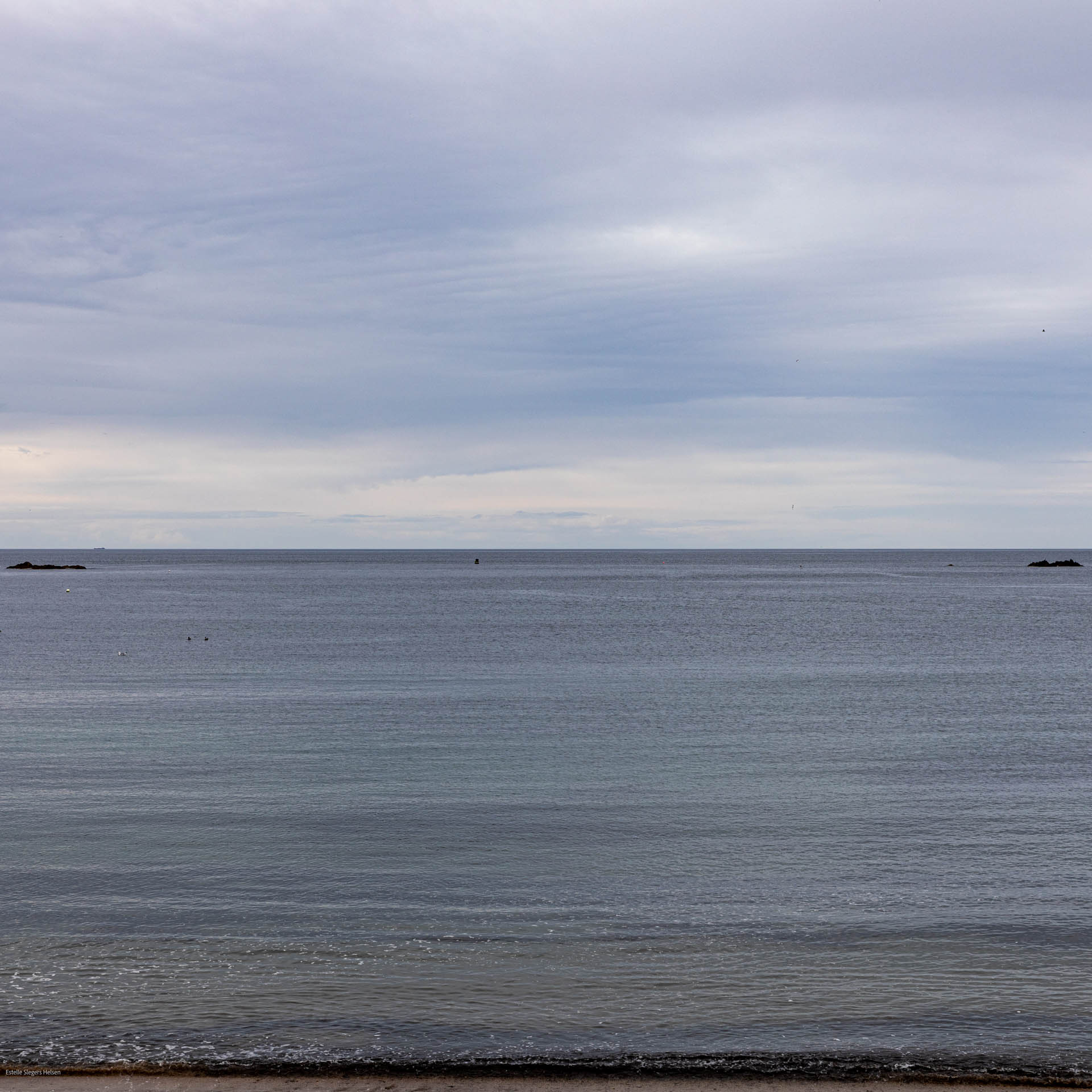
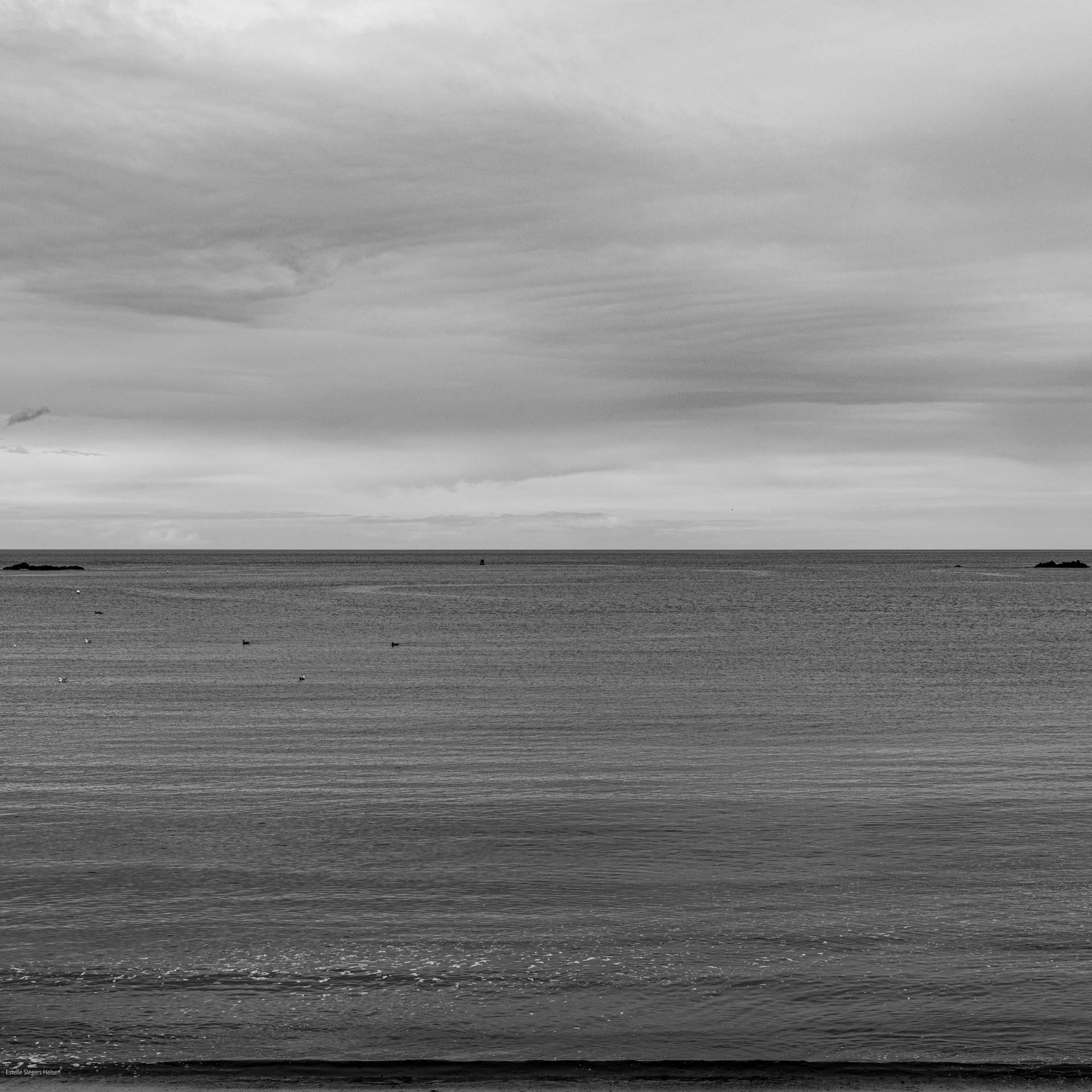
I still don’t have a plan for the day, nor the rest of the trip; only have a few ideas I could do, probably focussing on a few remakes of W. S. Thomson’s photographs, some seascape photography, a bit of writing and some reading. On my way from the campsite to Berwick-upon-Tweed, I noticed a lay-by on the A1, where I make a seascape photography pitstop on my way to Eyemouth. The lay-by is wide enough to park and leave the car safely. Called Sea View Point, it is high above the sea. Down is the railroad (London-Edinburgh), a farm and a crooked-edged flat field dotted with hay rolls. Beyond is a steep drop to the seashore. The light breeze gives the sea a smooth texture with small wavelets.
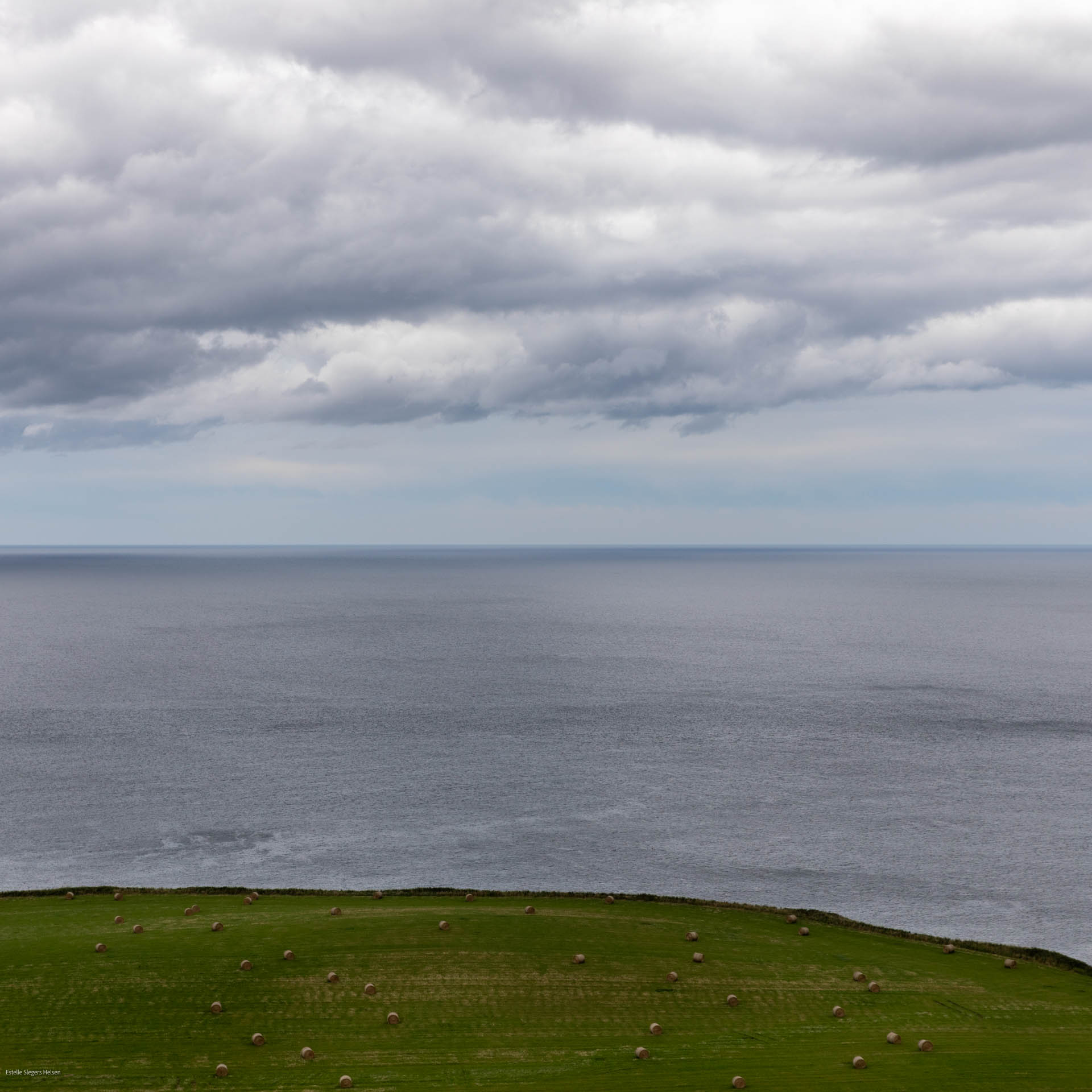
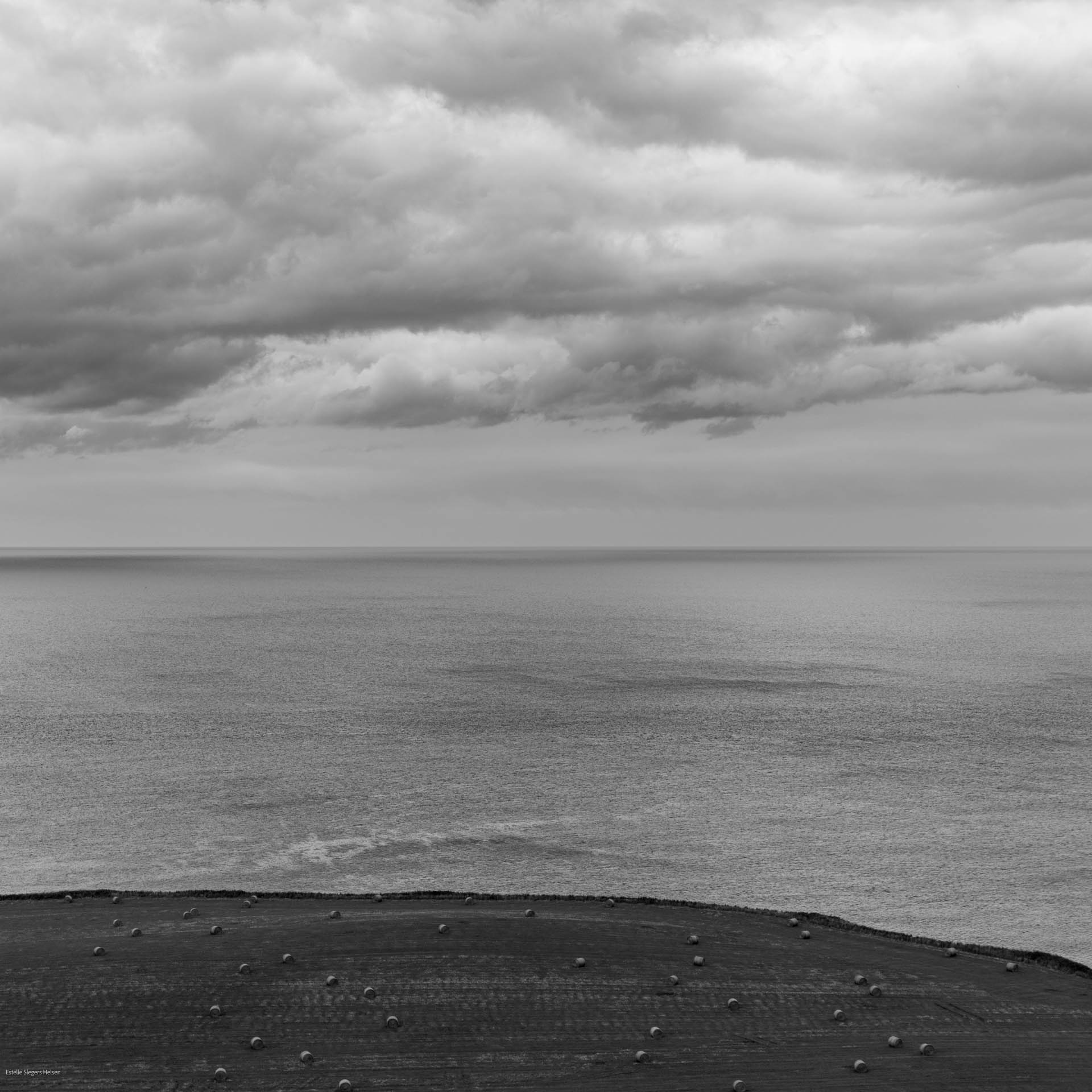
To the left, looking to the northeast, you have a beautiful view of the rocks made of the Upper Devonian red sandstone, which occurs widely across Scotland. The red colour of the rocks results from the presence of iron oxide.
Eyemouth is a not-so-busy (I anticipated more people) coastal town, the largest community in Berwickshire. I first wander around, wondering what to expect. At the Eyemouth Hippodrome on Harbour Road, I visit the Coastal Testimonies exhibition, which has photo portraits and quotes from people all around the Scottish coast who have a connection with the sea. The exhibition is part of the Our Seas project. Interesting…
Then, I switch to W. S. Thomson. Last autumn, I scanned a lot of the photographer’s small archive, which his youngest grandson saved. In a series of unframed 35mm stereo-slides, I discovered a brownish-coloured image of a harbour. Having no idea where it was, after an extensive search, I found it was Eyemouth, the Gunsgreen House, and the Nisbet’s Tower, which are two characteristic features. Built in 1753, Gunsgreen House, an elegant Georgian house overlooking the old harbour, was designed by John Adam – one of the most famous and expensive architects of the day – for John Nisbet, a notorious local man. By day, Nisbet was a respected merchant but a flagrant smuggler by night. Nisbet’s Tower is an 18th-century doo’cot or dovecote, now a holiday home. Thomson’s photograph is probably taken at the end of the 1950s when he was into stereo photography. The framed slides – about 20 in total – are nearly all dated 1958.
Eyemouth, like most of Scotland’s ports, was built on herring, and on smuggling too. Overfishing in the 1950s and 1960s reduced the North Sea’s limitless stocks by half. 7 in 10 Scottish fishing boats were laid off or gave up. On the website of the Eyemouth Museum, I read: ‘However, agriculture played a significant part in the initial development of the harbour with its grain export from the hinterland of the Merse. The museum has many interesting examples of old rural industries such as milling and farming; jobs like blacksmiths and wheelwrights, which existed in the area until the 1950s and are now virtually nonexistent, similar to the fishing industry, now sadly in decline in the town.’ In Eyemouth, about a dozen boats still operate. In the early morning, the fishermen pack their night’s catch in ice, which is for sale at the fishmonger of Duns, Kelso, Melrose, and Hawick from 9 am. So, seafaring is still part of the Scottish Border culture, for now…
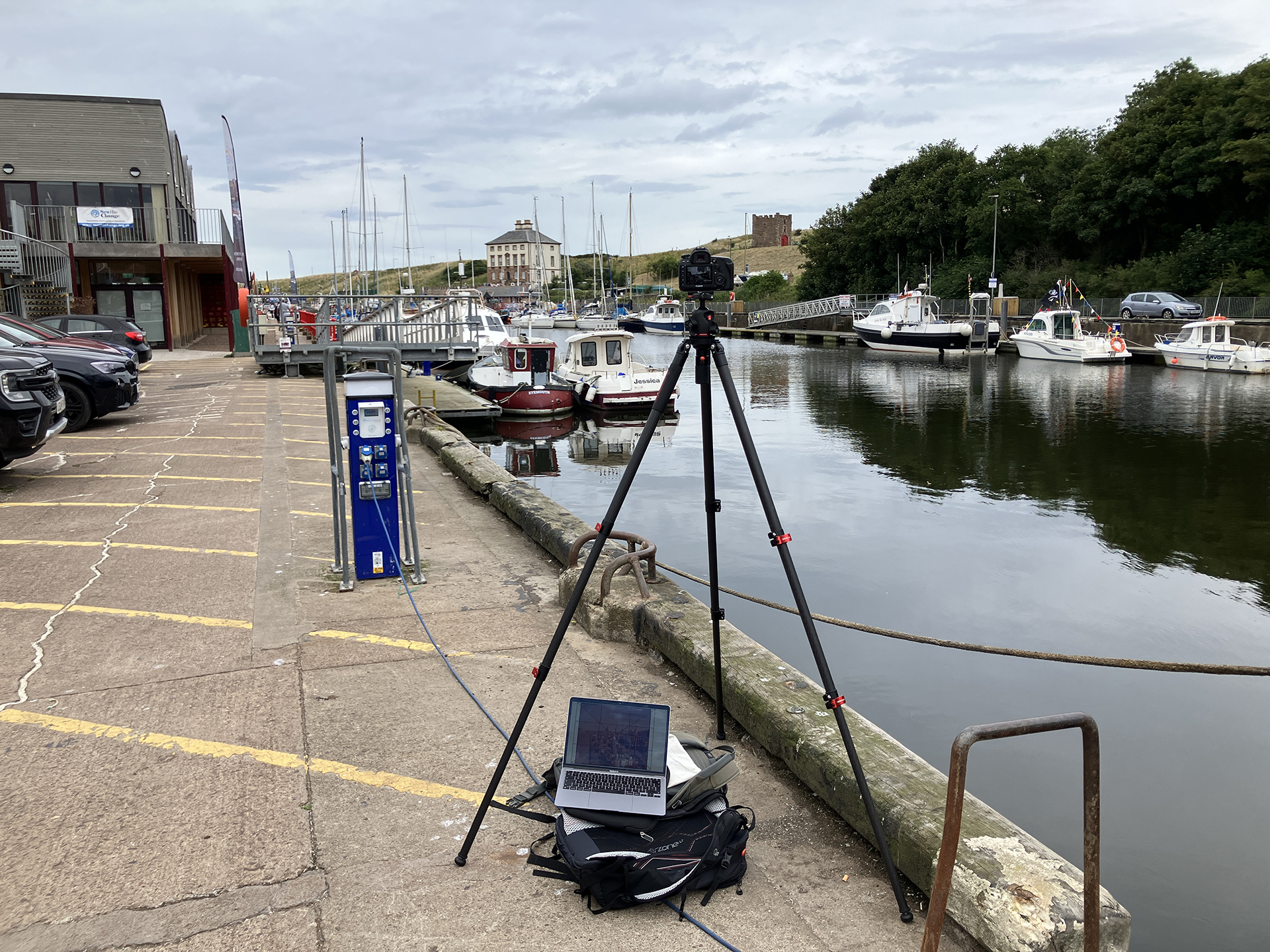
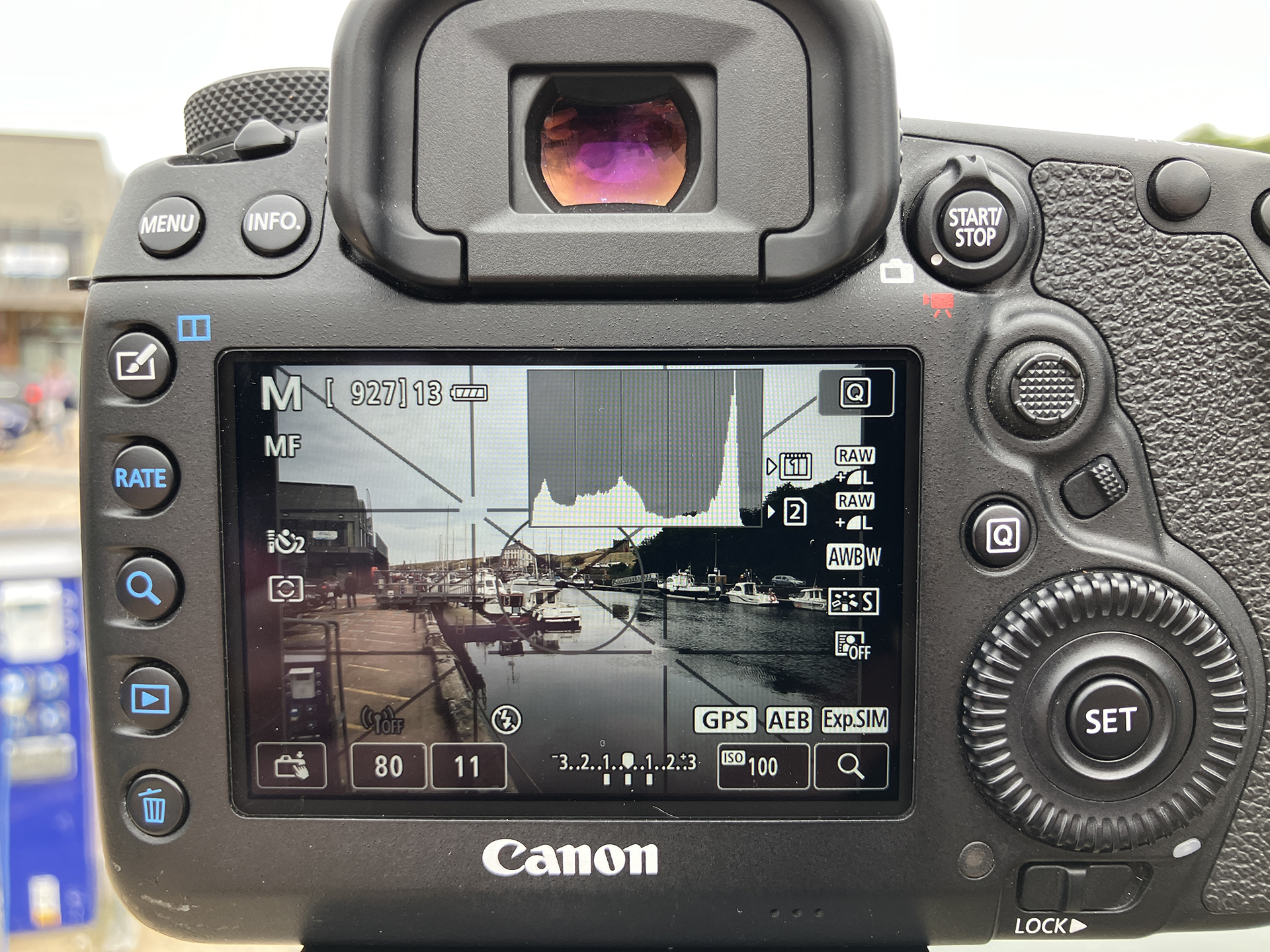
Although the sky is dull and grey, I take the remake.
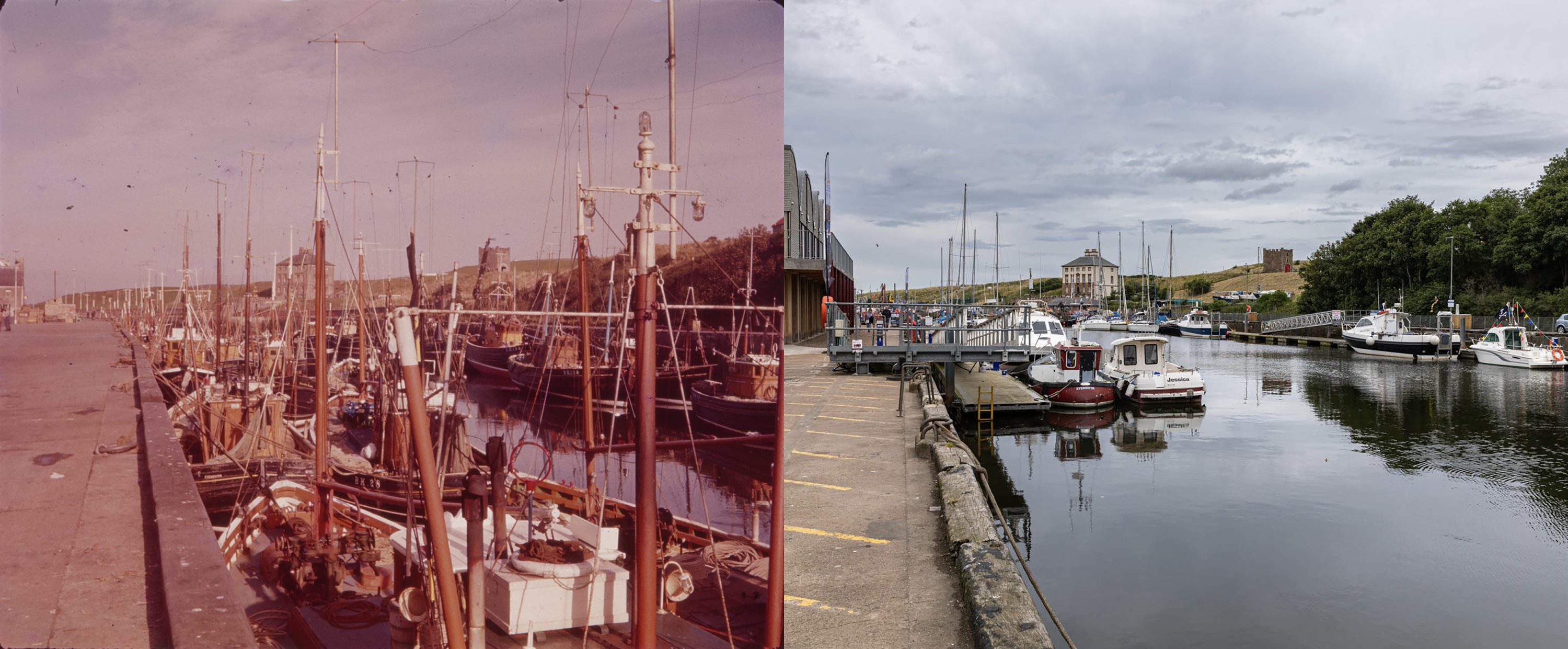
The Eyemouth fishing boats are in the background of the remake. New infrastructures in the harbour hope to attract new visitors and sailing tourists.
This week is also the Herring Queen Festival, with banners all around the town. The first Herring Queen was crowned in July 1939, and Mary Craig was the first girl to be given the honour. The event stopped during the war years. Mary Craig remained the Herring Queen until she crowned Ann Rosie in 1946. The Herring Queen and her Maids were initially chosen by their scholastic ability at Eyemouth High School and then by popular vote by their school peers. Since 2001, a panel of local townspeople has selected the Herring Queen. It made me think about the project ‘Kiek noa Mieke’ I created in 2018 with photographer Tom De Visscher, about the history of the annual shrimp queen contest in Koksijde at the Belgian cost. You can still watch the interviews (in Dutch with subtitles – not in English) on YouTube.
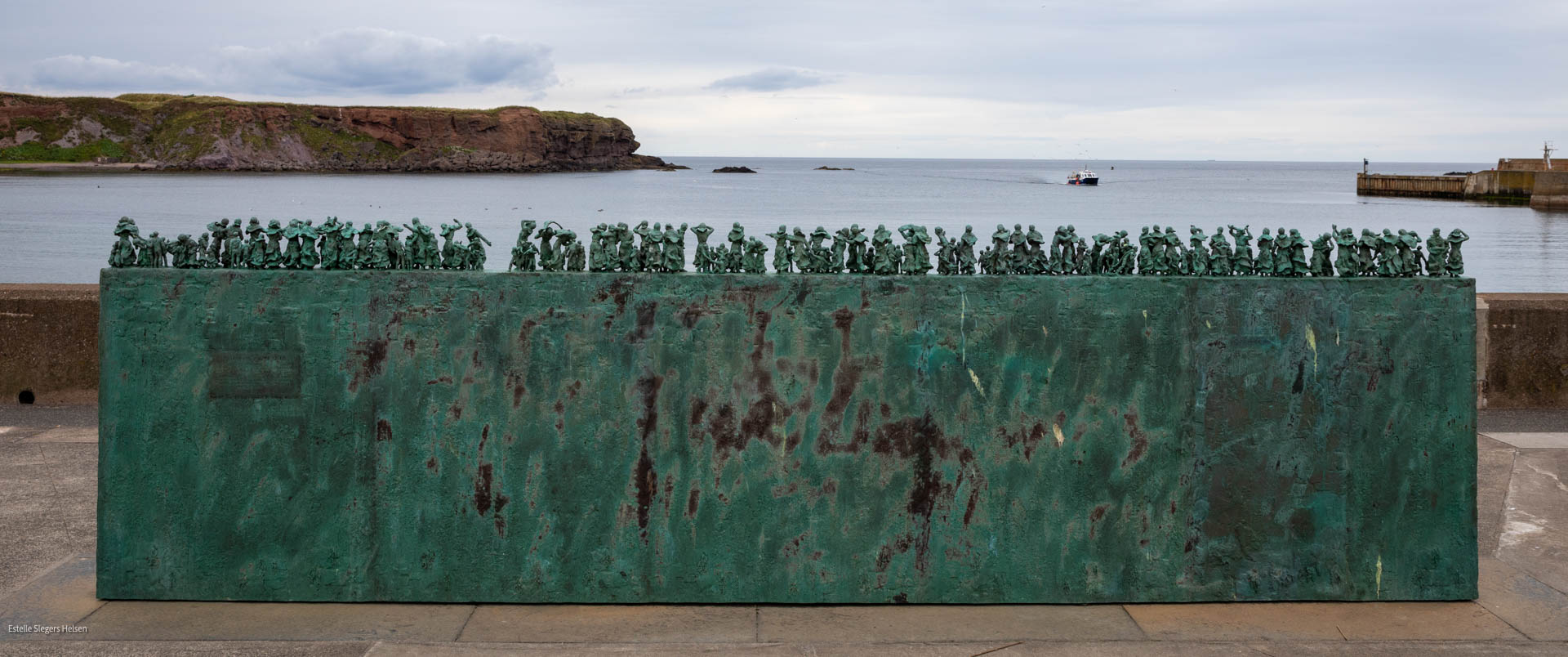
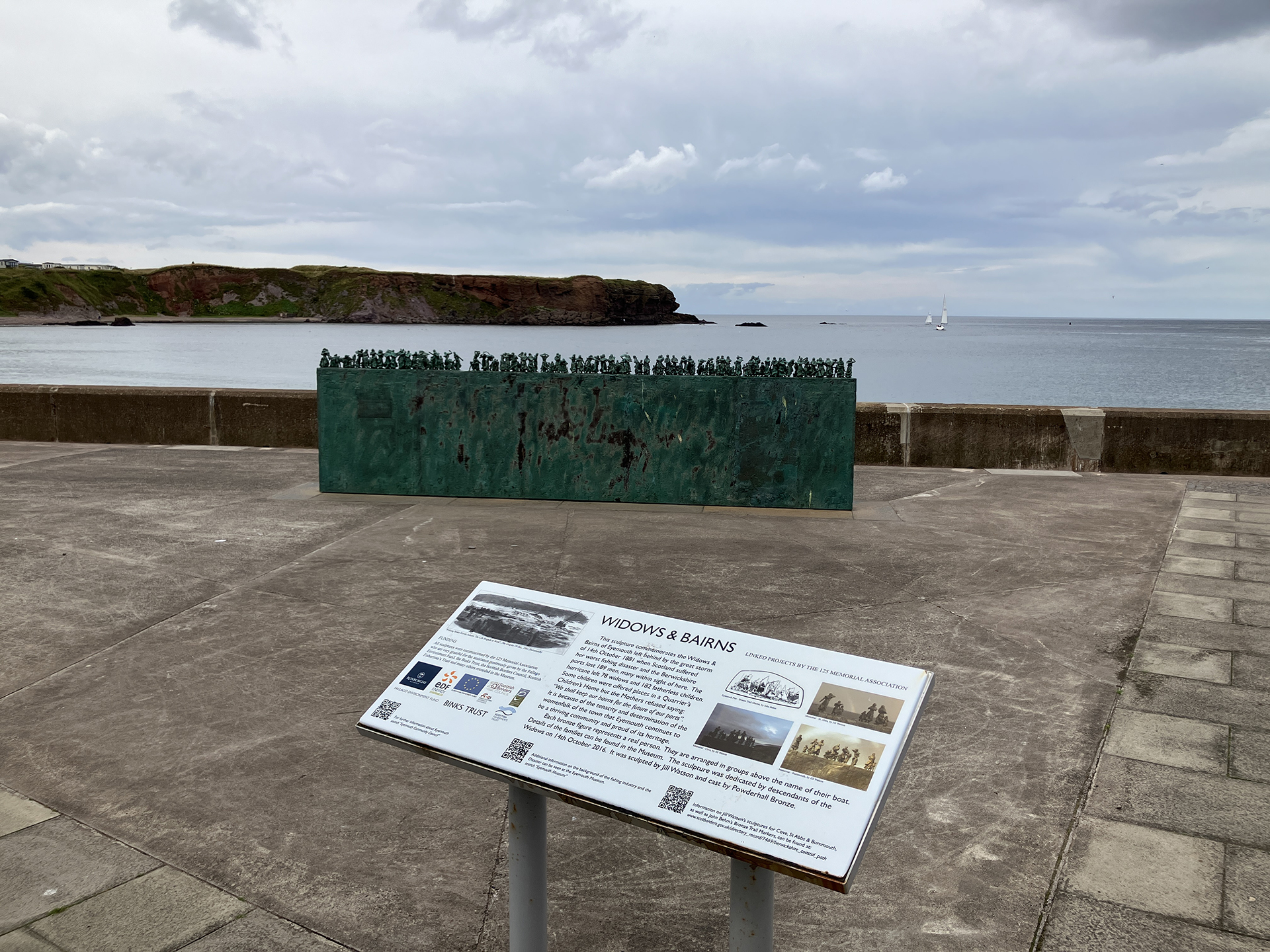
On my way back to the car, I stopped at Jill Watson’s bronze sculpture, commemorating the families affected by Scotland’s worst fishing disaster. On 14 October 1881, 46 fishing boats set sail from Eyemouth harbour, expecting a moderate storm. However, they encountered a near hurricane, and 26 boats had been lost by nightfall. A total of 189 men were killed in waters just outside the town’s harbour when a severe storm struck. All but 70 came from the town. Many of them drowned within full view of their families on the shore. The tragedy, known locally as Black Friday, left 78 widows and 182 fatherless children in the town. The five-metre-long sculpture called ‘Widows and Bairns’ represents the surviving widows and children from four communities affected by the disaster: Cove, St Abbs, Eyemouth and Burnmouth. You can read more about the story on the Eyemouth Museum’s website.
A second stop a bit further from Eyemouth Beach resulted in a second seascape of the day.