To Edinburg
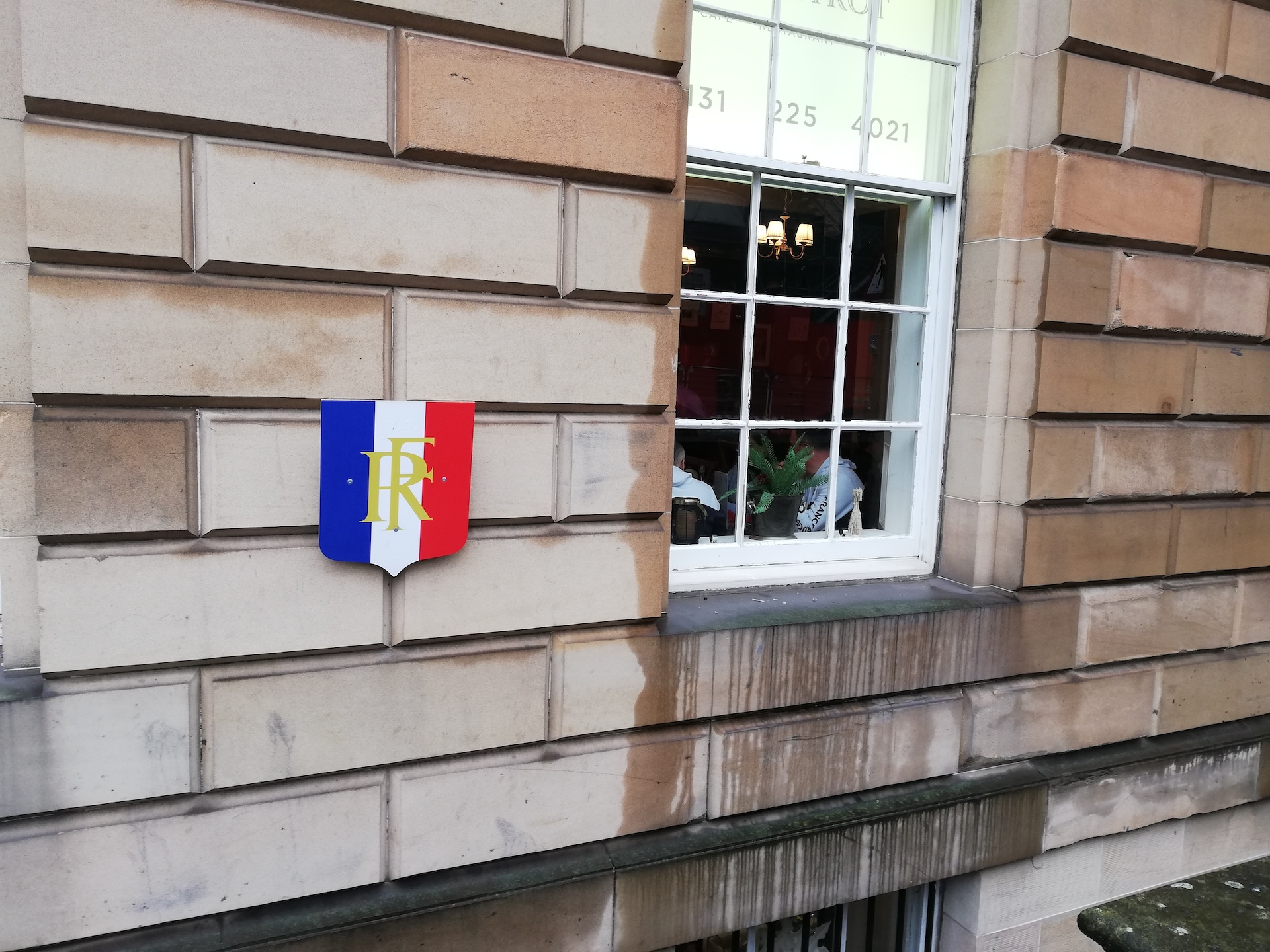
In the morning, I arrive by train in Edinburgh Waverley and climb the steps of Fleshmarket Close to reach High Street, a part of the Golden Mile. Immediately, I am surprised to hear so many people talking French. Most of them wear a hat or a shawl with the colours of the French flag: blue, white and red. The hats and shawls are marked with today’s date. Soon my penny drops.
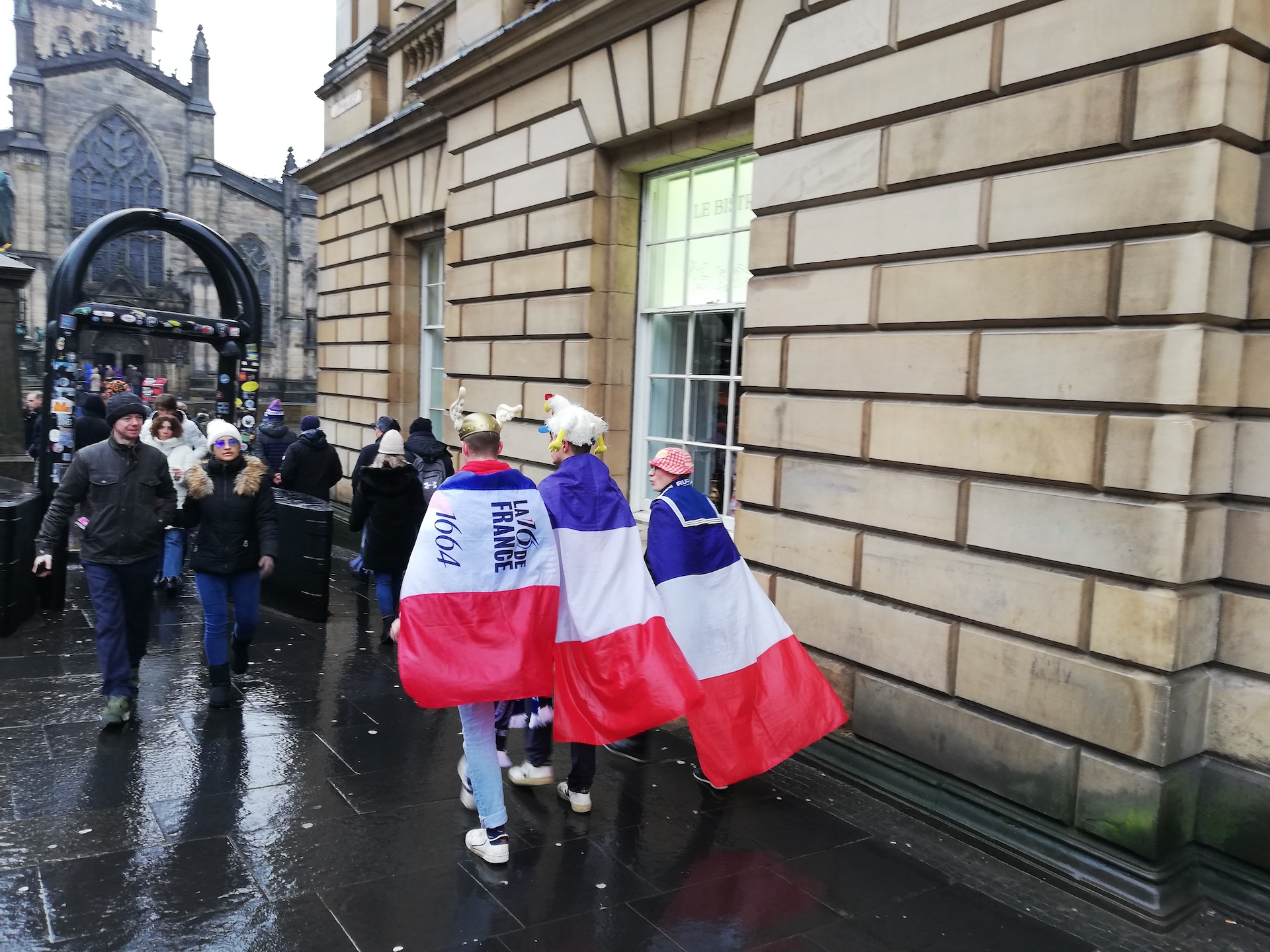
The Six Nations Rugby is in town. And yes, in the afternoon, Scotland will play against France at Murrayfield, the iconic rugby field west of Haymarket that opened in 1925 and was renovated in 1995, with a capacity of more than 67,000 seats. The atmosphere is lively and friendly; rugby fans are known to be easygoing and not as aggressive as some football fans.
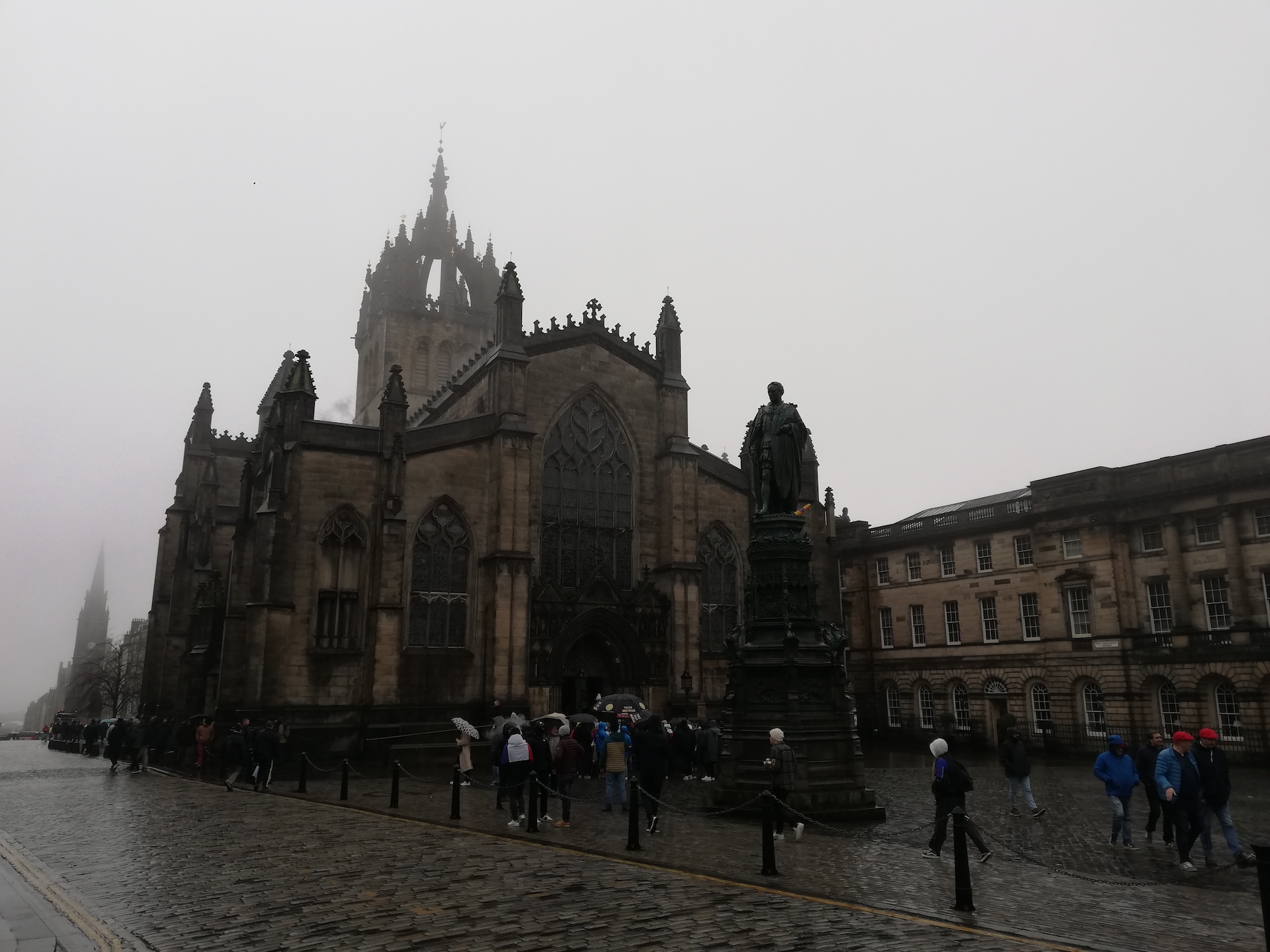
I look around and observe people passing by. I must admit, I enjoy the atmosphere, although I dislike standing in the middle of a big crowd. The French embassy and a fancy bistro are just around the corner. Opposite, in the doorway of the High Court, a piper plays his songs, surrounded by mostly French tourists. It is a misty and drizzly morning in Edinburgh.
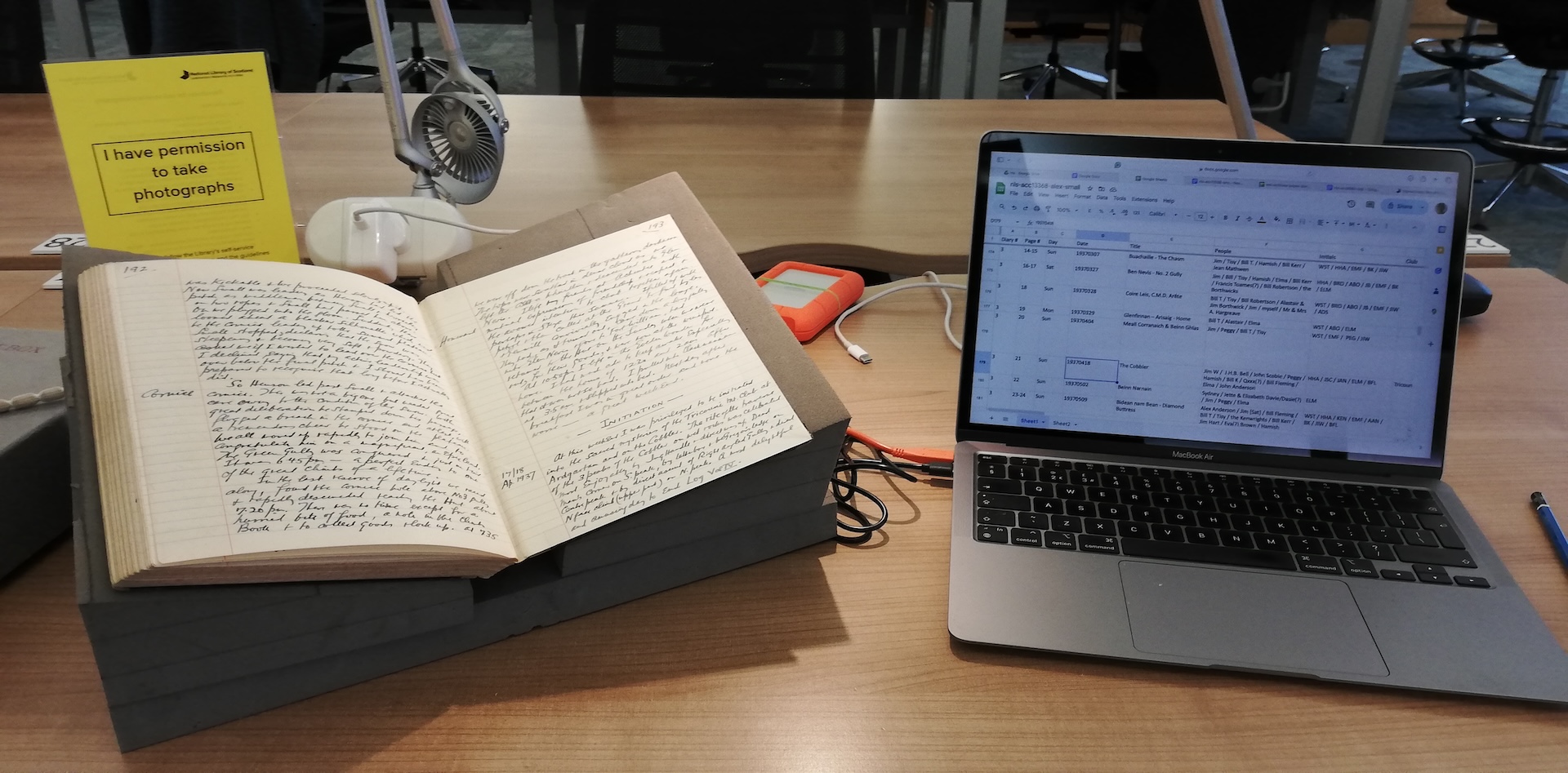
A bit after ten, it is time to return to business. I enter the National Library of Scotland (NLS), a place I have visited often over the past two years. I have the feeling this won’t be my last week of digging into its archive.
Although I am packed very minimalist, without my camera gear, it takes a while before I find the things I need to spend the rest of the day in the Special Collections Reading Room. Here the policy is more strict than in Glasgow, where you can just bring your belongings to your desk in Special Collections. Not so in the Glasgow City Archive, with a mandatory use of a locker. In Edinburgh, most of the visitors carry a transparent plastic bag with their research essentials. When you leave the General Reading Room and Special Collections Reading Room, the contents of your plastic bag get checked.
The archival and librarian assistants are as helpful as ever, managing their work with a set of rules to ask for archival material and manuscripts and keeping a close eye on how you handle the documents, diaries, photographs, etc…
The atmosphere is very peaceful. But today, a roar of applause and loud expressions of encouragement and disappointment regularly reach the upper floor of the NLS. Somewhere close to the library, 15 floors down, there must be an open space with a large screen where rugby fans are gathered to watch the game.
When I take a break and have a sandwich downstairs, a guy is watching the rugby match on his phone. He shouts loudy “yes” when Scotland scores a first try.
Back in the reading room, I continue my work and browse through the documents I requested. I have prepared a long list of material I would like to research and screen to fill in the many gaps that are still in the W.S. Thomson story now, just as in Glasgow the days before in the 1930s.
The rugby atmosphere still reaches the upper floor, and loud music silences human sounds during halftime. After 4 pm, I finish in Special Collections and move to the General Reading room to leaf through some requested books. At 4.40 pm, the first announcement is made that the library will close at five, and most visitors start packing their stuff.
A bit before 5 pm I am on the street in front of the library, waiting for the bus to bring me to the neighbourhood where I will stay for the week. I check my phone: Scotland 17 – France 20. Oh my…
The bus carries me through the city, and darkness has arrived by the time I must get off. After struggling to find the apartment where I have to be, I am warmly welcomed by Joanne, my host.
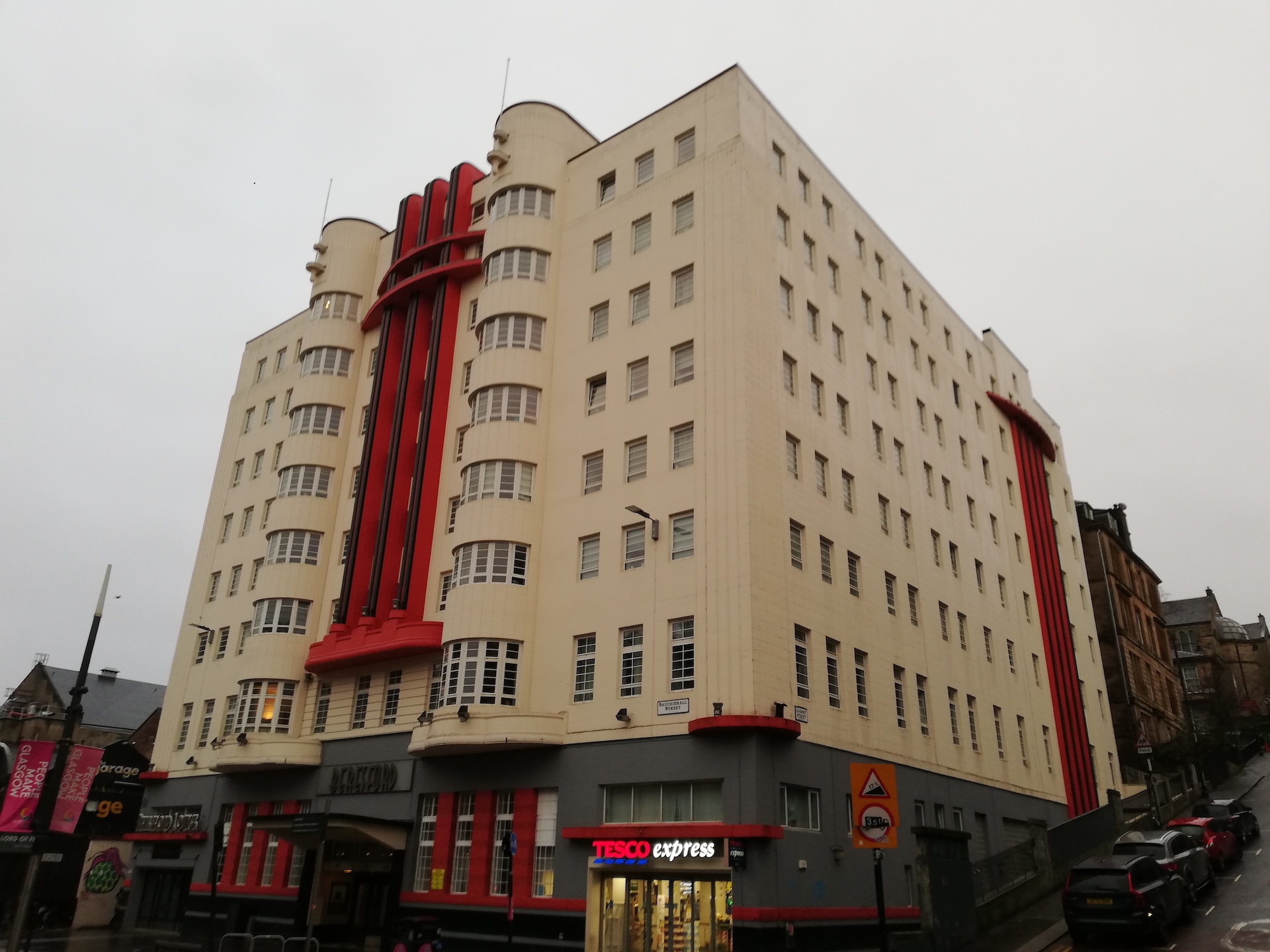
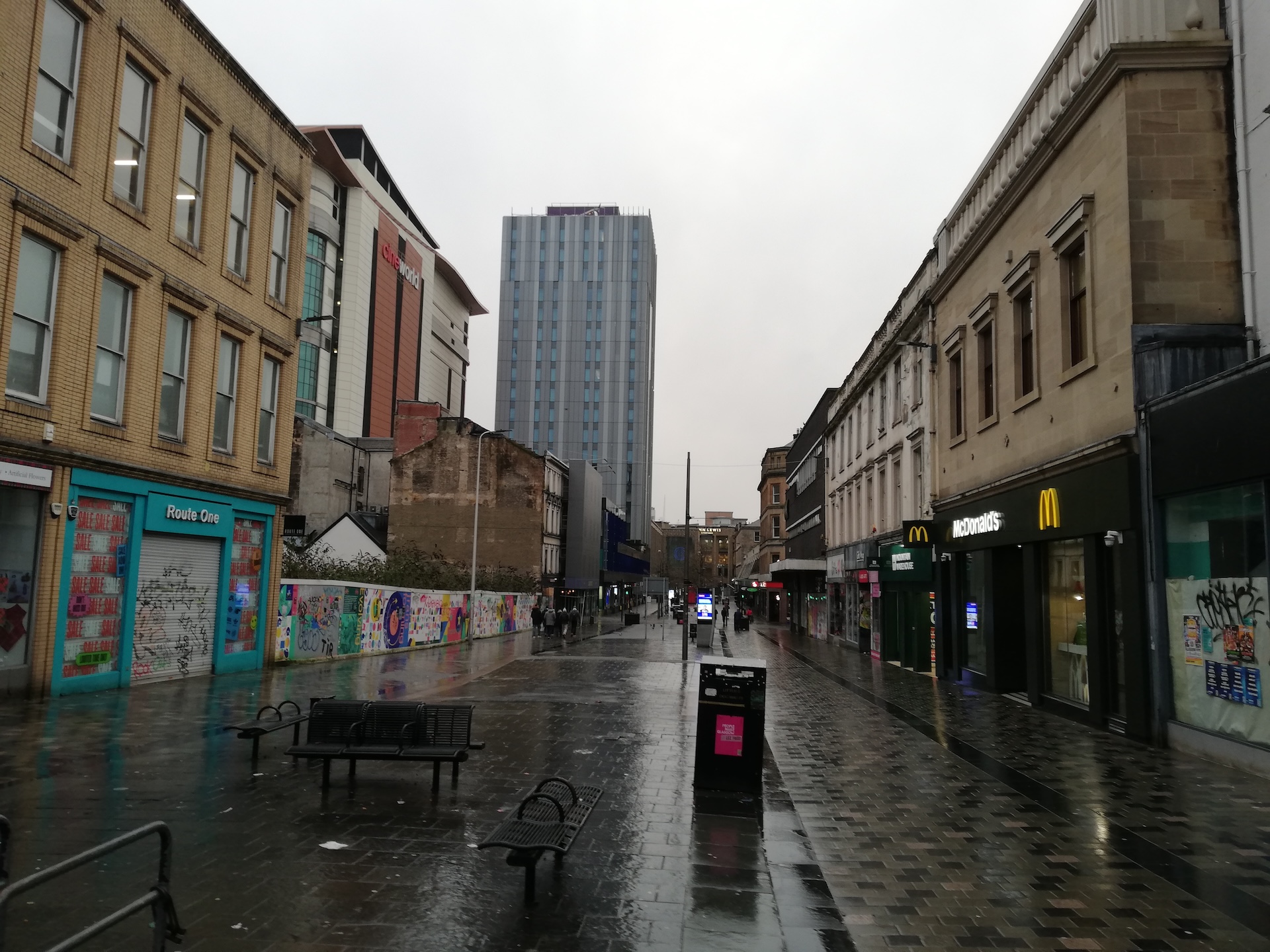
To close today’s report, let’s return to Glasgow this morning. On my walk along Sauchiehall Street, from the apartment where I stayed to Queen Station, the city demonstrates its opposites. Sauchiehall Street was once a bustling street with shops, theatres and clubs. Still, magnificent buildings show Glasgow’s history, such as The Beresford, an Art Deco/Streamline Modern skyscraper, seven storeys high. The building opened in 1938 as a hotel to provide accommodation for the city’s Empire Exhibition.
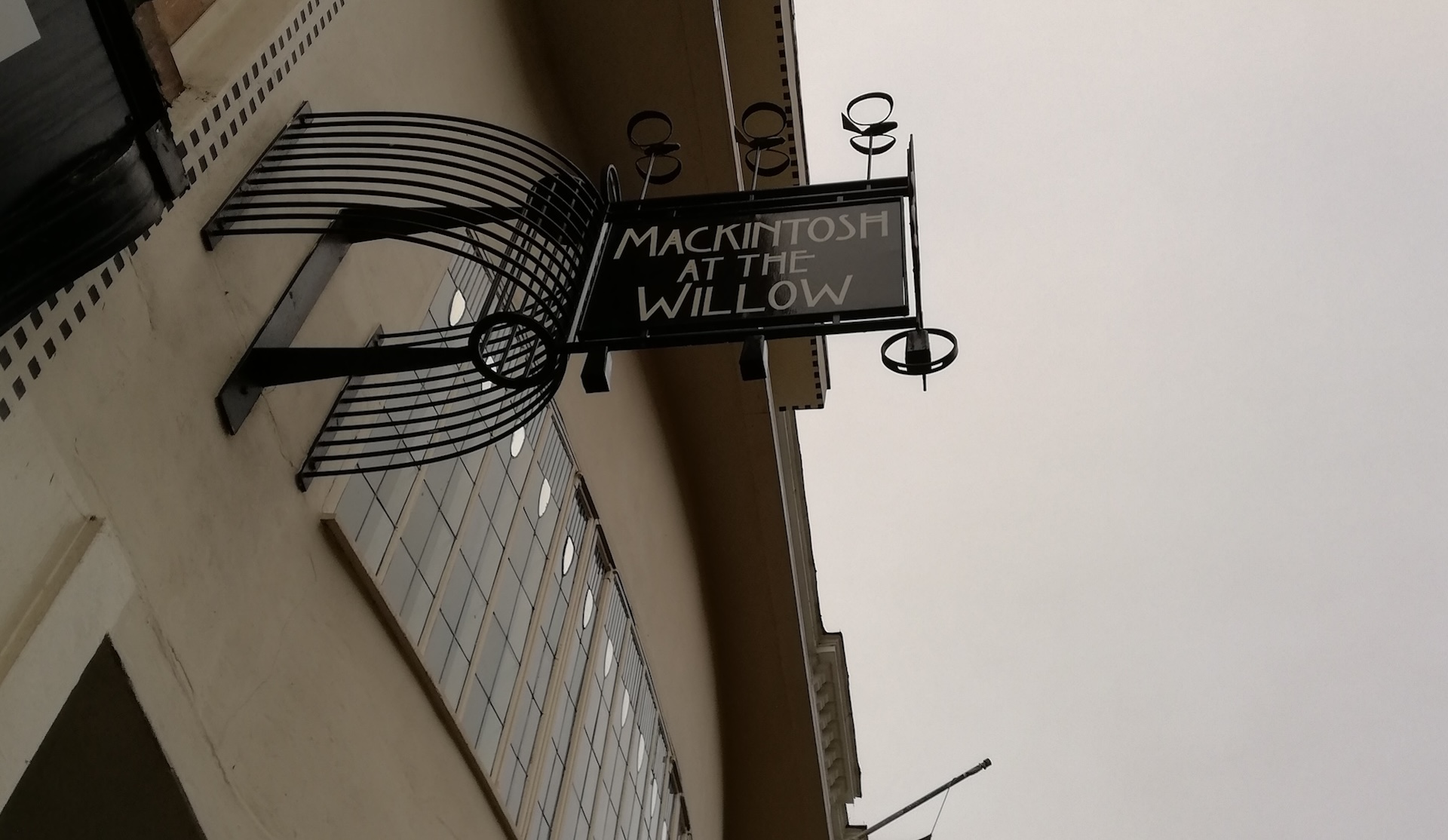
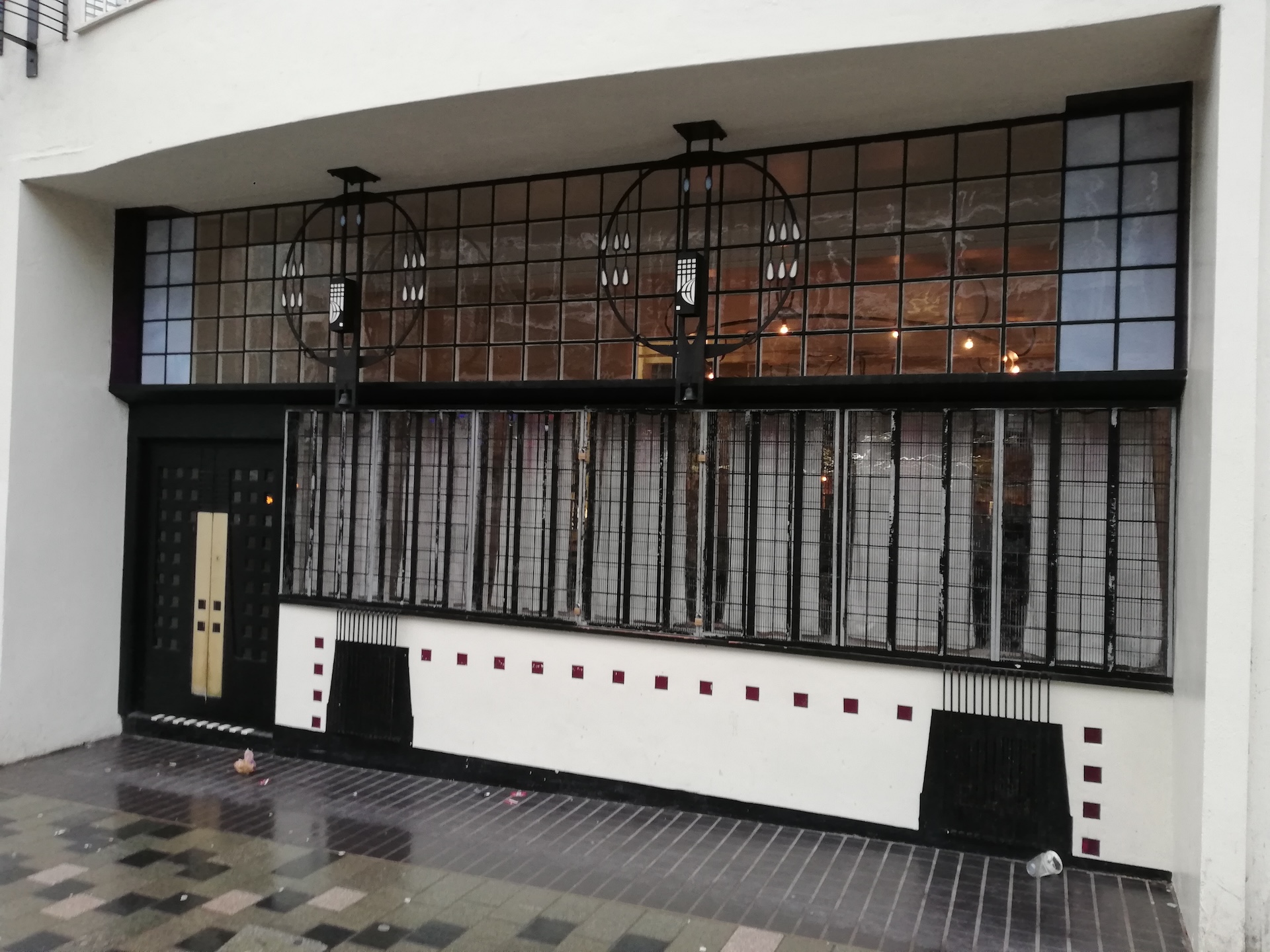
A second example is Mackintosh at the Willow, the only surviving Tea Room designed by Charles Rennie Mackintosh for local entrepreneur and patron Miss Kate Cranston, the “inventor” of the tea room. This tea room opened in 1903, but there were several Cranston’s Tea Rooms in the city.
The Tricouni Mountaineering Club met regularly at one of the tea rooms – no idea which one – because it was a mixed group, and women were not allowed in pubs in the 1930s.
Very sad to see is the state of the former Glasgow Art School building, also a Mackintosh design, badly damaged by a fire in 2018. Hopefully, this building will be rebuilt in the future.
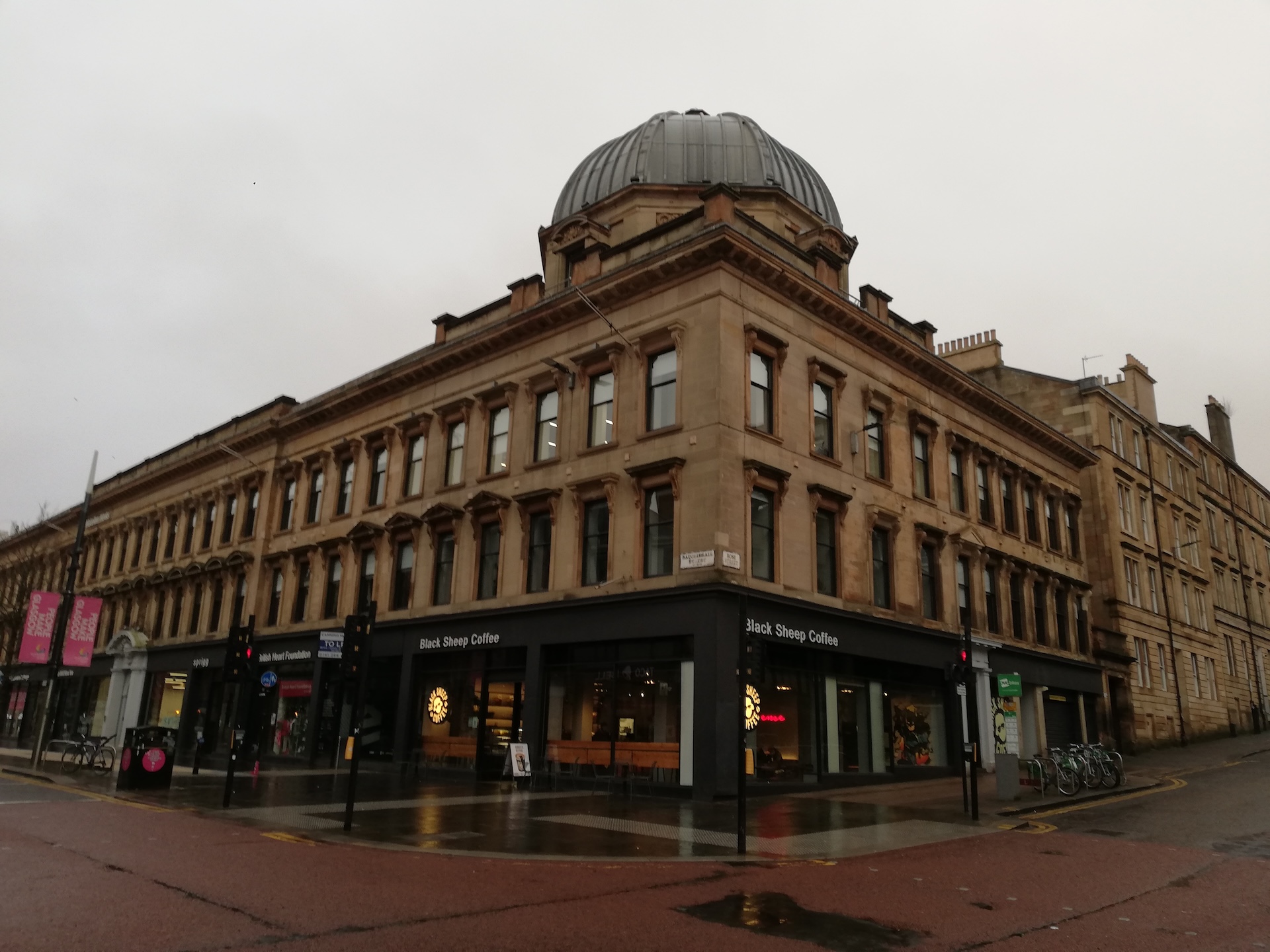
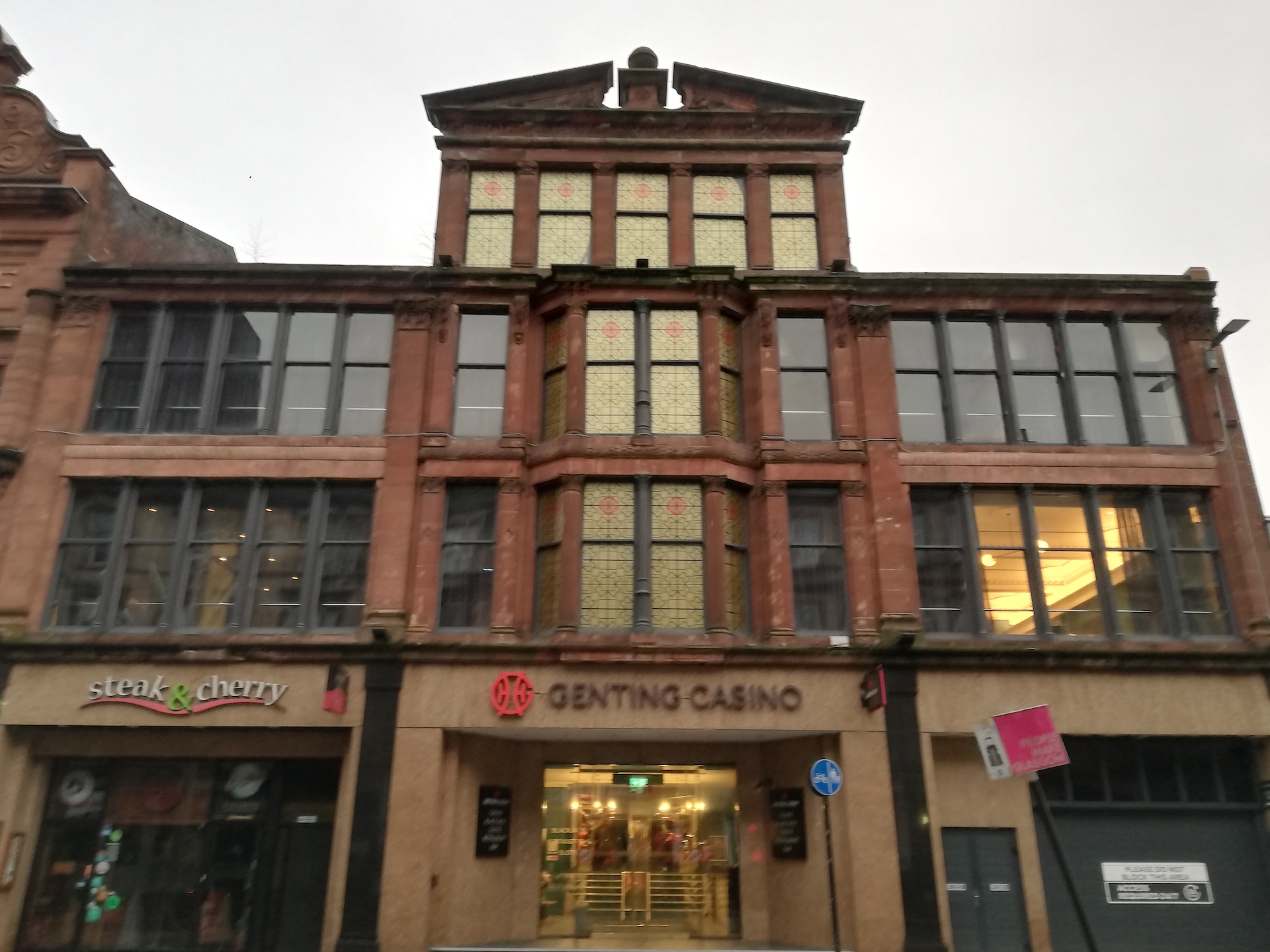
Many Scottish brownstone buildings are ruined by the refurbished design of the ground floor shops, trying to attract customers with mostly hideous colours and advertising. The modern way, I suppose.
This research trip is partly sponsored by a grant from the Scottish Mountaineering Trust