
Grimston Station – 1910s
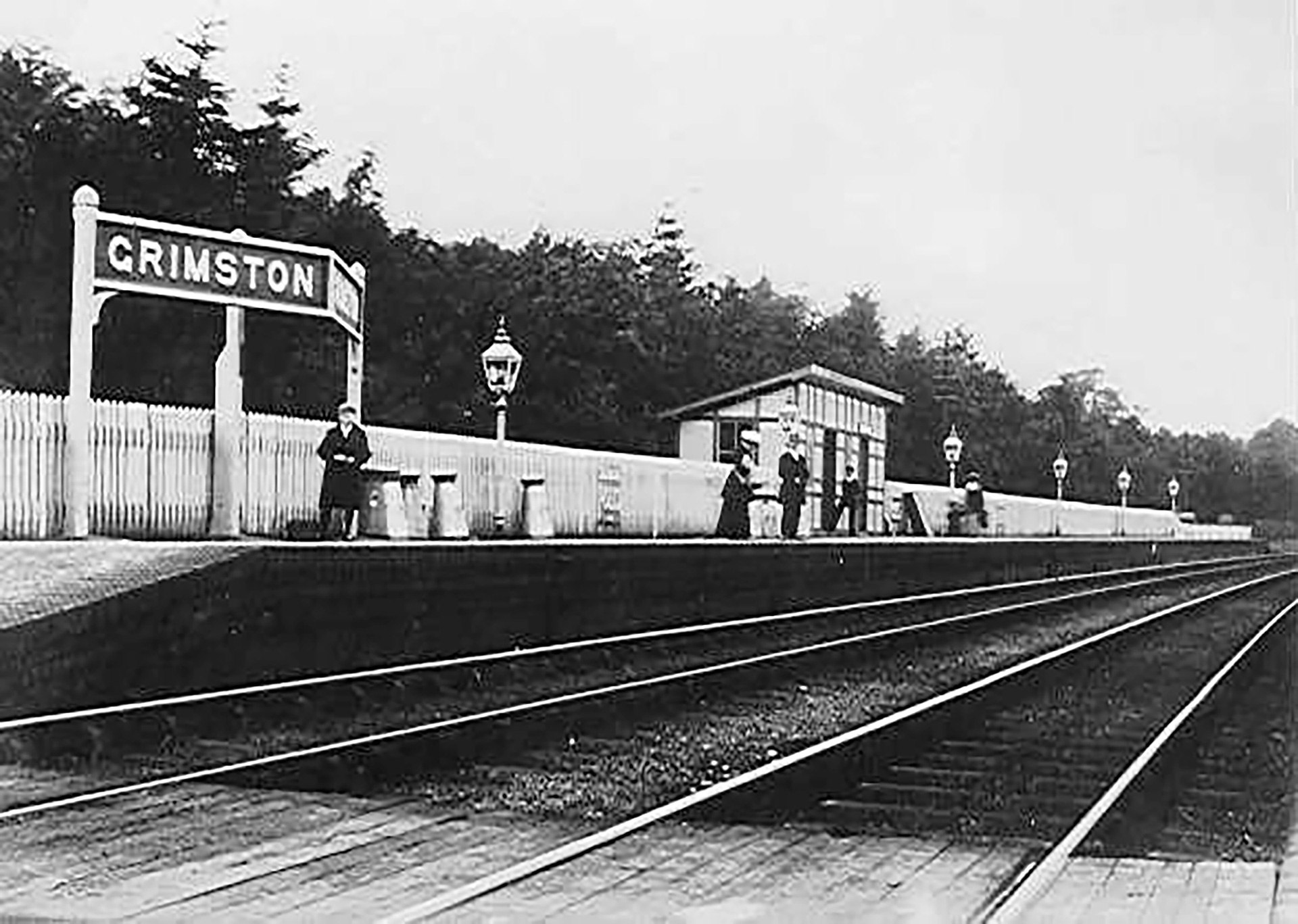
Risking a charge of trespass to photograph the remake, I couldn’t stand in the exact spot where the photographer was more than a century ago. The old picture is taken from the north side of the railway bridge over the road leading to Saxelby village. I positioned myself on the south side, closer to where the railway station was located. “The line was double-tracked on the old postcard,” remarked Richard Greasley, who has been living in Saxelby’s old Station Master’s House since 1980, to the right of the demolished railway station. “It was opened on the Midland Railway route between London and Nottingham via Corby. The line was built to allow the railway company’s expresses between London and the North to avoid reversal at Nottingham. It was a local train stop on one of the two premier Midland Main Lines.
One of the famous trains which operated on the line was the Thames–Clyde Express. This passenger train ran nearly non-stop from Saint Pancras to Nottingham and then further on the Settle to Carlisle line, which crossed the remote, scenic regions of the Yorkshire Dales and the North Pennines. The historic line was constructed in the 1870s and has several notable tunnels and viaducts, such as the imposing Ribblehead.
But why Grimston and not Saxelby? Richard explained: “On the 1st November of 1879, the railway line was opened for goods. From the start, confusion arose because of the names of two railway stations: one on the other side of Melton Mowbray, Saxby, and this one, Saxelby. Before the line opened to passenger traffic on the 2nd February 1880, they renamed the station and the signal box of Saxelby to Grimston.” The railway line also improved access to and from the iron-ore fields in Leicestershire and Rutland. Local traffic was minimal, and the station was closed to passengers in 1957. After closure as a through route in 1968, it was converted into a test track for the Advanced Passenger Train APT-E project, re-opening in September 1970. Now, Network Rail uses the Old Dalby Test Track on an ongoing basis for calibration and testing of measurement and gauging trains.
The original Victorian station building was timber and did not survive. It had already been pulled down when Richard arrived in 1980. “The last station master, Mr Mills, bought the house for a small sum and lived there for about five years. Then it was bought by a man who wanted to create a smallholding, but he found out that the station yard was not suitable for growing vegetables and put it up for sale again. That’s when we spotted it and dived straight in.”
“All the features, like the Victorian lamps you can see on the old postcard, were supposed to be saved, but the people who came to take the building down had no regard for anything whatsoever and just smashed everything up, for no reason really. Recently I found the letter O of Grimston on one of the exterior signs.” Some of the white fences, a chimney pot, and a few of the brackets used to hold the valenced canopy, and some of the valencing itself is now part of a small railway station Richard built five years ago in the former yard, next to the main house.
“It is all that I could save. I also built a miniature railway track and still run a little steam engine during summer. I was already interested in trains before we bought this house. I have been a train and car buff for years,” said Richard, which shows his love for trains and, in general, everything that runs on wheels.
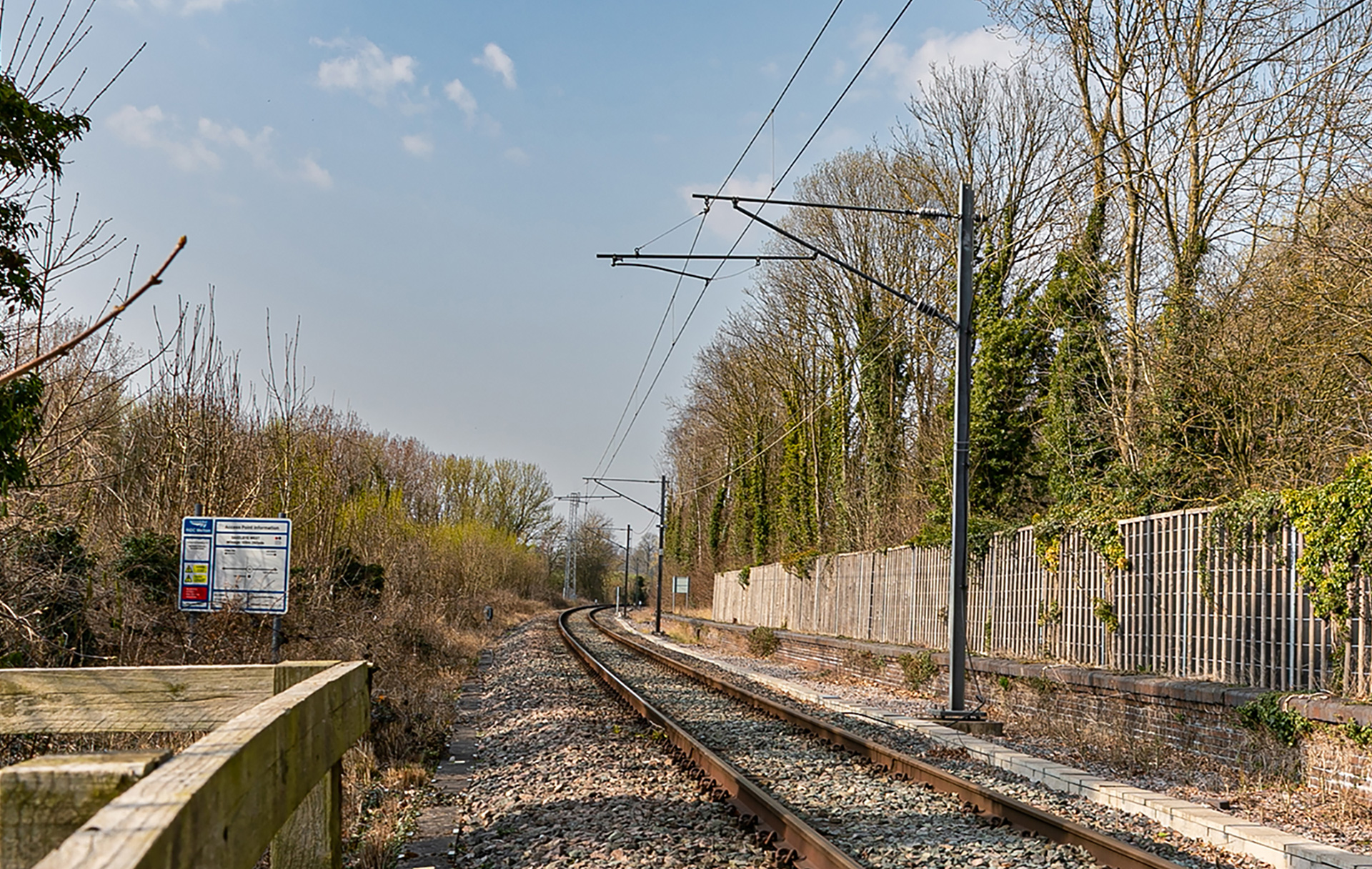

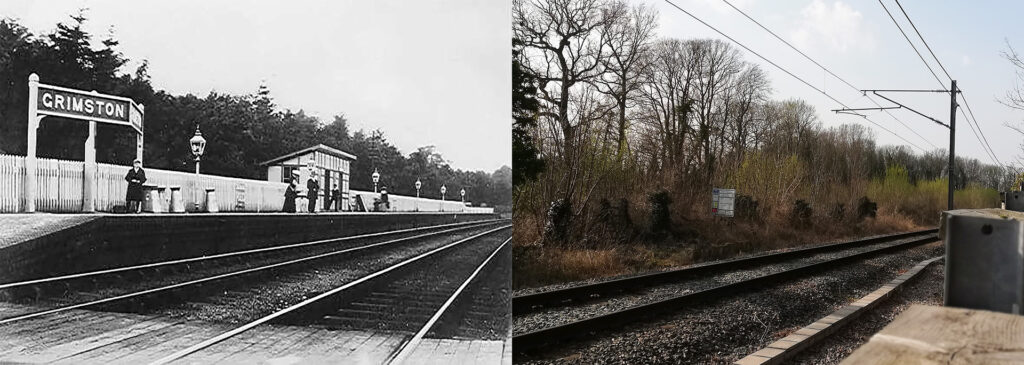
As we walk on Richard’s property, on the other side of the wall you can see in the remake, Richard explained: “The wall was built at the edge of the old railway station platform when the track was electrified in 2001. Before that, you could walk along the length of the track and through the tunnels, and nobody would bother you.” Standing on the tips of my toes, I could picture the remake of another old photograph.
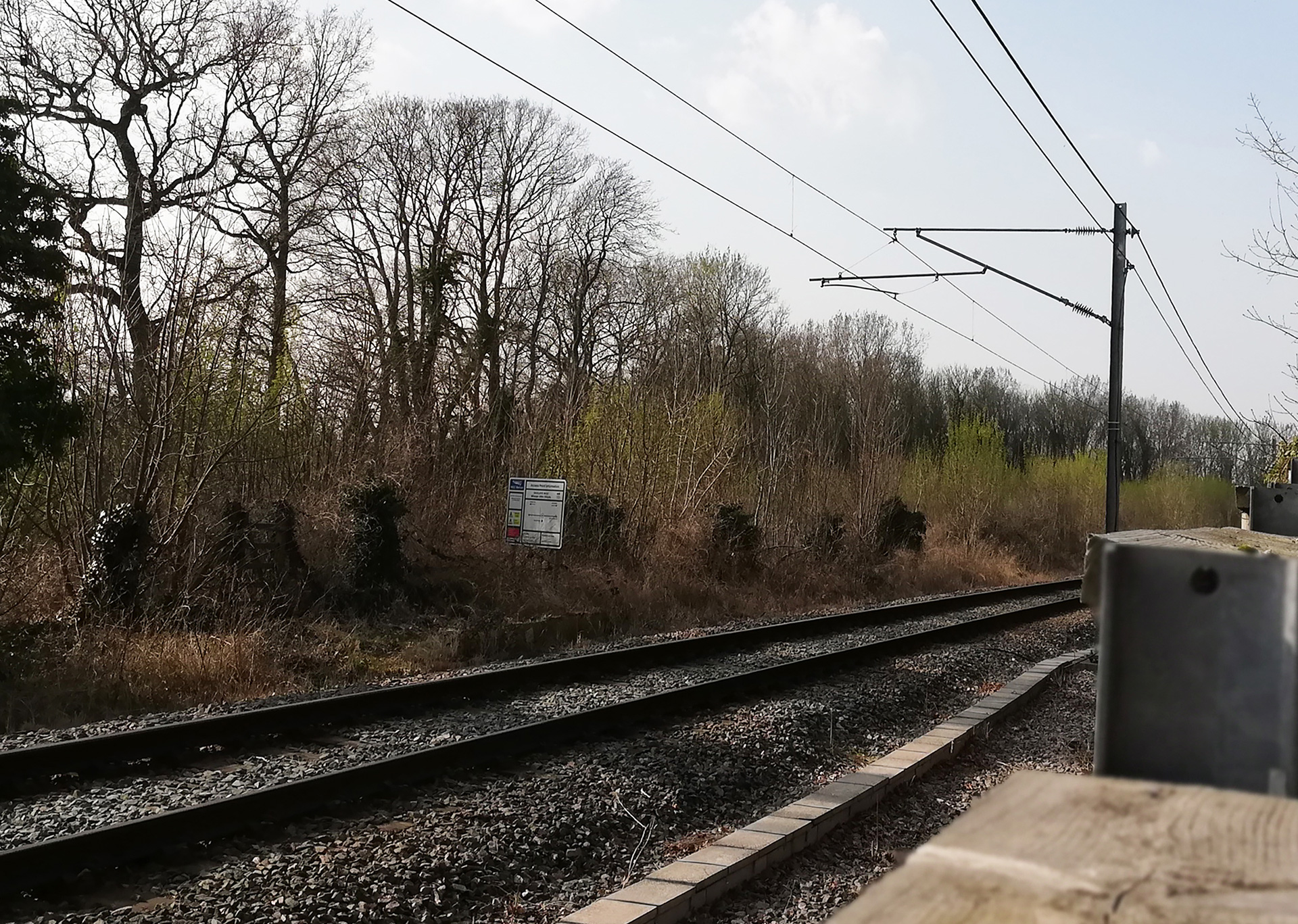
During most of the interview, Richard and I enjoyed the spring sun in the old train station yard. Scanning the area, Richard pointed to a sunken bit only a few feet away and said: “That was the weighbridge with a small brick building. Where the garage is now was a brick building for the local coal merchant. All the brick-built sheds were bulldozed and levelled onto the area. Over the years, I have grown a good layer of grass. It is still hard standing.” The larger trees in the yard – sycamore, pine and beech – were planted in 1880 when the railway station was built. “We were just getting into some trouble because one of the old trees came down two weeks ago during a storm.” One tree, a majestic copper beech tree, looks older than 140 years. Further on the property in the direction of the railway line are smaller trees, all self-seeded over the years. In the scrub are the remains of a cattle pen with a raised cobbled area. “In the past, there was a lot of movement of cattle. An area was raised, so when a train with cattle wagons came into the sidings, the cattle could go straight into the wagons.”
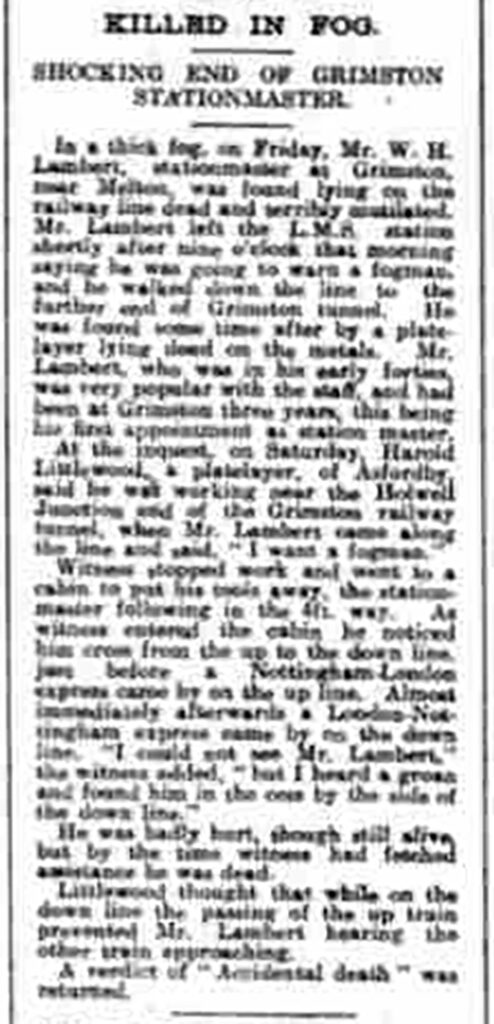
Suddenly Richard got up, when to the house and came back with an envelope. Richard said: “Last year, a lady came down from Hebden Bridge in Yorkshire, a family member of one of the former station masters, called William Henry Lambert. He was the station master from 1922 to 1924. He died in the Saxelby tunnel when hit by a train.” The accident got nationwide media coverage.
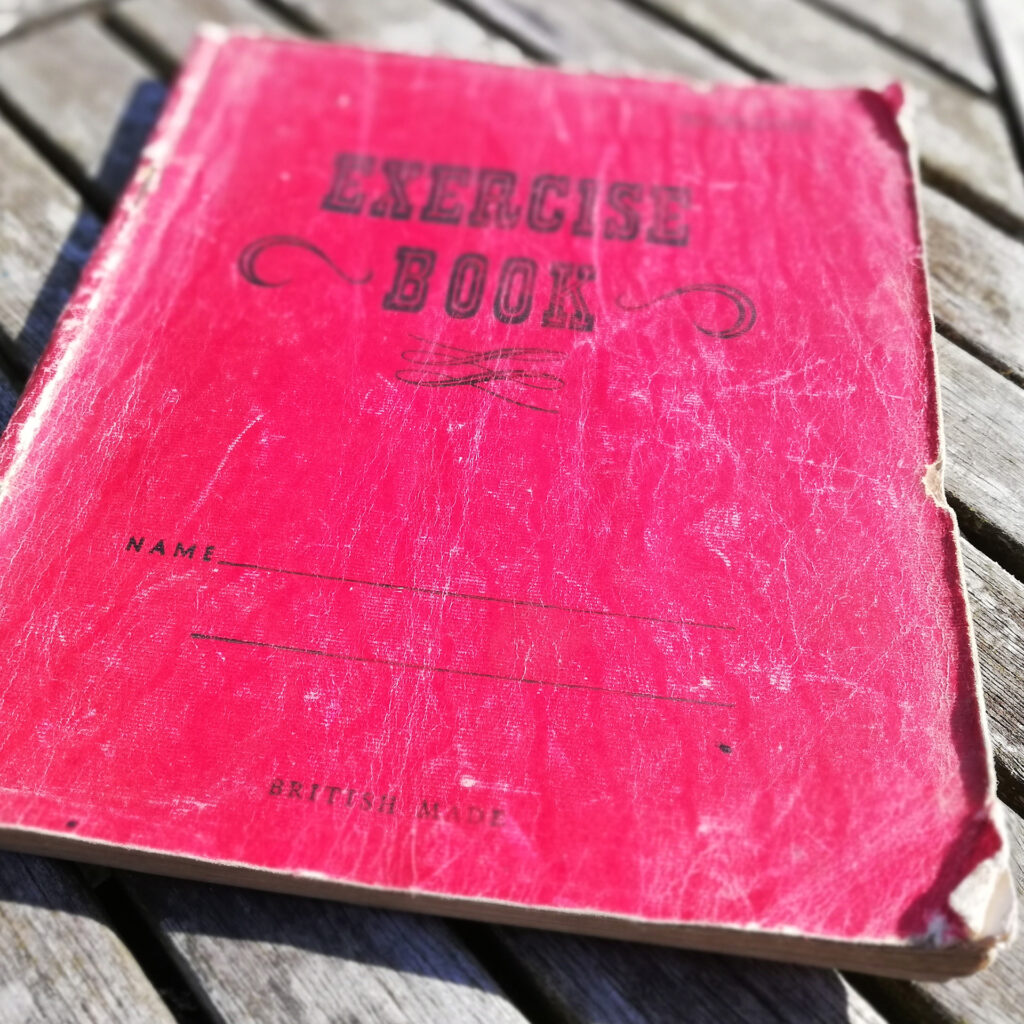
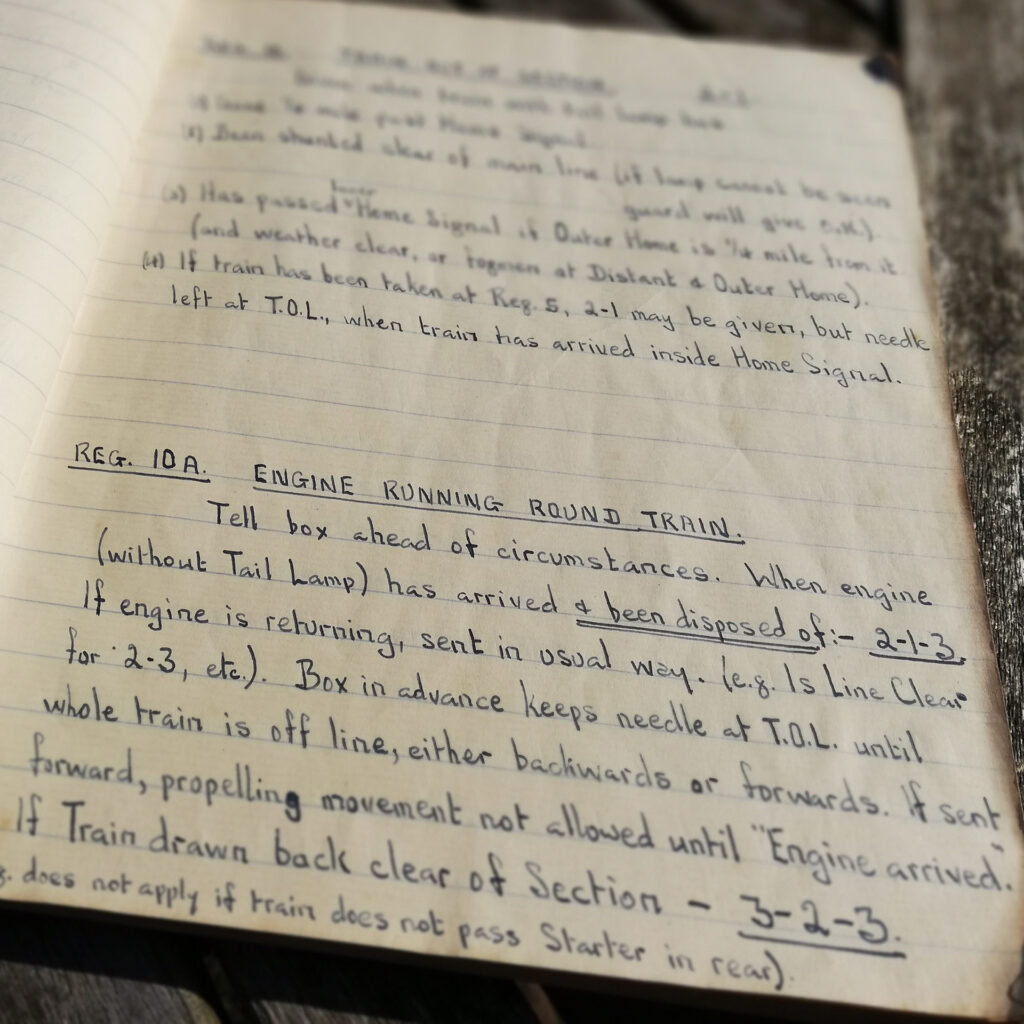
“Afterwards, the lady did send me one of his notebooks for my train memorabilia.” It is a regular red exercise book, filled with railway regulations and diagrams, nicely handwritten. “It is fairly dry stuff but rather fascinating,” Richard said.
There were five tunnels on the line at Stanton (1330 yards long), Grimston (1305 yards), Grimston Covered Way (100 yards long and sometimes known as Saxelby Covered Way), Saxelby (543 yards) and Asfordby (419 yards). Richard added: “The Grimston Covered way was built because of the hunt and to appease the landowners. The Quorn hunt objected to the railway line because it was between certain coverts, so they made a green area above the railway line like a modern eco-bridge.“
On the village
The village entrance is under the railway bridge. On the left lies the old station house. Further, also on the left was Webster’s Cheese Dairy. One of Richard’s collection’s more heavy railway memorabilia is an original wooden box to transport four large Stilton cheeses. The 150-year-old dairy only closed at the end of 2020 because the Covid pandemic hit the Stilton sales. There is no indication at all that production will resume in the future. “Webster’s Dairy was a small business, based in a row of 17th-century cottages, in recent years run by sisters Margaret and Helen Callow, using milk from a nearby farm,” wrote Nick Rennie in a Melton Times article. “It had a rich history, having been started in the 1880s by the Webster sisters and then passing into the hands of twin brothers before the Callow sisters took it on. Stilton is the UK’s most popular blue cheese and was first written about by Daniel Defoe in the early 18th century. Only a few dairies are licenced to produce Blue Stilton and White Stilton cheese: Colston Bassett Dairy, Cropwell Bishop Creamery, Hartington Creamery, Long Clawson Dairy, Tuxford & Tebbutt Creamery, Shirevale and Webster’s Dairy.”
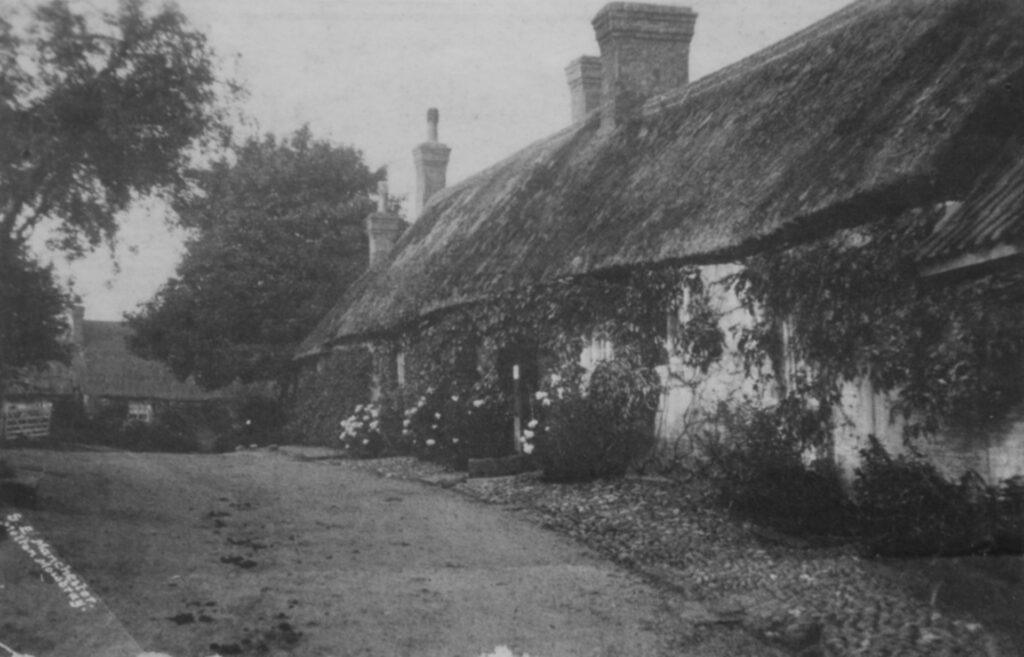
In the Melton Carnegie Museum’s archive, a newspaper clipping of 1983 pictured an old postcard with a 1915 postmark, taken by G.E. Manchester, a Melton photographer. The cottages were part of Saxelby’s village scene until they were demolished at the beginning of the 1940s. A woodman and a coal merchant lived in the thatched homes.
The exceptionally well-tended Church of St Peter is at least 700 years old. The pulpit is one of the few pre-Reformation ones in the county.
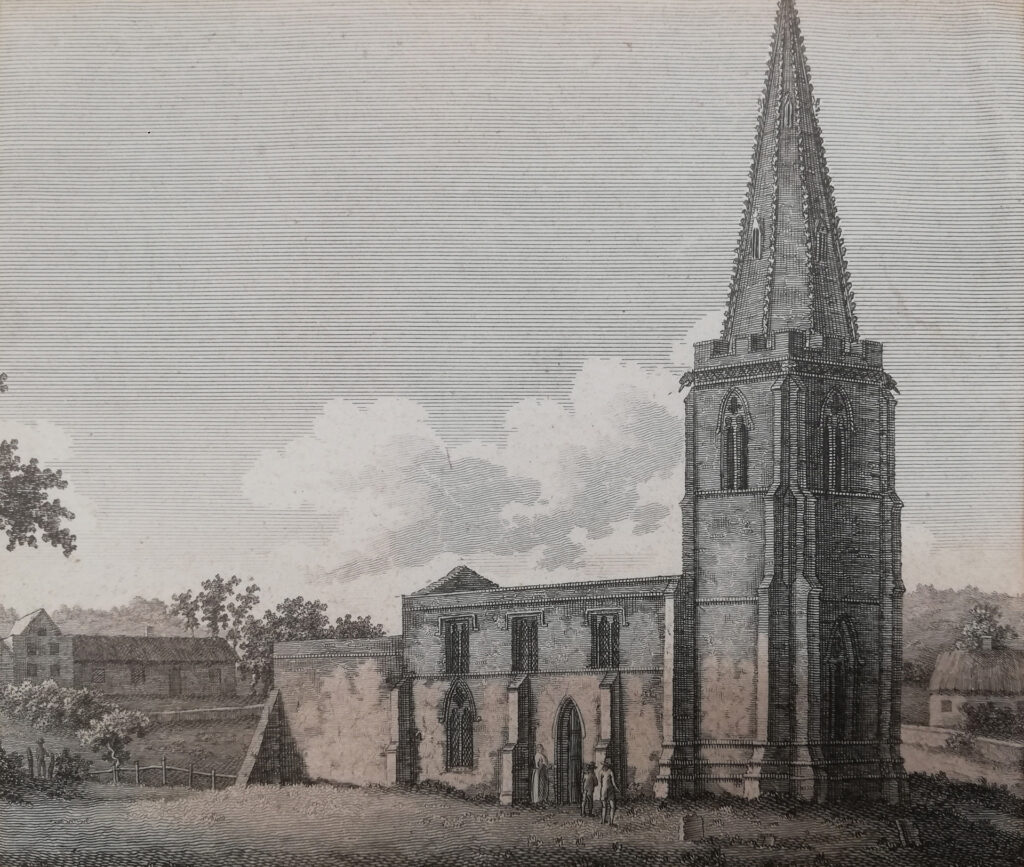
The Manor House is to the south of the church, in part Elizabethan with a large stone chimney breast. The staircase running up through three storeys is one of the oldest features in the house.
Would you like to add your story and recollection? Leave a comment at the bottom of this page or send a message.
More pictures
Would you like to add pictures? Send a message.
Domesday Book
Saxelby was a settlement in Domesday Book, in the hundred of Goscote and the county of Leicestershire.
It had a recorded population of 22.9 households in 1086, putting it in the largest 40% of settlements recorded in Domesday (NB: 22.9 households is an estimate, since multiple places are mentioned in the same entry).
Land of King William
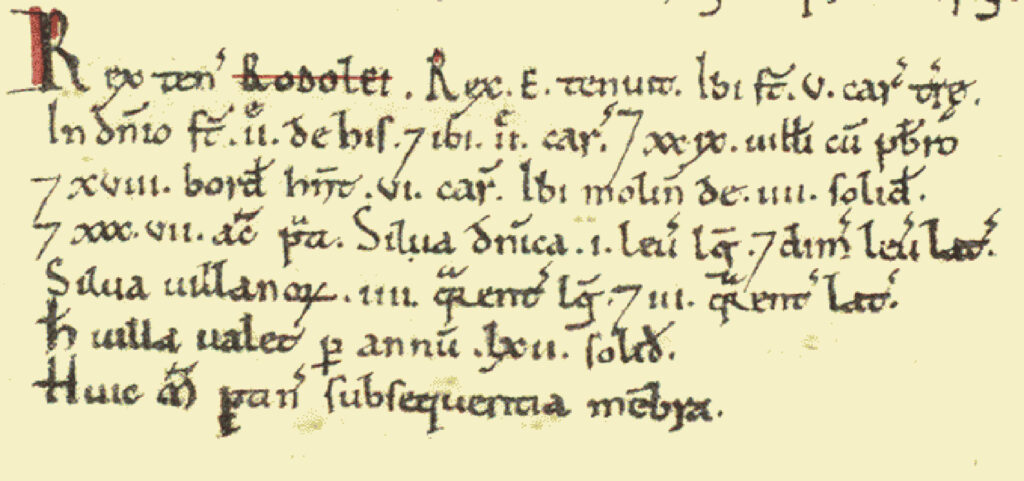
- Households: 186 villagers. 204 freemen. 112 smallholders. 1 priest.
- Ploughland: 2 lord’s plough teams. 88 men’s plough teams.
- Other resources: Meadow 176 acres & 3 * 1.5 furlongs mixed measures. Woodland 3 * 3 furlongs & 5 acres; 1 * 0.5 league & 4 * 3 furlongs mixed measures. 6 mills, value 17 shillings.
Valuation
- Annual value to lord: 34 pounds 10 shillings in 1086.
Owners
- Tenant-in-chief in 1086: King William.
- Lord in 1086: King William.
- Lord in 1066: King Edward.
Links
Would you like to add a link? Send a message.