
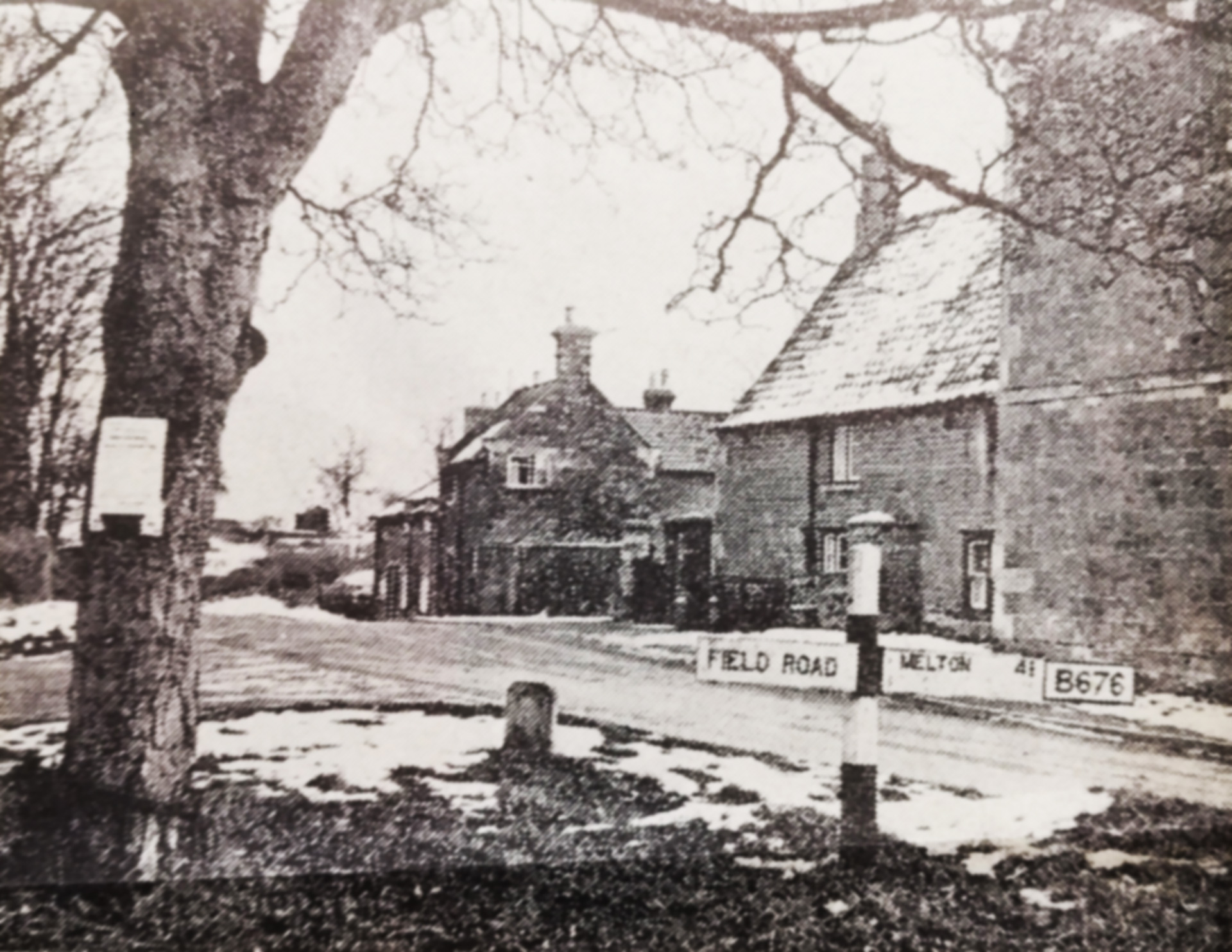
Garthorpe Road – 1960
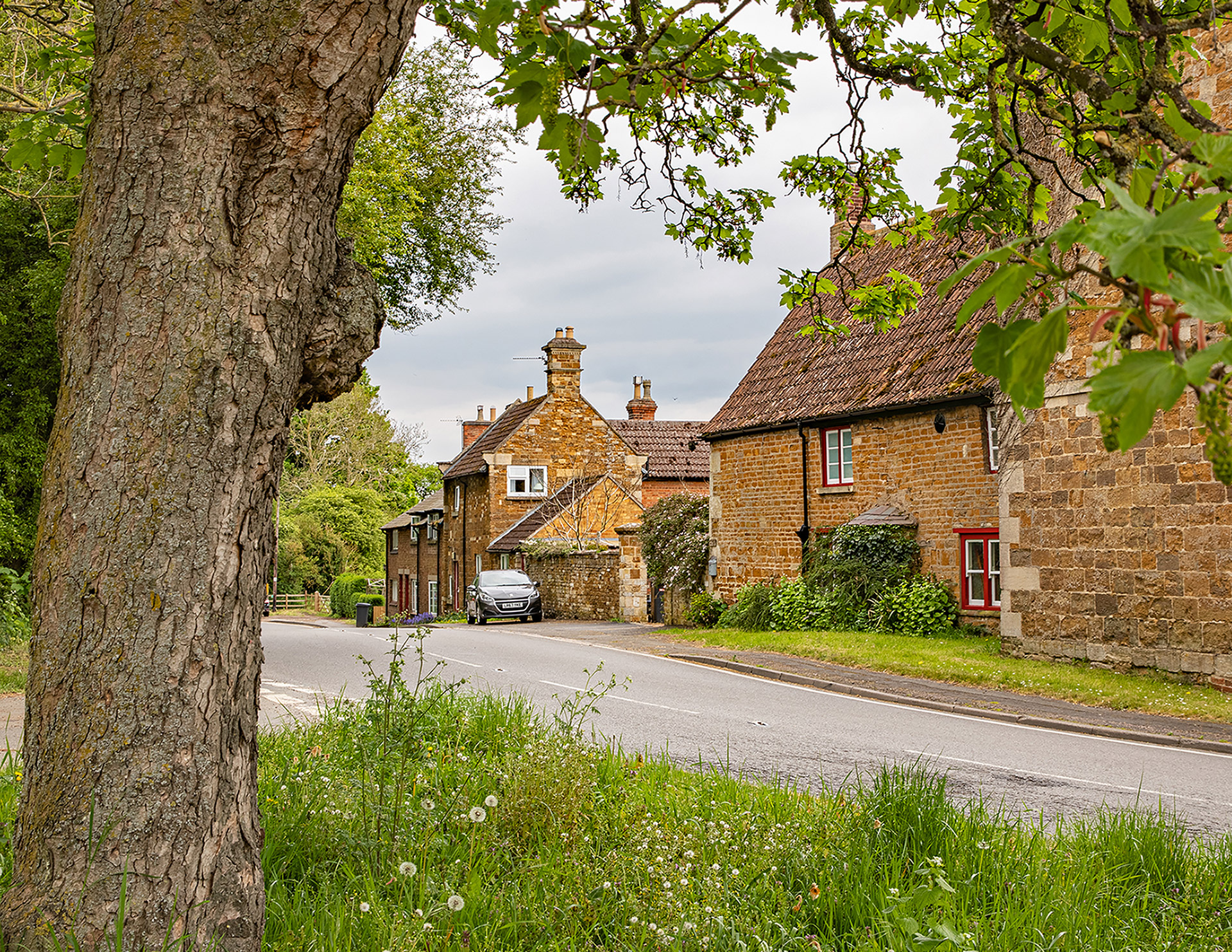
“The village can be missed if you look down to turn on your car radio,” wrote Richard Edmondson in the Melton Times of 28 September 1984 about Saxby. If you should do so, there is also a chance you will end up on the verge because of the main road twisting and turning through the village. Edmondson’s suggestion was right: Saxby is a small village. The view from the small triangle green at the junction of Field Road and Garthorpe Road with the single sycamore tree still looks the same. Only the tree got more prominent, and the fingerpost moved to the other side of Field Road, near Sycamore House, where the Anstees lived. Richard Edmondson wrote: “Arthur Anstee, who runs a commercial printing company, and his wife Marylin sampled village life for many years at Wallop before moving to Saxby 12 months ago. Their daughter, Georgina, is one of the most promising young venters in the country, having spent 1984 under the eye of the British riding selectors.” Georgina made a career in eventing and has now a 15-year old daughter who is doing excellent in jumping.
Saxby is also the residence of the renowned Le Blanc Fine Art Gallery and Sculpture Gallery in The Manor, home of Lloyd Le Blanc, an American-born artist from the east coast. He was married to the Saxby-born Judith Holmes Drewry, also a sculptor. In the 1970s, Judith went to the San Francisco Art School for two years, where she met Lloyd. They moved to Saxby in 1973. Both made an international career, but Judith died in 2011.
Opposite The Manor stands St Peter’s Church, now a private residence, which is different in style from any other in Leicestershire. It was built in 1789 by Robert Sherard, the 4th Earl of Harborough. The tower is its great ornamental feature.


The rectory of the same vintage is by its side with a vast semi-circular gable. In a sales advertisement in the Melton Times of 23 April 1982, Saxby Old Rectory was described as a magnificent period house standing on secluded grounds of approx 1.49 acres and a derelict cottage. Around Saxby are good stone-built houses of varying ages over the past 300 years, with the small village green as the centrepiece.
The battle of Saxby Bridge
Robert Sherard’s grandson, also Robert, the 6th Earl of Harborough, was quite a character, primarily known for the Battle of Saxby Bridge in 1844, an extended battle, both legal and physical, with Midland Railway over its proposal to run the Sys-ton and Peterborough Railway along the course of Oakham Canal, through Stapleford Park, Harborough’s country seat in Stapleford.
On 15 November 1963, the Melton Times brought the story of the “battle”, 119 years after, back into the spotlights because another railway fight was on, this time all over the country, to stop the wholesale closure of our railways, a plan brought forward by Richard Beeching. Saxby would be one of the many railway stations to be axed. Parliament decided to follow the plans, which became known as the Beeching cuts, to increase the efficiency of the nationalised railway system in Great Britain. A never-ceasing campaign to keep the railway lines, which cobwebbed the country, open was lost.
In the first half of the 19th century, towns and cities were only too glad to encourage the railway as extra means of communication. “But,” wrote the Melton Times in 1963, “not everybody welcomed the iron roads and the army of workers needed to lay them down. Through such objections, an exciting chapter of local history was written. Lord Harborough, then owner of Stapleford Park, heard that a stretch of the proposed Syston and Peterborough Line would pass through part of Stapleford Park. Lord Harborough took a great interest in the Oakham Canal, originally opened in 1800. He felt it might be affected or made useless by the new railway, and his investment in the canal would become worthless.” On 13 November 1844, an affair began on a very small scale. Lord Harborough and Mr Fabling, his steward, told the Midland Railway Company that “No one can enter Stapleford Park or surrounding lands to survey.” A notice went up stating: “Surveyors will not be permitted to enter upon the land of Earl of Harborough.” Both gentlemen also made clear that any attempt to do so would be resisted by force. The railwaymen ignored the warning: and seven of them were about to approach “forbidden territory” by the Oakham Canal towpath. A party of Lord Harborough’s men took them prisoners, and they were carted off towards Cold Overton Hall, home of T.F. Turner, a magistrate. He was out, so the railwaymen were released for the night. But this was not the end of the story.
“The second episode took place the next day, the 14th. Between 30 and 40 of the Lord’s men stood ready for a renewed attempt to get on to the land. After waiting some time, they saw in the distance “reckless vagabonds” carrying flagstaffs and other weapons,” wrote the Melton Times reporter in 1963, quoting a witness who said in an 1844 newspaper: “It looked like a regiment of soldiers coming to take the place by storm.” The Melton Times continued: “Talks took place on Saxby Bridge between Lord Harborough’s steward and solicitor, the clerk and treasurer of the Oakham Canal Company and the Midland Railway solicitors. Meanwhile, the Lord’s men prepared for a determined stand, fencing the paths with drays and other objects near the water’s edge. Surveyors tried in vain to force their way through the party stationed on the Oakham side of the bridge. The barrier was too firm, and they soon retreated.”
“Both sides brought in reinforcements. A number of county police arrived on the scene and said they would arrest the first person who committed an assault. Parties were told to lay down their weapons and try out their strength by pushing! The railwaymen strained as hard as they could, but so firmly did his lordship’s men hold their ground that some men were forced into the air, rolling over the heads of the two parties. Others were charged through a hedge, tumbling over each other and clogging the ditch. Confusion followed, and the two sides had difficulty distinguishing who was who under grimy and dirty faces. Surveyors managed to get the chain on the “forbidden ground” in the chaos. Lord Harborough’s men grabbed it and, in the scuffle, it snapped. The battle turned into a chase down the towpath for about 400 yards. Eventually, the railwaymen called a truce, and both sides agreed to withdraw forces.”
The matter was planned to be heard before the Petty Sessions at Melton on 19 November, but another skirmish broke out on the 16th. A small party of about 10 railwaymen attempted to take the towpath at one point. Nearly 100 others clambered over palings and started measuring land. “What followed was a general free fight, and blood flowed on the occasion. The railway party used spikes and injured many of Lord Harborough’s men. A tremendous noise attracted the attention of more of the Lord’s men, and the railwaymen beat a quick retreat.
The course of justice then took over, and peace was kept for nearly four months. Three incidents were tried at Leicester Assizes before Lord Chief Justice Tindal on March 26, 1845. For the first case, concerning events on November 16, the jury returned a verdict of guilty of an assault against all the defendants. The railwaymen were sent to prison for one month and fined 1s. each. The second case, Ward vs Lord Harborough, was an action for trespass and false imprisonment. The Lord’s servants were under the mistaken impression that they had the power to take Railway Company employees into custody. The third case Lord Harborough vs Ward and Cope, was an action for trespass on the occasion of the riot. The Lord Chief Justice sentenced the latter to imprisonment.
That was not the end of Lord Harborough’s no-railway campaign. At the end of 1845, he again obstructed surveyors preparing for the line. After another trial, a not guilty verdict was brought in. The disputes caused significant delays. Another Act of Parliament had to be passed authorising a deviation in the original plans. Terms were arranged with Lord Harborough. The section of the track between Melton and Stamford was not opened until March 20, 1848, when coal traffic was allowed through. Passenger service was introduced on 1 May 1848. But the final stretch of the railway had a tight curve in it, around a corner of Stapleford Park. It became known as ‘Lord Herborough’s curve’.
The station at Saxby opened on 1 February 1849. And it was at the north end of the curve. In 1892 an easier angle was built together with a new Saxby station, which opened on 28b August 1892. The original station on a stub of the original line continued in use for goods.
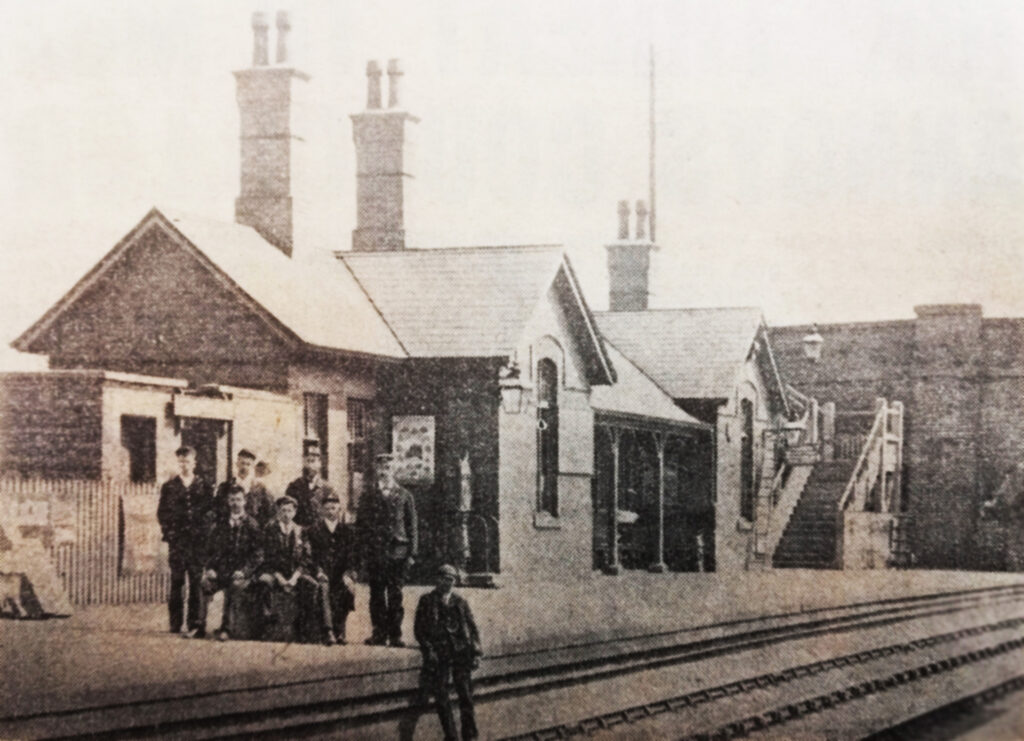
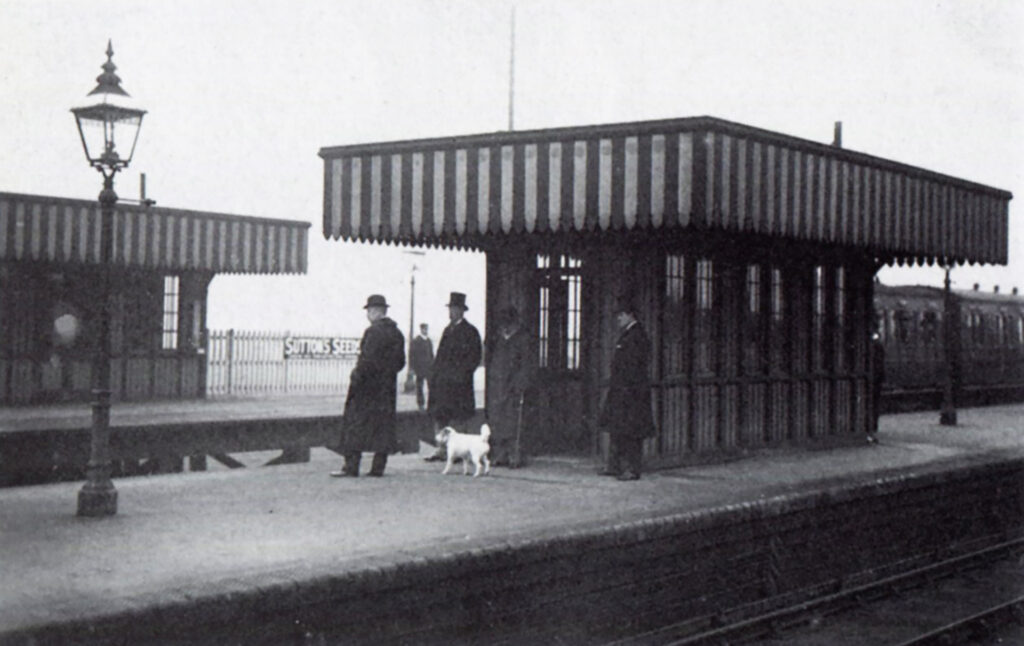
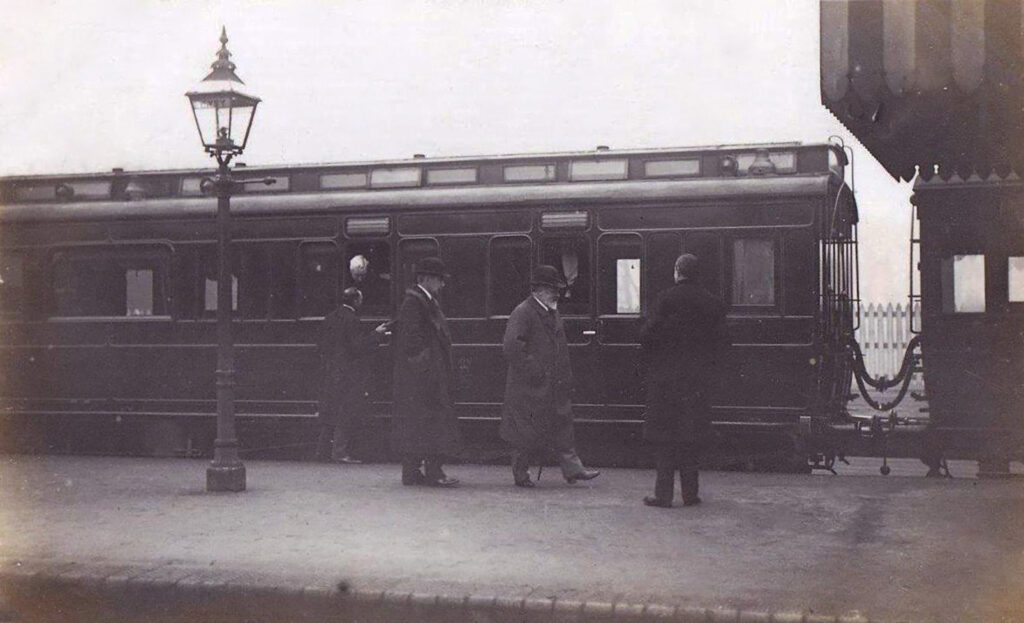
When Saxby Station closed, the last parts of the new station were wholly demolished in late 2014. The old station remains as a private house.
Robert Sherard was not only the 6th but also the last Earl of Harborough. He made himself very unpopular by warning the hunt off and having dog spears put in the coverts. He died in 1859. James Hornsby had the estate later, and then it was bought by John (later Lord) Gretton, followed by the second Lord Gretton, who got a residence in the 1960s at Stapleford. In the end, Stapleford Park got two railways run through on the grounds: one laid down by the Midland Railway Company and a second by Lord Gretton.
Would you like to add your story and recollection? Leave a comment at the bottom of this page or send a message.
More pictures
Would you like to add pictures? Send a message.
Domesday Book
Saxby was a settlement in Domesday Book, in the hundred of Framland and the county of Leicestershire.
It had a recorded population of 17 households in 1086, and is listed under 2 owners in Domesday Book.
1. Land of Henry of Ferrers
- Households: 9 villagers.
- Ploughland: 3 men’s plough teams.
- Other resources: Meadow 60 acres. 1 mill, value 2 shillings.
Owners
- Tenant-in-chief in 1086: Henry of Ferrers.
- Lord in 1086: Henry of Ferrers.
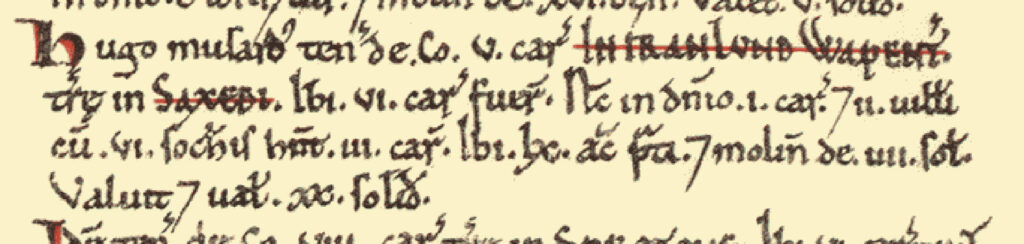
2. Land of Countess Judith

- Households: 2 villagers. 6 freemen.
- Ploughland: 6 ploughlands. 1 lord’s plough teams. 3 men’s plough teams.
- Other resources: Meadow 60 acres. 1 mill, value 4 shillings.
Valuation
- Annual value to lord: 1 pound in 1086; 1 pound when acquired by the 1086 owner.
Owners
- Tenant-in-chief in 1086: Countess Judith.
- Lord in 1086: Hugh Musard.
Links
Would you like to add a link? Send a message.