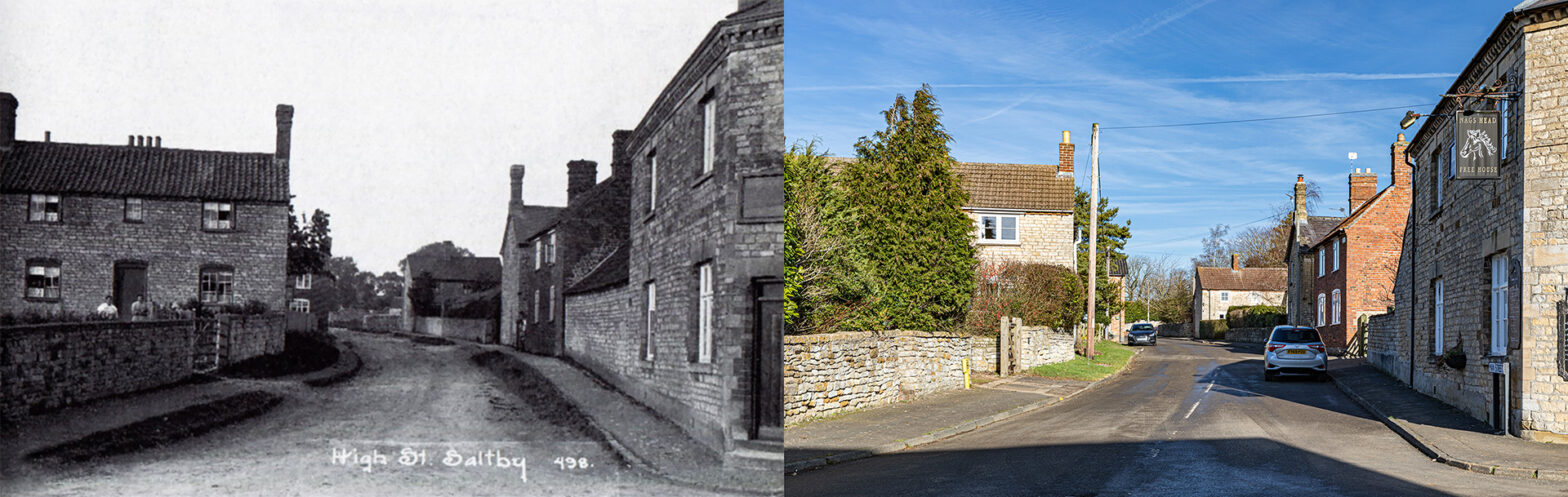
Main Street
“When you are brought up somewhere, you get very fond of the place,” said George Wells when we strolled through the village. Coming to Saltby from Lincolnshire in 1939, when he was eight years old, his father started farming at St Michael’s Farm on Stonesby Road. “Here in Saltby, we had about 170 acres. We rented all the time. It was hard work, but I enjoyed it. We left in 1968 because the landowner sold the farm to Lance Newton, who married Ursula Rank. He wanted to farm the whole village.” Most of the other farmers retired. Only George was left as a farmer. “There was no future for a family with four sons.”
George recollected: “The first house on the left was a smallholding where Mr Sentence lived. The next dwelling was the village shop with a petrol pump. Titus Skinner ran both, and he owned the garage next door with a bus service. I think there were three buses, 30 seats each. Before the Second World War, there were only two cars and one motorbike in the village. So most of us were reliant on the bus. Skinner drove to Melton on a Tuesday and to Grantham on a Saturday. And he managed the bus service for the older children to the secondary schools. You could also book a bus for an outing to Skegness or somewhere else.” Further on Main Street was the Methodist Chapel, originally a Victorian building dated 1830, since the 2010s a private home.
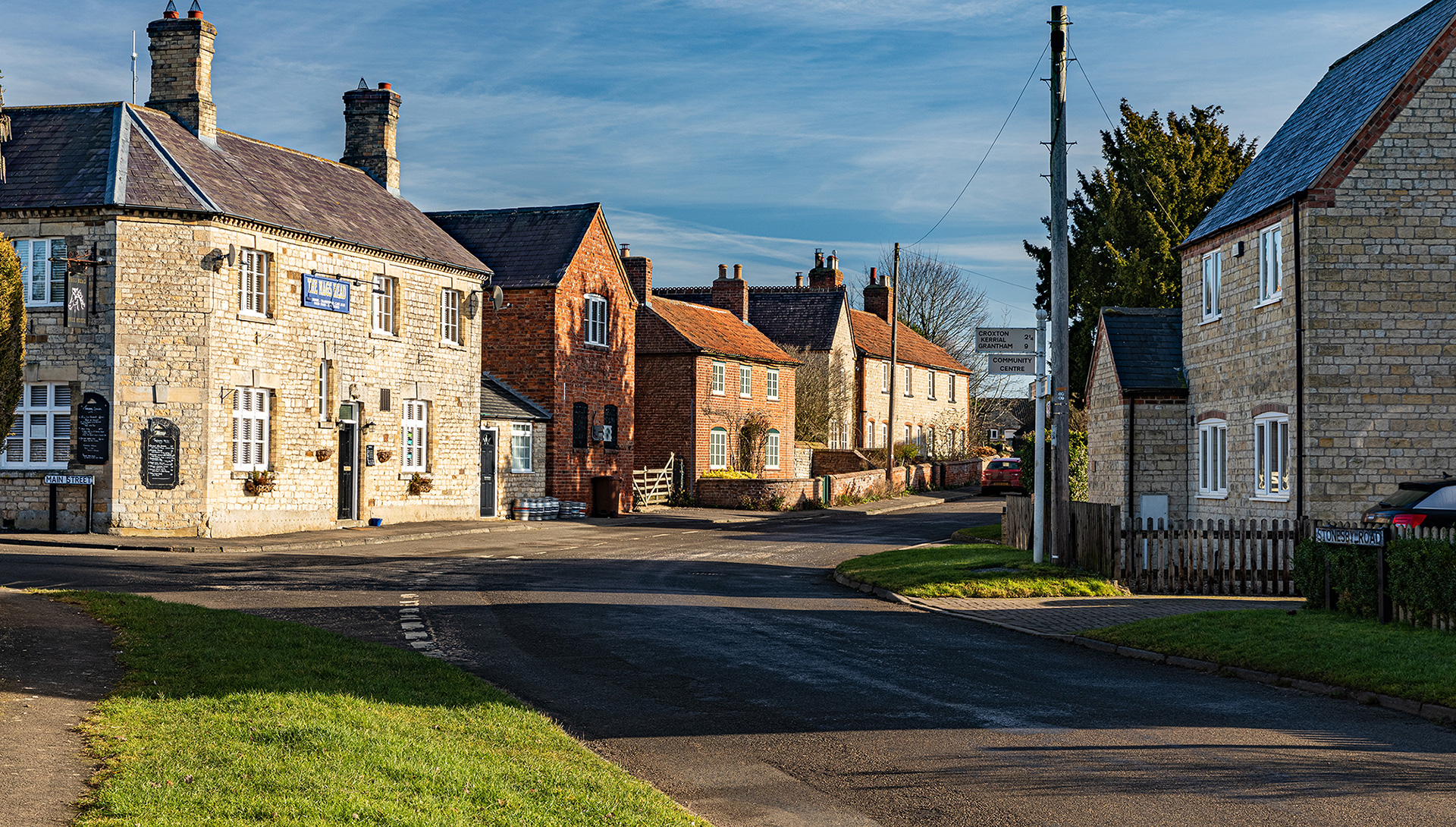
On the right halfway down the street lived Leslie Brown, the blacksmith. Now, his granddaughter, whom we coincidently met when walking along, lives in the house. “My mom is still in the village,” she said. George replied: “Your grandfather was such a nice man. He did a lot of work at our farm.” Further down, what is now Inglenook Cottage, was the carpenter’s shop. The Nags Head is the village pub and social hub at the corner of Back Street.
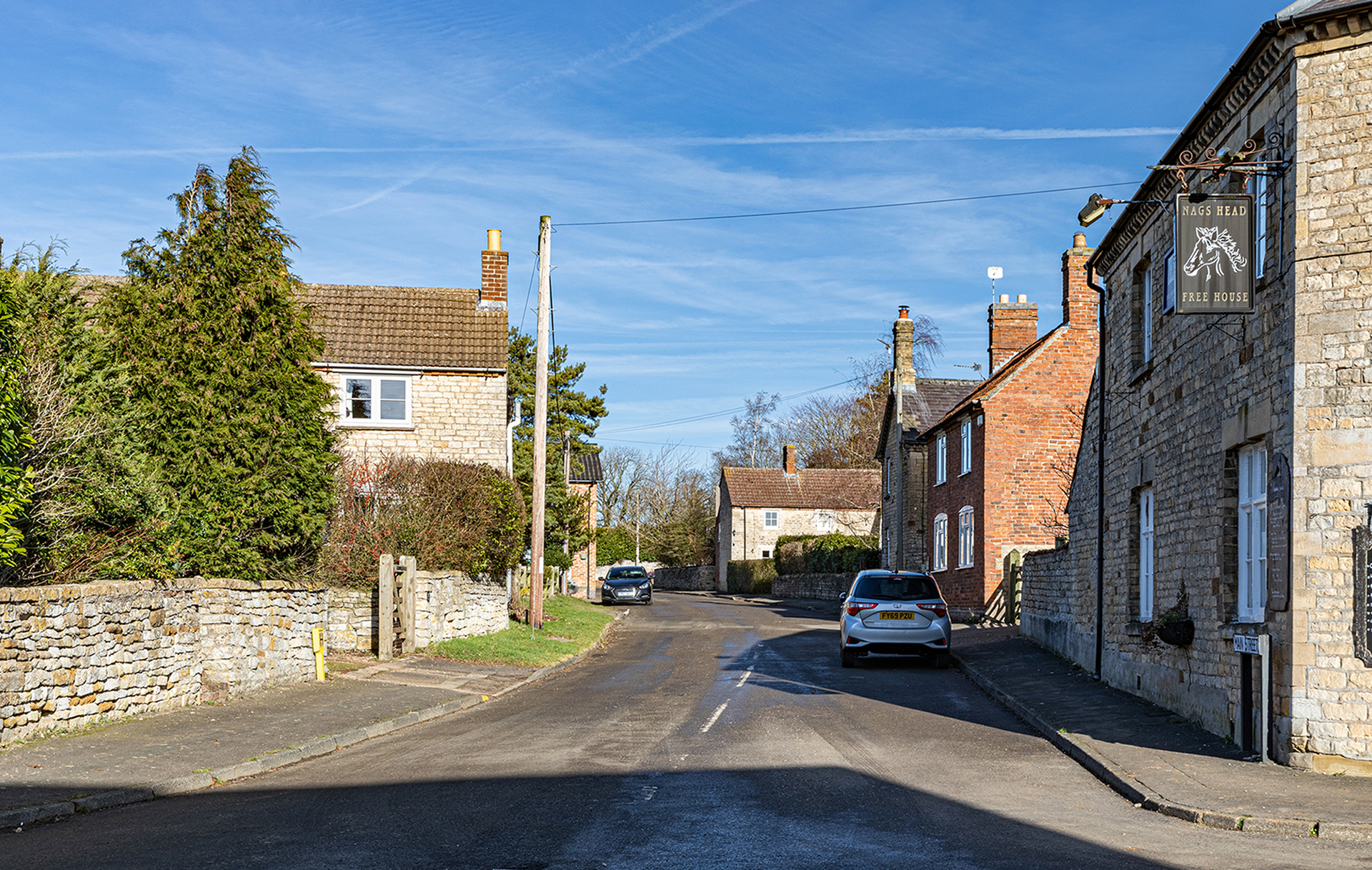

Before telling the story on The Nags Head, George and I continued walking on Main Street. Adjacent to the Methodist Chapel lies the post office’s house from the end of the 1970s into the 1980s. We round the corner in the direction of the church.
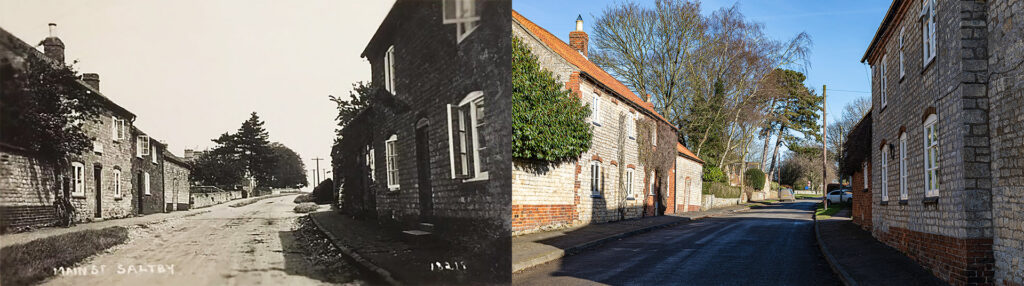
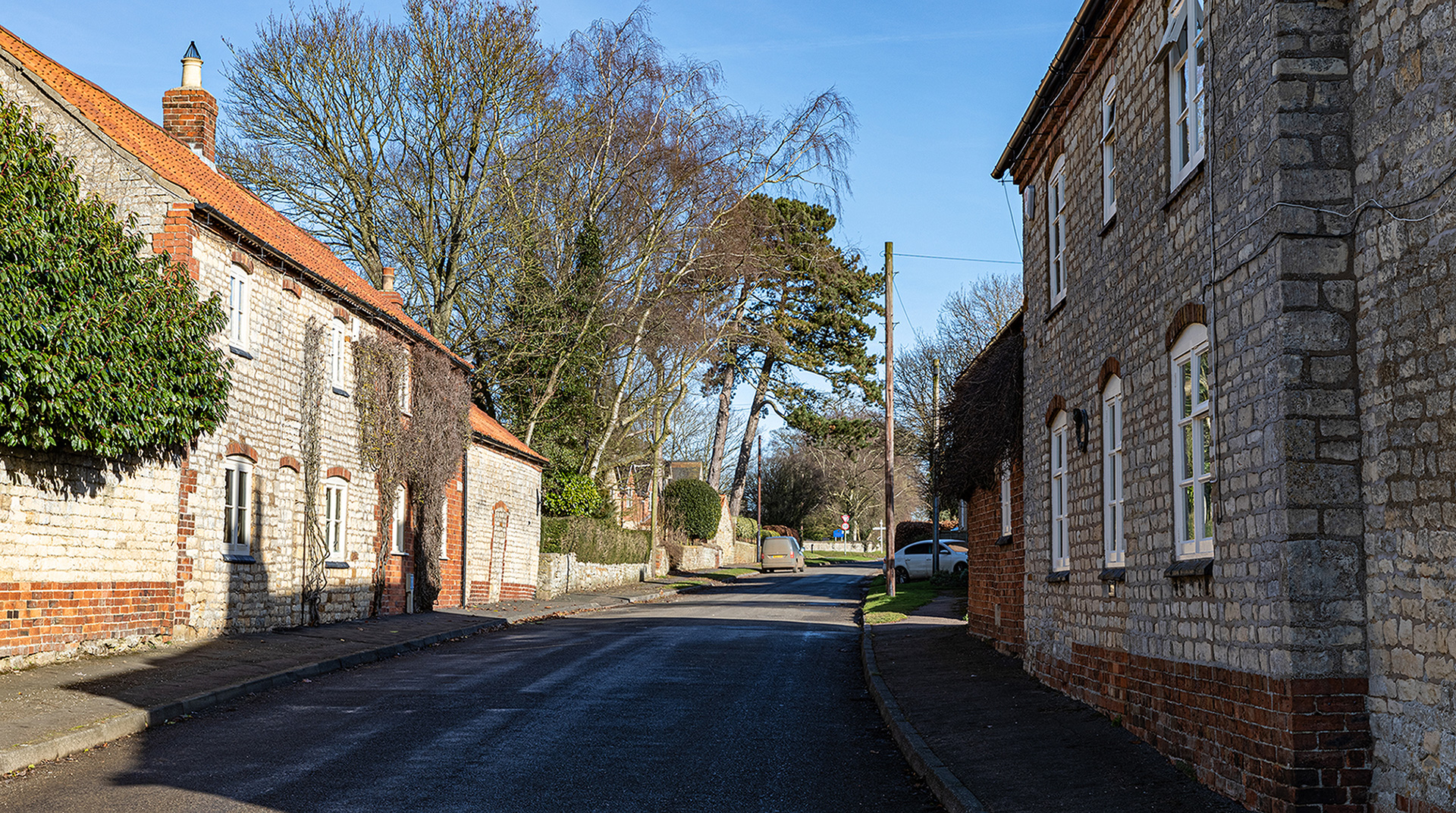
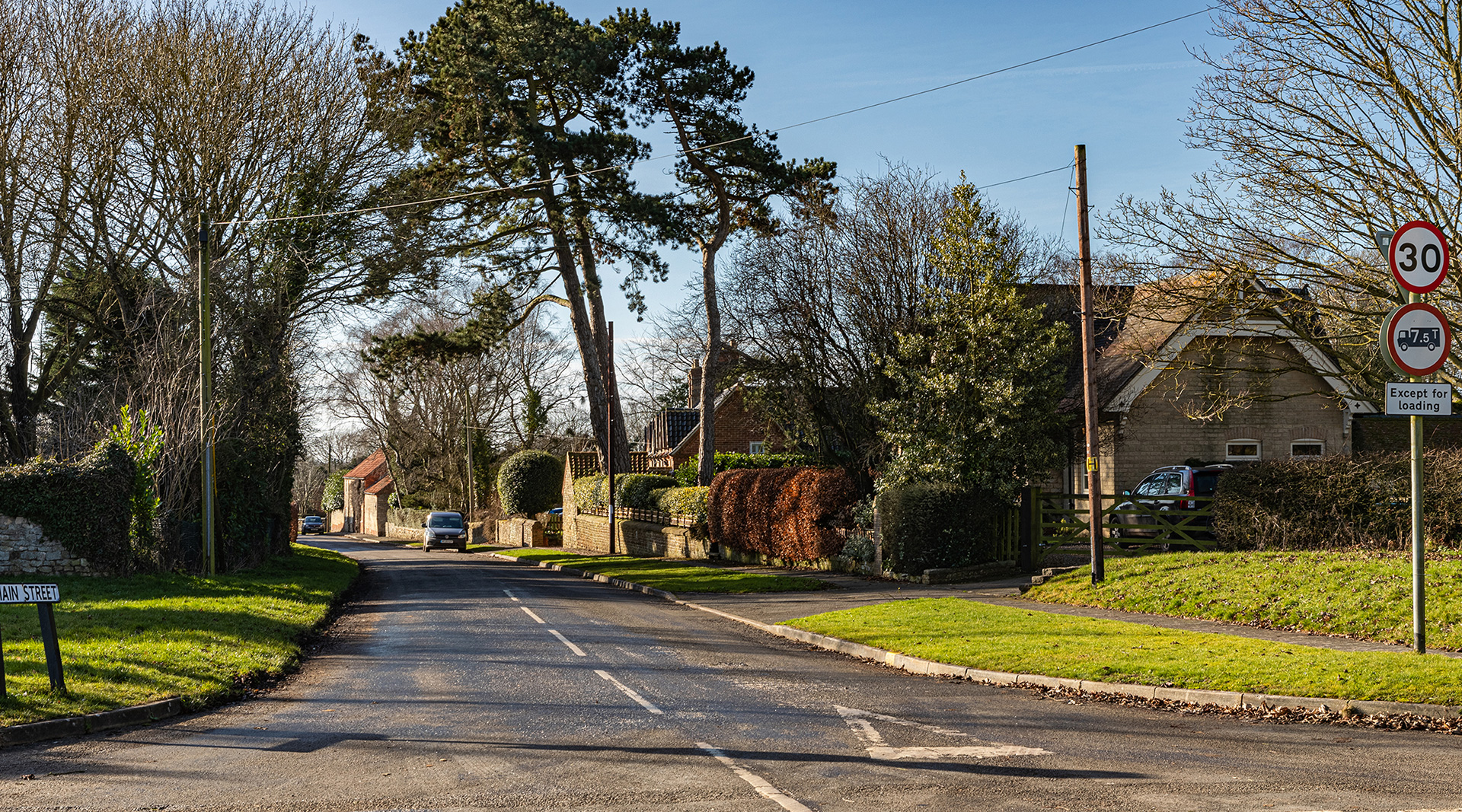
“This was Moor Farmhouse,” said George when he pointed to the right. “They farmed a bit of land up to the road from Stonesby to Saltby, called Saltby Moor. Saltby Heat is on the opposite side of the village, in the direction of the church. The farmer, Jack Cobley, was a jack-of-all-trades because he did not have that much land, so he also killed pigs and did all sorts of other jobs. He was a very nice man. I still remember the door at the front of the house as pictured in the old postcard.”
Opposite Moor Farmhouse was the old post office before it moved around the corner, also on Main Street. On the old postcard, it looks like there were two cottages, but in the 1940s it was already one dwelling with an outhouse as a barn. “Mr Pritchett ran it,” recollected George. “Mr Pritchett was my granddad,” added Roger Wright. “He had a smallholding and a shop in the farmhouse with the post office. He delivered the mail walking about five miles daily until he and his wife moved into our house in Melton Mowbray around 1966-67. My grandparents used to entertain RAF Saltby personnel on Sunday evenings, playing card games. It was when my aunt met her husband, as he was in the RAF.”

Further, along the street in the direction of the church, George still remembers the two cottages on the right. “They were sold in 1944 as part of a forced sale of nearly 5,000 acres of land and properties of the Belvoir Estate, for death duties the Duke of Rutland had to pay. The cottages made about 50 pounds each.”
On the left are Broom Cottages, built about 250 years ago. While tidying up his front garden, the man who lives now in the cottages explained: “There were originally two cottages – one up one down – as a part of the Belvoir Estate. On the left was the pigsty. Originally separate, it is now one house.”
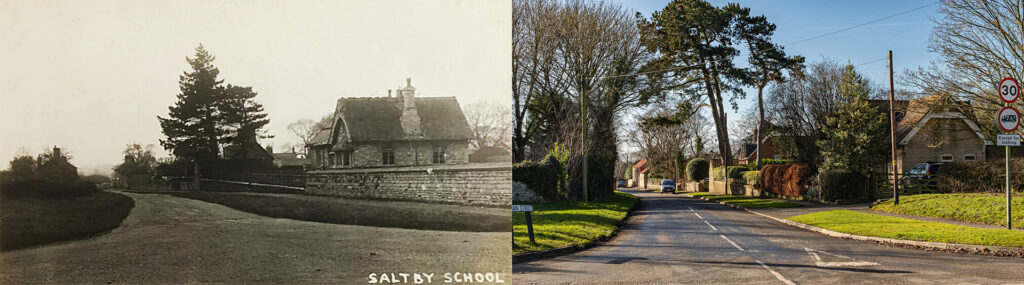
We took another break in front of the Old School House. “I was 8 when my family came to Saltby. We mixed with all the village people, and obviously, in those days you knew everybody. I went to this school. It is a lovely building, isn’t it?” asked George. “There were about 30 boys and girls in the age group of 5 to 11. We just had good fun. The building had a T-plan. The larger part was one big classroom that went right up to the roof. In cold weather, it used to snow in. We had inkwells. When it was freezing, which happened only odd times, they became frozen solid. The teacher sat near the fire with the youngest. Some of the children had to walk a few miles to the school. With wet weather, they were soaked, and upon arrival, also used sat near to the fire to dry out.” George remembered Miss Saywell and Miss Talbert, who lived in Waltham on the Wolds. Saltby Primary School, built in 1871 as indicated by a trefoiled date plaque within a brick surround, closed in 1991 and sold, now a private residence.

Saint Peter’s Church
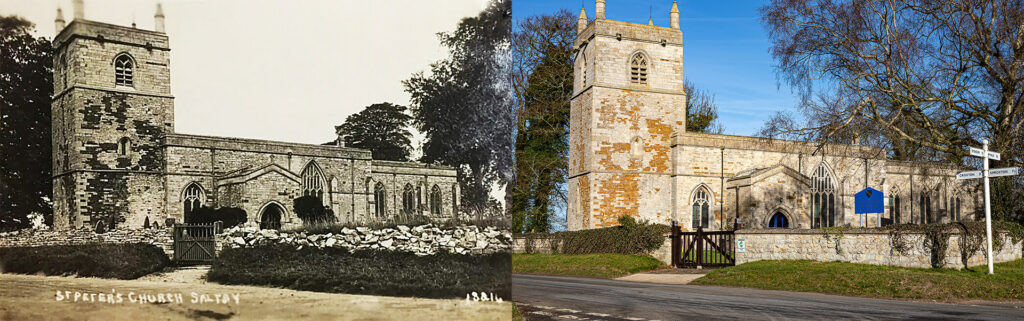
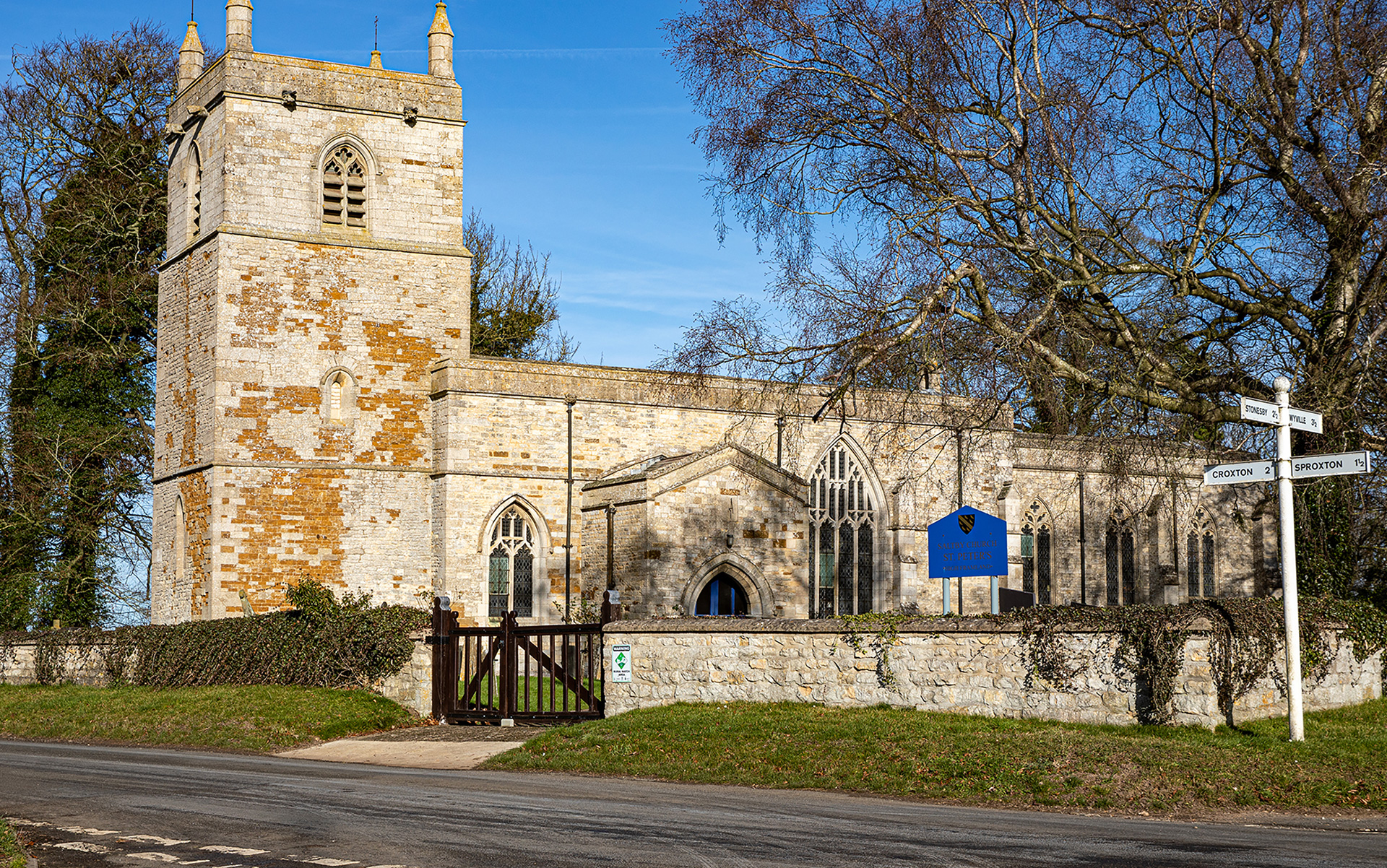
Saint Peter’s Church occupies a somewhat lonely place at the crossing of Main Street, Croxton Road, Wyville Road, and The Butts. The scene hardly changed. Only the stone wall was restored about 30 to 40 years ago.

Although George left the village already in 1968, he comes around sometimes. “When we go to Grantham, I like to come this way, bringing back happy memories. I had a wonderful time and loved the village. Farming was quite hard work. In the 1930s, the farm was run by natural horsepower and gradually changed when you could buy American-made tractors during the Second World War. My father was old school, so he hung on to his horses a bit longer than most farmers did.” George took over the farm. “I worked for myself. When I could, I took a day off, and when it was busy, we worked all hours. When working on the farm, you always could talk to people in the past. Now being a farmer is a quite lonely job spending lots of time alone in a tractor.”
“I stopped because our landlord died, and another took over. In 1963 came Lance Newton, who married Miss Ursula Rank. He wanted to farm the whole village and bought most of the farmland, creating the Saltby Estate.” Nearly 1,900 acres, Newton’s son, Joey, took over in 1976, selling the property again before his 30th harvest.”
Before getting to his car, we ended our conversation on the corner of Main Street and Stonesby Road at the parish information board, where once stood one of the village water pumps. George scanned the landscape to the west and said: “We had two windmills in the village, down there, which supplied us with water. If there was no wind, we got no water. There were a few people in the village who had a well. And we could also go to the brook to fetch water.”
Saint Michael’s Farmhouse, where Gorge grew up, didn’t change much. It is a Grade II listed building anyway. “But the owners spoiled the view with a tall conifer hedge,” George said. “We had an excellent view of all our buildings down there. The tallest one is a barn, where we kept corn and barley for feeding calves, cows and horses. We sold the good quality barley for making beer.” I said goodbye to George and went to The Nags Head.
Back Street
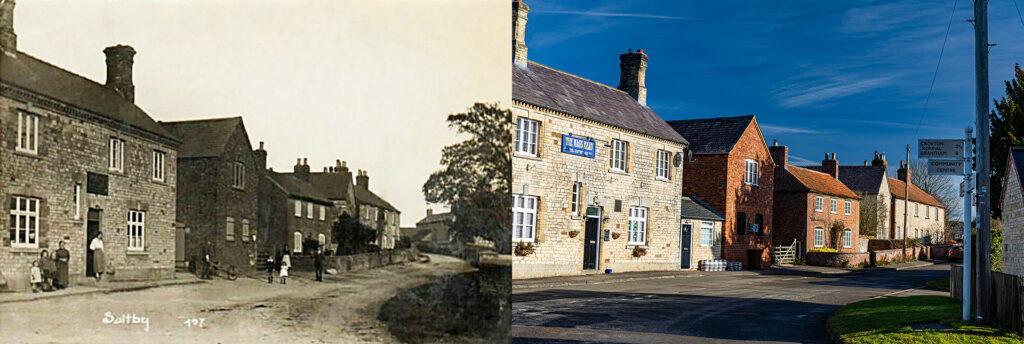
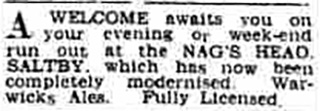
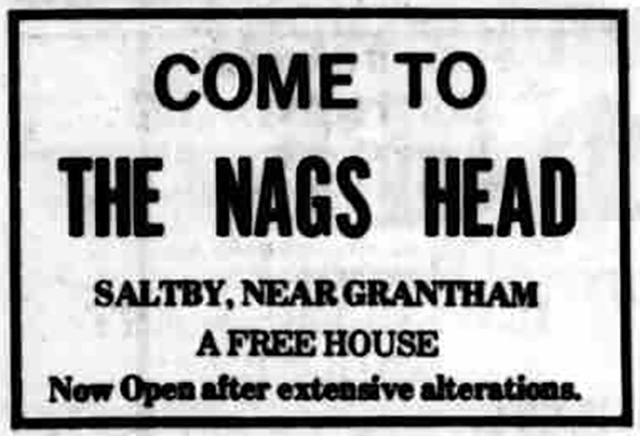
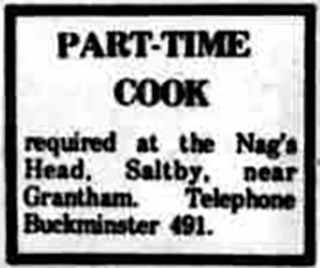
John and Kathy Cox gave me a warm Irish welcome in their pub. “We bought the pub 15 years ago. I had already been in the trade since 1968,” John said proudly. “We were doing voluntary work for the British Heart Foundation after we sold our tenancy in Grantham. We were moving stuff from Grantham to Melton Mowbray. Coming back along the back road, we passed through Saltby and saw this place was on the market. We wanted to buy a free house,” explained John. Kathy added: “We just stumbled on it and stopped for a coffee. A bit later, we bought the pub.”
“In the past, this was not only the pub but also the baker and the butcher,” explained Kathy. In both old postcards of Back Street, The Nags Head is on the left. There was a small driveway that led to small barns in the back. The adjacent building was the slaughterhouse, and there was also an oven to bake bread. While walking through a maze of corridors and rooms, Kathy showed me some original features; an oven and hooks hanging slaughtered animals. Kathy: “It was a sort of the hub of the whole village already more than 100 years ago. They kept the animals overnight to be slaughtered the next day. You can see part of the door in the driveway as the entrance to the place in the red brick building where the slaughtering was done.” The door is still there. The small building between the pub and the former slaughterhouse is now the beer cellar. Beer, bread and meat: what else do you need?
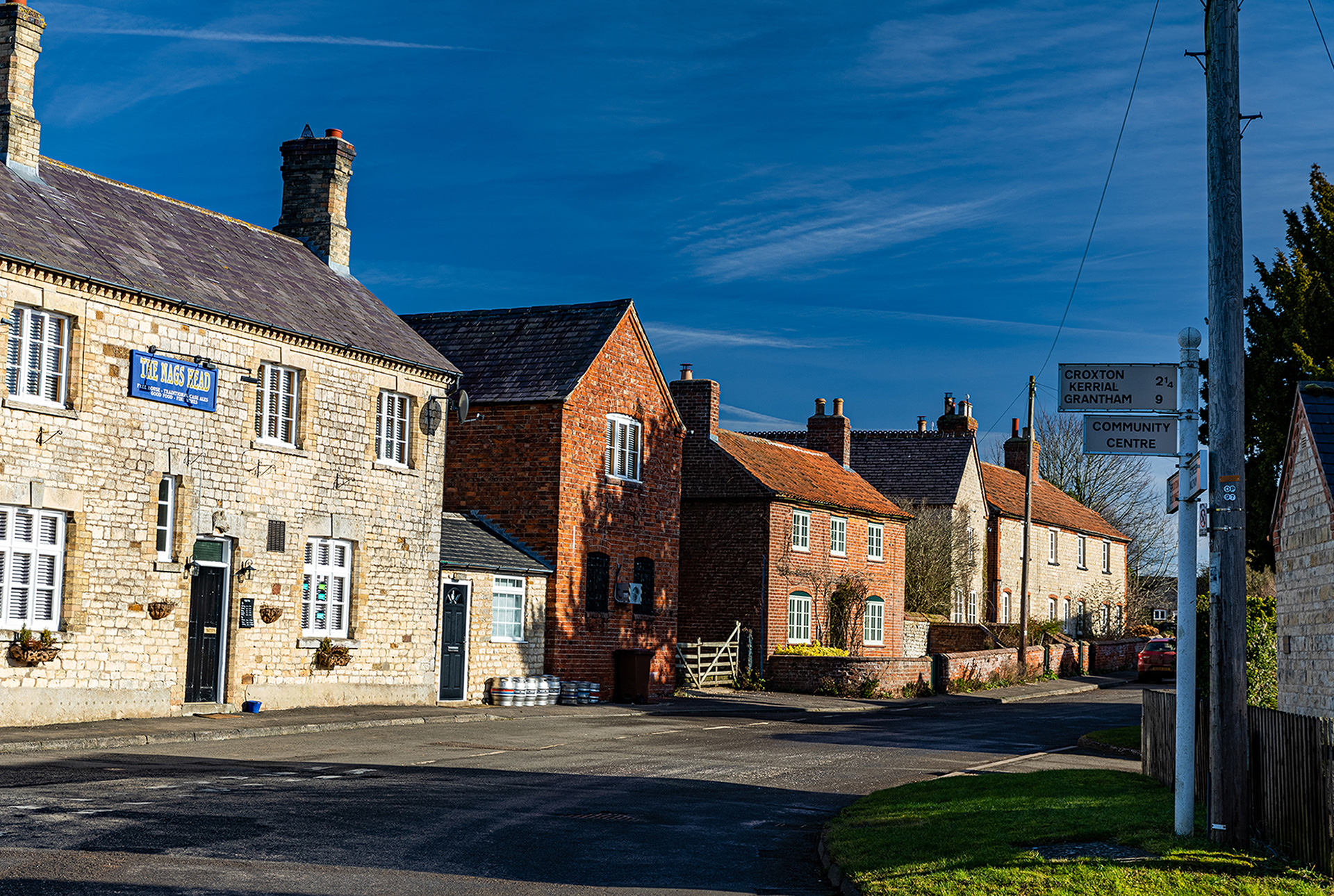
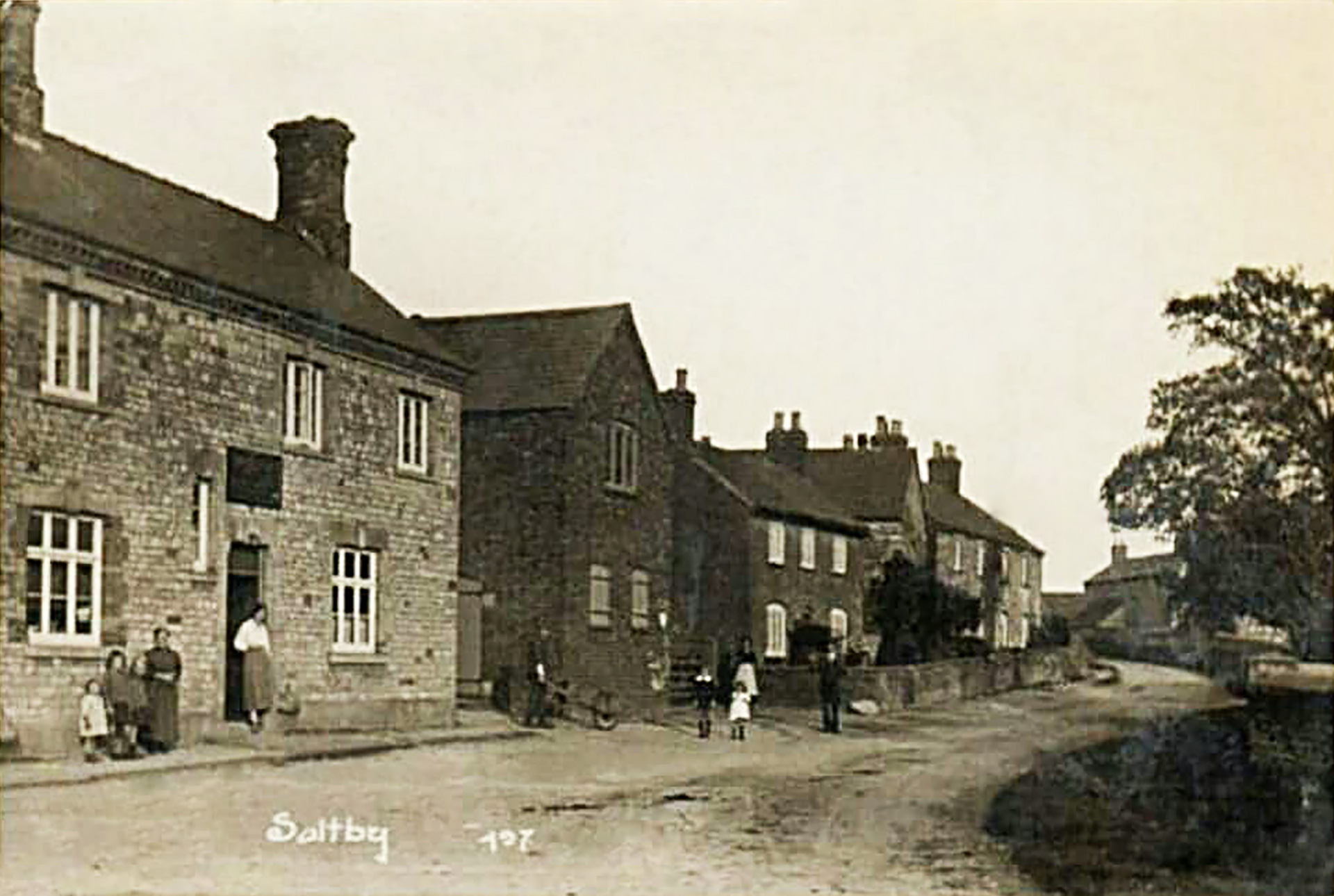
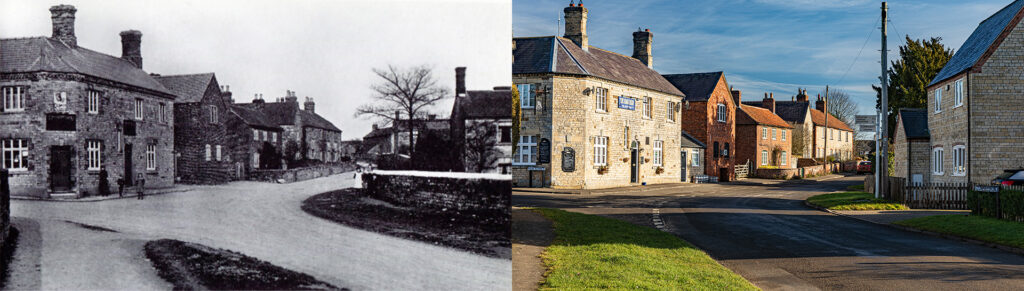
John and Kathy gave a list of names of the former publicans; one list was a series of first names, the other nearly all family names. A puzzle to sort out.
Nags Head Saltby
- John & Catty
- Mark & Pip
- Cheryl & Steve
- Dave & Vicky
- Phil & Jan
- John & Pam
- Robert & Linda
- Kevin
- Mr & Mrs Bailey 1978-1984
- Paddy 1978-198?
- Mr & Mrs Evans 1950-1966
- Mrs Wright
- Mr & Mrs Barker
- Mr Gilbert
- Alan and Linda Loomes 1985-1988
Landlords – Nags
- 1900 Alfred Henry Skinner
- —–
- Mr Barker
- Mrs Wright – WW2
- Mr Jack Selby
- Mr John Evans
- Mr Paddy Duggan
- Richard & Heather Bailey
- Mr & Mrs Jones
- Mr & Mrs Loomes
- Mr & Mrs Parsons
- Mr & Mrs Thetby
- Phil & Jan Man(n)ion
- Mr & Mrs Allen
- Mr & Mrs Milne
- Pippa & Mark Yarwood
- John & Cathie Cox
Other names and dates came up when browsing old newspapers. At the end of the 19th century, Mr Ironmonger was the publican. After his death, the licence was temporary transferred to his widow Ann Ironmonger (Grantham Journal, 23.6.1894). Three other transfers were: Alfred Henry Skinner to Charles Brown (Grantham Journal, 11.5.1912), Townsend Pretty to George Gilbert (Grantham Journal, 4.6.1927) and Mr Barker to Ada Barker, widow of the late licensee (Grantham Journal, 22.10.1942).

Saltby Airfield
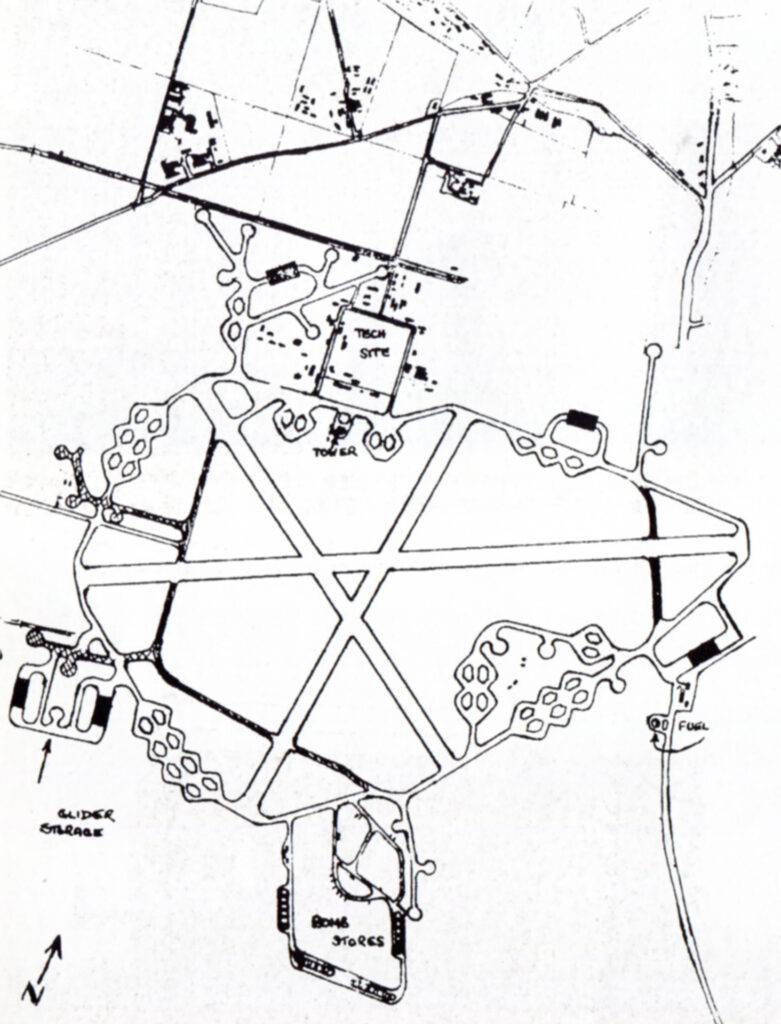
The large area of heathland to the east of the village, partly owned by the Duke of Rutland and Buckminster Estates (Tollemache family), was farmed by tenant farmers before World War Two. The War Ministry took over the land and built a large airfield. Before this, the road leading to Wyville was a rough track and was metalled to facilitate the airfield building.
Initially, a grass airfield satellite to RAF Cottesmore, RAF Saltby opened in August 1941 for British and Polish squadrons. The airfield was home to Hamden aircraft, Stirling bombers and Wellington bombers. In 1943 the airfield was extended and became home to the American airforce. In February 1944, it had three concrete runways that allowed large transport planes to land. Airborne troops departed from Saltby for the Normandy invasion, June 1944 and Operation Market Garden, September 1944 (). The main entrance was in the village of Saltby.
Saltby aerodrome and its associated buildings were very large and extended to the double bend at the Viking Way on Wyville Road.
The base was closed as an airfield in late 1945. “After the war Saltby Airfield was used to house prisoners of war,” recollected Angela Klawitter. “The Leicestershire Agricultural executive committee later took on the accommodation to house remaining prisoners who worked on the land before being discharged or sent home. My father was a German POW and worked there as cook in 1948.”
Sold in 1955, much of the site has since been demolished. One of the concrete runways was removed entirely. Approximately half of the land within the original perimeter track is now used for agriculture. A part remains active as Saltby Airfield, home to the Buckminster Gliding Club since 1971.
Today, the airfield consists of most of the main runway (07/25) and around half of runway (02/20), which runs from the start of 02 to its intersection with 07/25. The old hangar now covers just part of the concrete footprint of the original war-time main hangar. Running alongside 07/25 is a grass runway primarily used for landings, avoiding aircraft launching on the concrete runway.
Would you like to add your story and recollection? Leave a comment at the bottom of this page or send a message.
More pictures
Would you like to add pictures? Send a message.
Domesday Book
Saltby was a settlement in Domesday Book, in the hundred of Framland and the county of Leicestershire.
It had a recorded population of 77 households in 1086, putting it in the largest 20% of settlements recorded in Domesday.
Land of Roger of Bully
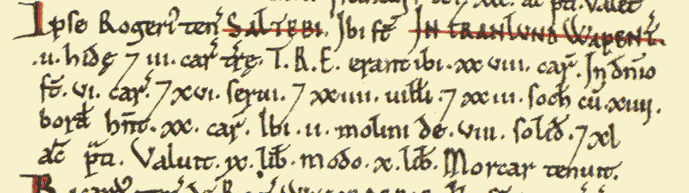
- Households: 24 villagers. 23 freemen. 14 smallholders. 16 slaves.
- Ploughland: 28 ploughlands. 6 lord’s plough teams. 20 men’s plough teams.
- Other resources: Meadow 40 acres. 2 mills, value 8 shillings.
Valuation
- Annual value to lord: 10 pounds in 1086; 9 pounds when acquired by the 1086 owner.
Owners
- Tenant-in-chief in 1086: Roger of Bully.
- Lord in 1086: Roger of Bully.
- Lord in 1066: (Earl) Morcar.
Links
Would you like to add a link? Send a message.
4 responses to “Saltby”
Are you sure that Mr Pritchard ran the Post Office and my granddad did and his name was Pritchett. He had a small holding and a shop in the farm house with the post office. He delivered the mail walking about five miles daily until he and his wife moved in to our house in Melton Mowbray around 1966/67. My grand parents use to entertain RAF personnel on Sunday evenings, playing card game. It is we’re my aunt meet her husband, as he was in the RAF.
I will correct the name and add your info to the story.
After the war Saltby Airfield was used to house prisoners of war. the Leicestershire Agricultural executive committee later took on the accommodation to house remaining prisoners who worked on the land before being discharged or sent home. My father was a German POW and worked there as cook in 1948. I have some photographs of the camp and the Warden Mr Chandler if you would like them
Thank you Angela for this information, that will be added to the story. I would be glad to publish some of the pictures on this Saltby-page. Please send the photographs to info@newtraces.uk.