
Old Hall and Church – 1895
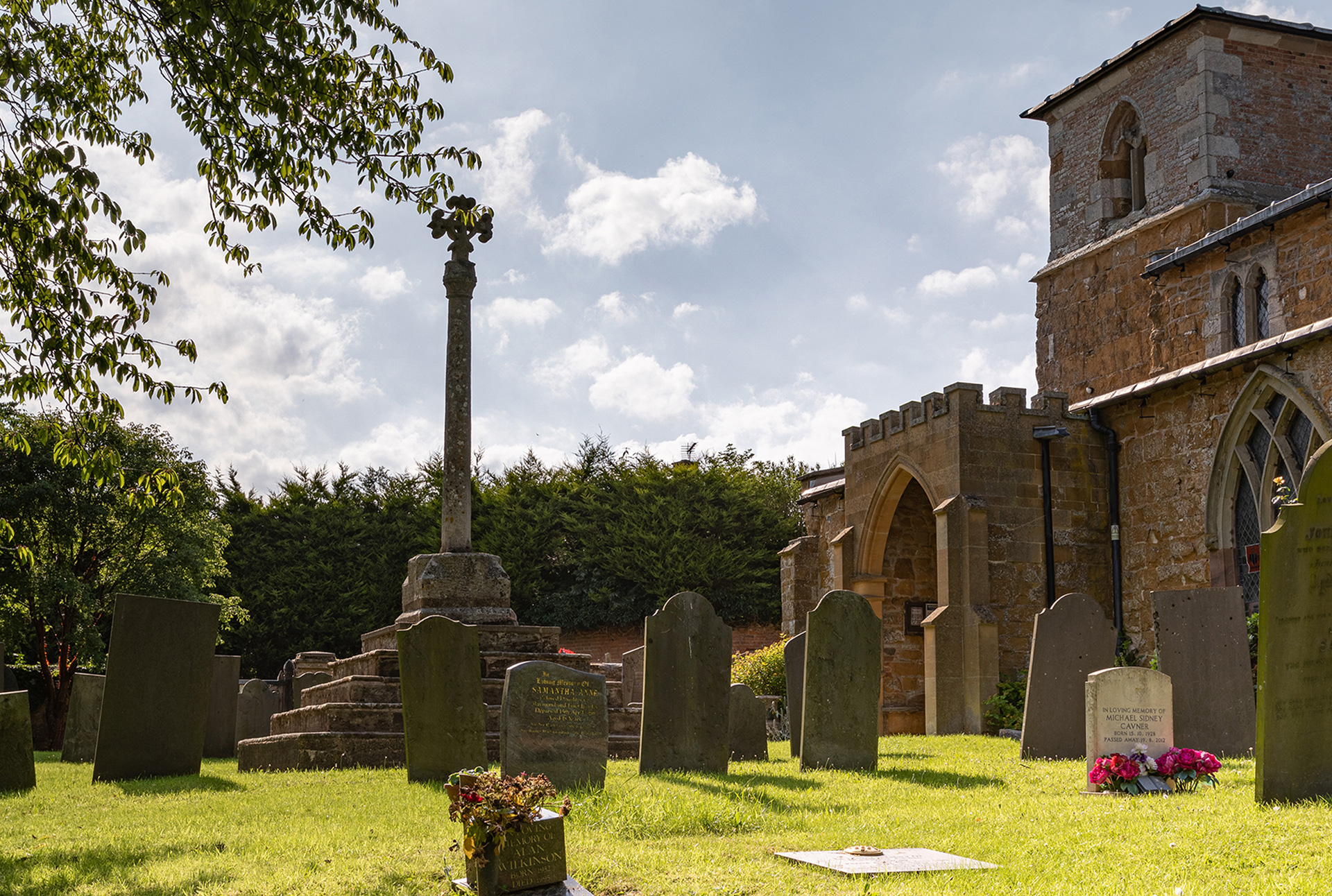
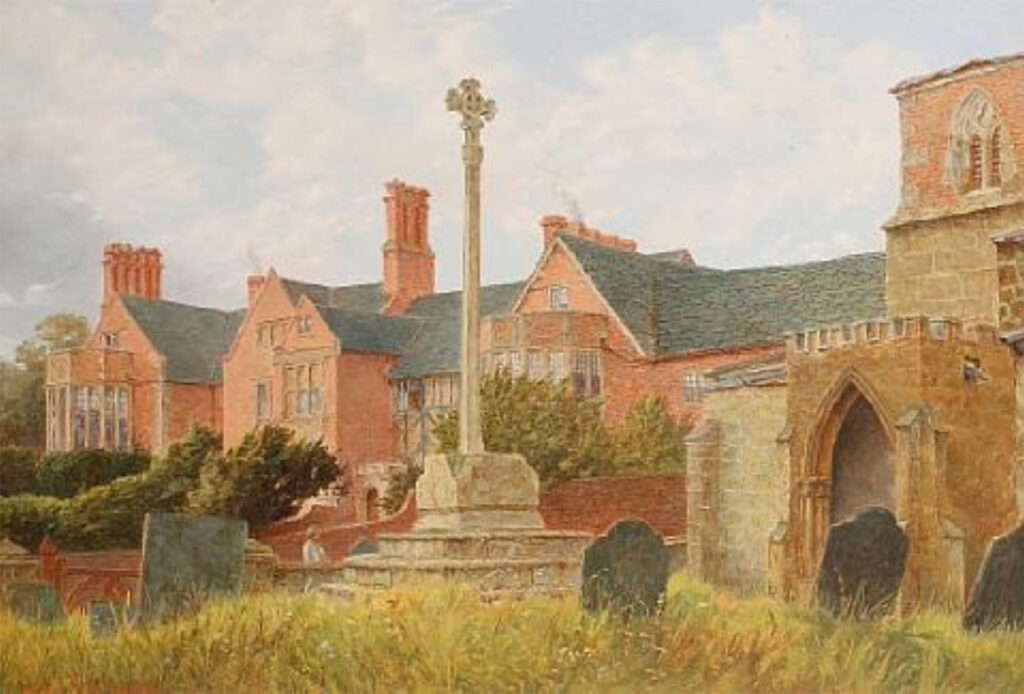
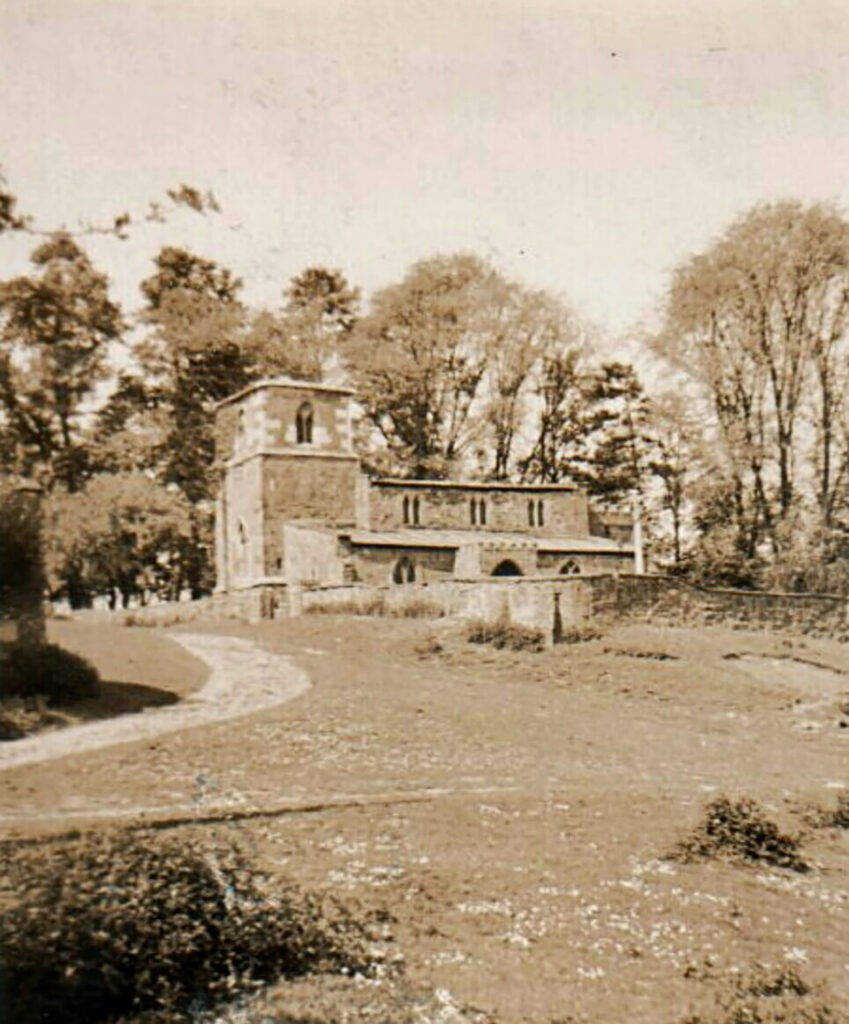
A Medieval cross with a sturdy base in a churchyard surrounded by old and new gravestones, some sheep with thick wool, a 13th to 15th century stone church and a mysterious looking Elizabethan Hall are the four subjects in a late 19th century picture of Ragdale. Ragdale is a small village sitting on the north bank of a feeder stream to the River Wreake.
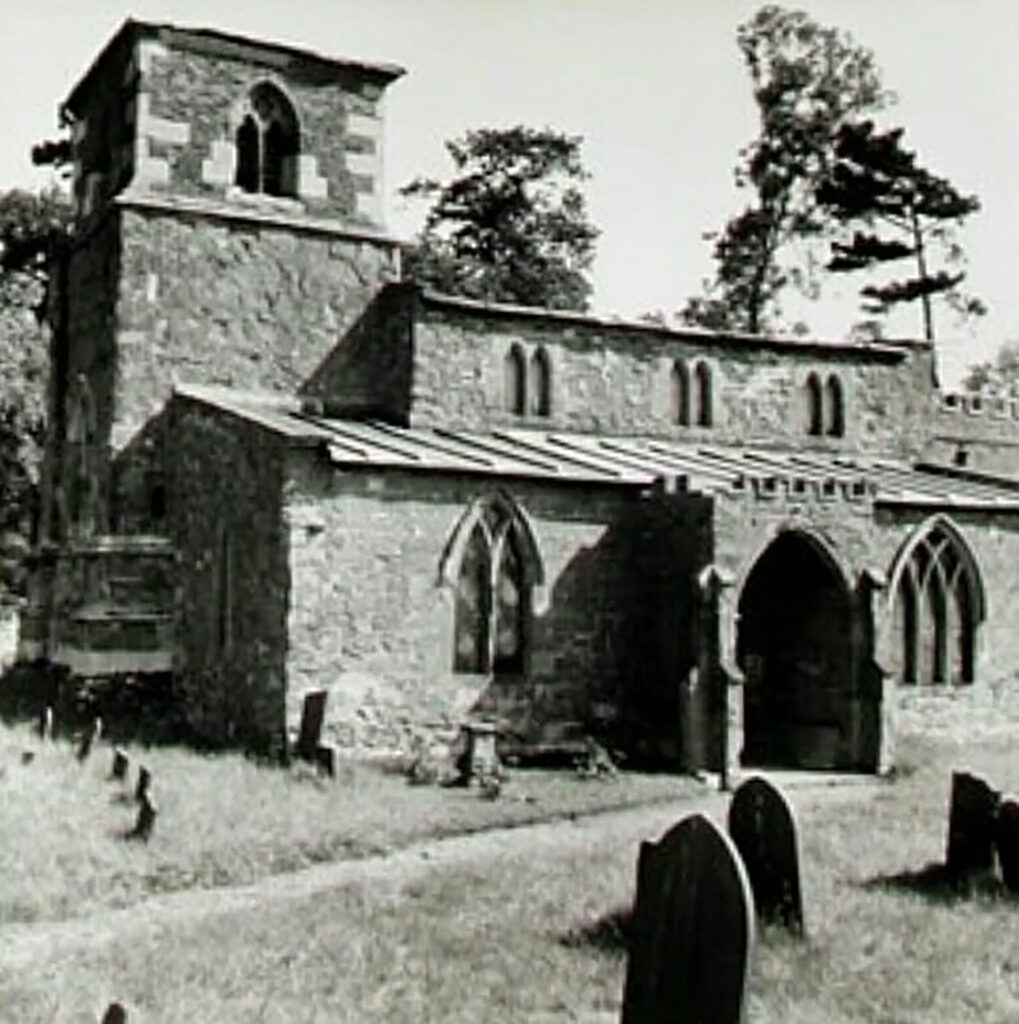
In search of the same spot I walk from Six Hills Road passing an old kissing gate on a curving slightly uphill pathway, avoiding the droppings left by the grass nibbling sheep. All Saints Church and the churchyard cross are hidden by a few trees. A sign on a wooden entrance gate to the churchyard warns to keep it shut and bolted because of the livestock in the adjoining field. The gate, which needs some new paint, is adorned with coloured fluffy balls, a tradition. Gary Asher recalls: “My father was vicar of Ragdale, Hoby, Rotherby and Brooksby from 1958 until he passed away in 1975. One of the highlights was the midnight service at Ragdale on Christmas Eve. As I remember the two church wardens, Mr Foinette and Mr Geary, aided by locals, used to decorate the church and place lanterns along the pathway through the field. For years the church would be packed.”
The church claims to have the oldest church bell in Leicestershire, dating from around 1300. There is one other old bell and a third from 2000, commissioned to celebrate the Millennium. The bells can be struck, but not rung.
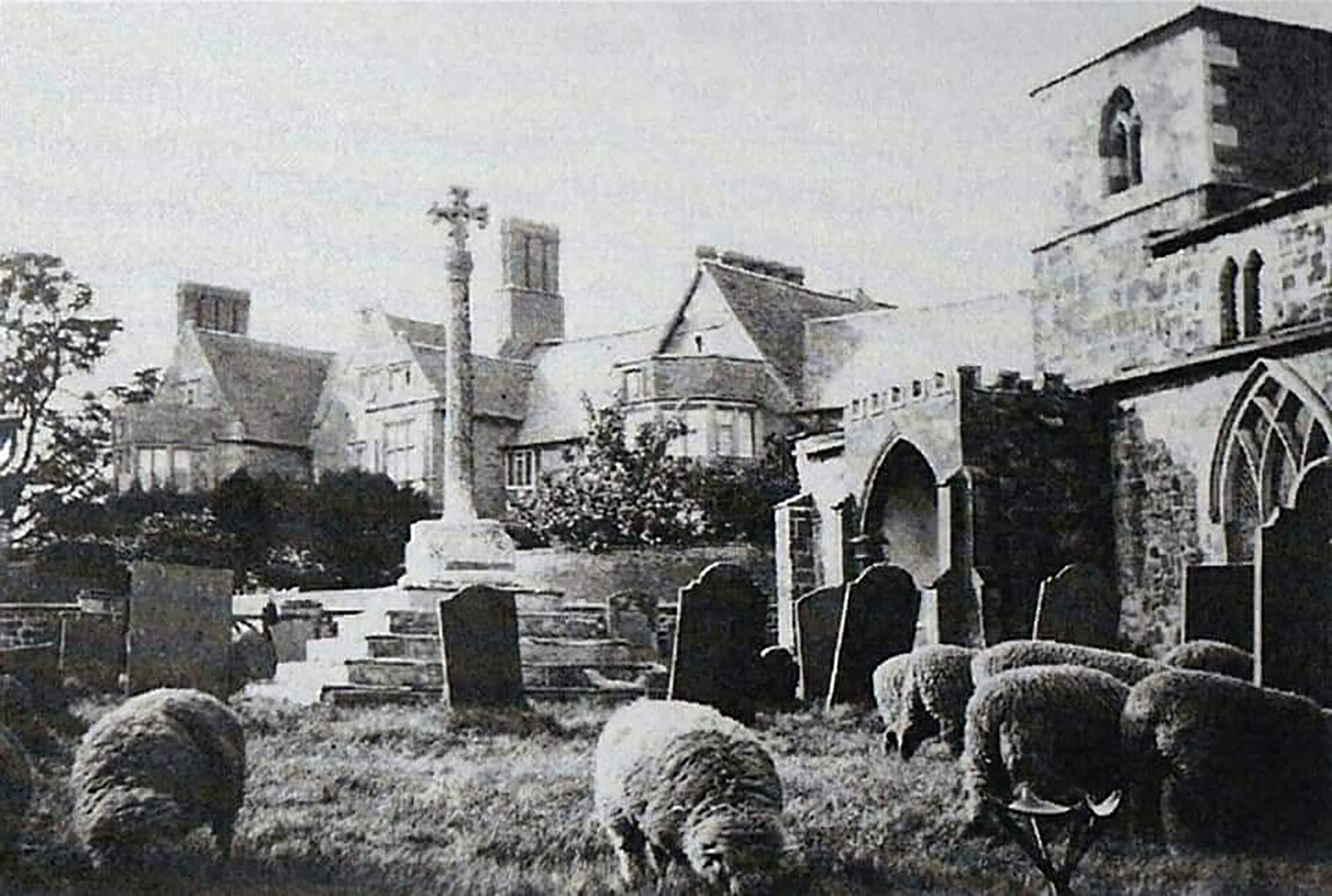
The old picture was taken in 1895 by George Moore Henton. He was born in Leicester, the son of a senior clerk at Paget’s Bank in 1861. Henton was trained as an artist and died in 1924. He lived in Leicester and Windsor and most of the photographs reflect this. On the picture also his photographers stool can be seen.
Old Hall and New Hall
The story of the early 16th century Hall, better known as the Old Hall is less uplifting for the simple fact it was dismantled in the autumn of 1956 after it had become a crumbling ruin over 25 years. The Leicester Evening Mail dated October 12 titled “So ends the glory that was Ragdale” featured its last owner, Charles Bramley, who talked about the start of the works removing the lichen-covered Swithland slates, some destined for immediate re-use in restoring the roof of Leicester Castle.

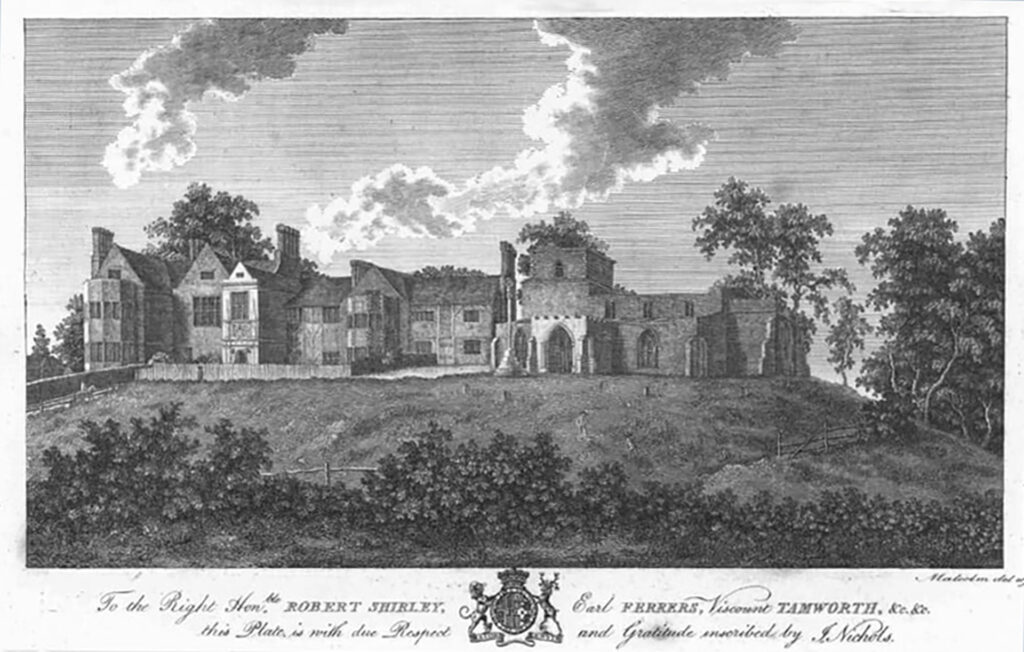
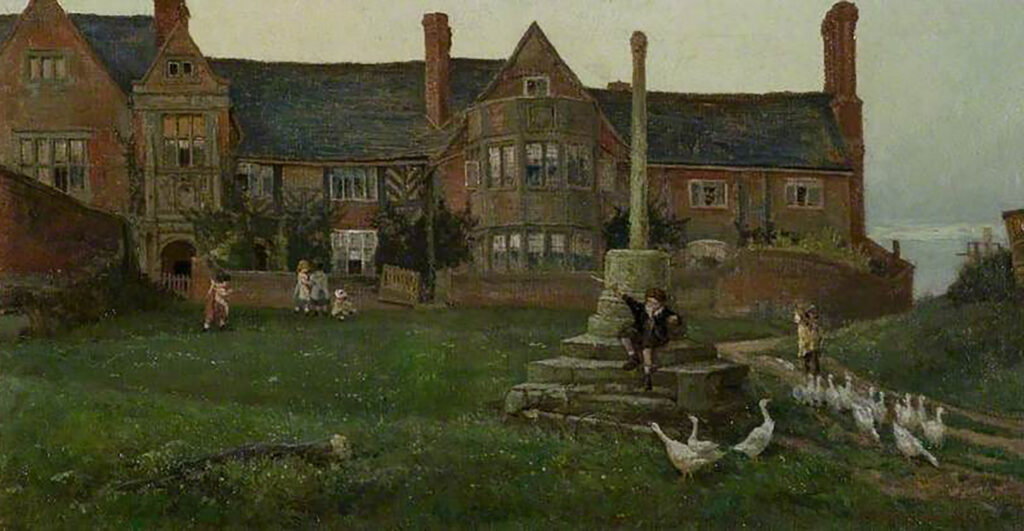
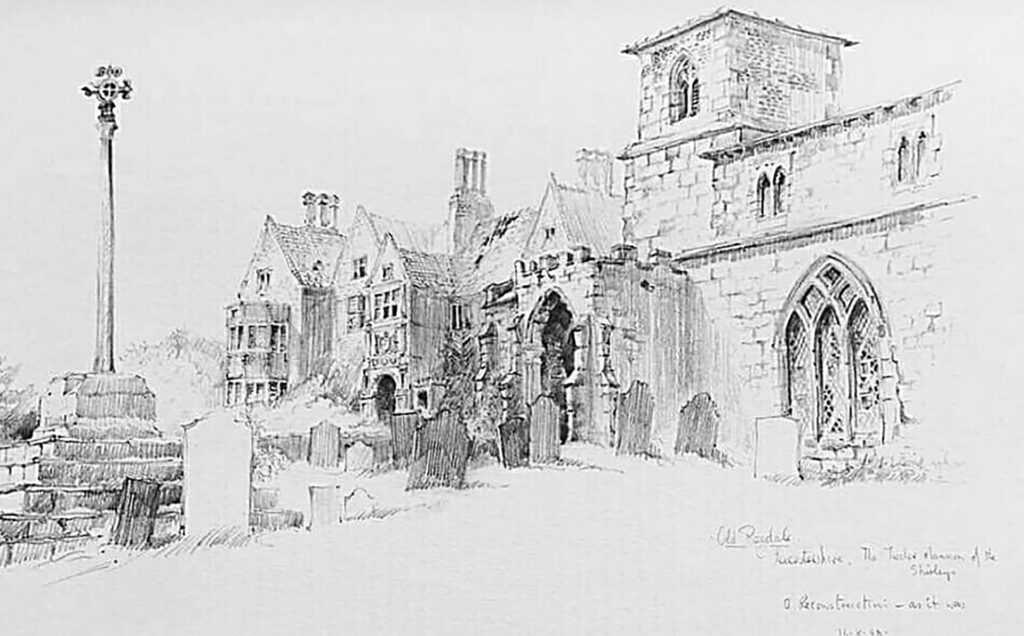
Ragdale Old Hall was built by the Shirleys in 1510 as a falconry lodge and only occupied when a hunting party was present. Greatly refurbished and embellished in 1629 by Sir Henry Shirley, the Hall was one of the finest of its kind in the whole country. The Shirleys became the Earls Ferrers in 1711, Ragdale Old Hall becoming their formal seat.
On an elevated position, about a mile northwest of Ragdale, a New Hall, the one that still exists, was built in 1785, in the Late Georgian period by the 6th Earl Ferrers in the neoclassical style. It was a large, cemented building, considered modern for its time, and was surrounded by an ornamental water-filled moat.

The Old Hall was converted into two semi-detached farmhouses and rented out to local farmers and tradesmen, even after Duchess De Sforza Cesarini became the owner, following the death of her grandfather the 7th Earl Ferrers in 1837.
At the end of the 19th century and the beginning of the 20th century photographs of the Old Hall taken by Charles Latham were printed in two reference works on English architecture. One print can be found in Architecture of The Renaissance in England (Vol 1), 1894, illustrated by a series of views and details from buildings erected between the years 1560-1635, with historical and critical text.

A series of five photographs with the early history of the Old Hall was published in In English Homes (Vol 2), 1907.


Gradually the building was more and more neglected and became a ruin.
Artists captured the Old Hall in paintings, drawings and photographs, keeping its history alive.
On the village
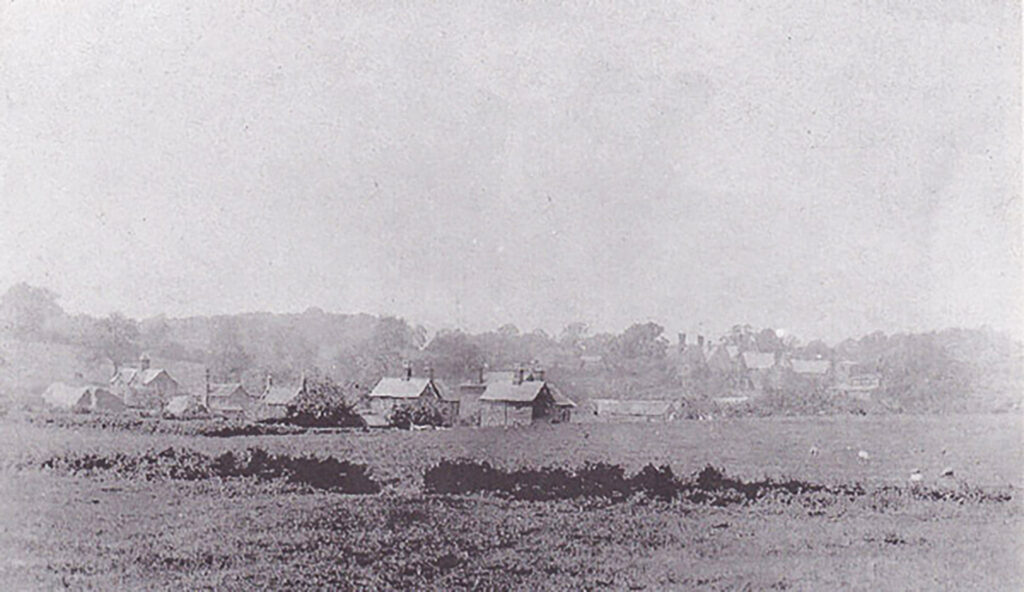
The village of Ragdale is first reported as an Anglo-Saxon settlement situated near the Roman Camp at Six Hills. During the reign of Edward the Confessor (ca 1050 AD) the village consisted of six plough lands and was valued at 16 pence. Seric, a freeman “held 3 curacates at Ragdale”. The name of Ragdale has had a number of variations over its one thousand year existence. The village has been known as Ragendale (mentioned in the Domesday Book of 1086), Rakdale, Radgdale on the Willows, Rachedale, Rekedale, Rakedale, and more recently Wreakedale through to the early 1800’s, when the village became known by its modern name of Ragdale. The interpretation of the name is said be “a settlement in a crooked valley” or a break or “rake” which forms a deep “dale”. This deep dale starts about a quarter of a mile to the north the village and extends southwards for a mile, where it narrows to allow a small brook to pass to Hoby and then into the River Wreake. The village is situated on the banks of this small brook, which flows southward from the Wold Hills through this picturesque dale.
More pictures

Domesday Book
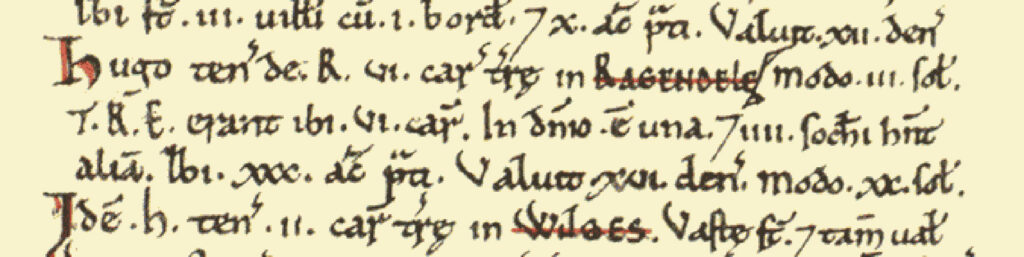
Ragdale was a settlement in Domesday Book, in the hundred of Goscote and the county of Leicestershire.
It had a recorded population of 4 households in 1086, putting it in the smallest 20% of settlements recorded in Domesday.
Land of Robert of Bucy
- Households: 4 freemen.
- Ploughland: 6 ploughlands. 1 lord’s plough teams. 1 men’s plough teams.
- Other resources: Meadow 30 acres.
Valuation
- Annual value to lord: 1 pound in 1086; 1 shilling and 2 pence when acquired by the 1086 owner.
Owners
- Tenant-in-chief in 1086: Robert of Bucy.
- Lord in 1086: Hugh.
Links
- Hoby & District Local History Society – Ragdale
- Historic England – Gallery on Hoby with Rotherby
- Architecture of the Renaissance in England (Vol 1), 1894
- In English Homes (Vol 2), 1907