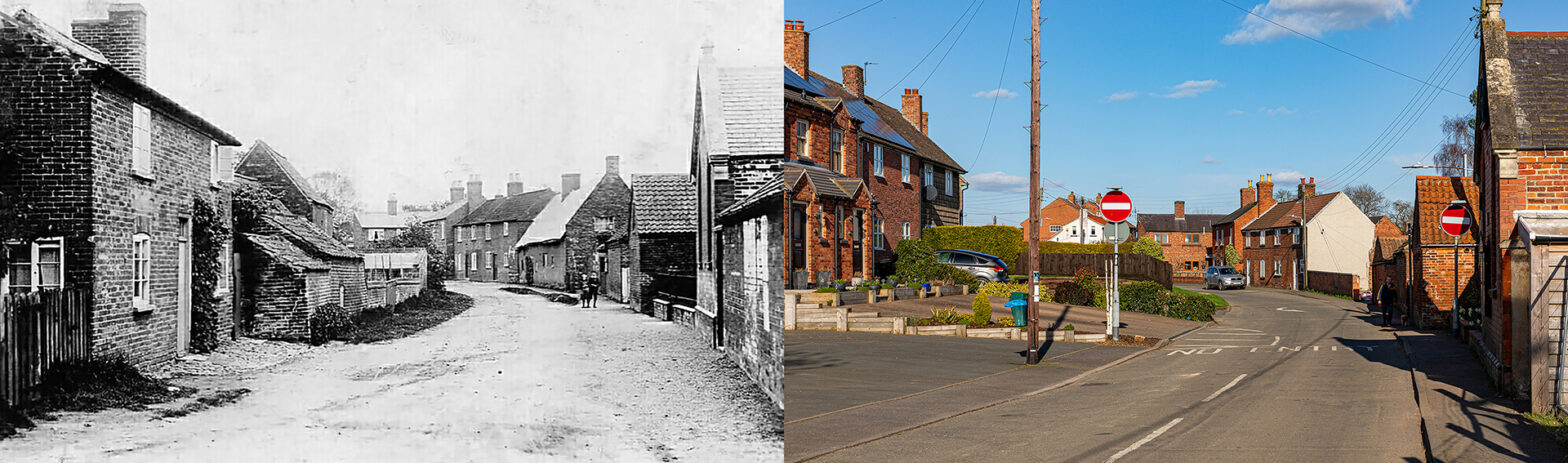
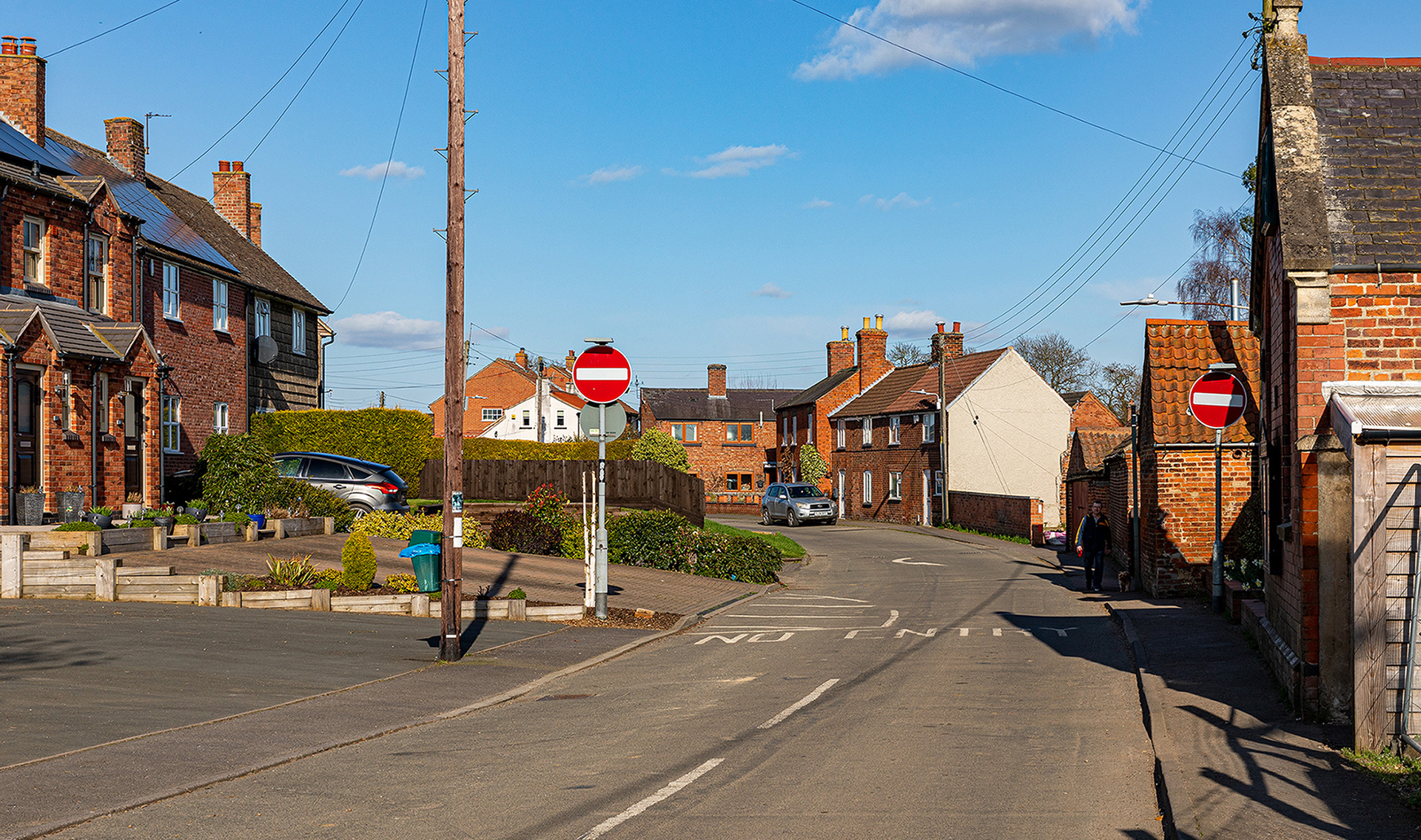
Chapel Lane – Around 1908
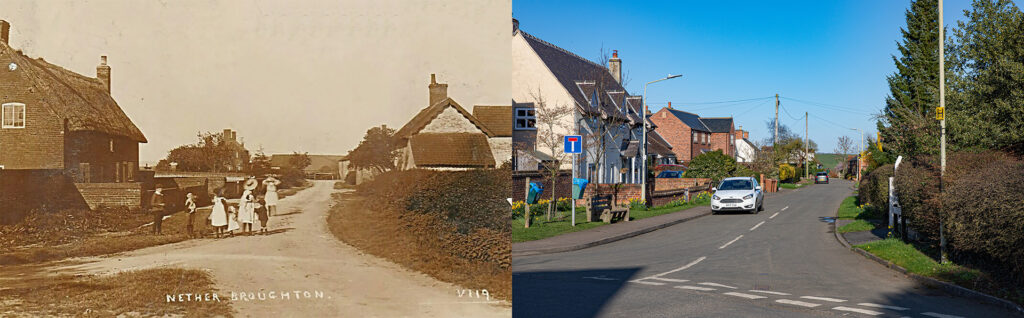
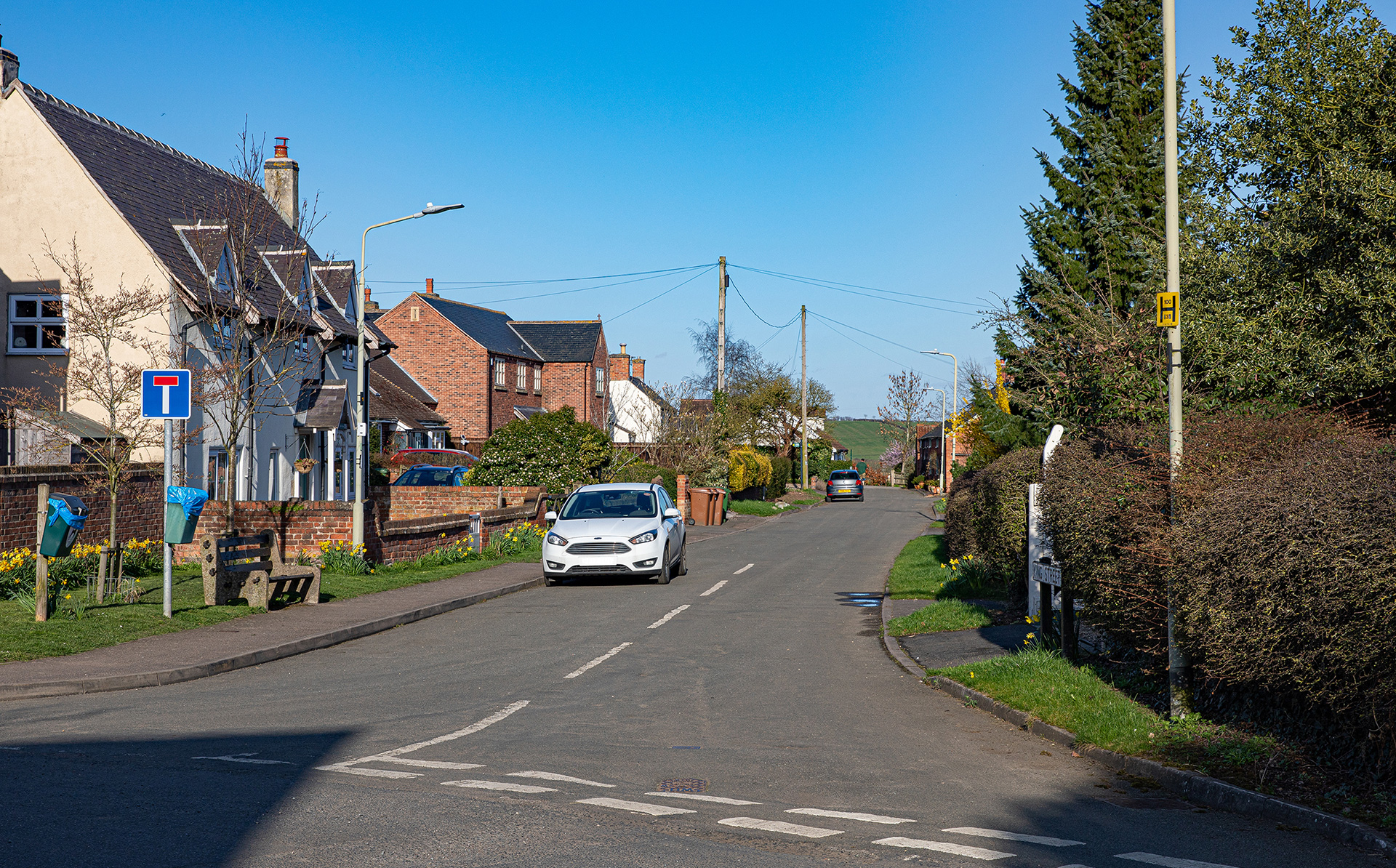
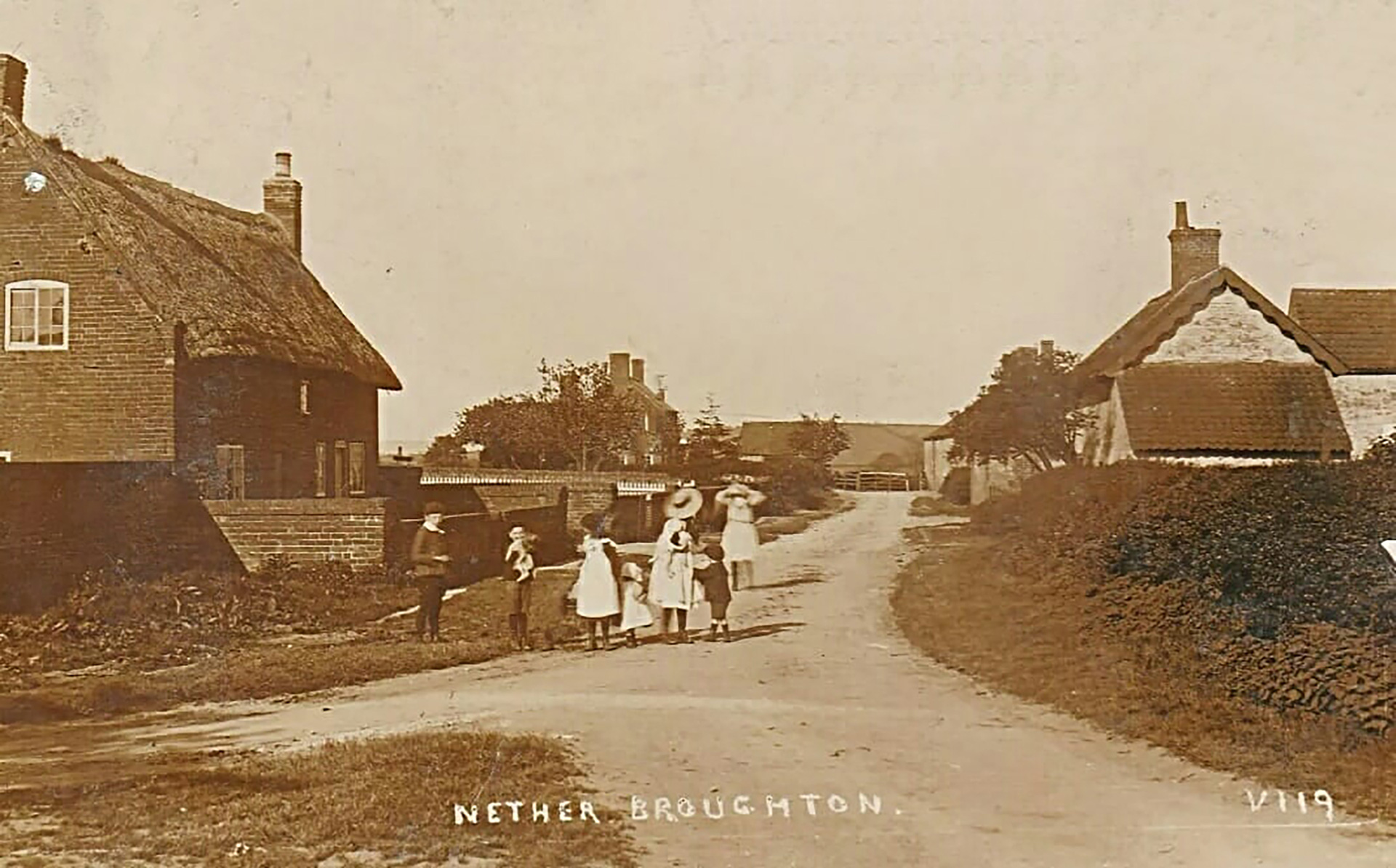
The view of Chapel Lane, now a one-way street, is hard to recognise, except for the profile of the chapel and three houses further down the street, all on the right. Dodi Honisett remarks: “My partner, Mark Goodman, his nan and grandad lived in the now knocked down brick house on the left”. Isobel Sommerville moved into the village in 2003 and confirms the house had gone by then. “Although the stable and the outhouse remained standing until the new build began about 6 years ago. But time flies, so maybe it is longer.”
A man and his dog, hidden by an outbuilding’s shadow, walk past the same spot where the children posed in the old picture. “That is our outbuilding and garage, and is still the original structure, including a couple of internal mud walls”, Louise Bridgeman says. “We live in a house that replaced the demolished cottage.” A low brick wall makes a vague memory.
Chapel Lane refers to the Wesleyan Methodist Chapel, pictured in front on the right side. It was built in 1839 and converted to the Village Hall in 1985. An information board opposite the car park tells the whole story. It is one of nine heritage trail boards, scattered around the village, depicting local history.
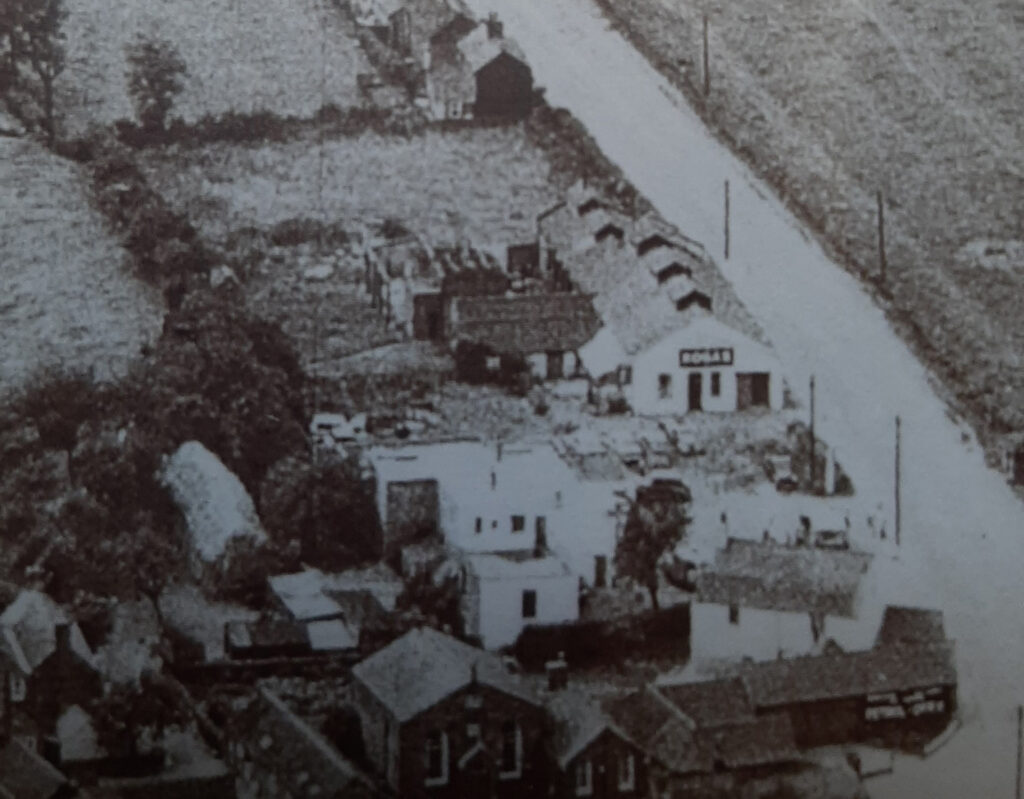
Born in the village, John Finch is a mine of information. He is full of memories about Nether Broughton. Just before taking the new picture, a school bus stops in front of the old chapel. So, I have to step aside and wait on the footpath, at the corner with the A606, a busy road skirting the village. Looking around, I notice the last bits of a demolished building. John recalls “That was the Stilton Cheese Dairy and Pork Pie factory run by the Thompson family. My dad was an apprentice pie maker until he was called up for World War II.”
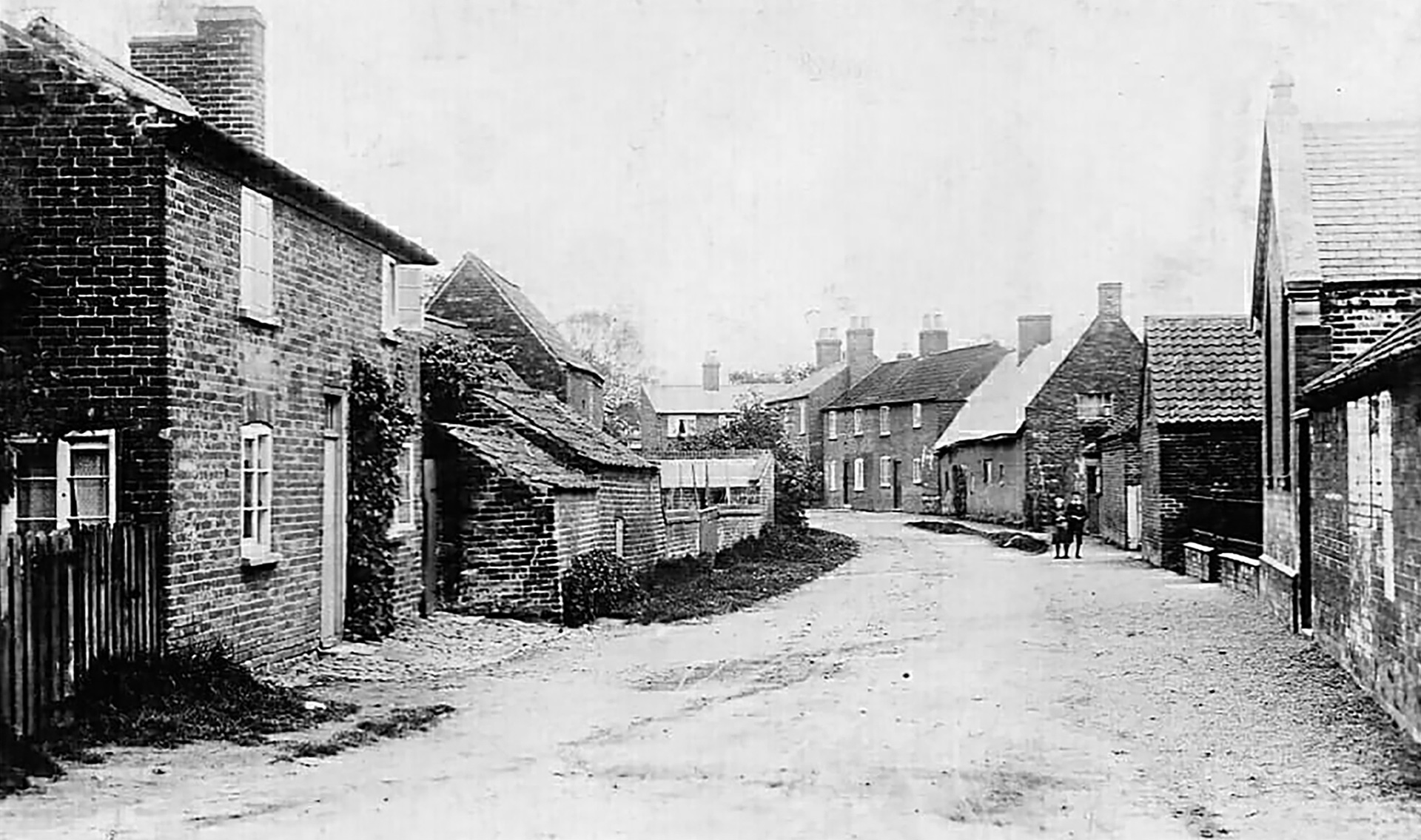
Along the A606 I have a clearer view of the demolished factory. The foundation for some new houses is already visible.
Carefully strolling on I take a left on Middle Lane. In the second part was the Post Office on the right. John Finch did send me a picture of that. “I was born in the cottage on the right. The white building is the old Post Office.”
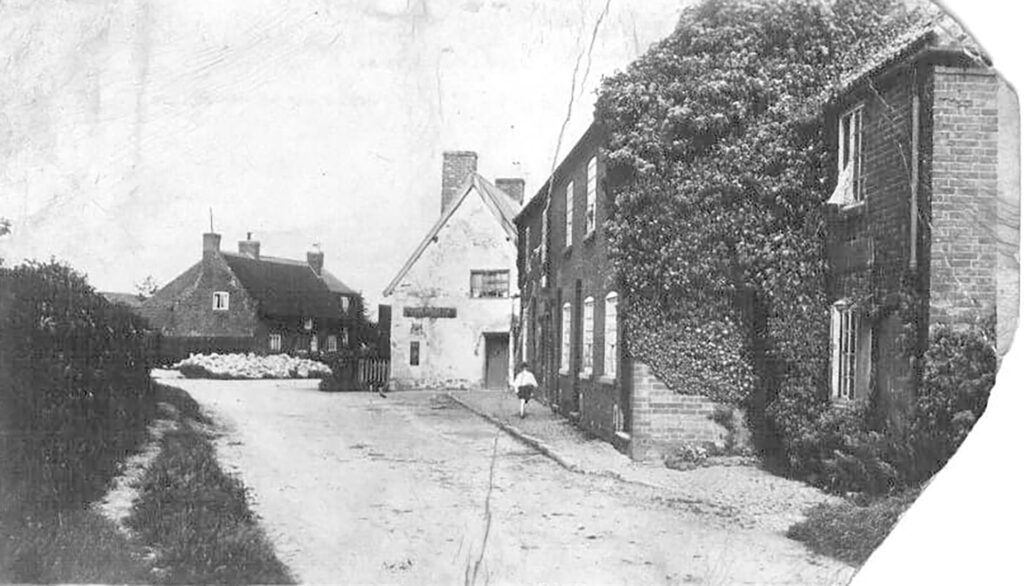
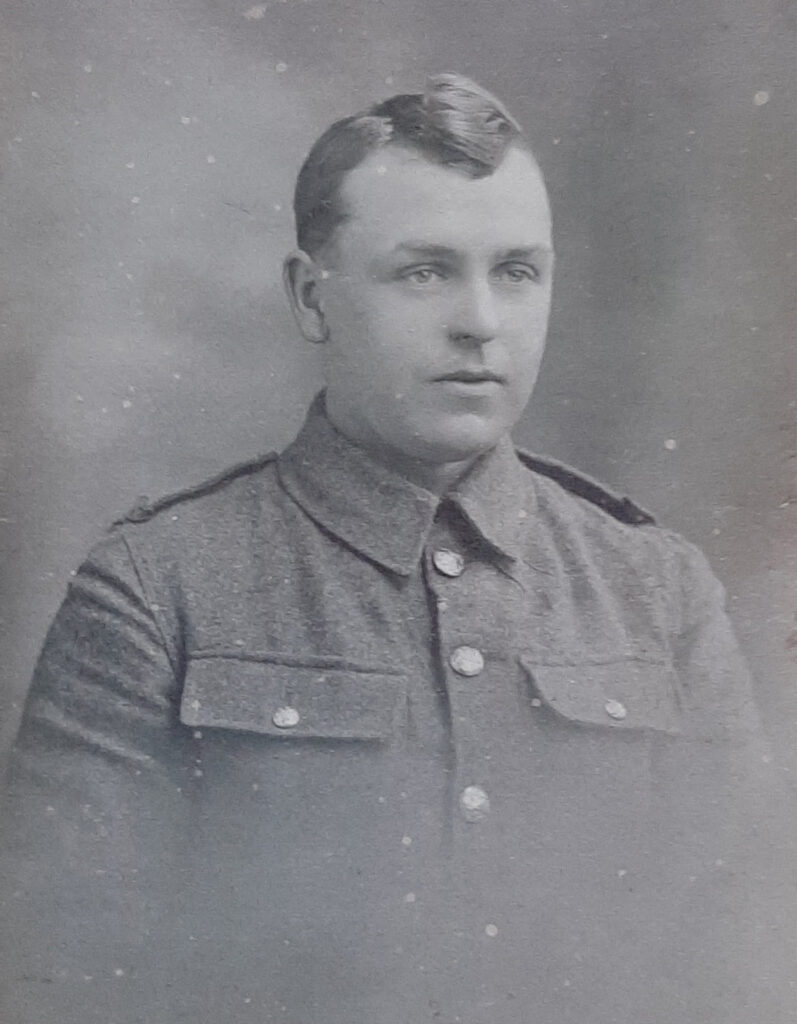
John told me about his grandparents and parents life. “My grandfather, George Thomas Shelton and Rose his wife, along with his parents lived in Hill View Farm Nether Broughton. After three exemptions to help on the farm, he was called up to go to war in 1916 aged 22.”
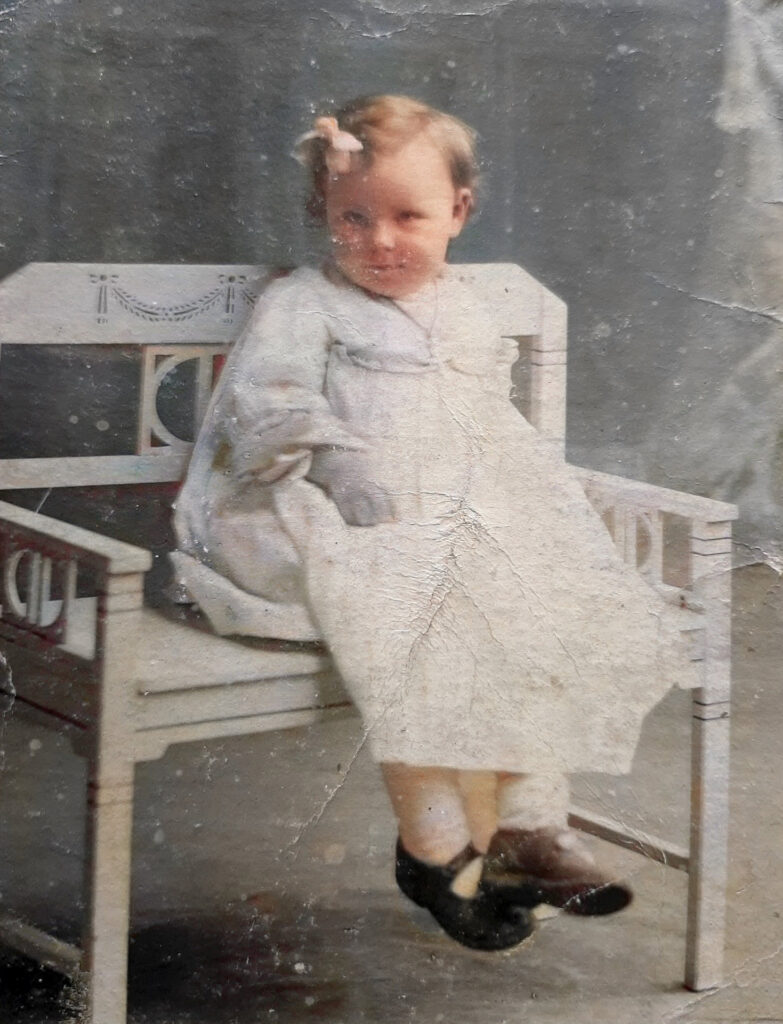
“Rose ran the farm, looked after Georges parents and their three-year-old daughter Janet, my mum.”
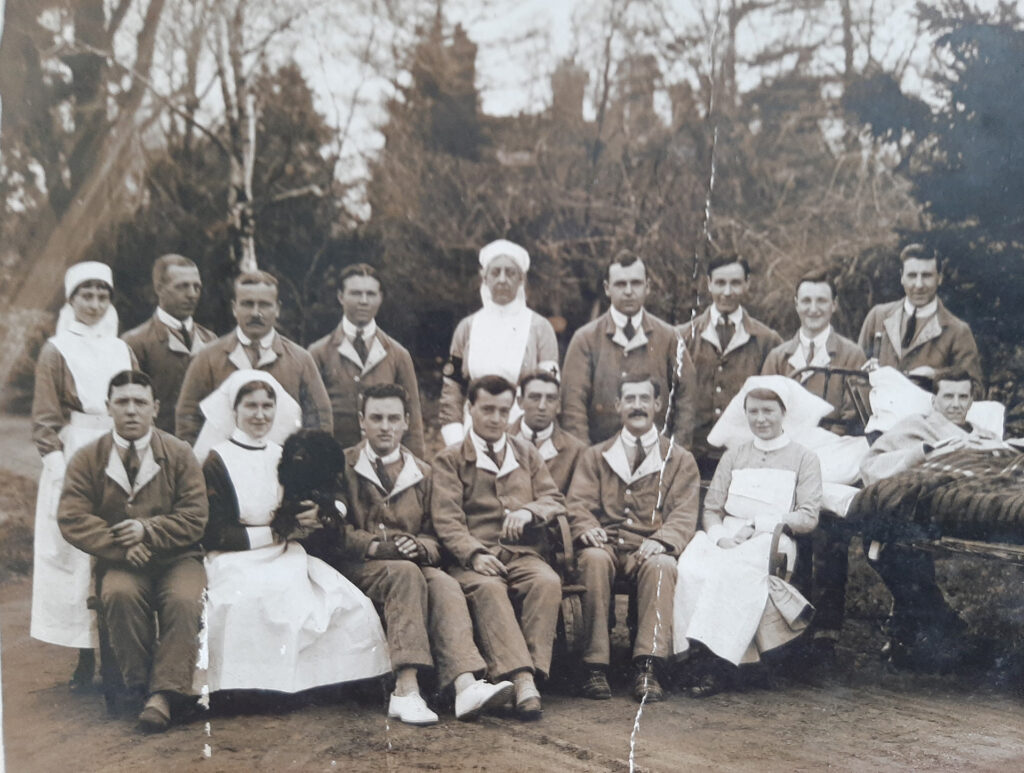
“Grandma Rose milked and most days carried buckets of milk on yokes over two miles to Old Dalby Station to catch the milk train to Nottingham. Granddad George was wounded at the Battle of Boulon Wood in France and hospitalised.”
“They eventually retired in the 1960s.”
On the corner of Middle Lane and King Street, a dead-end street, I remake another picture.
King Street – 1900s
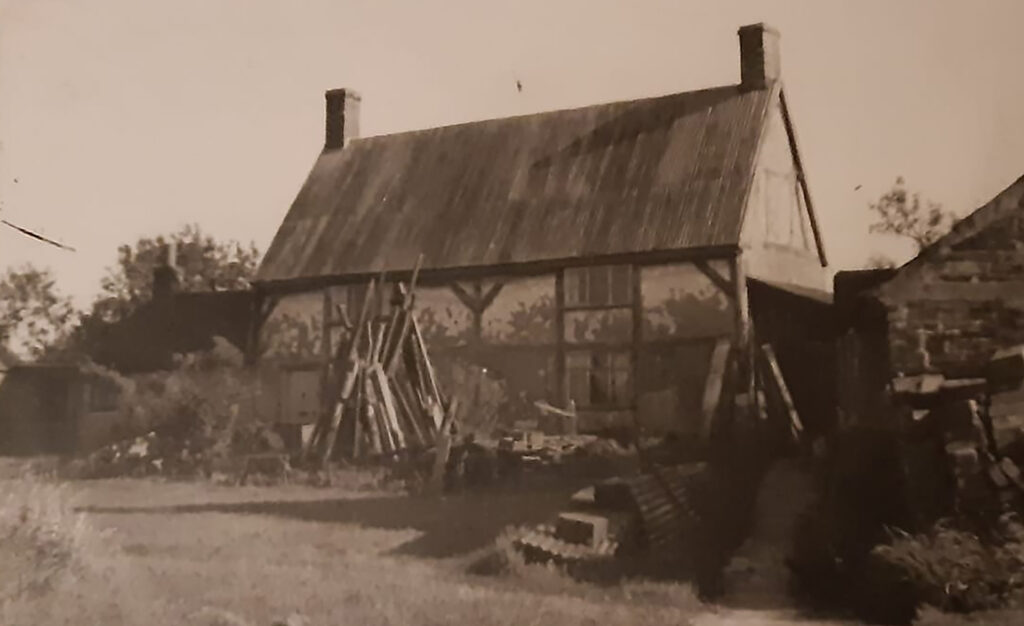
“The thatched house is still there, just the roof was changed”, says Isobel Sommerville. Up to 1979, when it was demolished, on the right side of the street stood a timber-framed house with its corrugated iron roof. Ebenezer and Mary Jane Edlin lived there after their marriage in 1900.
Church End
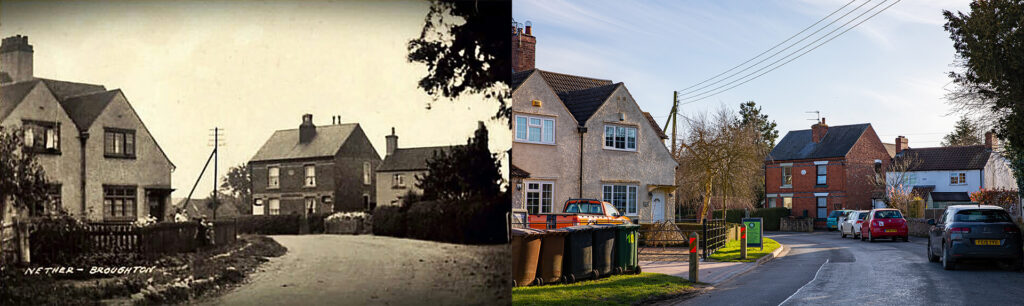
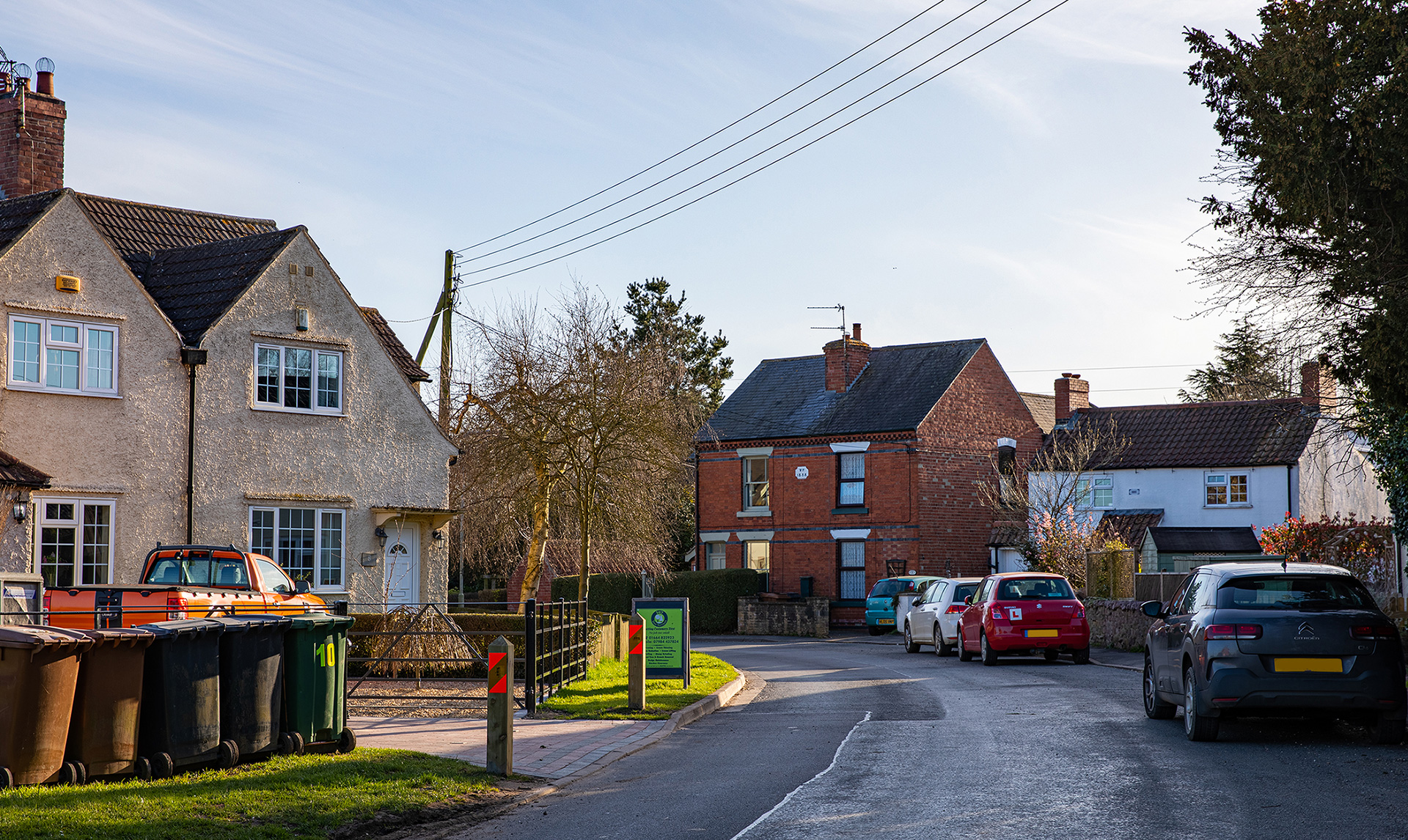
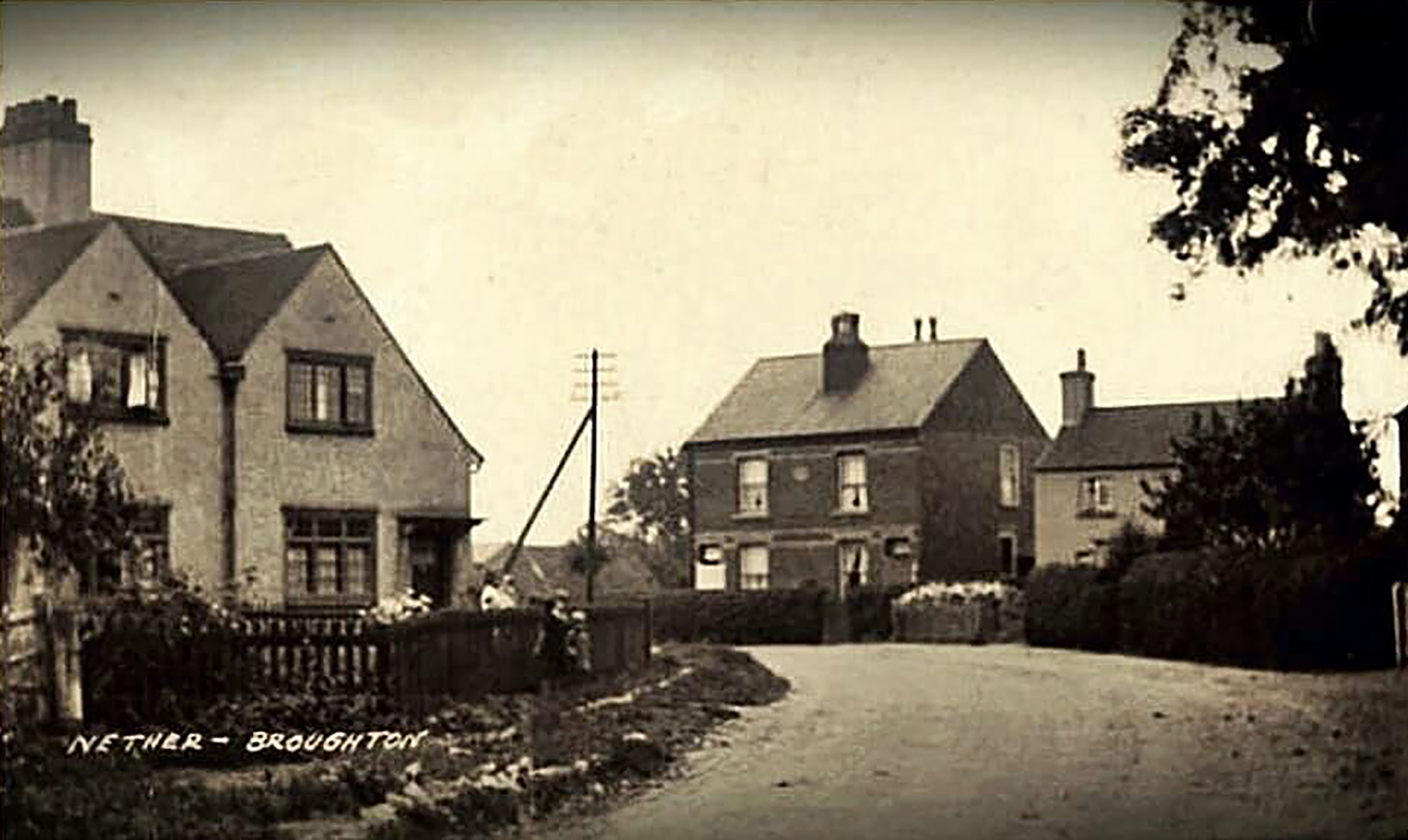
I make my way further on zigzagging towards the village church. At Church End there is a third picture te remake. In search of the right frame, a man with binoculars and a camera with a telephoto lens walks by and says: “I don’t see it”, probably thinking I spotted a bird. I explain what I am doing and I have a nice chat with him on the first butterflies which came out this sunny kind of summer warm early spring day.
This scene hardly changed except for the bins, the cars, the trees and the tarmac road. Rachel Holland: “We live in the second cream house on the left. We’ve been here since 2007. I believe a Mr Hood lived here before us and the house was the original configuration at that time.”
3 responses to “Nether Broughton”
John is wrong in the fact that the Stilton Cheese Factory with the pie factory. It was on Dairy Lane, Nether Broughton and was owned by my Grandfather-John Henry Burrows Greaves, and he sold it up in the 1920/30s.In the outbuildings at Manor Farm in the 1960s there was remnants of the cheese shelving from the hastening rooms
Thank you for your comment and correction,
I lived on Chaple Lane next to Blacksiths,Slater Shelton was the Blacksmith.