
Easthorpe Lane – Around 1980
Forty years after the old black and white picture was taken, you don’t have to worry about cars coming from your back when standing in the middle of the road, facing the junction with Church Lane and Woolsthorpe Lane. The reason is simple: the road from Easthorpe to Muston was cut off by the Bottesford by-pass, which finally opened in February 1989 as part of the A52, connecting Grantham and Nottingham. For the Bottesford villagers, it was a much-awaited new road. Since the mid-1960s increasing traffic, including lots of heavy lorries, made driving through and even more living along the village main road an everyday hell. In the Grantham Journal, a Bottesford resident vividly described the road as “a terrifying and hair-raising Silverstone circuit with traffic travelling at a ridiculous speed”. The downside for the Easthorpe and Muston villagers was that they lost their shortest inter-village link.
At first sight, you barely notice a difference: the old picture was taken late spring with cow parsley in the road verges and the new one at the end of summer. Unusually, there were more cars in the 1980s photograph. The two tractors parked on the verge can still be found after all these years. One tucked away on the farm cottage driveway. The other waits patiently in a pasture along nearby Church Lane. Facing the farm cottage are barns and outhouses of Spray Farm, managed by the Hodgkinsons. The farm was situated on Woolsthorpe Lane, the road straight ahead at the end of Easthorpe Lane.
Muston was for a long time a real farmer’s village, most engaged in food production. George Shipman farmed the land next to Glebe House. On the west side of Woolsthorpe Lane, the Dongers were at Peacock Farm, next to Spray Farm. Also, Leavesly Junior and Leavesly Senior both ran farms along Woolsthorpe Lane. The Calcrafts farmed on Sykes Lane. Other farmers were Jack Moore, the Chandlers and the Coddingtons.
Philip Draper added some facts about his family living in the village: “John Henry Draper (born in 1856), his wife Emma and their seven children lived at Muston Gorse Farm from 1882 to 1901. Somewhere between 1901 and 1911, they left to live in Sedgebrook because the 1911 Segdebrook census mentioned their names.” Anybody who can help Philip in his ancestry-search do so using the contact page.
In the centre of the back are two modern houses adjacent to Post Office Row, a terrace of labourer’s homes, one of which housed the village shop and post office from the 1950s. Initially, the post office was further down on Woolsthorpe Lane.


The Cross

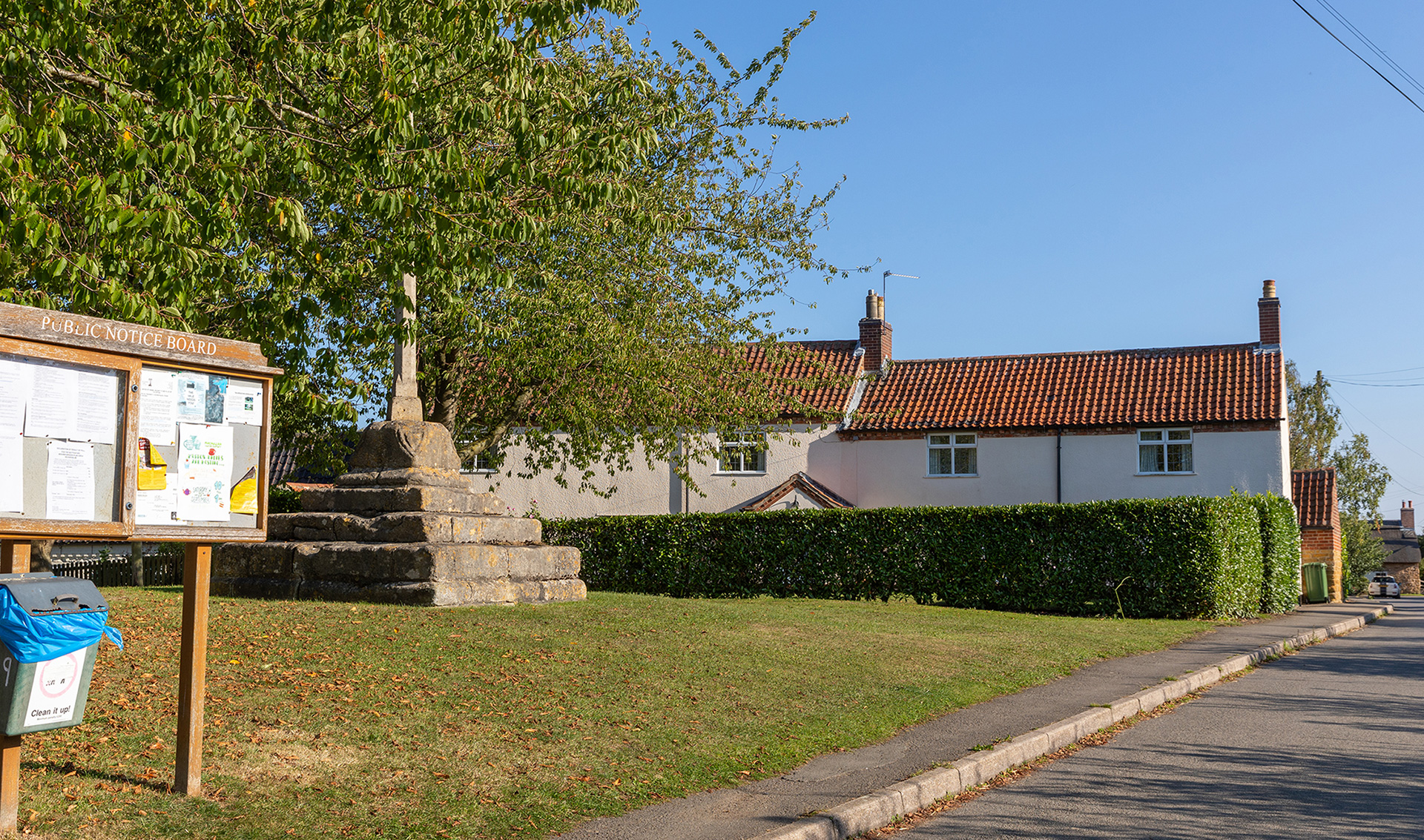
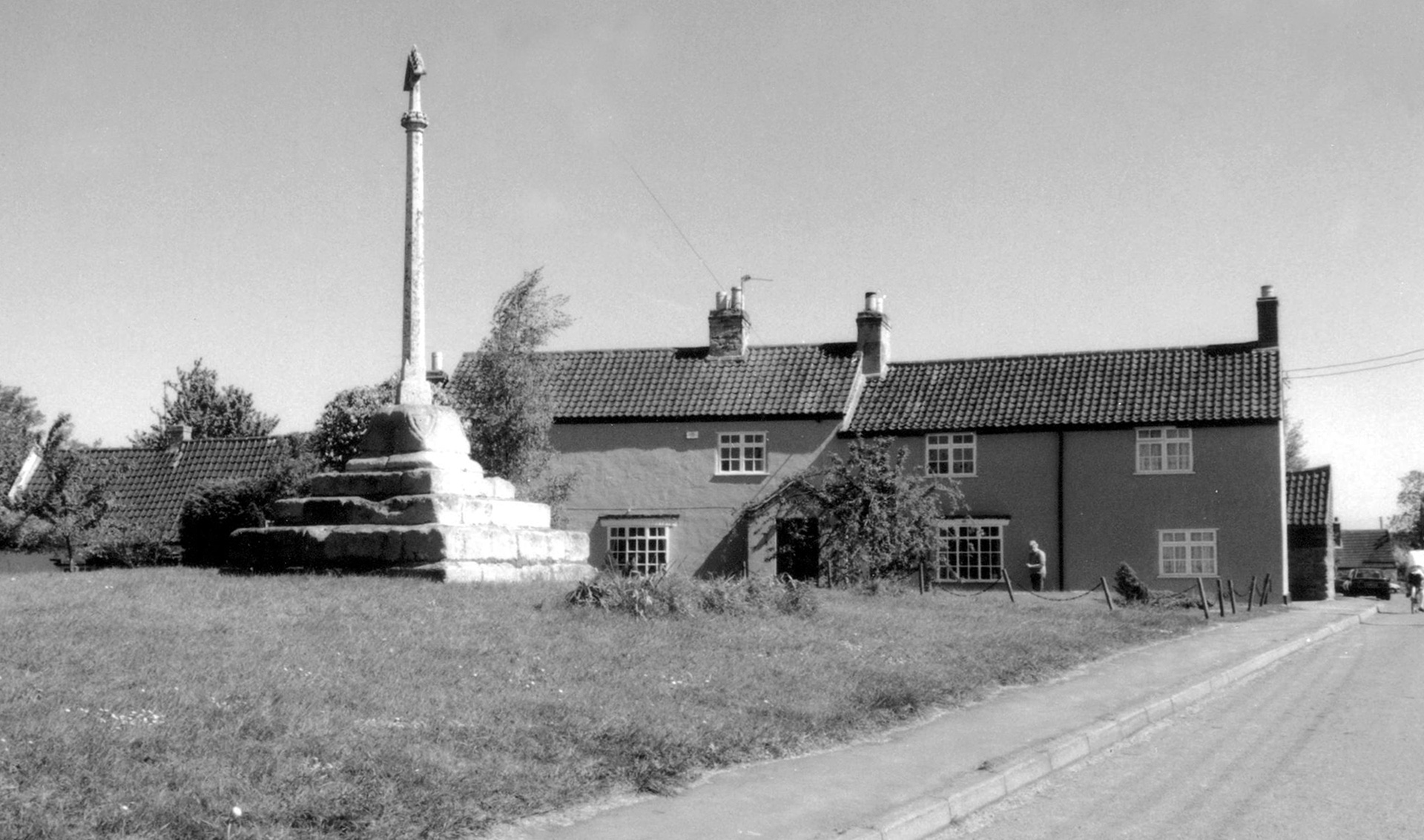
In the middle of The Green along Woolsthorpe Lane stands the Muston Village Cross, a Grade II listed feature. The limestone cross originally dates from the 14th century and is composed of four stone steps arranged as a square, diminishing in size towards square section socket stone. On the square base rests an octagonal shaft, with a 19th-century crenellated cross on top, put in place when the cross was restored. In 1912 the Muston market cross was again restored under the supervising eye of Reverend Nugee, after which the place on The Green became a village picnic spot.
Tucked away behind the Parish Council notice board, in the back on the left of the cross is Holly Cottage, a late 17th-century two-unit cottage, extended in the early 18th century, used as a single dwelling. Again this century, the cottage was extended, but this does not interfere with the original structure. The original part appears to have been the stone section to the left. Now Holly Cottage is a whitewashed coursed ironstone dwelling.
Main Street
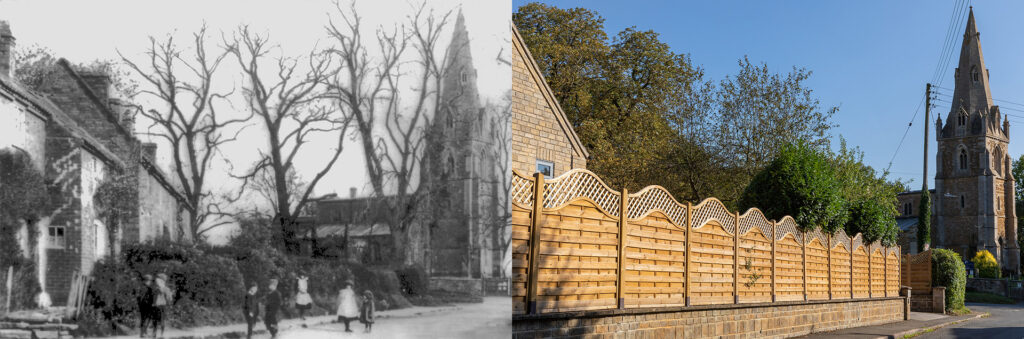
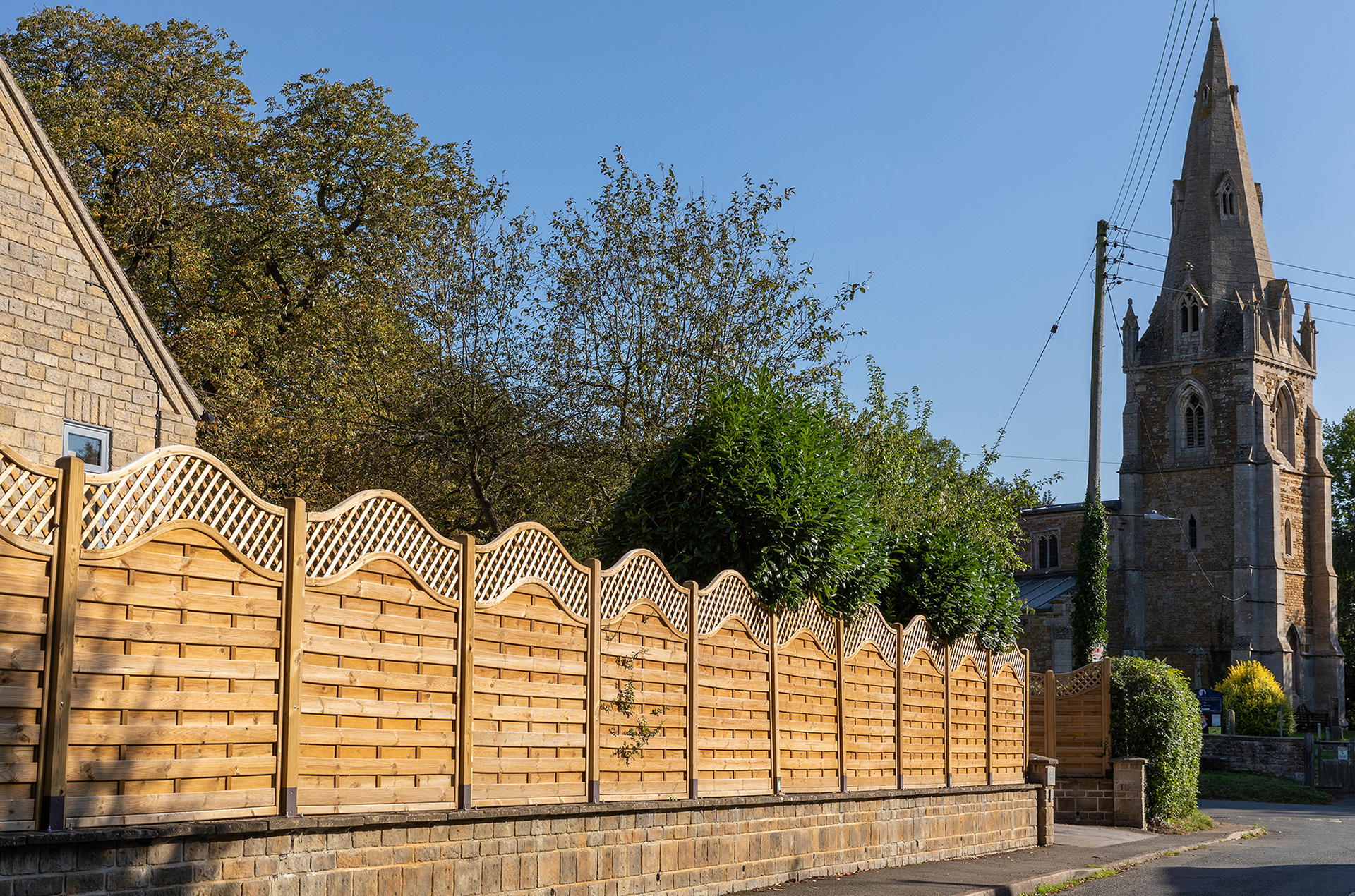
The left part of Main Street near the junction with Church Street is completely changed. The cottages have been replaced by Brinsley Cottage, mostly hidden behind a high wooden fence. On the right-hand side, the 14the-century tower of the Church of St John the Baptist is still visible. The church has original 13th-century features in the nave and the aisles and was restored in 1875-6 by C. Kirk.
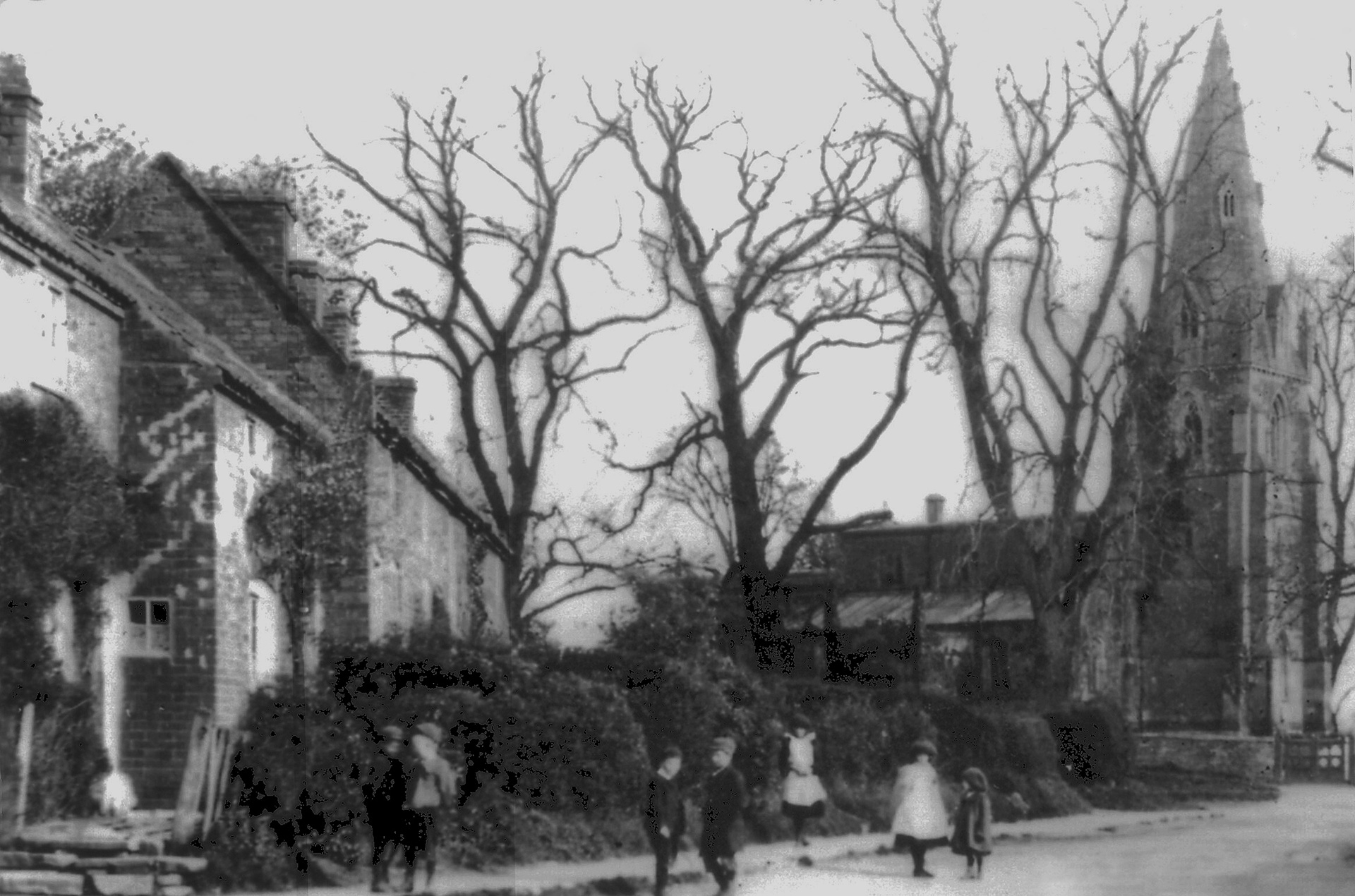
The old pictures are used with the kind permission of the Bottesford History Group.
More pictures
Would you like to add pictures? Send a message.
Domesday Book
Muston is not mentioned in the Domesday Book.