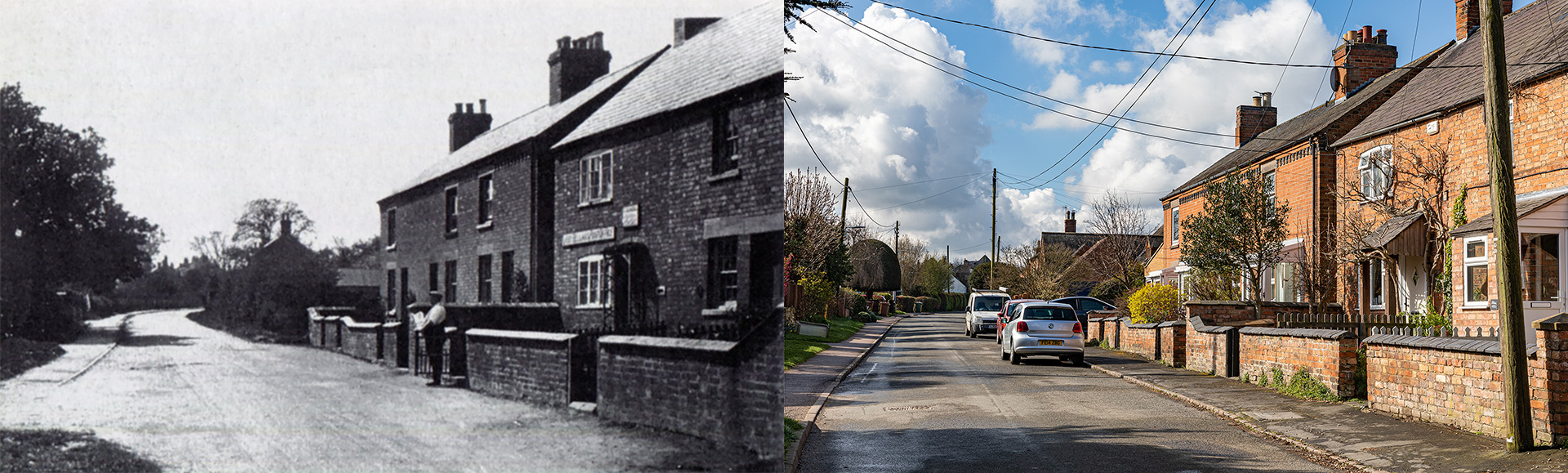
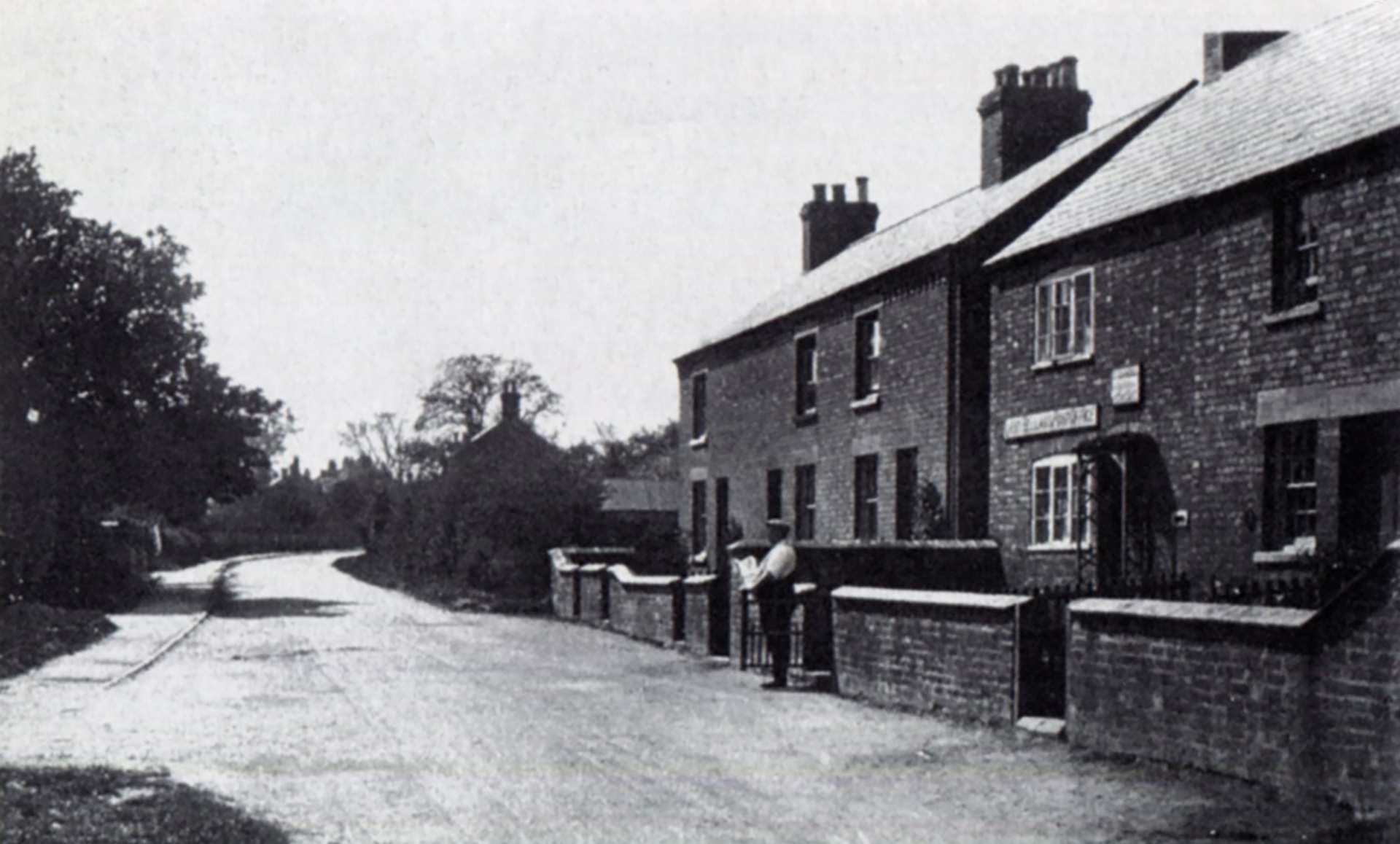
Main Street – 1910s
“I was born in that bedroom there, in 1936,” Sheila Taylor said enthusiastically, putting her finger on the first-floor window in the photograph, left of the passage between the two pictured groups of cottages. My grandmother, from my mother’s side, lived at the other end of the three cottages. The Gaines lived in the middle one, and then us.”
My mum had four of us in seven years. We lived in a three-bedroom cottage with some brick buildings in the back garden, a coal house, a shared washhouse, and a copper bathtub. We went in one at a time, but there was only enough water for one bath, and the cleanest person bathed first. That was probably my youngest brother. Water was collected in three water tubs filled with rainwater. When they were empty, my dad got a barrow and a dolly tub with a big, long rope around his back and up to his neck, and he went down to the river, down Washdike Lane. Arriving there, he threw the dolly tub in the river, and he pulled it up with all his strength, getting it on the barrow to get it home to fill the water tubs. There was also a well down Washdike Lane to get water if it was impossible to get water from the river.” The river also claimed some lives over the years. “I remember a little girl who came from school with a friend. They went home through the fields and climbed a tree. The branch broke down, and one of the girls fell into the river and drowned,” told Sheila.
She continued: “As kids, we played a lot on the land on the other side of the street. We climbed the trees. We collected the haws of the hedges and stored them in an open tree for the birds in the winter.” Sheila’s father was a farmworker at a farm on the old Great Dalby Road. “When he came home at night, he also helped at Sam Brutnell’s farm, the oldest farm in Kirby Bellars, opposite where we lived. I wondered a lot when my dad slept. He was always working.”
In Sheila’s living room, she still has the lamp that was the only light source they had in the house. There was no electricity and no water. “The lamp stood in the middle of the big scrub table in the kitchen. It was lit when my father came home from working in the fields.”
During the Second World War, the blinds had been put up before making any light. The nearby Holwell Works at Asfordby Hill were a target for the Germans. But they never got it. Only one bomb hit Asfordby Valley.” It reminds Sheila of her father being a member of the Home Guard. “He didn’t have to go to the war. With a friend further down the village, he went out at night. They used to black their faces with a burned cork, put their uniforms on, and set off to the fields near the railroad track. He stayed there all night, got home in the morning, changed clothes and went to work. He didn’t have time to go to bed. My father never had much sleep. I don’t know how he managed.” Sheila asked: “Would that happen today?”
Sheila’s uncle, the brother of her mother, Sidney Pymm, Corporal at the 11th Batt Sherwood Foresters, got killed on the first day he went to war, on July 1st 1916, aged 23, when leading his men through the wire. He is buried at Blighty Valley Cemetry, Authulie & Aveluy in France.
“In the old postcard Mr Randell is portrayed,” recollected Sheila. “He had one arm and was nearly blind. He would come out of the cottage on the right of the passage, where the Post Office was run by Mr Randell’s sister. The Post Office was in the front room, but everybody took the passage and used the back door. You could also buy ‘Ha’pennies’ a handful of sweets for a penny or less. Ms Randell asked us to put our money up, and we got a small paper bag with some fruit drops. We could have them at home sharing the sweets with my other sister and two brothers.” Later Ms Hazlewood became the postmistress, and after she died, the office moved up the village near where the Village Hall is now.
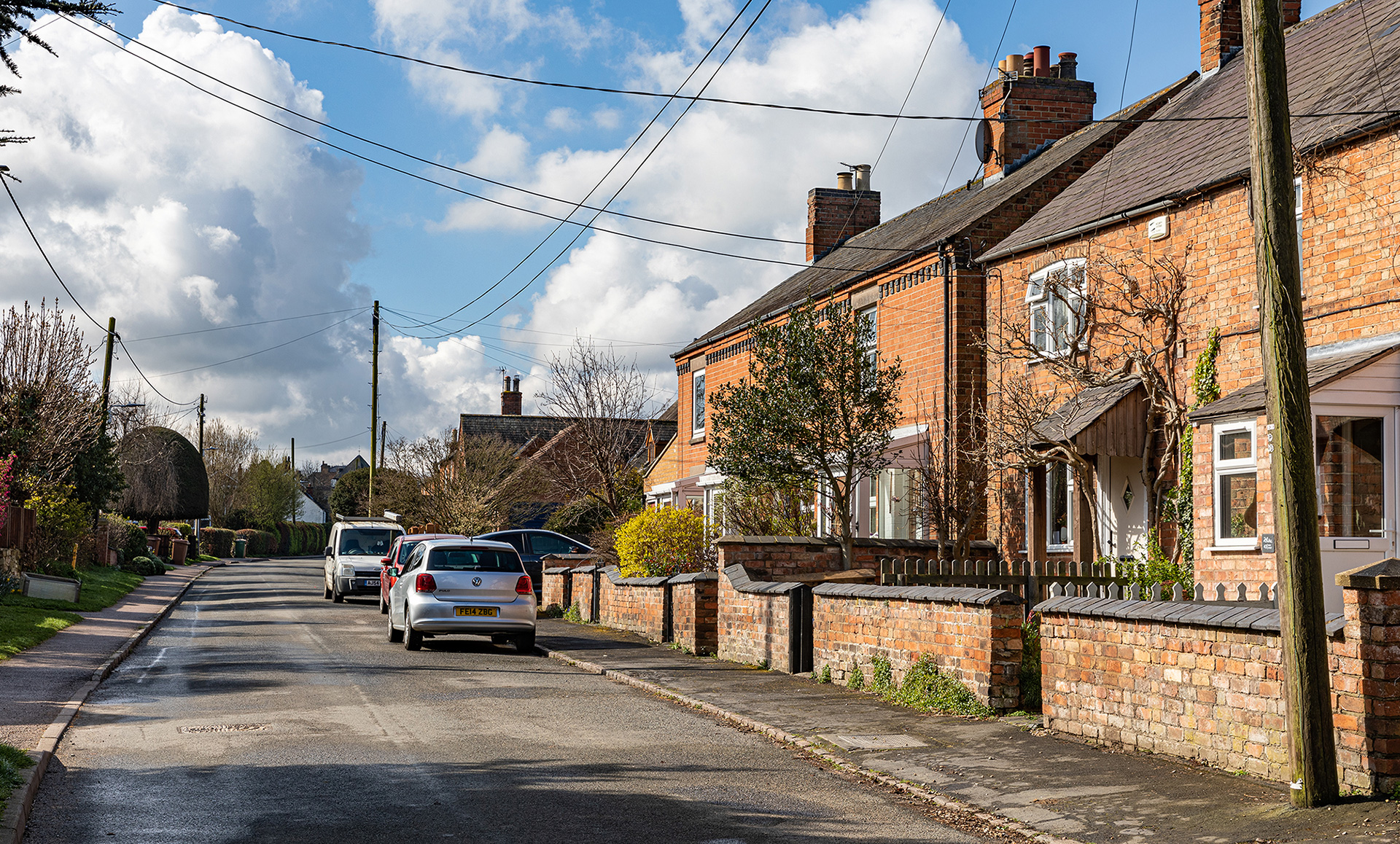
“I got married there when I was 24, and we had to leave the village because there was nothing available, so we lived for a few years in an old cottage in Asfordby. It was terrible. In 1964 we moved to Melton, where we bought some land for £300, and I still live here.”
But Sheila is still a regular visitor to St Peter’s Church, where she has played the organ for more than 60 years. “It all started with the harmonium in the village’s Congregational chapel. My dad prepared the service on a Sunday, and I tried to play the Herky Quirky. He said I better have some lessons with a lady living in the village. I loved playing the hymns and other songs. When the chapel closed in the 1960s, I continued playing at St Peter’s Church at the bottom of the village. They got a new organ in the 1970s. It is huge with a lot of pipes. For now, it is covered in plastic because of the problems with the roof. It was a very popular church.
“When I go back to St Peter’s Church, it feels a bit empty,” Sheila said. The roof of the church is gone. It had been stolen, like other churches in the area. It happened a few times during Sheila’s life. “One day, when I was still living at home, my mum said something was going on in the middle of the night because there was a lorry in the street, and the church roof was gone the next day.” Now there is a plastic roof to protect the most important parts.
Flying Childers
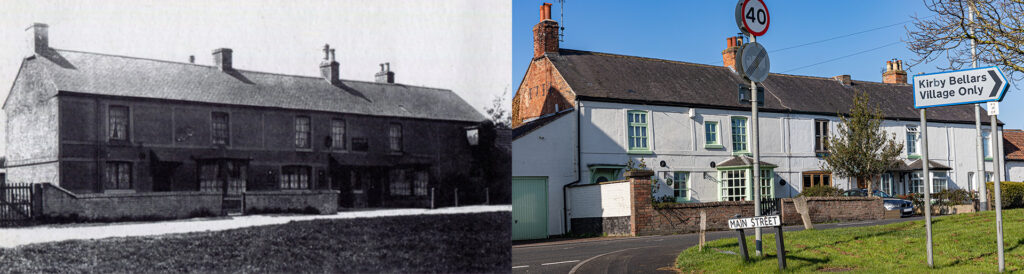
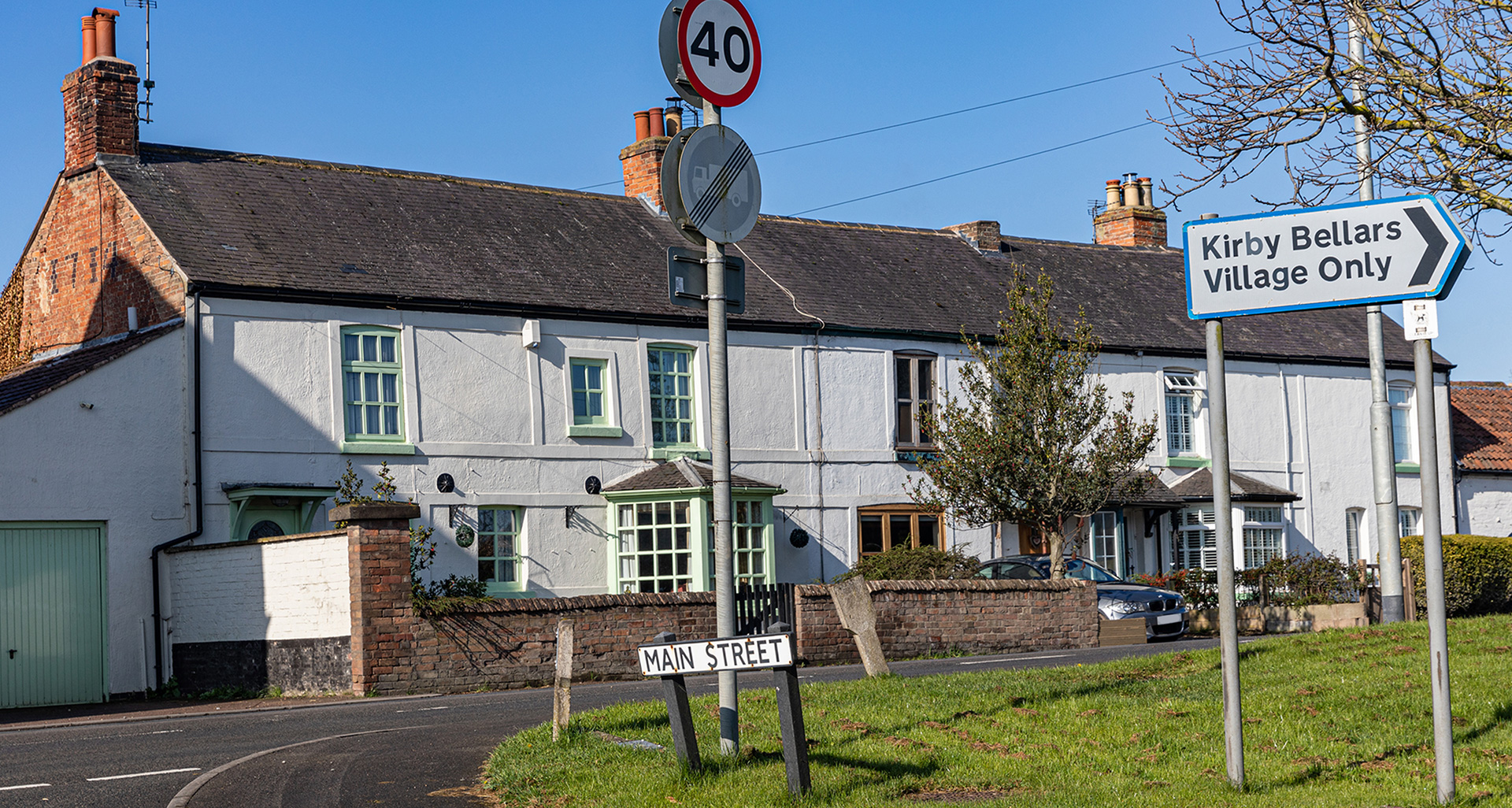
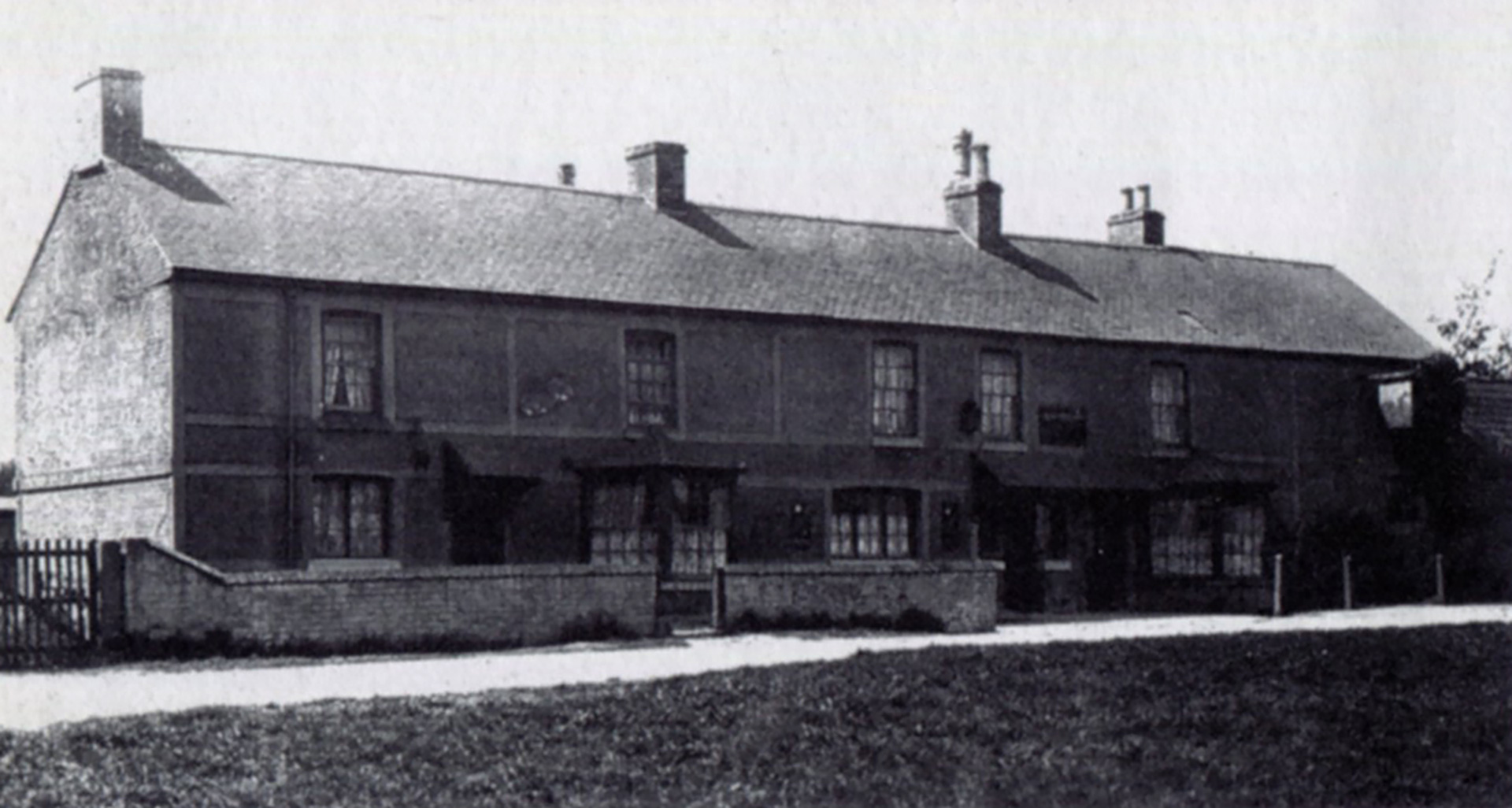
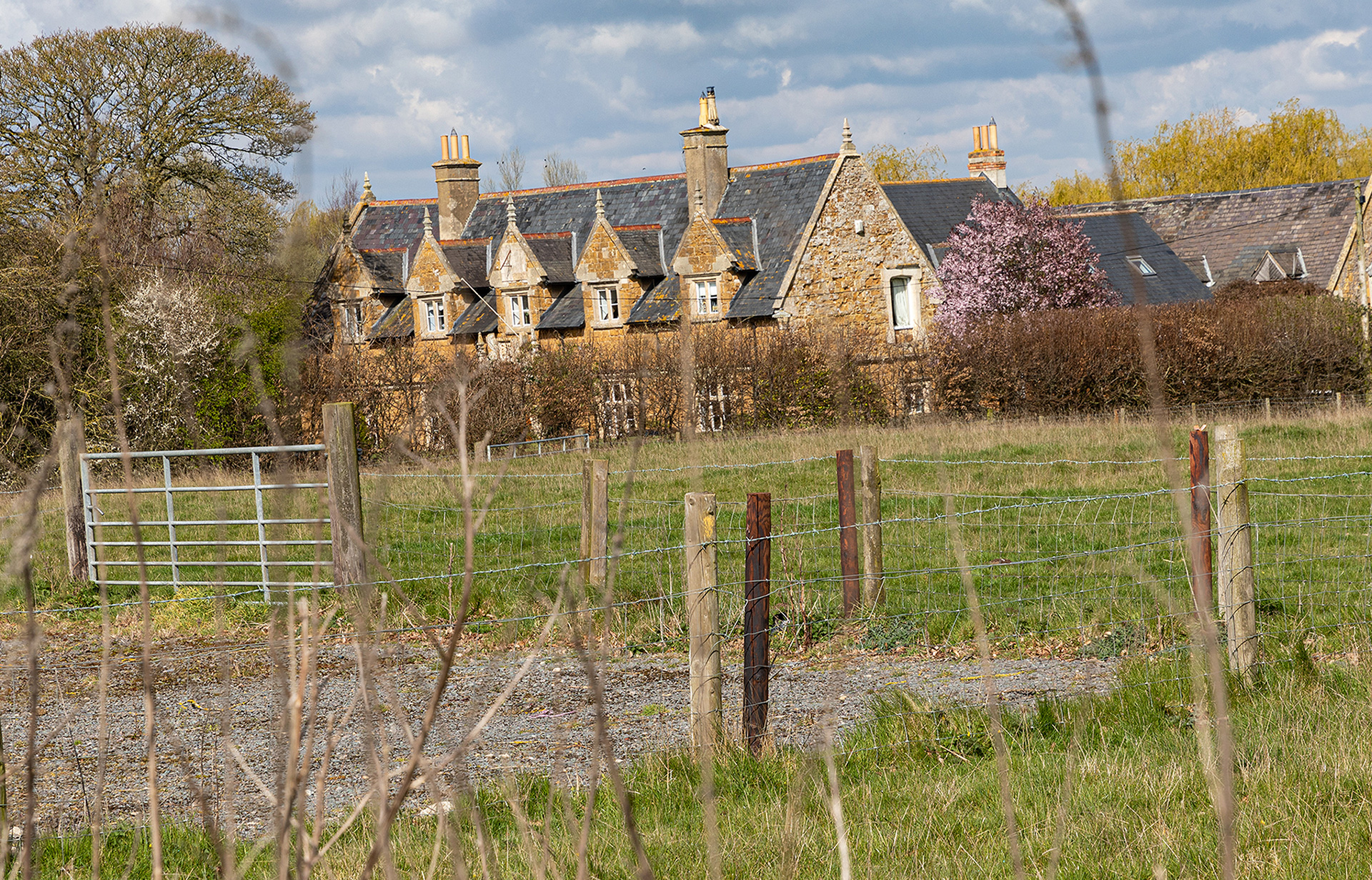
Adjacent to the right of Kirby Hall, built as a hunting lodge about 1830, is a row of cottages, where once the public house Flying Childers was located. The ‘new’ Flying Childers was built on its present site in 1904, so the photograph is probably earlier than that date. The building was part of the manorial estate until sold in 1900. The date on the gable end of the cottages on the left is 1714, the same year the famous and undefeated 18th-century thoroughbred racehorse Flying Childers foaled at Carr House in Warmsworth, Doncaster. The cottage on the right was the pub, and it is not sure what the two other cottages were before 1900. Some of the publicans were Thomas Bowley (White Directory – 1877), Samuel Greaves (Wrights Directory – 1884), John Walker (Kelly’s Directory of Leicestershire and Rutland – 1904), Martin Henry Codd (before October 1912) and Chas Theobald Dickens, late Sergeant-Major of A Squadron, Leicestershire Imperial Yeomanry (from October 1912).
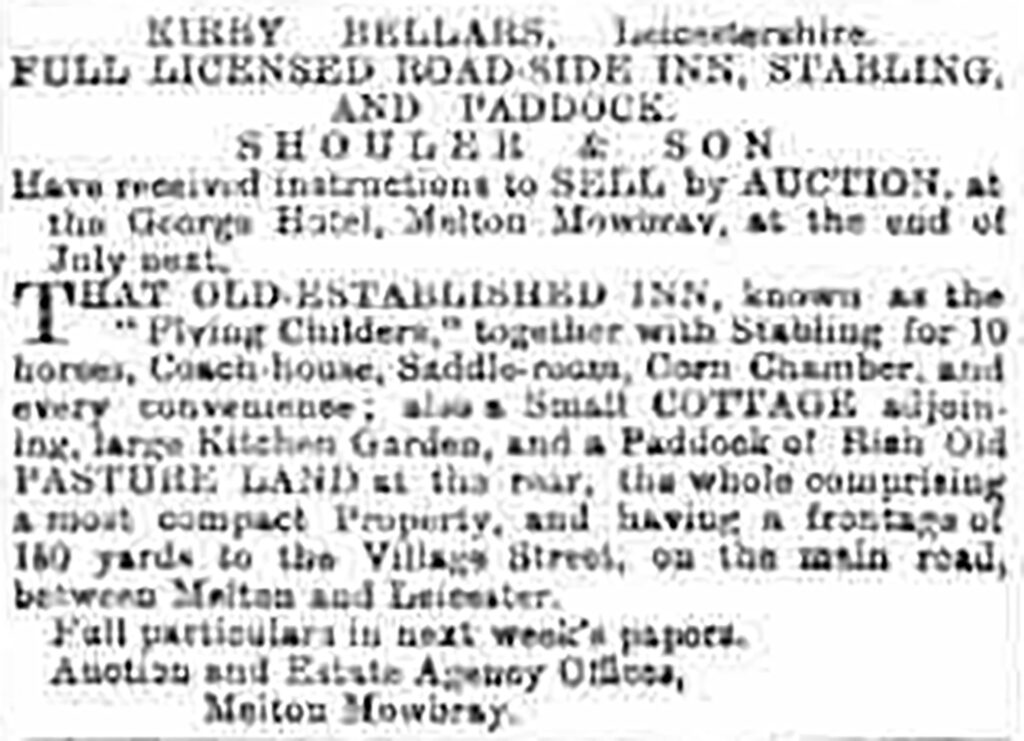
Kirby Hall was bought by a couple, Mrs and Major Muir. That must have been before the Grantham Journal of 8 February 1913 reported: “The licenced house [the Flying Childers’ prior location] at Kirby was the only one in the parish, the population of which numbered some 270. The present owner of the house was Major Muir, and get required the premises for certain private purposes of his own. He had a large establishment, and was desirous of transforming the place into cottages for his own employees. It was proposed to remove the license from the present house to one it was proposed to build further along the road towards Leicestershire from Melton, close to the third milestone.”
People employed by the Muirs lived at the back of the hall and in the three cottages along the main road. At the left lived the butler, and in the middle cottage lived an electrician who also had his own business. Sheila recollected: “After Mr Muir died, Mrs Muir continued going to the church. She walked down to the middle of Main Street with her big long umbrella. The other villagers all waited at the side of the road until she passed by. Then we could walk behind her to the church. Mrs Muir used to have a lovely garden, and we could get some flowers from her to decorate the church. A new altar was placed in the church in memory of Major Muir. You can read that on a brass plate in the church.” Kirby Hall was turned into flats in 1960.
Publicans for the new Flying Childers were: G.H. Robinson (before February 1922), George David Kent (after February 1922) and Mr and Mrs Harry Newman (1930s).
Kirby Gate
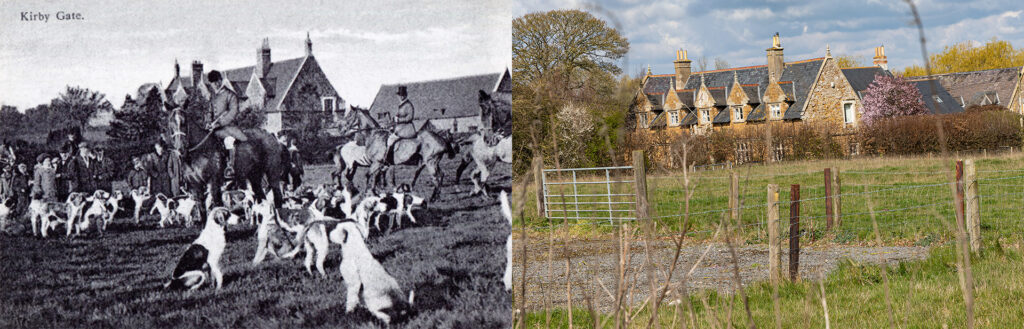
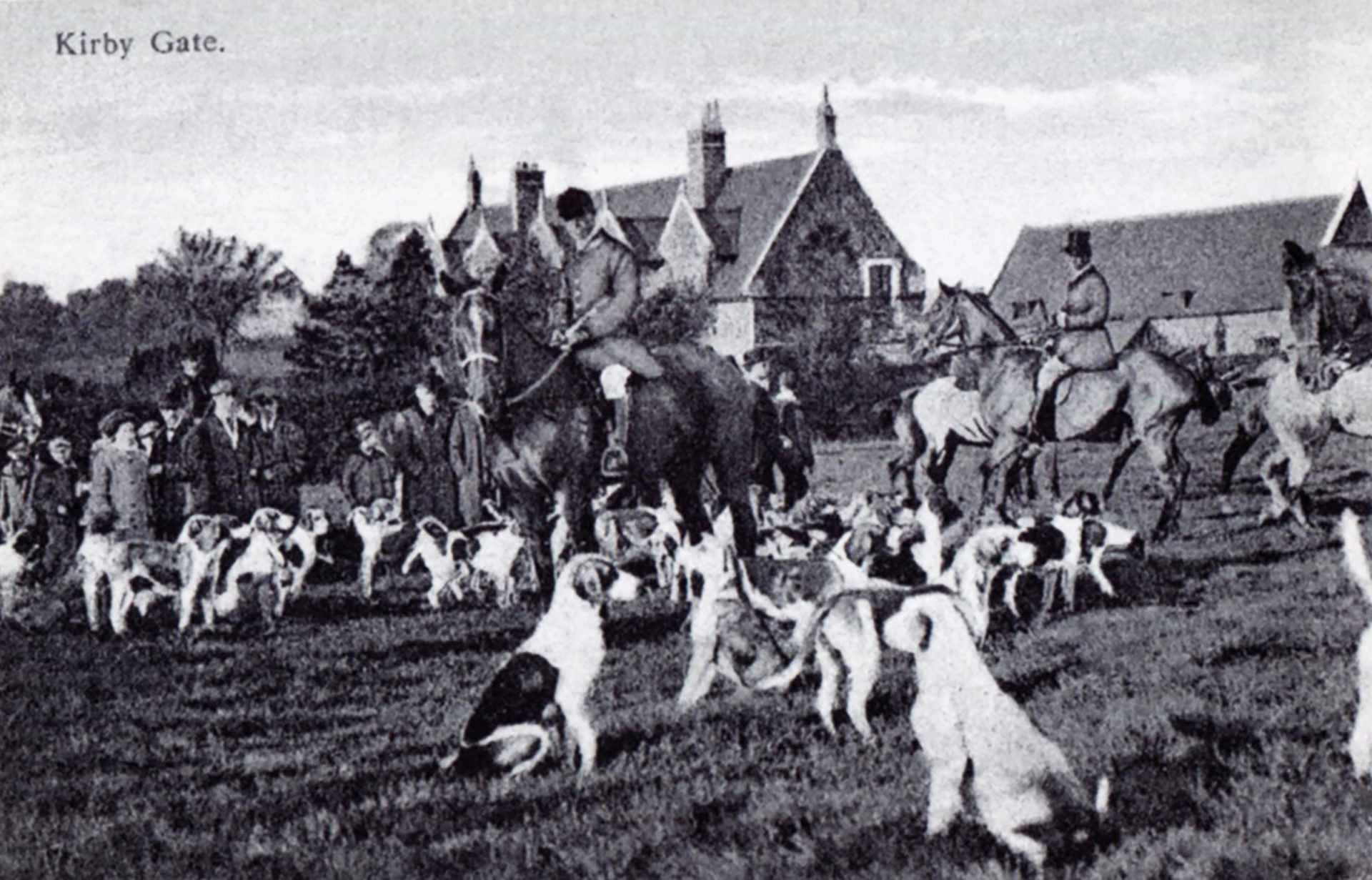
The old postcard titled Kirby Gate was taken during one of the traditional gatherings of the Quorn Hunt, with Park Farm (formerly listed as Kirby Park Farmhouse and also previously listed as Manor House) on the former site of Kirby Hall in the background. Sheila recollected: “It was occupied by tenant farmers until 1974, when Stan Green, as the tenant, bought the property. It was where the hounds met about the 11th of November. We all used to walk down there to see the dogs,” told Sheila. “The lady of Kirby Gate always stood in the doorway. She came out with the wine for the headmen, and then the hunt set off in the direction of the Burrough on the Hill area. It was a most important day for Kirby Bellars, and the Kirby hunt has always been the first Quorn Hunt of the season.”
Park Farm was rebuilt after the Civil War. The early 18th-century house was remodelled early 19th century for Sir Francis Burdett, with the dormers and porch.
On the village
“Kirby Bellars was a thriving parish in medieval times, but enclosure in the early 17th century resulted in deliberate depopulation. The site of the priory has been disputed in the past,” writes Victoria County History volunteer Dr Alan Fox, who lived in the village for many years, in the introduction to the Kirby Bellars webpage of the Institute for Historical Research website. “But research within this parish history has uncovered unambiguous documents which clarify matters.” In seven documents, Alan Fox unravels the village’s economic, social and religious history and describes its sites and buildings, landownership and local government.
“In the medieval period, the village grew in a south-easterly direction, but this extension was destroyed in the early seventeenth century to create Kirby Park,” wrote Alan Fox. He challenges in his VCH draft on Kirby Bellars the traditional interpretation of the spectacular earthworks left behind by this destruction. “In particular, the probable site of the medieval priory (and its forerunners) is placed in the Kirby Park area [along the Main Road] in contradiction of several other sources, including Ordnance Survey maps, for example, the 2000 edition of the Explorer sheet 246 [north of the church].”
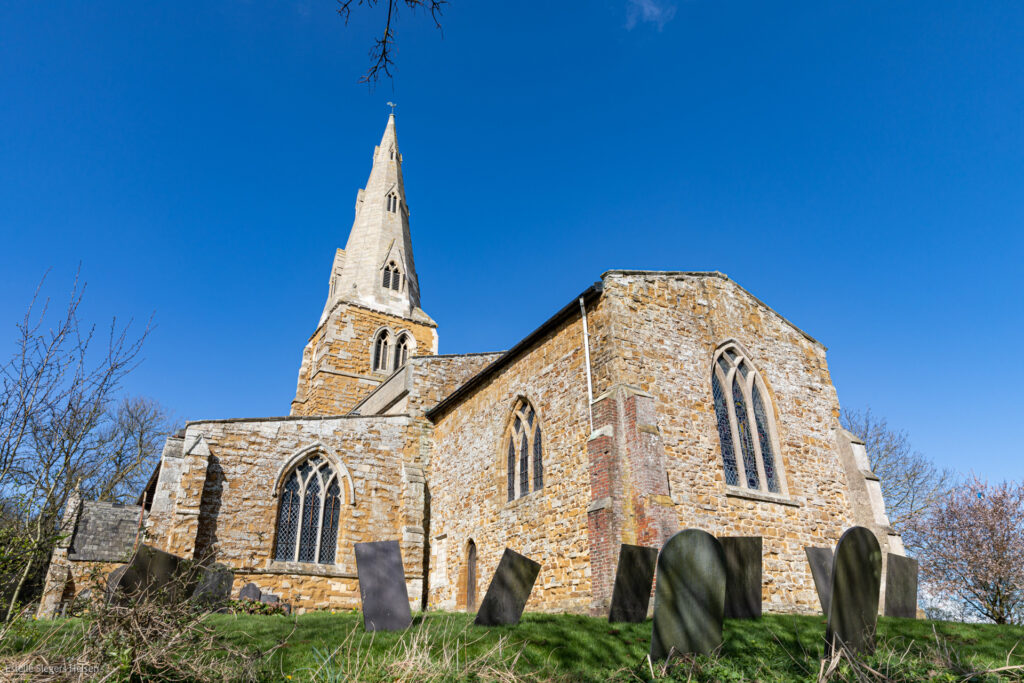
The 1904-edition of Kelly’s Directory of Leicestershire and Rutland describes the Church of St Peter as a spacious building of stone, in the Gothic style, consisting of a chancel, clerestories nave of four bays. Alan Fox: “It is strikingly large, especially for a small village, and was even larger before the north aisle was demolished in 1670. Its size hints at a place of some importance, a large population in medieval times and a degree of wealth within the village.”
Alan Fox wrote on the chantry and the priory: “Documents confirm that the Kirby Park area was the location of the 1316 chantry and its successor, a priory.”
Would you like to add your story and recollection? Leave a comment at the bottom of this page or send a message.
More pictures
Would you like to add pictures? Send a message.
Domesday Book
Kirby [Bellars] was a settlement in Domesday Book, in the hundred of Framland and the county of Leicestershire.
It had a recorded population of 28.1 households in 1086, putting it in the largest 40% of settlements recorded in Domesday, and is listed under 2 owners in Domesday Book.
1. Land of Geoffrey of la Guerche
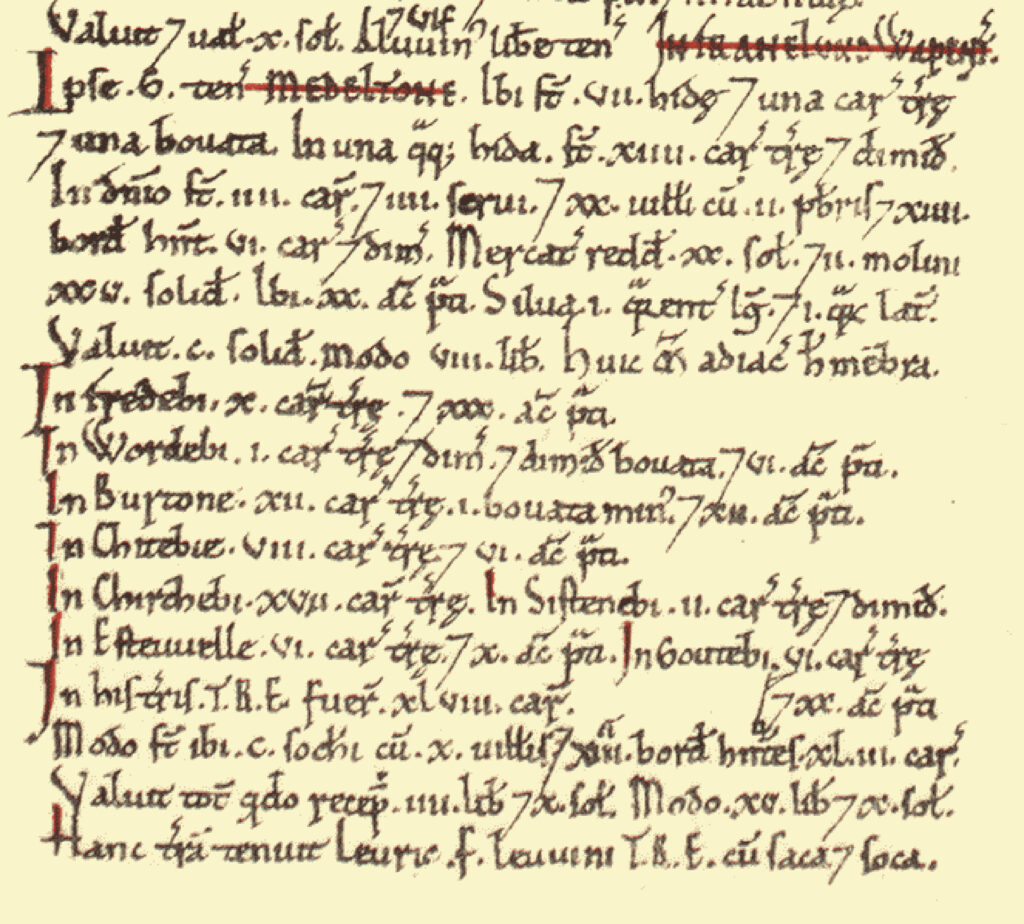
- Households: 30 villagers. 100 freemen. 27 smallholders. 4 slaves. 2 priests.
- Ploughland: 48 ploughlands. 4 lord’s plough teams. 49.5 men’s plough teams.
- Other resources: Meadow 104 acres. Woodland 1 * 1 furlongs. 2 mills, value 1 pound 5 shillings.
Valuation
- Annual value to lord: 23 pounds 10 shillings in 1086; 9 pounds 10 shillings when acquired by the 1086 owner.
Owners
- Tenant-in-chief in 1086: Geoffrey of la Guerche.
- Lord in 1086: Geoffrey of la Guerche.
- Lord in 1066: Leofric (the noble) son of Leofwin.
2. Land of Geoffrey of la Guerche
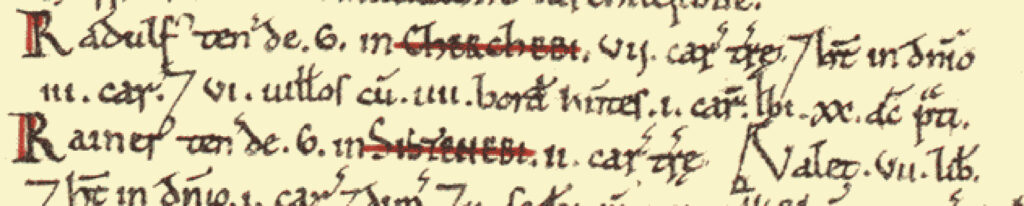
- Households: 6 villagers. 4 smallholders.
- Ploughland: 3 lord’s plough teams. 1 men’s plough teams.
- Other resources: Meadow 20 acres.
Valuation
- Annual value to lord: 7 pounds in 1086.
Owners
- Tenant-in-chief in 1086: Geoffrey of la Guerche.
- Lord in 1086: Ralph.
Links
- Victoria County History – Kirby Bellars webpage
- Leicestershire Archaeological and Historical Society – Alan W. Fox – The Location of the Priory at Kirby Bellars: A Reappraisal in Transactions Volume 88 (2014), pp.75-84
Would you like to add a link? Send a message.
One response to “Kirby Bellars”
I dated Julie Knight,Daughter of John Knight..circa 1976..helped lay several timber floors and generally helped out as they had just moved in.Suzy,Chris, John and Janet I think.John was a skilled engineer if I recall correctly. Lost touch over the years Happy memories of a good family and fine house.