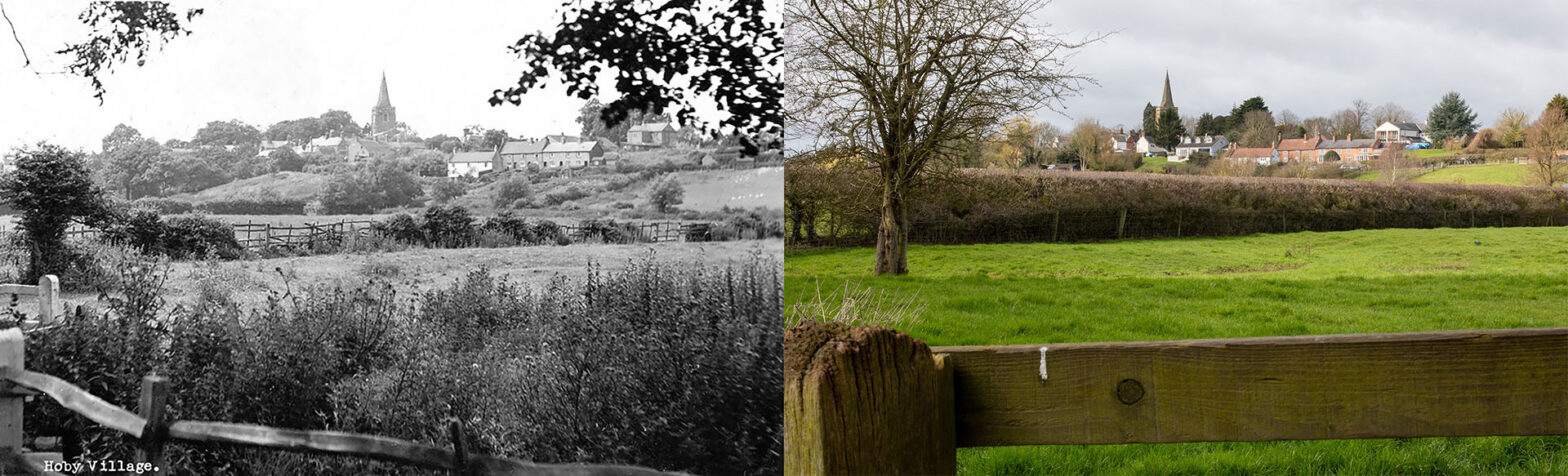
View on the village – 1950s
From Back Lane, a public footpath leads downhill to the pastures where the river Wreake slowly meanders from Melton Mowbray towards Leicester. Passing a second kissing gate and rambling along a muddy path, I reach a sharp bend. There, at a small brick bridge crossing a brook, I set up my tripod and camera. “Watch out,” I warn a couple of older hikers, “it is slippery.” “A nice hill view down onto the village from here”, the woman says. The man adds: “As charming as in the old days.”
In the past 70 years, the view hasn’t changed that much, except for the hedgerows and the village trees. The old pollarded hawthorn on the left is still there. The church is partly hidden by a few conifer trees. A post-war newbuild on Back Lane fills the space between the church and a white painted house. Named ‘The Bank’ it was a thatched house when the Haines’ family lived there, a century ago.
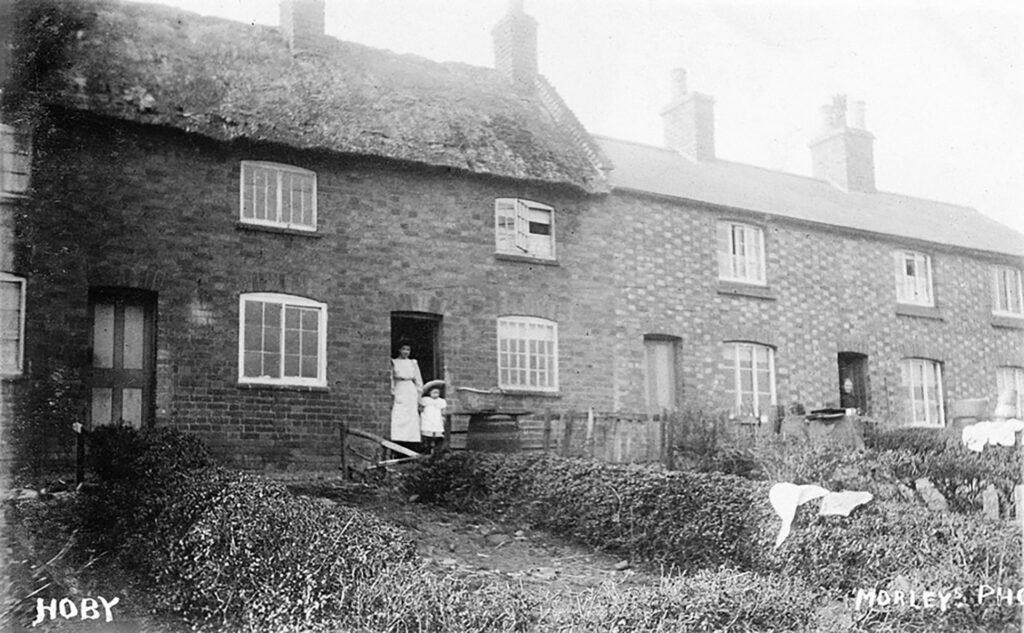
Next are two brick semi-detached houses where over the past about six families lived. The roof behind is that of today’s Village Hall on Main Street and the neighbouring farmhouse became a whitewashed private dwelling with a spacious valley view. Alongside, hidden in both pictures, lies the village pub, The Blue Bell.


Old Mill view – 1910s
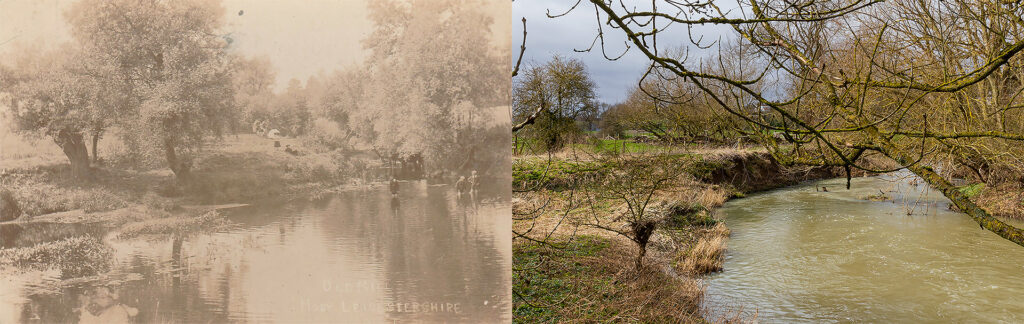
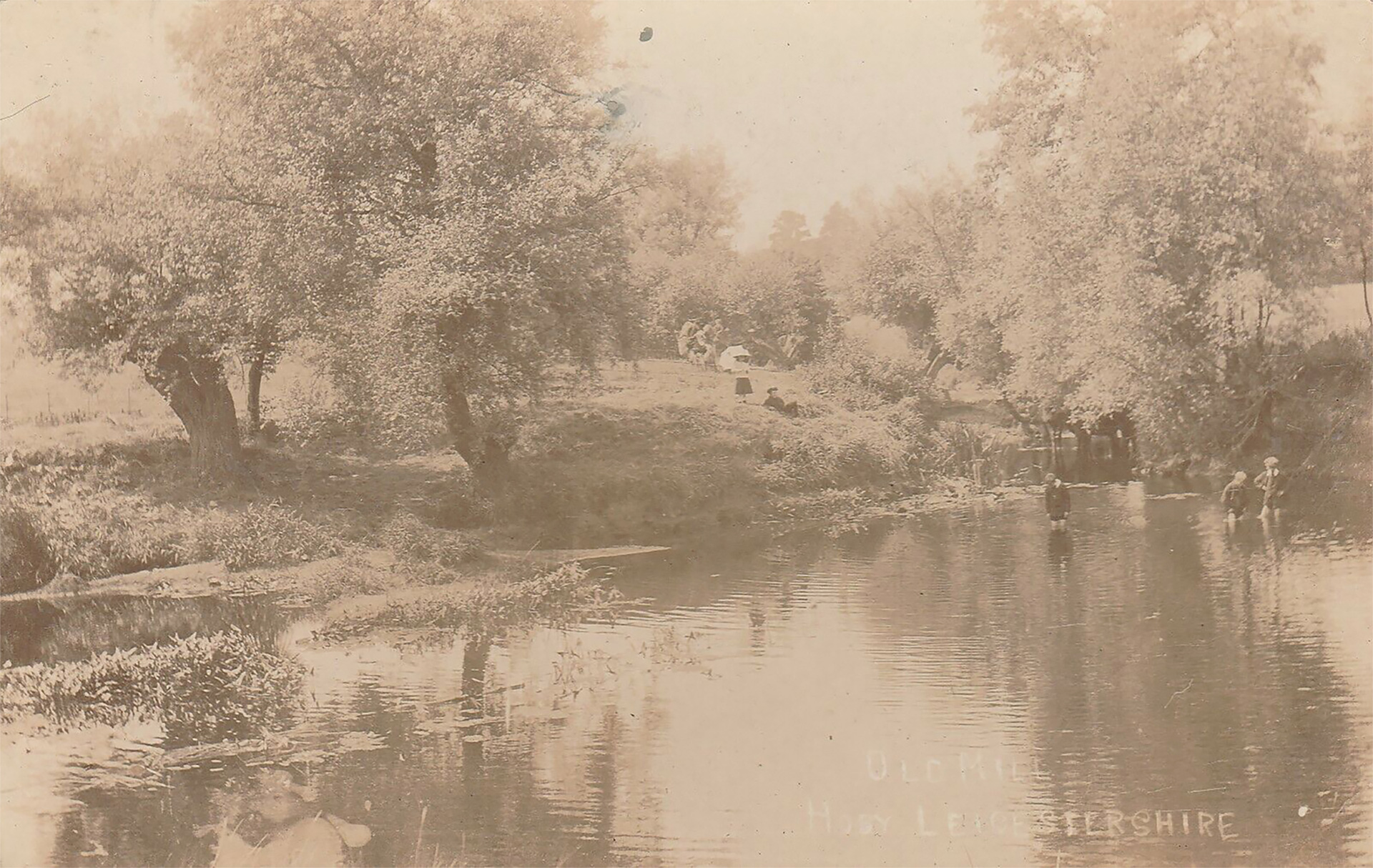
Around the bend, 150 feet further from where I stood, I reach the narrow plank Old Mill footbridge with its metal pipe boards, crossing the Wreake. It was from the footbridge, that a postcard was made which first drew me to this place.
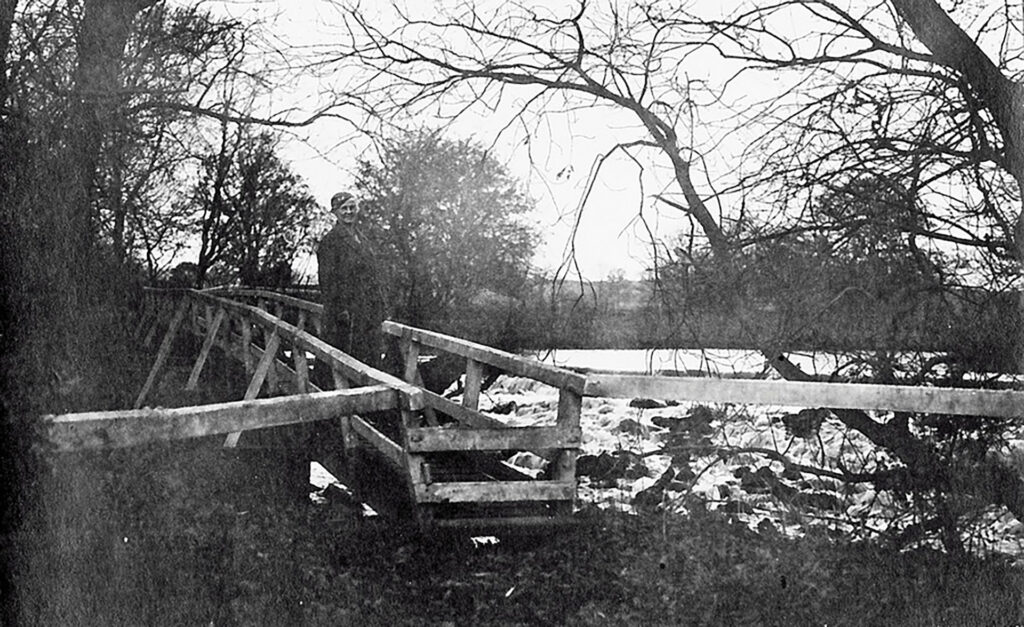
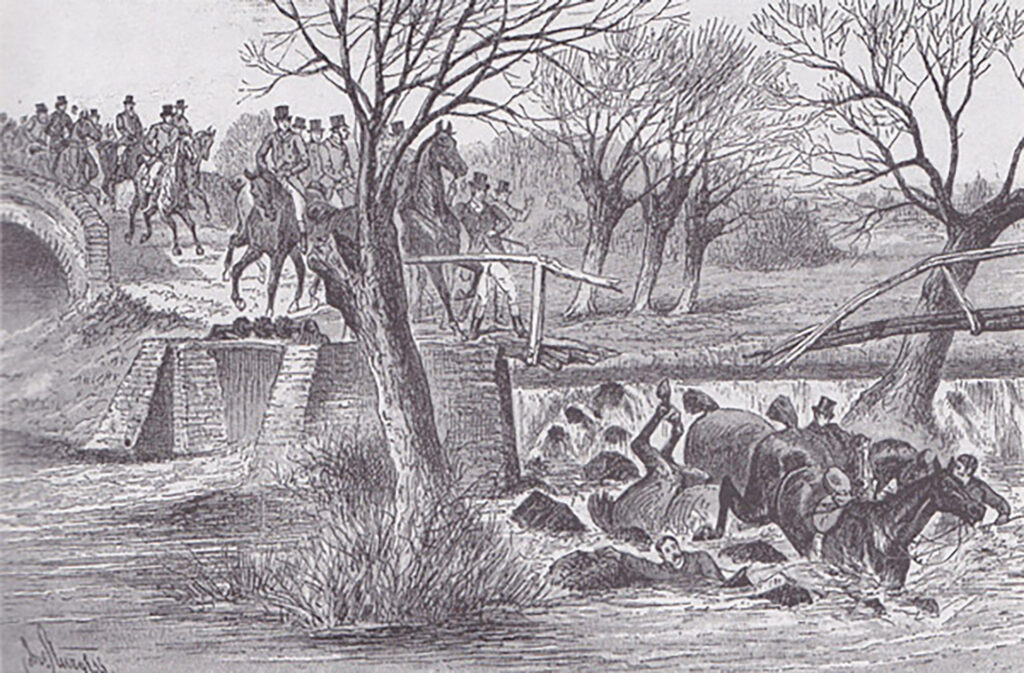
A crumbling brick wall is the only remnant of a long-gone fulling mill, already out of repair at the end of the 18th century. There is a coloured print from 1874 by John Sturgess depicting a scene of three gentlemen horseriders – Lord Grey de Wilton, Mr G. Moore and Revd Weller – splashing down into the Wreake, interrupting the Quorn, UK’s most famous fox hunt, being led by Tom Firr.
Village children are enjoying a sunny summer day, laying in the riverside grass and wading knee-deep in the river. Now the view is very much overgrown.

Links to this article and Hoby’s history