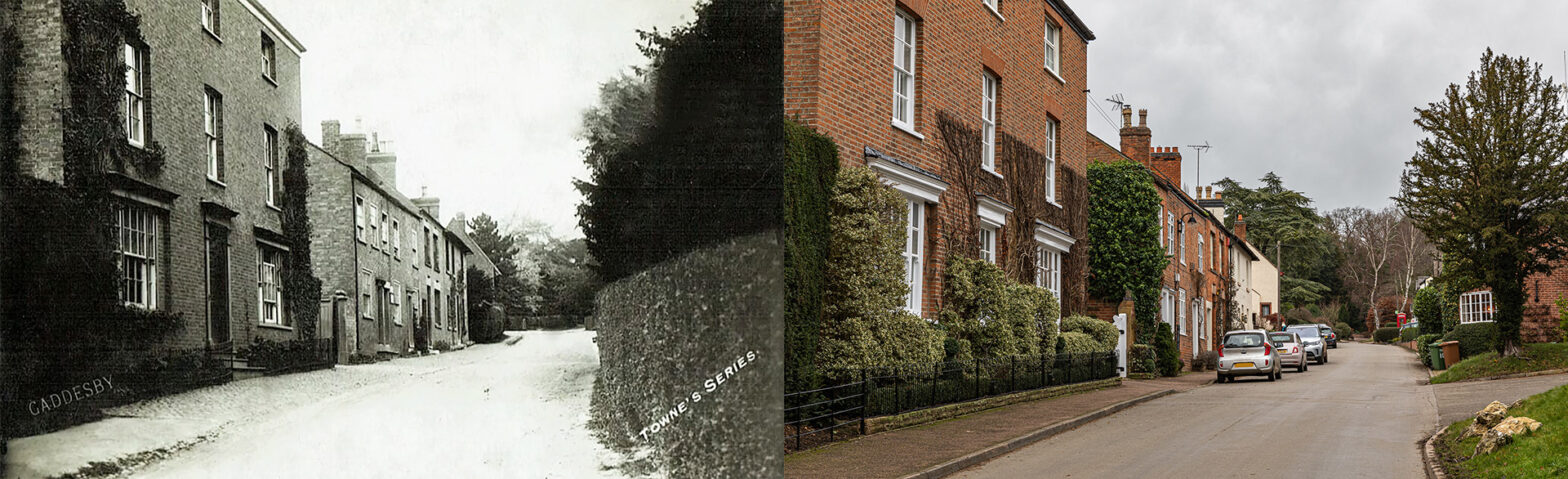
Main Street
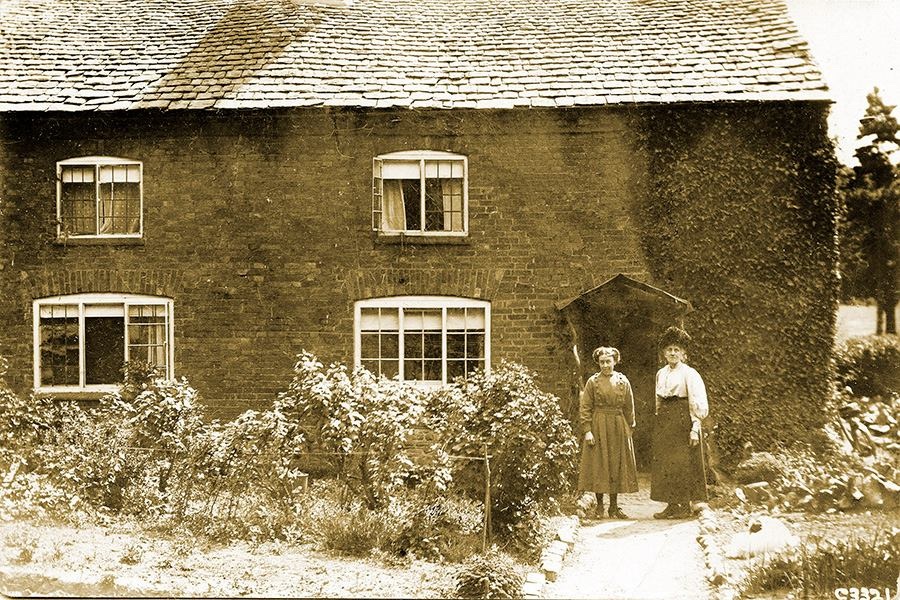
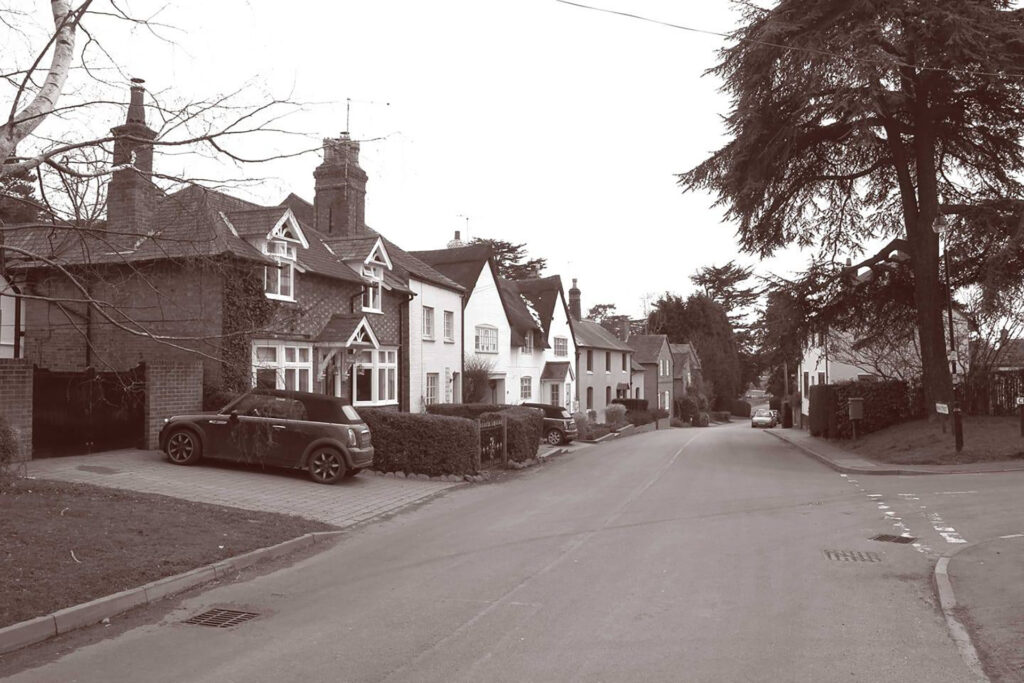
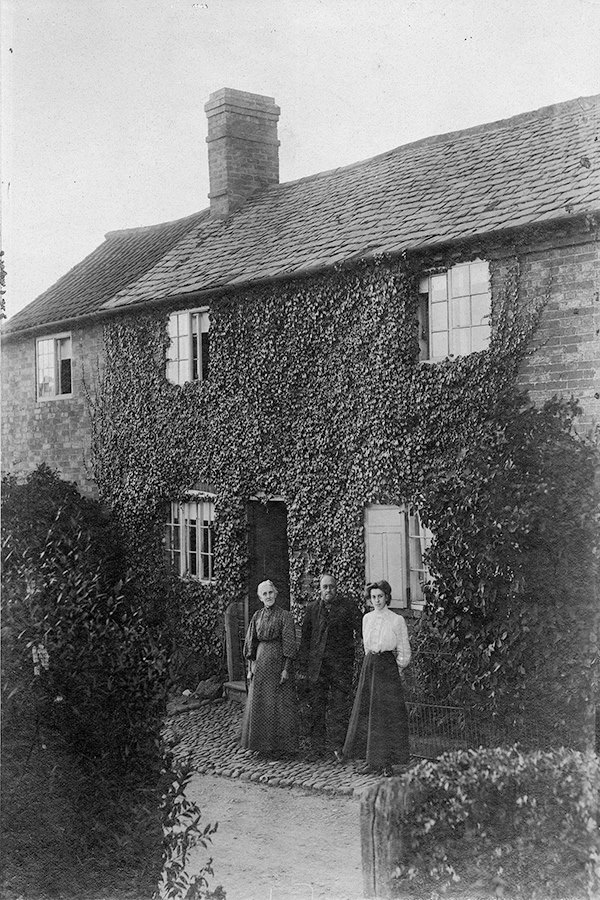
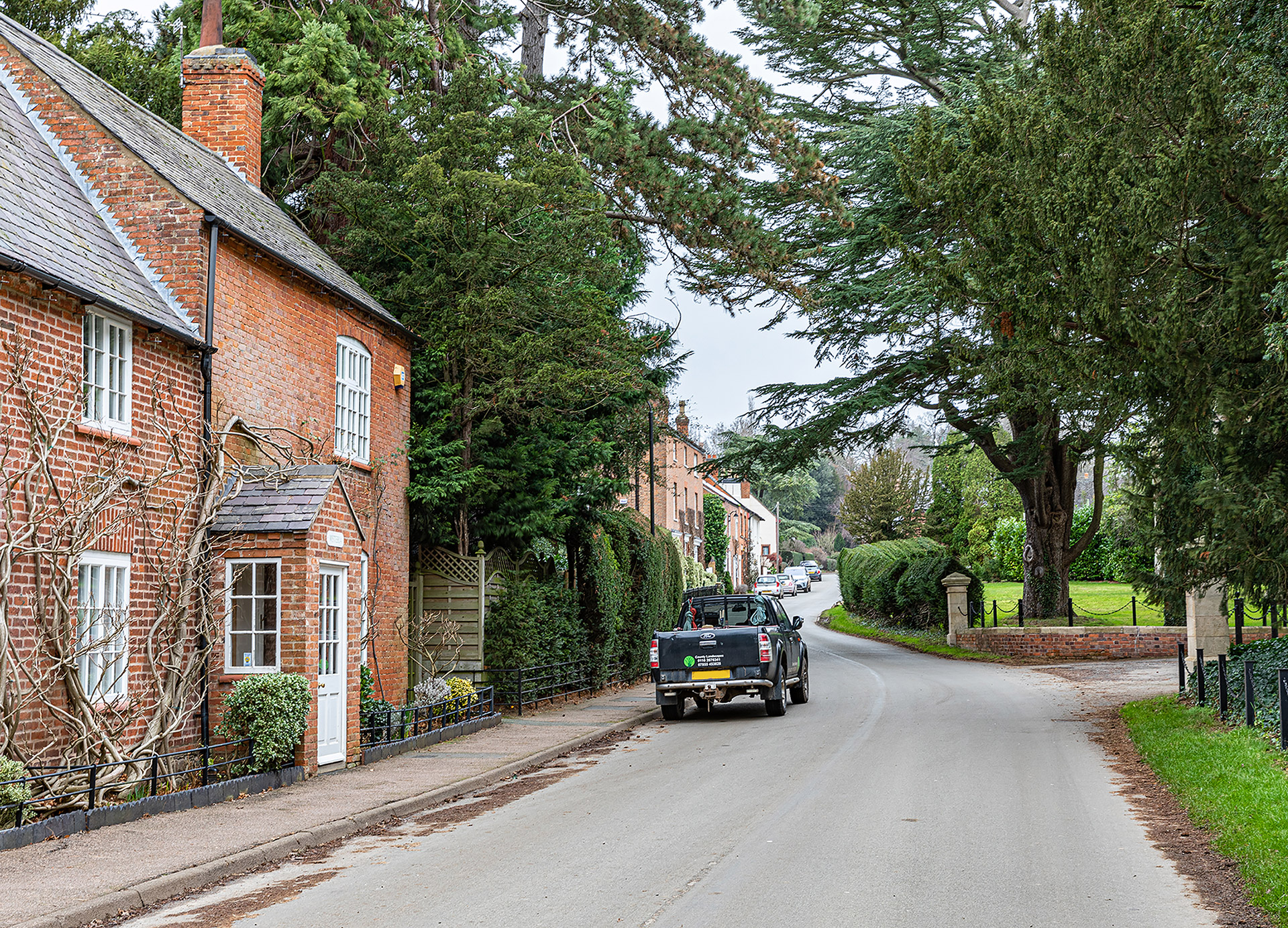
“Although I left Gaddesby in 1967, I have fond memories of my childhood and teenage years in the village,” said David Lewis, a sixth-generation Gaddesbyite, born in 1949. “My mother was a Smith, and our ancestor Edward Smith, born in Beeston in Nottinghamshire, came to the village when he married Mary Brown, a Gaddesby girl, at St Luke’s church in 1781. Edward was a carpenter and wheelwright, and they settled in the first cottage to the right, now called Wheelwright’s Cottage, with the workshop situated to the rear.” David, who is writing a book on Gaddesby’s history, grew up in that cottage, where his grandfather lived. In March 1986, Leicestershire Mercury advertised the sale of Wheelwright’s Cottage at an asking price of around £57,500. “Originally comprising a cruck cottage constructed 500 years ago, this listed building has been substantially extended since its original construction initially 200 years ago.”
Geraldine Kelley: “We lived in Wheelwright’s Cottage until 1983 and sold it to newcomers for £39,000! We were good friends of Jack and Ella next door and Bob, who ran the village shop. The Quicks lived below us in the Dower House and the Batchelors still live in Wisteria Cottage below that. It was a lovely place to live and our son was so happy at the village school with the wonderful headmaster!”
In the second cottage was the Post Office. A silent remnant is a black-painted original postbox cemented in the brick wall. Why black? Rob Hunt, who has been living in the cottage explained: “The only relic to the old Post Office is the post box that is still in the wall. The Post Office did want to remove it when we bought the property, but we were able to keep it if we painted it black. It can be accessed from inside the house.”
David continued: “Edward Smith’s granddaughter, Elizabeth, married David Johnson, one of the local farmers, and became the village postmistress. They also oversaw the installation of the first telephone switchboard in the village.
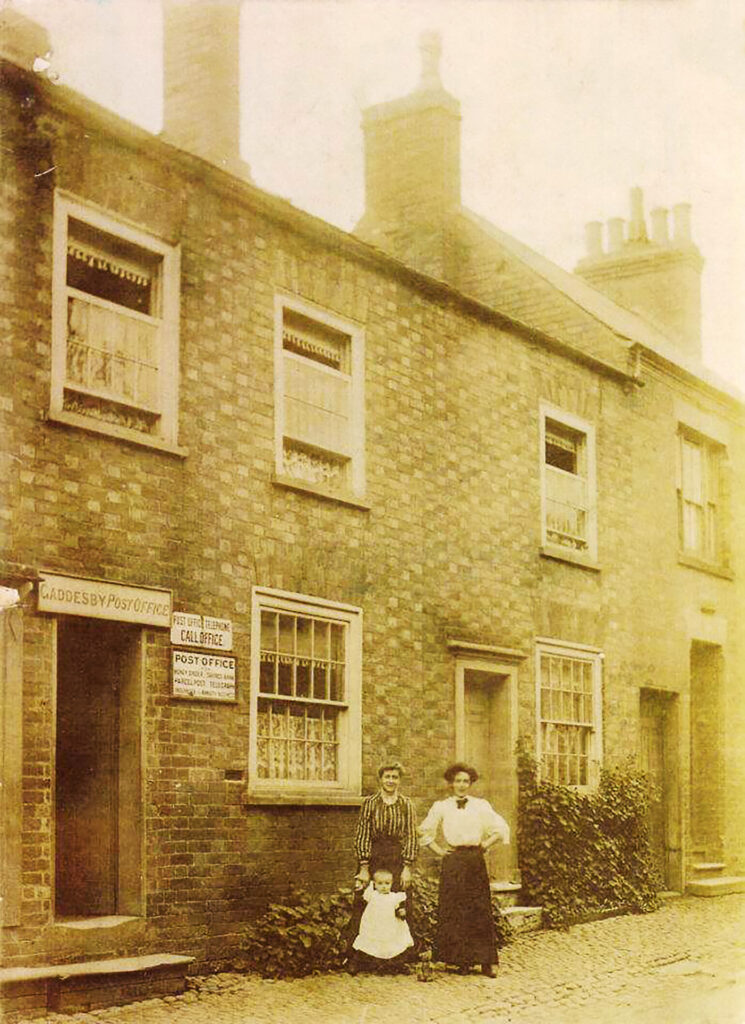
From the 1950s, the Post Office was run by their granddaughter Ella and her husband, Jack Hollingshead. She was always known to me as Aunt Ella.“
In the foreground on the left, the stately home is a Grade 2 listed late-18th-century brick-built property. David recollected: “It has a few names over the years. It used to be the home of Charles Bland, the Cheney Estate manager, and his wife when it was known as Napier House. It was later called The Cottage, and today, as in my days, it is The Hermitage. I remember the gentleman who lived on the property: Mr Porter. He had seven cars, with number plates RGP1 to RGP7. Even the former Prince of Wales, later King Edward VIII, stayed there. He was also on occasion a guest at Gaddesby Hall.”
The village history is intertwined with Gaddesby Hall, a Queen Ann House built on the site of a 14th-century hall, Paske Hall, believed to have been built around 1394. The Ayre family carried out the rebuilding in 1744. They “Georgianised” and enlarged the property with 27 bedrooms. John Ayre was the High Sheriff of Leicester and a sizable landowner. He died in 1758 at the age of 82, and the Hall passed to Thomas Ayre and then to another John Ayre, brother to Thomas. In 1807, Anne Ayre, John Ayre’s widow, owned the Hall and lived there with her daughters Mary and Eliza. In 1811, Eliza Ayre, second daughter of John Ayre, married Colonel Edward Hawkins Cheney CB [Member of the Order of the Bath] of the Royal Scots Greys. So the Cheney family inherited the estate. Eliza and Edward had several children but, in 1818, Eliza died soon after childbirth, and their new son died a month later.
Edward Hawkins Cheney, the most famous family member, joined the Royal Scots Greys as a cornet in 1794, soon after the French had declared war on Britain. The same year, serving under the Duke of York, he was severely wounded when the English were defeated in Holland. With the same regiment, he fought in the Battle of Waterloo on 18 June 1815, when Napoleon was finally routed and banished to St Helena. After four horses were killed under Cheney, he rode a fifth horse, which was also wounded, while taking his regiment’s command.
As a great horseman, Edward Hawkins Cheney had stabling for 100 horses and 20 polo ponies built on the Gaddesby Estate. He died in 1848 and was, as a horse-lover, remembered with a life-size equestrian sculpture carved by Joseph Gott from a single block of Italian marble. The statue was placed in the conservatory.
David Lewis: “My two times great grandmother came to Gaddesby from Pickwell to act as a nursery maid for Colonel Cheney. She stayed there, and around the time she married, Colonel Cheney’s wife died from birth complications. Their newborn son died shortly after that as well. My two times great-grandmother continued to act almost like a surrogate mother for Colonel Cheney’s children. Because of that relationship, the son, Edward Henshaw Cheney, was always a close friend of the Smiths.”
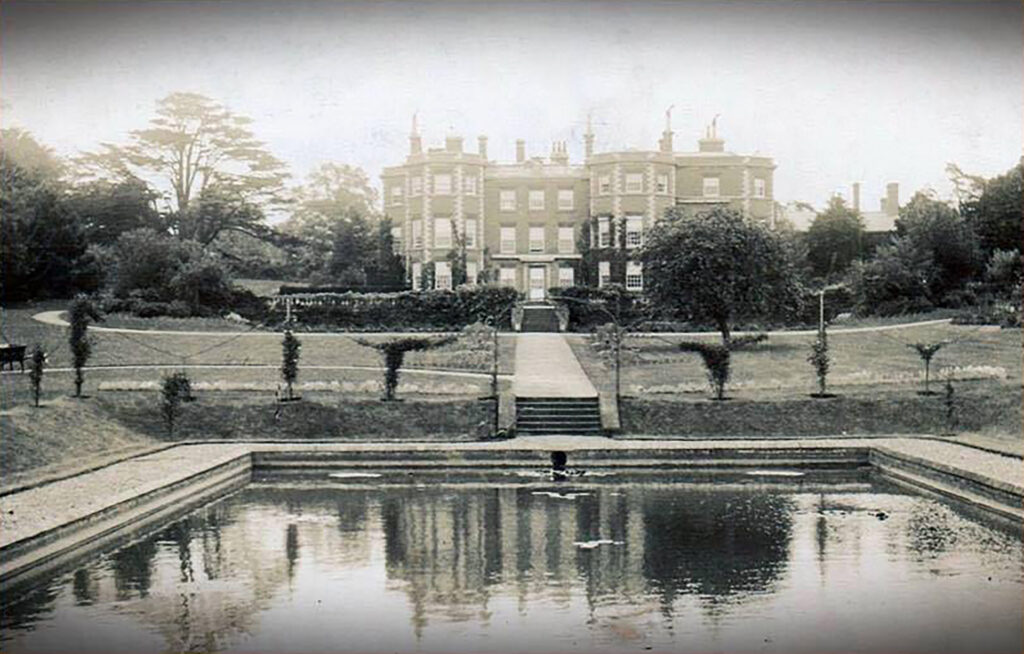
The estate passed to his eldest son Edward Henshaw Cheney who purchased a considerable further amount of land surrounding the estate. The Cheney family were known to support the village community and, in 1859, paid for much-needed repairs and restorations to St Luke’s church and built the school in 1868. That year Gaddesby Hall also got additions.
Following Edward Henshaws death in 1889, his widow Mary inherited his debts and subsequently let the hall as a Hunting Box. The estate was sold in 1917, and Edward Hawkins’ statue was moved, using three rollers, out of the conservatory of Gaddesby Hall to St Luke, the village church. The statue depicts the Colonel riding a collapsing horse in the heat of the battle, and in the panel below, he is shown in hand-to-hand combat with a French officer, trying to recapture a lost Napoleonic eagle.
Before the Second World War, Count Jacques de Pret Rous was the last owner. The Hall was occupied during the Second World War and used as billets for the Royal Engineers, the RAF, USA troops, and Irish farm labours during the war. The building then fell into decay and disrepair.
After WW2, it was saved from demolition by Rearsby builder, Mr E Sheriff. With the help of the Leicester architect Clement E. Ogden, the Hall was Leicestershire’s first “sawn-off” home. The top storey was taken off. And the right wing and the servant’s quarters at the rear were demolished. It became his family residence in 1952 as a five-bedroom home with stabling for ten horses.
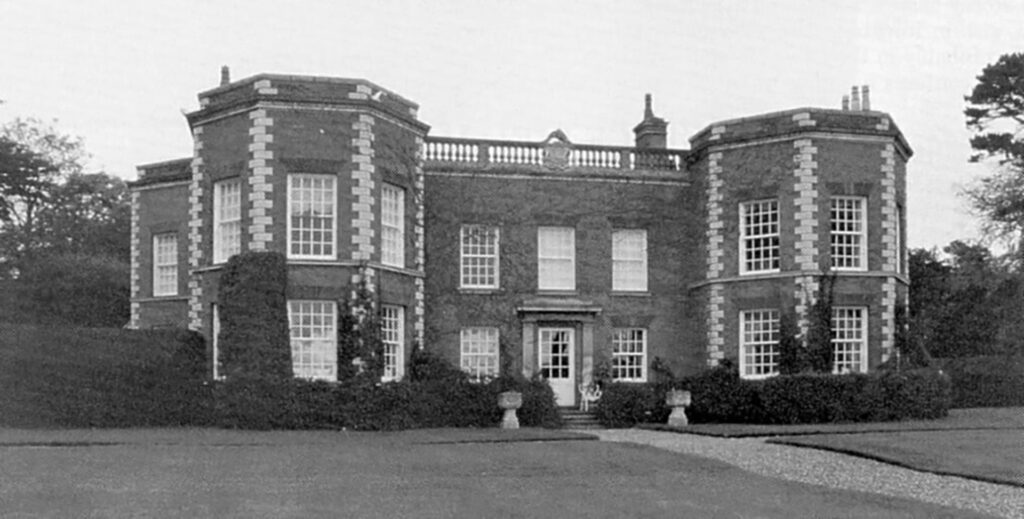
The Hall was put for auction on 23 October 1973 by Warner Sheppard and Wade at the Grand Hotel, Leicestershire, for offers in the region of £100,000, on behalf of the trustees of the late Wing Commander Alan Laird Craig. He was the managing director of the knitwear company of Chamber International. At that time, the house stood on six acres of ground. The nearby service cottage, garages and stables, were auctioned as a separate lot.
Gerrit van Ravenswaay was the owner from 1978 to 1985, when Gaddesby Hall was sold for more than £280,000. Today, the Hall remains a private residence and is a Grade 2 listed building.
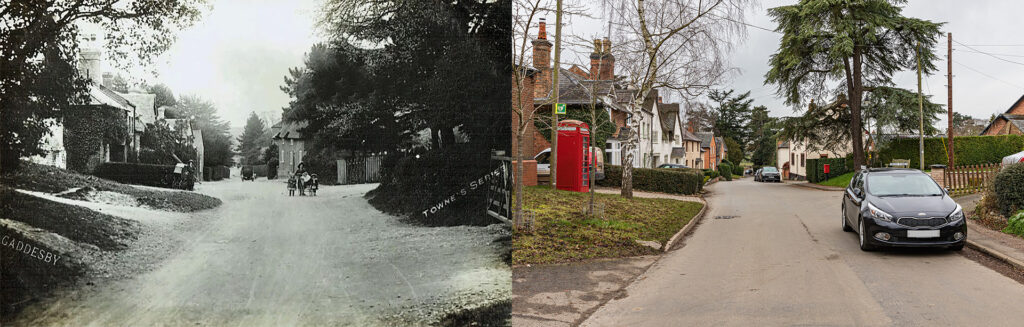
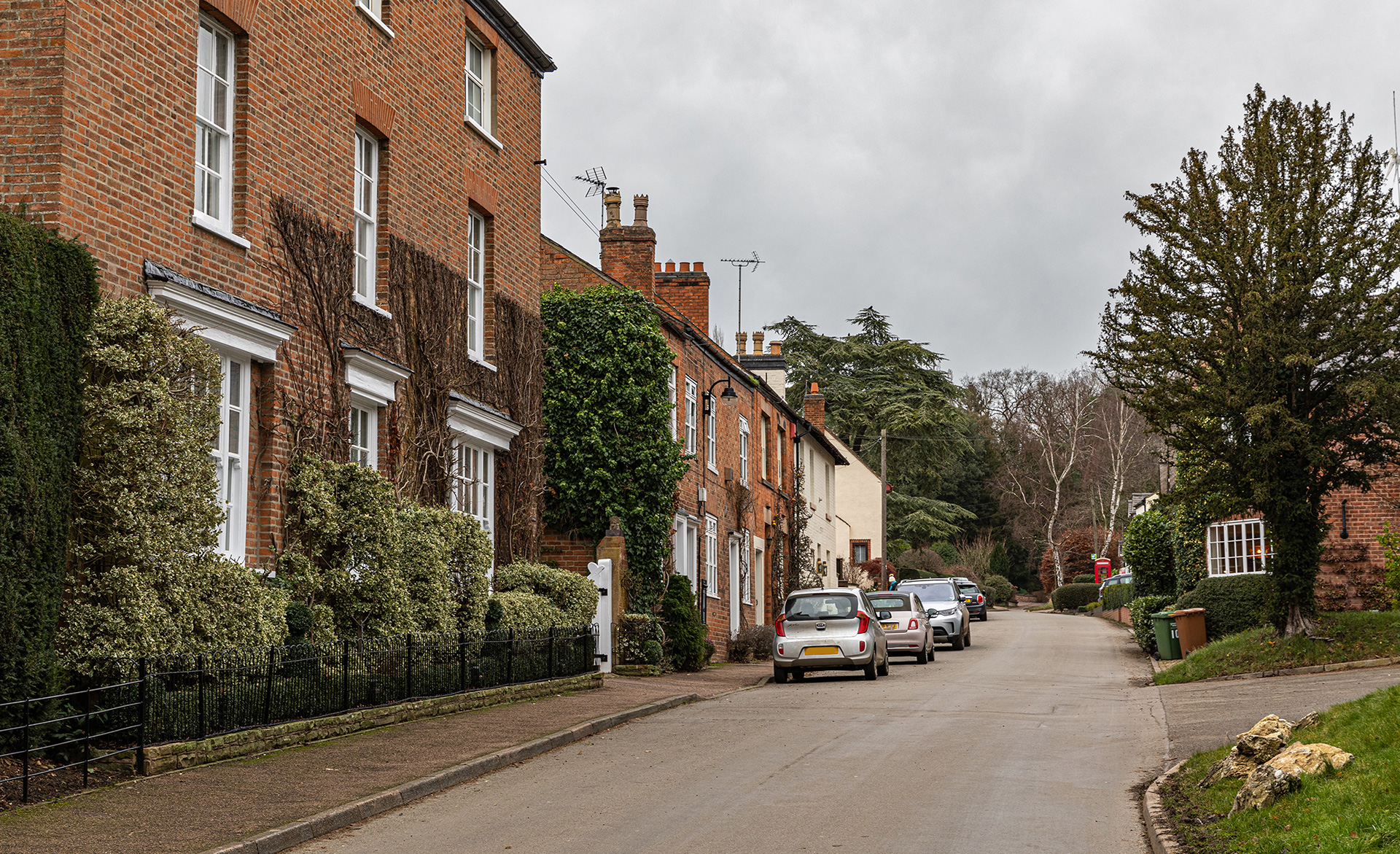
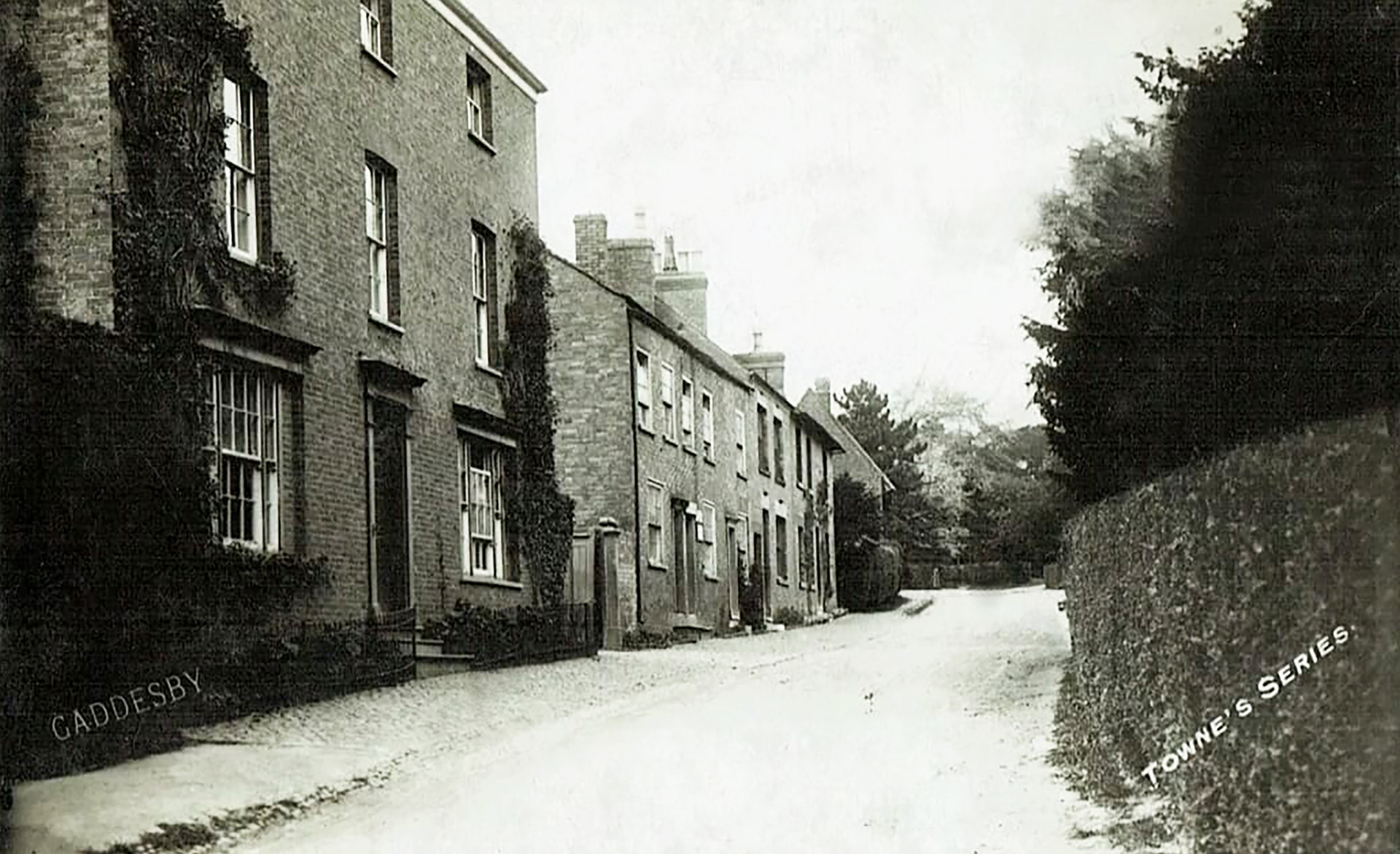
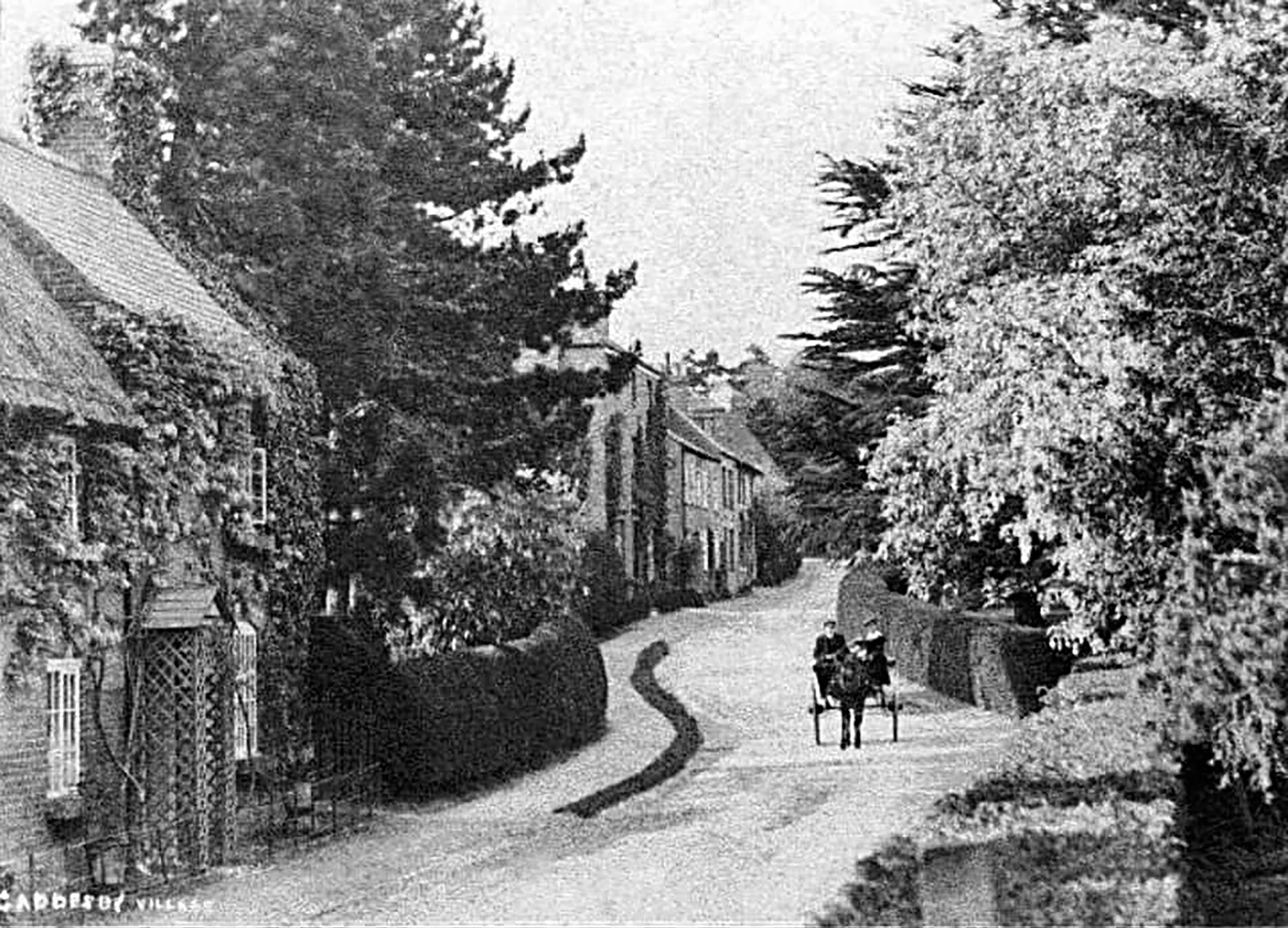
Moving to the top of Main Street, the house immediately to the right, from where the photograph is taken, is called the Bushes. David Lewis: “That was my grandfather’s sister’s marital home. She became a Baker.” In that part of Main Street are several Georgian houses in very good order. On the old postcard, there is a thatched cottage on both sides of the street. The one on the left, Forge Cottage, is still thatched. The one on the right got replaced, probably already before the Second World War.
David Lewis: “When my great-grandfather gave up his work as a wheelwright and carpenter he went into farming and moved from Main Street round to Cross Street, the street on the left of the old and new photograph, in a house called Croft, a house that is still there today.”
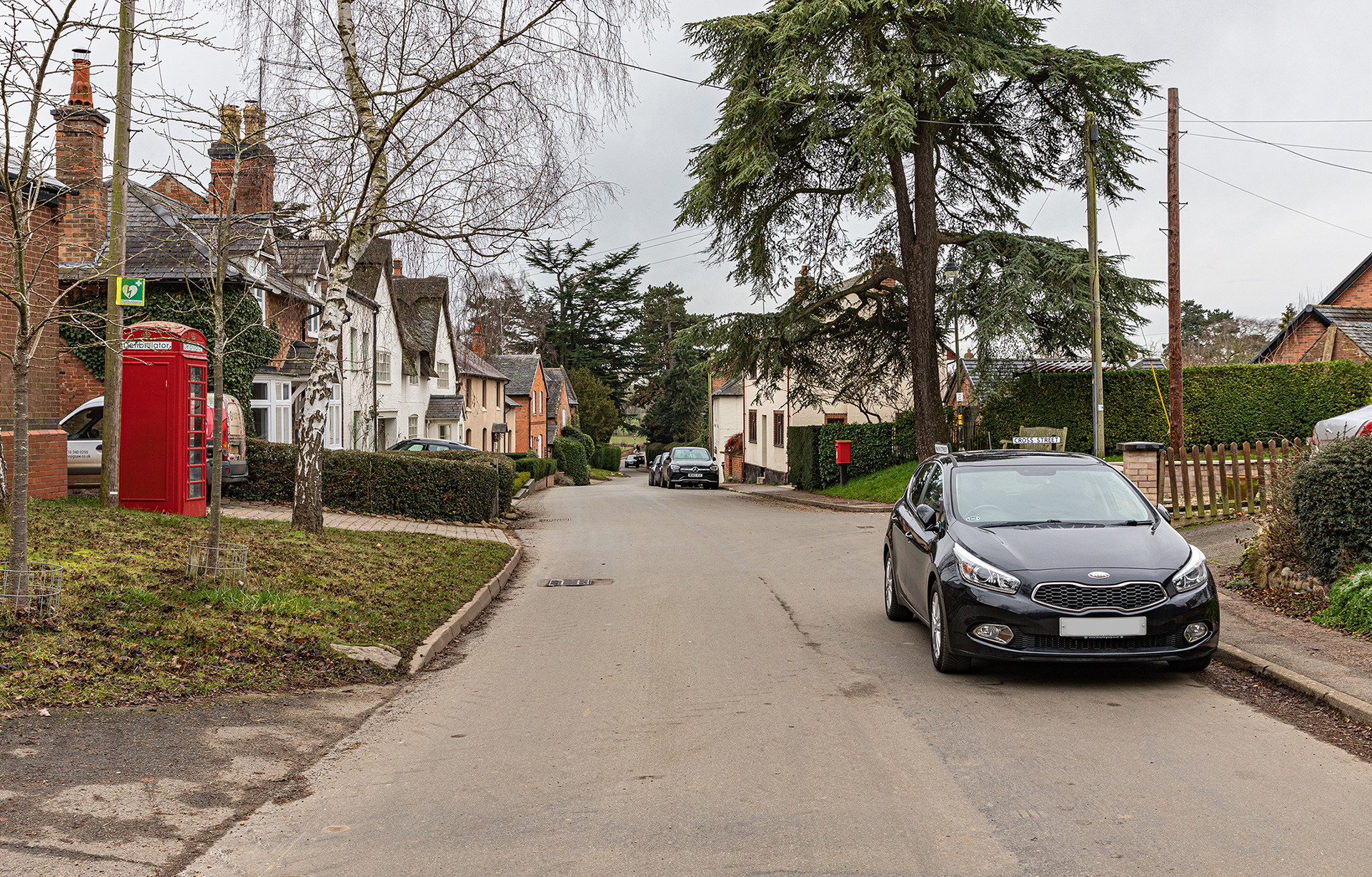
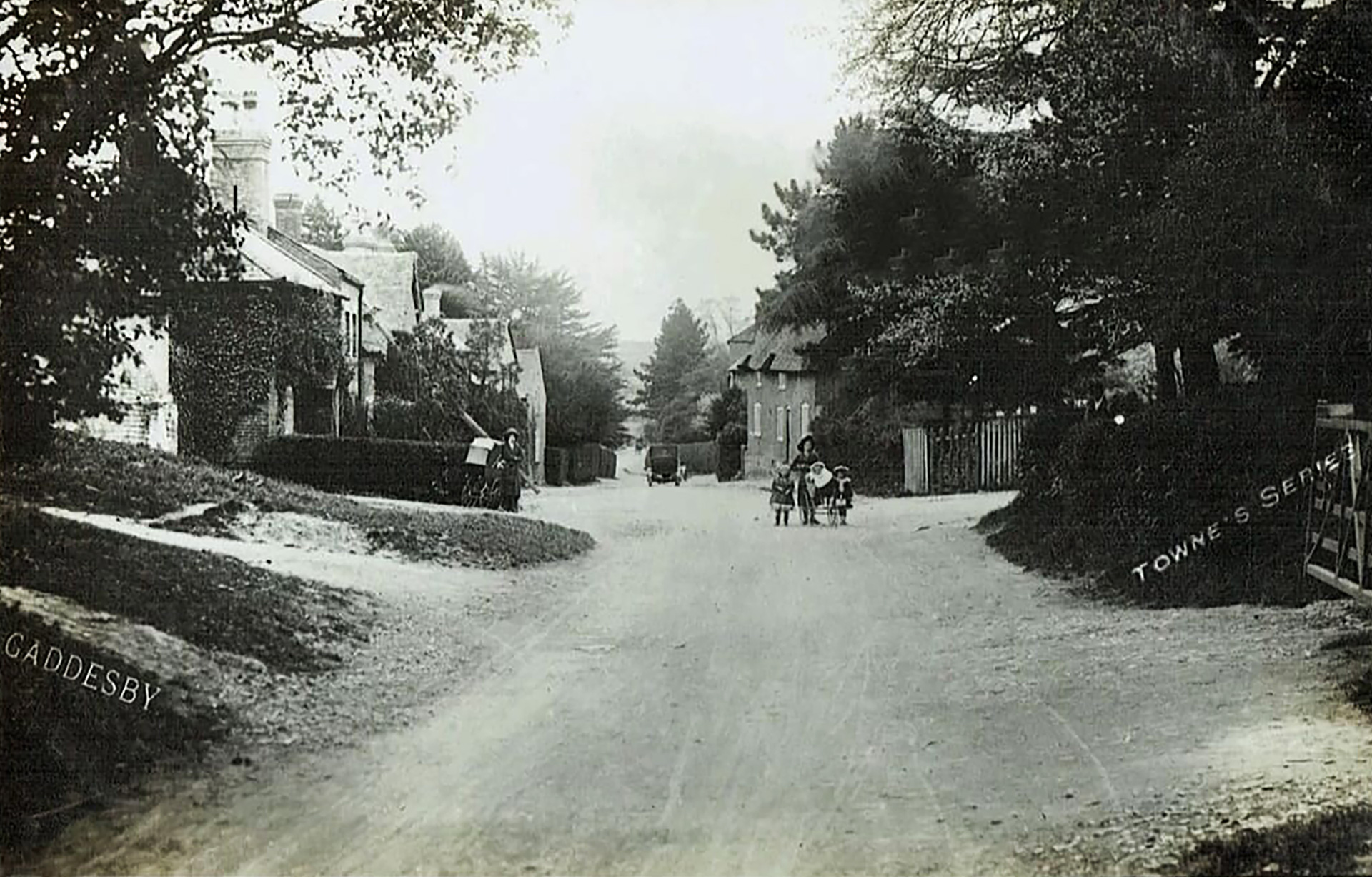
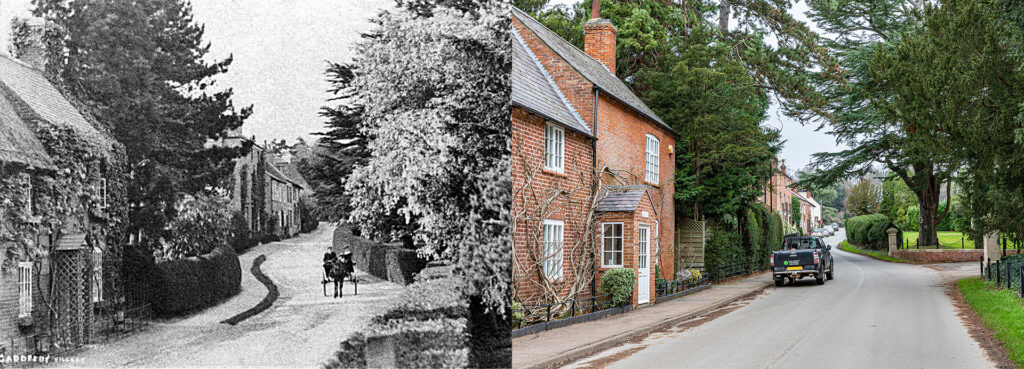
One time, the house on the left, Wisteria, was the home of Christopher Baker, whose son married David Lewis’ grandfather’s sister. There is a pony and trap in the street in the old postcard. On the right is the entrance for the driveway to Gaddesby Hall. David Lewis: “The hedge on the right wasn’t there when I was in the village. It was a spinney.”
Cheney Arms
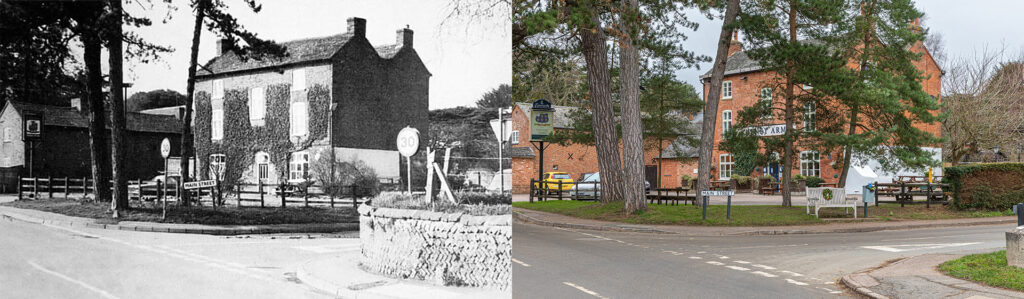
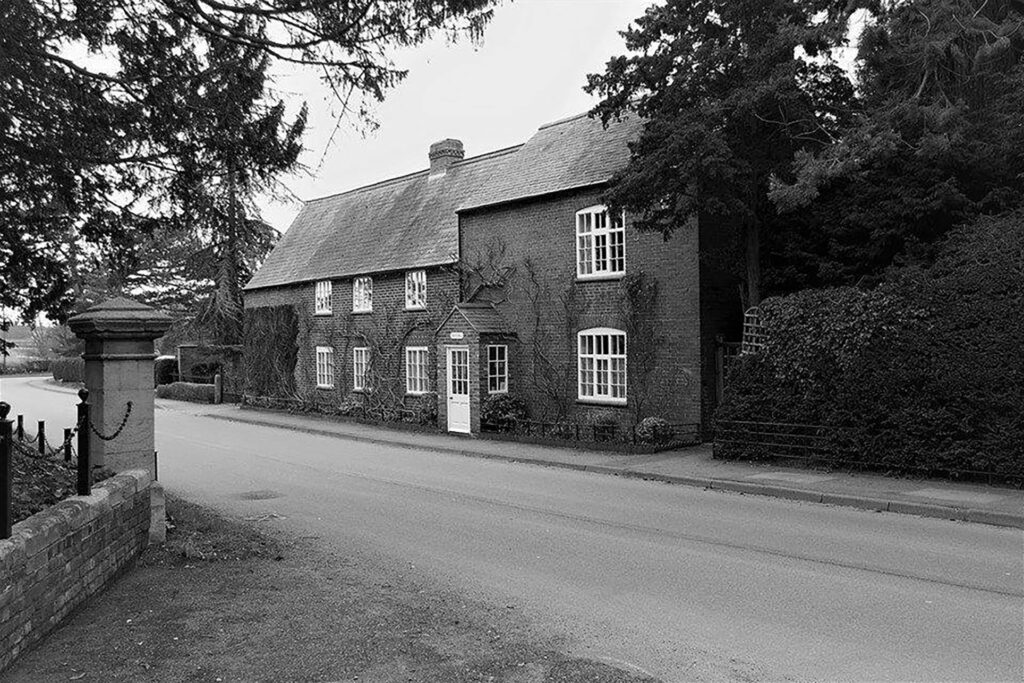
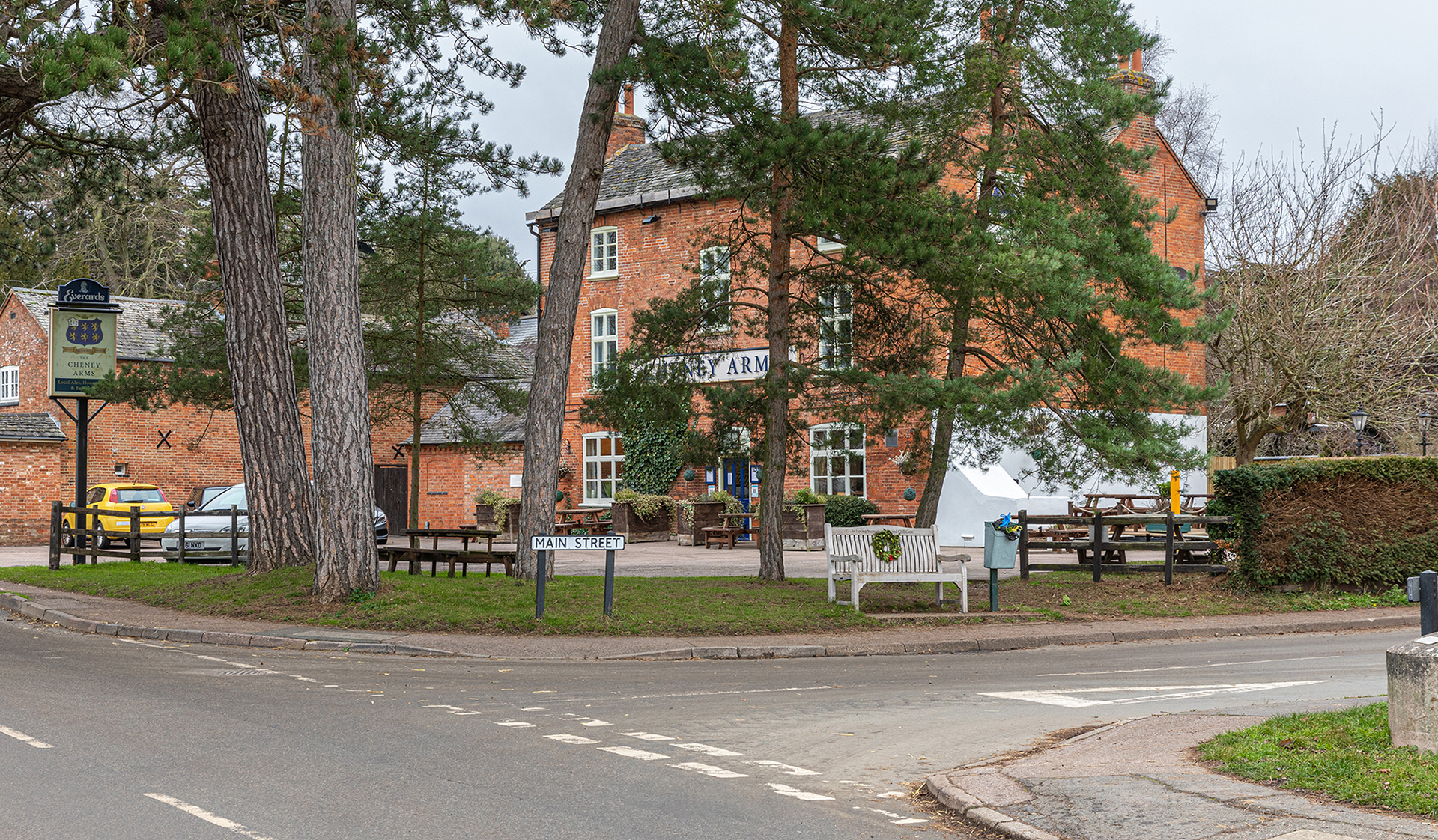
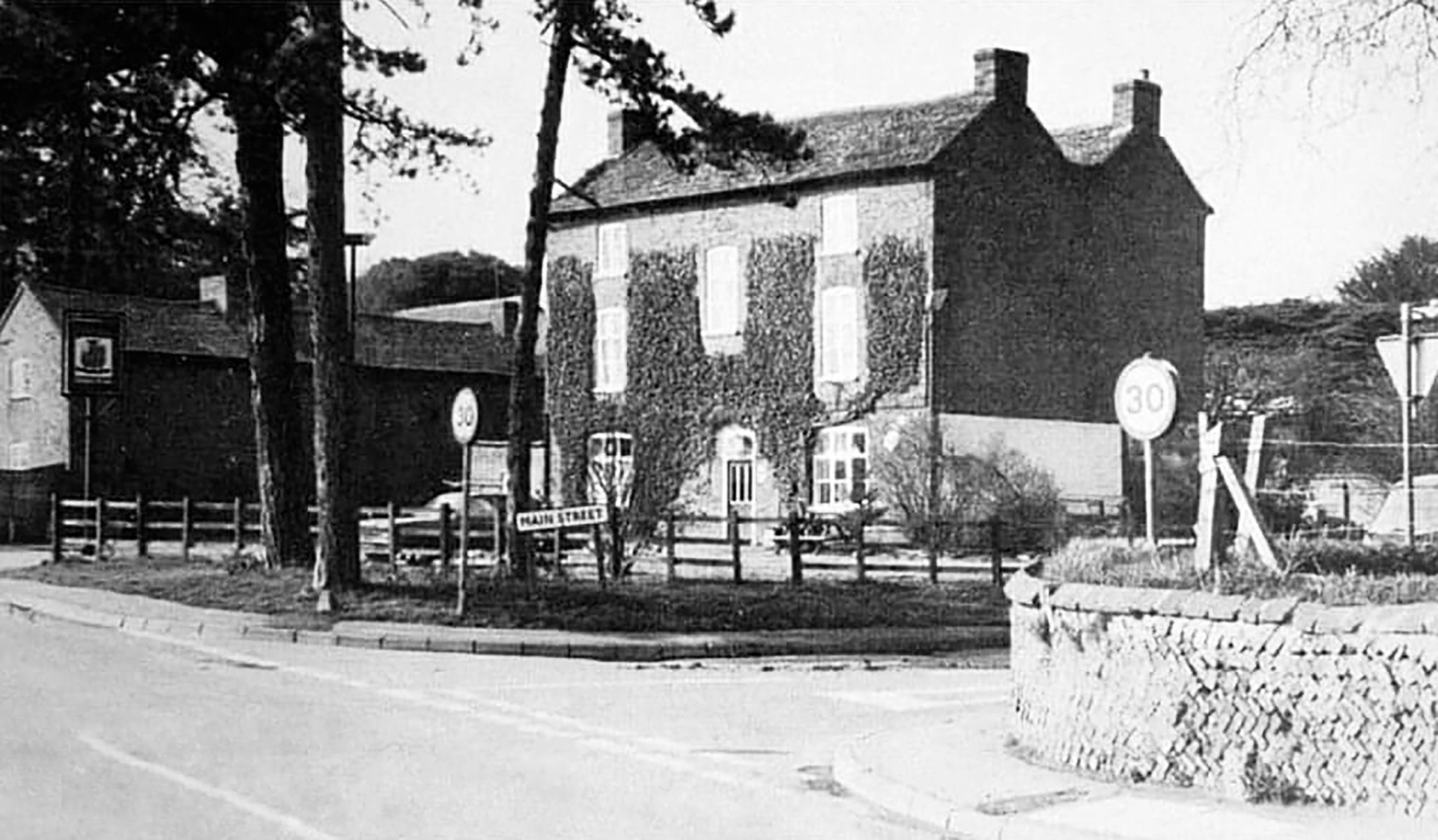
At the bottom of Main Street, the local pub lies at the corner of Rearsby Lane. The Cheney Arms is a three-storey red-brick Georgian house, dated 1740. Although it appears to be a public house, it was built as a dower house, a dwelling for a widow who had lived with her husband in the local mansion, which was required by other members of the family. There are several pointers to this for the house had initially been a stable block which indicates the way of life the occupier was expected to maintain. The only difference is that the back of the house now is the front because, in years gone by, the cobbled road took that course past the building. While researching a book, David Lewis discovered that the Cheney Arms public house is situated on land which used to belong to the manor of Ashby Folville. The Cheney Arms was transferred to Gaddesby in 1882.
The directory of 1846 gives two public houses, the Malt Shovel and the Gate, the licensee of the latter being a butcher. By 1880 the Cheney Arms was the only public house mentioned, and even then, the licensee William Yates was also a grazier.
David Lewis: “When my great-grandfather, who was the wheelwright and carpenter, and later became a farmer, died, my great-grandmother moved to Cheney Cottage, the building on the left behind the mature conifer trees.”
“In 1962, when I was 14, I had a pop group with some friends. The first time we played publicly was for charity on the inn’s lawn. The name of the band was ‘The Boys’. Original or what?” David recollected.
John Clynick became the landlord in 1973. He and his wife Cindy pulled at the ale pump that dispensed traditional Everards. It is still the main served beer. John and Cindy have been at the Cheney Arms for some 12 years. In 1983 told a newspaper reporter: “You might be able to make a little profit out of selling beer, but owning racehorses is an expensive hobby. I recently sold my racehorse. It did win once, but mostly it had a good view of the others in the race – from behind. It was all good fun, but it can become a costly luxury. I think in future I will stick to running the pub.” A keen golfer, John was happy to be in the village so proud of his farming and equestrian past.
There is a herringbone brick wall on the right-hand side of the old picture, part of the Gaddesby Hall estate. It extends to Church Lane. That work was also done in the late 1860s.
The old photograph of the Cheney Arms was taken in the 1950s. By that time, the herringbone wall was moved back a few metres. The round concrete structure is a blacker bombard anti-tank gun mounting. These guns were supplied to Gaddesby, Ashby Folville and Barsby Home Guardformed in 1940 against the threat of a German invasion.
On the village
Gaddesby is admirably stocked with cedars and other conifers. The trees give the village a distinct look. A statement made in 1891 says: “The land is chiefly in pasture. Stilton Cheese is being made by all the occupiers. The soil is stiff clay; subsoil sand. The area is 1,657 acres.”
On 4 November 1983, the Melton Times wrote an article highlighting a distinctive agricultural aspect: “The aristocratic village of Gaddesby has changed over the years. For a few decades, there weren’t any ploughed fields in the village, only a few cattle and horses mingling with the trees on the giant estates. The rest of the village belonged to the grazers – small milk and cheese producers with, perhaps eight or ten cows each. They and their cottage industries were the backbone of the village, a backbone long since eroded by the plough and the growth of the large estates.” The newspaper portrayed John Haynes, 83 years old in 1983 and the oldest resident in the village, born and raised on a grazer’s farm. There were 11 in his family, and his father’s 50 acres just wasn’t sufficient to support them all. John left home and worked in service for the major estates in the village. John said: “I was general dogsbody to the wealthy. There wasn’t much to in those days, and I spent 14 years with Captain John Robinson, who was secretary of the Quorn Hunt before he was killed in a car accident in the 1930s. In those days, you had to be prepared to do anything, and although the money wasn’t very good, it seemed to be worthwhile to work in your home village.”
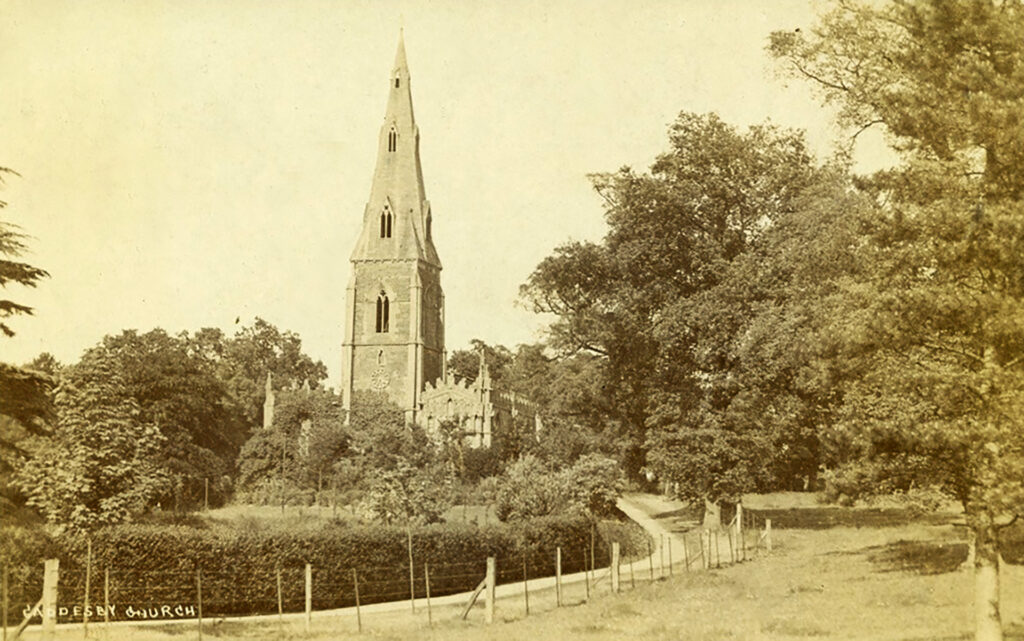
St Luke’s Church, built on a Norman foundation, dates from the 13th century and was well endowed before many parish churches in the Melton Borough. It was part of the Soke of Rothley from the tenth century, first under the Knights Templars and then under the Knights Hospitallers. The church is famous for the Cheney memorial and its ‘ox-eye’ window over the south aisle. The general aspect of the church attests to the former wealth of the village.
The Melton Times of 2 March 1995 reported that the village shop was about to close after 44 years “a victim of supermarkets and modern-day shopping trends.” John Hancock, who lived all his life at the shop at Nether End, remembered helping his parents behind the counter as a child. The shop was once a thriving little business in the village, selling all kinds of food and household goods. The business started a couple of years after moving to the village in 1950. John’s mother began selling cigarettes, which she bought in Leicestershire, to local farmers. The business grew, and part of the house was converted to a shop. Later, the family opened a petrol station nearby, but that also closed.
John Hancock, 46 years old in 1995, said: “I am really upset. I can still imagine my mother and father in the shop. My father was a farmer who bought a smallholding in Gaddesby, leaving the running of the shop mostly to my mother, who lived for the business. My mother died in 1992 and his father a year later.”
David Lewis recollected: “Hancock’s shop was a regular stop on the way home from school to purchase gobstoppers, sherbert dips, flying saucers, love hearts et al. Good to see John Hancock, who was a contemporary of mine, continued to run the shop after his parents passed away. Sadly, the shop is no more!”
John Hancock used to work in forestry sub-contracting to a timber firm but gave up his job after his father’s death and took over the shop. He told the newspaper: “I am winding down the shop now. I am clearing the stock of perishables. I think the Sunday opening and the big supermarkets have taken their toll. Many people in Gaddesby used to come here at the weekends, but now they go out to the cities and make a day of it.” Hancock’s shop would be open from 7 am until 11 pm at its peak. “The shop holds a lot of memories for me. Now I suppose I will have time to dig the garden. Villagers have expressed their disappointment about losing the shop. You either use it or lose it,” concluded John.
More pictures
Would you like to add pictures? Send a message.
Domesday Book
Gaddesby was a settlement in Domesday Book, in the hundred of Goscote and the county of Leicestershire.
It had a recorded population of 34.6 households in 1086, putting it in the largest 20% of settlements recorded in Domesday (NB: 34.6 households is an estimate, since multiple places are mentioned in the same entry), and is listed under 4 owners in Domesday Book.
- Land of King William
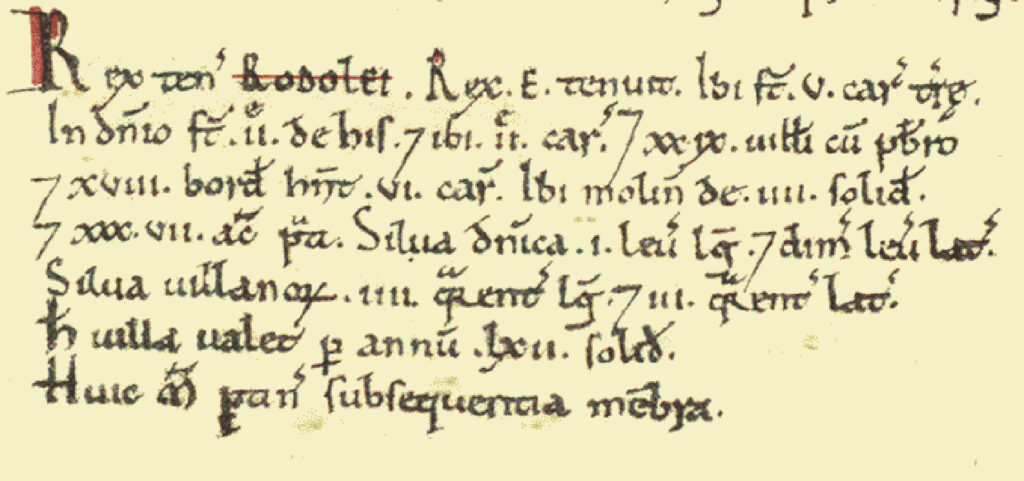
- Households: 186 villagers. 204 freemen. 112 smallholders. 1 priest.
- Ploughland: 2 lord’s plough teams. 88 men’s plough teams.
- Other resources: Meadow 176 acres & 3 * 1.5 furlongs mixed measures. Woodland 3 * 3 furlongs & 5 acres; 1 * 0.5 league & 4 * 3 furlongs mixed measures. 6 mills, value 17 shillings.
Valuation
- Annual value to lord: 34 pounds 10 shillings in 1086.
Owners
- Tenant-in-chief in 1086: King William.
- Lord in 1086: King William.
- Lord in 1066: King Edward.
2. Land of Countess Judith
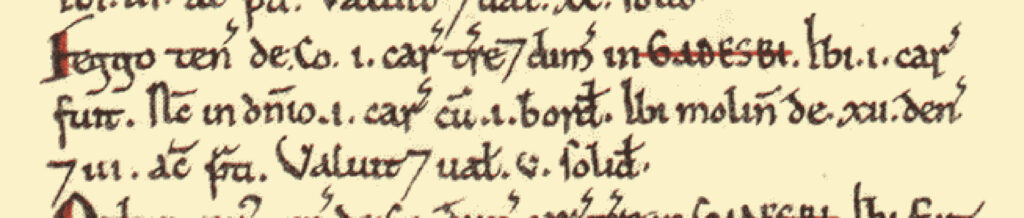
- Households: 1 smallholder.
- Ploughland: 1 ploughland. 1 lord’s plough teams.
- Other resources: Meadow 3 acres. 1 mill, value 1 shilling.
Valuation
- Annual value to lord: 5 shillings in 1086; 5 shillings when acquired by the 1086 owner.
Owners
- Tenant-in-chief in 1086: Countess Judith.
- Lord in 1086: Feggi.
3. Land of Countess Judith

- Ploughland: 0.5 ploughlands.
- Other resources: Meadow 2 acres. 0.5 mills, value 2 shillings.
Valuation
- Annual value to lord: 5 shillings in 1086; 5 shillings when acquired by the 1086 owner.
Owners
- Tenant-in-chief in 1086: Countess Judith.
- Lord in 1086: Othenkar (son of Alnoth).
4. Land of Earl Hugh (of Chester)
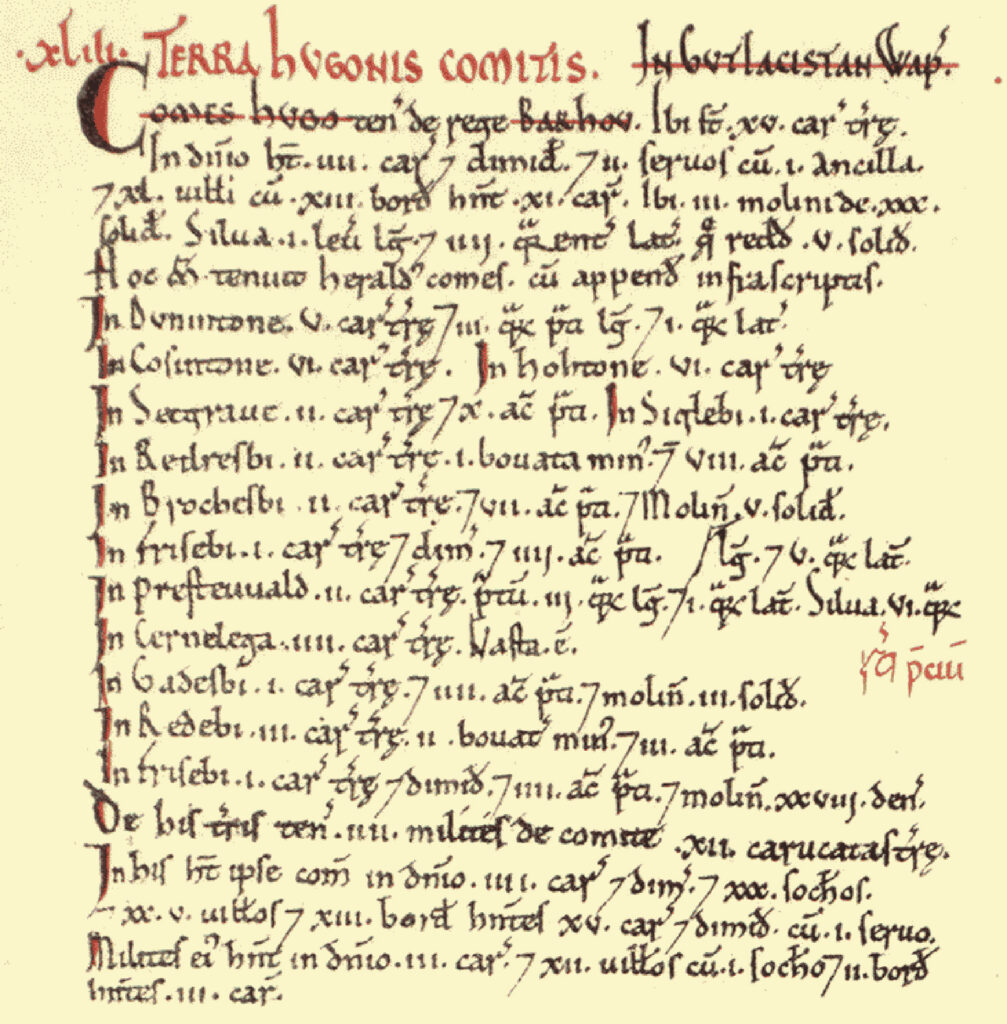
- Households: 77 villagers. 31 freemen. 28 smallholders. 2 slaves. 1 female slave.
- Ploughland: 12 lord’s plough teams. 29.5 men’s plough teams.
- Other resources: Meadow 40 acres & 3 * 2 furlongs mixed measures. Woodland 6 * 9 furlongs. 6 mills, value 2 pounds 12 shillings and 2 pence.
Owners
- Tenant-in-chief in 1086: Earl Hugh (of Chester).
- Lords in 1086: Earl Hugh (of Chester); men-at-arms, four.
- Lord in 1066: Earl Harold.
Links
Would you like to add a link? Send a message.
19 responses to “Gaddesby”
Really interesting article, especially as we have lived in the Old Post Office since 1995.
Thank you, Rob. Are there any other features in the house in relation to the Post Office?
Really the only relic to the post office is the post box that is still in the wall. The post office did want to to remove it when we bought the property but we were able to keep it if we painted in black. It can be accessed from inside the house.
Thanks Rob, it is added to the story.
Hancock’s shop was a regular stop on the way home from school to purchase gobstoppers, sherbert dips, flying saucers, lovehearts et al. Good to see John Hancock (who was a contemporary of mine) continued to run the shop after his parents passed away. Sadly, the shop is no more!
My wonderful father, John Ervin, converted the house (Cheney Cottage it was called then) into a home for us…. We lived there so happily for 8 years and I so loved Gaddesby… John Hancock used to drive me to school in Loughborough (I went to the lovely village school first) in his big bus… he smoked away!! I soo loved his shop & his lovely wife.
Thank you for sharing, Alex.
Hi Alex, my great-grandmother paid £200 for Cheney cottage in 1920 was than two separate dwellings.
hi David Lewis, we are about the same age and must have been brought up in Gaddesby at the same time. until age 11 I lived in Wesley cottage in back street next to Charwood house.. My grand parents Richard and Elizabeth Smith lived in Charnwood and after their demise my aunt Rose knight lived there. My mum and dad Pauline and Richard Clifton (Cliff) Smith moved to the “Gables” the house on Main Street that faces Cross street. My Uncle George and wife Alice lived in the cottage opposite the post office.
I knew many of the people you mention including Aunt Ella and Uncle Jack at the post office and Arty Baker the Blacksmith. I served as a weekend barman in the Cheney Arms before leaving for university so knew the publican and his very pretty wife.
Hi Richard John Smith. We are distantly related as Cliff Smith (whom I remember) was a 4th cousin once removed. I believe you are a year older than myself, so would have been at Gaddesby School at the same time although we obviously do not seem to remember each other. My mother and I moved back to Gaddesby in 1958 to look after my ailing grandfather (William Cope Smith, next door to the old PO) and we left circa 1967. BTW – I have a school photo from 1926 which has your 7-year-old father, along with my mother and other relatives, on it.
Hi David, I cannot remember you and certainly had no knowledge of any relationship. I would love to receive a copy of the photo you mention. I have some amusing tales. Arty Baker for instance was a very well respected horse shoer.He had never learnt to drive a ca, but it was not unknown for wealthy people to send a chauffeur driven rolls to pick him up and take him to the stables. Arty was a very small guy but tough as nails since he was shoeing horses of 18 hands. He drove a pony and trap which was hilarious.when he came down back street from the forge the pony automatically turned into the pub yard and the only way to get it to go elsewhere was for Arty to get off and lead it by hand past the pub. But there was a positive side to the pony since Arty loved Guinness and after an evening sessional he had to do was stumble into the trap and the pony would take him home with no human guidance. I have another story about Jack Hollings head which Ill convey another time. Best wishes John
John, I remember the stories of Artie stumbling back into his trap after a few at the pub to be taken home by his (uber) pony. If you use the link below to my ‘Gaddesby, One-Place Study’ page, there is an ‘Email me’ button. Can you send me an email so we can continue our discussion more privately.
https://www.facebook.com/GaddesbyOPS
Hi Richard John. Not sure whether you have tried to send me an email via the link provided, but as yet nothing has been received. I am unable to attach the school photo here, so email contact is the best solution.
Although most of my SMITH genealogy research was done over two decades ago, I have this week revisited your lineage (adding a few additional details) and put together three charts to show how we are related (5th cousins). Hope to hear from you soon. Best wishes, Dave.
Very interesting. Moved to Gaddesby from Cambridge area 16 years ago. Moved into house next to village hall car park. If you look for “made” in the text you can change it to maid, which would please my sub-editorial instincts.
Glad you liked it and I hope you enjoy living in the village.
Thanks for the editorial remark. 🙂
We lived in Wheelwright’s Cottage until 1983 and sold it to newcomers for £39,000! We were good friends of Jack and Ella next door and Bob, who ran the village shop. The Quicks lived below us in the Dower House and the Batchelors still live in Wisteria Cottage below that. It was a lovely place to live and our son was so happy at the village school with the wonderful headmaster!
I’m so glad to have stumbled across this article- so full of information and happy memories for us.
Hello Geraldine,
Thank you for your comment.
I am delighted you found the article and that it triggered happy memories.
Estelle
Hello Geraldine – Would your husband be Jim – a former teacher at Quorn School? If so he taught me and was an inspirational school basketball coach.
I now live at the Old Post Office next to Wheelwrights.
I came across your website/article when one of my sons was asking me where I grew up.
From about 1967, at the age of 6, I grew up living at The Hermitage on main street.
Me & my siblings would visit Bob’s post office regularly (sometimes on errands for our mum but usually to put sweets on the family account), we attended the local primary school which only had 2 classrooms when I started and Mr Robinson was the headmaster. Then, like all the Gaddesby schoolchildren, I would stop at Hancocks shop for a bag of fruit salads & black jacks on my walk home.
When I was a teenager,I would babysit at some of the cottages mentioned in your article.
I have beautiful memories of living in Gaddesby and have thoroughly enjoyed reading this and going down memory lane.
I now live in Australia!