Branston Road – 1910s
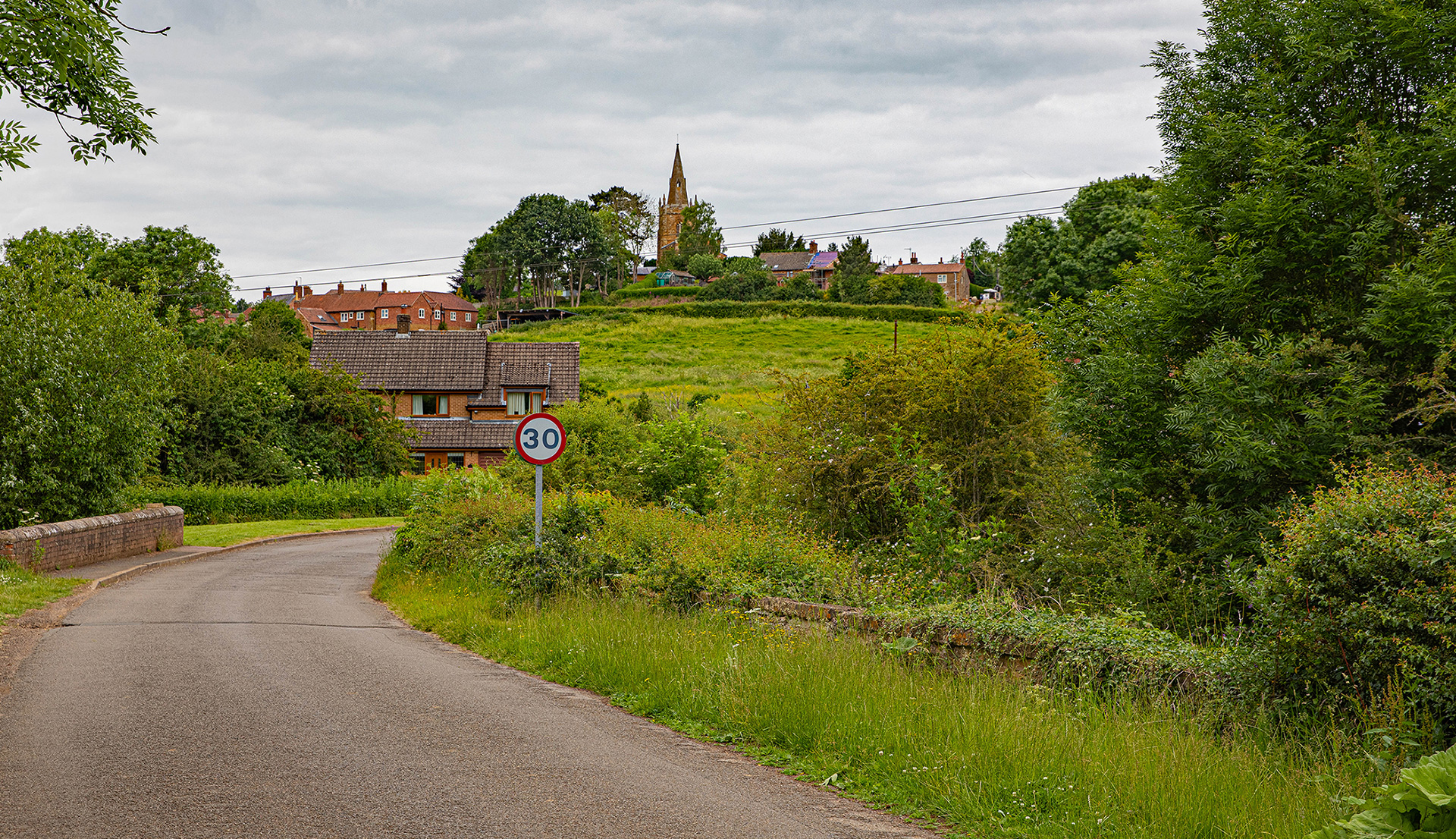
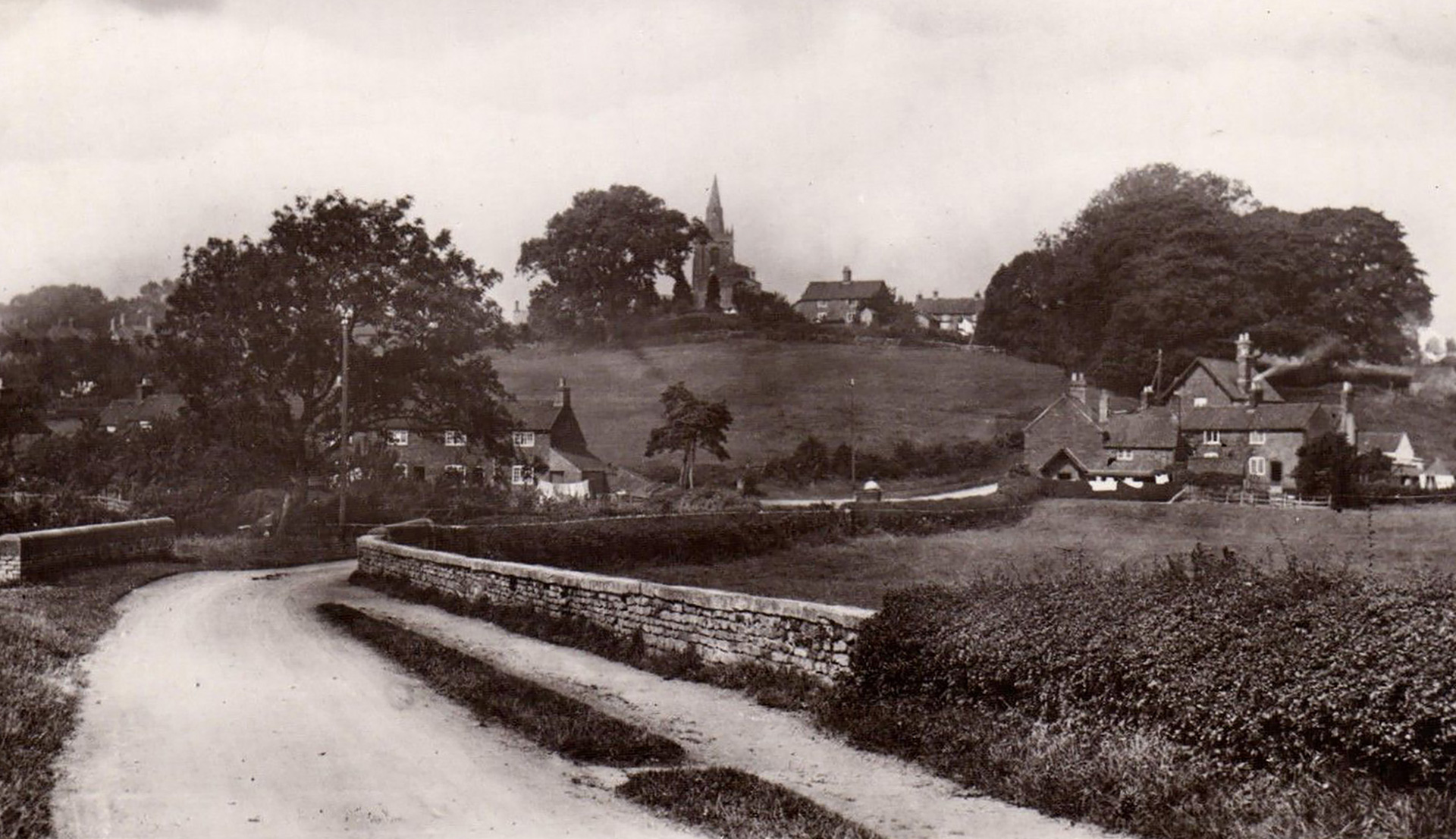
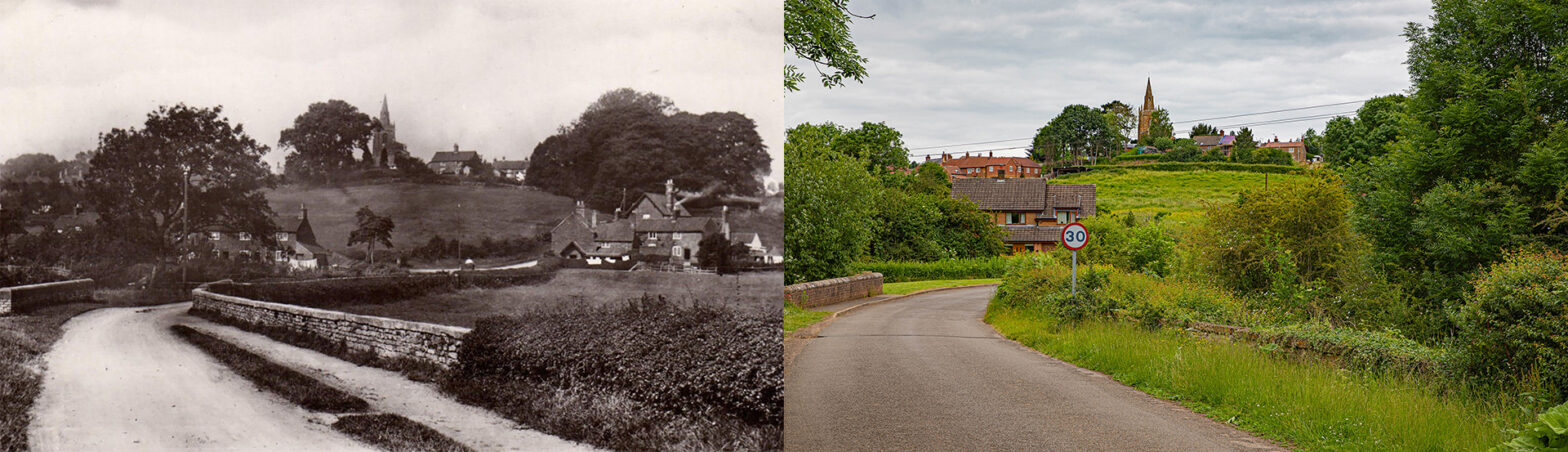
The old view of Eaton from Branston Road, not far from the Grade II listed Mill House, formerly part of the Duke of Rutland’s estate, is lovely. Although the village lies in the Vale of Belvoir, the Church of St Denys, constructed in Norman times, towers over the landscape and most of Eaton lies uphill. The land surrounding the village has at least ten known springs, all sources of the River Devon. In the forefront at the left side, the original stone parapet wall indicates where a burgeoning tributary coming from neighbouring Eastwell slides under the road. Passing Branston it flows into the Knipton Reservoir, built in the 1790s to supply the Grantham Canal.
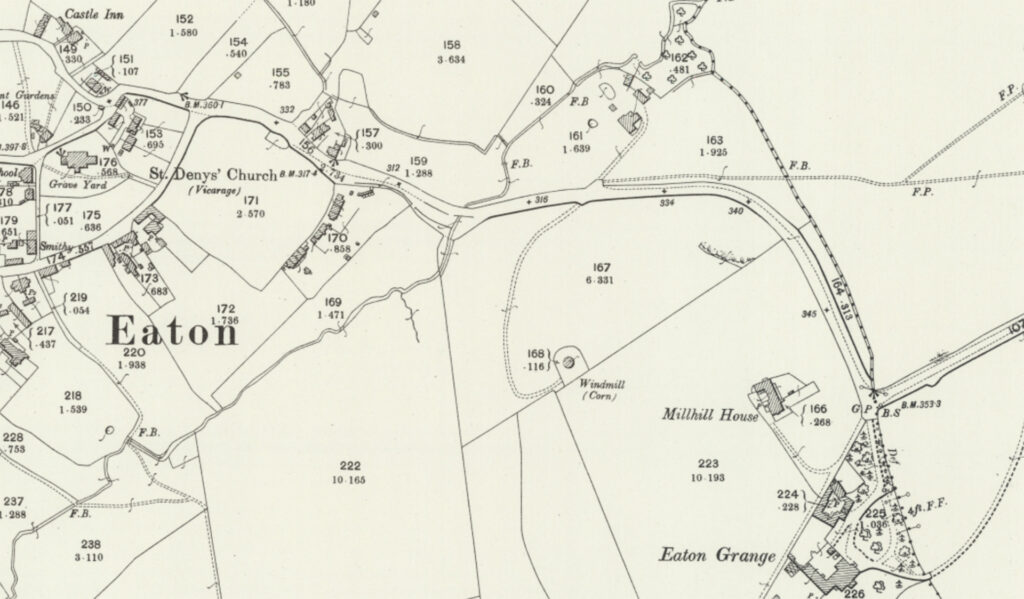
The lengthy old stone wall on the right hand side is overgrown. Scrub and trees block the view of the houses on the right. One of the dwellings is called Spring Cottage. “In one of these houses the local welder operated”, recalls Graham Smith. Lynda Sharpe adds: “There was a lovely spring that came from the field that we used to drink from and people used to fill buckets from it before there was tap water.” John Shipman comments “That spring, half way up Undle Hill, is still there.” A search gives no explanation about the meaning of ‘undle’, nor is there a trace on old maps. A 1892-1914 Ordnance Survey map shows a corn windmill, “still working in 1904”, writes J.D. Bennett in the Leicestershire Historian spring 1971 issue.
Graham Smith continues: “The first building on the left became the coal yard.” “My aunt and uncle, Mr and Mrs Skinner, lived in that house and it was called Down Undle”, adds Linda Wakeling.
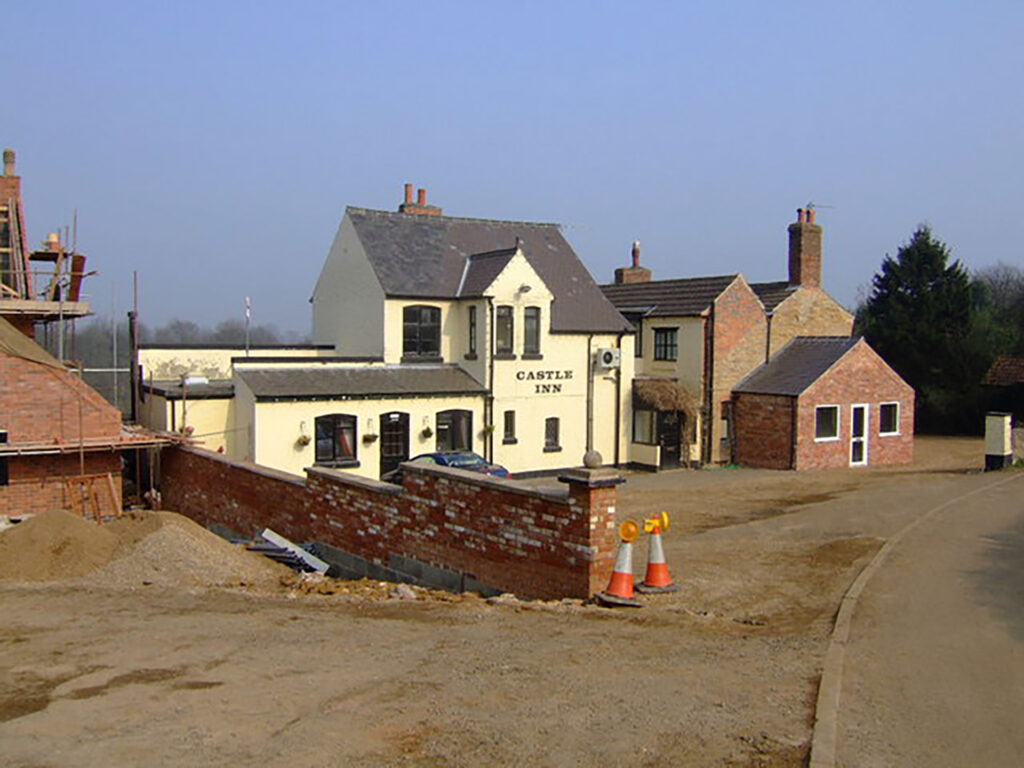
The two houses on the skyline on the right of the church are situated in a maze of streets, between Main Street, Church Lane and Vicarage Lane. “The second to the right was the cottage of Drummer Darby’s son”, remembers John Shipman. “Drummer was my uncle and a long time ago he was the landlord of the pub, the Castle Inn in Vicarage Lane.”
Returning to the old postcard, a large tree hides what can be seen in the new photograph, namely Vicarage Farm and the Grade II listed Old Moore’s Cottage. Passing the cottage along Main Street, you can spot a long brick panel with initials T W (Thomas Wright) and date 1774 in the burnt headers. Wright was the proprietor of Old Moore’s Almanac, which has been published for nearly two and a half centuries.