
Somerby Road – 1905
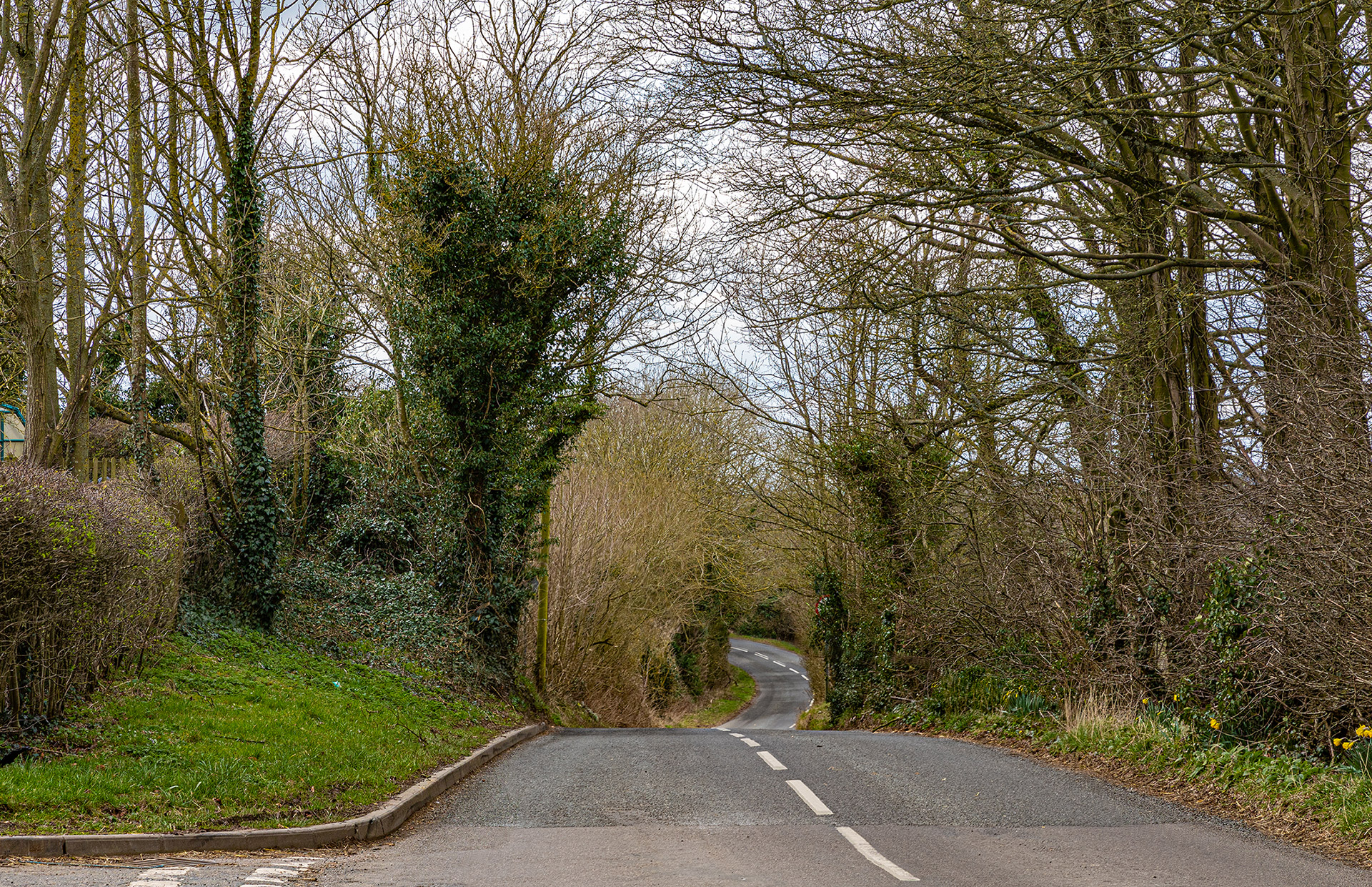
Once a sandy road at the junction to Knossington, curving down to Somerby, these days that same road is much busier with cars, lorries, and tractors. Even two beautiful brown draft horses, each pulling a sulky, a rather unusual spectacle, passed by when I was waiting to photograph an empty Somerby Road. The overgrown building is demolished, and the fingerpost has been replaced by a newer one, further to the left. Gates Garden Centre, situated at my back, was until the end of the 1940s the kitchen garden and glasshouses of Cold Overton Hall, one of the finest and well-maintained houses in Leicestershire.
An article in the Leicester Advertiser of 28 November 1959 stated: “Frederick Arthur Gates has a nurseryman’s business at what were the nursery glasshouses and kitchen gardens belonging to the Hall. On the other side of the road from the Hall grounds, they were taken over by Mr Gates in 1952.” Together with his wife Ivy, Fred created a market garden. Still, a family concern today, the garden centre and farm shop business are run by Nigel Gates and his son Jack.

Saint John the Baptist Church
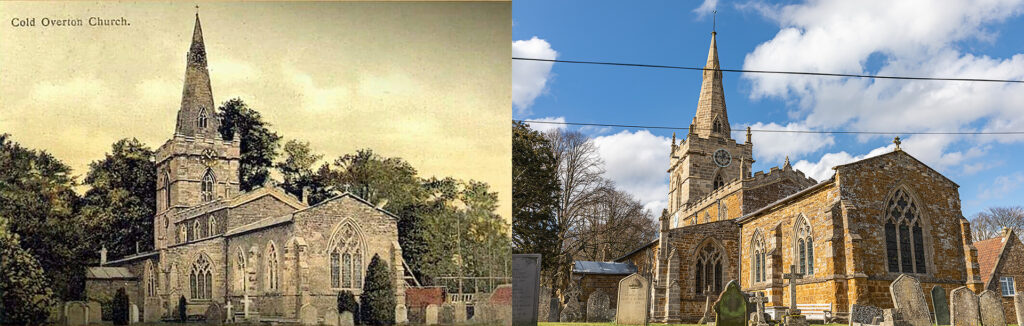
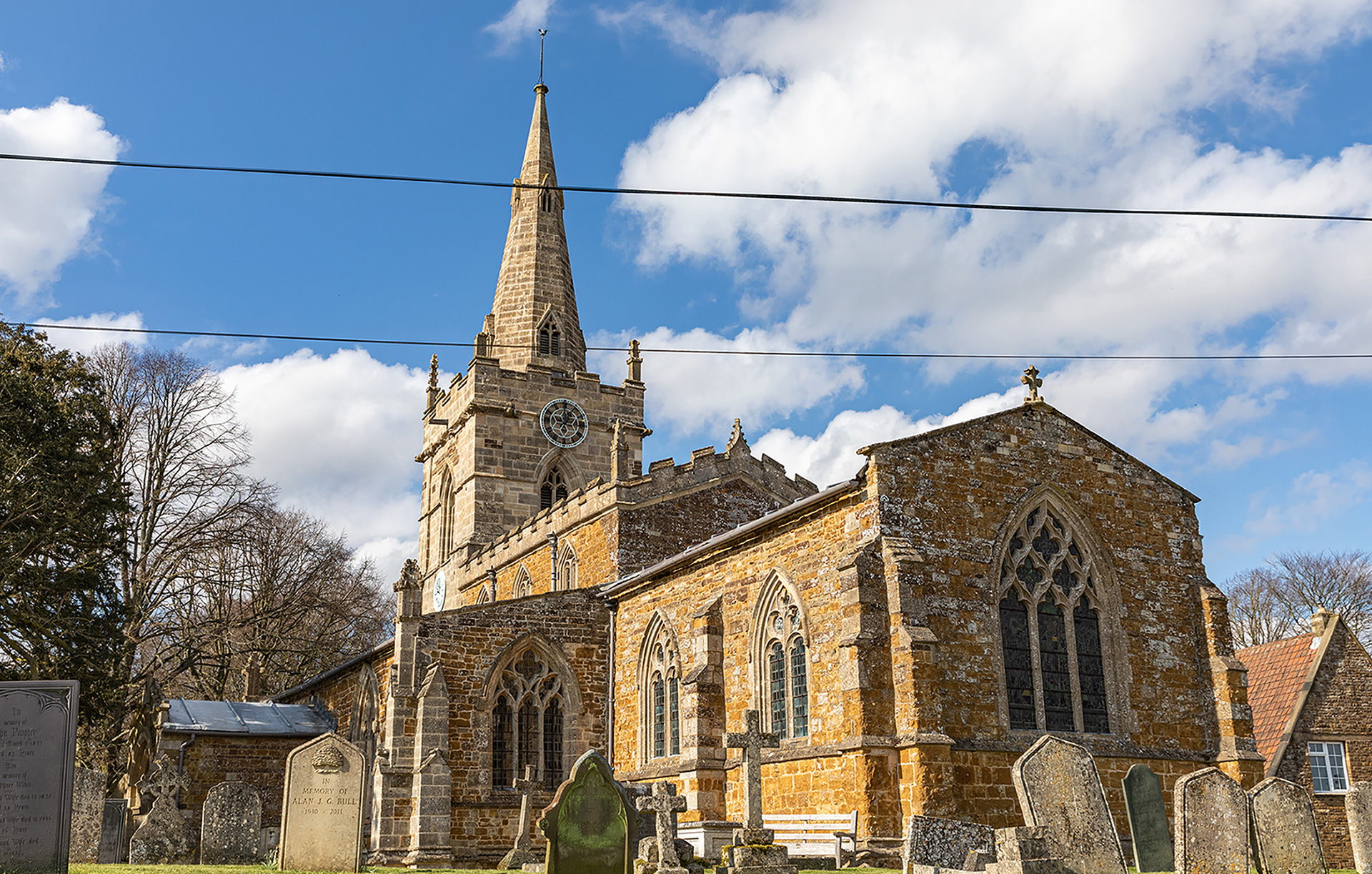
Next to the Hall lies the Church of Saint John the Baptist, with a pinnacled tower and spire and grotesque heads of animals carved about its base. In the shade of an old yew tree at the entrance, I met Jeremy Lefever, who lived in the village from 1967 to 1979. On the left of the south entrance outside the church, nearly covered by the oil tank, Jeremy showed a small tombstone. “That is the grave of a daughter of James Montagu. She died at childbirth. The graveyard around the church is kept very tidy. “A local historian, Leslie Spanswick researched all the graves,” told Jeremy. He did also write the leaflet on the history of the church.

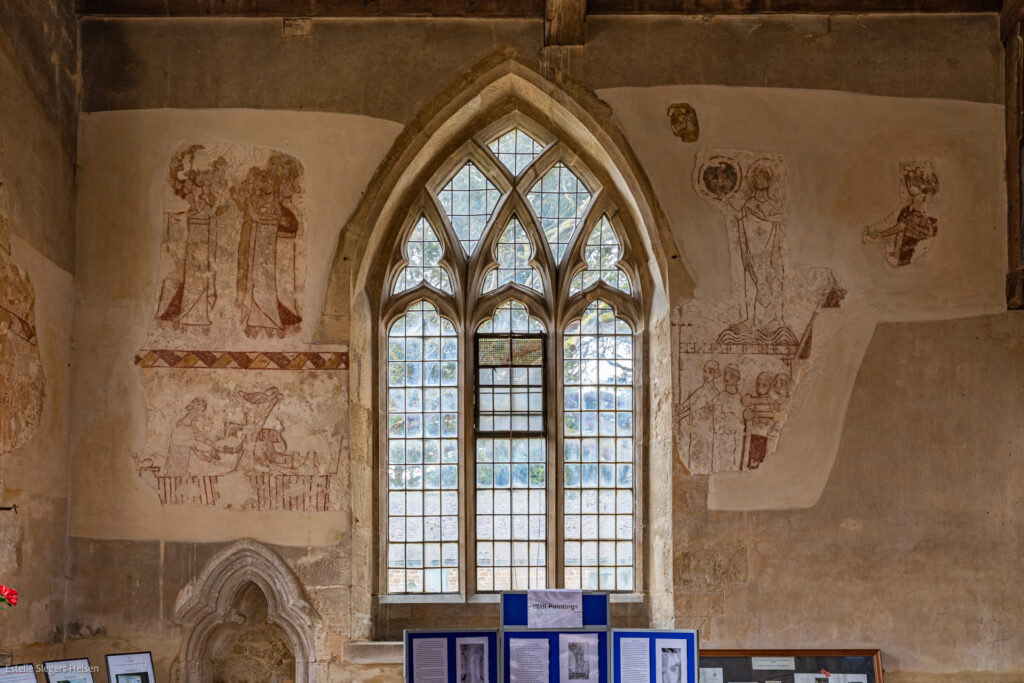
A 13th-century doorway with detached piers and sculptured roses leads into the church’s south aisle. Inside, Jeremy said: “They took out the pews to sit for about 100 people. Modern single chairs are put in place. I had to stand and read the lessons as a kid, and I was petrified. Although I am doing a radio programme. I don’t like standing in front of an audience.” Then he turned to the south wall of the south aisle and gazed at the 13th-century mural paintings. On a series of information panels, Leslie Spanswick wrote: “Journeymen painters moving from place to place probably painted village churches. Cold Overton’s paintings show a sureness and purity of outline, seen particularly in the 13th and early 14th centuries when English painting was at its height.
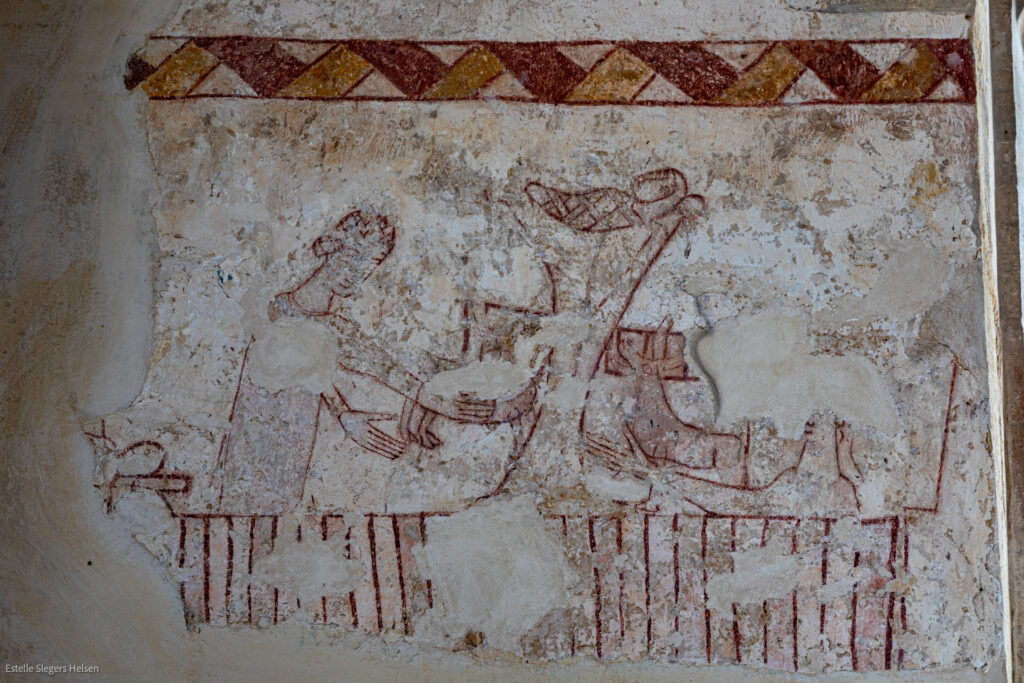
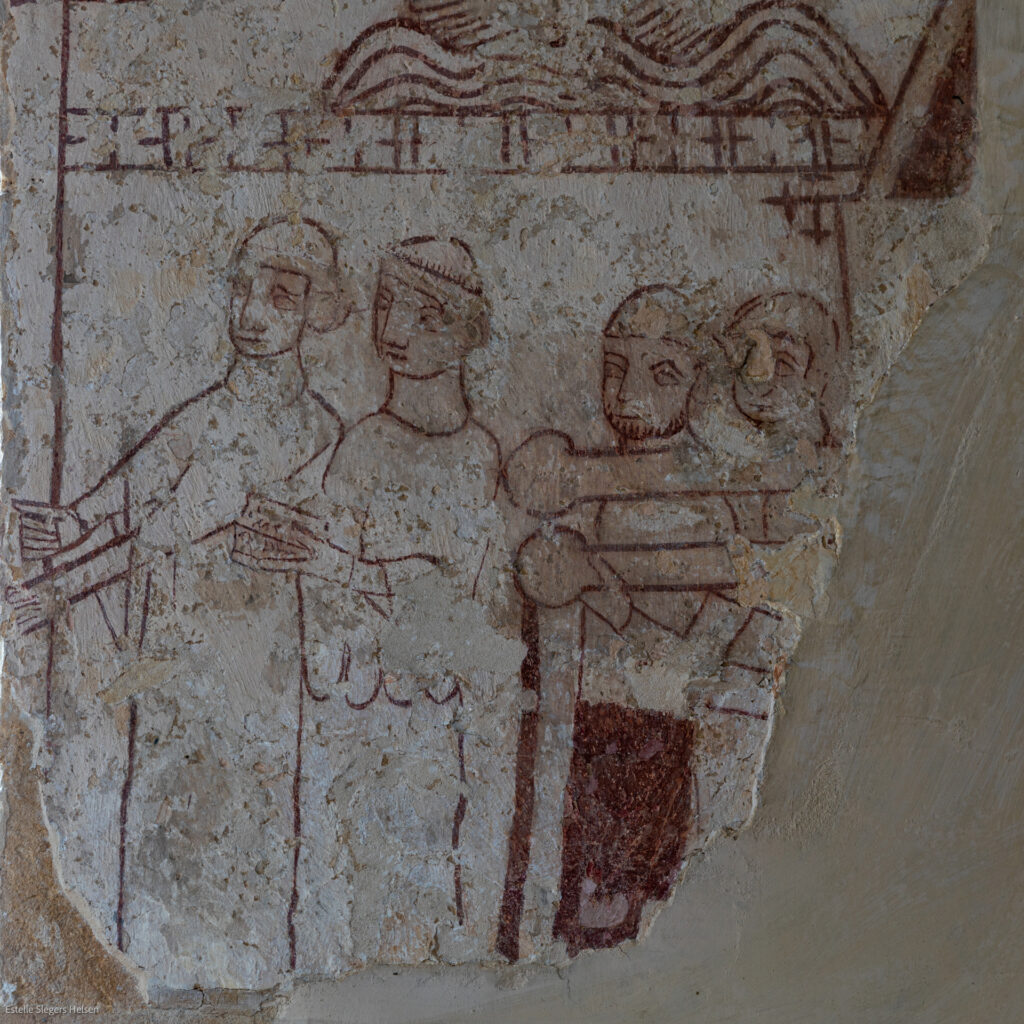
Photos Estelle Slegers Helsen
Cold Overton Hall
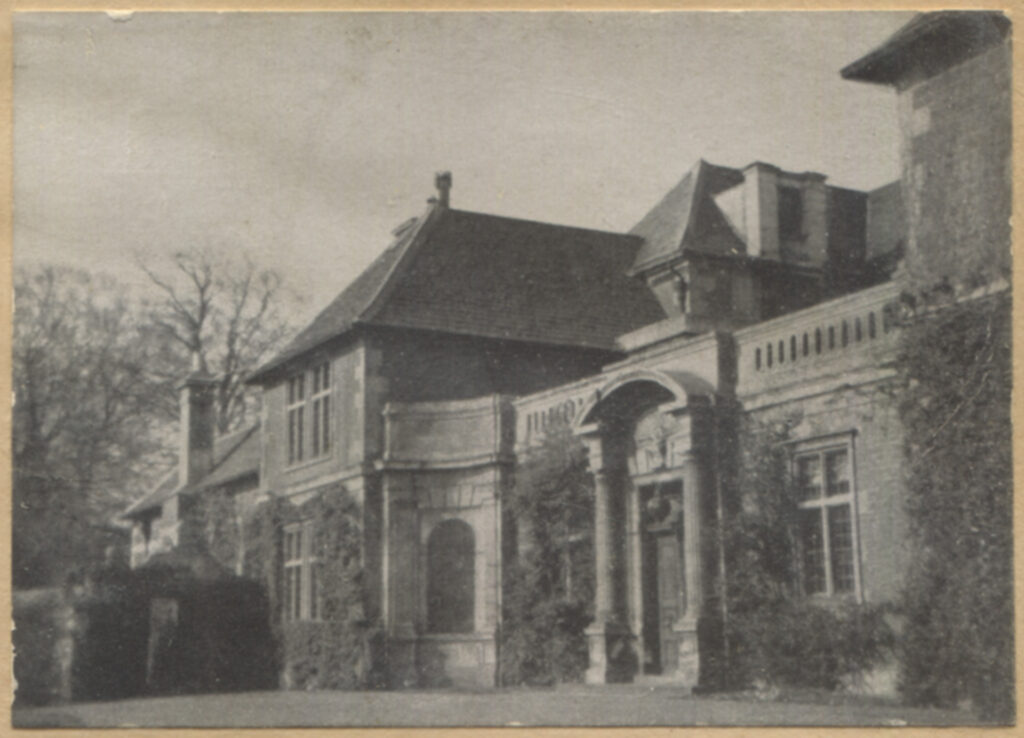
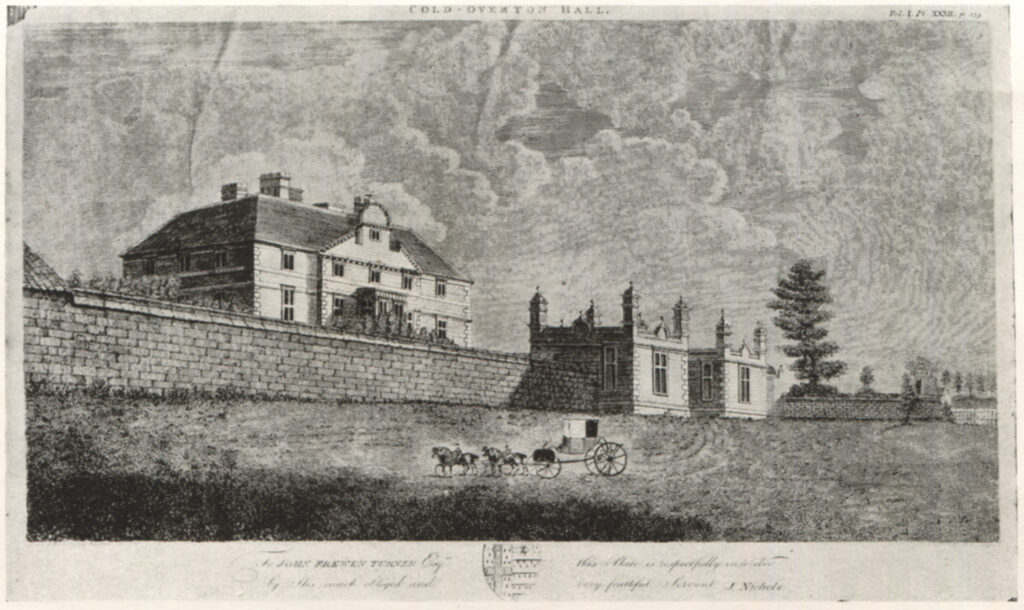
Cold Overton Hall is a fine example of a Jacobean country house in late Elizabethian style, built in the 17th century, with three storeys plus attics with a five-bay frontage. The Hall is an ironstone building with limestone dressings and a Swithland slate roof. It is Grade I listed and has a rich history, standing on the site of a house owned in the 13th century by Simon de Montfort, who fortified the Cold Overton estate after the Battle of Evesham in 1265. That estate formed part of the lands which were held successively by the three noble houses of Segrave, Mowbray and Berkeley. Mowbrays, whose name was allied with the house of the dukes of Norfolk, held the estate until John Mowbray, 4th Duke of Norfolk and 10th Baron Mowbray, died in 1476. John’s daughter, Ann, was as a child betrothed to Richard of Shrewsbury, Duke of York, younger son of Edward IV. She was only 5 years old when they formally married in Westminster. Three years after this ceremony, Richard, together with his brother King Edward V went to the Tower, reputed to be foully murdered by order of Richard III. The body of the youthful Anne was discovered in 1964 on the site of the Franciscan nunnery in the Minories, London, and was later privately reburied in 1965 in Westminster Abbey.
About 1620, the Cold Overton estate was purchased from William Compton, first Earl of Northampton, by John St John, High Sheriff of Leicestershire, in 1632. The present Hall, one of many fine country houses built in Leicestershire in the early part of the 17th century, was erected by Rowland St John in 1663-64. He was a brother of John St John and cousin of Oliver St John, who was Solicitor General from 1641 to 1643. As Lord Chief Justice in the Cromwellian era, he signed Charles I death warrant.
A hearth tax return shows that in 1661 the house had 18 hearths, which gives some indication of its size. The St John ownership lasted nearly a hundred years. In the early 18th century, the St John’s family sold the property to the self-made merchant Turner family of Sapcote, in which it descended to a John Turner. Having no heir, he willed it to his cousin Layton Frewen – the Frewens a Sussex Puritan family – who died childless and left it in 1777 to his own cousin, the Rev Thomas Frewen, who thereupon adopted the additional surname of Turner. The property was passed to his son John Frewen-Turner, who was MP for Athlone (1807–1812) and High Sheriff of Leicestershire in 1791.
The Frewen-Turners remained in possession until the close of the nineteenth century. In the mid-19th century, the hall was sold to Earl Cowley, who left his wife to live with another woman in France. At the end of the 19th century, Lord John Manners resided in Cold Overton Hall. In 1882 his horse Seaman won the Grand National steeplechase. The grave of this famous horse is in the Hall grounds.
“The most noteworthy 20th-century owner was James Montagu of Papplewick Hall, Nottingham, who bought the Hall in 1912. He entrusted the London architects, Lanchester and Rickards, with the house’s restoration introducing 16th and 17th-century panelling, ceilings, and fireplaces. Also, some additions were made,” Jeremy added while showing me an original copy of the cream coloured sales book with a detailed description and pictures of the Hall and 312 acres of land. “They employed 30 outdoor staff just to maintain the ground. There were lakes and ponds and a forest of ferns.”
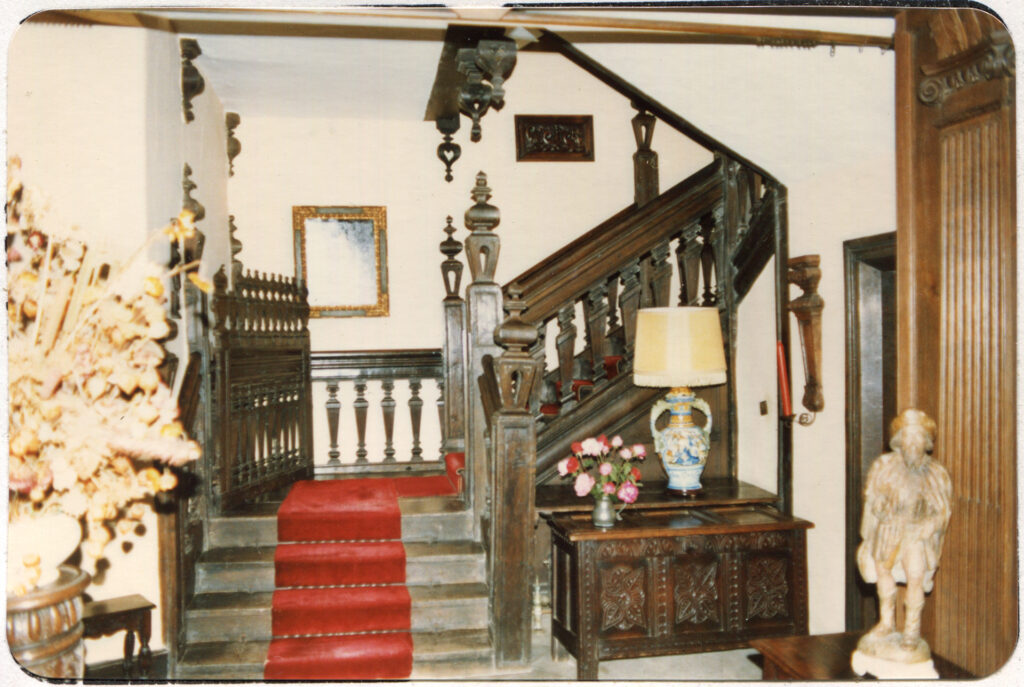
Many of the period scenes in Francis Brett Young’s novel Jim Redlake are set in Cold Overton Hall, and there is a mention of the unique, robust dog gate across the foot of the main Jacobean oak staircase. This gate at the foot of the main staircase was designed to keep the dogs from invading the bedrooms.

Jeremy went on: “Montagu more or less owned Cold Overton and provided the village with water and electricity in the 1920s. He collected freshwater from the roof of the Hall and stored it in water tanks to get it straight through the village. He had a 110V DC system instead of the 240V AC system. He meant a great deal to the village.” Mrs Towell, sub-postmistress in the village from the mid-1950s, told in an interview for the Leicester Advertiser in 1967: “There was a big improvement for the village when we came on the mains water about two years ago. Before that, we had a private supply pumped from the Hall, but it wasn’t really very satisfactory. We used to find all kinds of whirligigs in it!” In an article of the Leicestershire Advertiser of 28 November 1959, Herbert Duffin, one of the villagers, then approaching 85, explained: “I have seen some changes here. When he was at the Hall, Lord Cowley built some good cottages, and James Montagu pulled down a lot of the old ones and built fine stone ones. He did a lot of improvement in the village.”
James Montagu suddenly left in 1944 following the death in action of his only son and heir in WW2. He sold the property in 1946. Because there were no takers for the job lot, the 312 acres-estate was split into five farms, and the house was sold separately. On this, the Leicestershire Advertiser of 28 November 1959 wrote: “Both Hall and park were once much larger, and it was only in recent years that the house was reduced to a manageable size these days. It was a stroke of good luck for the village’s appearance that the whole house did not become an economic casualty, for there was some danger of that. When the estate was sold by James Montagu in 1946, it was bought by a firm of auctioneers and duly split up. It was then that the Hall might have been demolished as a place too large for today. There was talk of that when Mr and Mrs A.S. Gray first saw it.”
The Grays made it their home after bringing the house back to its former state by getting rid of the 1913 additions. On 18 April 1964, the Leicestershire Mercury wrote Cold Overton Hall was offered for sale at an undisclosed figure after Mrs Gray’s husband died. Mrs Gray explained the Hall “is thorough manageable and that if one makes up one’s mind to ignore the attics. There are only five bedrooms with three bathrooms on the first floor. Mrs Grey hoped that the Hall would be bought “by someone who will appreciate its beauties and character and preserve it for future generations.”
Jeremy: “My mother’s brother, Charles Kenneth Binns, bought the Hall in 1967, with only 7 acres of garden and land. He liked these styles of house because he collected 17th-century antiques. My mother and I came with him. My uncle died in 1990, and my mother left in 1994. She moved to Oakham and died in 2006.”
Just arrived in Cold Overton Hall, Charles Binns was interviewed by Ann Coltman for the Leicester Advertiser. On 10 November 1967, she wrote: “I called at Cold Overton Hall – the “big house” around which the life of the village revolved for centuries. And what a splendid house it is with its ancient panelling, magnificent plaster ceilings and great Jacobean staircase, which rises through three stories, has imposing newel posts as well as flat balusters, and a well-preserved dog gate -used at one time for keeping the house dogs from the upper rooms and now rarely seen. Today, the Hall houses much fine – and in many cases – rare antique furniture for the owner, Capt. Binns is a collector and patently a connoisseur. Some of his furniture, he told me, is on loan to museums.”
“However, although Cold Overton Hall is full of rare and beautiful things, it is still very much a home. With roaring fires in the great fireplaces – one of which is dated 1599 – and thick-walled to keep out the winds that have torn relentlessly at the exterior for centuries, it is warm and welcoming. We sat in the blue-walled drawing-room – which has a Louis fireplace of gold-tinged marble and pretty corner alcoves, also showing the French influence – and Capt. Binns told me something of the problems he had had to cope with since moving in.”
Today, Cold Overton Hall is still privately owned.
On the village
Cold Overton stands high up near the borders of Rutland. The Leicester Advertiser’s article of 10 November 1967 titled Cold Overton as a “village with a chilly exterior and a warm heart.” Anne Coltman wrote: “High on the eastern edge of the Wolds, 600 feet above sea level, Cold Overton – climatically, at least – is certainly true to its name. They say that winds blow across it straight from the Steppes of Russia, and anyone who has visited the village on a rainy, blustery November day might well agree.”
In early spring of 2022, walking down the winding Main Street, the village’s only street, from the garden centre downhill towards Whissendine, we caught spectacular views of the rolling landscape. The weather is sunny, and there is nearly no wind. The first stop on the left is Court Farm.


Main Street turns to the right. The first dwelling close to the street is the old post office, a brick house once thatched when it was a smallholder’s farm. Jeremy pointed to the particular yellow-like doorknob. “When we had car treasure hunts in the area, it was always one of the clues. Here lived my friend Ruth. She is in Lincoln now and is 70-something. We meet for coffee occasionally.”
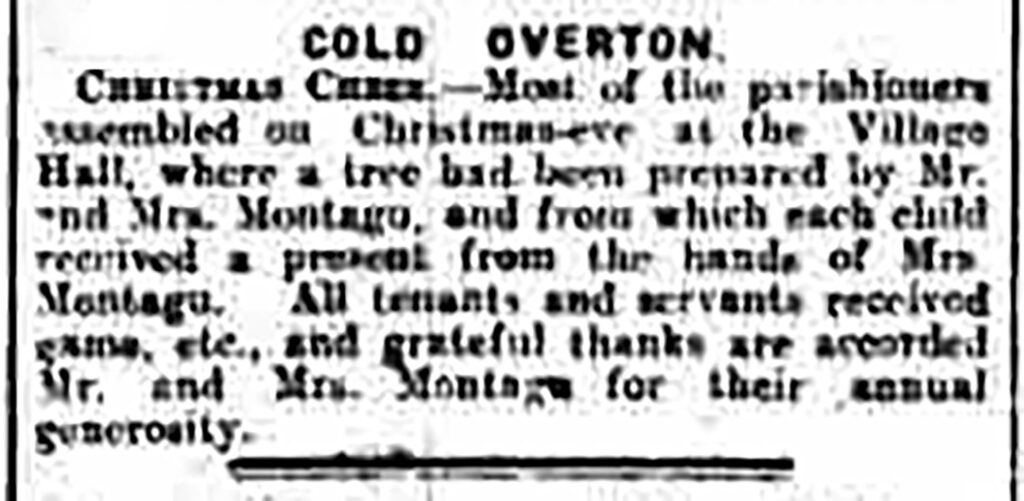
At the end of the 19th century, it became the Post Office and was run until the 1980s by the Towells. In February 1901, permission was given to erect a telegraph line to Cold Overton Post office.” On 28 November 1959, the Leicester Advertiser wrote: “In charge is Mrs Towell who took over four years ago, but after a full apprenticeship, for she followed her mother, Mrs A Brown, sub-postmistress for 42 years.” Mrs Towell said in the Leicester Advertiser of 10 November 1967: “Up to the beginning of the last war sweets and cigarettes were also available at the Post Office, but this was discontinued when rationing came into force and never has been started up again.” In 1969 William Towell was mentioned as postmaster. An article in the Melton Times of 2 September 1983 told part of his story: “Mr Towell is a fund of knowledge, and has lived in the village just after the 1939-45 war and is a churchwarden at St John the Baptist Church, al bellringer, and generally looks after the church inside and out. He’s also the village postmaster operating from the hallway of its cottage, which was once two homes. Cold Overton’s post office has been a family business since 1898. Mr Towell took over six years ago from his wife. Before retiring to the village, he was an assistant inspector at Oakham post office. The post office started its life when Wymondham tailor W. J. Brown and his seamstress wife moved to the village. They received £1 a week for the postal services they offered. And today, the office supplies everything from dog licences to family allowances, stamps to TV licences.”
Jeremy peeked his head through the hedge on the opposite side of the road, where a public footpath starts. “We used our sledges when snowing, going downhill on these slopes. That was fun. But it was also a way for my mother to get me out of the house,” Jeremy laughed.
100 feet more down, also at the left side of Main Street, there is a wooden gate to a grass field with some trees and shrubs. A small copper plate states: “This land was given by J.F. Montagu Esq. in 1924 for the benefit of the inhabitants of Cold Overton.”
Jeremy recollected: “When I was a boy, a small village hall used to stand here. In the canteen, people played whist, the card game. The village hall fell into disrepair, and they knocked it down, but the land was bequeathed to the village.” Another bend, now to the left. Here to the east are the most spectacular views of the valley.
Stone House Farm
On the right, at the bottom of the village – Main Street gets Whissendine Road here – Stone House Farm, a 20-acres property, is being completely restored and re-landscaped. Stone Hous was built about the middle of the 19th century as a home for 20 orphan girls by John Frewen Turner.
The Leicester Advertiser of 28 November 1959 wrote about a visit to the farm, then the home of Richard Reynolds and his wife, who came from Northamptonshire in 1950. “When living on Northamptonshire, where he farmed, Mr Reynolds hunted with the Cottesmore; and when Stone House and its farm turned up, he moved into the Cottesmore country, the most sporting country in the shires, so they say, and indeed strongly fenced. Mr Reynolds farms a lot of land. He has also some in Lincolnshire with his brothers and in Ridlington. His 19-year-old son Michael, who both hunts and rides in the point-to-points, is preparing for a farming career.
“Farmers are not known for their interest in gardening, a waste of a man’s time; but Mrs Reynolds managed to get an old stone pit – in a later newspaper article described as a rubbish tip with bushes and weeds all over the place – into a very beautiful sunken garden with banks of flowers and shrubs and a bit of lawn of its own.”
Cold Overton Hall
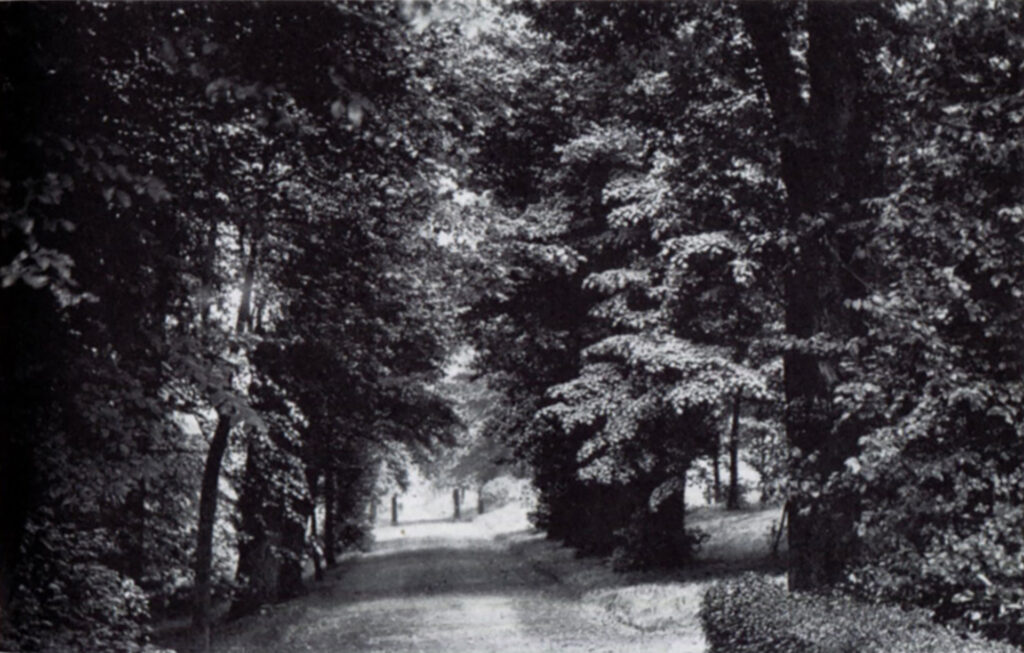
Still further down, where the road curves to the right, we look at the remains of the main entrance to the Hall. “A long carriage drive originally approached it from the north, passing behind Court Farm, leading to the west porch.”
“There is an old fence. And some big stone pillars. I remember big balls on it. They are gone. You can still imagine where the avenue of trees was,” concluded Jeremy.
Would you like to add your story and recollection? Leave a comment at the bottom of this page or send a message.
More pictures
Would you like to add pictures? Send a message.
Domesday Book
[Cold] Overton was a settlement in Domesday Book, in the hundred of Framland and the county of Leicestershire.
It had a recorded population of 17 households in 1086.
Land of Drogo of la Beuvrière
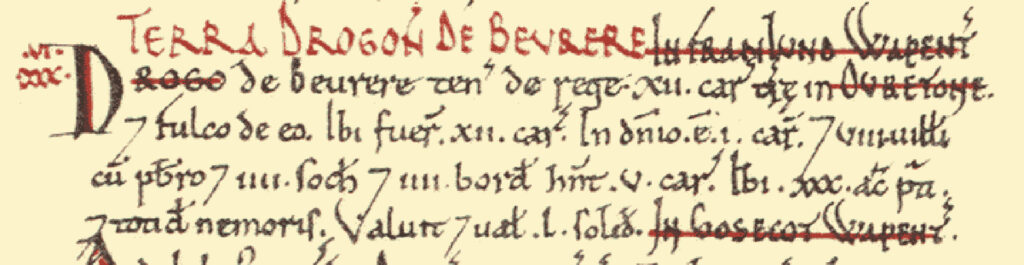
- Households: 8 villagers. 4 freemen. 4 smallholders. 1 priest.
- Ploughland: 12 ploughlands. 1 lord’s plough teams. 5 men’s plough teams.
- Other resources: Meadow 30 acres. Woodland 30 acres.
Valuation
- Annual value to lord: 2 pounds 10 shillings in 1086; 2 pounds 10 shillings when acquired by the 1086 owner.
Owners
- Tenant-in-chief in 1086: Drogo of la Beuvrière.
- Lord in 1086: Fulco.
- Lord in 1066: Ulf (Fenman).
Links
Would you like to add a link? Send a message.