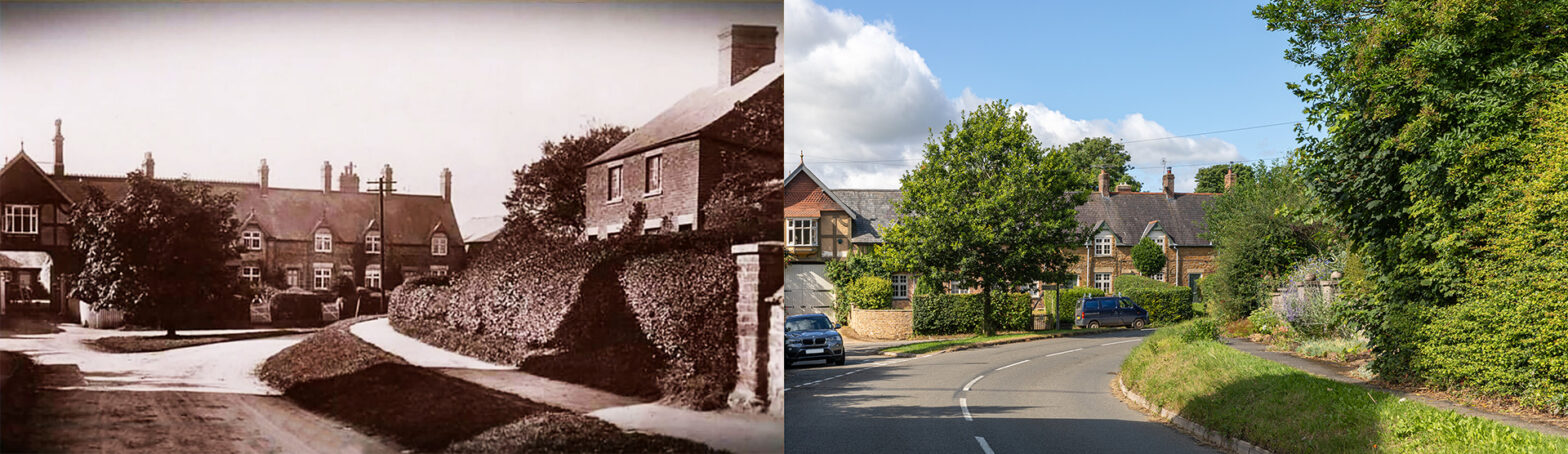
Main Street – Early 1900s
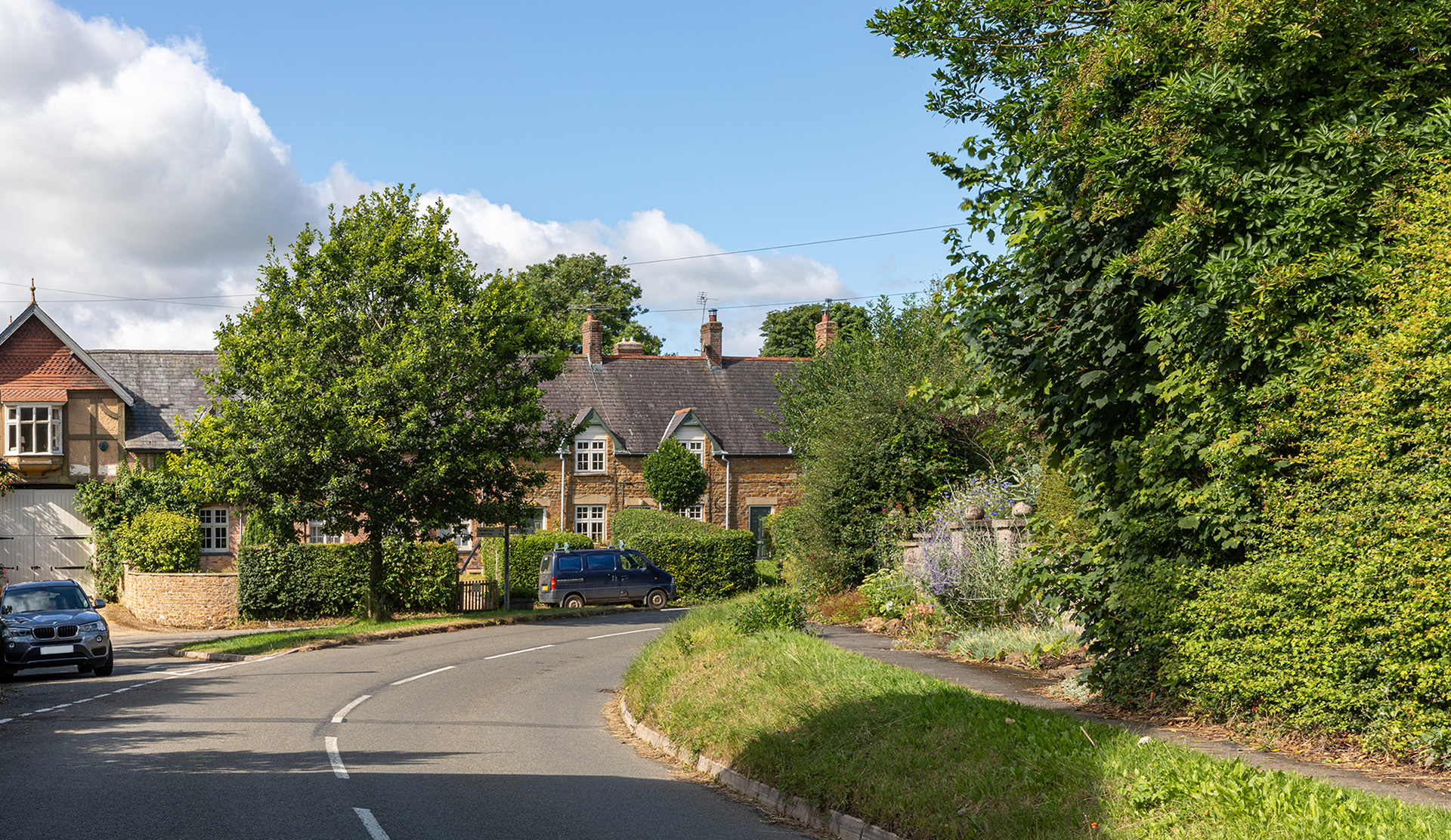
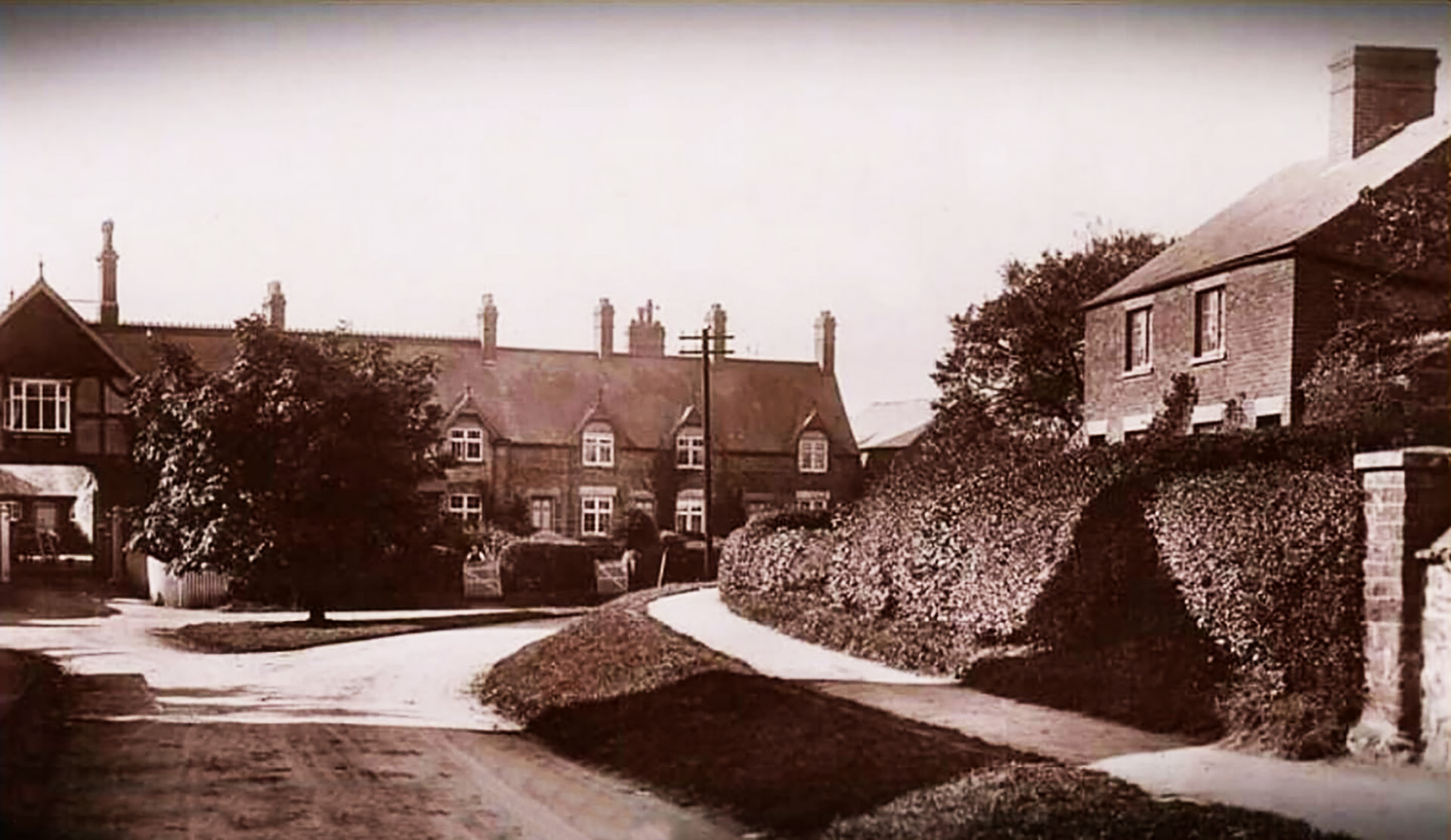
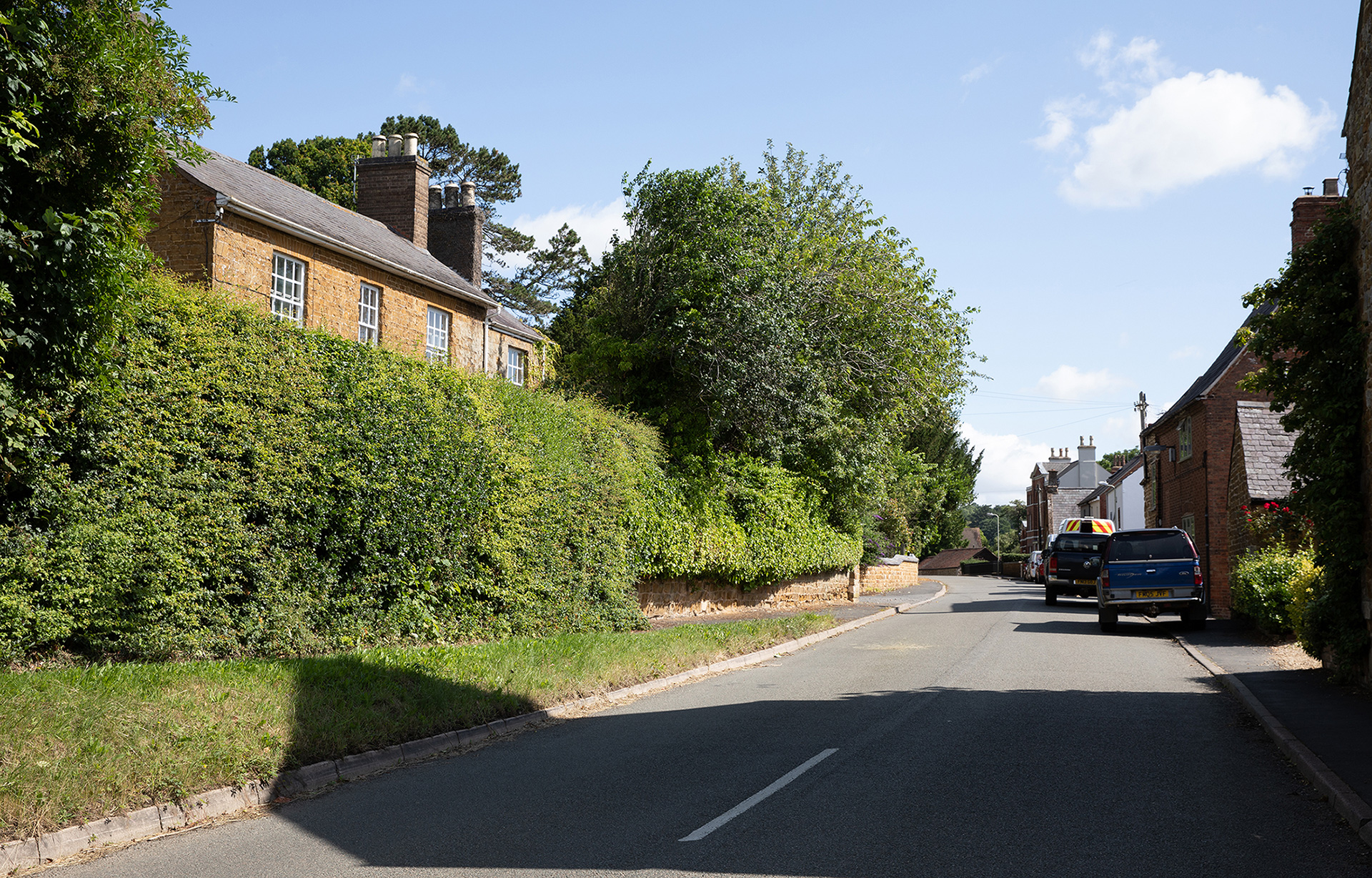
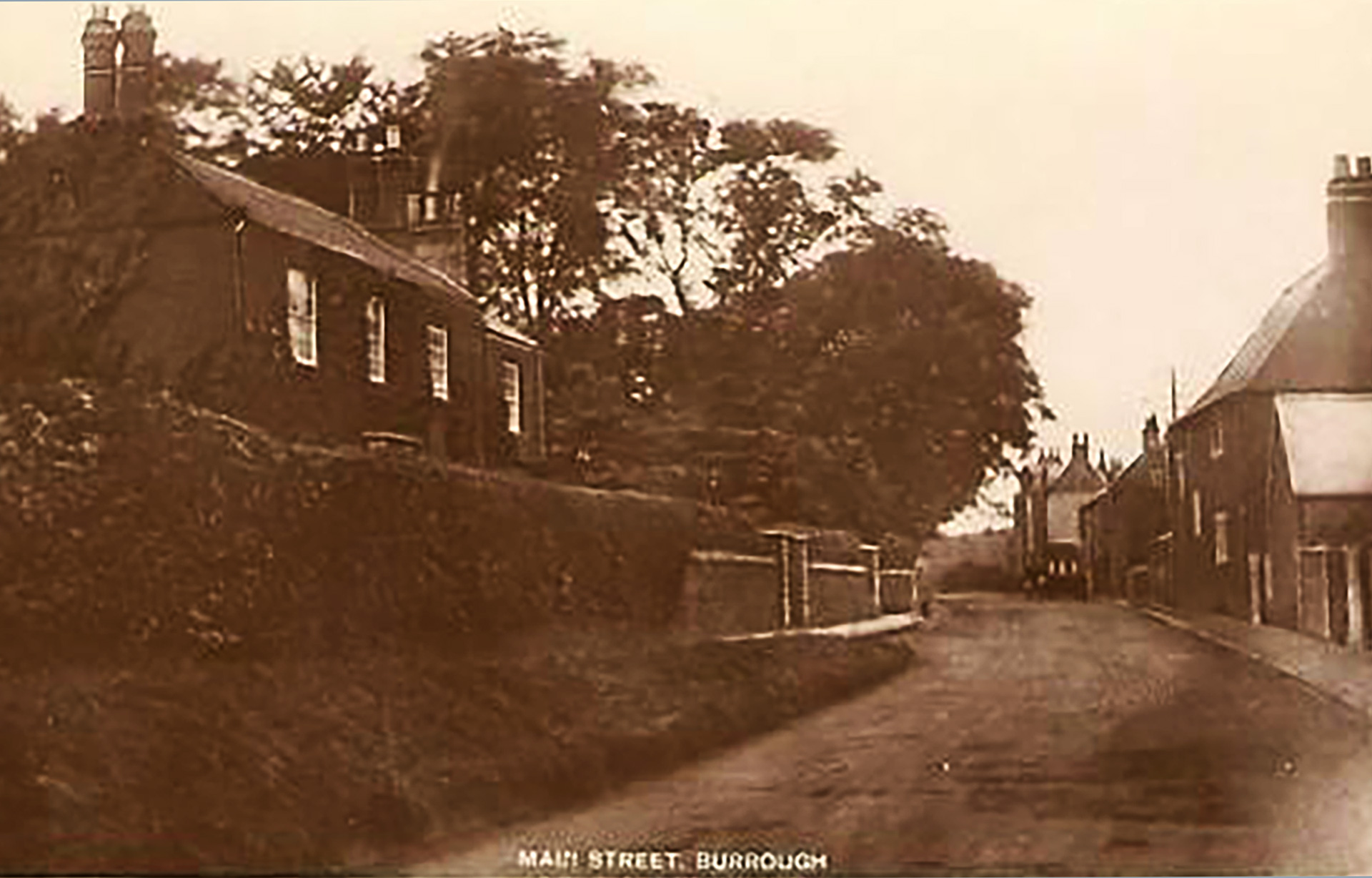
By the early 20th century Burrough-on-the-Hill had three large houses used as hunting lodges or occupied by hunting families, Burrough Hall, Burrough Court, and Burrough House. The latter stood at the south end of the village where Newbold Lane, a narrow single-track gated road leading to Owston, meets Main Street. The row of houses on the old postcard are late 19th century extensions of Burrough House, which lies out of sight to the left. Now a white wooden gateway masks the passage that was the entrance to a large stable court. The right half of the row is made up of three small cottages. By the time the old postcard was taken, Maj. W. A. Peake was living at Burrough House. Later it was occupied by Sir Raymond Greene, who died in 1947.
“In the 1960s and 1970s I lived in the house where the chap is standing behind the smaller middle gate in the old postcard”, recalls John William Thirkell. “The chestnut tree on the green was huge by then and I loved climbing it. Unfortunately, it had to be chopped down.” Another tree was planted about 20 years ago that is now slightly bigger than the old one.
Elizabeth Gibb adds: “I lived in one of the two semi-detached cottages up the bank on the right” The cottages are still there but dense bushes now block the view. The left one is called Chestnut Cottage. “That is where I live now”, says Kevin Freeman, asking Elizabeth what year she lived there. “I am not quite sure. It must have been 1943-1944, I was four years old. There was no electricity and there was a pump on the corner for water. Nothing modern, but I loved it.” Kevin concludes: “It still has the pump at the end corner of the garden.”
Enid Laird Craig has good memories of the village: “In the 1950s and 1960s, we spent lots of time with my Granny and Grandad, Lucy and Ernest Riley, at Cheselden Farm. We ran for hours through the fields and climbed Burrough Hill many times.”
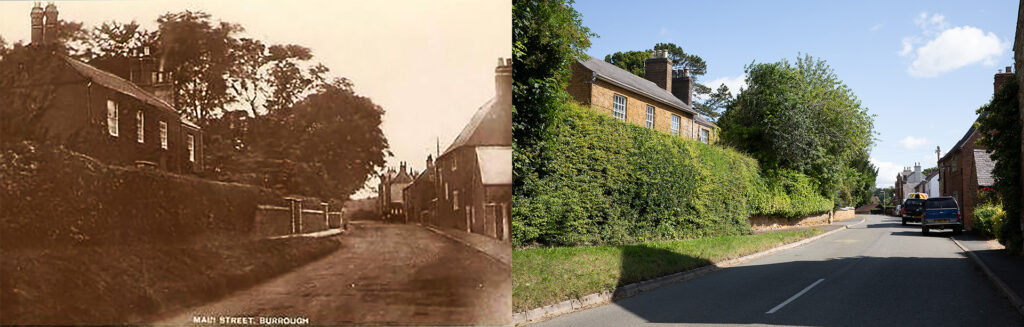
Turning the camera to the north gives a view into the next part of Main Street when driving to Somerby.
Opposite the church is a tall brick house known as the Manor, built in 1781. It belonged to Brasenose College (Oxford) until the sale of their property in 1941.
On the village
The Iron Age fort at Burrough Hill to the north gave Burrough-on-the-Hill its name. The village was formerly called Erdeborough, a name which survived until the last quarter of the 19th century, although probably by then in a consciously archaic way.
A map (see below) made in 1607, showing the parish immediately before inclosure, indicates several of these roads, including those to Twyford (then called Leicester Gate) and to Marefield. At Burrough Hill in the north, a continuation of the road from Somerby skirted the south side of the earthwork and descended the western slope of the hill towards Thorpe Satchville (Moor Gates and Salters Gate), and in 1959 this was still in use as a farm track. Part of the present road to Great Dalby was also in existence in 1607 but it does not appear to have continued northwards beyond its junction with the old road to Thorpe Satchville.
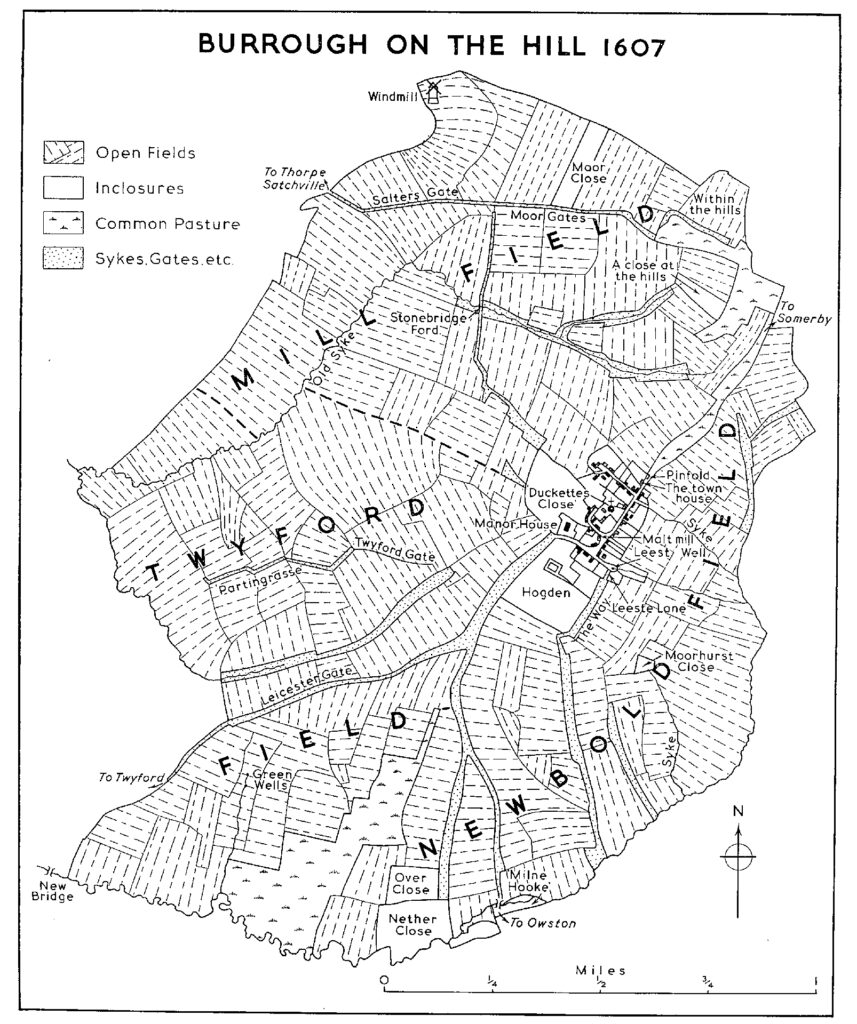
The size and layout of the village, with its main street and side lanes, has changed little since 1607. There are about 60 houses in the village itself, most from the 18th and early 19th centuries built using ironstone as the building material.
As mentioned in the beginning Burrough-on-the-Hill had three large houses used as hunting lodges. The second is Burrough Hall or Burrough Hill House along Somerby Road. It was built in 1876 by C. W. Chaplin on high ground to the northeast of the village. It is a stone mansion in the Tudor style and is surrounded by gardens and plantations. Some of the outbuildings, as well as additions made by the second owner Maj. A. Coats, were demolished after the Second World War.
The third large house, Burrough Court formerly stood half a mile from the village on the road to Twyford. It was built in c. 1905 by H. C. Allfrey and later belonged to Marmaduke, Viscount Furness, who used it as a hunting box. He died in 1940. Between the world wars, it became a well-known meeting place for the hunting society of Melton. In the autumn of 1930, the first meeting between Edward, Prince of Wales, and Mrs Wallis Simpson (later Duke and Duchess of Windsor) took place there. The house, which was burnt down during the Second World War when it was requisitioned for troops, is said to have been in a low-built farmhouse style.
J M Lee and R A McKinley, ‘Burrough on the Hill’, in A History of the County of Leicestershire: Volume 5, Gartree Hundred(London, 1964), pp. 61-68. British History Online http://www.british-history.ac.uk/vch/leics/vol5/pp61-68 [accessed 11 August 2021].
More pictures
Domesday Book
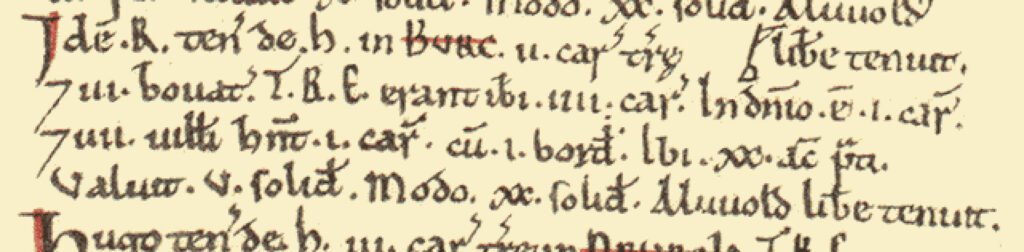
Burrough [-on-the-Hill] was a settlement in Domesday Book, in the hundred of Framland and the county of Leicestershire.
It had a recorded population of 16 households in 1086, and is listed under 4 owners in Domesday Book.
- Land of Henry of Ferrers
- Households: 4 villagers. 1 smallholder.
- Ploughland: 4 ploughlands. 1 lord’s plough teams. 1 men’s plough teams.
- Other resources: Meadow 20 acres.
Valuation
- Annual value to lord: 1 pound in 1086; 5 shillings when acquired by the 1086 owner.
Owners
- Tenant-in-chief in 1086: Henry of Ferrers.
- Lord in 1086: Roger (of Livet).
- Lord in 1066: Alwold.

2. Land of Geoffrey of la Guerche
- Ploughland: 1 ploughland.
Valuation
- Annual value to lord: 5 shillings in 1086; 5 shillings when acquired by the 1086 owner.
Owners
- Tenant-in-chief in 1086: Geoffrey of la Guerche.
- Lord in 1086: Buter <of Pickwell>.
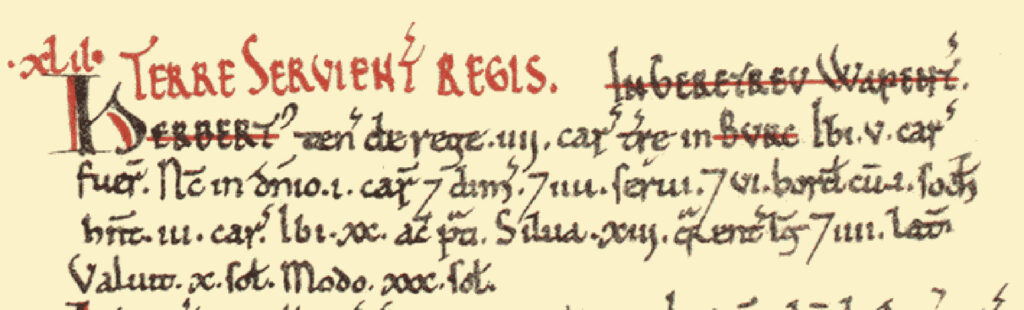
3. Land of Herbert <of Burrough>
- Households: 1 freeman. 6 smallholders. 4 slaves.
- Ploughland: 5 ploughlands. 1.5 lord’s plough teams. 3 men’s plough teams.
- Other resources: Meadow 20 acres. Woodland 13 * 4 furlongs.
Valuation
- Annual value to lord: 1 pound 10 shillings in 1086; 10 shillings when acquired by the 1086 owner.
Owners
- Tenant-in-chief in 1086: Herbert <of Burrough>.
- Lord in 1086: Herbert <of Burrough>.

4. Land of Herbert <of Burrough>
Valuation
- Annual value to lord: 2 shillings in 1086; 2 shillings when acquired by the 1086 owner.
Owners
- Tenant-in-chief in 1086: Herbert <of Burrough>.
- Lord in 1086: Herbert <of Burrough>.
Links
- British History Online – Burrough on the Hill in A History of the County of Leicestershire: Volume 5, Gartree Hundred. Originally published by Victoria County History, London, 1964.