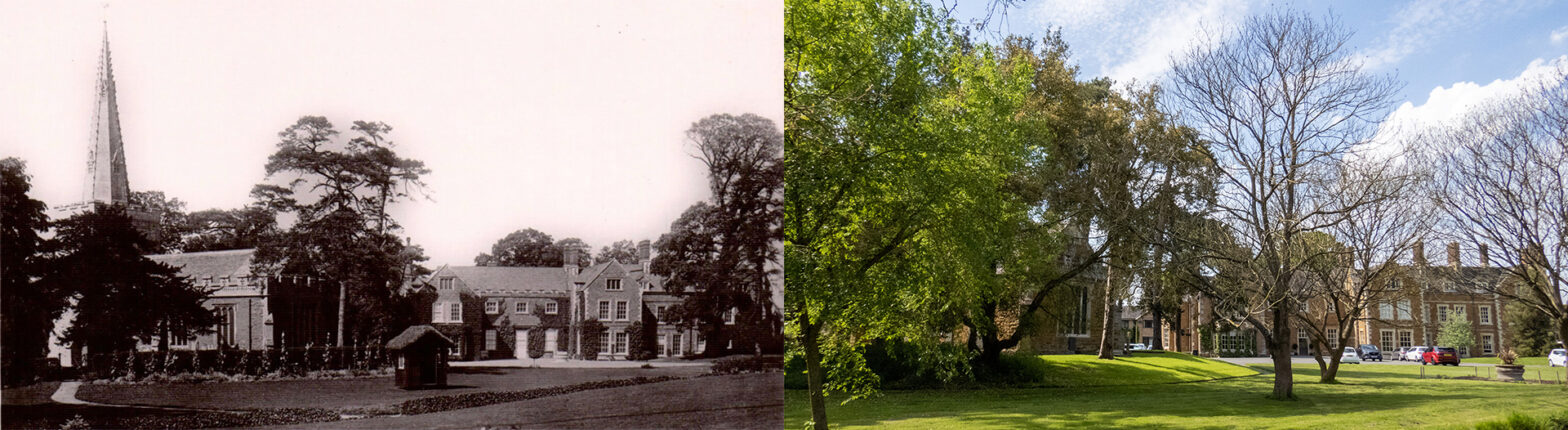
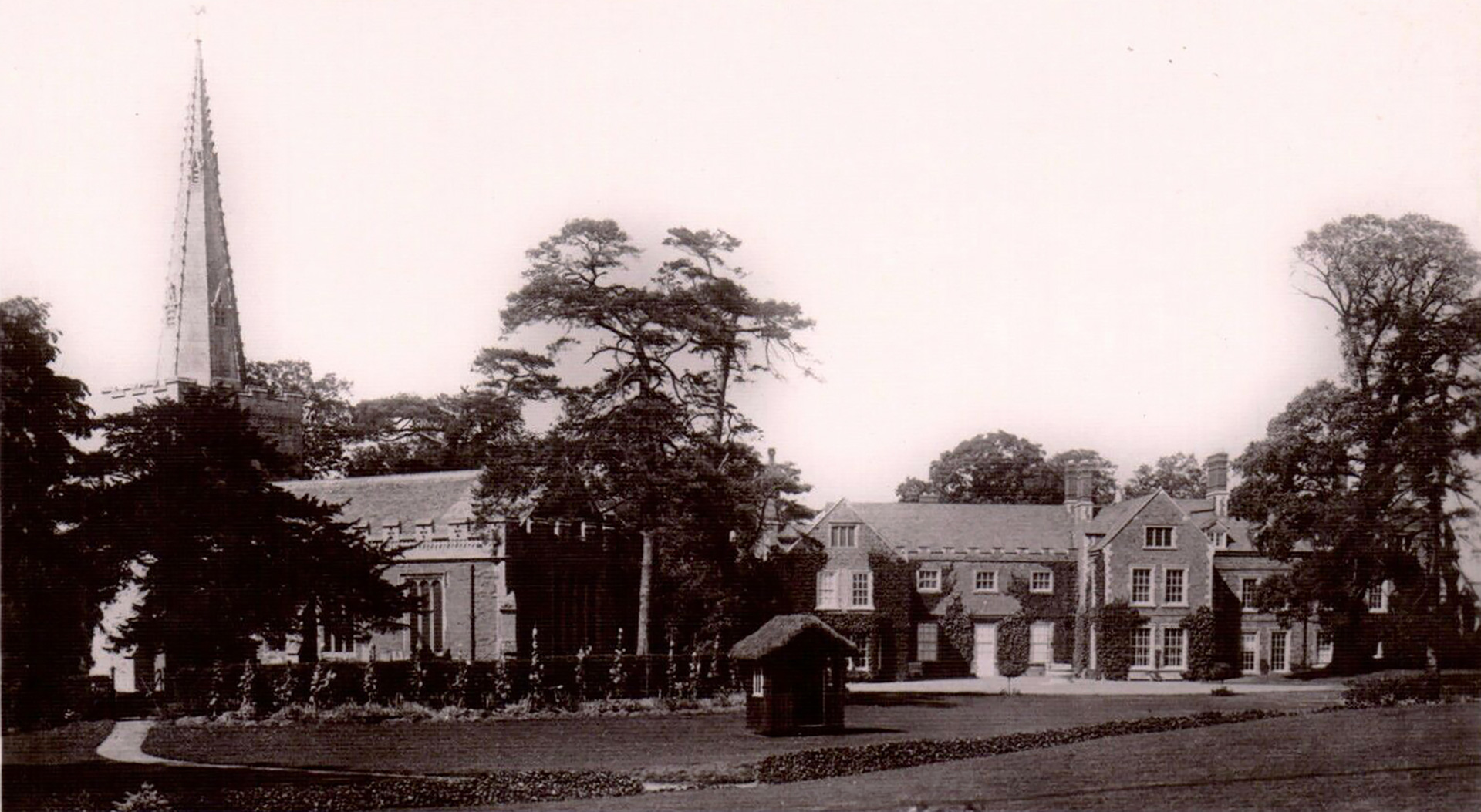
Brooksby Hall – 1930s
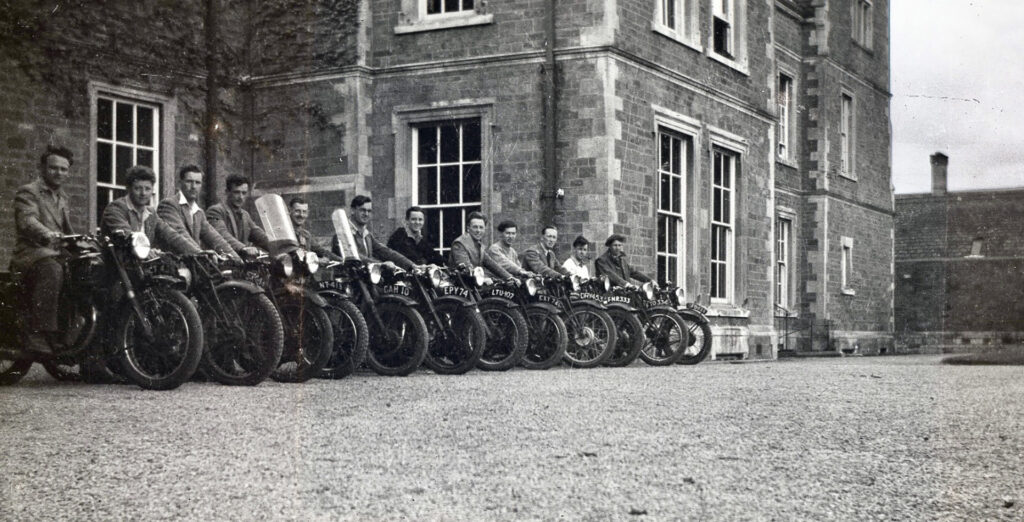
In September 1949, Peter Dalton, now 95, enrolled at the Agricultural College established at Brooksby Hall. Leicestershire County bought the estate from the Beattys just before the end of the Second World War to give ex-servicemen a trade or find a job in agriculture. Peter, who was an air force soldier, recalls with a vivid voice: “There were 50 of us, from 18 up to 40 years old. I still remember Tony Barber from Melton Mowbray and Jack Knowles from Leicester. The rest of the guys came from all over the country.”
Peter continues: “It was a year-long hands-on course in practical farming. The day started at 4 am: we had to milk cows by hand and machine; we had to plough, to sow, to reap and to mow. At the technical department, we took a tractor to bits and put it back together again, supervised by Paddy.” At the stables, there were cows and sheep, but no horses. “9 sharp in the morning, lessons started in the lecture room. Topics were animal husbandry and agriculture. The Principal, Mr Thompson, was mad about growing potatoes”, Peter recalls laughing. Other rooms in the hall, totally occupied by the Agricultural College, were inhabited by living-in staff and dormitories for the 50 students in groups of 5 or 6. “During the evenings we had to write down our notes at the library”, Peter remembers. “We got 2 pounds a week, which we often spent in the local pubs, The Rutland Arms and The Blue Bell, both at Hoby.”
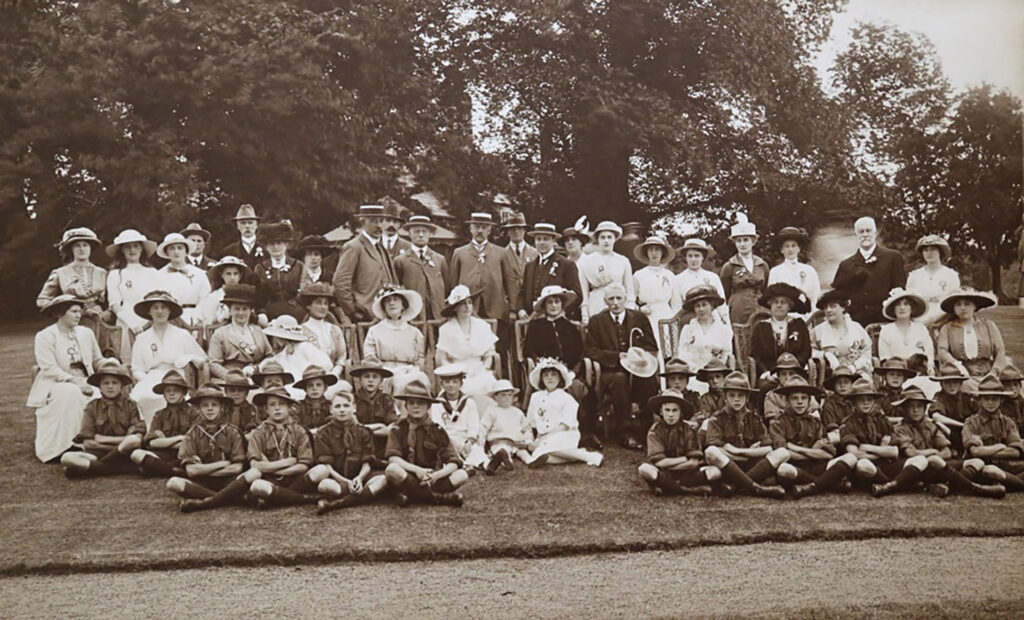
And there is another connection. “My mother, Edith Clay, spend time as a young teenager at Brooksby Hall playing with the Beatty children”, recalls Peter Dalton. Later in life, before she married, Edith got invited again for a Brooksby Fête. In a picture, she stands among Brooksby staff and other guests.
Peter adds: “When my mother married, the Beattys handed her two bronzes and my dad got a cigarette box.”
Royal Navy Captain, David Beatty, and his immensely wealthy American wife Ethel Field purchased Brooksby in 1903. Beatty rose to Admiral of the Fleet and was created First Earl Beatty, Viscount Borodale and Baron Beatty of the North Sea and Brooksby in 1919. The Earl died in 1936, four years after his wife, and passed the hall to his son. During the war, Brooksby Hall became a convalescent home for soldiers under the supervision of the Red Cross. Beatty himself lived in the former gardener’s cottage near the church. Now, the Brooksby Hall estate is still an agriculture college and is part of Brooksby Melton College.
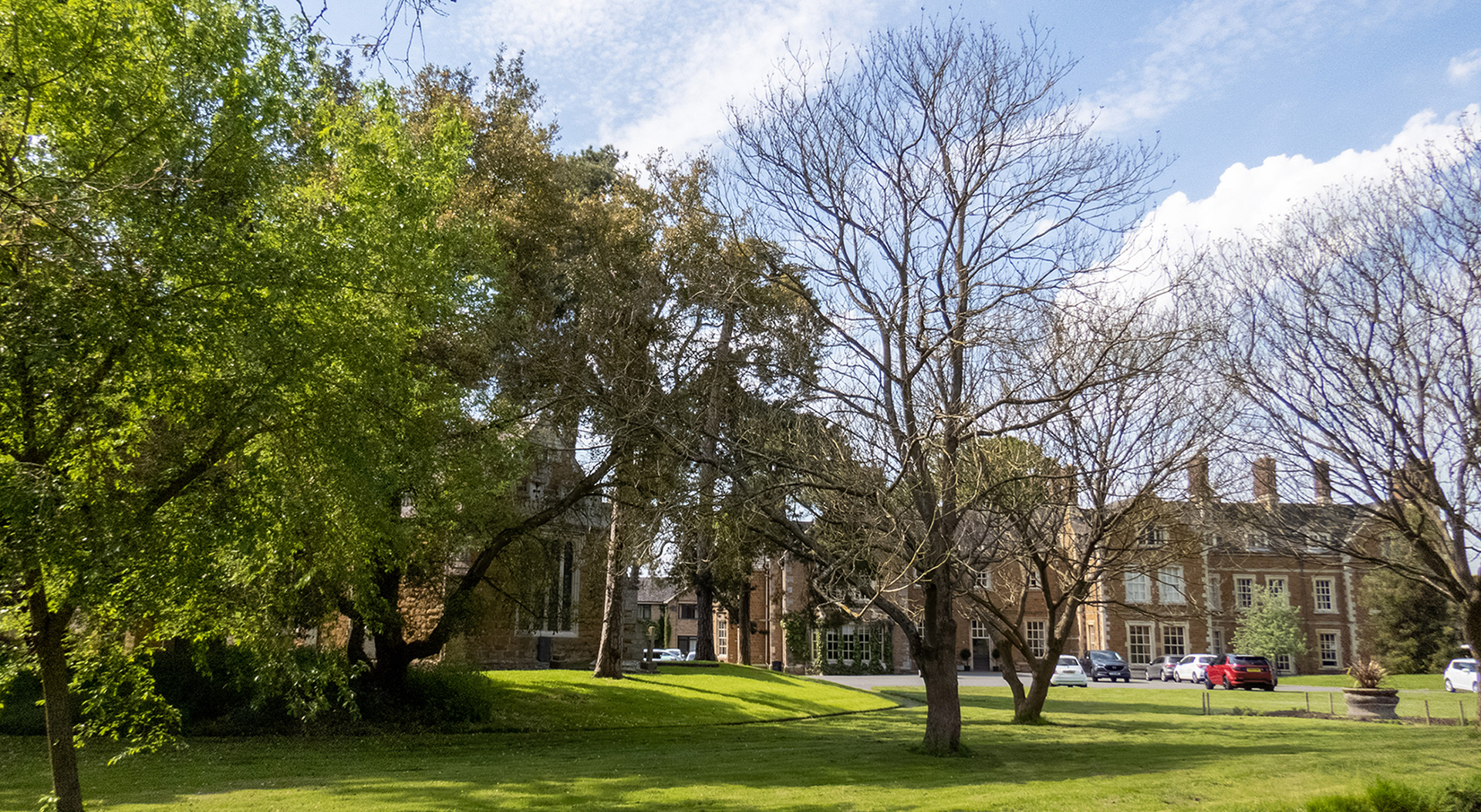
Brooksby Hall – Before 1915
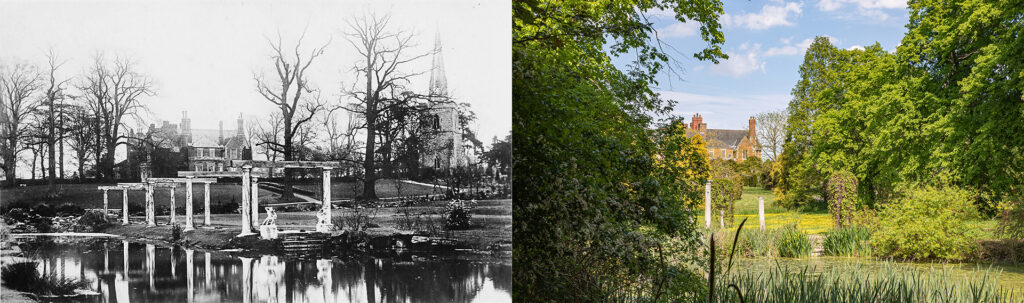
At the half-term break, I get permission to picture a retake of a postcard from the back of Brooksby Hall seen from the lake. “The lake was constructed between 1911 and 1915 by Irish workmen, using the ‘puddled clay’ technique”, writes Sue Blaxland of the Leicestershire and Rutland Gardens Trust. “In 1945 it was described as dirty and overgrown.” Now it seems much wilder, but it is kept tidy by several gardeners. The old picture shows also the pergola. In ‘A History of the Gardens at Brooksby Hall’ Sue Blaxland continues: “This was constructed between 1911 and 1915 and comprises eight free-standing stone pillars with timber cross beams. It terminates at the Lake. There were originally two Italianate stone statues and a flight of steps down into the Lake.” In 1935 Brooksby Hall was put up for sale. “The estate agent’s particulars describe ‘The beautiful old-world gardens and well-timbered pleasure grounds’ which ‘afford the fullest possible measure of amenity with limited upkeep.” The property did not sell. Some of the columns are now broken.
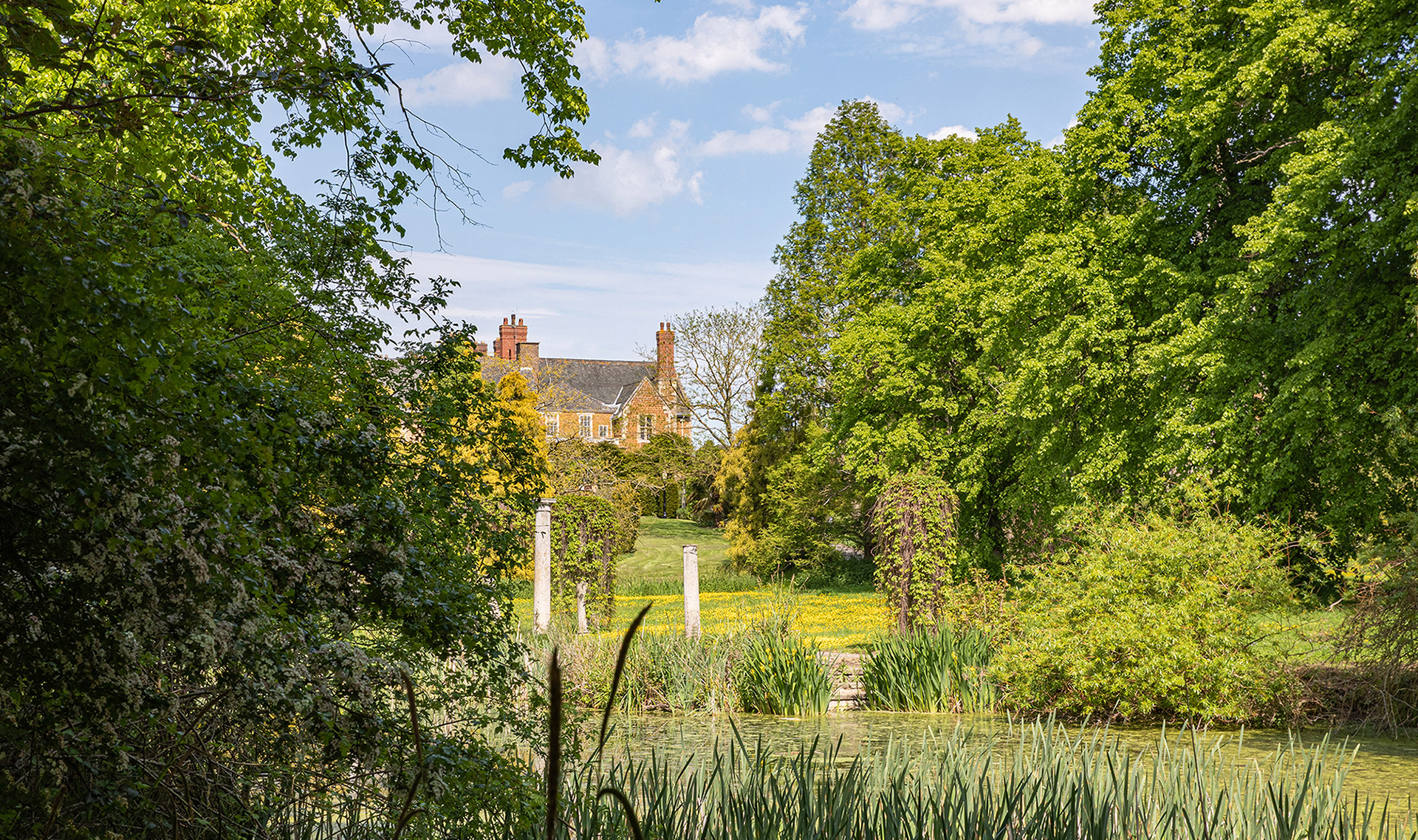
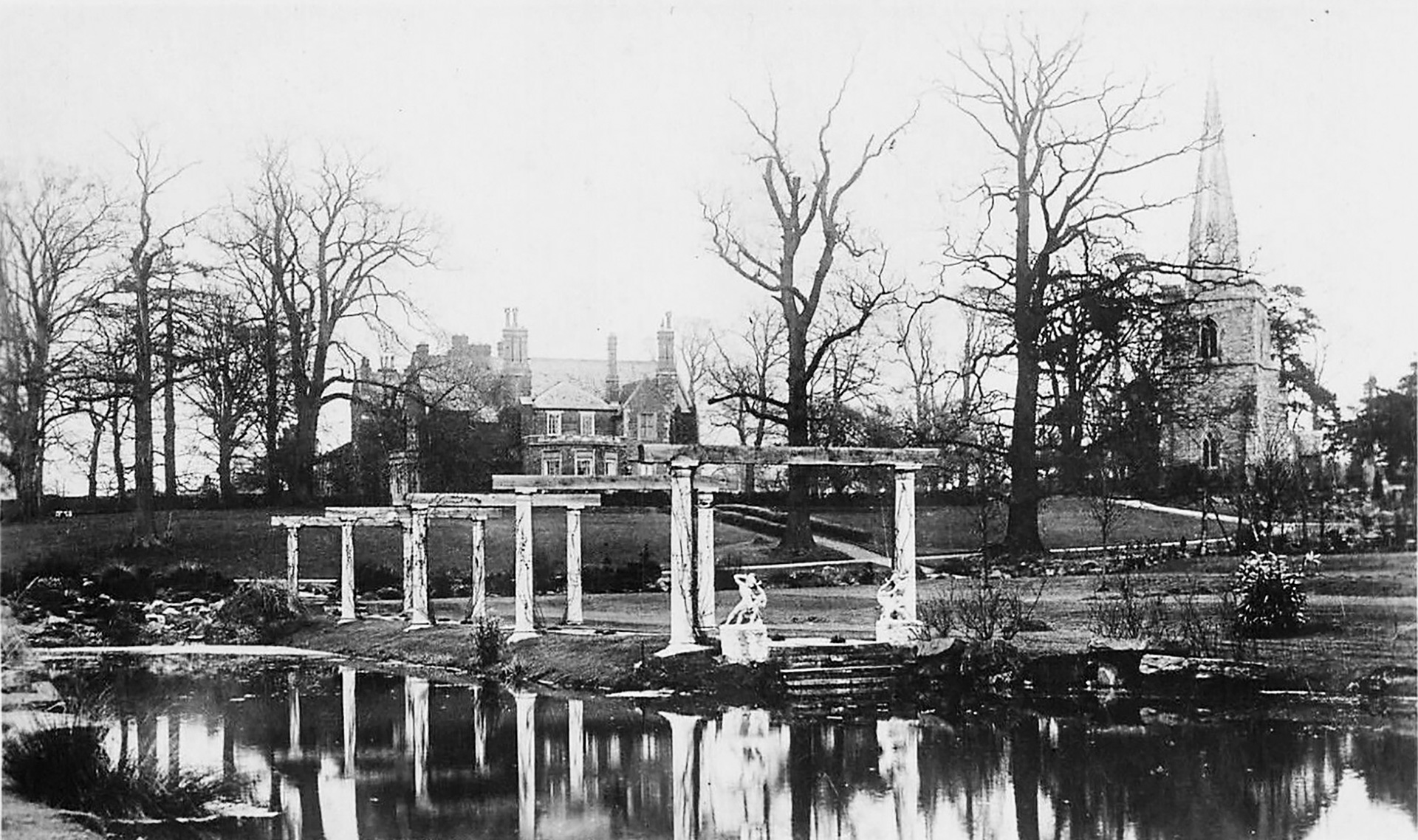
In both pictures, the Church of St. Michael and All Angels, a Grade II listed building, is hidden by trees planted after WWI and even WW II. The Church is built of uncoursed random stone rubble with limestone dressings and there are portions of old render. There is an ironstone ashlar to the east and south walls. The roof is slate: Swithland slate to the south slope.
A special thanks to Annmarie Dalton who interviewed her father.
On the village
“Brooksby parish lies on the south side of the valley of the River Wreake and is bisected by the main road between Leicester and Melton Mowbray. For much of the medieval period and later the lords of the manor were from the Villiers family. The medieval village was probably abandoned in 1492, following enclosure for pasture by Sir John Villiers, leaving a manor house, the church and a mill as the only buildings,” wrote Alan Fox in his draft history of The Victoria County History of Leicestershire. “The manor house became Brooksby Hall.”