Baggrave End
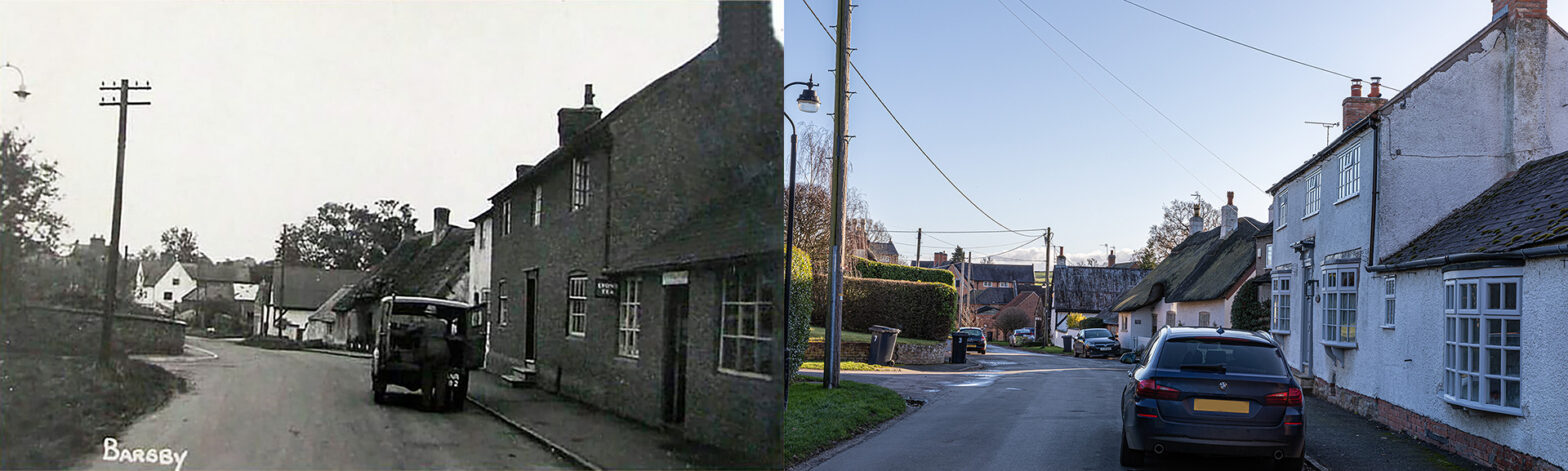
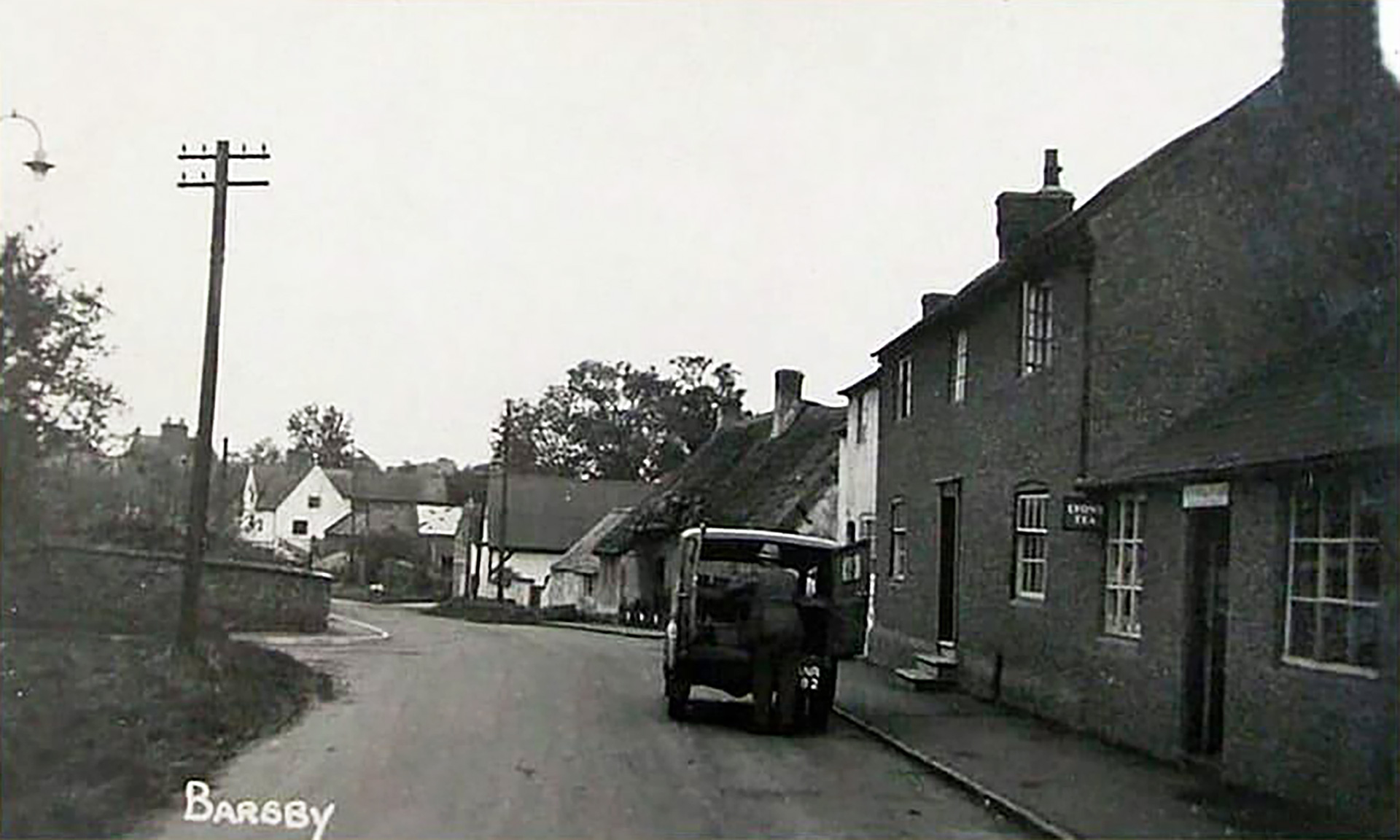
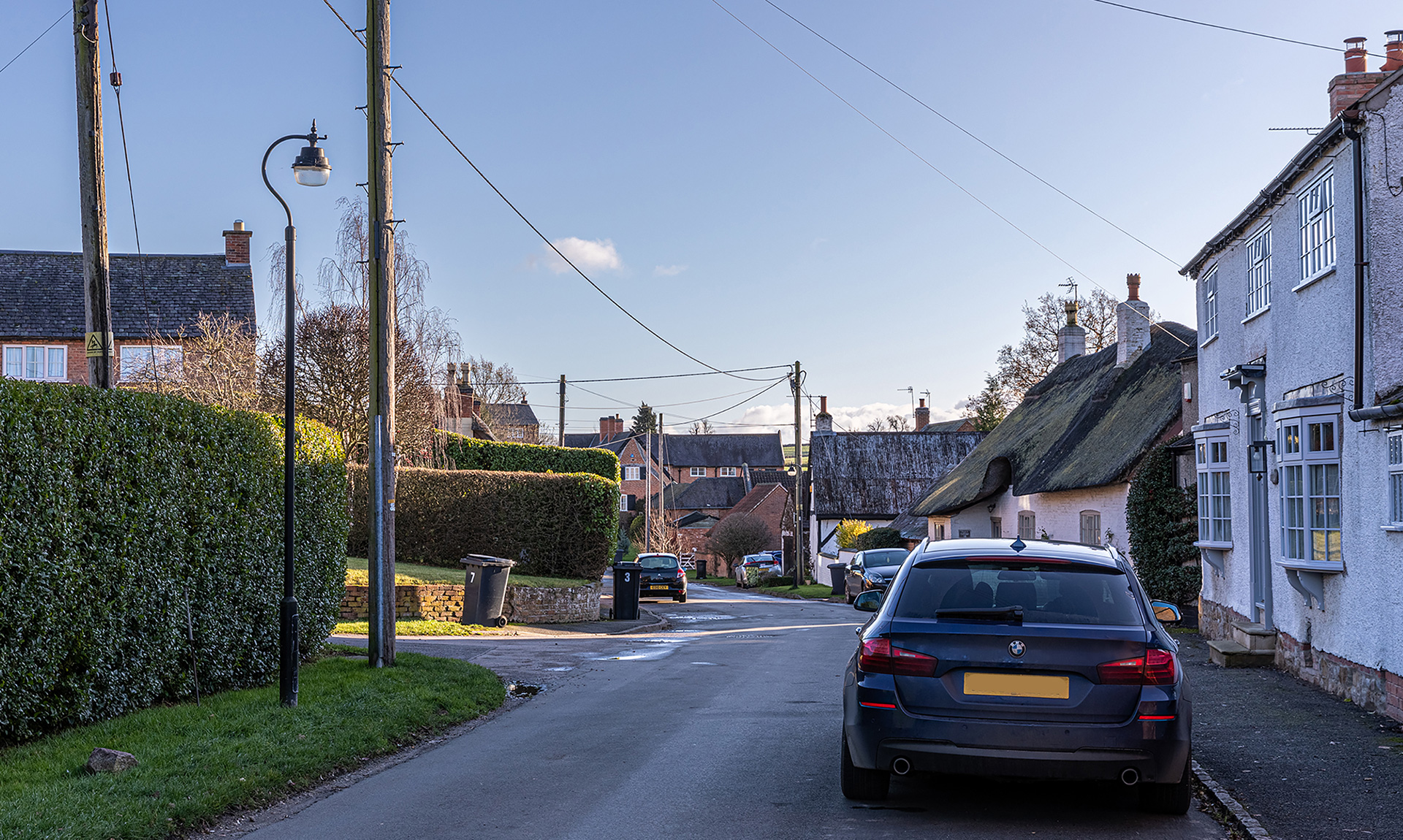
“I would guess that the man with the van is my great-uncle Charlie Palmer or his brother Nobby delivering bread,” recollected Brian Palmer. Immediately, Freda Lane added: “The smell of the bread was delicious.” The picture was taken at Baggrave End, one of a handful of streets in Barsby in the southwestern part of Melton Mowbray Borough. The road was named after Baggrave Hall, located in neighbouring South Croxton. The Burnaby family owned Baggrave Hall up to 1939. The country house was built in the 18th century, and a track ran to Barsby.
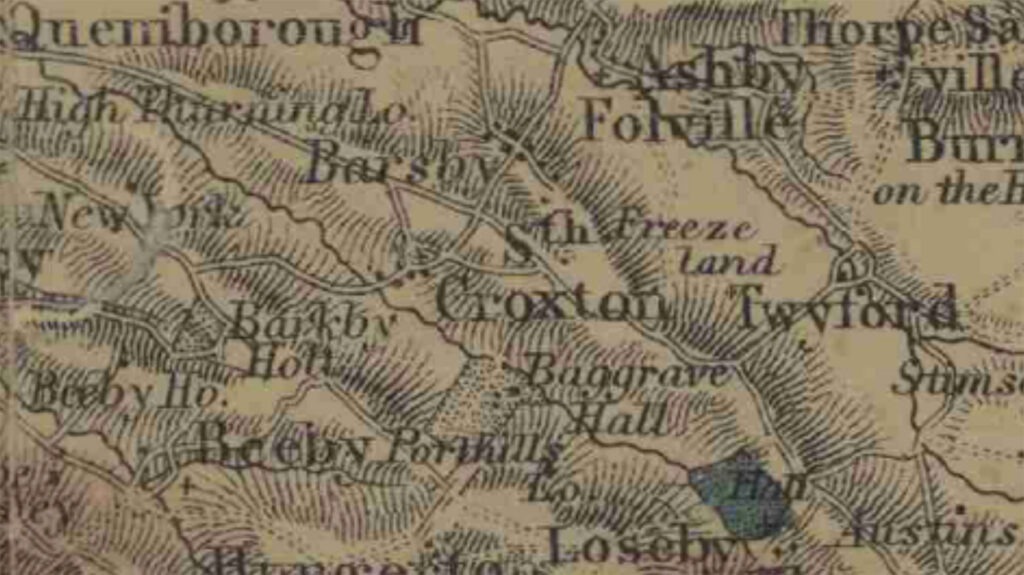
The Burnaby’s had land and one or more cottages in the village. A public footpath following Queniborough Brook still leads to the country house.
At Baggrave End, a thatched cottage is in the middle of the picture, one of the four listed houses in Barsby. The mid-18th-century building had an adjoining dairy. Brian Palmer added: ”In that thatched cottage, great-uncle Charlie and great-aunt Nancy lived for many years.” Diane Heywood recollected: “My mum always said that your great-aunt Nancy made the best cakes ever as a child. The cakes were real birthday treats.” There is more of Palmer’s history in the street. “On the right is great-aunt Phyllis’ village shop. Her sister Annie also made cakes and biscuits,” remembered Brian Palmer. He added smiling: “I loved her ginger biscuits during coffee break when I worked in the shop on Saturday mornings.” The old store is now part of the building next door, a private house named the Three Bows.
“The thatch was replaced after a fire,” added Jen Tait, sending a picture restoring the thatch. “The yellow roof is the thatch being replaced, and tarpaulin over part of the roof waiting to be replaced.”
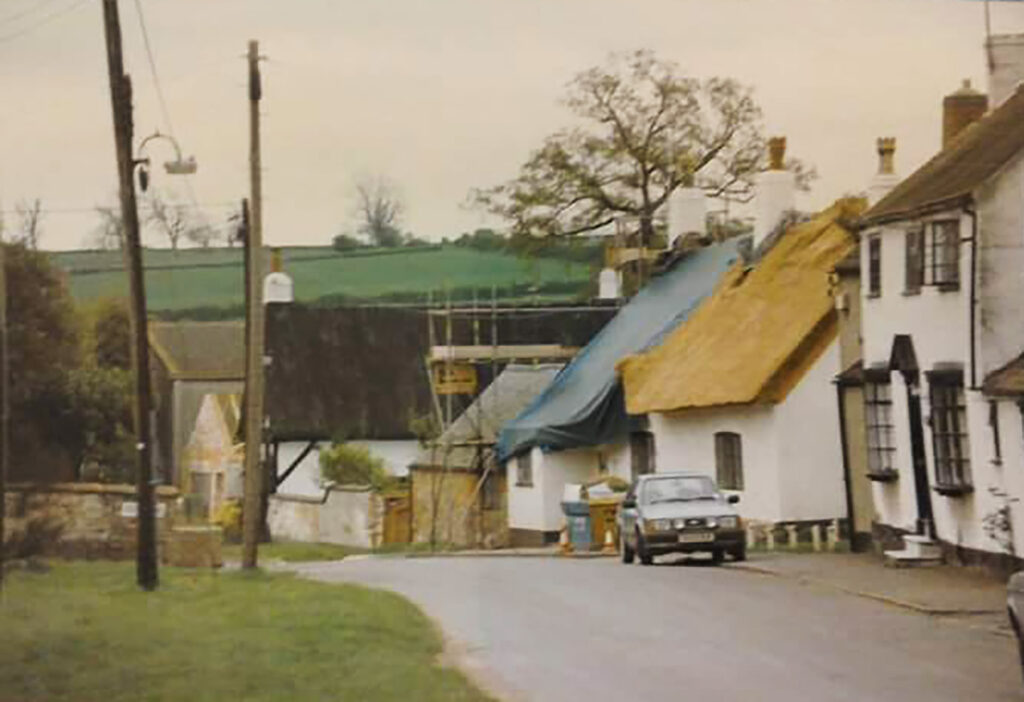
The one further, the dwelling with a steeply pitched corrugated iron roof, is Old Oak Cottage. The timber-framed brick cottage was built in the mid-18th century and is also listed. Opposite Old Oak Cottage lived Derek Tait, who came to Barsby in the mid-1960s. It used to be a farmhouse where Stilton cheese was made. The old stone cupboard that stored the cheese has been retained in the living room. His daughter Jen, now living north, recollected: “The house also had an iron roof with old thatch underneath. My parents had the house thatched again around 1971. I was only 8, but I will always remember it.”
Derek Tait was a crop inspector and landscape gardener, later starting a thriving industrial weed control business.
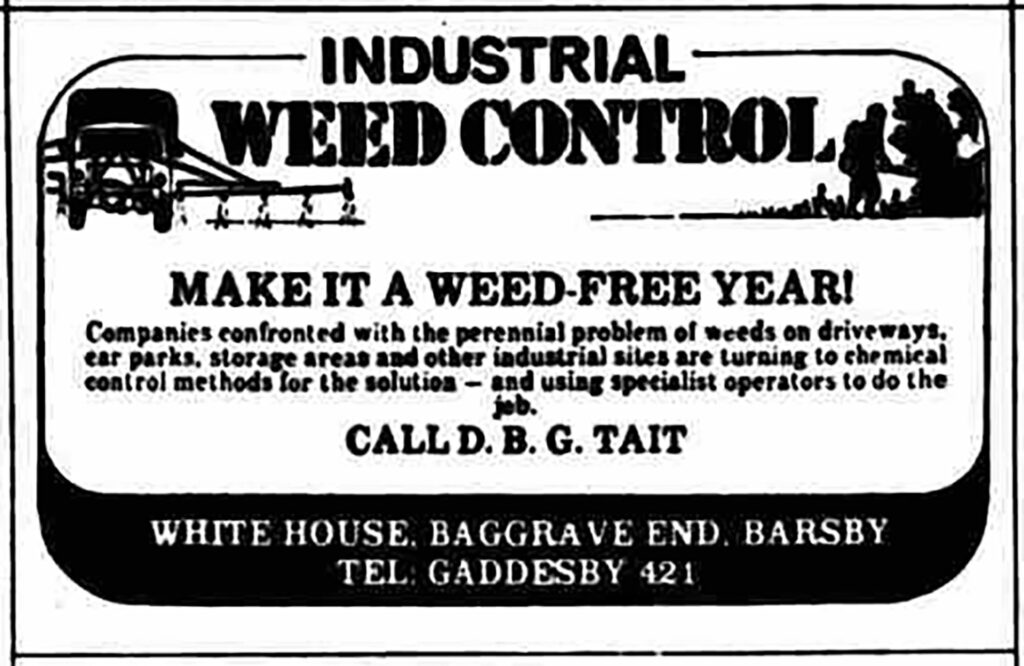
In an interview published April 6th 1984, in the Melton Times, he said: “When I first moved to Barsby, there were many more farms and smallholdings. People used to keep a couple of pigs, sheep or calves on their land to help pay the bills. But all that has gone now, and about 70 per cent of the population live here but work elsewhere.”
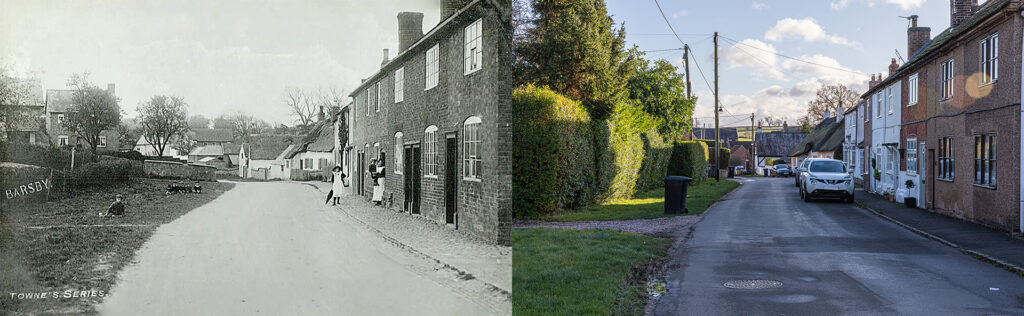
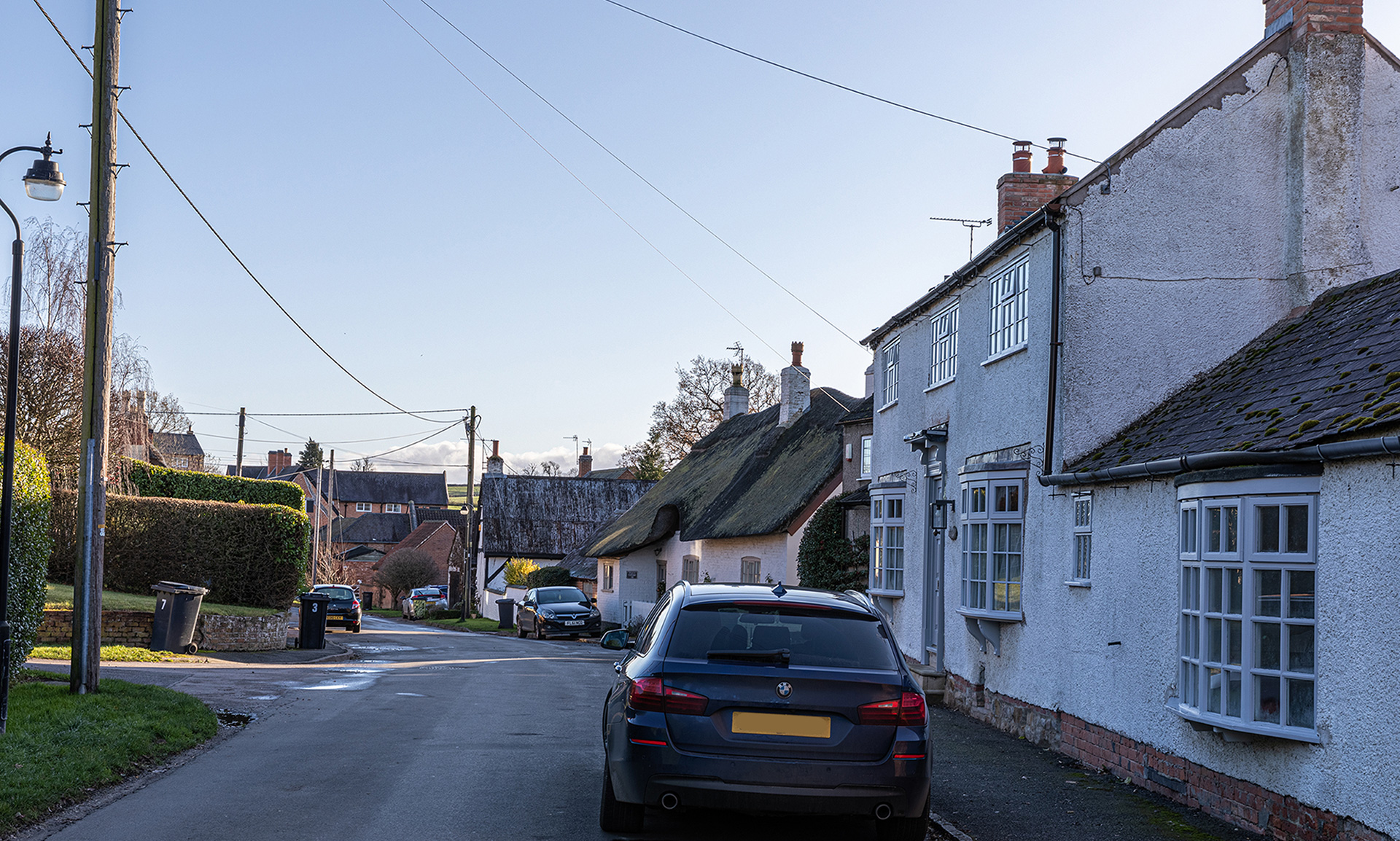
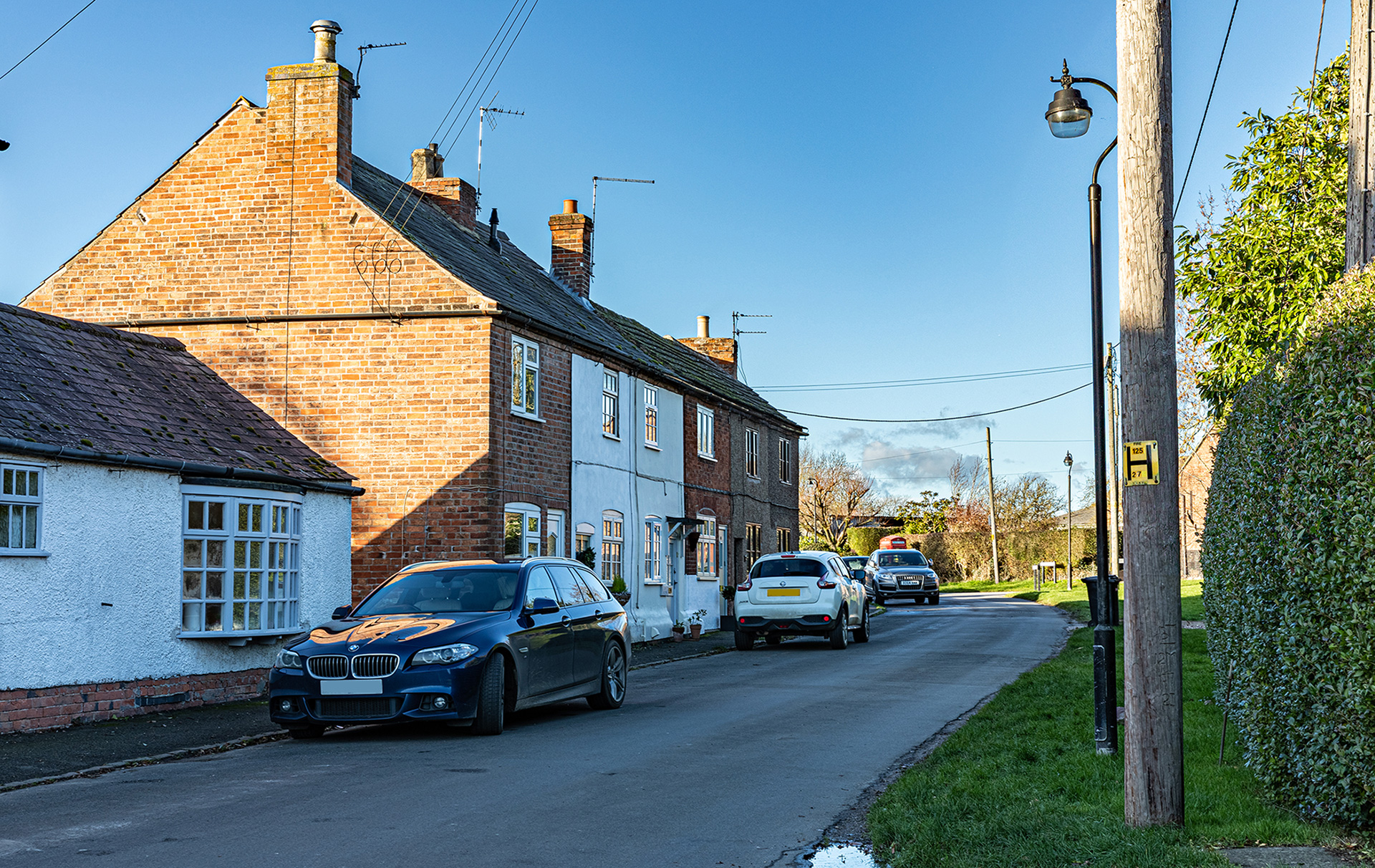
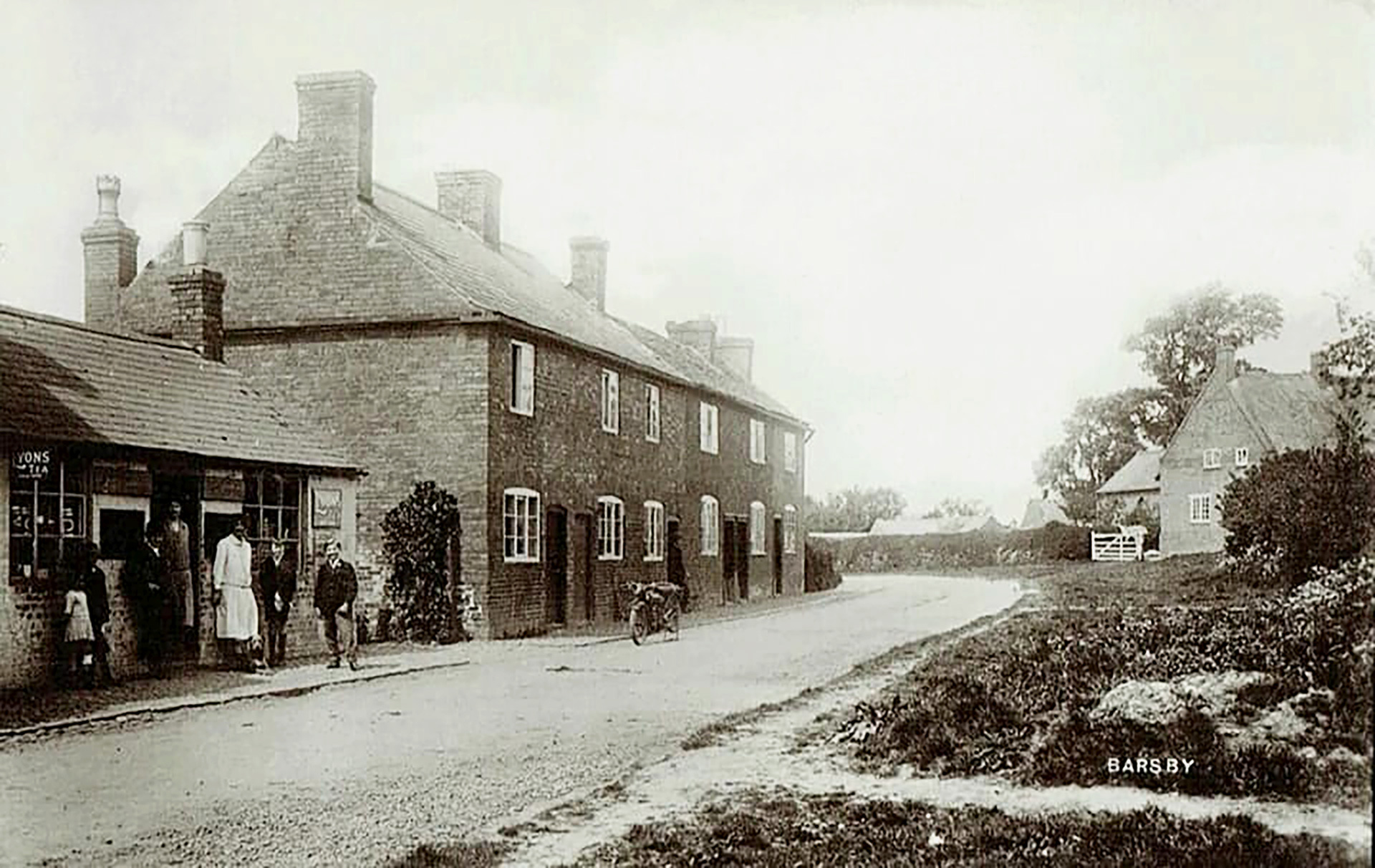
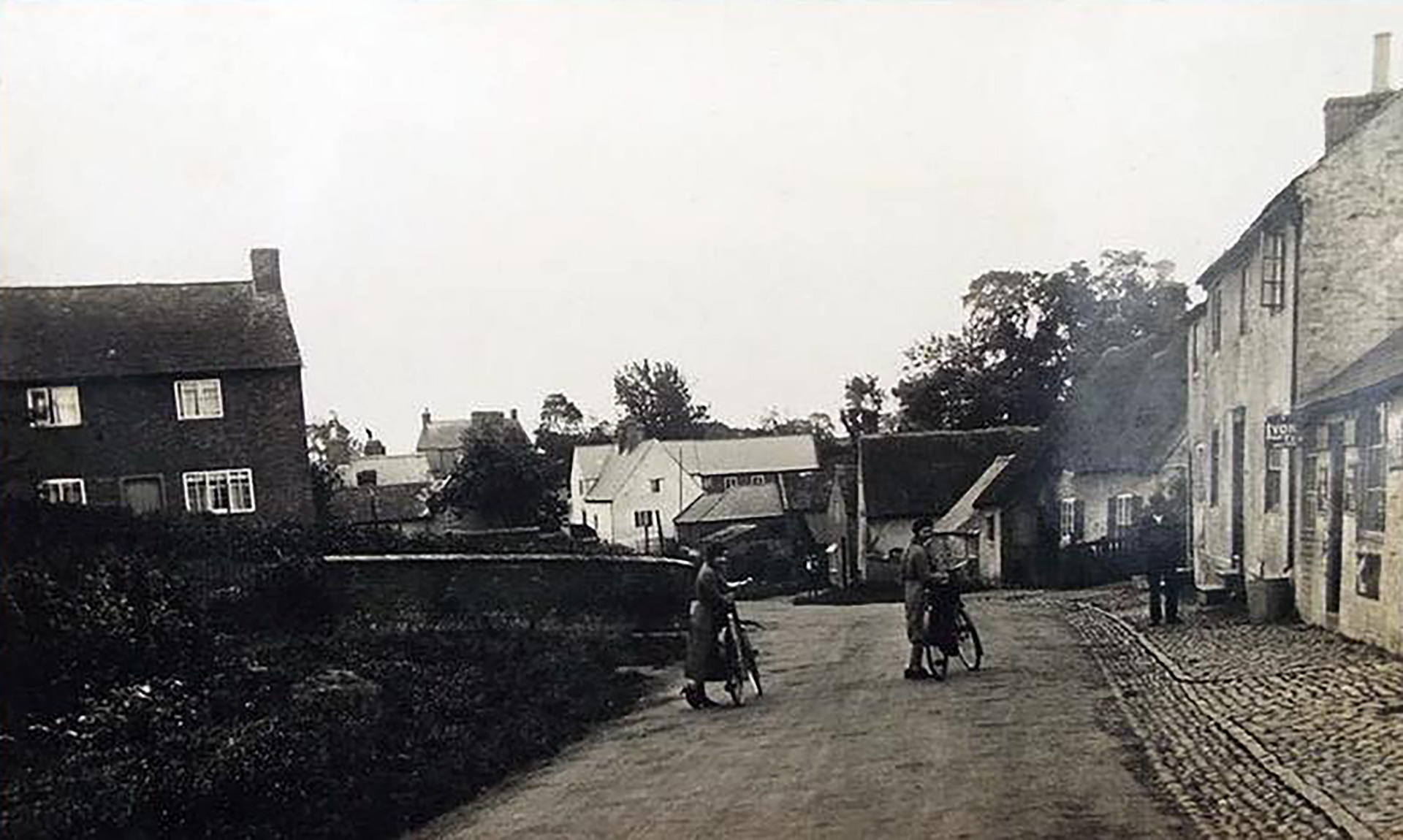
On the left side of the picture is Church Street. Barsby’s Church Street is a relatively short and narrow street starting at Baggrave End (there was a small triangular space called The Green, but there is no reference anymore) and going in a bend, ending halfway at Baggrave End again. The following picture of Baggrave End was taken from The Green. On the right are six terraced houses named Six Row. Joanne Highton said: “I have such happy memories of school holidays spent with my grandparents in what was number 3 Six Row.” “On the left are two houses situated on Church Lane,” said Jen Tait, “with one further forward a bit, I knew as Syd and Fred’s garden.” A rather tall hedge obstructs the view. And in the remake, you can see the flair caused by the afternoon sun.
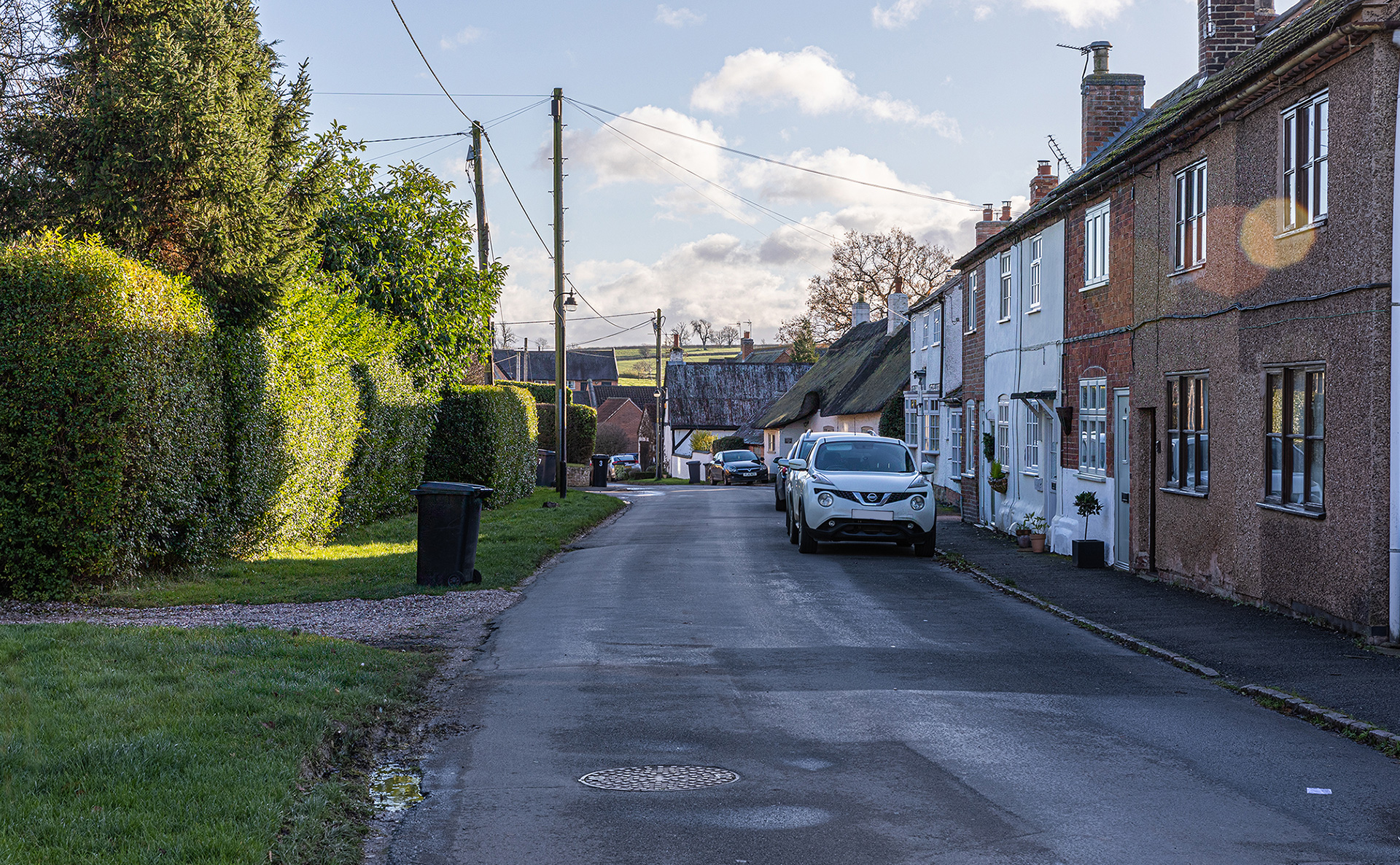

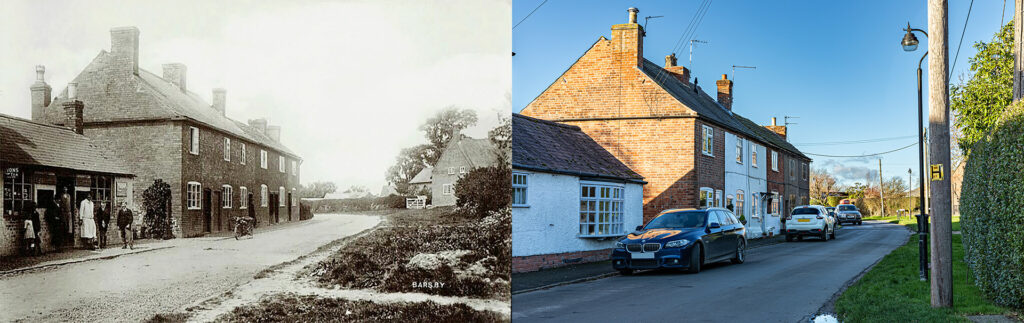
Another view of Baggrave End from the corner where Church Street meets Baggrave End gives a nice view of the old shop and the Six Row terrace. In front of the house on the right was The Green. The shop was also the village’s Post Office. Before WW1, Albert Boden Platt was the sub-postmaster and grocer. In the old picture, he stands in the doorway with family and friends.
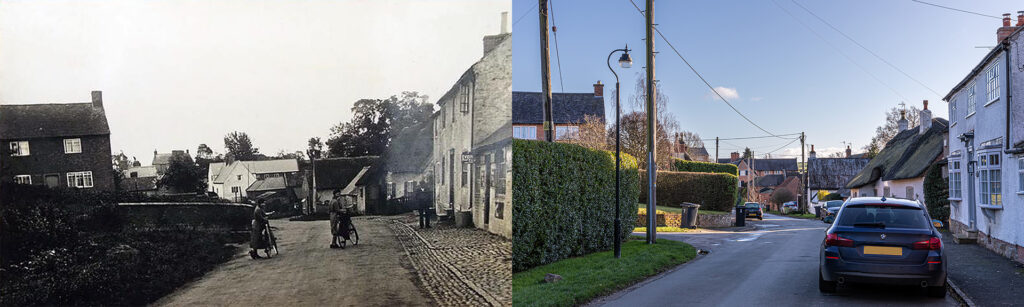
Jen Tait: “It is lovely to see the cobbled pavement and side of the pavement.” “We lived at Top Cottage,” recollected Fred Thompson, “just behind the tree in the background, knocked down and replaced with a new house.”
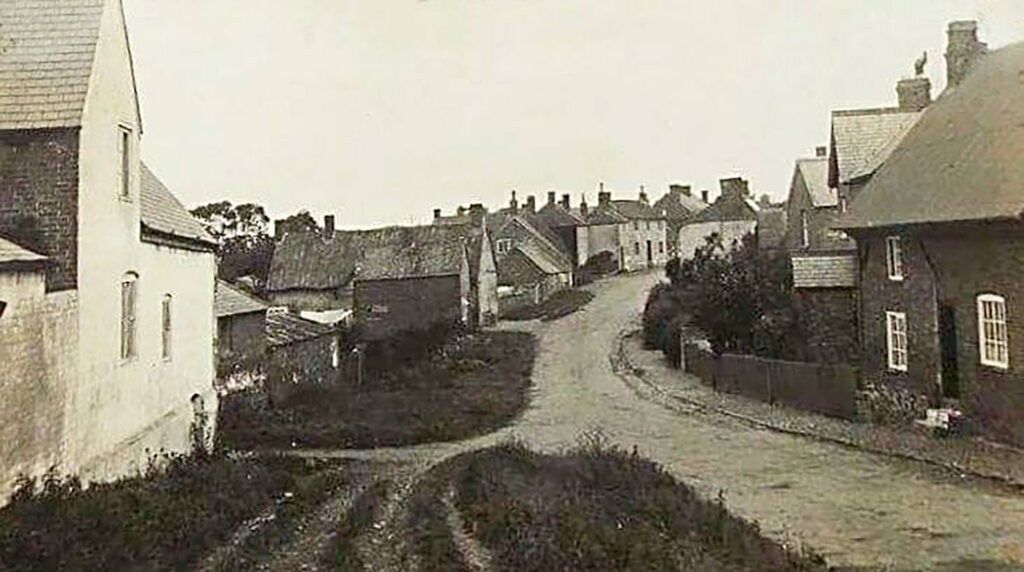
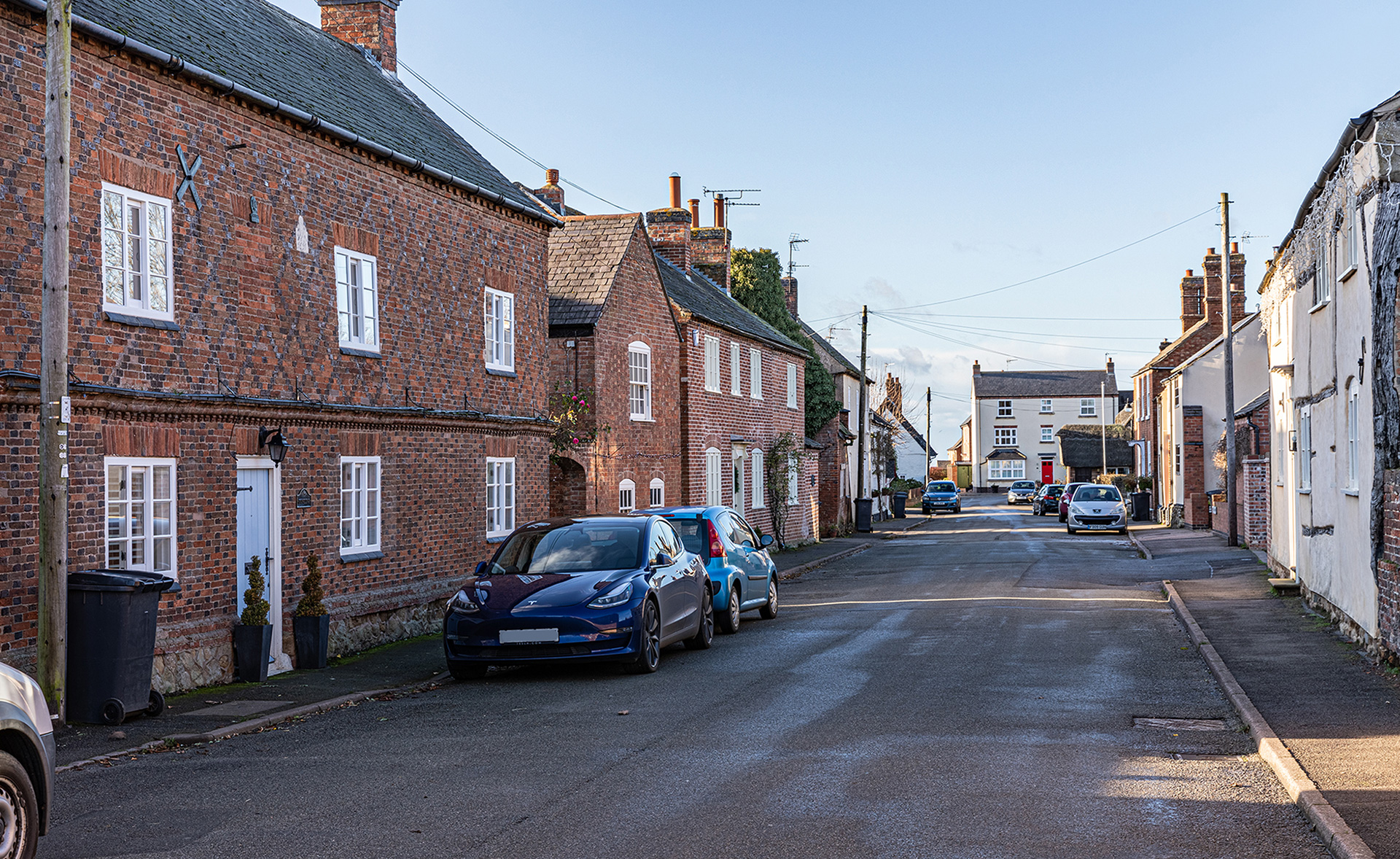
The last picture in the Baggrave End series was taken nearly at the dead-end of the street. The path on the left side of the photograph is now a private road leading to Springwell (also referred to in the literature as The White House), the partly visible white building on the left. The road on the right continues a little further with a few more houses.”
Karen Norton wrote in the Melton Times’ article in 1984: “[William Ross-Wilson’s] home is a 14th-century cruck building and is unusual in that it has a king post in its structure. The only other building known to have one in Leicestershire is the Guildhall in Guildhall Lane.” A cruck truss set on a substantial ironstone plinth is visible at the west end of the house. There is a second cruck truss inside, of medieval type. A 16th-century three-bay box-framed wing intersects the second bay of the cruck building. “The house gets its name from a spring-fed well that lies under it and has now been covered. William and his wife Jacqueline have lived at the farm for 40 years and are both keen followers of the Quorn Hunt. Their farm is one of the few in the area which produces milk solely from Jersey cows, and it is one of the largest of its kind. Surprisingly, there are only 37 cows on the farm, and their milk is sold locally through the Co-op. William’s father, Hugh, was quite famous as one of the first manufacturers of electric cars. His Leicester-based company Patridge and Wilson made several vehicles for Kirby and West dairies to deliver milk in the 1930s. And one of the two revolutionary cars was also made by him, although the idea never took off, and Hugh finished manufacturing electric vehicles in 1950.” William Ross-Wilson’s died in 2018.
The house on the right was demolished in the 1960s.
Main Street
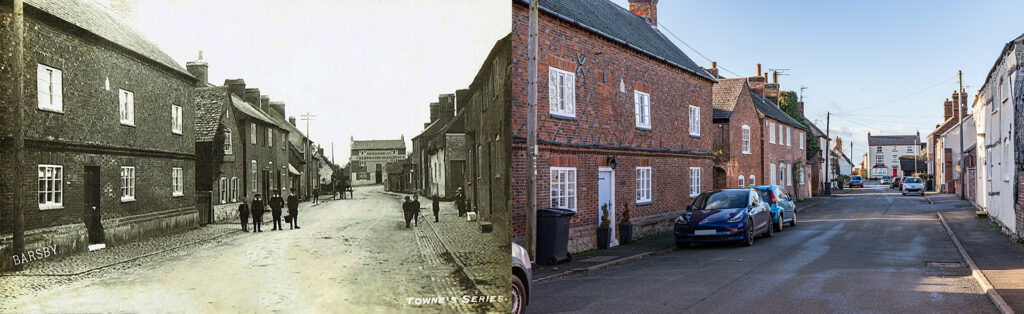
Opposite Baggrave End, Main Street also straddles the rather busy Station Road from Great Dalby to South Croxton. The second house on the left (the first in the above then and now pictures) is Stoneleigh, a listed brick dwelling with a slate roof, dated 1691. The street front has a chequered brick pattern and diaper work above the ground floor. A fire insurance plaque and a datestone inscribed ‘AW 1691’ are between the left upper windows.
When Stoneleigh was for sale in 1976, the Leicester Mercury of 9 October 1976 wrote: “The property, Stoneleigh, which occupies a site in the main street of the village, comprises a 17th-century cottage and a range of outbuildings with gardens, an orchard and a paddock at the rear, extending altogether to an area of about two acres. The cottage is listed as a building of special architectural or historical interest, with its chequered brick construction and slated roof, is a fine example of buildings of that period.”
Freda Lane said: “I was born in a cottage on the right-hand side halfway down the street. It is opposite the farm where Mr and Mrs East lived. I know the cottages are still there. My mum and dad were Mr and Mrs Terry. I lived there until I was 21.”
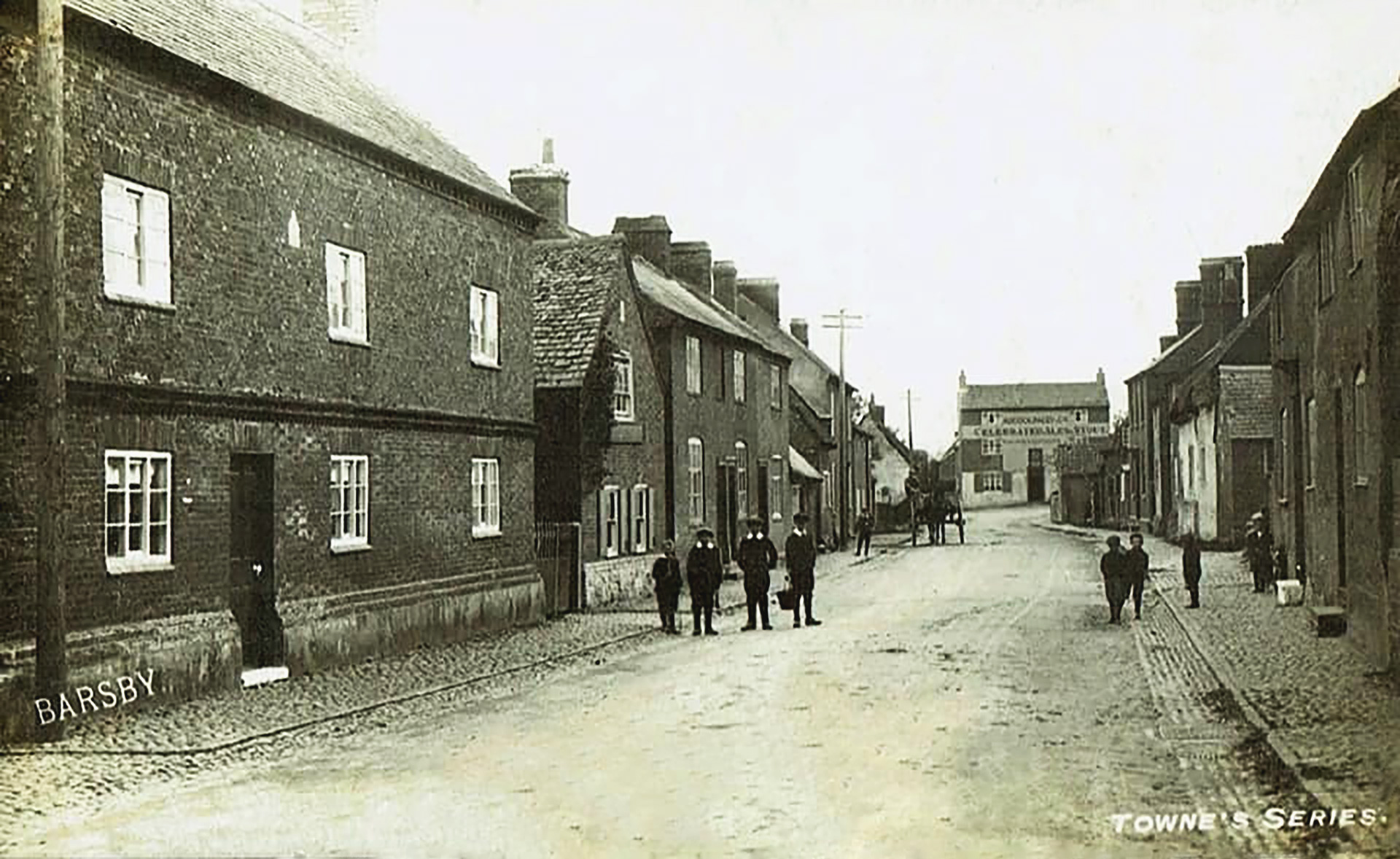
Looking into Main Street, at the end lies King William Inn, also named King William IV, a pub (later restaurant) that closed in 2003.
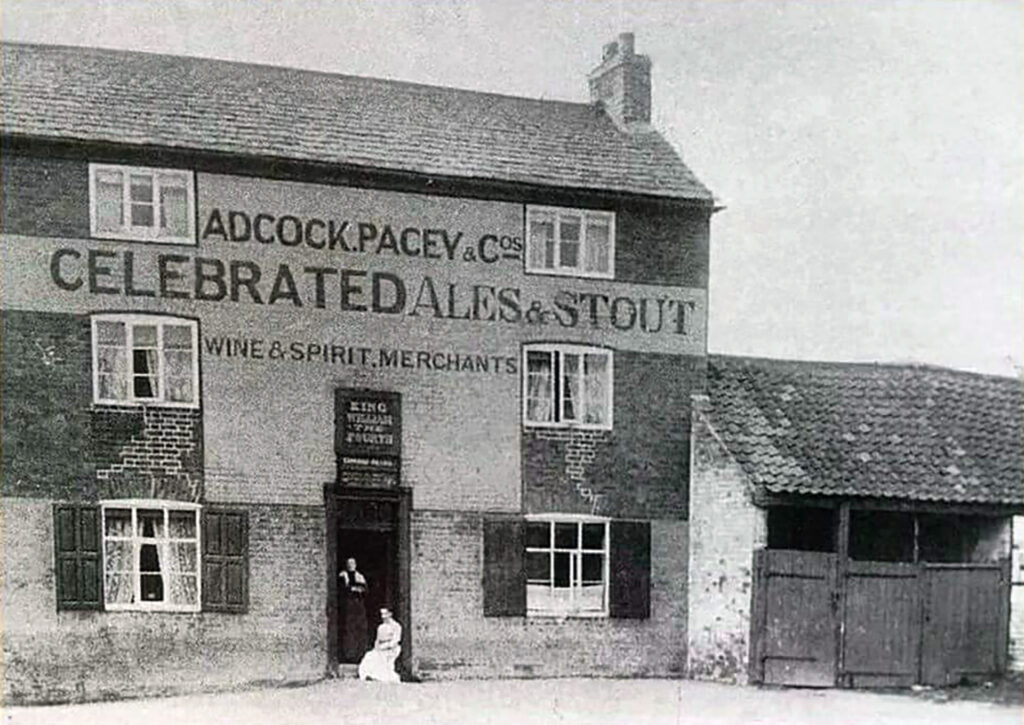
For a long time, the public house had an ‘Adcock, Pacey & Co’ advertisement prominently painted on the top of the façade. On his blog Yesterday in Melton Mowbray John McQuaid wrote: “In the summer of 1873, after two decades of trading alone, William Adcock announced to the world that he was to forge a partnership with Mr James Pacey, a respected farmer of nearby Garthorpe, from which came the business known as Adcock, Pacey and Co.” They had the Egerton Brewery, situated at Bentley Street in Melton Mowbray. They owned at least 35 public houses in the wider Melton Mowbray area, where they sold their celebrated ales and stout. The brewer also was a wine and spirit merchant. The brewery was sold in December 1919 and acquired by Ind Coope Ltd, Romford (Essex).
One of the pub’s regular customers up to the 1980s was Morgan “Taffy” Evans, born in 1900. When he was 84, he remembered two more pubs in the village, The Crown and The Black Horse. His cottage was once another pub, the Shoulder and Mutton, which closed around 1910. Taffy lived in his Main Street cottage, Randle Close, since 1921 after moving from his boyhood home in Wales. He worked as head gardener and gamekeeper at Baggrave Hall in Leicestershire for ten years. Later, Taffy became a grower and was on one of the pick-your-own farms in Melton. In an interview in 1984, he said: “The village has stayed pretty much the same in size over the past 60 or so years. The only change has been the number of businesses that have gone. We used to have a fishmonger, a grocer, a post office, a cobbler, a blacksmith and a baker. Now, we have only a pub, a chapel and a village hall. Pensioners have to travel to Gaddesby to get their pensions and food, and it would be nice to have a village shop again.”
Freda Lane recollected: “I used to work behind the bar. It was a lovely old pub. My mother cleaned there, and when they had chickens on the cricket field, she collected the eggs and shut them up at night.” Until 1982, the pub was a small country inn, but it was closed down and went up for sale by public auction at the end of the year.
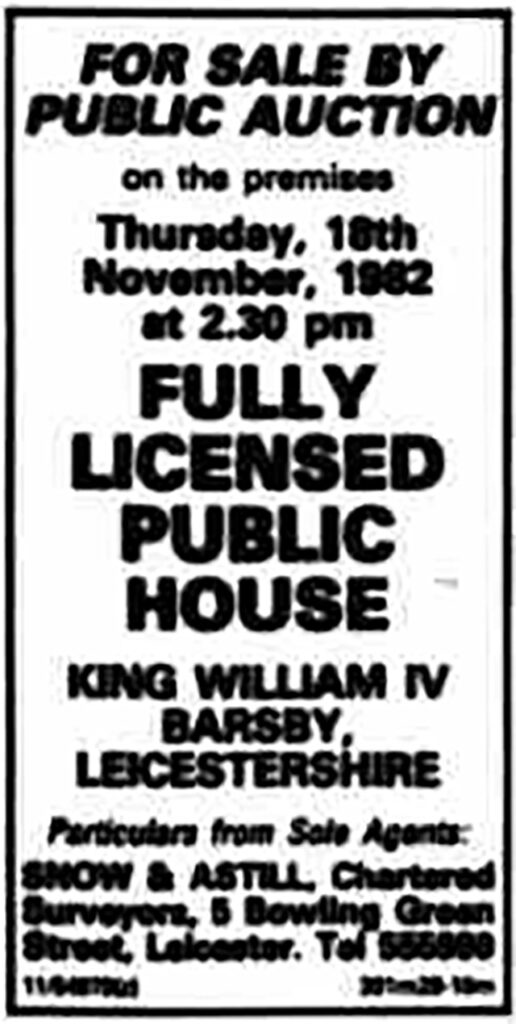
Rod Gray bought the public house, turned it into a pub with a restaurant, and reopened it on 16 December 1983. Karen Norton wrote about Gray’s new business in the Melton Times of 6 April 1984: “Those who travel to Barsby might well see gleaming suits of armour, colourful wall tapestries – and even chastity belts! That’s if they pay a visit to the village pub, which is becoming well-known for its medieval flavour. The King William at Barsby used to be a typical old-fashioned rural pub – noted for its peace and quiet. But since new owners took over last year the building has been transformed into a lively and thriving centre. There’s now a restaurant, which is gaining fame for its medieval banquets. People travel from all over Leicestershire, Nottingham and even further afield to take a step back in time. So the newly-renovated pub has helped put Barsby on the map – thanks to the hard work of the manager Mr Rod Gray. The idea of a banqueting centre wasn’t always popular with some villagers, as a public meeting proved in February last year. But despite their objections, planning permission was given, and the old pub was extended and improved.”
In 2003, there was a fire. The place was boarded up. A 2005 planning application was approved for the partial demolition and conversion to residential use of the old pub and the construction of 13 new dwellings and associated parking.
The University of Leicester Archaeological Services was commissioned to undertake an archaeological standing building survey and trial trench evaluation of the former King William IV public house. The report concluded: “An initial archaeological desk-based assessment identified the building as possibly eighteenth century in date, of some historical interest, and close to known archaeological sites. As advisor to the planning authority, the Leicestershire County Council Senior Planning Archaeologist requested that a standing building survey and trial trench evaluation be carried out. The building was in a poor state of repair have suffered fire damage and been subsequently stripped of fixtures and fittings. The building survey suggests that the building is a twentieth century rebuild within the footprint of the earlier building. Despite its promising location on the fringe of the historic village core, nothing of archaeological significance was located during the archaeological evaluation.”
Construction works started in 2007. Demolition of the building began at the rear of the building. Sam Tait took two pictures of the old King William during the turn of the year 2007 to 2008. The first is dated 18 December 2007. The second was taken on 12 January 2008. Sam remarked: “It was ‘accidentally’ weakened so they could get away with pulling the whole building down.”
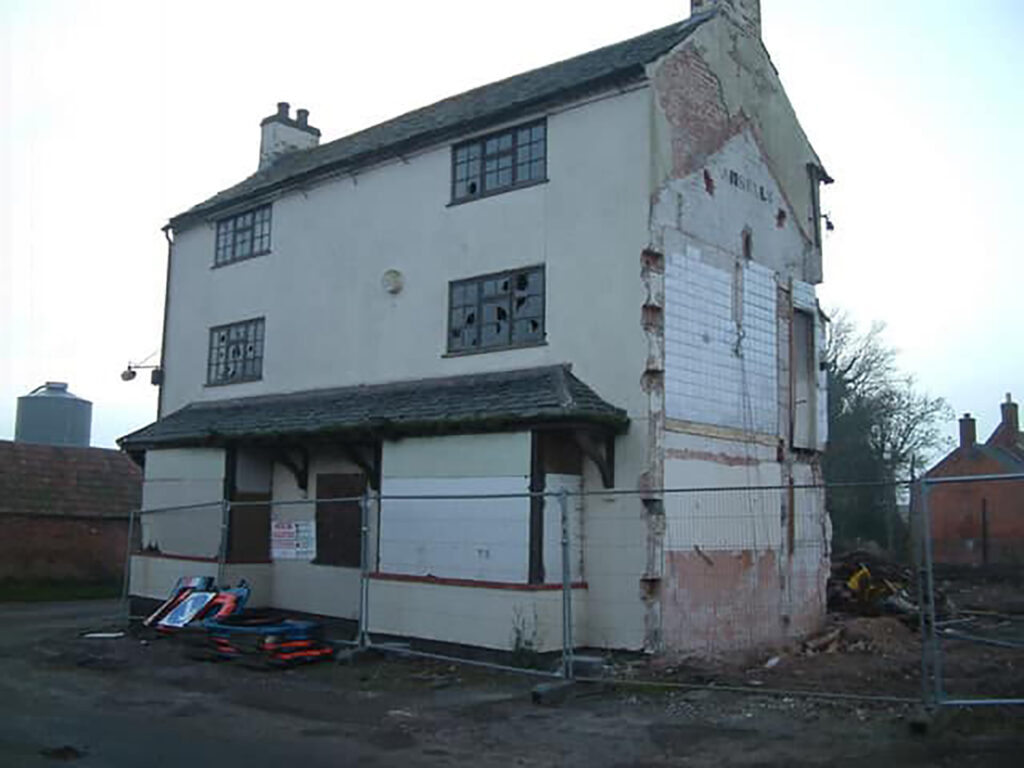
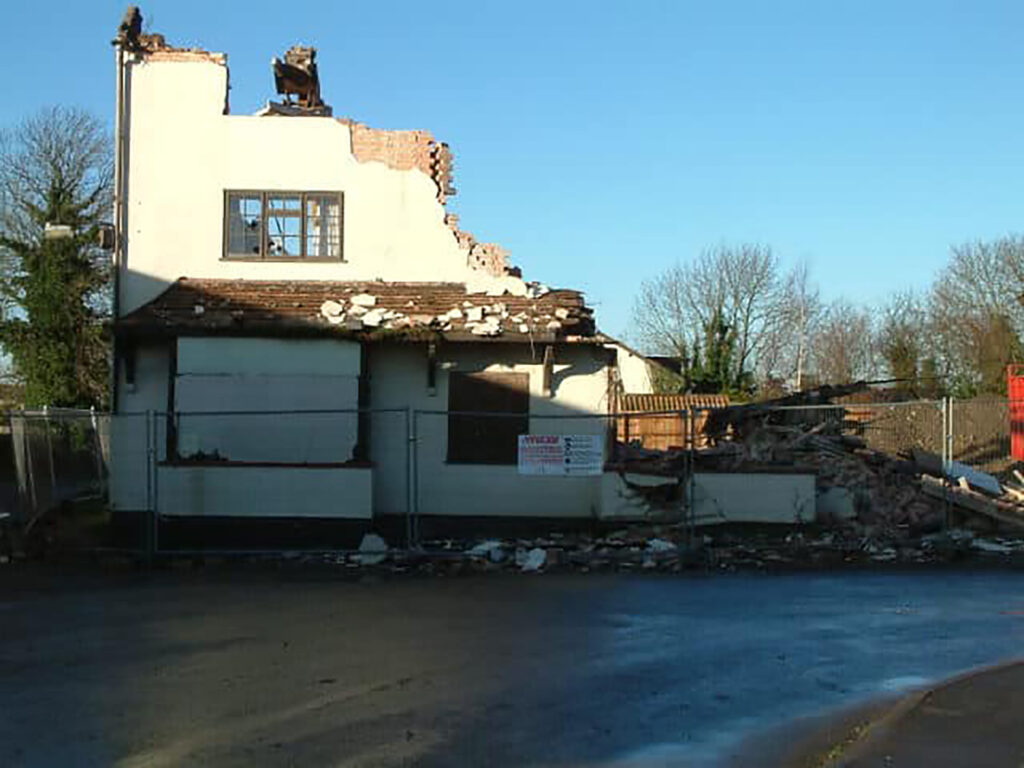
The ULAS report stated: “As a result of unforeseen structural issues, a further application was to demolish the remainder of the originally to be retained structure fronting onto Main Street and replace it with an externally identical rebuild, this was granted. Following approval the demolition work was carried out on January 12th 2008 under archaeological supervision.” So, the current residential building was built in 2008.
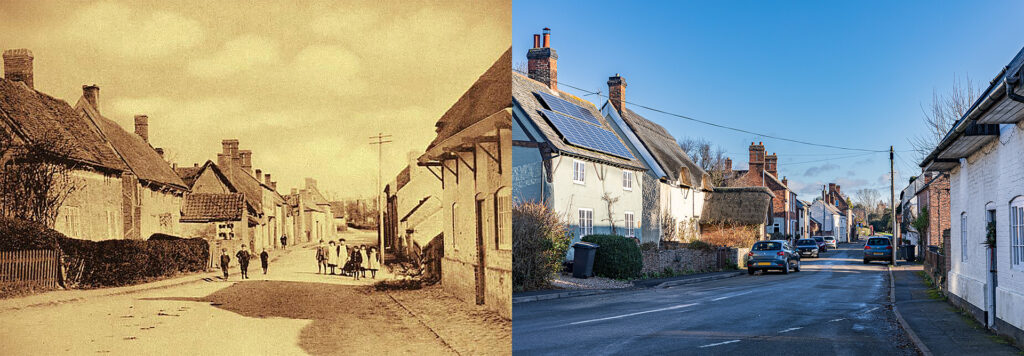
The cottage on the right is Cream Cottage, an early 18th-century dwelling, now listed and identified on the Ordnance Survey map as Walnut Tree Farmhouse. Jackie Jesson: “I think there are still three working farms in the village: Barsby Farm, Walnut Tree Farm and Dairy Farm. The Firs isn’t a working farm anymore. Not bad for a village like this.”
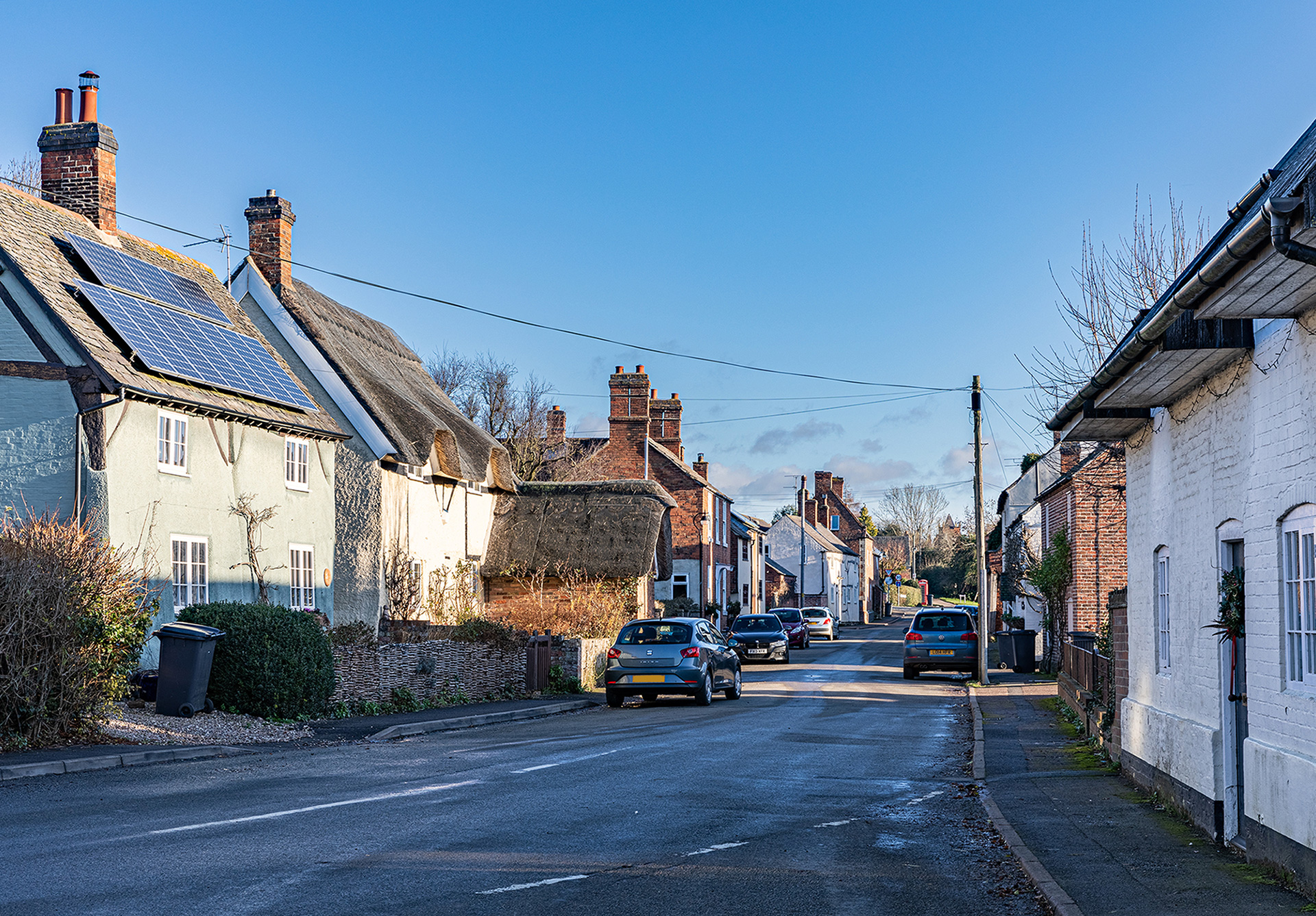
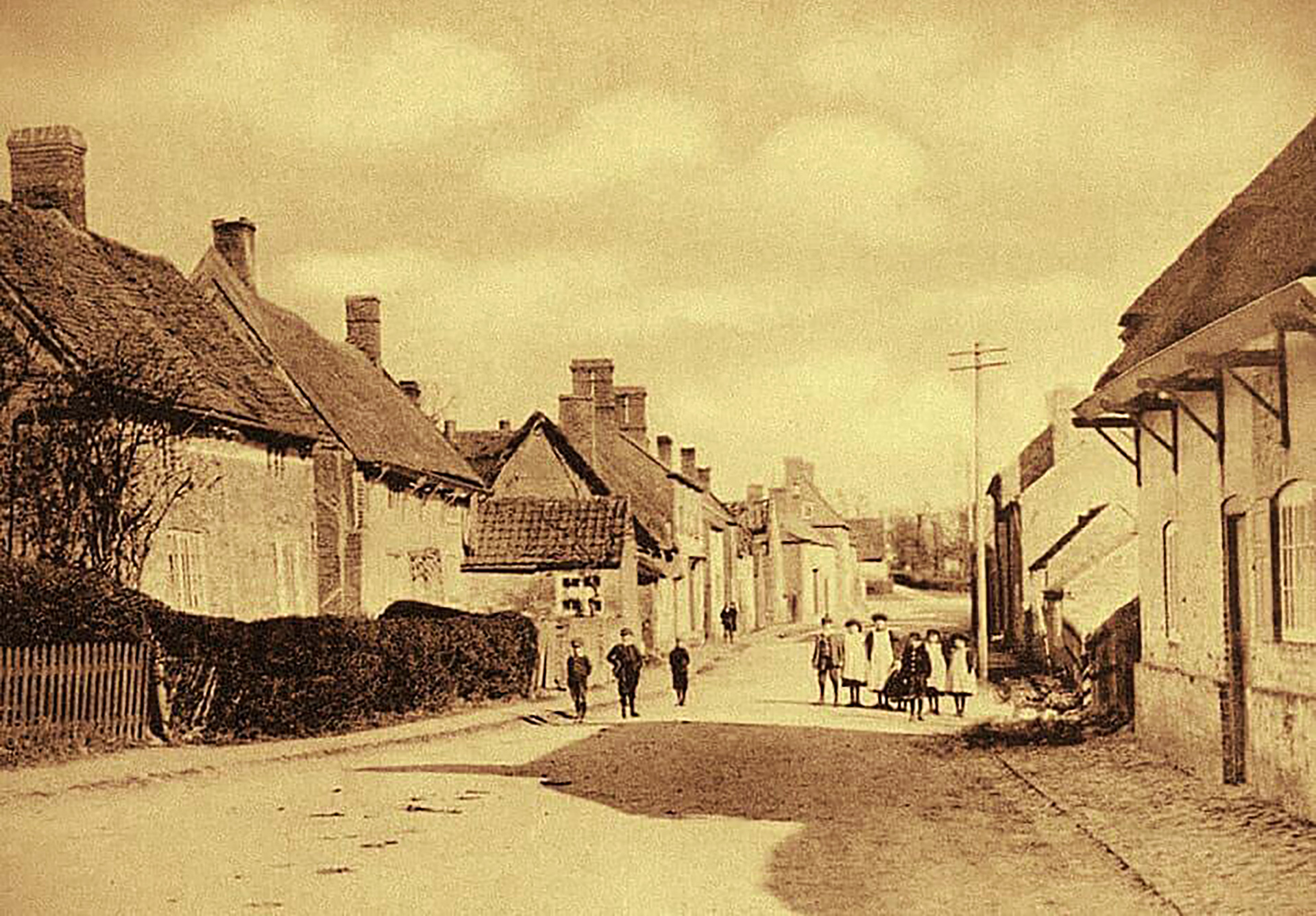
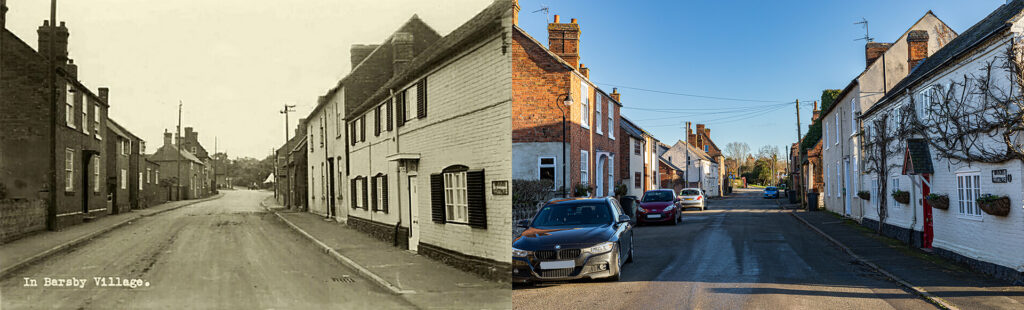
Freda Lane said: “The second cottage on the left is where I was born in 1935. I have lots of sweet memories.” Also on the right is a farm. “The farm is Barsby Farm,” said Kathryn Shorrock. “My family bought it in 1925 and still farm it today. In the 1970s, Mr and Mrs Hebden lived in Brock’s Cottage, next to the farm. We lived at The Firs, opposite, until 1970 when we moved to Baggrave End.” Jen Tait: “The house on the near right, I recall, with huge hollyhocks.”
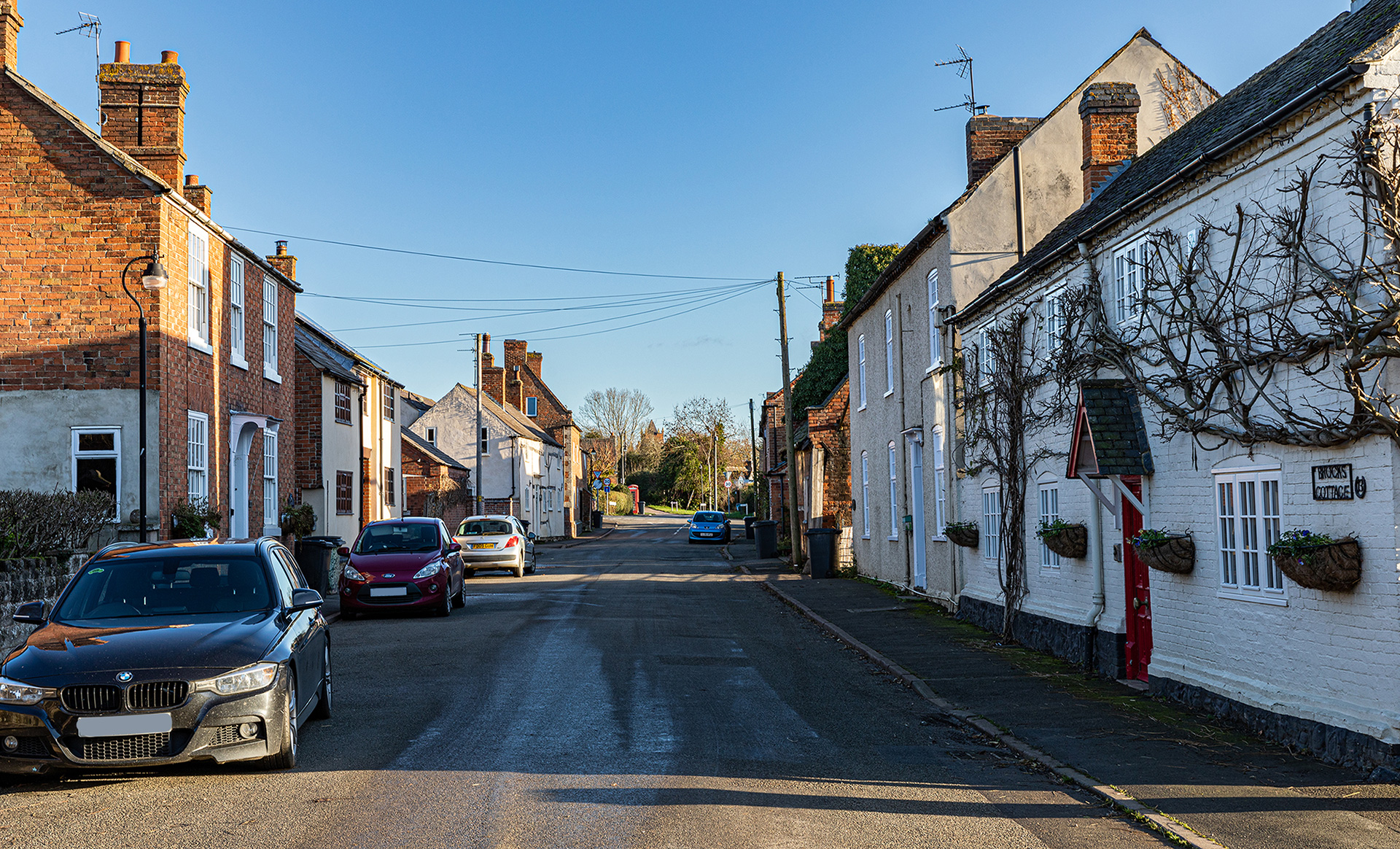
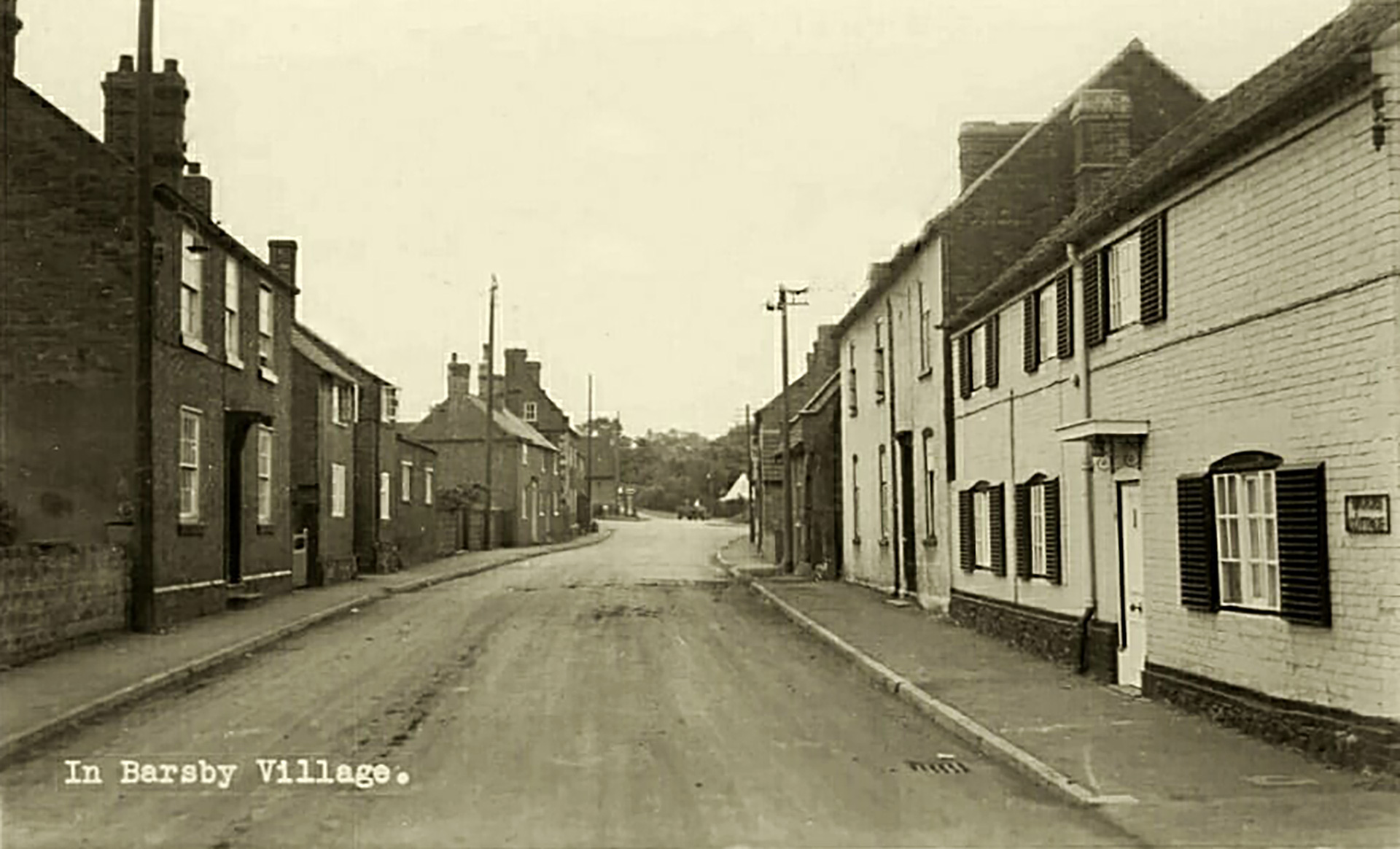
Warrington’s of Leicestershire. A Family History
Stewart Warrington, living in Thurcaston, north of Leicester, researched his family history in Barsby. Here is his story…
I have loved researching my Warrington family history. It has been fascinating to discover my ancestors, who they were, and where they lived, and I have tried to imagine what their lives were like in those quite different times. Having had my DNA tested, it would appear that having a 76% English ethnic result indicates that my roots are firmly based in the UK and the East Midlands area, which is confirmed by what I’ve discovered having traced my direct family members back to the 1690s, and our family surname itself back to the early part of that century.
First, starting with the Warrington’s in the 1600s, despite not actually discovering a direct link on a relationship basis, I’ve discovered that a great number of them were living in Medbourne, a small village a few miles from Market Harborough, in Leicestershire, such as Alicia Warrington, baptised on 16 March 1613, Anthonius Warrington, married on 30 June 1608, William Warrington, burial 6 January 1692 to name but a few.
Having found so many, I’d hoped I would be able to trace their family members into the 1700s, but strangely this has not proved up to now to be possible and moving on to when the first national census was conducted in 1841, not one single Warrington is to be found in Medbourne. Having lost that trail, I eventually traced my 8th Gt Grandfather William Warrington (born in 1690), living in Kibworth Beacham in the 1700s, a village just a few miles from Medbourne. So, one does wonder if his parents were from there.
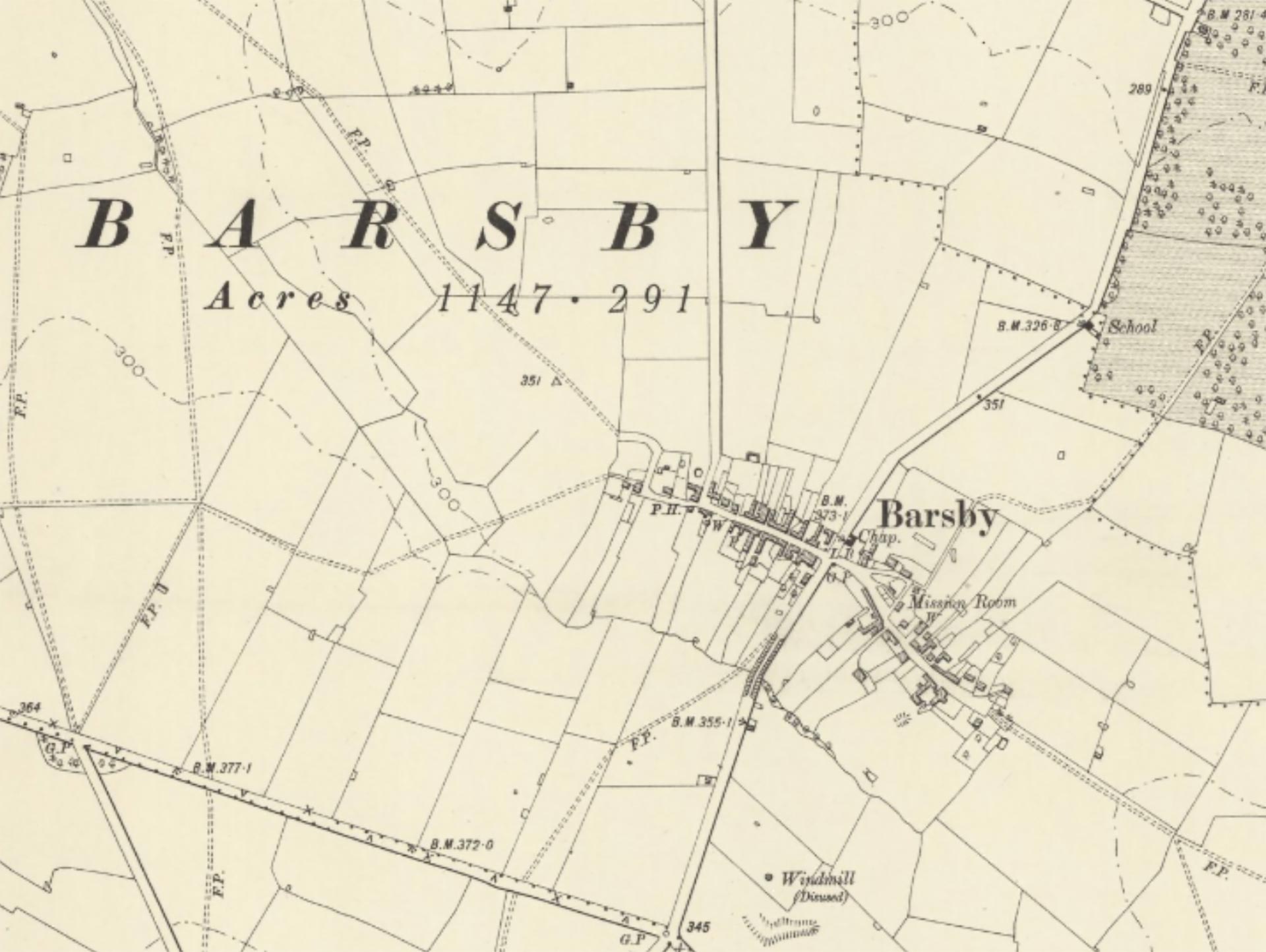
Looking at my family tree over the last four centuries, it does trace my family moving across Leicestershire, first from Kibworth Beacham, then on to Tilton-on-the Hill, Barsby, South Croxton, Cold Newton, Ashby Folville, and then perhaps because of the industrial revolution into the City of Leicester itself by 1901, close to where I live today at Thurcaston.
A useful tool in my family research has been the national census, and in researching the 1851 census, when seeking ‘Warrington’s’, I found a total of 27 of my family members recorded living in the small village of Barsby, from a total of 47 in all of Leicestershire.
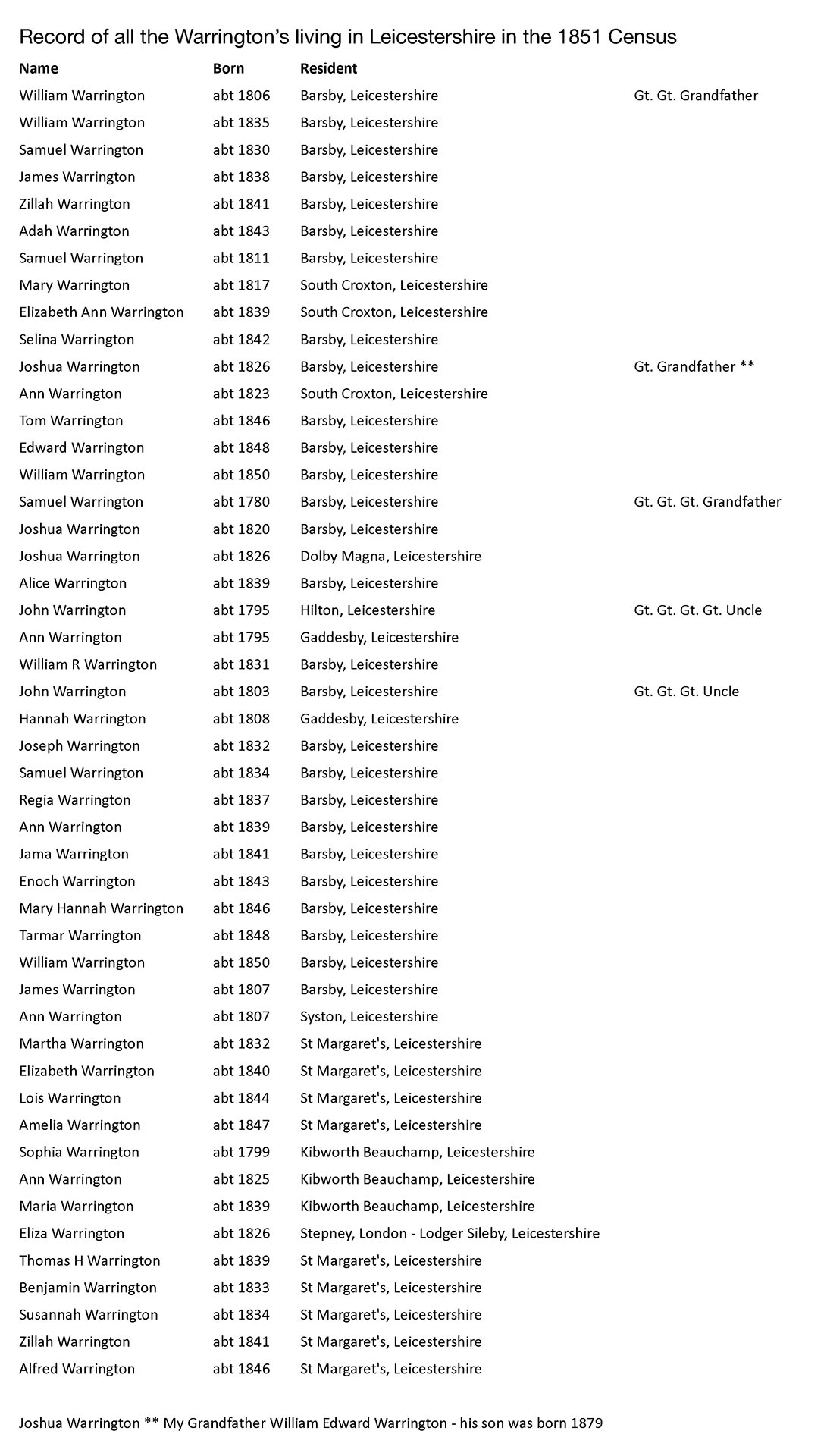
What was even more remarkable to me was that in the Census, I found not one, but five Warrington families all directly related to me living together, included in which were my 3rd, 2nd and 1st Gt Grandfathers, plus two Gt Uncles, and even my Grandfather William Edward, who was to be born later in the village in 1879.
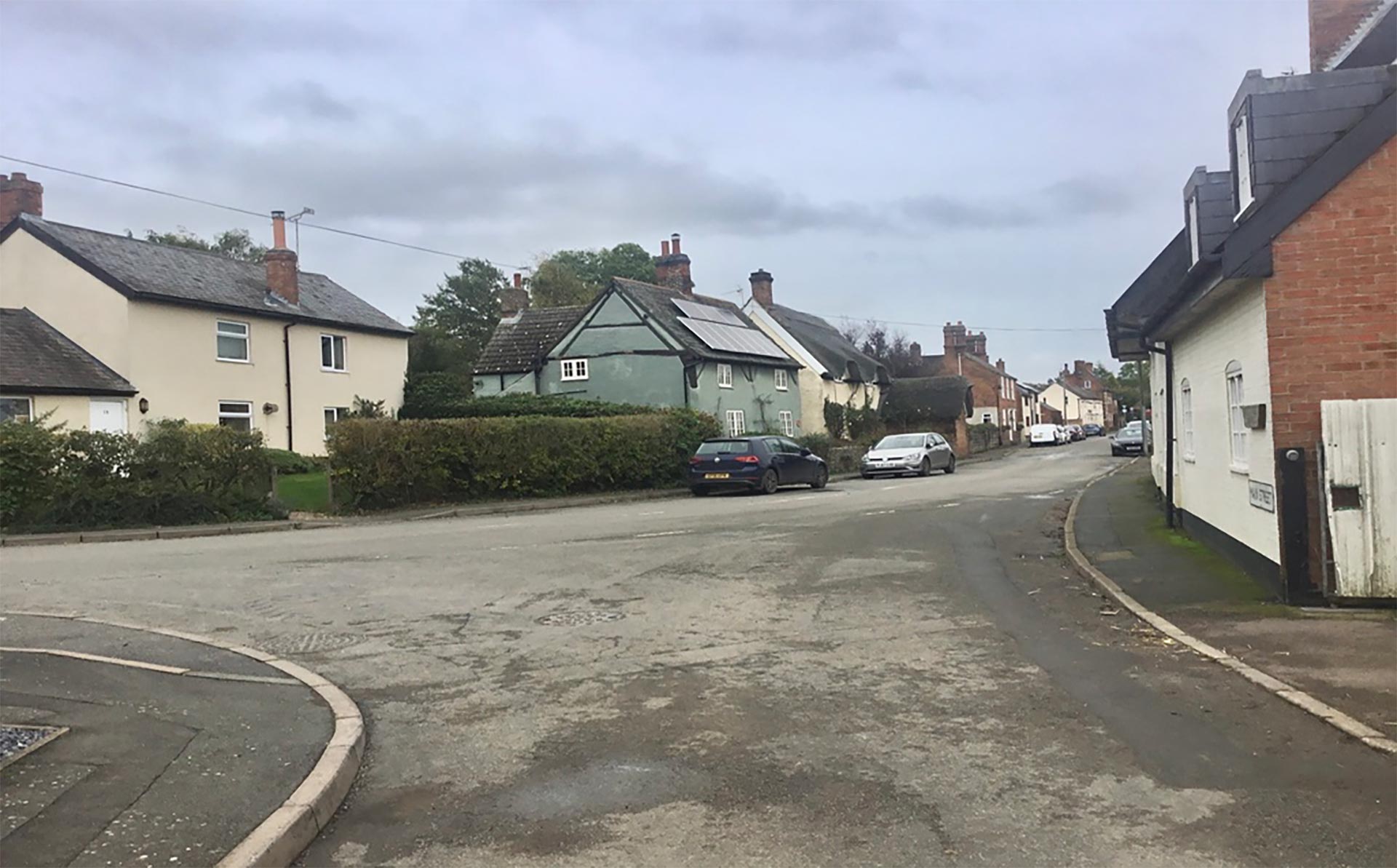
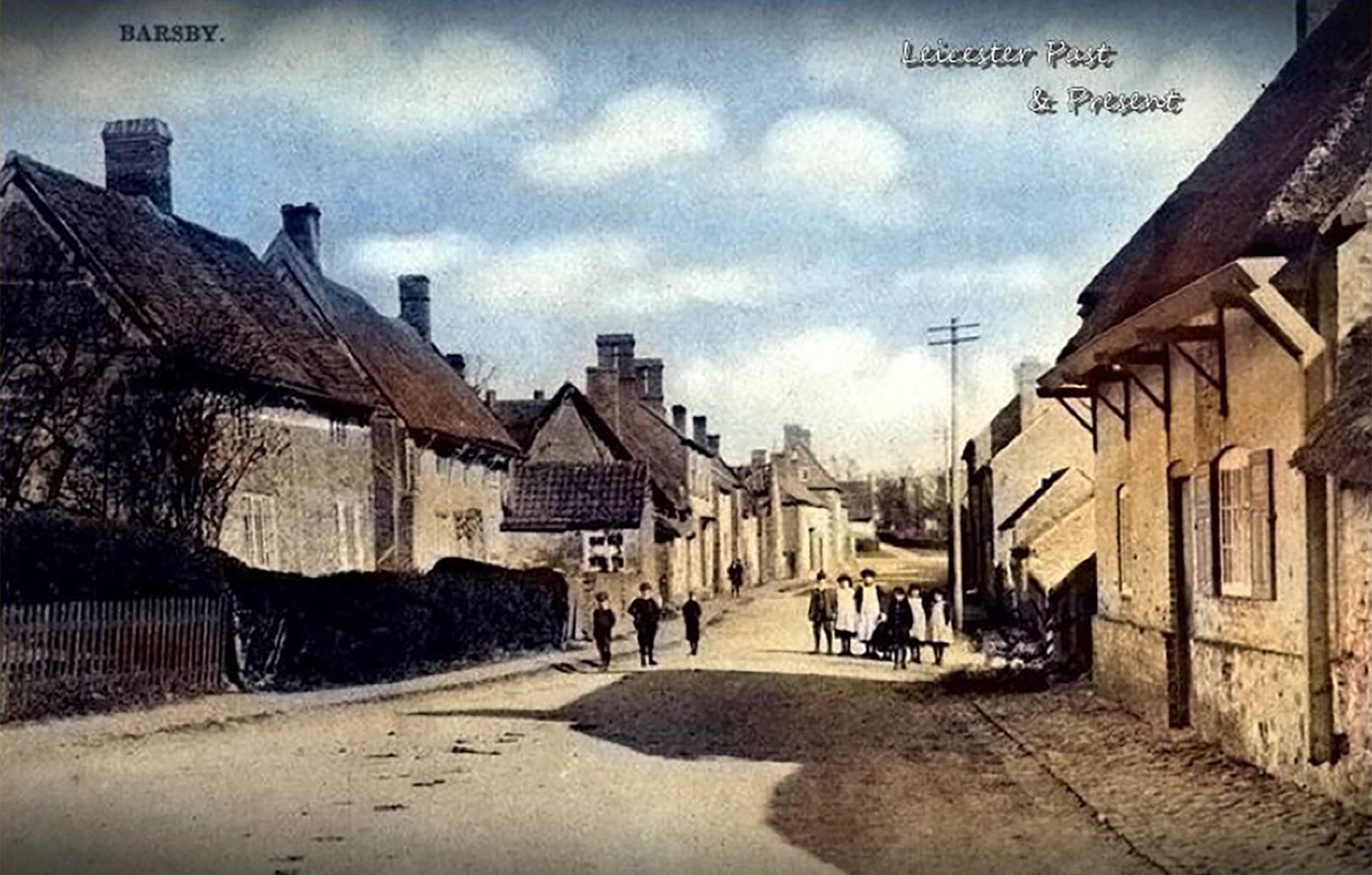
Having discovered my family connection, out of curiosity, I’ve been drawn to the village several times, especially having established that a large number of its properties were certainly there in 1851, so I’ve enjoyed walking the roads that form the village fairly confident that I’m looking at the actual houses, or in one case a farm, they may have lived in.
Looking at the census list and starting with my 3rd Great Grandfather Samuel, who by then was a widow, lived close by with his son Joshua, and perhaps reflecting his age (71) and situation, his daughter Elizabeth Warrington is recorded as his housekeeper, living there with her baby daughter Alice aged 2. In my research, I’d discovered that he was buried in 1853, with his wife Zillah at Ashby Folville, in a very prominent position opposite the St Mary’s Church’s main door, I like to think, because of that he must have been held in extremely high regard in his community.
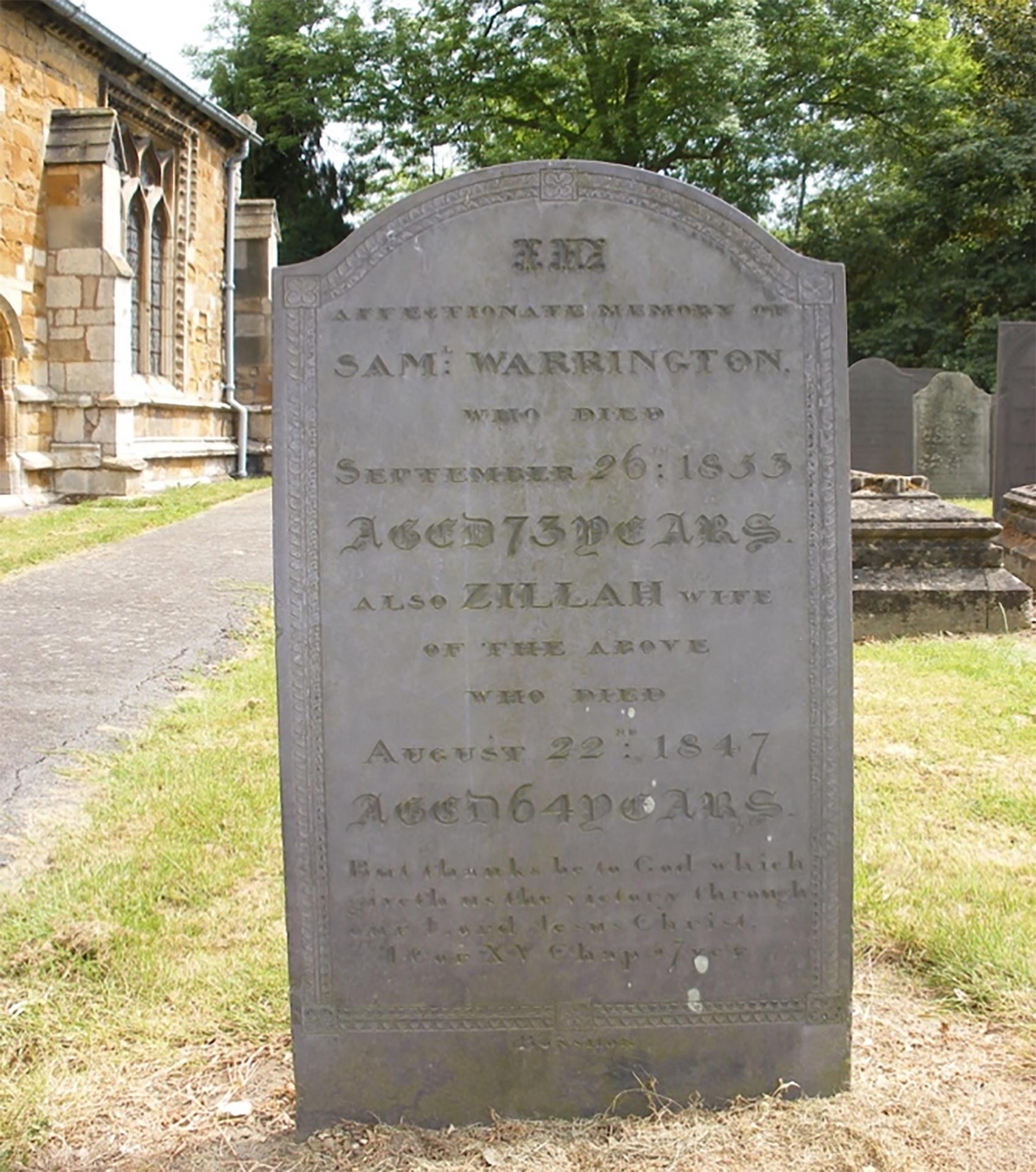
Born in December 1779 in Tilton on the Hill, he married Zillah (Smith) at Ashby Folville in 1802. The couple had ten children, with William, their second, being born in Barsby in 1807. In the 1841 Census, aged 60, his employment was recorded as a Warp Hand, but in the 1851 Census, he was a farmer of 39 acres, which suggests an upturn in his fortunes. Over the years, having researched their history, I have visited the grave and paid my respects to them, and in doing so, found more Warrington’s buried in the graveyard, perhaps a reflection on the number of my family who I have discovered lived locally.
Whilst the census does record numbers for the houses, I don’t think they bear a relationship to today’s ones, but what I did discover, however was that the house in the picture above on the left in both pictures had once been the village pub, therefore the home of Samuel son my Gt Gt Grandfather, William Warrington aged 45, the Licensed Victualler, who lived there with his family. Sadly, William was a widower by then, having lost his wife Sarah (Gilbert) in 1846, leaving him with a family of three sons and two daughters: Samuel, aged 21, and William, 16, both of whom the census recorded worked, at home, as warp hands, weaving cotton on a wooden frame loom, then James 13, with the girls Zillah 10, and Ada 8. I also know from my research that William sadly died himself in 1858, so looking at the children’s ages, one wonders how difficult it must have been for them.
My Gt Grandfather Joshua Warrington, William’s son, and his wife Ann (Holland) lived a few doors away with their three young sons: Tom, 5, Edward, 3, and William. They went on to have a large family of eight children, including my paternal Grandfather William Edward Warrington, who was born in Barsby in 1879. One of my greatest discoveries researching family history involves his family, particularly their daughter Elizabeth Warrington, my first cousin 4x removed, who in June 1862 married none other than a Henry Pick, who I later traced when looking into my Wife Carolyn’s Pick family history to be her Gt Gt Grandfather, which to be honest was a shock at first to know that our families relationship was connected in history with Elizabeth being her Gt Gt Grandmother, they went on to have a large family of eight children including my paternal Grandfather William Edward Warrington who was born in Barsby in 1879.
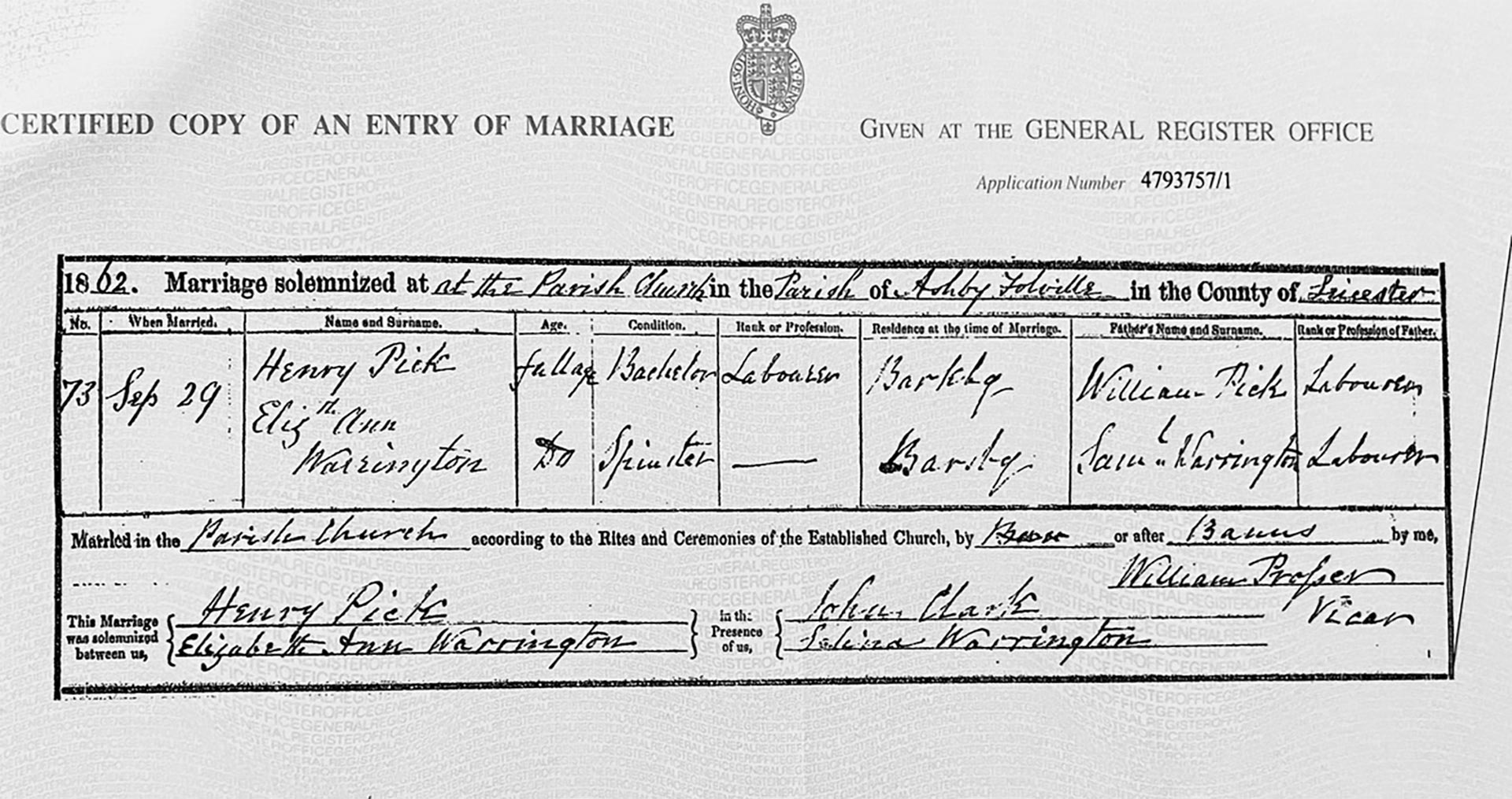
Now, I don’t know the odds about what happened what I’m about to tell you next having found this out, but several years later, another connection was made when visiting Carolyn’s mother’s home just after Christmas, I helped take down the seasonal decorations and store them in the loft, on doing so I found a large box containing several books, began looking through them found at the bottom a bible, which I took out turning the cover page to find a message written in 1873 which I instantly realised was by my distant Aunt Elizabeth Warrington to her son Samuel William Pick (Carolyn’s Gt Grandfather), and that the bible was a a tenth Birthday present for him.
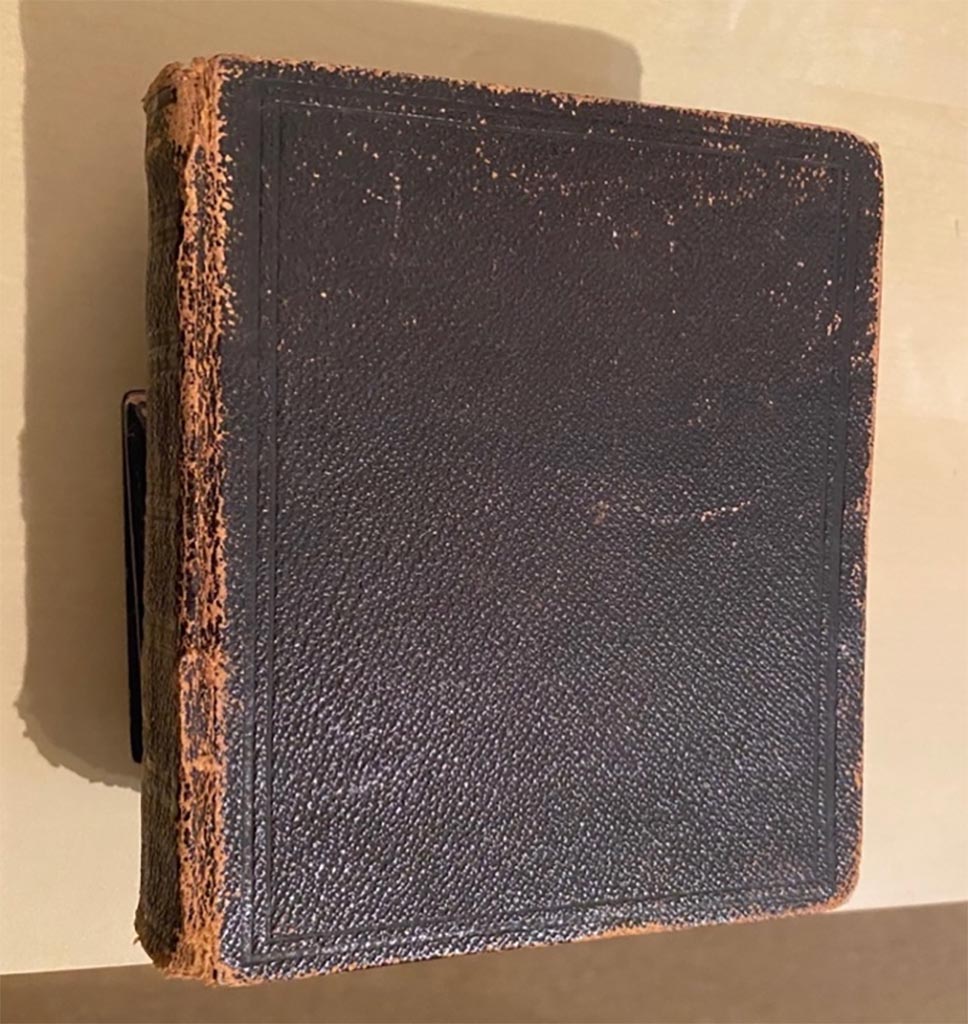
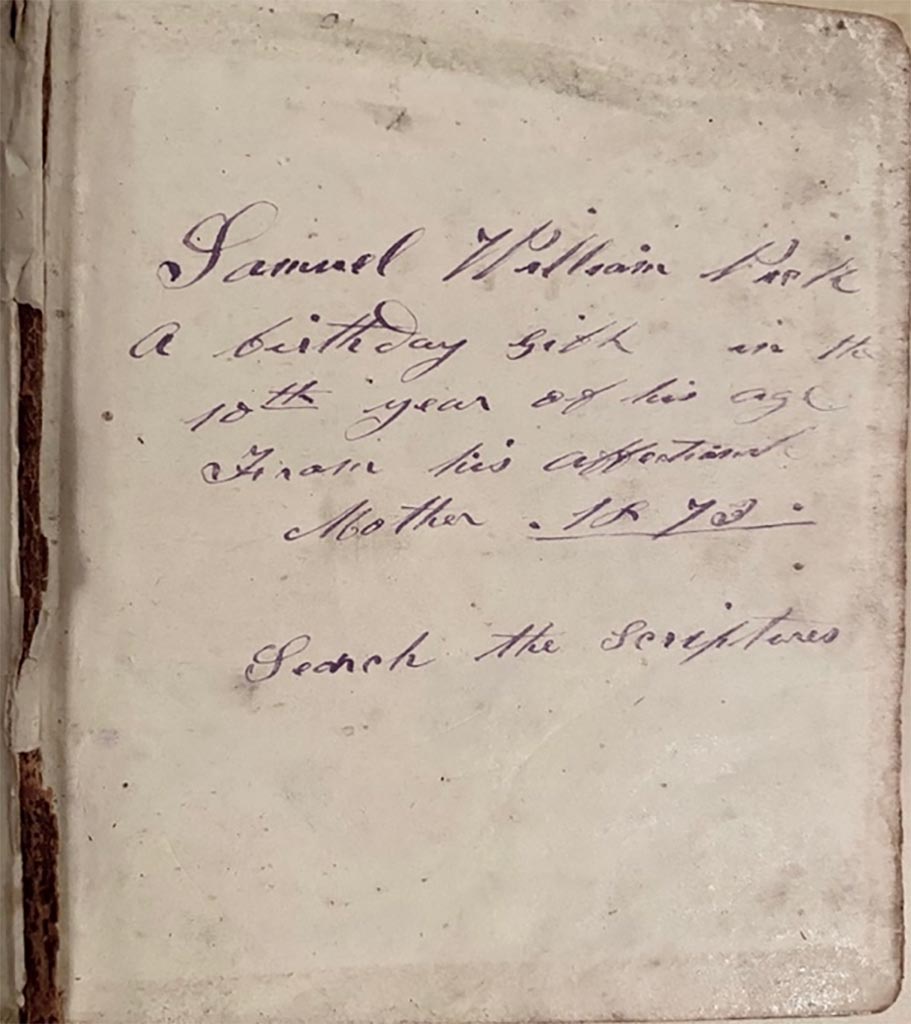
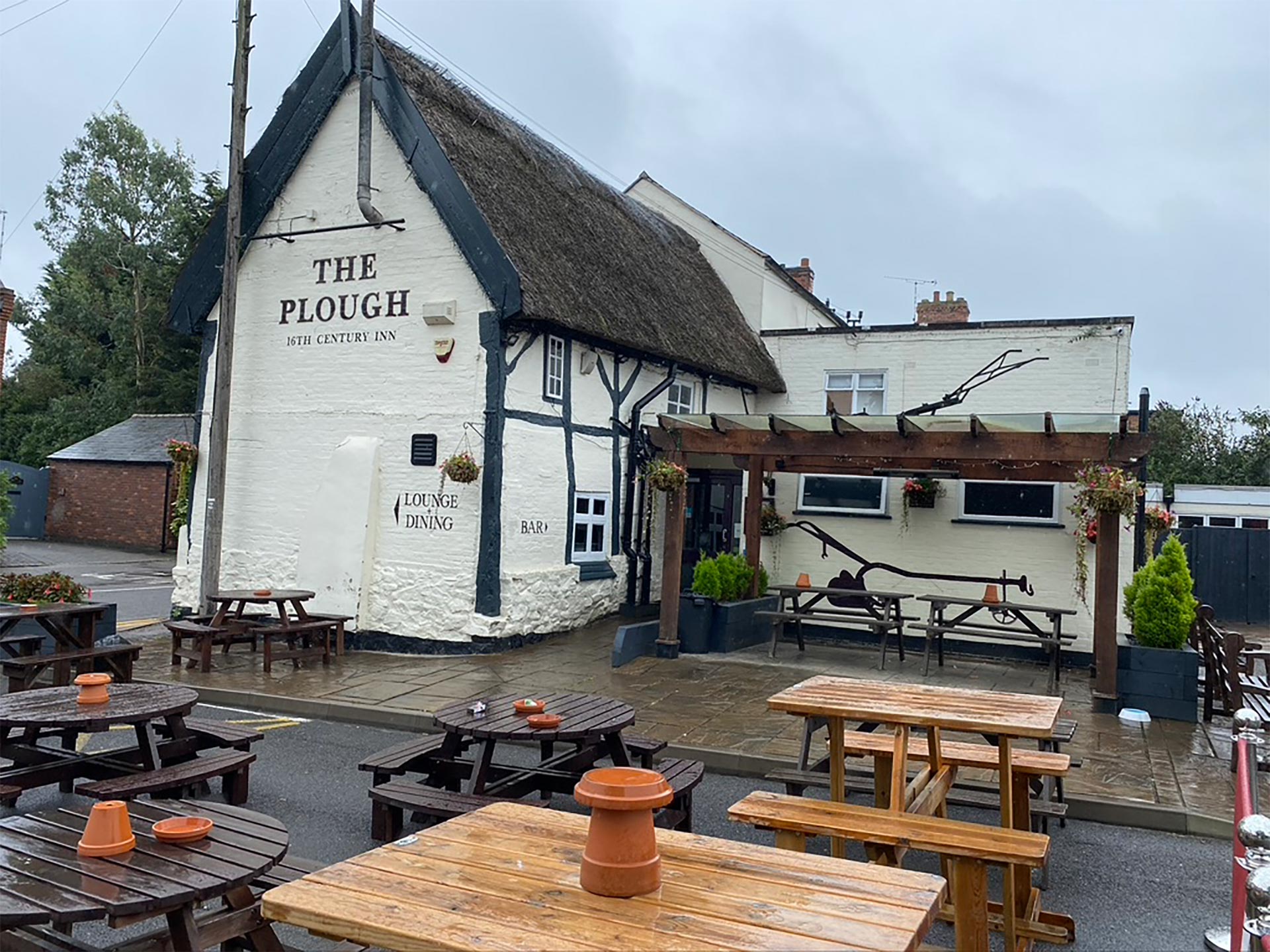
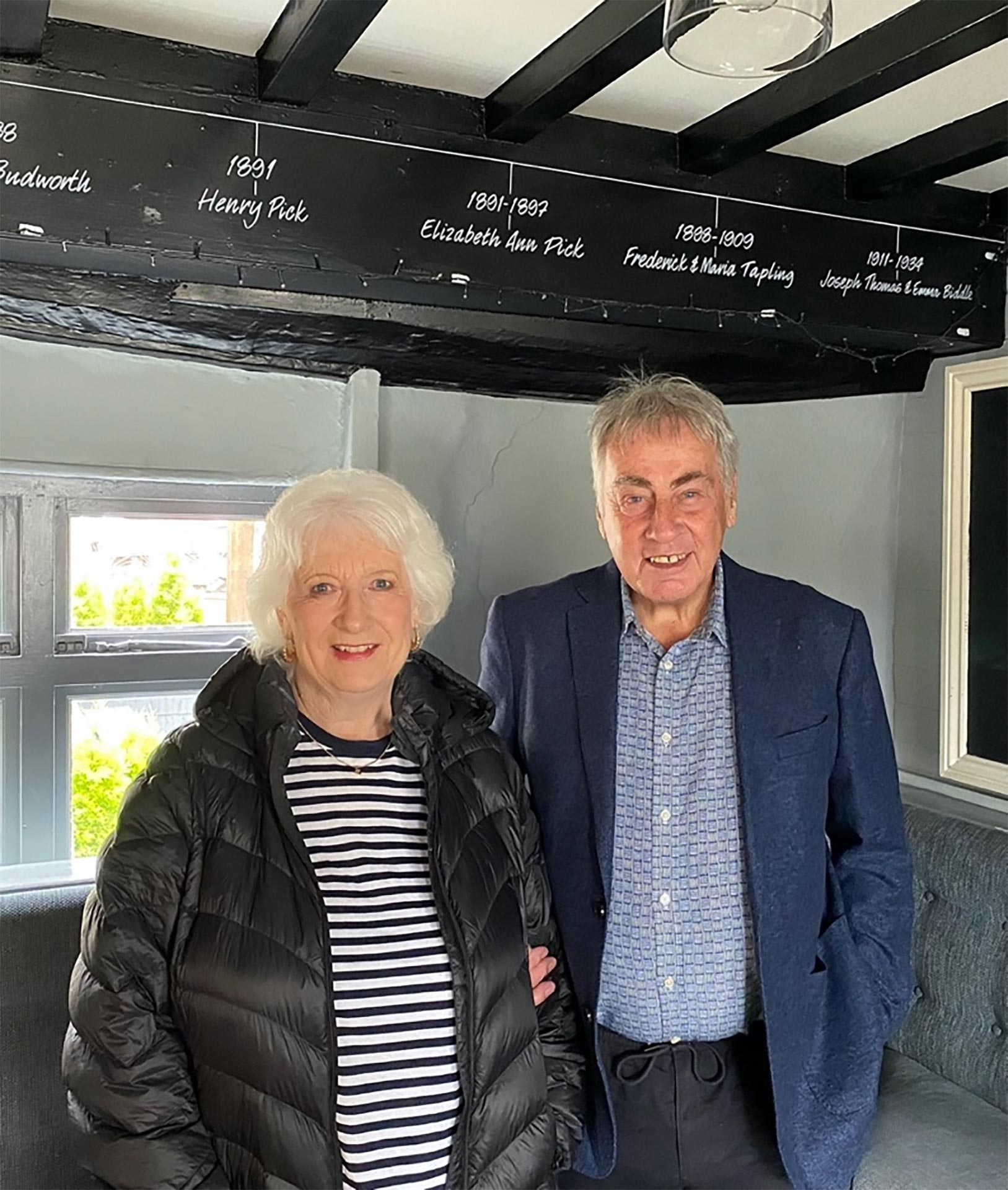
It was a shock, the fact to start with that I’d shown an interest in researching my family history, then discovering the family connection, so I was able to identify who had written in the bible straight away, and there I was a Warrington relation actually finding it, but the story doesn’t end there after I recently discovered that Henry and Elizabeth later became publicans of the Plough Inn in Littlethorpe, Leicestershire, where we visited recently to find their tenancy commorated on a beam in the bar area, along with with their daughter Maria, who ran the Pub after them, with her husband Frederick.
On to my Gt Uncles, and another John Warrington, my 4th Gt Uncle, who was born in 1794 at Tilton on the Hill, the son of my 5th Gt Grandfather John, he married Anne Reeve at Gadsby Church in December 1829, and had two children, one of which William Reeve Warrington is recorded as being at home in the census, at the time their occupation is recorded as plumbers and glaziers, in his later life William became a Wesleyan local preacher at the local chapel and was highly regarded in the community.
My third Gt Uncle was John Warrington, who was born in 1803 and married Hannah Brown at Ashby Folville Church in 1828. My research suggests they had a total of 11 children, which is rather mind-blowing. Certainly, the 1851 Census records nine of them aged from nineteen to one year old, with two more I discovered born afterwards. John, along with his two oldest boys are recorded working as loom hands, one wonders how they all managed to be accommodated in their home considering the size of houses in the villages at that time.
Over the next 50 odd years, Warrington’s still lived in Barsby, but in ever declining numbers with the census recording the following: 1861 – 30, 1871 – 26, 1881 – 16, 1891 – 5, and 1901 – 3, which perhaps reflects the industrial revolution with movement particularly to Leicester, where my Gt Grandfather Edward lived with his wife Harriett, and their eight children including my Grandfather William Edward in 1891.
Stewart Warrington
Thurcaston, Leicester
January 2024
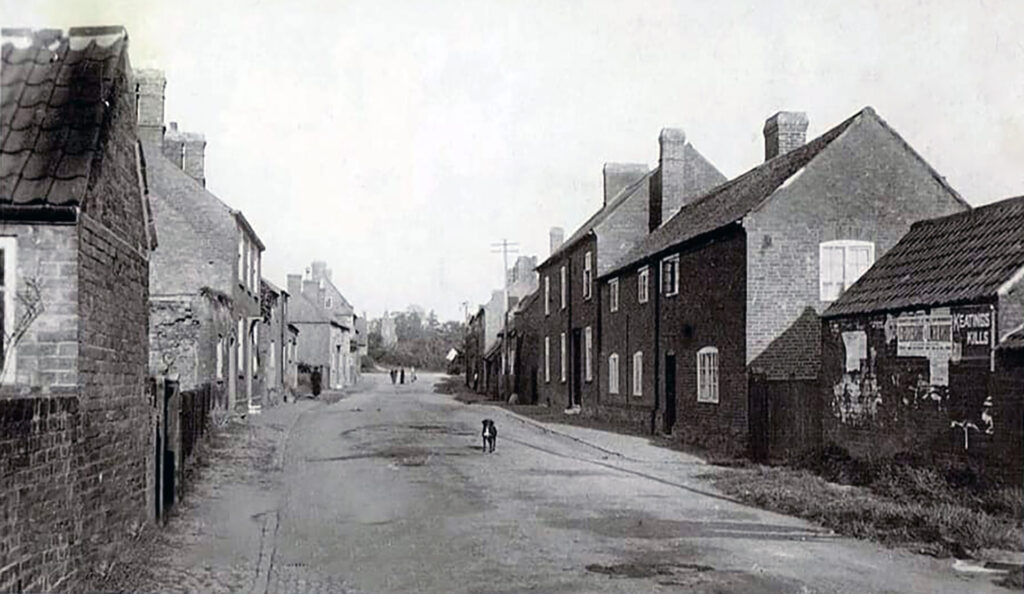
On the village
Rev Philip Hunt, who wrote a series of articles titled ‘Our Village Heritage’ in the Melton Times, and mentioned Barsby in his feature on Ashby Folville of 20 August 1982:
“Half a mile to the south west [from Ashby Folville] and passing a picturesque Victorian building, formerly a schoolhouse, is the village of Barsby. Here we have one of the finest collections of largely unspoiled old property in the country. Walking from the King William IV Inn along the whole length of the main street [Main Street and Baggrave End] to Springwell House, we can see many examples of ancient work, including several cruck buildings. There is no church here, but Church Lane leads to the Victorian pile, in the form of church tower, known as Godson’s Folly. [John] Nichols, writing of Barsby in 1795 [History and Antiquities of the Country of Leicester (1800)], tells us that the village originally had a small church served from Ashby but which had been desecrated many years. The present imitation church building could be on the original site or why Church Lane? There is a small Methodist Chapel on the crossroads corner, dated 1826.”
In the Leicester Mercury of 12 September 2003, Olwen Hughes wrote:
“It is worth exploring [Barsby], especially at this time of the year, for many of the houses are embellished with bright hanging baskets and their garden flowers and rose trees are looking glorious. In that stretch of Main Road that leads to the now closed King William hostelry are several dated cottages. One of the most interesting is dated 1691. It is of pleasing decorative red brick with a diaper pattern of vitrified bricks. Another almost opposite, is a substantial red brick house bearing a wall plaque high above the front door, giving its building date as 1761. Some of the neighbouring houses have rather pleasing names. I noticed one called Holly Blue Cottage, another named Burgundy House, and on the right of this sketch is a thatched building called Christmas Cottage. Nowadays, it has what looks like a porch flanking Main Road. This was used as a coals house until re-thatching took place in 1969. Next to it is a picturesque cottage with a Welsh name, Y Bwythyn meaning The Cottage. Here Blodwen Griffiths, headmistress of the now closed village school, chose to live in her retirement.”
More pictures
Would you like to add pictures? Send a message.
Domesday Book
Barsby was a settlement in Domesday Book, in the hundred of Goscote and the county of Leicestershire.
It had a recorded population of 25.9 households in 1086, putting it in the largest 40% of settlements recorded in Domesday, and is listed under 2 owners in Domesday Book.
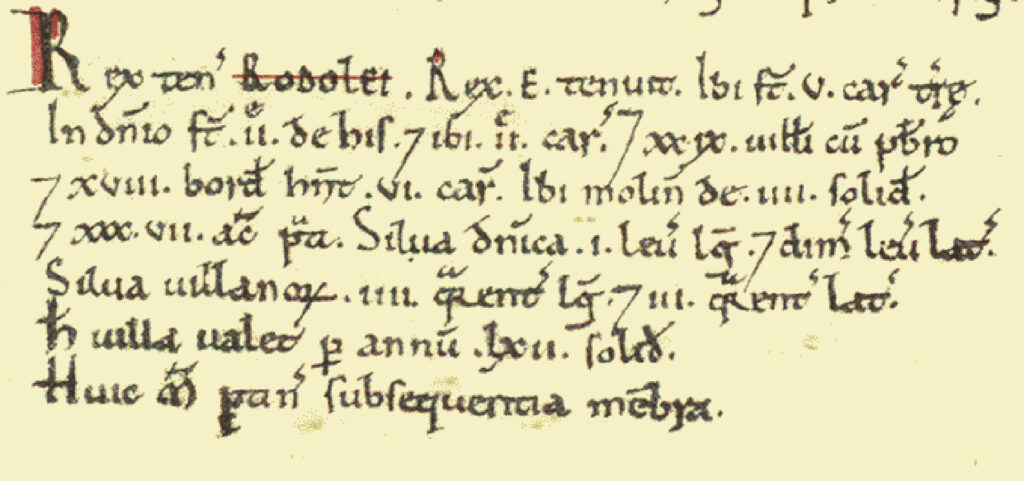
- Land of King William
- Households: 186 villagers. 204 freemen. 112 smallholders. 1 priest.
- Ploughland: 2 lord’s plough teams. 88 men’s plough teams.
- Other resources: Meadow 176 acres & 3 * 1.5 furlongs mixed measures. Woodland 3 * 3 furlongs & 5 acres; 1 * 0.5 league & 4 * 3 furlongs mixed measures. 6 mills, value 17 shillings.
Valuation
- Annual value to lord: 34 pounds 10 shillings in 1086.
Owners
- Tenant-in-chief in 1086: King William.
- Lord in 1086: King William.
- Lord in 1066: King Edward.

2. Land of Humphrey the chamberlain
- Households: 3 villagers.
- Ploughland: 2.5 ploughlands. 1 lord’s plough teams. 0.5 men’s plough teams.
- Other resources: Meadow 6 acres.
Valuation
- Annual value to lord: 1 pound in 1086; 8 shillings when acquired by the 1086 owner.
Owners
- Tenant-in-chief in 1086: Humphrey the chamberlain.
- Lord in 1086: Humphrey the chamberlain.
- Lord in 1066: Alwin.barsby
4 responses to “Barsby”
We lived at Baggrave End from 1962/3 the bad winter. My father used to collect the papers for the hall from the shop in Baggrave End. I remember going with him some times.
Whenever I am up that way, I always pass through to see how it’s changed.
We cannot go back further than my grandad so we can not find out how we got the Barsby name.
Who can help Richard in his search?
I too lived in Baggrave End during the winter of 62/3! We moved to Barsby in ‘61 and left in ‘73.
I remember a not pinned at the side of Mrs Griffith desk in Barsby School say ´villages ending in by were founded by the Dane’s’. I often wondered how they got there!!!
Thanks Dee, for your comment.