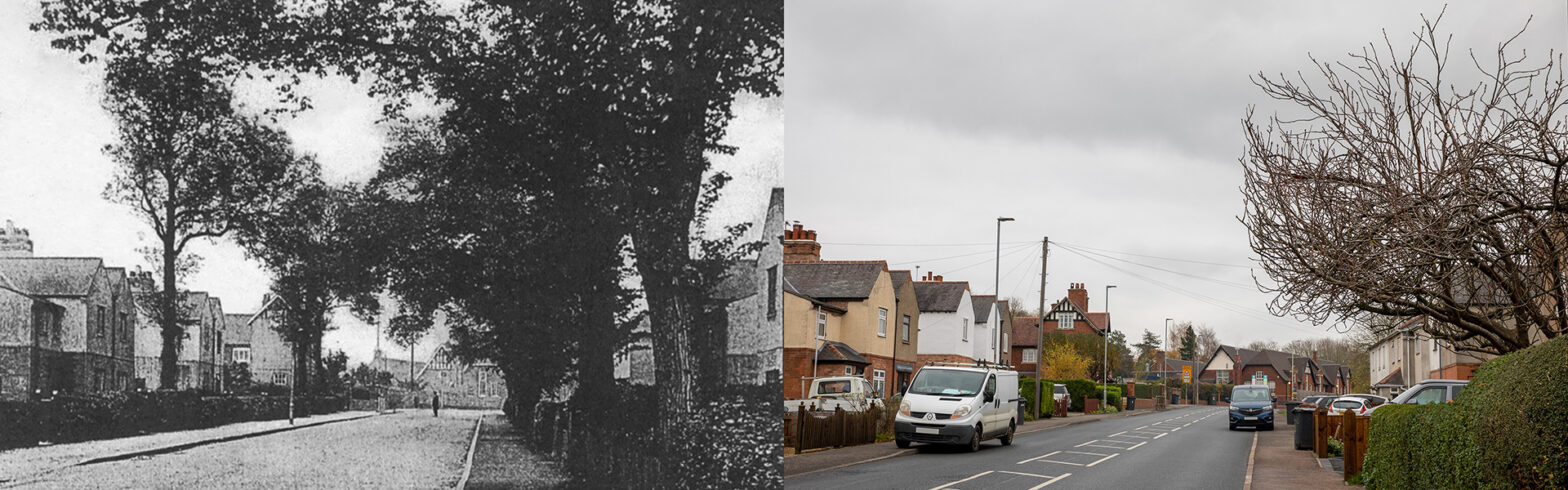
Melton Road – Before 1943
Until the end of 1875, Asfordby Hill was purely a hill in a rural Leicestershire landscape with no buildings or homes. In December of that year, Richard Dalgliesh, a young civil engineer, established Holwell Iron Works. The first furnace went into production six years later, accompanied by a tragedy, an explosion resulting in two deaths with Mr Dalgliesh and a company shareholder being partly blinded. Despite this ominous beginning, the furnace soon produced 350 tons of iron weekly.
The company developed a new village with Richard Dalgliesh junior, as general manager particularly interested in welfare work, building a social institute for workers, now known as The Stute, and a school. Housing started with a terrace of a dozen smaller homes west of Welby Road, with more terraced homes in the same area. More construction followed with a series of semi-detached houses along Melton Road and an estate with semi-detached dwellings south of the main road, the A6006: Crompton, Glebe and Stanton Roads.
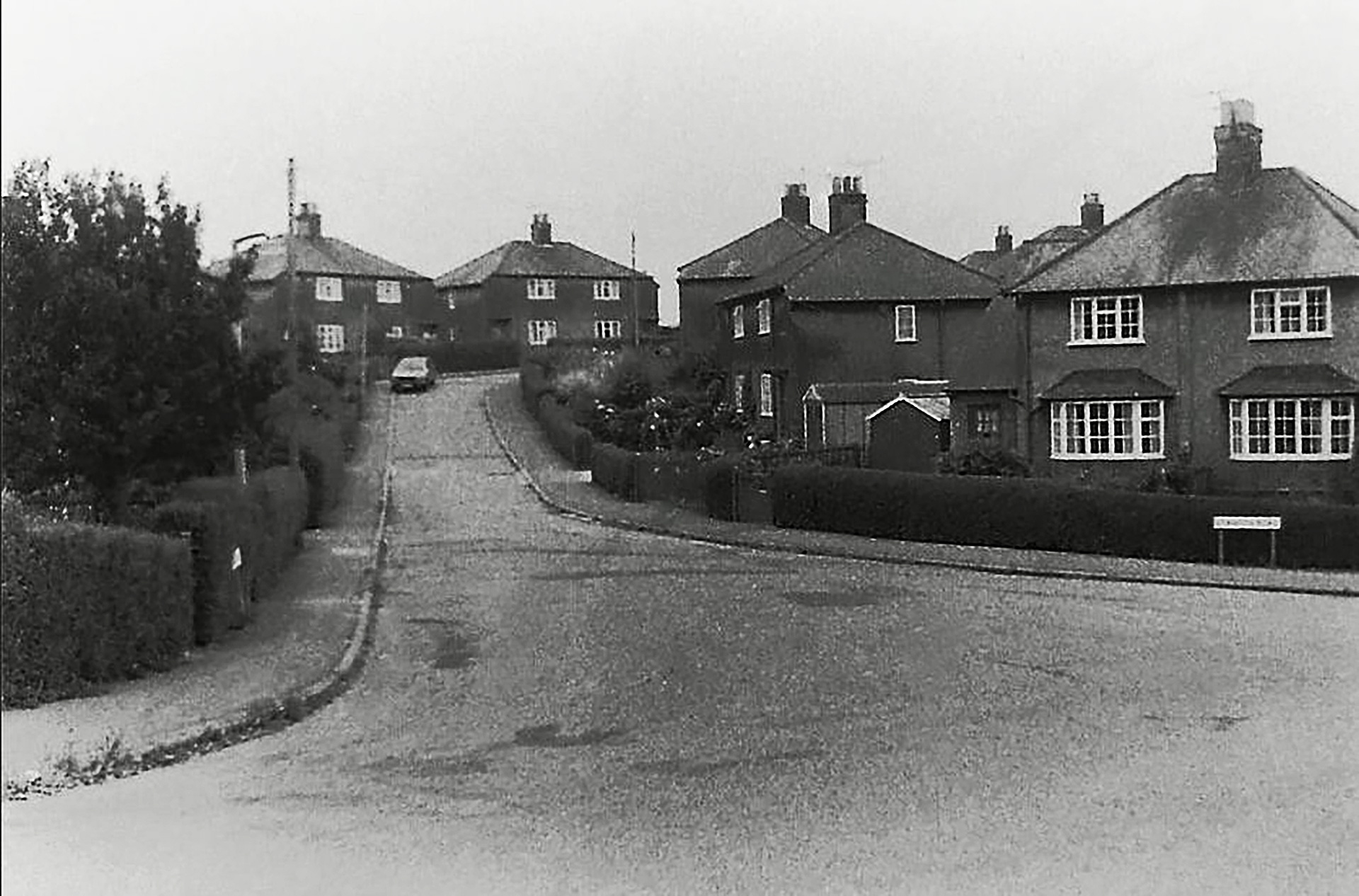
The semi-detached dwellings along Melton Road have hardly changed. Motor traffic seemed slow when taking the new photograph, but it was just one of those rare moments with no lorry, van, or car on the road. And what about the trees? “I remember the trees along the main road in the 1960s”, said Trevor Hudson. “There were also trees lining the road going down to Holwell Works. Their gardening department kept the green spaces tidy. Standing on top of an old Barton’s bus, workmen lopped and cut the tree branches.” “I bought my house on Asfordby Hill in 2000,” told Lorraine Seddon, “and all we had was a tree stump in the front garden.” Christina Moulton added: “I have been up here 25 years, and the trees were all gone.” “I bought my house on Asfordby Hill in 1988, on the right of this picture,” continued Sue Smith, “and all that was left of the tree in my garden was a big tree stump. It is such a shame they were cut down.” Margaret Clay concluded: “The character of the road was quite different when it was lined with trees to the summit of the hill. It was a beautiful avenue of mature trees. I think we lost many of them to Dutch Elm Disease in the late 1960s or the beginning of the 1970s.” So they had to be cut down for safety reasons.
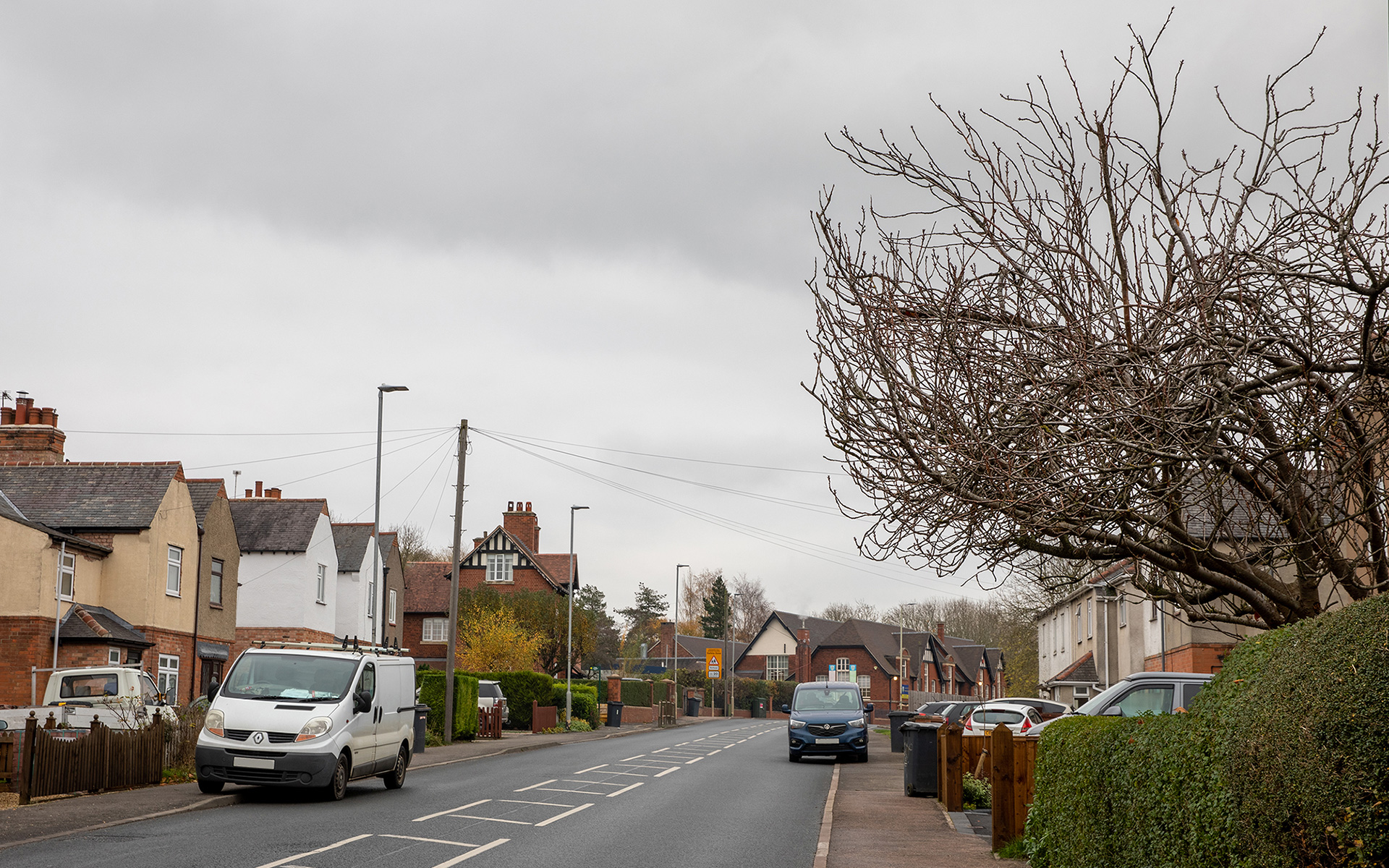
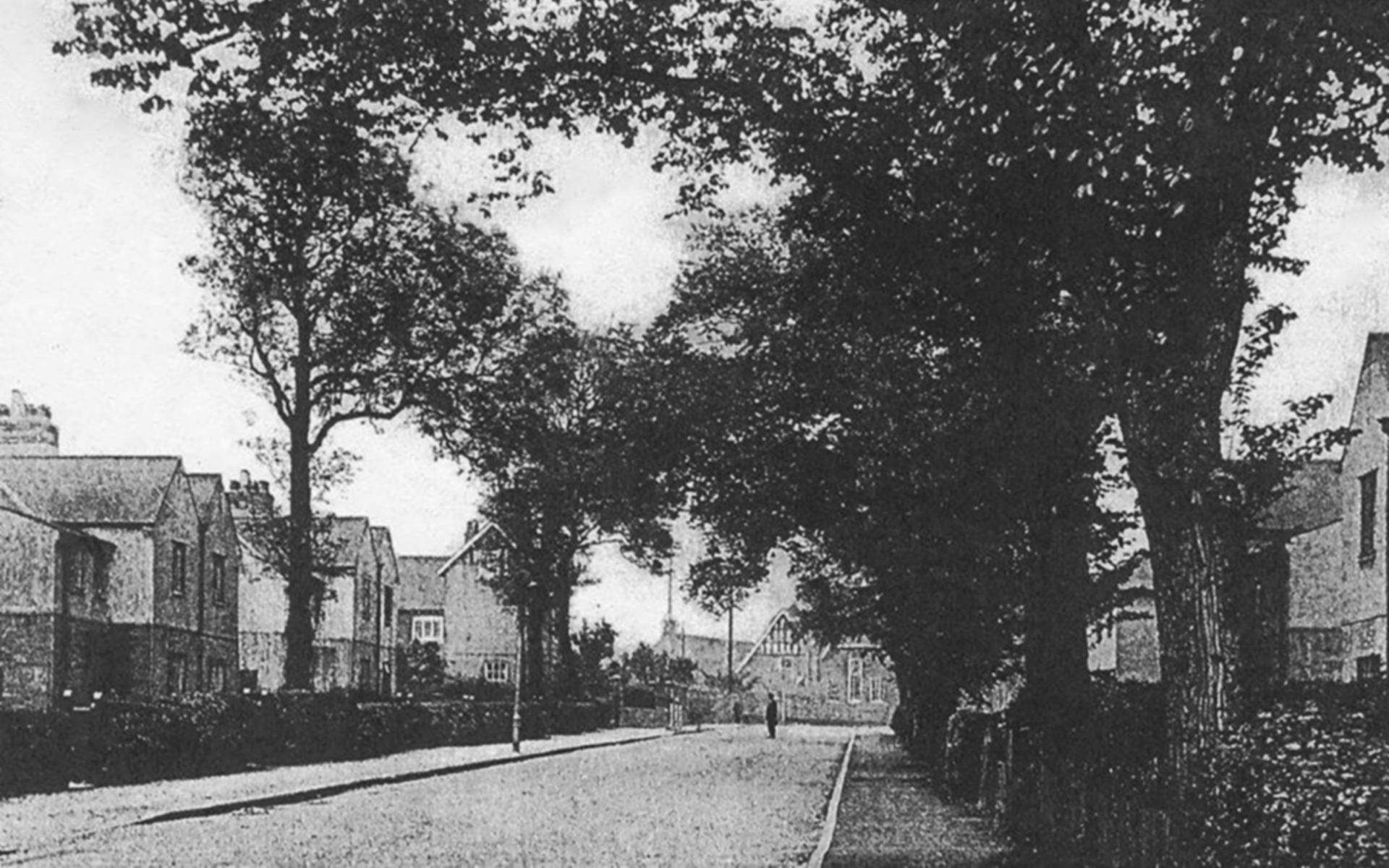
In both pictures, the building at the back in the centre is the school built in 1909, in conjunction with the Leicestershire County Council, to accommodate more than 200 children and is now named Asfordby Hill Primary School. As everything in Asfordby Hill also the building of the school is linked with the development of Holwell Works.
Primary School
In the Melton Times edition of 12 July 1990, Gilbert King wrote: “The school opened with 110 children in the last week of November 1909, although this was short-lived for it closed on December 6 due to an epidemic. The school re-opened after a few weeks, closing again because of the flooding of Asfordby Valley, where some of the children lived. In the 1930s, there were over 250 pupils on the roll and in the 1940s, just over 200.”
In its first 80 years, up to 1990, Asfordby Hill school has had only four headmasters. The first headmaster, Frank Corah, stayed there until he retired in 1944, a total of 35 years. He was part of the local village scene, being Clerk to the Asfordby Parish Council and an overseer. Bernard Groom took over, followed by Ray de Haro and David Brown.
in the edition of the Leicestershire Advertiser of 20 March 1981, Ray de Haro, the third schoolmaster, explained the traditional school building could boast the playing fields, tennis courts and pavilions maintained by the Holwell Sports Association. “The fields used to belong to the British Steel Corporation but were acquired by the local education authority for the school’s use.”
In a 1984 interview, headmaster David Brown said: “Three former headteachers since the start in 1909, shows a lot of consistency. I still feel we are keeping a lot of the steadiness of the past, although we are introducing new ideas when we feel they are appropriate to the children and the best for the children.”
Thirty years ago, in 1990, Gilbert King also wrote in the Melton Times: “Few schools have the local area war memorial in them, but Asfordby Hill has because it was the only public building in which it could be placed. It has been re-sited recently and carefully renovated by the Holwell Works craftsmen. Some of the pupils attending the school are related to those recorded on the plaques.”
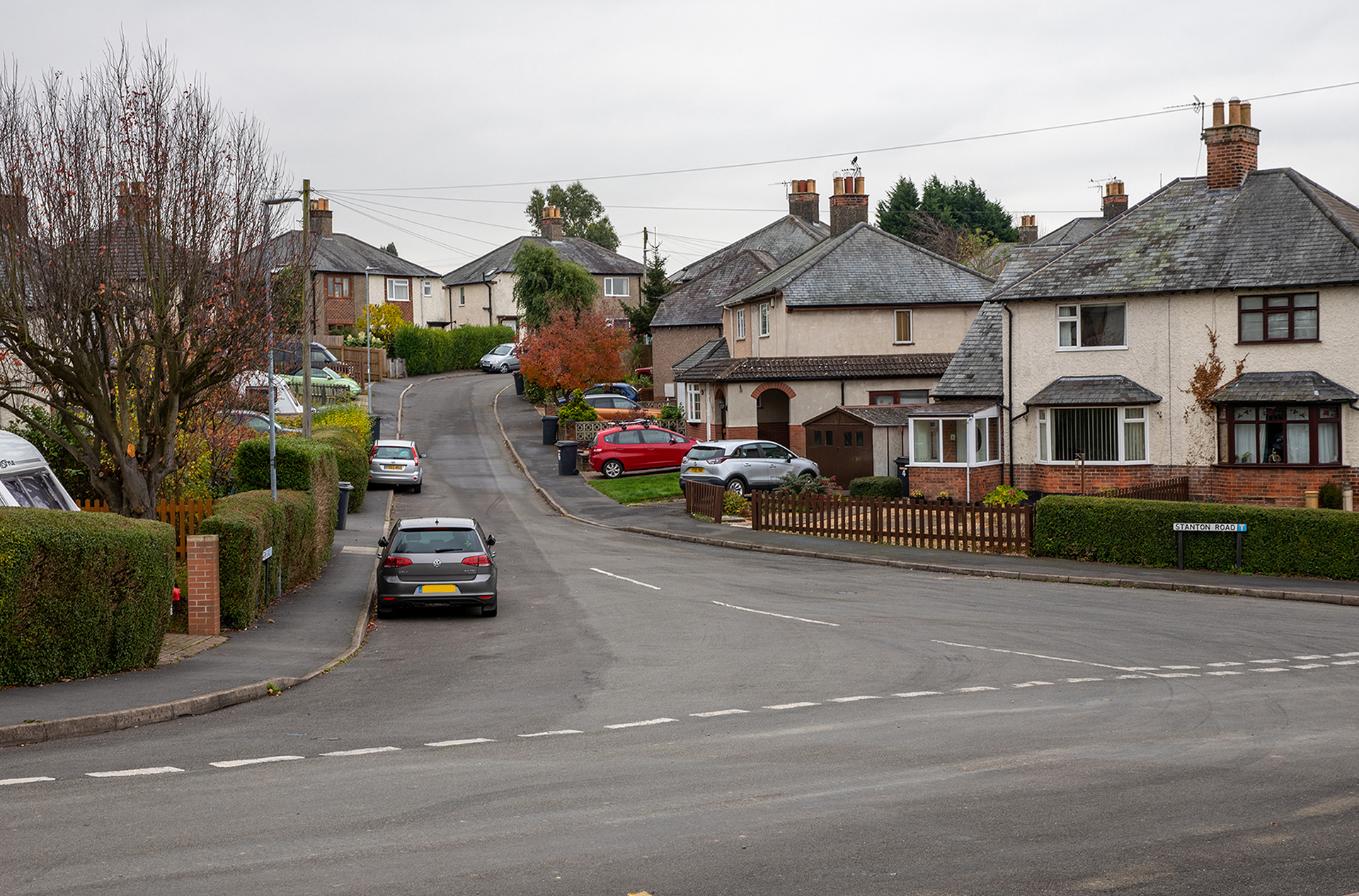
Stanton Road
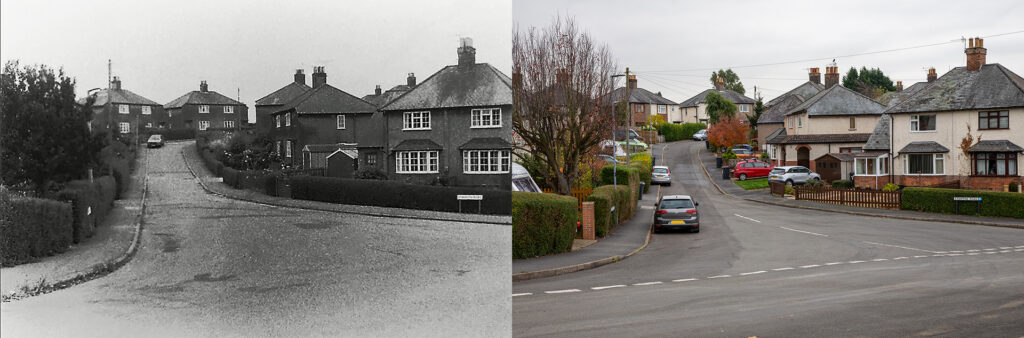
The blast furnaces of the Holwell Iron Works have long been disappeared. Asfordby Hill in 2021 is a far cry from the original 12 workmens’ cottages near Welby Road north of the main road. And it was also a long time ago when only people who worked for the Holwell Iron Works could live in the estate houses, and the electricity supply was free.
In the 1930s, the semi-detached dwellings were built as a new estate (Glebe, Crompton and Stanton Roads), part as manager’s and foreman’s houses. Christina Moulton said: “We live in the old house of Elsie Drazys. I am not sure her surname is correct. The electricity for the old football pavilion of the Mowbray Rangers field ran from our house.”
Trevor Hudson was collecting the paper money in Asfordby Hill and recollected many people who lived at Stanton Road: “In the house on the right corner lived Mr and Mrs Roy Fielding. Roy played bowls for Holwell Works, and he was a member of the Melton Mowbray Male Voice Choir. Ted and May Atkinson occupied the next house going up Stanton Road. Ted was a foreman in the moulding shop, and May worked at Pedigree Pet Foods in the canteen. Mr and Mrs Shelton lived next door. Edith was the treasurer at the Chapel on the Hill and also secretary of the Ladies Sisterhood. Mr Shelton was very much involved in the chapel. Their only son was Roy. On the same side of Stanton Road after the jetty way lived Mr Arthur Robinson, who had a job at the Holwell Institute. When going there, he checked your membership card and collected the coats.”
Holwell Institute was built in 1926 as a social club and meeting place for workers. After Holwell Iron Works closed, also non-workers could join and enjoy the facilities. Throughout the years, the club was extended and modernised. In the mid-1980s, it provided a large lounge with a stage and bar, a separate bar, a snooker room, large hall for dances combining skittle alley. Steward for the last 12 years is Stan Paling, the steward in the 1970s and 1980s, and looked after the staff of 11 told in 1984: “We can cater for 600 people on one night.” That year the club had 1,200 members on the books. The Stute is the name for the once Holwell working men’s club.
Trevor Hudson continued about the people living on Stanton Road: “Further, there was Mr Joe Lee who smoked a pipe and was in charge of the fitting shop. At the bottom on the other side of Stanton Road lived Mr and Mrs Allison. I used to hear somebody playing the piano. And let’s not forget Mrs Greaves, Mrs Winfield and many moor people.”
“In the 1960s, my grandma lived on Crompton Road,” told Diane Lightfoot. “She used to walk us up Stanton Road to the cricket pitch for a picnic. We had to walk the perimeter of the pitch before we could have anything to eat.”
On the village an the ironworks

Asfordby Hill is often lumped with the village of Asfordby but is very much a separate community. Asfordby Hill has long been a community dominated by the nearby ironworks of Holwell.
In 1874 ironstone was (re)discovered in the villages of Holwell and Ab Kettleby by Mr Richard Dalgliesh, an engineer employed by the parliamentary survey of the Nottingham and Melton railway line for the Midland Railway Company. Dalgliesh obtained a lease of the ironstone, and in December 1875, he established the Holwell Iron Company. The engineer also recommended the construction of a narrow-gauge railway mineral branch from the quarry working in Holwell village to the mainline in the parish of Asfordby.
Rediscovery of the Leicestershire ironstone in modern times
It was Mr I.A. Knipe who is credited for the rediscovery of Leicestershire ironstone in modern times. He drew a geological map of the Belvoir district where the ore occurred and brought it to the notice of the Duke of Rutland. Before that, in 1855, a trial of marlstone from Croxton Kerrial was made at the Clay Cross Company furnaces. But there was no means of getting the stone away. Mr Richard Dalgliesh, manager of the Holwell Iron Company, and Mr H.A. Allport started working the Leicestershire ironstone and gave the ore a commercial value. Both gentlemen examined the district and sent samples of the Holwell ironstone to London to be analysed. The report was very favourable. Next, a large ore sample was shipped to Staveley to be smelted. The ironstone turned out easy to smelt, and the pig-iron produced was of good quality.
Construction for local smelting facilities at the Holwell Iron Company site, what later became Asfordby Hill, began in 1878. Three years after, the first blast furnace was tapped. Between 1878 and 1881, the Holwell Company sent all their ore to the Staveley Company and other large iron smelting firms in Derbyshire. The furnaces at Asfordby Hill, three in total, were the only furnaces in the Leicestershire ironstone field.
On 24 December 1900, the Holwell Iron Company was registered to reorganise the capital account and extend the works of a company of a similar title.
The works continued to expand, and homes were built for the employees in three areas: west of Welby Road, along Melton Road and south of Melton Road. Ore deposits were placed to the outskirts of the industrial development, away from the homes west of Welby Road. The ironworks quickly developed into the ‘tip’ which could be seen for miles, towering over the countryside, and included a foundry to cast the pig iron produced by the furnaces.
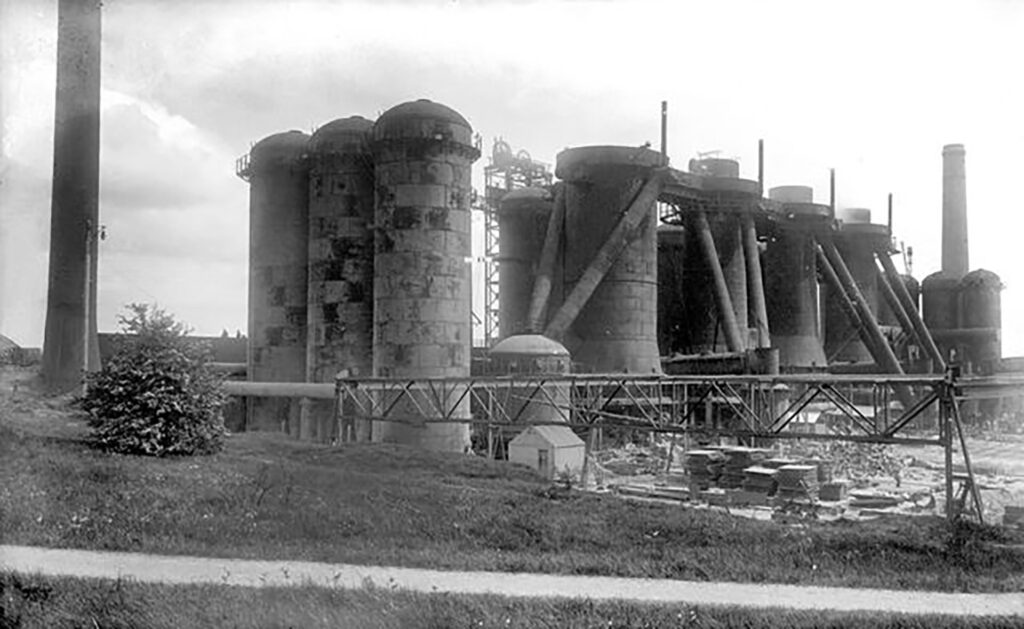
In 1914 the company controlled ironstone mines, had pig iron smelters, and were manufacturers of cast iron gas and water mains and specials, tubbing plates, columns etc. In 1918-1920 Holwell Iron Works became part of Stanton Iron Works Company, which owned seventeen blast furnaces in total.
During the Second World War, Holwell came under attack from German bombers as the works produced ammunition and shells and iron castings for the industry. Although the bombers came close to destroying the works, all bombs missed their target, leaving craters in fields and around. One bomb fell close from the edge of the furnaces landing in a field between the Hill and Asfordby Valley. Splinters caused the deaths of several people, including babies and youngsters.
In 1951 the Iron and Steel Act nationalised the British steel industry and Stanton Iron Works Company. The site at Asfordby Hill became part of the Iron and Steel Corporation of Great Britain. In 1960 this company was taken over by Stewarts and Lloyds Ltd and was merged with the Staveley Iron and Chemical Co Ltd in 1960 to form Stanton and Staveley.
During its operation, Holwell Ironworks has seen many technological changes. The introduction of a continuous casting plant increased the foundry’s production rate significantly. Between 1930 and 1960, the thriving industry employed over 1,200 people.
A steady decline in the blast furnaces’ use at the site started in the 1950s and continued in the 1960s. Increasing international competition made importing pig iron from abroad cheaper than producing it at the works. The quarry at Holwell closed in 1962, and the last blast furnace was taken out of production in 1963. The company continued making pipe fittings and engineering castings. Somewhat surprising, in the 1960s, the development of the Kunkel-Wagner machine, made Holwell one of the most up to date foundries in Europe of the time.
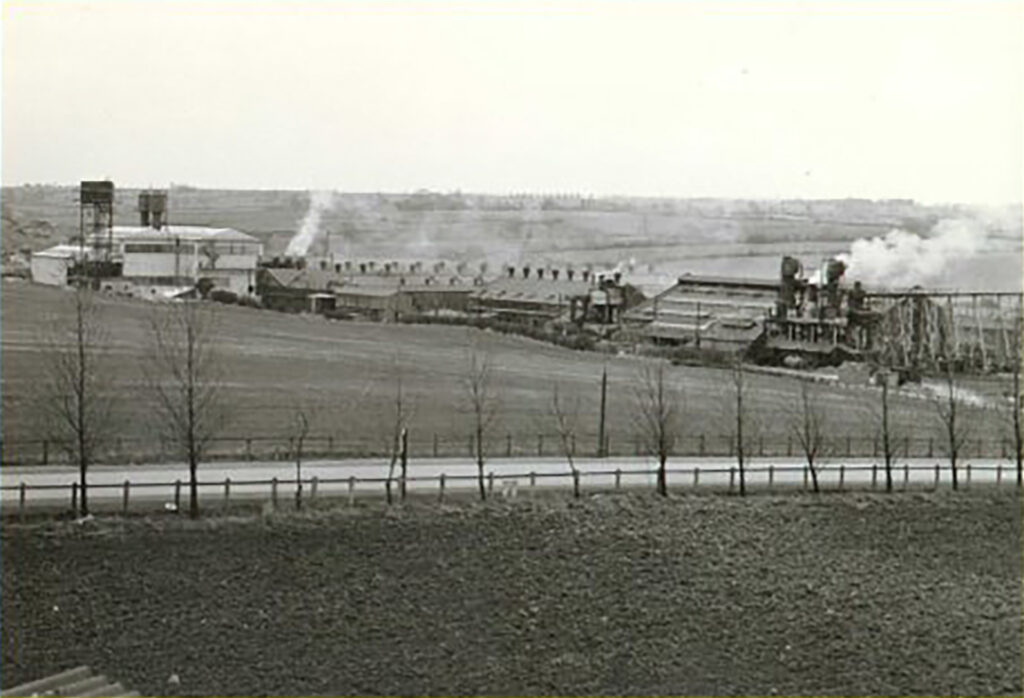
The Iron and Steel Act of 1967 brought the 14 largest steel companies, representing about 90 per cent of the UK’s steelmaking capacity, into public ownership as the British Steel Corporation. Stewarts and Lloyds and their major subsidiary, Stanton and Staveley, was also incorporated.
For a long time, the local industry and the local community shared their ups and downs. “The Holwell Works Institute is the centre of Asfordby Hill community life,” explained Mr Geoff Sinclair, the Stanton Stavely’s accountant, in a Leicestershire Advertiser article dated 20 March 1981. “Everybody gathers for sporting activities, entertainments and general social gatherings.” Mr Sinclair lived in Asfordby Hill since 1968 and was the treasurer of the Works Institute and many other organisations. Mr Creed, who used to work at the forge as an electrician in the old days when the blast furnaces were still in operation, explained in the same article: “The modern-day life of television and radio certainly show the change, but the community spirit is still grand.”
In 1979 the Bennetts took over the shop. When interviewed in 1984, Rose Bennett was the postmistress at the Post Office and general store opposite the school in Welby Road. She and her husband Larry ran the business, helped by daughter Sarah. Rose said then: “It’s a very close-knitted community, and the newsboys deliver about 80 papers a day.”
In 1984, the industrial steel unit, part of British Steel, was compact but still retained the buildings that were once a hive of activity. British Steel also owned the 200 terraced and semi-detached homes. There was a Post Office and general stores, Methodist Chapel, primary school, and a social club in the village. That year David Ward, was the foundry manager at the works, producing iron castings and told then: “Holwell used to be the largest employer in the area. Today British Steel has 550 workers whittled down to keep the works economic and viable. Though many of the Hill homes are still occupied by employees, retired employees and widows, many workers have been chosen to live in Melton or buy their own homes.” British Steel offered all of its 200 homes for tenants to buy as part of its economic drive.
Before the 1980s, the tip was gone, as had the tall chimneys used for smelting the ore. At the start of the 1980s, the prospect of introducing coal mining would bring renewed prosperity to the area, which once played a significant part in employment and industry. Preparatory work began on the mine in 1984, but construction did not start until 1987. Asfordby Colliery, also known as Asfordby Mine, became the last deep coal mine. Two shafts over 1,500 feet (460 m) deep were dug into the coal seams. Engineers expected to coal for many years. The first coal left the mine by train in 1991. Three years and an investment of £300 million later, British Coal was wound up, and RJB Mining purchased the Asfordby site and invested a further £40 million. Although, due to geological problems, the production already ceased in 1997, at its peak, the mine employed 490 personnel.
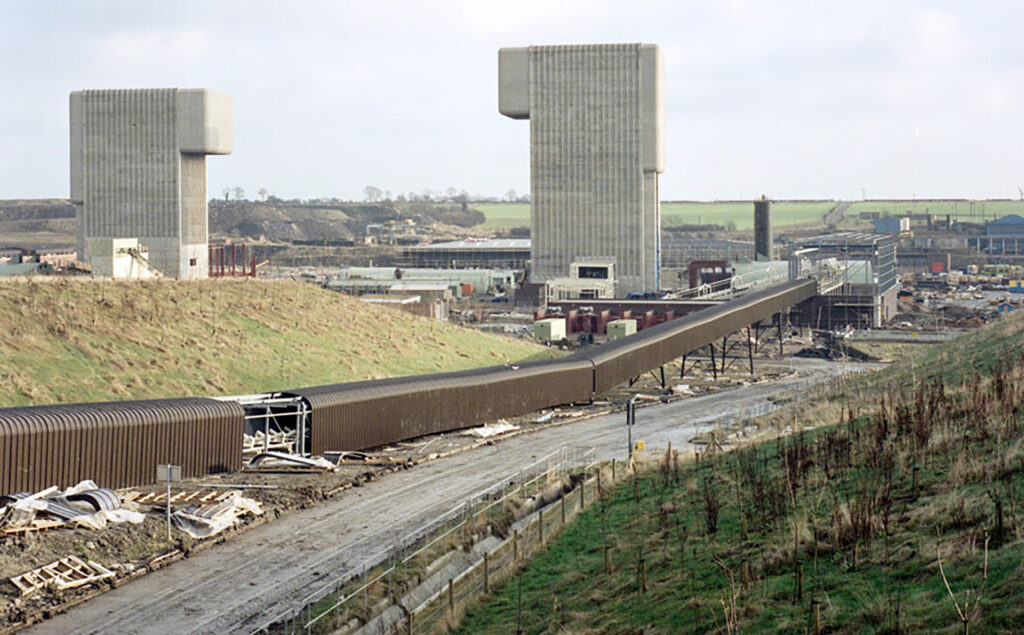
Just before the closure was announced in August 1997, a massive flood and rockfall destroyed £6 million worth of equipment, and the mine was closed, leaving behind a possible 454,000,000 tons of mineable coal. The winding towers were demolished in 1998. For the sake of history, the Asfordby super-pit has been described as “the least successful coal mine ever conceived” and “a £400-million-plus folly.”
During the early 1980s, British Steel was privatised, and the last remains of the Asfordby Hill Iron Foundry are owned by St. Gobain, which make a large proportion of the nation’s drain covers. Parts of the former mine site became industrial units. In 2007 a test centre for trains was installed, using the spur built to connect to the mine. The site is still promoted as an area for growth and business opportunities.
On the village
The Spike was the nickname for Asfordby Hill, probably because it was above Melton Mowbray and Asfordby Valley that was on either side of of it.
More pictures
Would you like to add pictures? Send a message.
Domesday Book
See future story on Asfordby (village).
Links
- Oral History Research Unit – Bournemouth University – Holwell Works
- A visit to the Asfordby ‘Super Pit’ coal mine under construction in 1986
- Asfordby Hill Primary School – Notes from the logbook
3 responses to “Asfordby Hill”
Was there an area on Asfordby Hill called “The Spike” in the early 1900s and where was it?
I asked around on social media and got the following answer:
“I asked this question almost exactly a year ago on this page: [Facebook page Friends who like Memories Of Melton Mowbray – https://www.facebook.com/groups/1653923758229310%5D. After a lot of debate and head-scratching, I came to the conclusion that the Spike was the name for the football ground that still exists off Welby Road in the early 1900s. One of the ends was known as the Furnace End. There was also a pavilion which was replaced by the one that still stands.
the Spike WAS the nickname for Asfordby Hill, Probably because it was above Melton and abbe Asfordby Valley that was on either side of of it. I was born there in 1937.