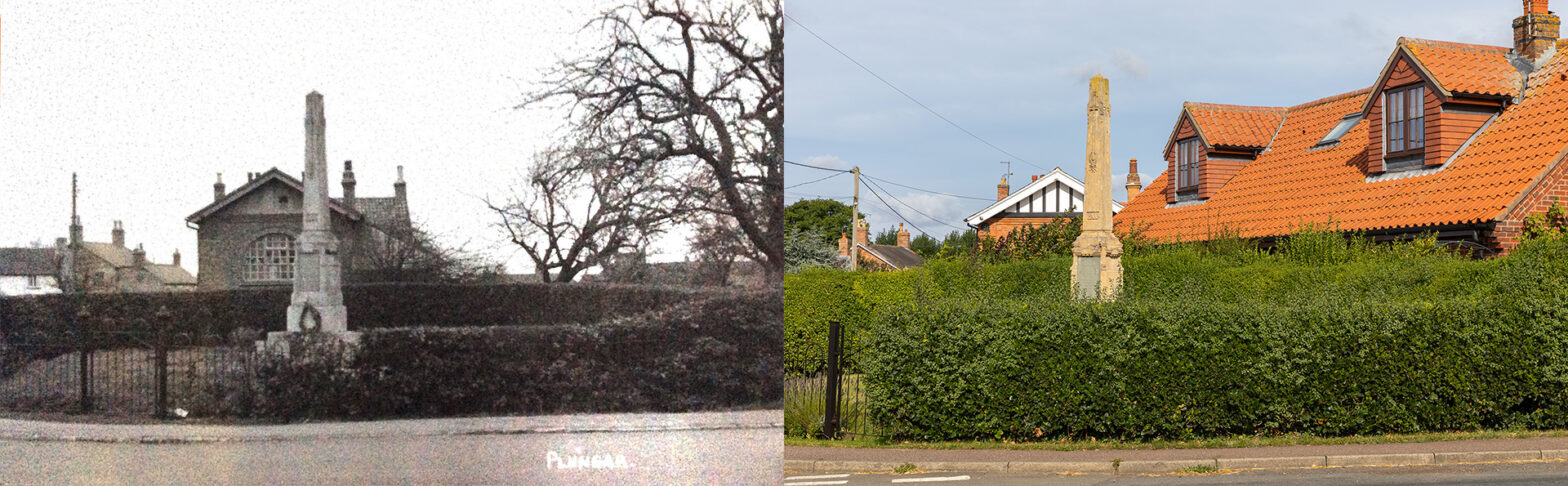
War Memorial – 1920s
When unveiling the Plungar War Memorial on Sunday 7 November 1920, the Reverend Seivewright was delighted and spoke of the splendid unity and concord in the village. “We can be proud because of our united and loving feelings which have prevailed throughout”, he said.
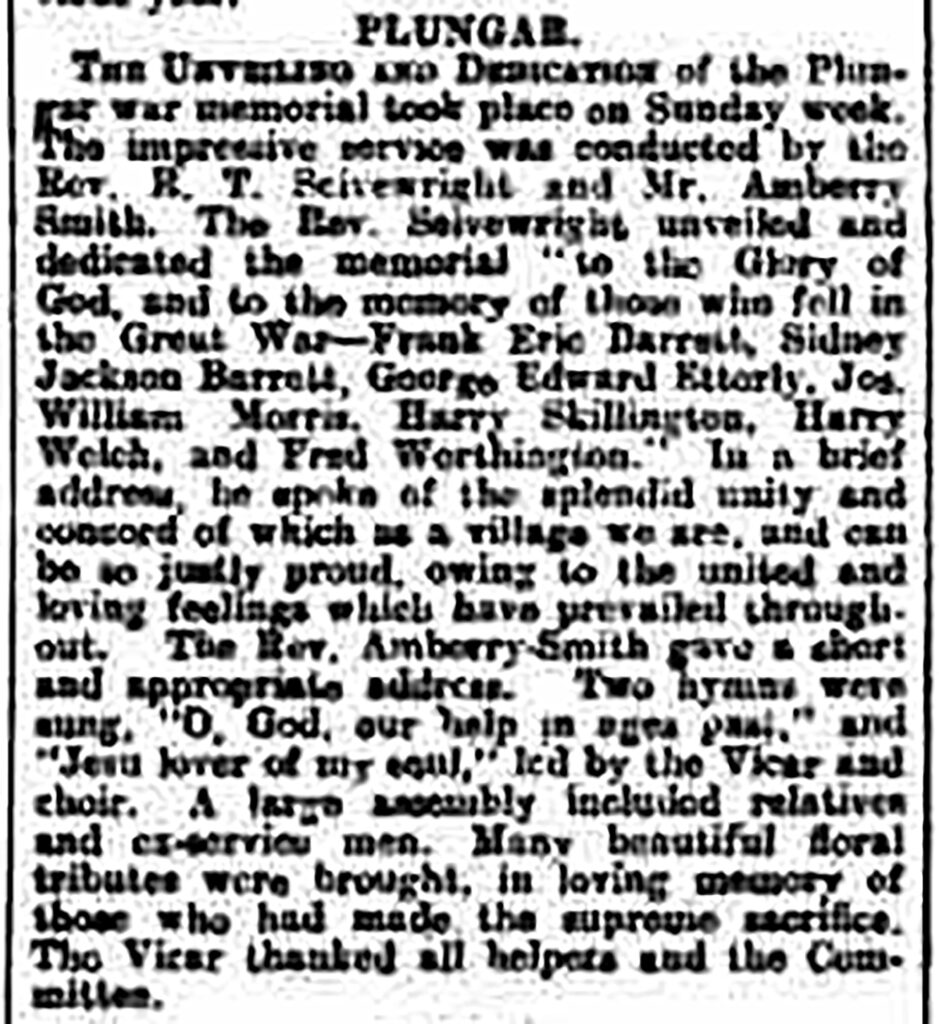
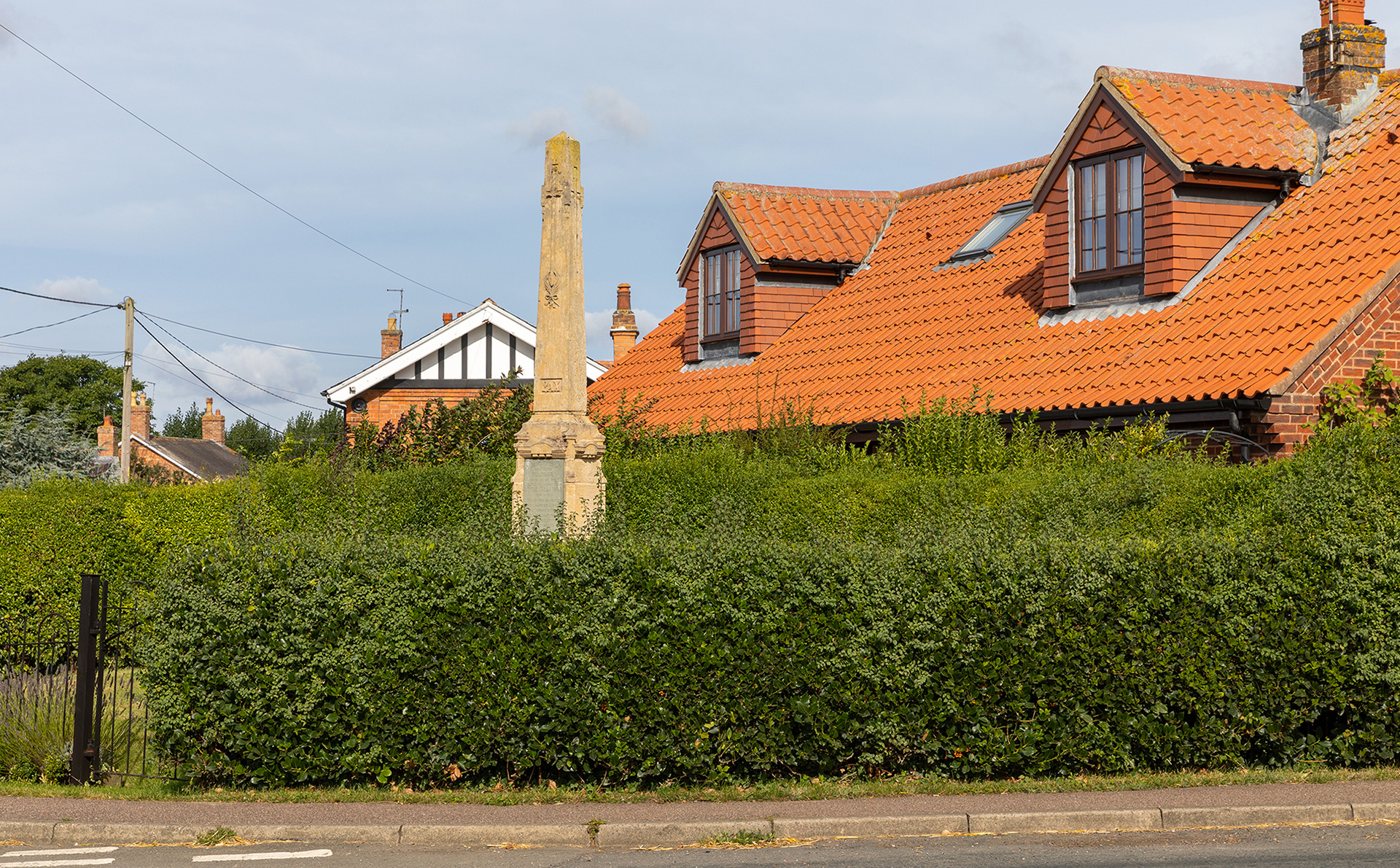
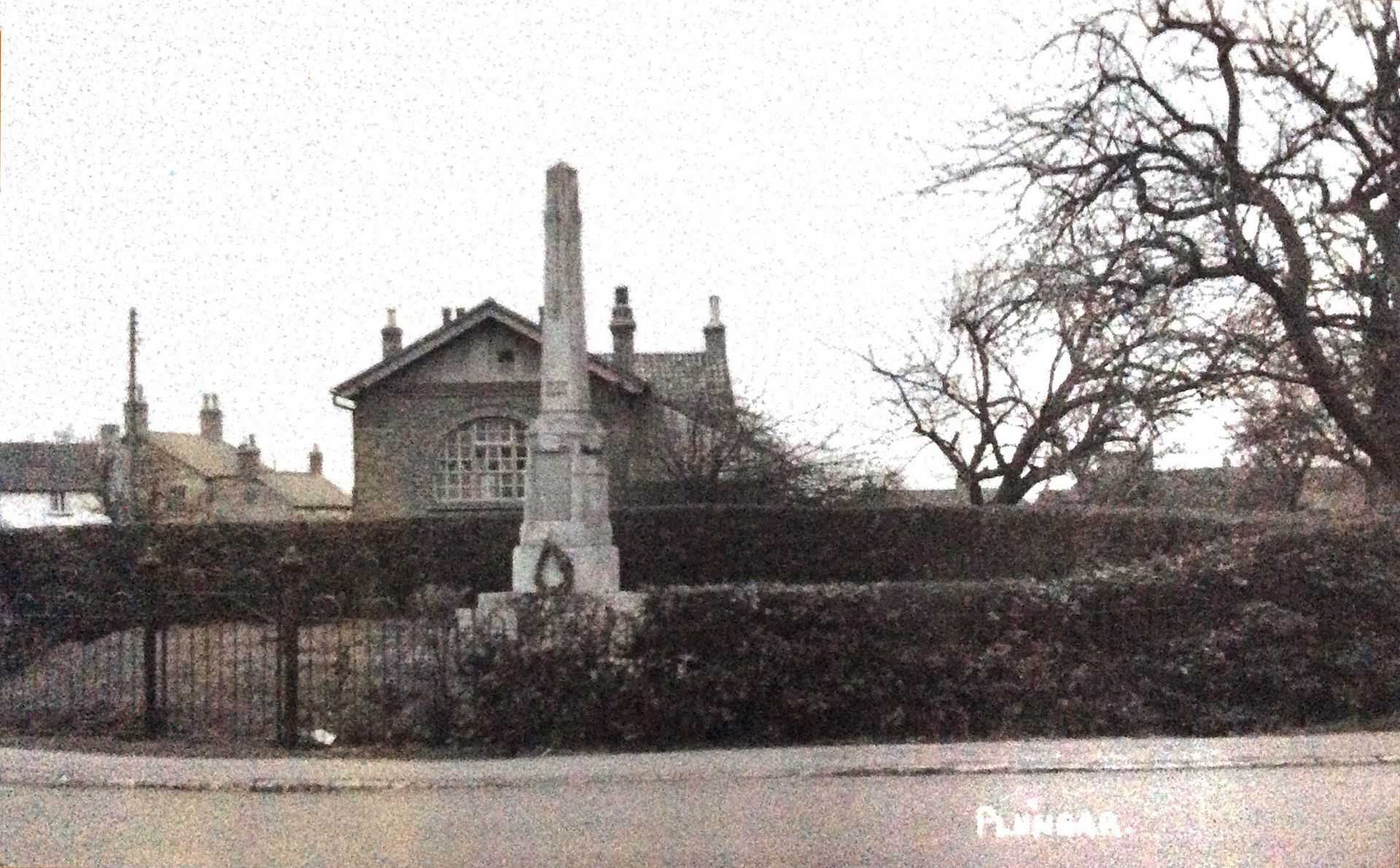
The aftermath of WWI saw the most significant single wave of public commemoration ever, with tens of thousands of memorials erected across England. The official policy was not to repatriate the dead from battlefields overseas. Therefore the memorials provided the main focus of the grief felt at losing three-quarters of a million British lives. The Plungar memorial is a permanent testament to the sacrifice made by seven local servicemen. Following the Second World War, the name of the single villager who fell into that conflict was added. “The War Memorial is well kept and still in a small garden”, said June Grant, a villager since the late 1970s and co-writing a book on the history of Plungar with David Hall.
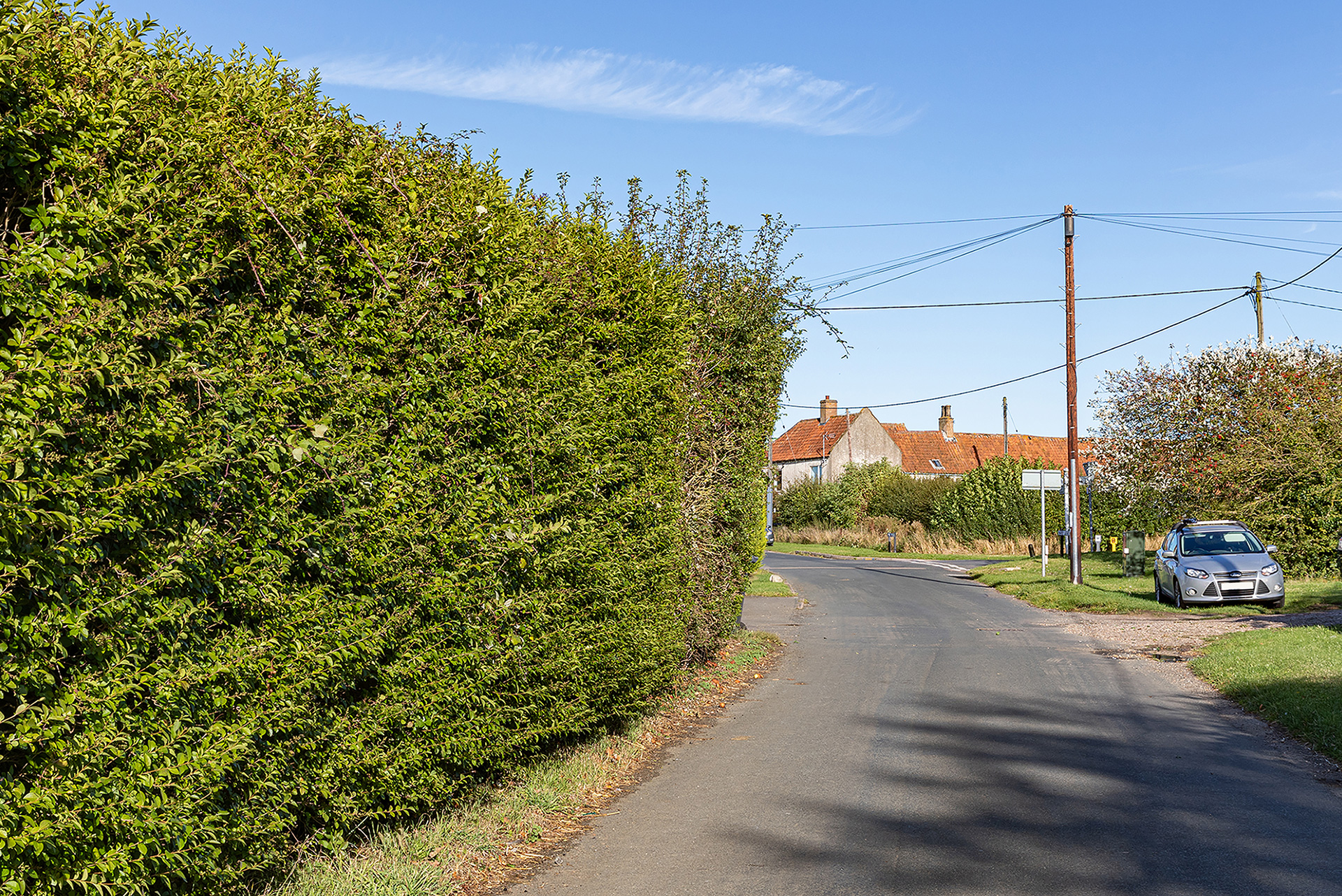
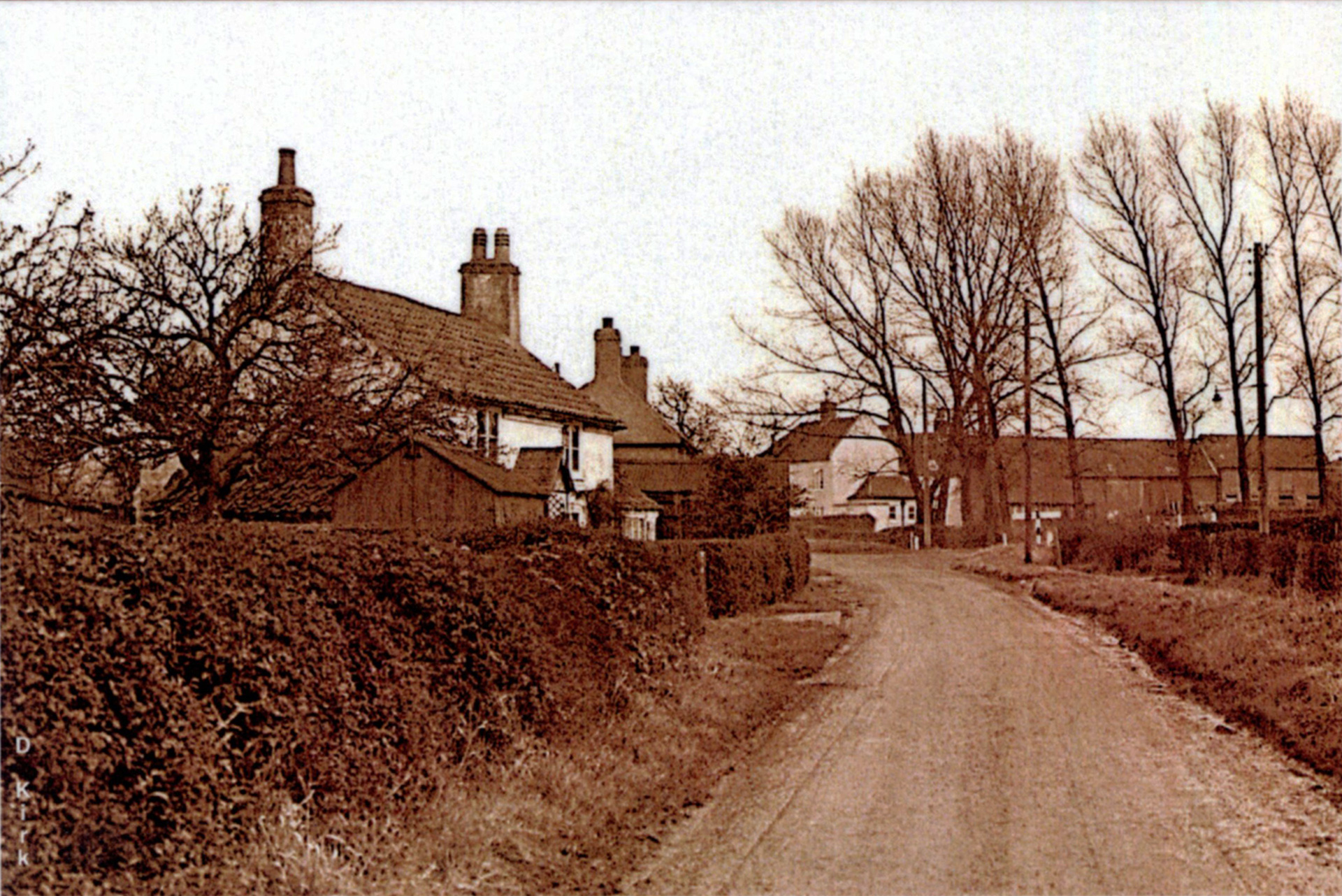
June continued: “Behind the memorial lies the Village Hall, gifted to the village by Frank Wright in 1901.” “It started as a reading room for the workers in the village to leaf through the newspapers and socialise”, said David. While laughing, he added: “Trying to keep them out of the pub.” On the right-hand side, where now the red roof-tiled house is situated, was probably a large pond. But the villager who lives next to the Village Hall at the other end, says that the pond was where the Village Hall toilets are now. Frogs must have been coming out of the place and jumping all over because the street along the War Memorial and the Village Hall is called Frog Lane. Ernest Twells recollected: “My grandmother, Ethel Dewey, was born at Rose Cottage on Frog Lane. It is the white building just visible on the left in the old photo. Our family goes back a long way in the Vale of Belvoir.”
June Grant recollected: “When we moved into the village 40 years ago, there were villagers who had never been further than Melton in their life.” In the past, villagers stayed local because the transportation wasn’t that good. The roads were poor, and bus services were scarce. It didn’t change that much until the end of WW2. June added: “The people who lived on the Wolds were seen as foreigners.” Local shops and trades vanished after villagers travelled further by car to buy goods in towns and visit cities. “Now Plungar is much more like a dormitory village for people working in Nottingham and Grantham”, said David Hall, “We have been lucky Plungar hasn’t expanded in recent times with new developments.” “We are fighting them fiercely”, concluded June.
Harby Lane
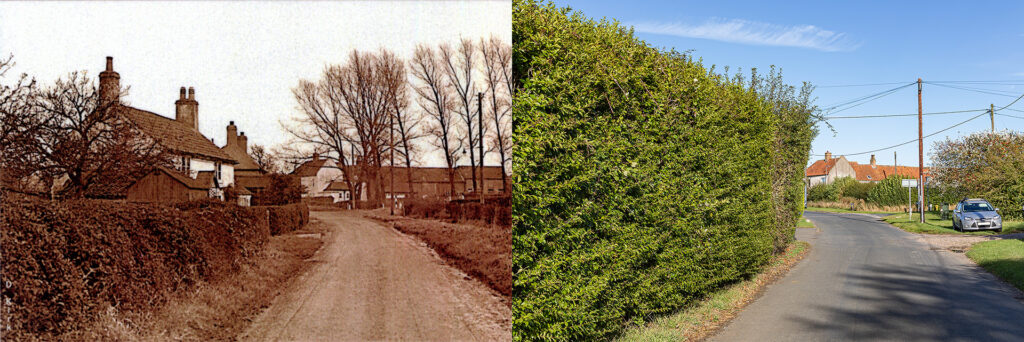
The cottage on the left-hand side seems to be obscured by the hedge, but unfortunately, Jasmine Cottage was demolished. The adjoining house, Vine Cottage, is still there. The poplar trees in the back were cut down a few years ago. The farm behind was called Poplar Farm, but not a farm as such anymore. The barn along was converted. June Grant said: “There were five farms in the village, and there is one left at the end of the village by Grantham Canal, Plungar Grange. The rest all moved out.”
On the village
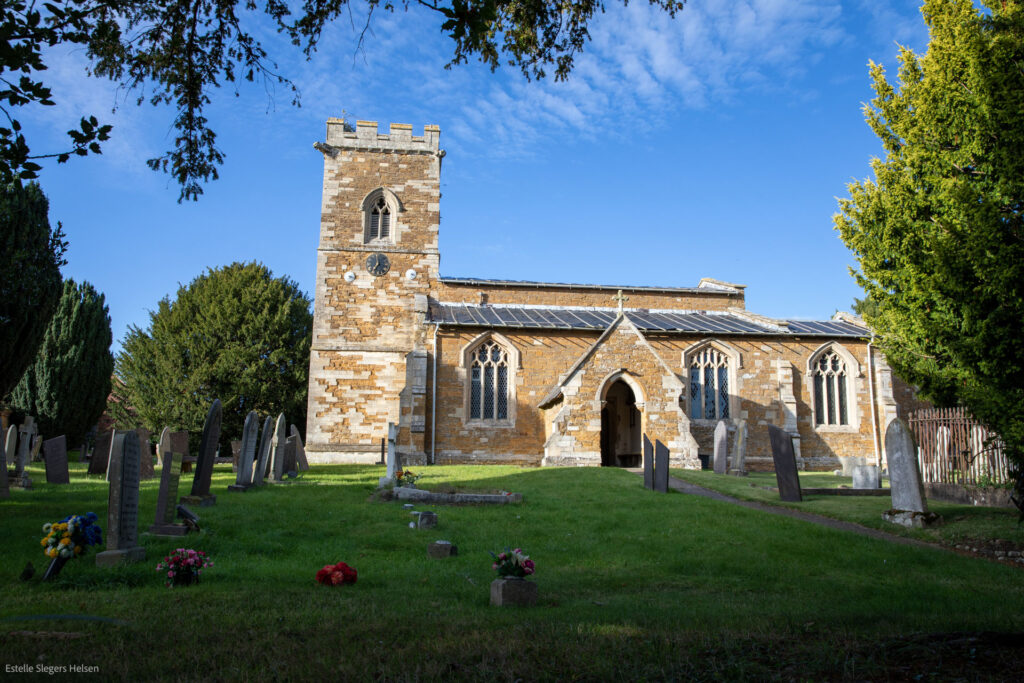
The parish church of St Helen, a Grade II listed building, dates from the 14th century, with additions made in the 15th. June Grant told: “The church was repaired in 1829 while rebuilding work in 1855–1856 added a chapel and replaced the south aisle. It needs a big repair at the moment because four years ago the roof was stripped by lead robbers. Like most in the area, not many people are in the congregation. So it is hard to raise a lot of money. But, the big story is that the church registers are very sparse due to the parish clerk in the late 1700s. He was also the village grocer, and he didn’t think much about the old registers and used the pages from the register to wrap customers’ groceries and provisions.”
In 1564, 26 families were recorded as living in the village, whilst in 1377 59 taxpayers were registered for poll tax. There is evidence in 1225 of fees being paid by knights living in Plungar and Barkestone towards the cost of the marriage between King Henry III’s daughter and the Roman Emperor.
At Post Office Lane was the Post Office, a bakery shop (and bakehouse), and another cottage. David Hall told: “It is called Cordwainer. A cordwainer is a shoemaker who makes new shoes from new leather. The cordwainer’s trade is contrasted with the cobbler’s trade. To a tradition in Britain that restricted cobblers to repairing shoes.” June Grant continued: “I am not sure when the post office closed. There is a post box still in the wall.” “The last owners of the Post Office and shop were a young couple”, recollected Amanda Morigi. “Unfortunately I can’t recall their names. They bought the place and hoped to revamp it, selling fruit, vegetables, and some other groceries. And they took care of the post office. Whilst running the place they had a baby boy that was diagnosed with a limiting illness. Shortly after that, they left.” June continued: “The story goes that the robbers gave Mrs Tweddle a piece of paper with the words ‘this is a hold-up’ on it. Mrs Tweddle gave them the money that they demanded, they put it in a bag but didn’t secure the bag. They made their get-away on a motorcycle and as the bag was not closed, a lot of the banknotes escaped as they were fleeing along the road. When they got to their home address, they found the police waiting for them. The piece of paper given to Mrs Tweddle had their home address on the other side!” “They left an expensive paper trace,” concluded David.
Until the Belvoir Estate sale, in March 1920, the Duke of Rutland owned land in and around Plungar. But the death of two Dukes in quick succession combined with the pressures of taxation and increased maintenance costs, some of the land and adjoining properties were sold to the villagers. Properties such as Pasture Farm, Cherry Tree Farm and Newholme came to be privately owned.
In the 1950s, oil was discovered in the village. During the Second World War, a few bombs were dropped in the vicinity of Plungar, and geological inspection of the craters convinces the oil geologist Percy Kent that it would be worth prospecting for oil. This story is featured in a magazine article titled Midland Villages: Plungar, published in October 1959.
More pictures
Would you like to add pictures? Send a message.
Domesday Book
Plungar was not recorded in the Domesday survey.
To read
June Grant’s and David Hall’s book on the history of Plungar will be published soon.
2 responses to “Plungar”
The last post mistress was not Mrs Tweddle. The post office and shop were bought by a young couple who hoped revamp it. They started selling a small amount of groceries and fruit a veg. As well as the post office. Unfortunately I can’t recall their names but whilst running the place they had a little bab who I recall was diagnosed with cerebral palsy.
Shortly after that they left.
Thank you Amanda, I will add this to the story.