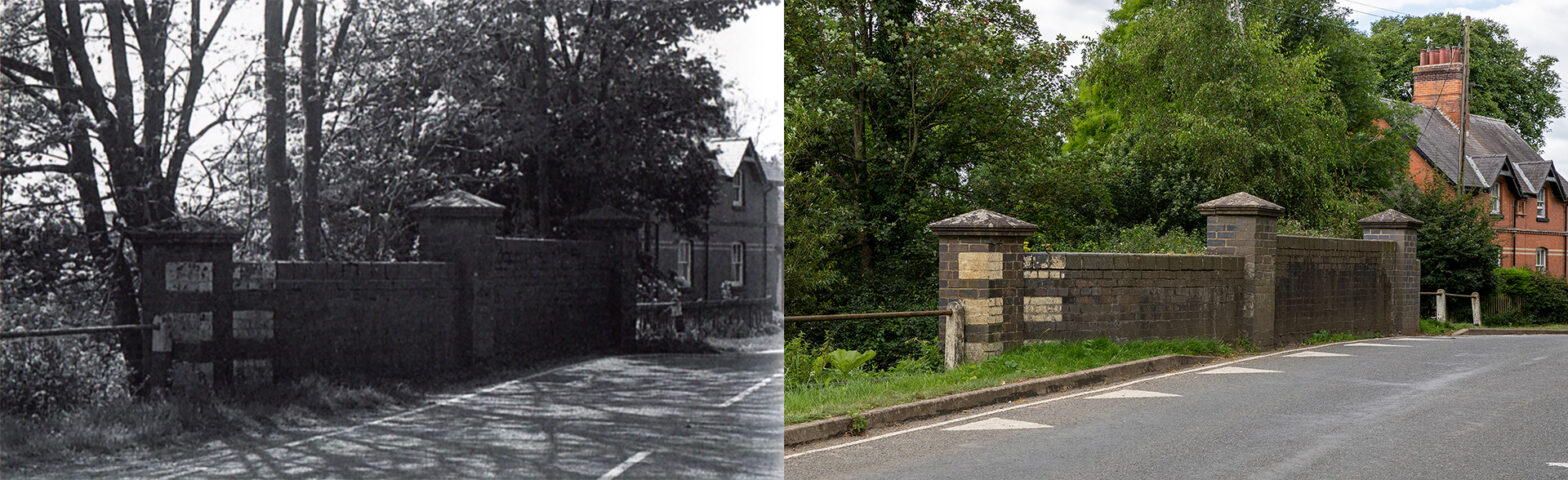
River Eye Bridge – 1960s
The picture of the bridge over the River Eye, with at the back two semi-detached cottages, built in 1884 by the Earl of Dysart, is one of the few older pictures of Coston. Coston is a so-called ‘shrunken’ village with a handful of houses along the B676, a road twisting and turning between Melton Mowbray and Buckminster. “In many ways, Coston is typical of many Leicestershire villages. Like Coston, many have clear evidence that they were once much bigger”, said historian Pam Fisher, who coordinates The Victoria County History of Leicestershire project. “Extensive earthworks in the fields to the south of the church on the opposite side of the road reveal where the village once stood. ‘Lumps and bumps’ are marking old property boundaries and house sites.”
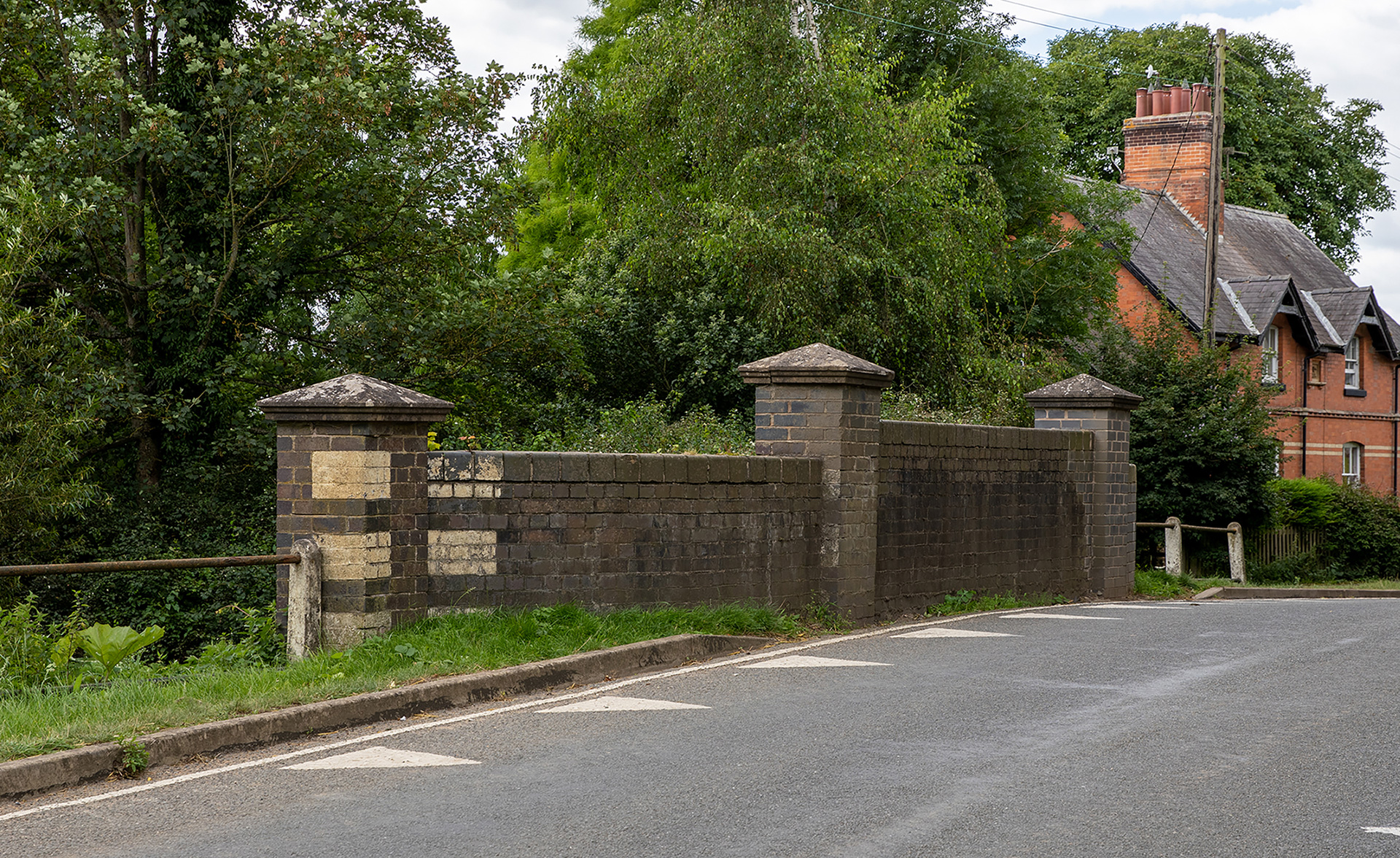
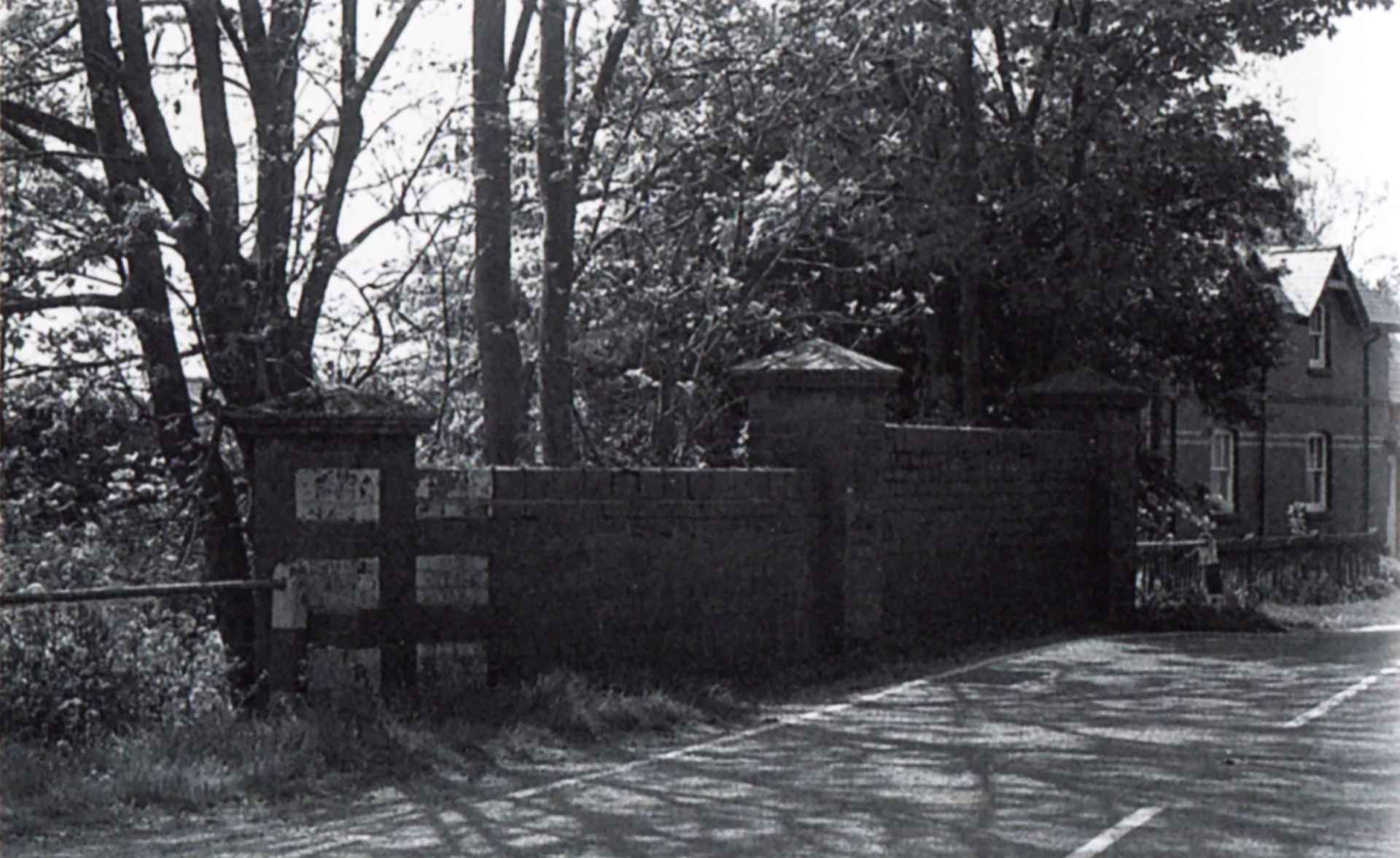
Three main reasons for village depopulation in England are the mid 14th century Black Death, large landowners turning arable land into pasture in the 1500s-1600s because wool was very profitable, and the great depression of agriculture during the late 19th century.
Pam Fisher: “Coston was probably given to Henry of Ferrers by William the Conqueror after 1066. The village remained with the Ferrers until the 1260s, when Robert of Ferrers gave Coston to his sister Joan, who married Thomas Berkeley of Wymondham in about 1267. Coston remained with the Berkeley family until 1620. Maurice Berkeley inherited Coston in 1536 and died in 1601. There is evidence that he enclosed some land (i.e. took common land into private ownership) at Coston in 1595, which may have displaced a few families.”
Documents suggest that some of this drop in population happened around 1600, when there were about 95 communicants, so in total about 140-150 villagers.
Pam Fisher: “When Maurice Berkeley died in 1601 he left large debts and his son Henry tried to raise rents to increase income, and also enclosed further land to increase the capital value before a sale. Other families are therefore likely to have moved away between Maurice’s death in 1601 and 1620, when the estate was sold to Sir John Tufton. His son became the Earl of Thanet and the widow of the Earl, the Countess of Thanet was called to account to have depopulated the village. And she said it wasn’t me it was Maurice Berkeley.”
The earthworks to the south of the church are clearly house platforms along a former lane, but whether these houses were ‘deserted’ between 1595 and 1620, or were already deserted before 1595, is not clear. “Excavation indicates that the earliest depopulation followed the Black Death in 1348-9”, added archaeologist Peter Liddle. But more archaeological fieldwork has to be done to be sure. Peter Liddle: “The excavations have also produced evidence of the early history of the village suggesting origins in or around the 7th century. Some of the pottery found has travelled from Suffolk and Cambridgeshire as well as nearby Lincolnshire which might suggest that this early settlement was of high status or was a trading centre.”
Pam Fisher: “There was also a later period of shrinkage, in the 1880s-1890s, due to the agricultural depression, when small farms were just not economic, and people probably moved away to earn a living elsewhere, away from the land.”
In the 1880s the Lord of the Manor in Coston was Earl Dysart, who is doing a lot of work in Buckminster, such as creating The Crescent. The two pairs of houses opposite the church in Coston were rebuilt in this period, presumably for the farmworkers who remained. One pair has the date 1881 on it and the other, most close to the River Eye Bridge, is dated 1884.
Church
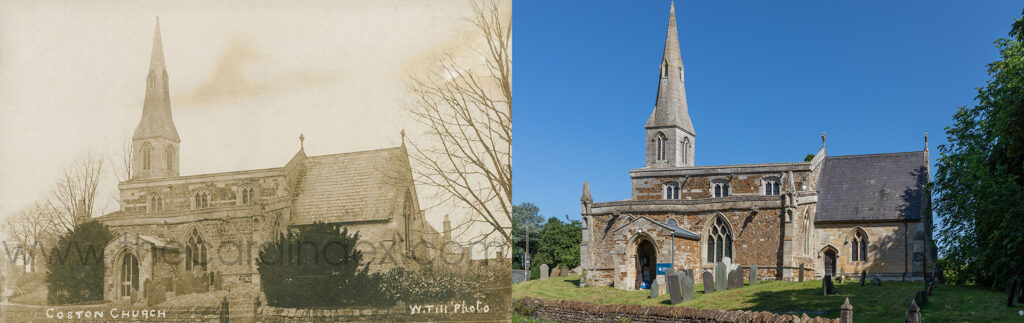
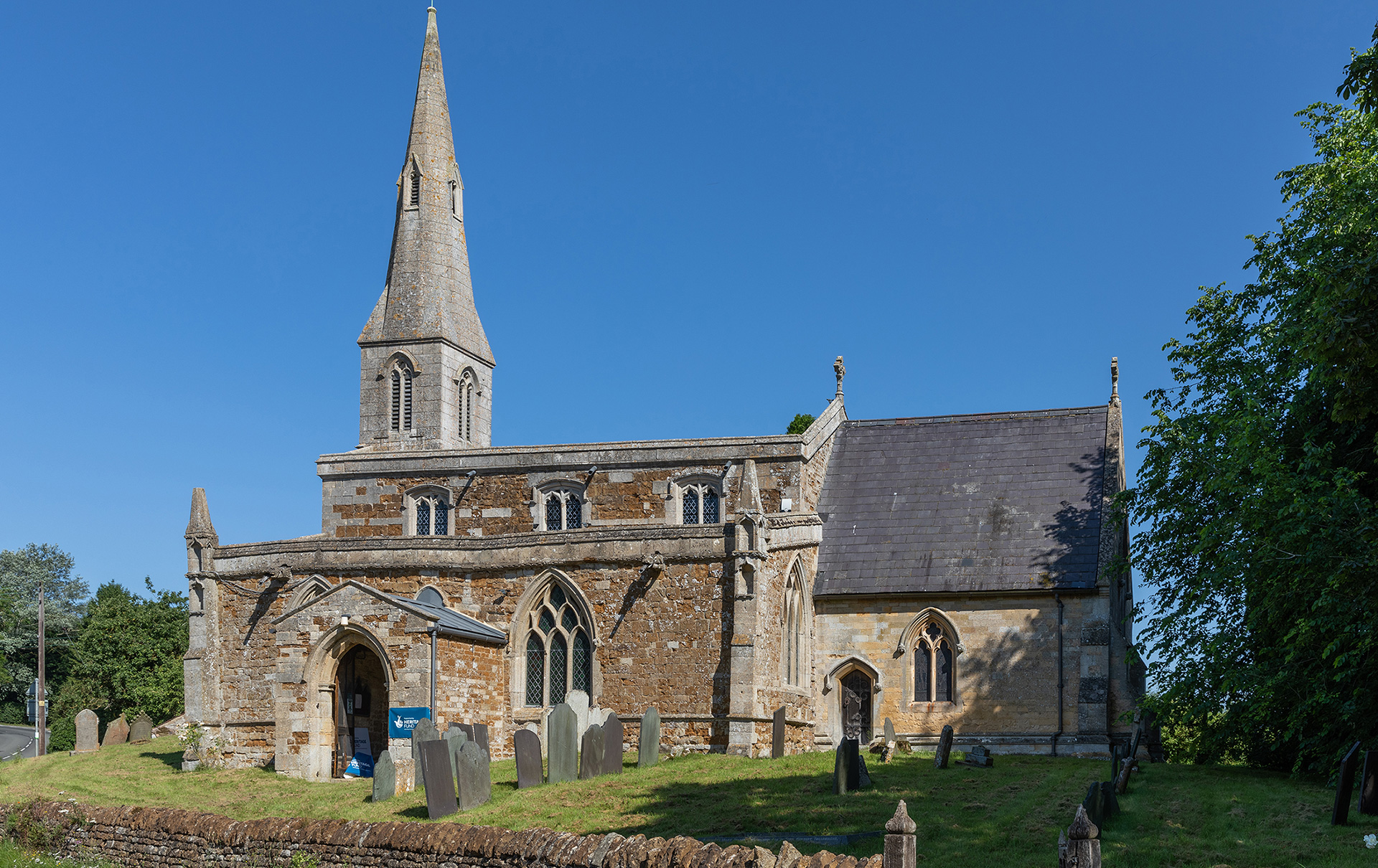
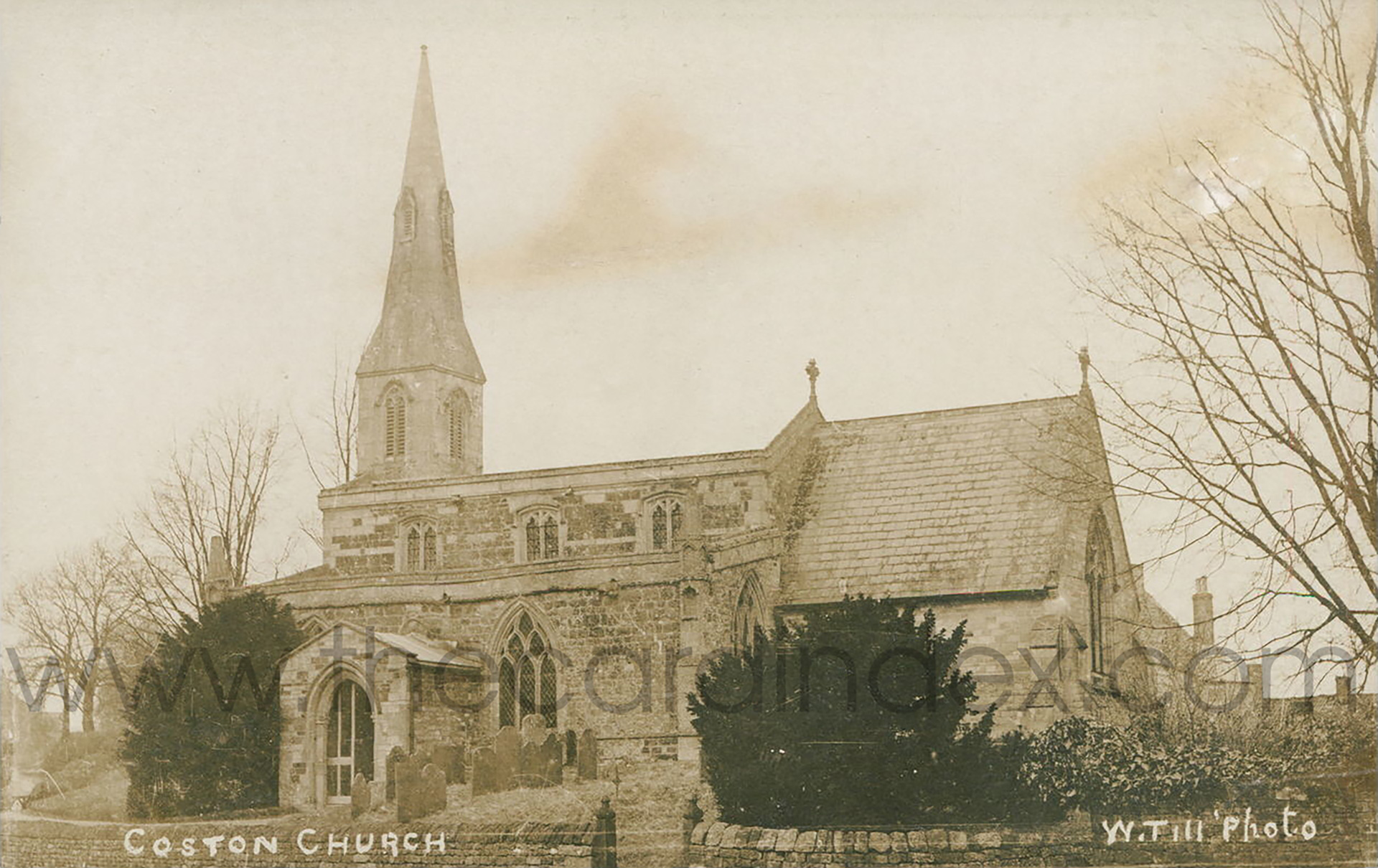
The recently restored medieval church of St Andrew occupies a prominent raised spot adjacent to the B676. The church lost part of its roof to lead thieves in 2018. An application by the parochial church council to the National Lottery Heritage Fund proposing a community history project and a range of open days and other events in the church was approved.
Henry of Ferrers almost certainly built the first stone church by 1080. Churchwarden David Chubb gave some more historical details: “The oldest part of the church is the tower, with a deeply-splayed lancet window. The south aisle has two fragments of 14th-century glass in the east window, depicting the crucifixion and St Mary. The chancel, probably the earliest in this style in a Leicestershire church, was completely rebuilt in the Gothic Revival style in 1846 by Sheffield architects Weighman and Hadfield, with the east window by William Warrington. On the wall is a brass memorial to Temple Edgecumbe Crozier, the son of the Rector of Coston.”
Pam Fisher: “Temple Crozier left school and went to work for a firm of corn merchants in Liverpool, to be a businessman. But after 18 months he decided he wanted to be an actor. He worked in a lot of productions around the provinces and around the country playing in different plays. And then he went to London about 1895. In August 1896 he got himself an acting job with two plays each day for a week at The Novelty. In the second play, a melodrama by Frank Harvey, The Sins of the Night, Temple acts as a villainous Spaniard, who earlier in the story seduced and killed a woman named Abima. His friend and actor Wilfred Moritz Franks played Abima’s brother, taking revenge in the final scene. In the final scene of the play, the play’s hero had to stab the villain with a fake knife. Wilfred thought it would look much nicer using a real and not a theatrical dagger. As Crozier’s co-actor cried ‘Die, villain, die!‘, while striking him with a knife, the audience literally shuddered.”
After the curtain comes down, the audience clap and go home, thinking this is a good and very realistic play. And there is Temple Crozier still lying on stage… dead.”
Domesday Book
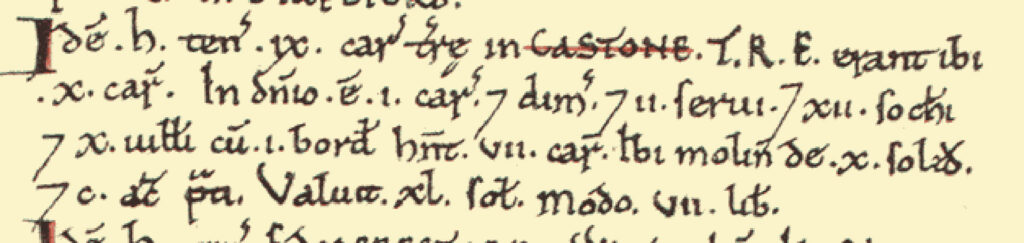
Coston was a settlement in Domesday Book, in the hundred of Framland and the county of Leicestershire.
It had a recorded population of 25 households in 1086, putting it in the largest 40% of settlements recorded in Domesday.
Land of Henry of Ferrers
- Households: 10 villagers. 12 freemen. 1 smallholder. 2 slaves.
- Ploughland: 10 ploughlands. 1.5 lord’s plough teams. 7 men’s plough teams.
- Other resources: Meadow 100 acres. 1 mill, value 10 shillings.
Valuation
- Annual value to lord: 7 pounds in 1086; 2 pounds when acquired by the 1086 owner.
Owners
- Tenant-in-chief in 1086: Henry of Ferrers.
- Lord in 1086: Henry of Ferrers.
Links
- On the Crozier accident – The Sketch, 19th August 1896
2 responses to “Coston”
Well done. Nice to read your story and see the pictures. What is searching?
Interesting question. Searching could be finding or maybe discovering not at all. Searching as a way of living? It seems good not to try and search all the time and try whatever will happen come to you.