
West End Stores – 1930s
Long Clawson is Melton Borough’s most ‘stretched’ village. “It is more than one mile long and has 14 right-angled bends. The village follows the line of an aquifer, which in the past enabled wells to be sunk for potable water”, says Mike Allsop. His late wife Jenny wrote for forty years about local history. Unfortunately, last year she became one of the early COVID-19 victims. It is a hard choice which part of the village to highlight. My focus was inspired by this postcard of West End Stores. The shop continued until the 1990s and the outline of its distinctive sign can still be seen. Jenny wrote: “West End Stores served that part of the village from at least 1841, originally run by Thomas and Elizabeth Barnard.” “From the end of the 1940s Lesley and Philip Bailey, a really kind couple, ran the shop”, says Jo Towle. Jennifer Dobbin adds: “I remember Mr Bailey whacking his stick on the top shelves to get things down.” Michael Nichols laughing recalls: “Mr Bailey was a navy diver throughout the war. When I farmed at Harby, every week I delivered cracked eggs, for about 23 years. One Christmas Mr Bailey offered me a glass of whisky. Although not being a drinker, I politely took a gulp. After that, I never ever touched any alcohol again.” When the Baileys retired, the store was sold several times. Ann Merrins recalls: “First Sally and Graham Pellew took over, followed by Sue and Spud Oldham.”
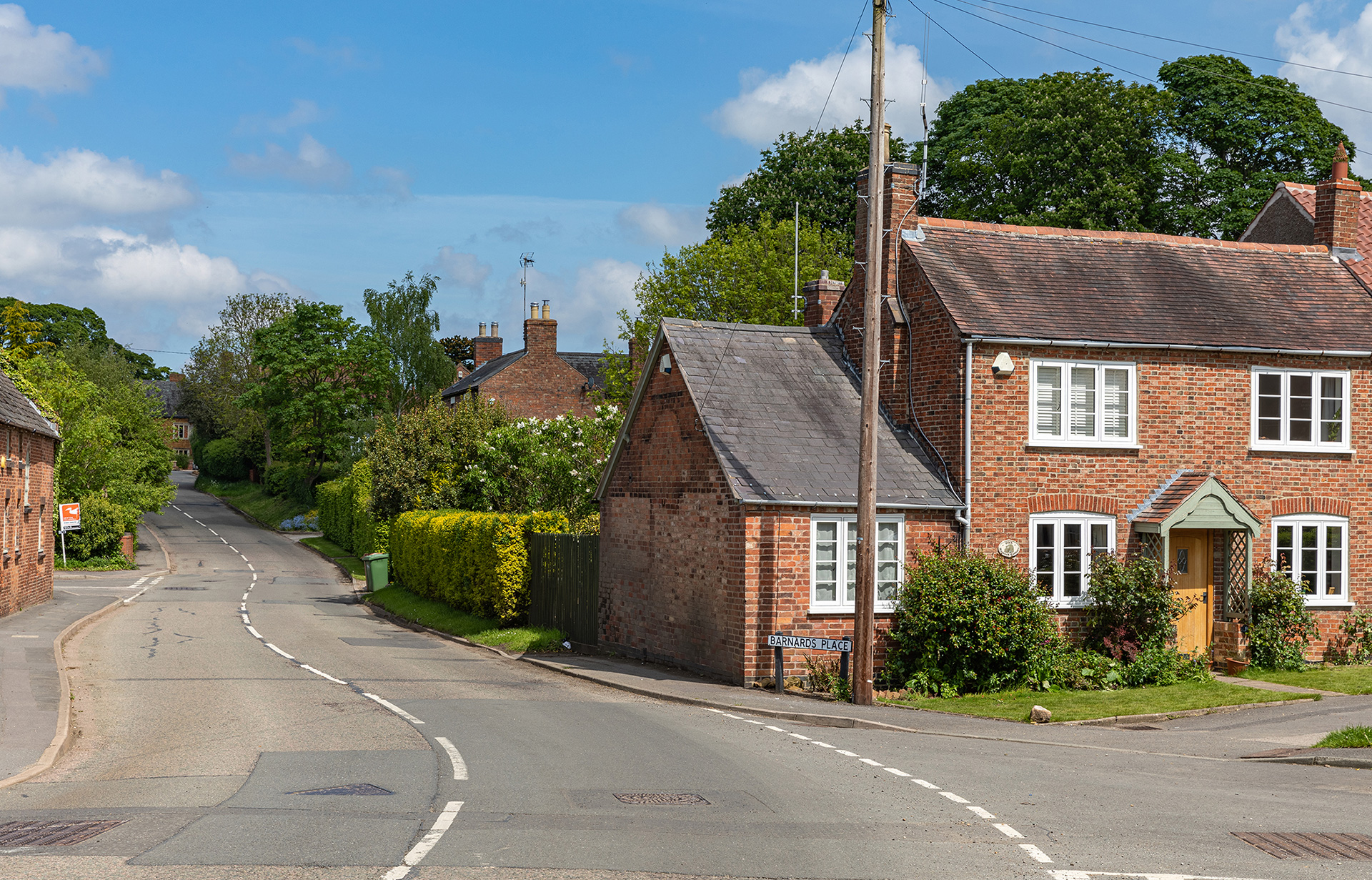
The old store stood at the corner of Barnards Place. Jenny wrote this about the street name: “On the enclosure map of 1790 you see a row of cottages with a lane curving round to meet Melton Road. At the end lived Robert and Ann Barnard. Barnard’s Lane became variously Bonsors Lane, Peck’s Lane and finally Barnards Place.” The large house next to the stores is School House. “It was church property and provided accommodation for the local school’s headmaster. The last was Mr Watchorn, who left in 1972.” Jennifer Dobbin remembers Mr Knight as headmaster. Michael Nichols adds: “Mr Knight also took over the running of the Long Clawson Football Club for many years.” To conclude, opposite to the old store the walls of Hollytree farm can be seen, one of the many dairy farms that have now moved out of the village, providing milk for the well known Long Clawson Dairy.

West End – Long Clawson Dairy

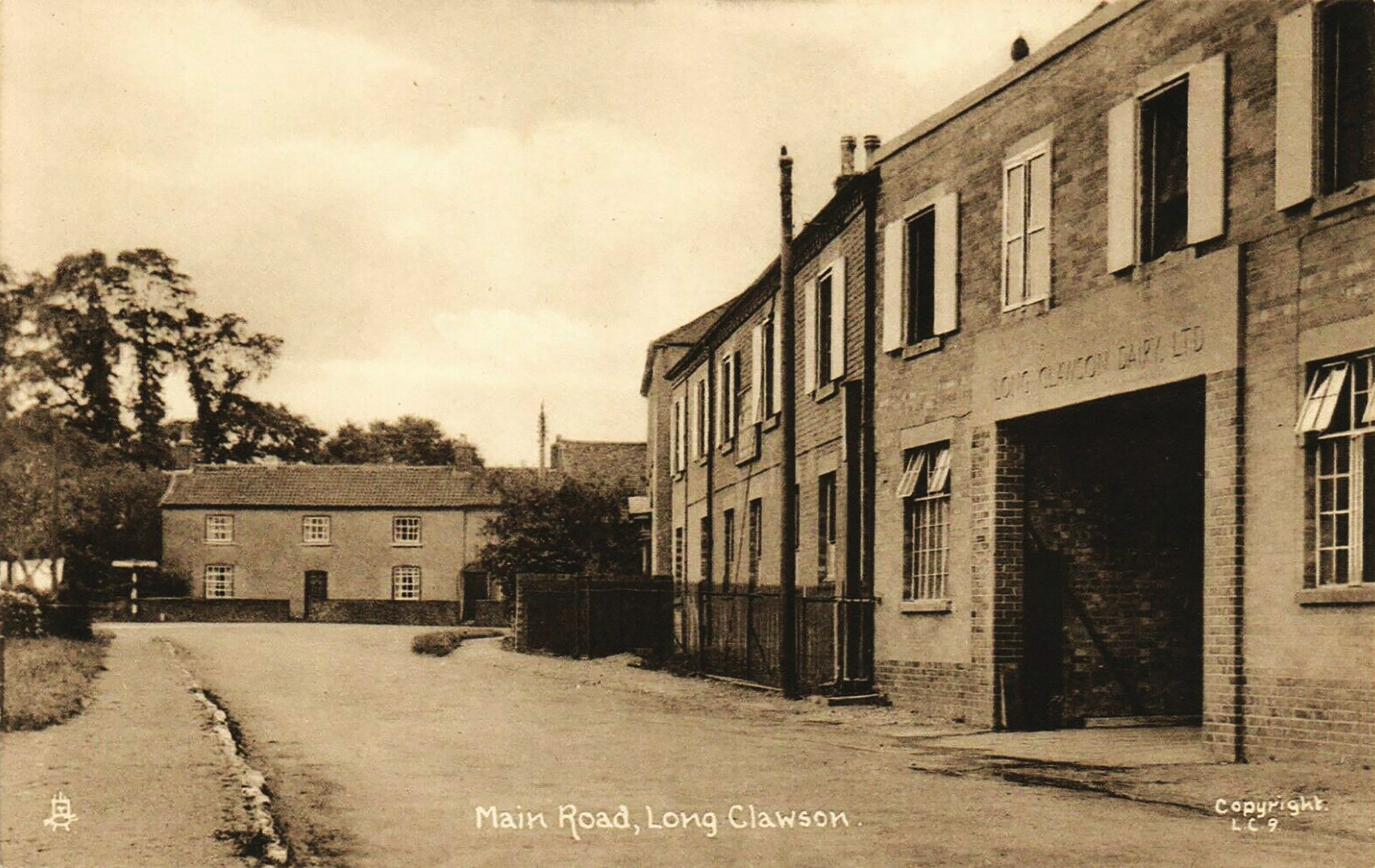
Since 1911 Long Clawson Dairy plays an important role in the village community and far beyond. Ginger Wright: “Half my family worked at the dairy. Mr Wiles ran it, then John skull and then Mr Reader.”
“One of our founding members, Thomas Hoe Stevenson, was running Mount Pleasant Farm near Melton Mowbray, alongside his two sisters who produced Stilton cheese in a room adjoining the main farmhouse. In order to ensure this special cheese would continue to be produced for generations to come, Thomas Hoe canvassed the opinion of local farmers for the development of a dairy. He soon had 11 partners, and the group purchased an old empty pub – The Royal Oak – in the village of Long Clawson. Long Clawson Dairy’s head office resides there to this day”. More of its history is found on the Long Clawson Dairy website.
On the right of the old postcard is the original entrance to the dairy from the start in 1911 until 1986.
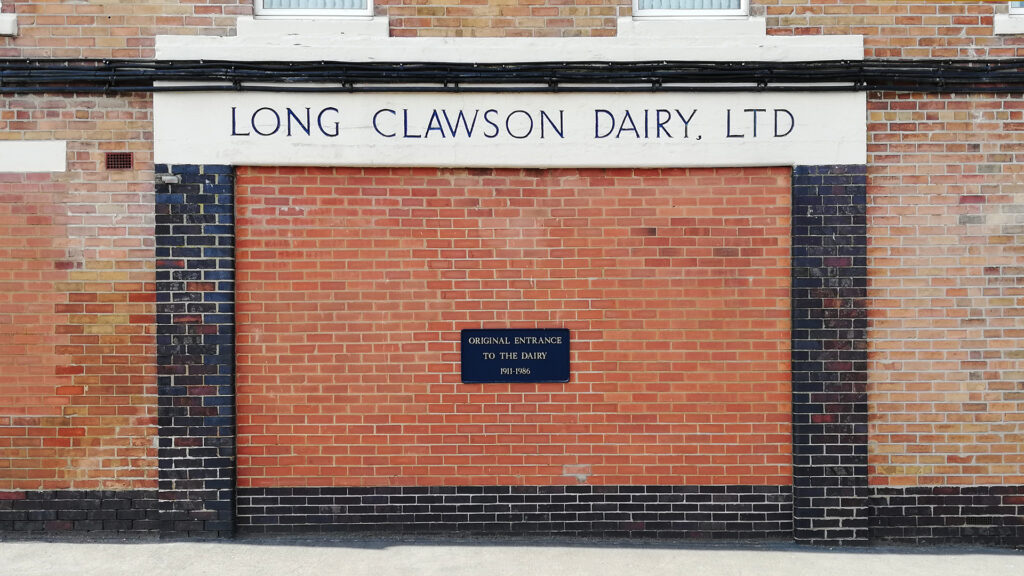
“The house at the back is Headland Farm”, recalls Jo Towle. “Many years before that was the Cricketers Arms, one of 5 pubs in the village at the time .” Kim Kupfer adds: “In 1984 when we moved to the village, they used to make dog food at Headland Farm.” Ginger Wright knows Mr Huckerby. owned the house.
Jo Towle also remembers: “When I was about 9 years old, I helped the milkman Doug Hourd, a milkman for many years, deliver milk and would drive the electric float down Coronation Avenue, just behind the corner off Melton Road, to pick him up lower down.”

East End
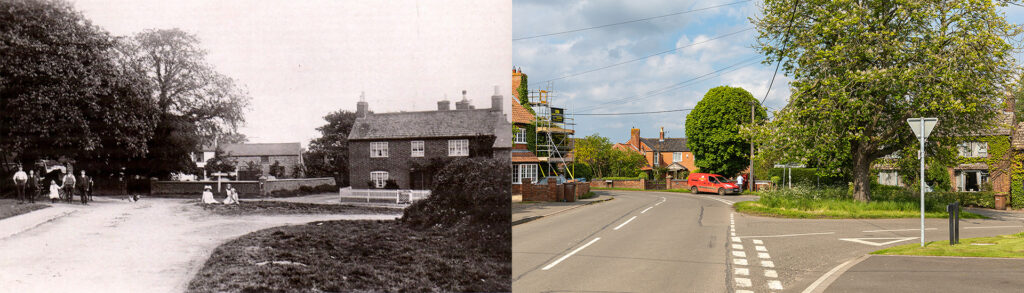
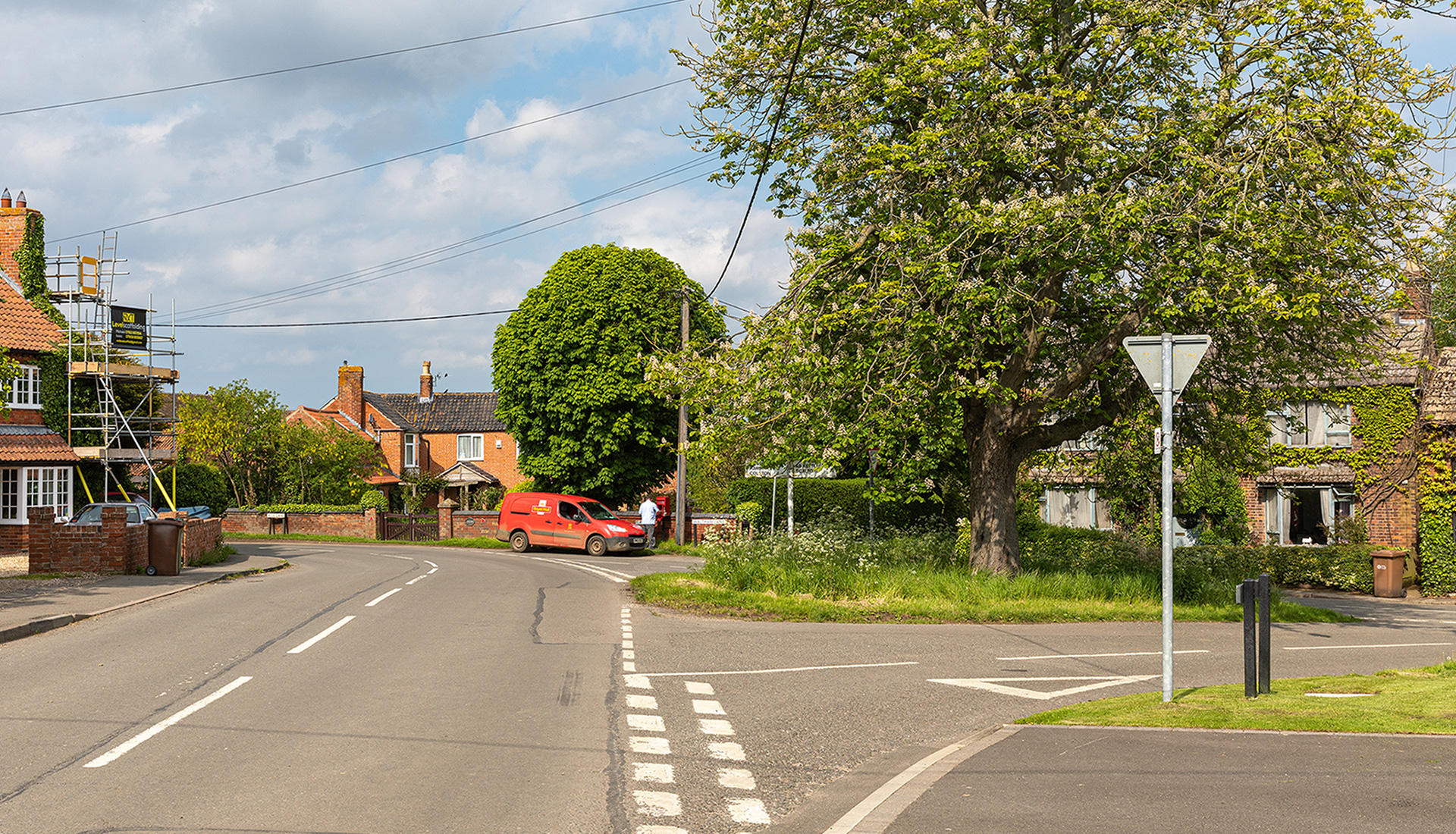
While walking towards Long Clawson’s East End dark clouds gather above the village. I am confident the sun will come back. It is a long wait, but there is an extra reward. The moment rays break through the clouds a post van stops near the postbox to collect today’s tangible mail. The postbox on the old postcard at the corner of the low brick wall is still there, but out of use. “There is a side road to another house where Malc Jallands lived”, recalls Ginger Wright.
A century ago a photographer visiting a village was an event. On the old postcard, a whole family poses in front of a cart and some nice dressed children sit on a grassy patch where East End, Waltham Lane and Hose Lane connect.
Referring to the old postcard Ginger Wright states: “The house at the back with the big tree was Sneath’s Farmhouse. The houses to the right belonged to the Birleys. They have still their garage on Waltham Lane. The house on the left was Dr Conners.” “Before him the house belonged to John Arthur Miller who was the wheelwright.”
“I lived in the white house”, adds Michael Nichols. “It was owned by Laurie Burnett. In the house in the centre attached to Elm House lived a German ex-prisoner Stephan and his wife and old mother. He worked on the farm milking cows.”

2 responses to “Long Clawson”
Hi Estelle,
Nice piece of history on my old village (1967 – 1985). I lived first at Lemington House (opposite the dairy) and then The Villas (just up the hill from West End Stores, opposite Peck’s Garage). For some time now I have been trying to name all five pubs in the village. Thanks to this article I now have four, Crown & Plough, Star Inn (may have been The Old Star), Royal Oak and the Cricketers Arms. Just need the fifth now. It could have been the Godspeed or White House just up from the Cricketers on Melton Road.
Ginger Wright, now there’s a name from the past. As he says, half his family worked for the dairy when my dad (Ray Watson) was a cheesemaker there.
Hello Steve,
Hope you can find the name of the fifth pub. Maybe it shows up here sooner or later.