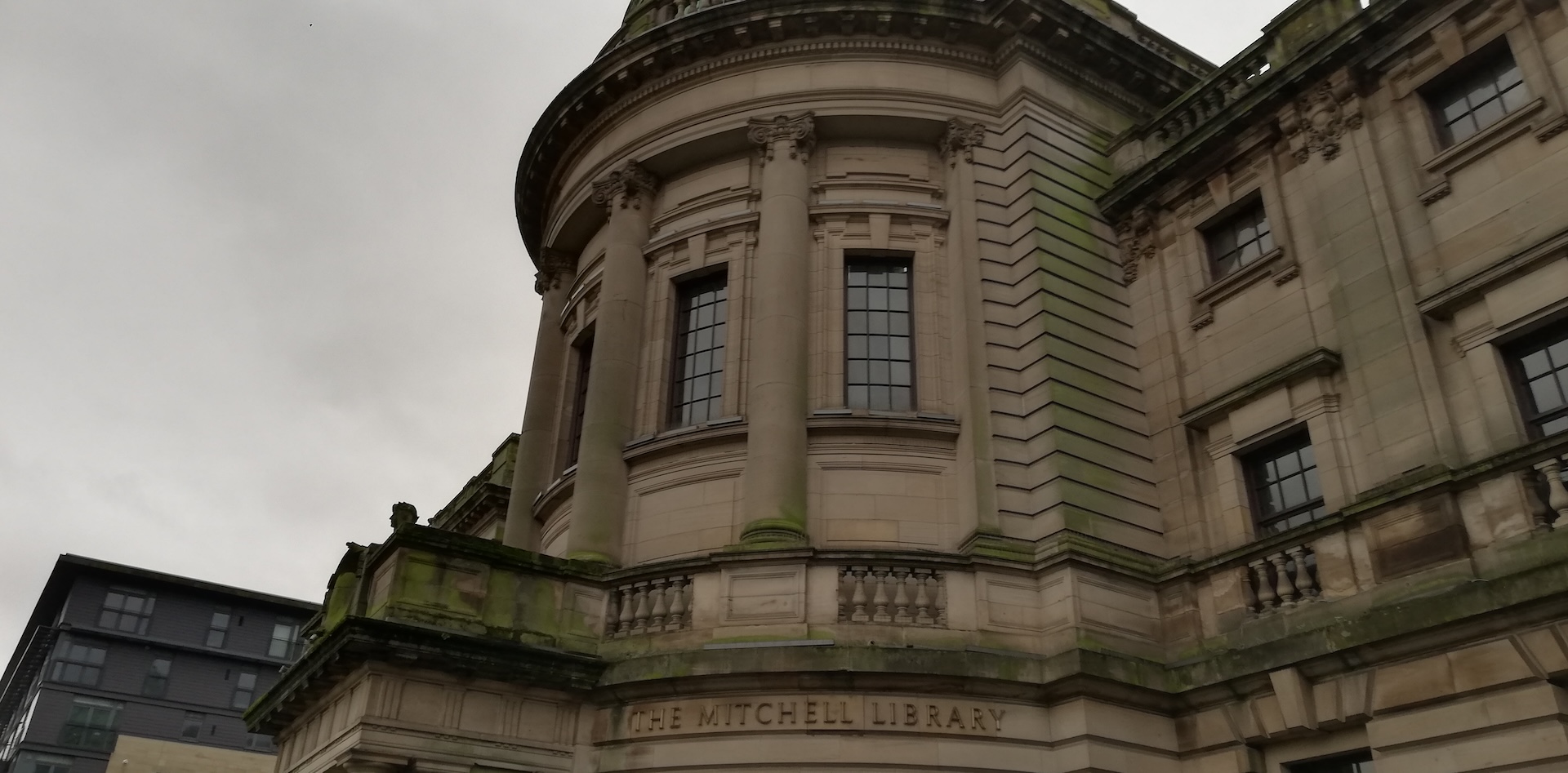
The Mitchell Library
Under a dreary sky and the heavy traffic on the M8, which splits the heart of Glasgow in two, I gasp at the monumental dome of the Mitchell Library. The Mitchell is the most extensive public reference library in Europe, and the centre of Glasgow’s public library system. The library was established in Ingram Street in 1877 with money left by the wealthy tobacco producer Stephen Mitchell. In 1907, new buildings were erected on North Street.
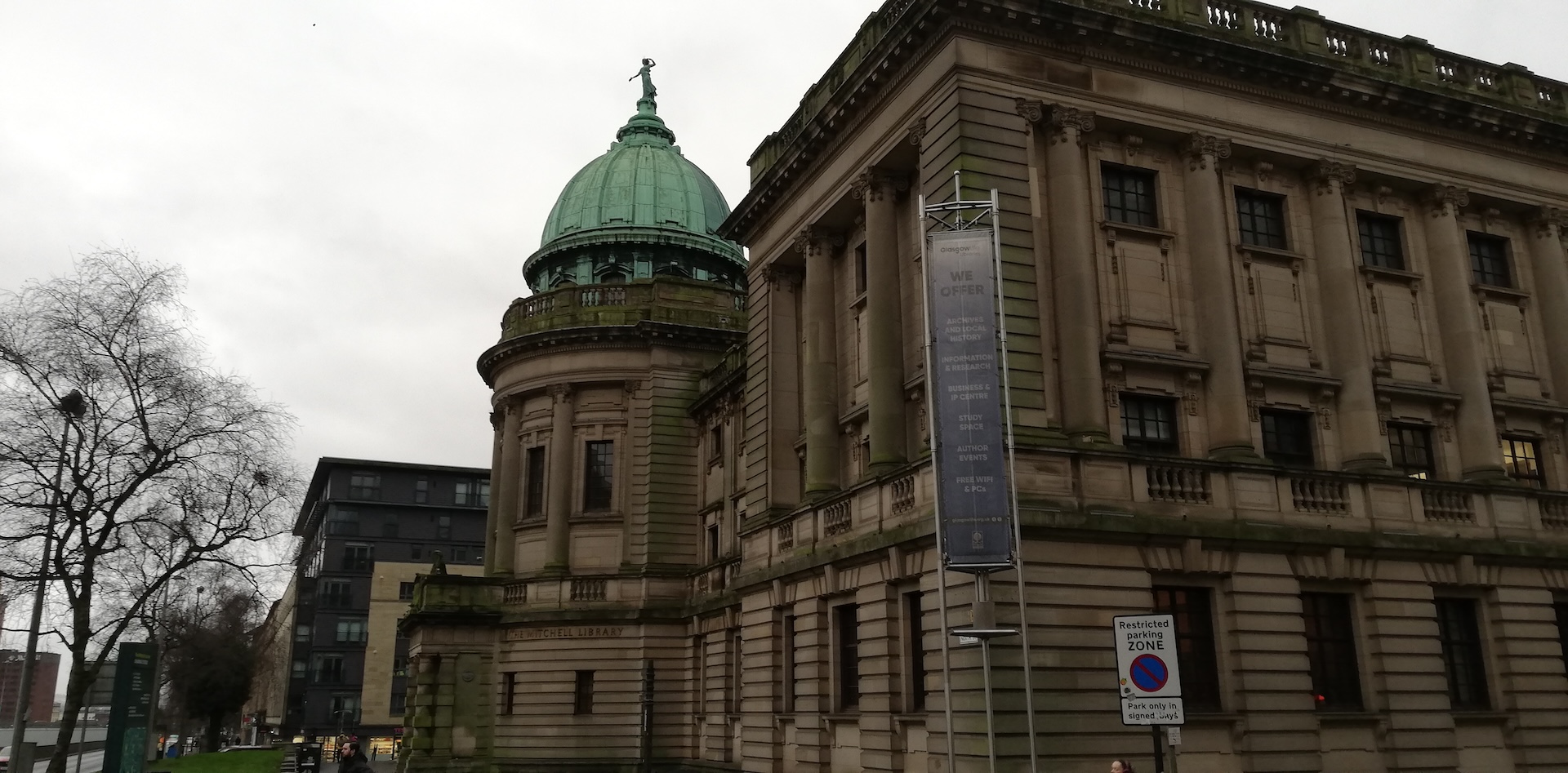
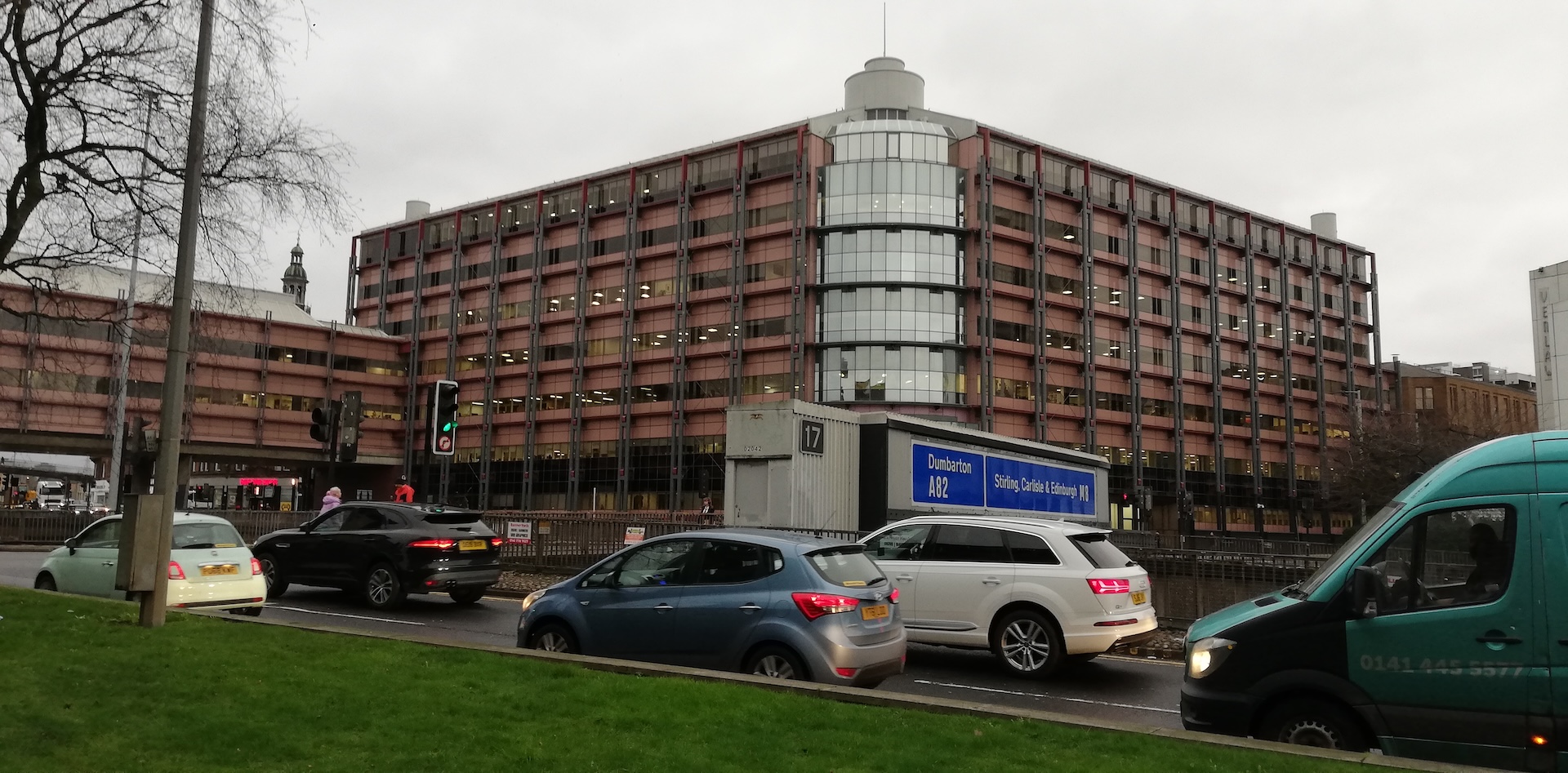
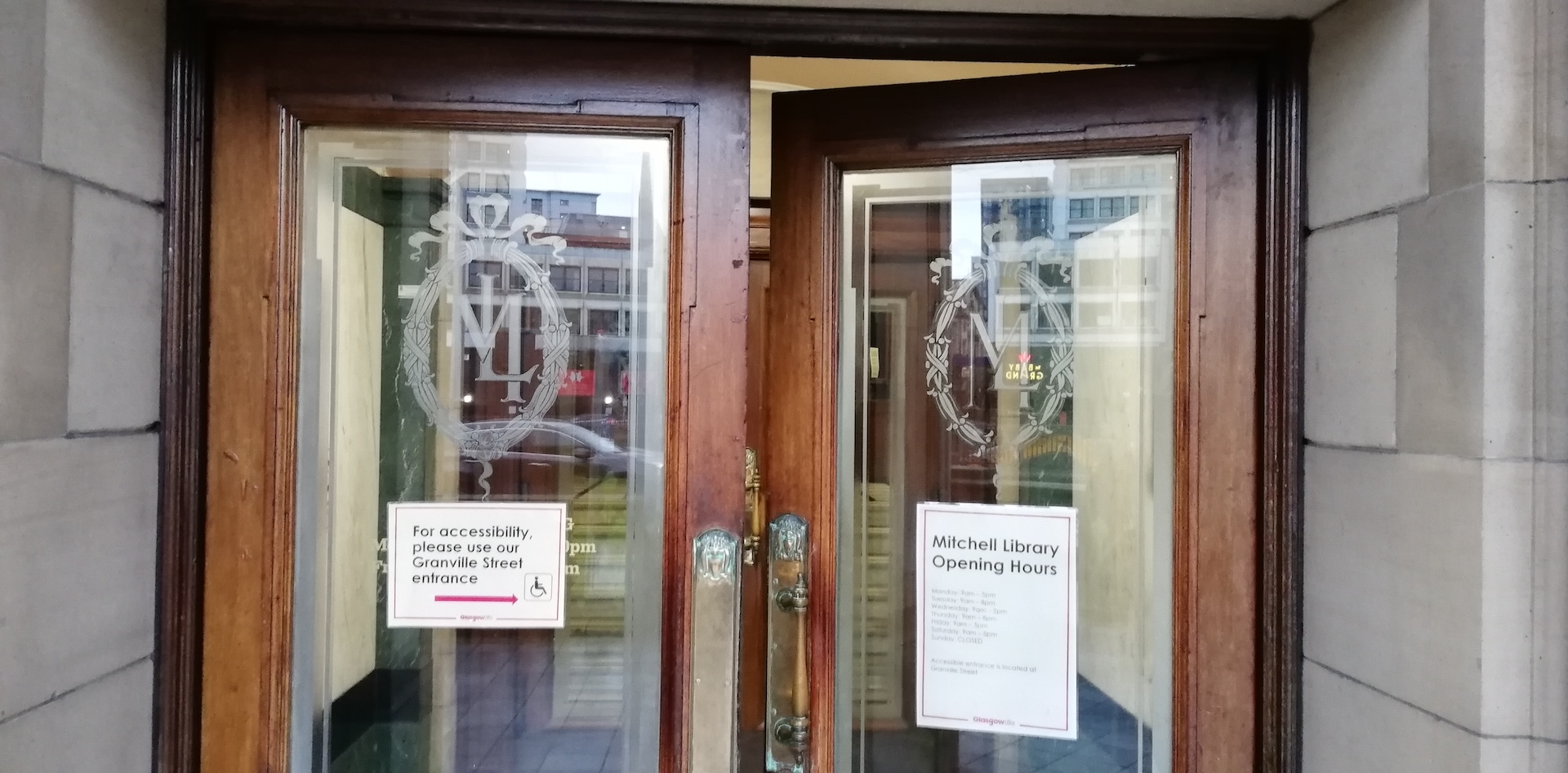
A man at the North Street entrance desk is drinking some tea. I ask for directions. With a heavy Scottish accent – I love his rolling r – he points me to the extension building at the back, built between 1972 and 1980. While walking in the main corridor I gasp at the shining tiles, the marble and wooden wall panels and the high ceilings.
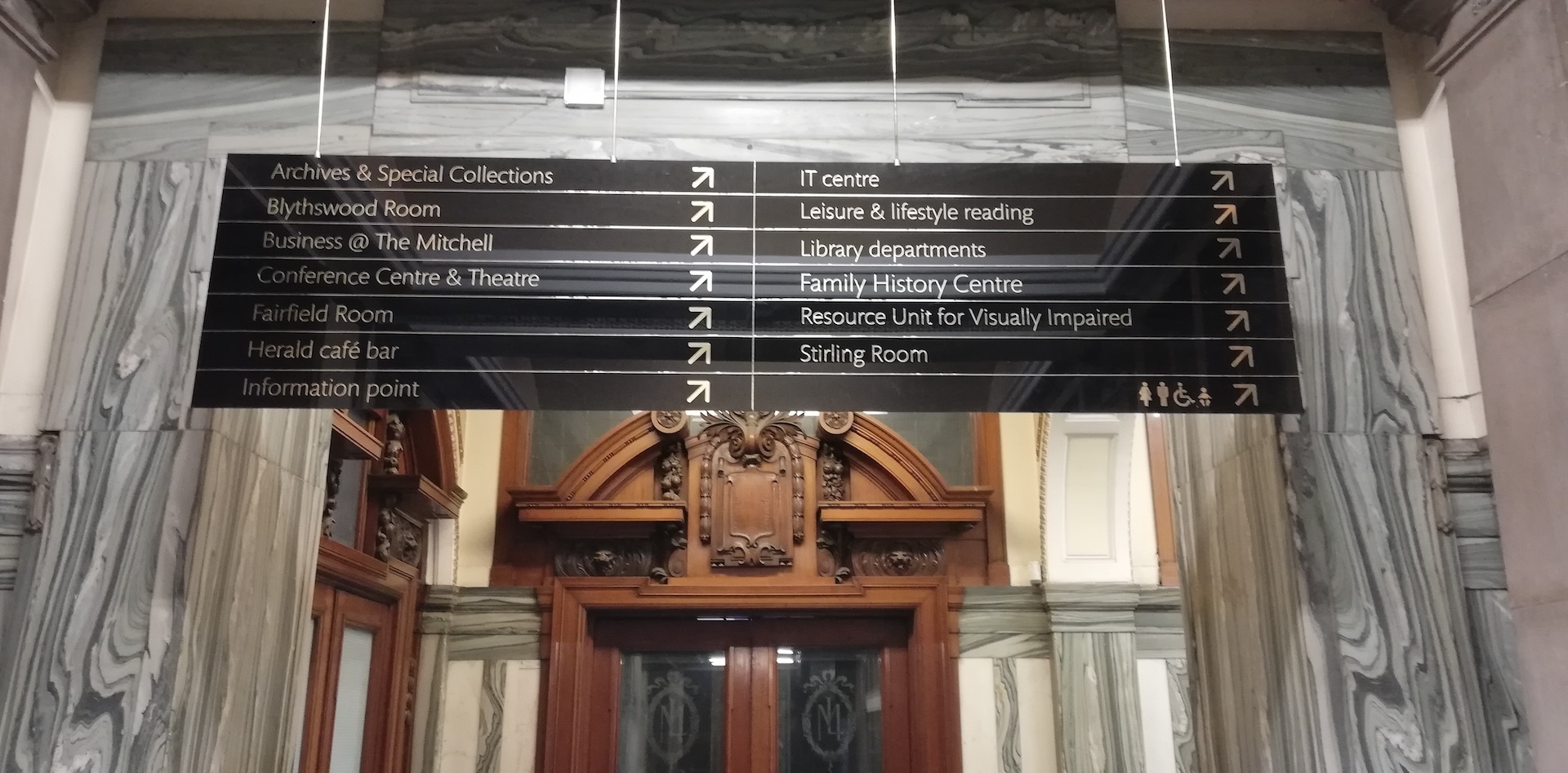
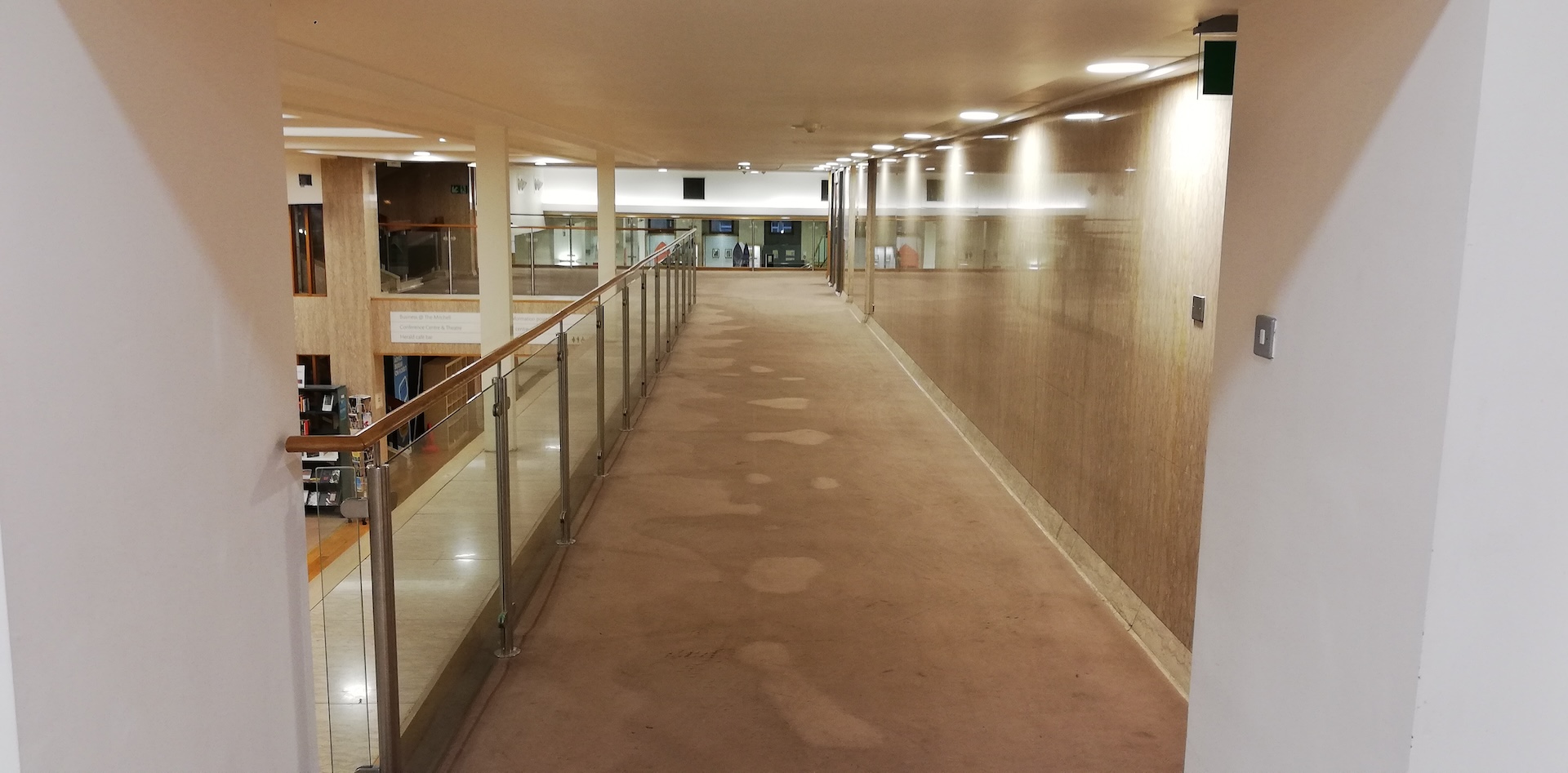
A sudden modern look marks old becoming new. I enter the library’s public spaces, wondering what is in the old building.
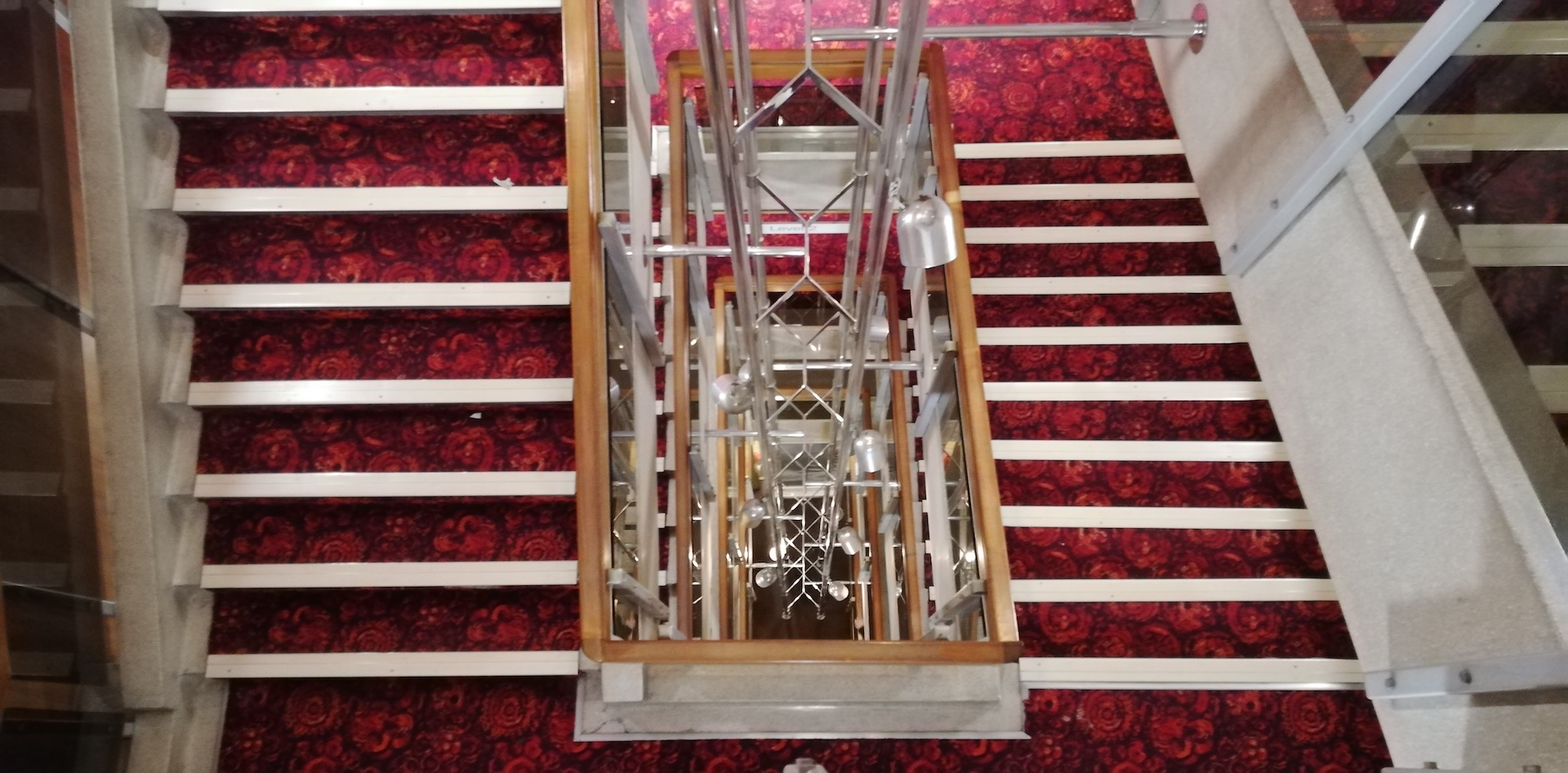
To reach the fifth floor, I ignore the elevators and take the staircase with a 1970s-designed lighting system.
The top floor is the home of the Glasgow City Archives and Special Collections, considered one of the world’s best resources for researching family history.
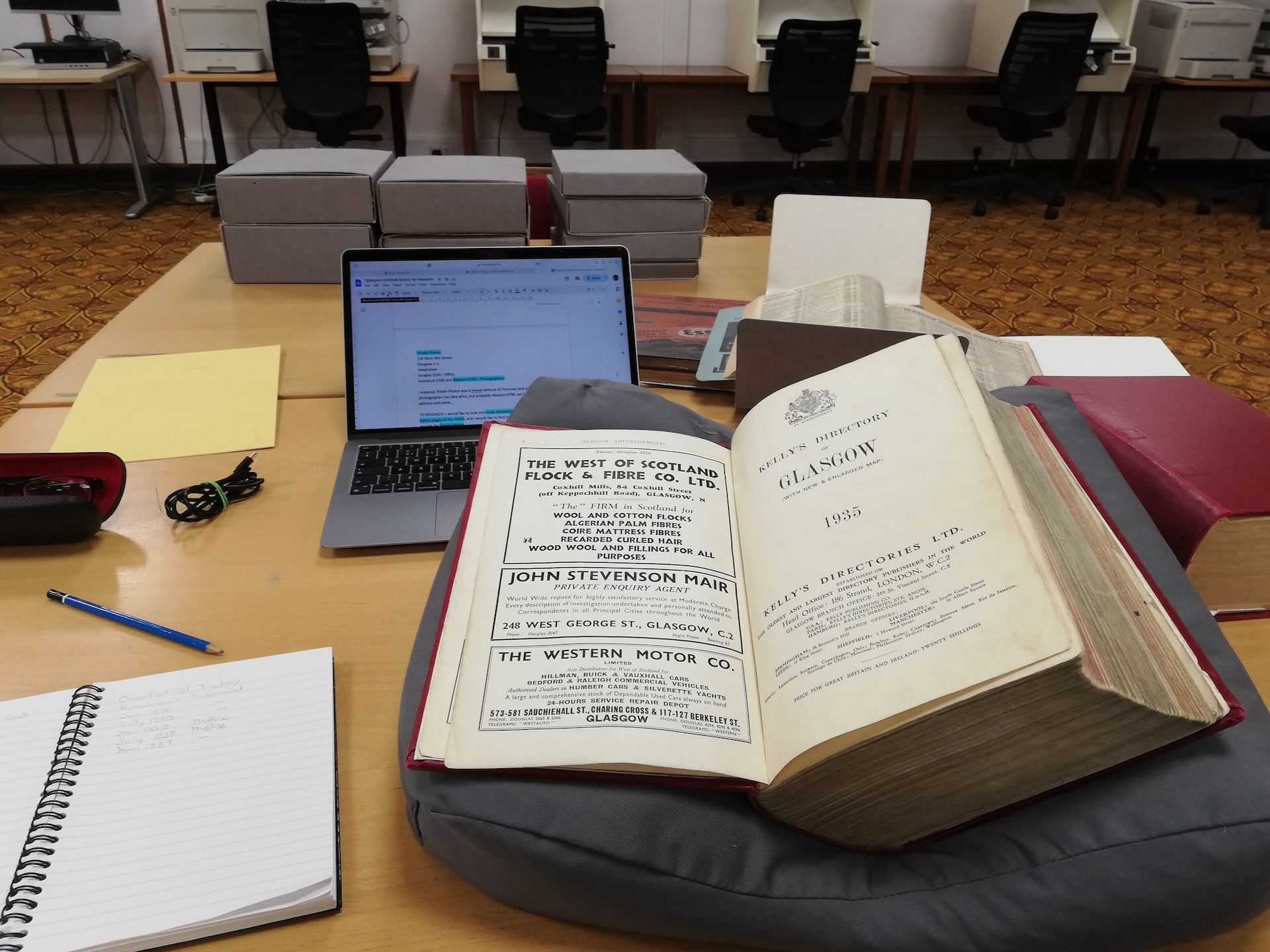
After a brief introduction to my research with one of the helpful librarians, I get started. Ten minutes later, he covers my work desk with brick-sized Post Office Glasgow Directories packages of Phone Books and Yellow Phone Books for Glasgow. All are published in the 1930s, the period I focus on for this week’s research.
Some photographs of W.S. Thomson in the family archive have a stamp on the back with Thomson’s name and address and the name of a photo agency: Thistle Photos. I try to find out when he became a photographer as a profession. Volume by volume I check home and business addresses, names and telephone numbers. At the end of 1936, he became a commercial (press) photographer, and the name of his business, Thistle Photos, only shows from early 1938 to late 1939, when Thomson left Glasgow for Orkney.
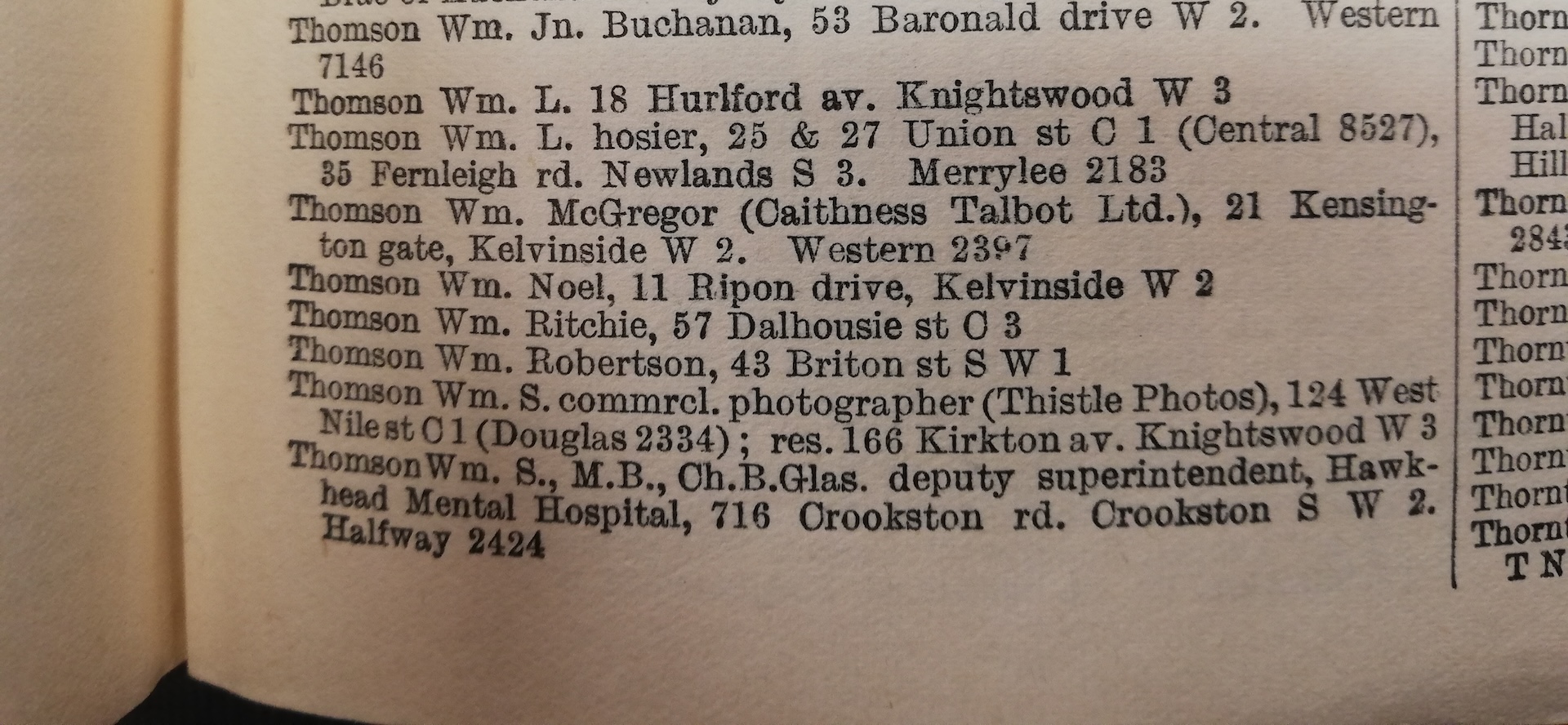
The name of a partner, of which I only have a phone number – Western 6790 – remains a mystery. Even the librarians can’t help me. The directories are not digitised, so to find the name I have to go through a copy of a telephone guide column by column. That will be a job for tomorrow.
I have a short break to eat my sandwiches in the lounge area on the fifth floor and attend a scheduled online meeting with the Woodland Trust for the Londonthorpe Woods project back at home.
During the afternoon, I browse the 1930s copies of Kelly’s Directory Glasgow, which are even more voluminous and detailed than the Post Office Glasgow Directory. I wonder how many people worked throughout the year to get all this data added, checked and placed. Each volume counts about 2000 pages. Kelly’s – a London-based company – made directories for all the cities and shires in England, Wales and Scotland. The old editions of Kelly’s Directories are highly collectable and have also become a helpful reference tool for people tracing the history of local areas.
Just before closing time (5 pm on a Monday), I am asked by a library staff member to pack for the day. Although I haven’t found new facts, I can add details to Thomson’s timeline of the 1930s. The old front entrance, which seems to be the back entrance, is closed, so I leave by what is the main entrance in Granville Street, at the other end of the large building.
It is raining, but in two minutes, I am at the apartment where I am staying for the week. An evening of reflection awaits.
This research trip is partly sponsored by a grant from the Scottish Mountaineering Trust