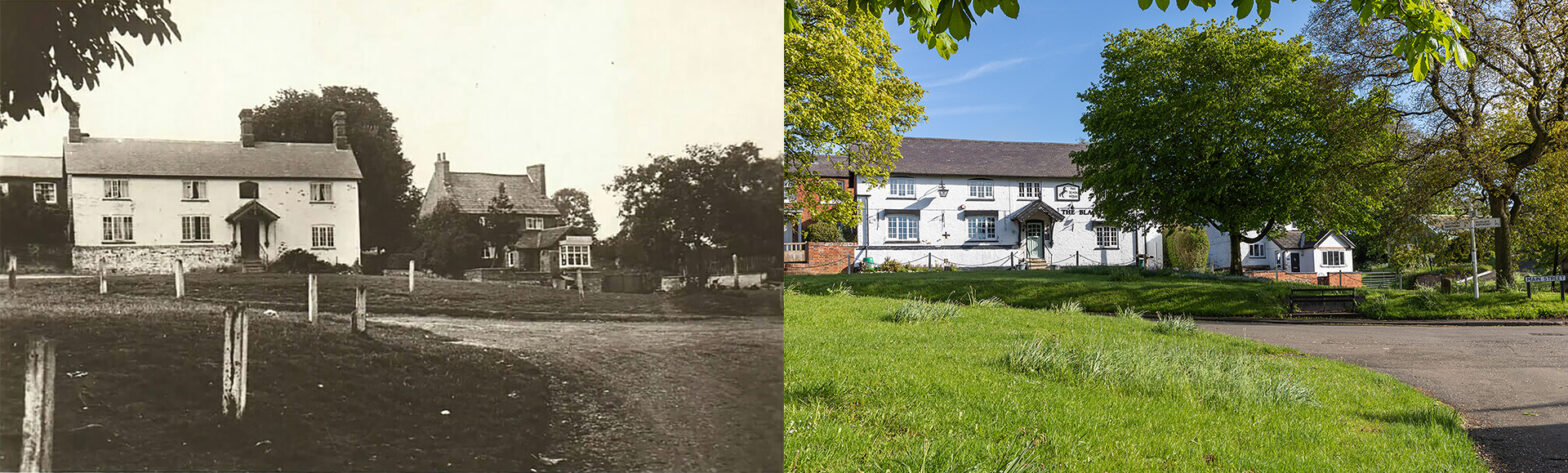
The Black Horse Inn – 1916
Besides the village hall, the church, the post office and the local shop, the pub is one of the traditional and basic elements of village life. Standing on the village green facing The Black Horse Inn, with the old post office on the right, I wonder how much of the village’s soul has disappeared after the pub closed unexpectedly in January of last year to the dismay of many locals. A few months later the owners filed plans to convert the building into housing and create a much smaller micropub. One of the villagers reacted: “I have been going to The Black Horse Inn on and off for 48 years and never for one minute, dreamed it would be anything other than a traditional English public house. It must be retained as what it is, a pub as a part of the heart and soul of the village.”
The Black Horse has served the people of Grimston since 1828. Another old postcard dated 1899 pictures Arthur Wardle the publican with his wife Rhoda and Mrs Sharpe at the front of the inn. Where the bus shelter is now located, stand three of their children: Ethel, Thursa and Leonard Wardle.
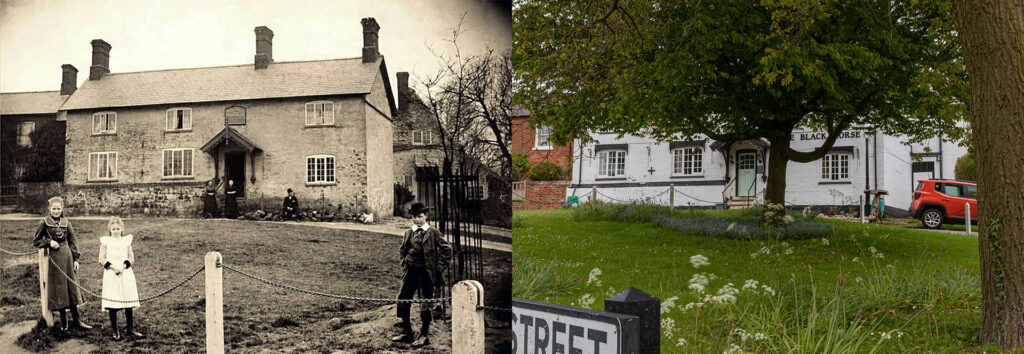


The Grantham Journal of 27 January 1923 mentioned the death of Rhoda: “A gloom was cast over the village on Wednesday week, when it became known that Mrs. Arthur Wardle had passed away during the previous night. The deceased was the wife of Mr. Arthur Wardle, of the Black Horse Inn, and had suffered with heart trouble. The interment was at Radford Church, Nottingham, on Friday. Deceased was aged 67. The deepest sympathy is felt for her sorrowing husband and nine surviving children.” The Grantham Journal of 15 September 1934 wrote: “Grimston loses another old inhabitant this week, in the person of Mr. W. Wardle of the ‘Black Horse’ who is retiring and taking up his abode at Nottingham. Mr. Wardle who is aged 77, had held the licence of the village inn for forty-five years, and leaves with a clean record. Mr. Whittington, of Bourne, is his successor.” That same year, October 7th, Arthur W. Wardle died. The funeral for the popular host at The Black Horse Inn was held two days later in Old Radford Church in Nottingham.
“My maternal grandfather Alfred Henson was the landlord during the 1940s and 1950s”, says Ian Riley, born in 1956. “My mother always said, because I was reluctant to emerge from the womb, that the doctor told her to go and lift a few barrels at her father’s pub.” Alfred Henson became the licence holder in May 1940. He took over from Ada E. Whittington, as mentioned in the Grantham Journal edition of 31 May 1940. Ada’s husband John Thomas Whittington died in April 1940.
The Black Horse Inn was advertised for sale in the Grantham Journal of 15th and 22nd February 1957 with a 6-day licence.
Susan Robinson recalls: “When we lived in the village in the 1960s, Mrs Read was the landlady. She also had a shop at the back of the pub.” Julie Fisher adds: “I remember going there for so-called 1p sweets. Not sure why, because we used to get 4 for a penny back then.”
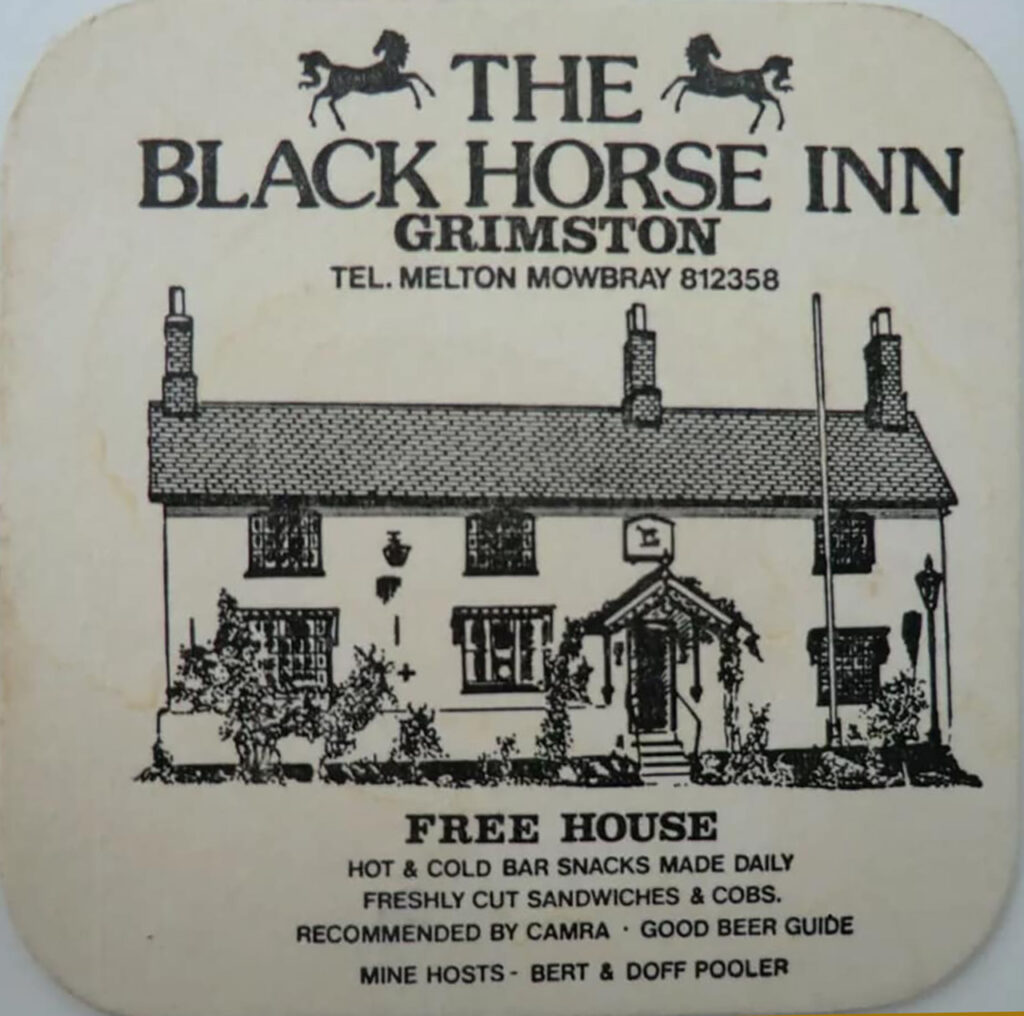
On a Black Horse Inn beermat, Bert and Doff Pooler advertised the free house serving hot and cold bar snacks, and freshly cut sandwiches and cobs. Bert, experienced in buying the best beers and wines, and Doff, proud of her standards in the kitchen, were much loved in the village. It became a mecca for food, and cricket fans because there was a room with cricket memorabilia.
But, will the pub come back? After a year-long legal battle, last January a judge upheld the place as an ‘asset of community value’ and there is hope the historic pub’s place in the heart of Grimston village life can be safeguarded for the future.

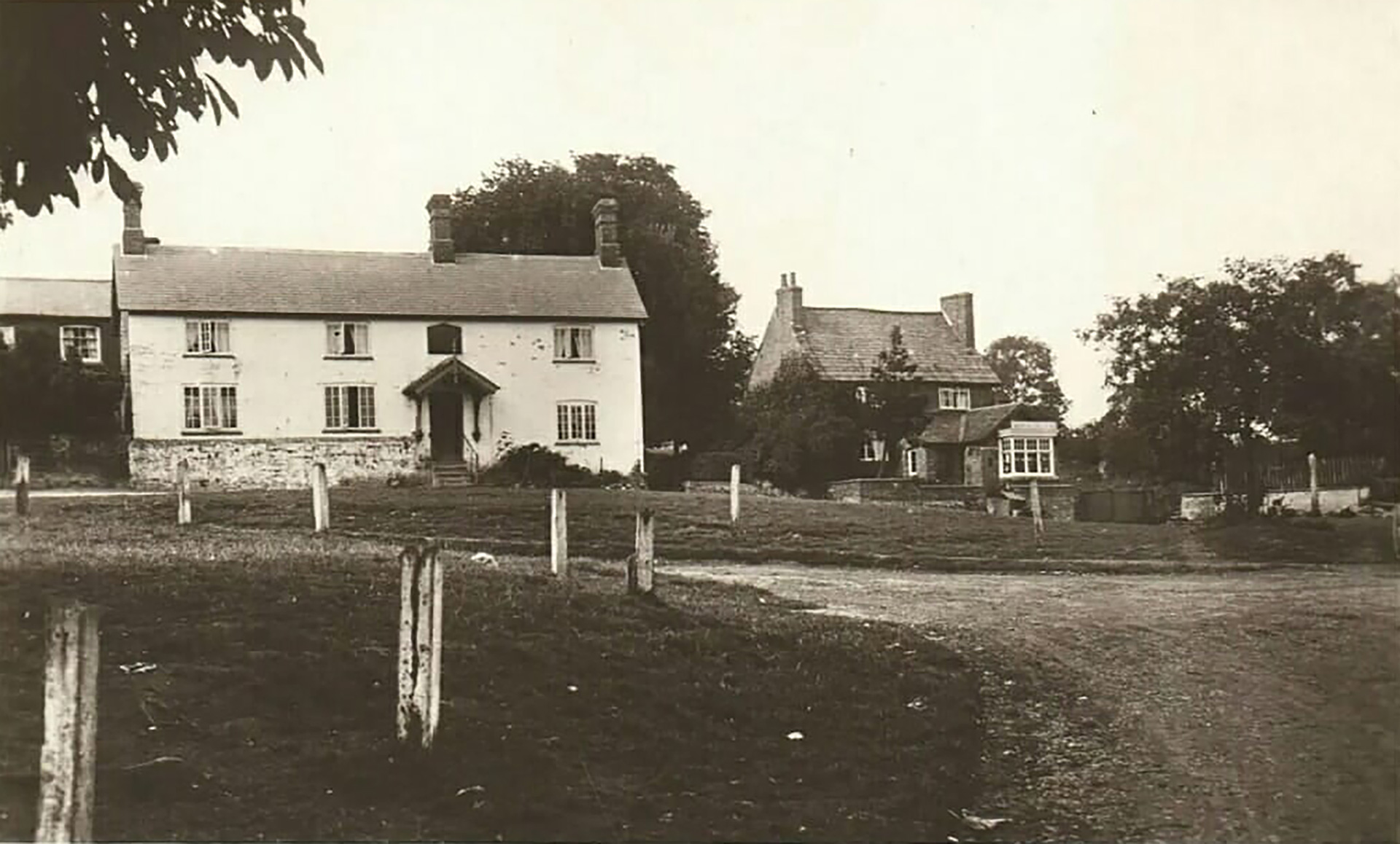
Main Street

A view on Main Street facing east show at the left two Grade II listed 18th-century cottages, called ‘Yew Tree Cottage’ and ‘The Cottage’ altered in the second half of the 20th century. The original red brick has been painted.
At the centre at the back stands the Wesleyan Methodist Chapel originally built in 1839/40, providing 20 free and 24 other sittings in 1851. By 1860 the original building was subsequently extended. From 1873 on the chapel provided seating for about 100 persons. Situated at the north side of the road to Saxelbye, at the point where it turns sharply southeastward, it seems to have been demolished to make way for the new chapel built in 1892.
On the right side of the road, a water pump is situated on the grass verge. The old picture shows a more sturdy pump and is fenced..

