Since 2021, photographer and historical researcher Estelle Slegers Helsen wanders around Lochaber in the footsteps of the Scottish photographer W.S. Thomson MBE (1906-1967). She takes photographic remakes roughly 75 years after Thomson initially captured the landscape and talks to local people along her journey. This is article #18

‘The road from Loch Ailort to Arisaig is colour and variety all the way, with a certain scintillating light that impregnates everything,’ writes the Scottish author Wendy Wood in the introduction to W.S. Thomson’s booklet Let’s See Mallaig and the Road to the Isles. Written around 1950, I take these words for granted as I drive east from Back of Keppoch to Lochailort because the sky is filled with mist. Nothing sparkles on this Sunday morning a few days before the summer solstice.
The winding road, popular with tourists, is almost deserted. After two fruitless stops in the quest to remake a photo of Loch nan Eala (Loch of the Swans) and Loch nan Uamh (Loch of the Cave), I park my car in a lay-by along an old part of Telford’s Loch na Gaul road. Next to the road runs the West Highland Railway line. I have an improvised brunch from the boot of my car looking across at Polnish Church, which stands out on account of its white paintwork.
Suddenly a van arrives. The driver hits the brakes. A man and a woman jump out. Both are carrying a camera with a telephoto lens. I wonder what is happening. As the penny drops, puffs of smoke appear. The Jacobite Train is on its way. Cameras are clicking. The train chugs by.
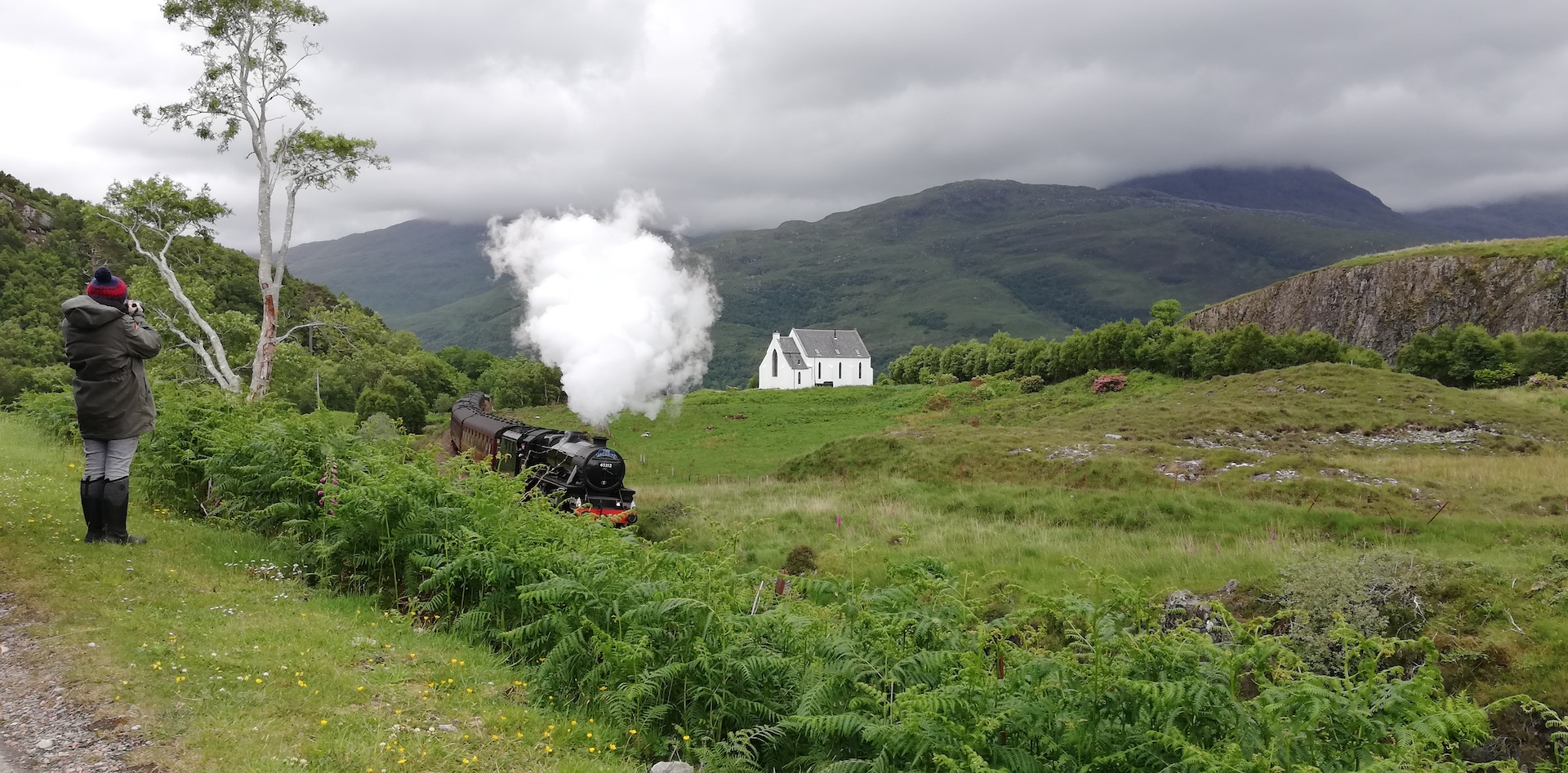
The photographers jump back into their van and speed away to get ahead of the train for their next photo opportunity.
As I rescan the horizon looking southwest, cloud still covers the mountains. I wonder why Thomson didn’t capture this scene: the Our Lady of the Braes, a stirring Roman Catholic landmark, as a simple white buttressed box with gothic glazing, viewed from the road with the barren Rois-Bheinn range as a backdrop.
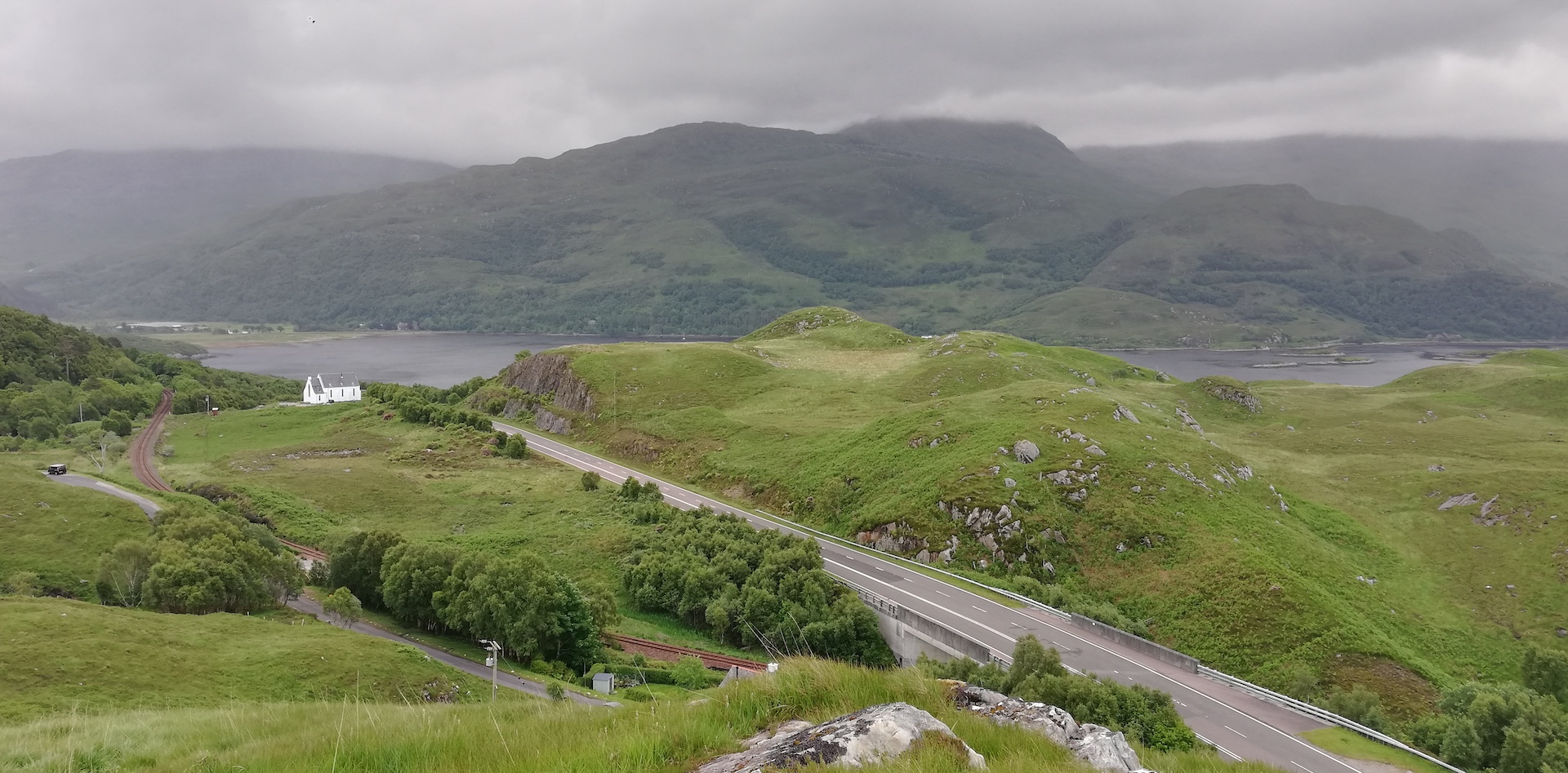
Established in 1872, the church served the now deserted townships of Ardnish and Polnish. The building, abandoned in 1964, was a location in the Scottish comedy-drama film Local Hero (1983, directed by Bill Forsyth) and is now converted into a home.
To remake Thomson’s rocky, empty-like black-and-white photo entitled Roshven from Polnish, I need to be somewhere on the flank of the Beinn Chaorach, to the northwest of my current location. Leaving my car at the end of the old road opposite Polnish Station Cottage, I climb up through heather and tall grass.
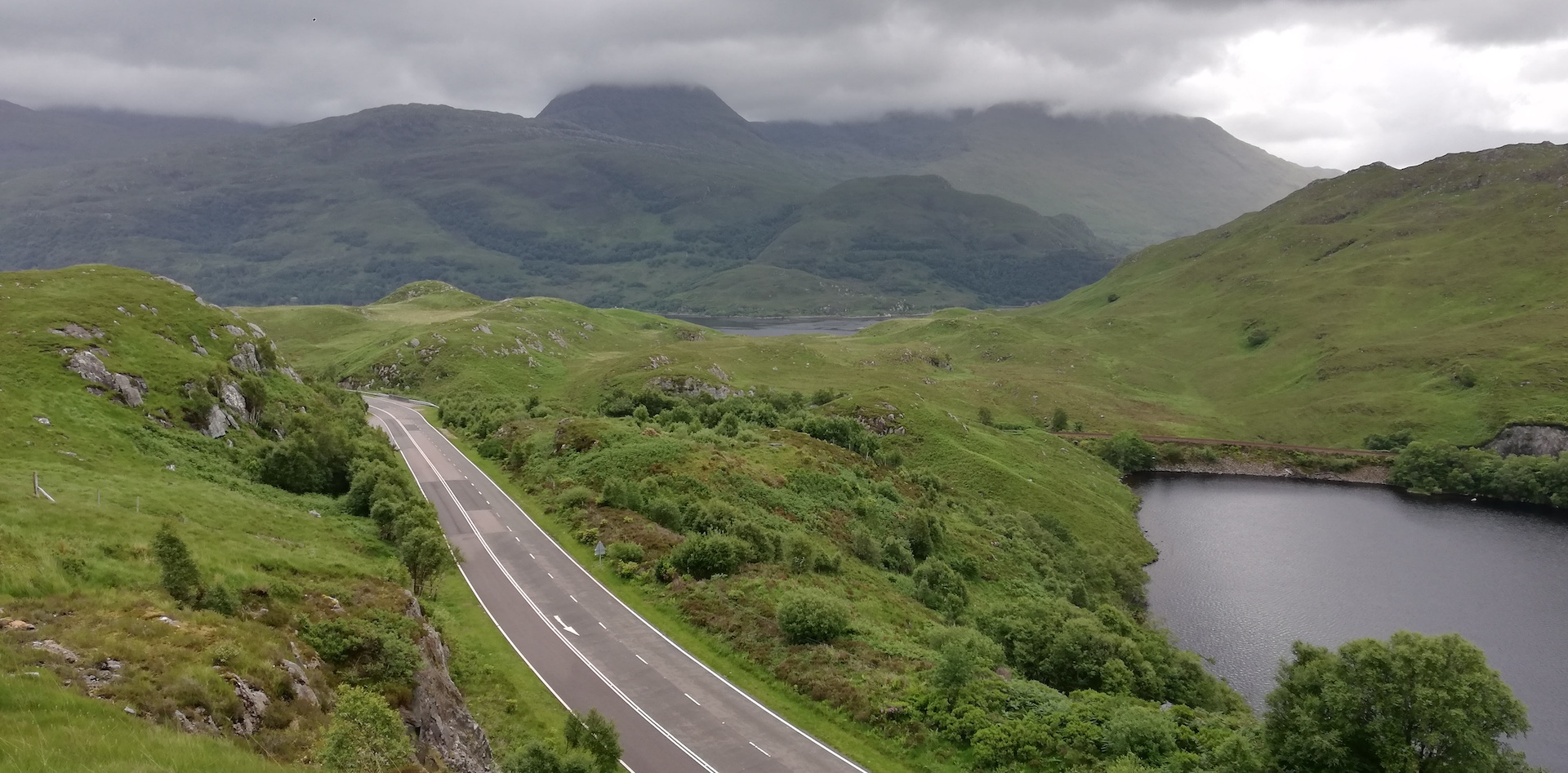
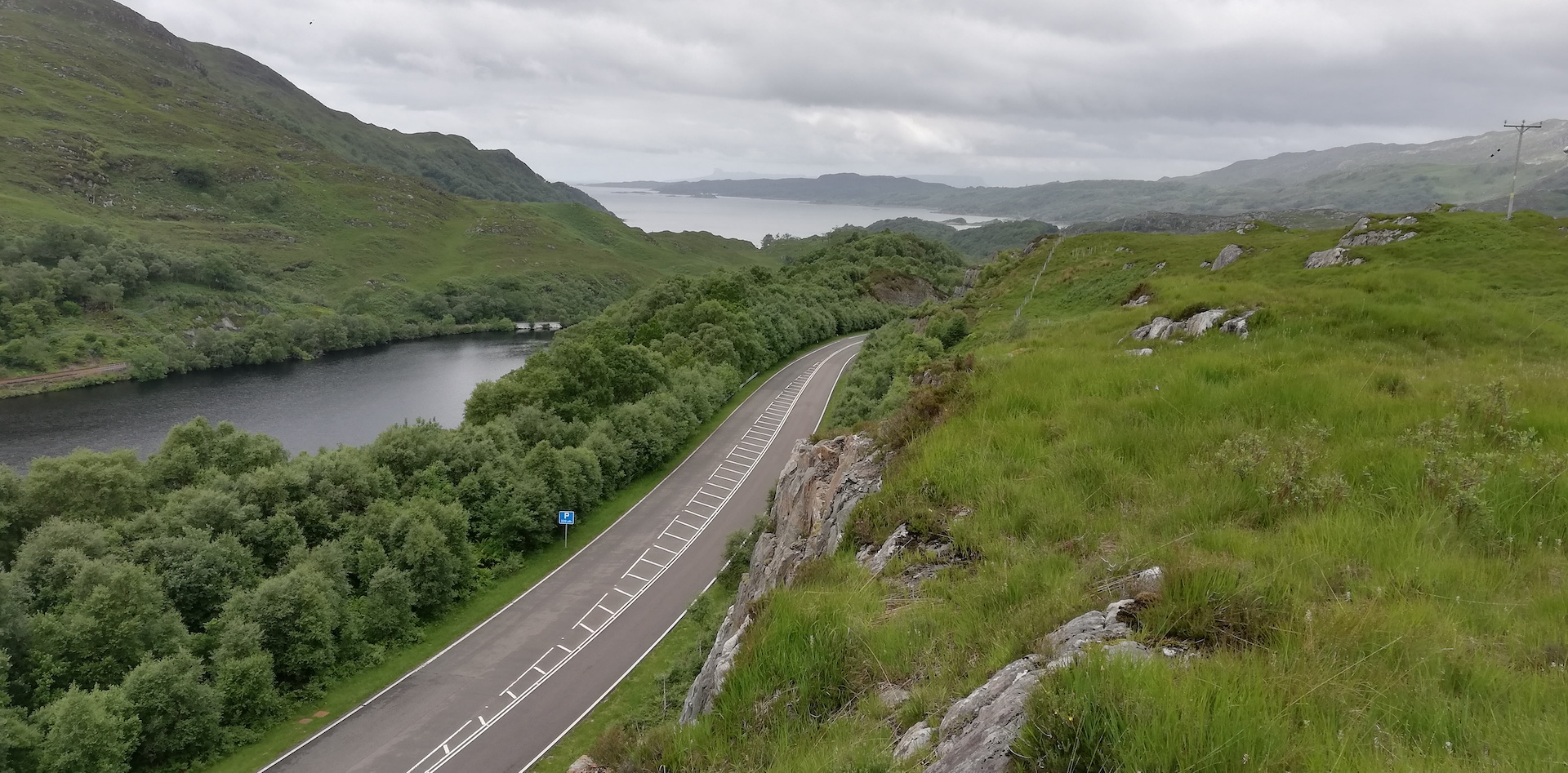
I plant my tripod on the rock-solid ground between a new double power line and a low fence, which keeps sheep away from a steep drop onto the main road. Leaving my camera backpack safely tucked away, I search for rocks similar to those in Thomson’s photograph.
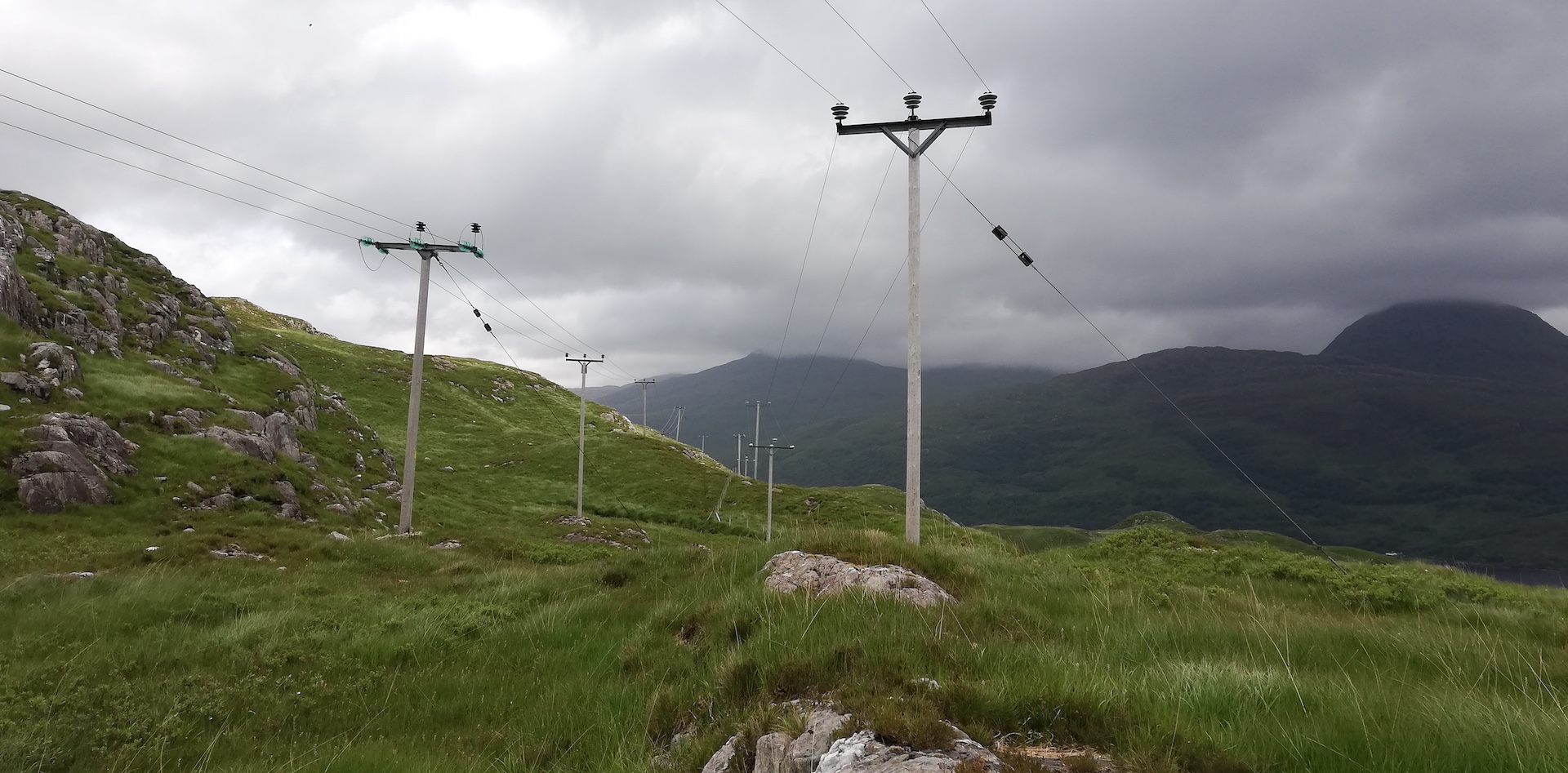
Occasionally sunbeams break through the clouds and highlight patches of tough grass. The wind strikes what looks like an empty landscape. After squandering an hour, I give up. Nevertheless, I take a remake.
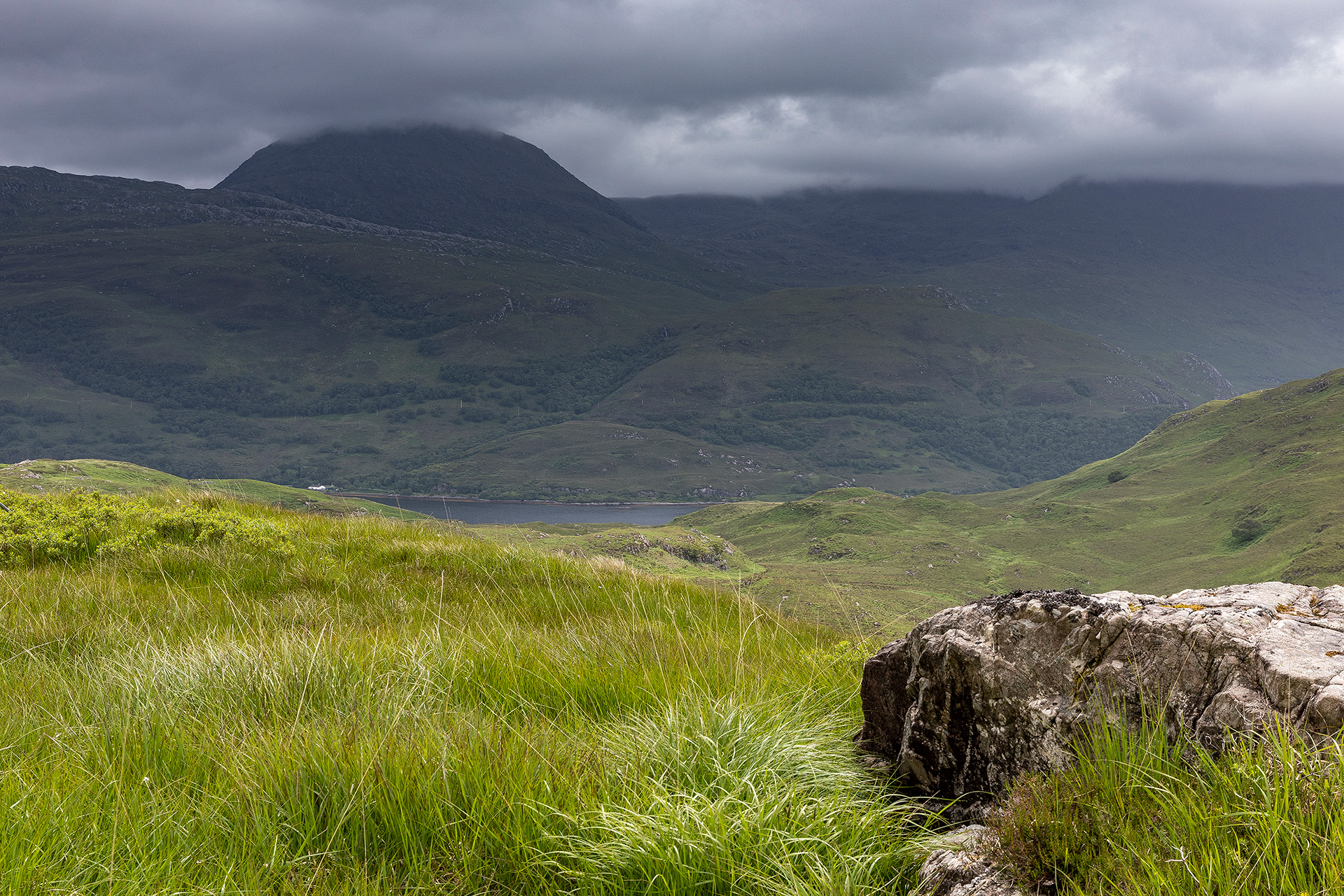
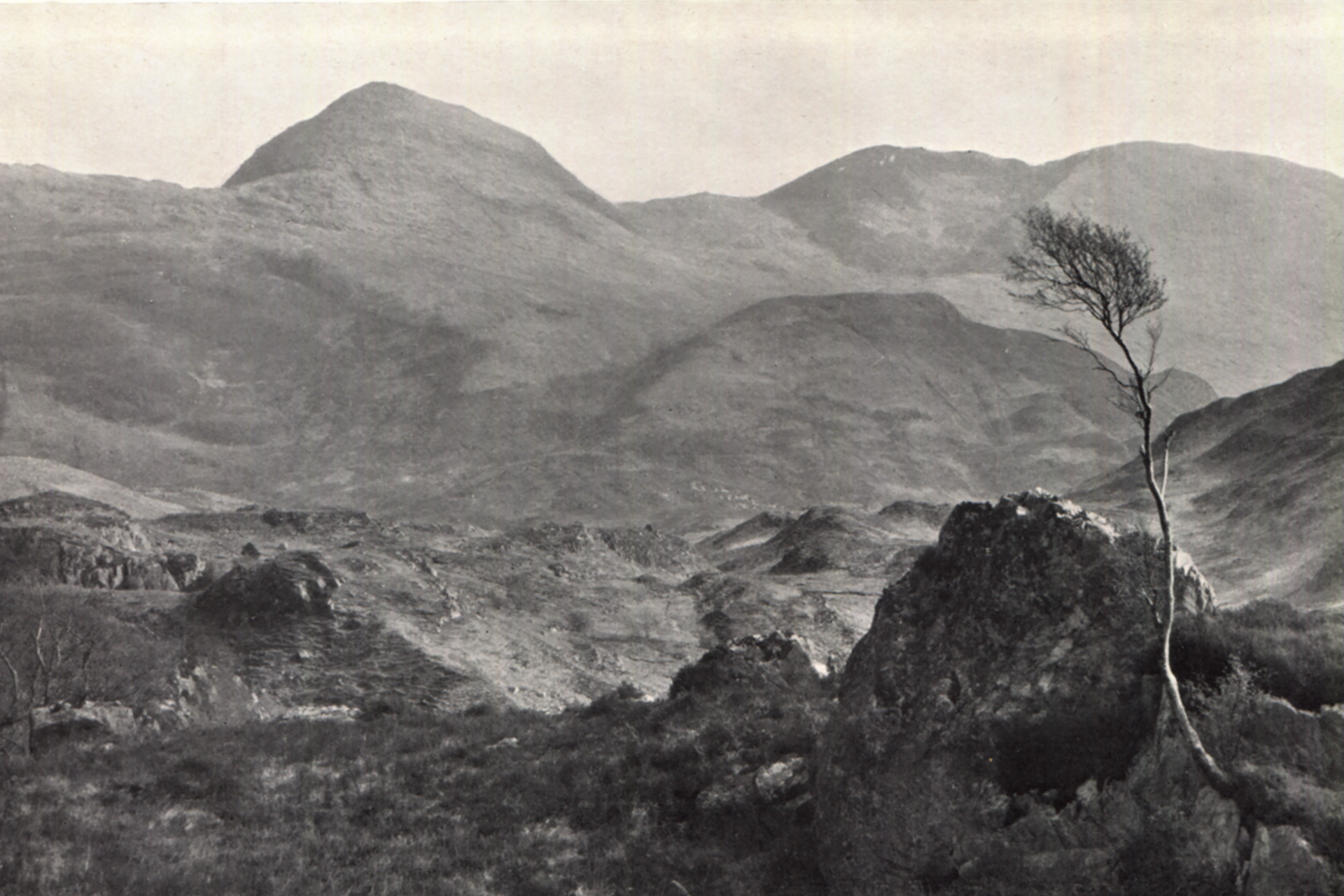
Move the slider to discover what changed.
Then (left) – Late 1940s © W. S. Thomson – Roshven from Polnish. Published in Let’s See Mallaig and the Road to the Isles, p.11.
Now (right). June 2022 © Estelle Slegers Helsen – Roshven from Polnish.
Although it seems an adequate attempt, the foreground isn’t right. Also, Thomson’s photo, which he took 70 years ago, doesn’t show Loch Ailort, which was obscured by the irregular smaller hills. In the remake, you can see the white office depot of Marine Harvest Ardnish along the A861 from Lochailort to Glenguig and Kinlochmoidart, which in Thomson’s era was a footpath.
I try to imagine how hard life must have been in the past around Polnish and the wider area, with bad weather sweeping in from the west, limited scope for making a living from the land and poor transport. People surviving with the basics or even less, working the nearby sea lochs and further out on the open sea; both an indispensable lifeline and a life-threatening danger.
Documents indicate that the settlements, such as Peanmeanach and Lower Polnish, along the Ardnish peninsula were thriving communities. Peanmeanach was at the south end and the 1841 census shows that 48 people lived there in seven houses. Nellie MacQueen was the last resident and left her property in 1942. That house is now a bothy. In Lower Polnish, one cottage has also survived. It is only accessible by a 300-yard walk. All this is overlooked by two prominent mountains, Sgùrr na Bà Glaise (Peak of the Grey Cow) on the left and Rois-Bheinn (the Horse Mountain) on the right and forms part of a scene that will still be here in many centuries to come.
For my next visit, I hope to catch Wendy Wood’s ‘scintillating light that impregnates everything’.
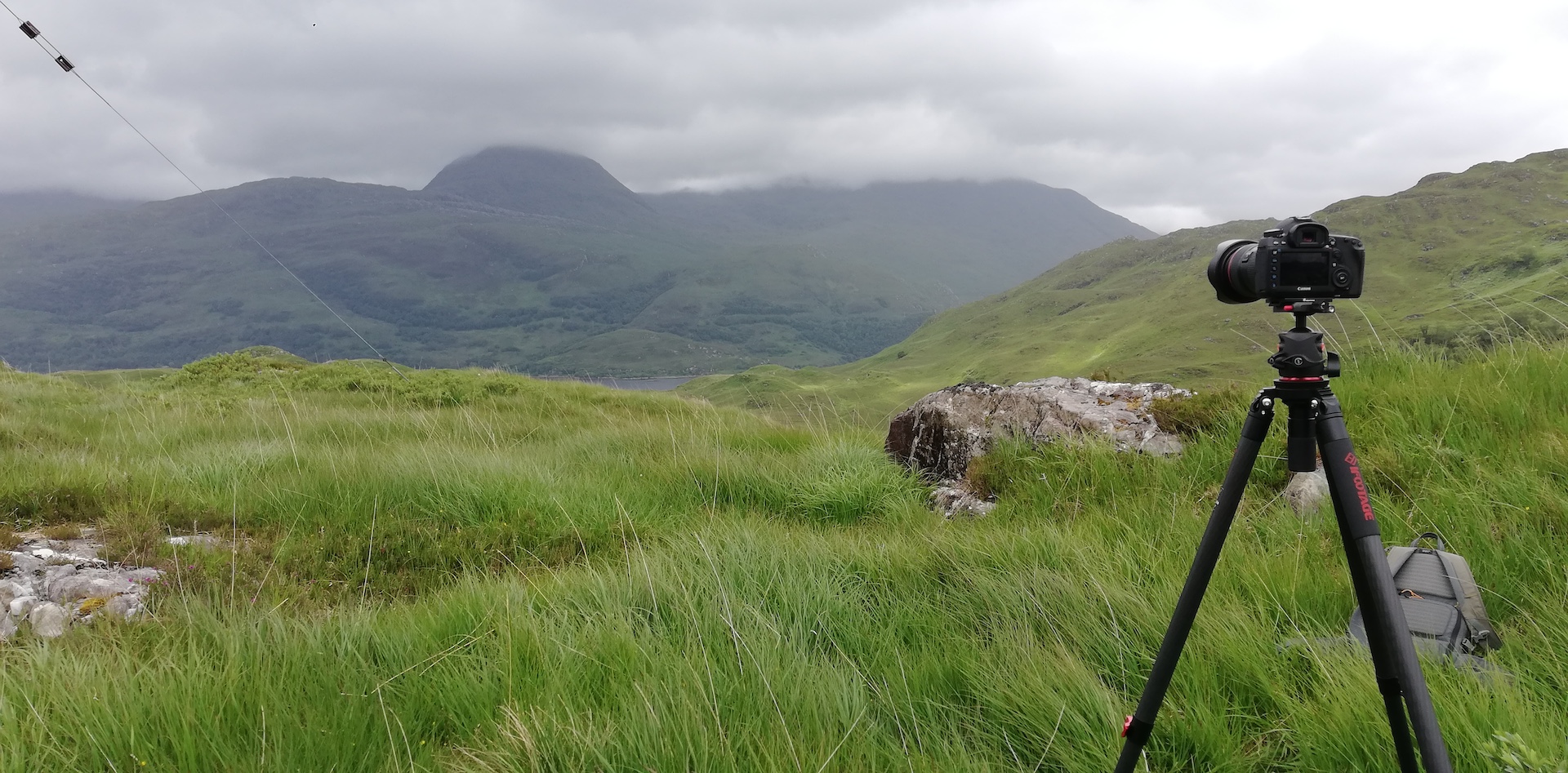
Where I stood for the remake.

Travel in Time – Lochaber Series is supported by the West Highland Museum and the Year of Stories 2022 Community Stories Fund.
Estelle has published a 64-page book with 30 side-by-side then-and-now pictures, which you can find in local shops or buy online. More information available here.
