
To Ullapool
After an early rise, I make breakfast and pack my stuff slowly. All has to be in place in the car to keep travelling comfortable. It is a sunny day, so summer is back again. Today, the trip will go further Up North to Ullapool with possible stops at the Gruinard Bay View Point, Badcaul, Dundonnell, along the Destitution Road and Braemore Junction. The whole drive is known territory, but taking a left at Braamore Junction will be the first time because I have never been to Ullapool. Exciting…
I visited Gruinard Bay View Point for the first time in October 2021, having yet to learn about the history of this notorious bend in the road. For Thomson, this place was one of his favourite spots, just as the view over Loch Maree to the Slioch. I catalogued at least 5 photographs, mostly in colour. A back-and-white picture is published in a book on Scottish and Alpine mountains written by scientist, mountaineer, and Scottish Mountain Club (SMC) member J.H.B. Bell, a friend of Thomson.
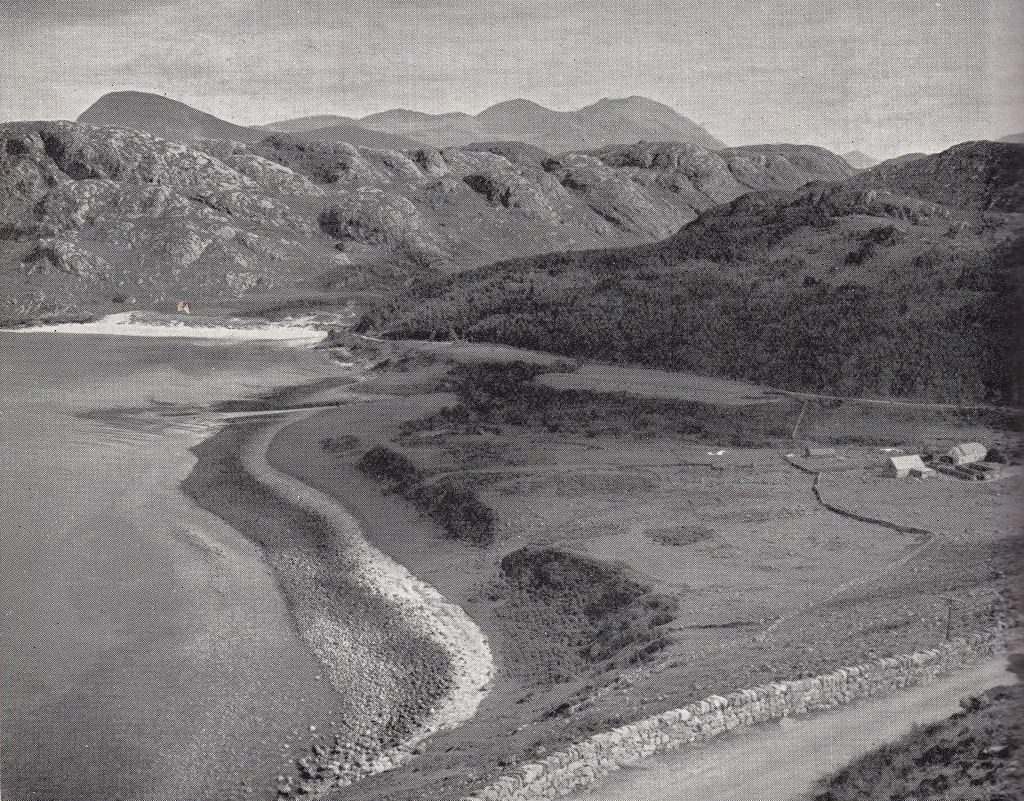
In February this year, I discovered Thomson is mentioned several times in Bell’s climbing notebooks, which are kept in the National Library of Scotland in Edinburgh as part of the SMC archive.
The view from the Gruinard Hill is also one of my favourites. In the foreground, the road makes a dramatic sharp turn right. Steeply down the hill, sea waves splash on the shores of the sandy bay. A range of mountains makes a shark teeth-like backdrop. Three well-balanced horizontal layers take one-third of the picture’s height.
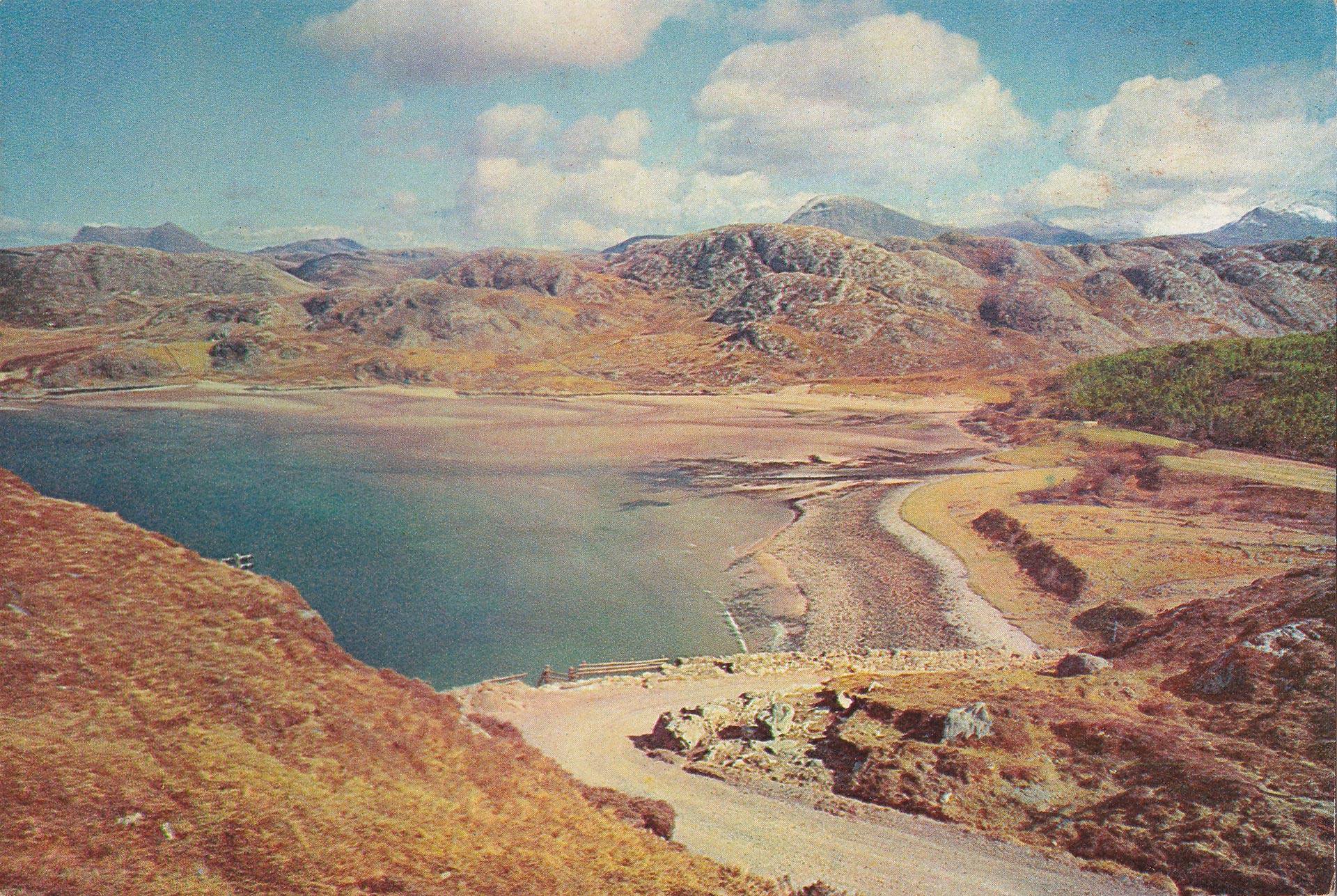
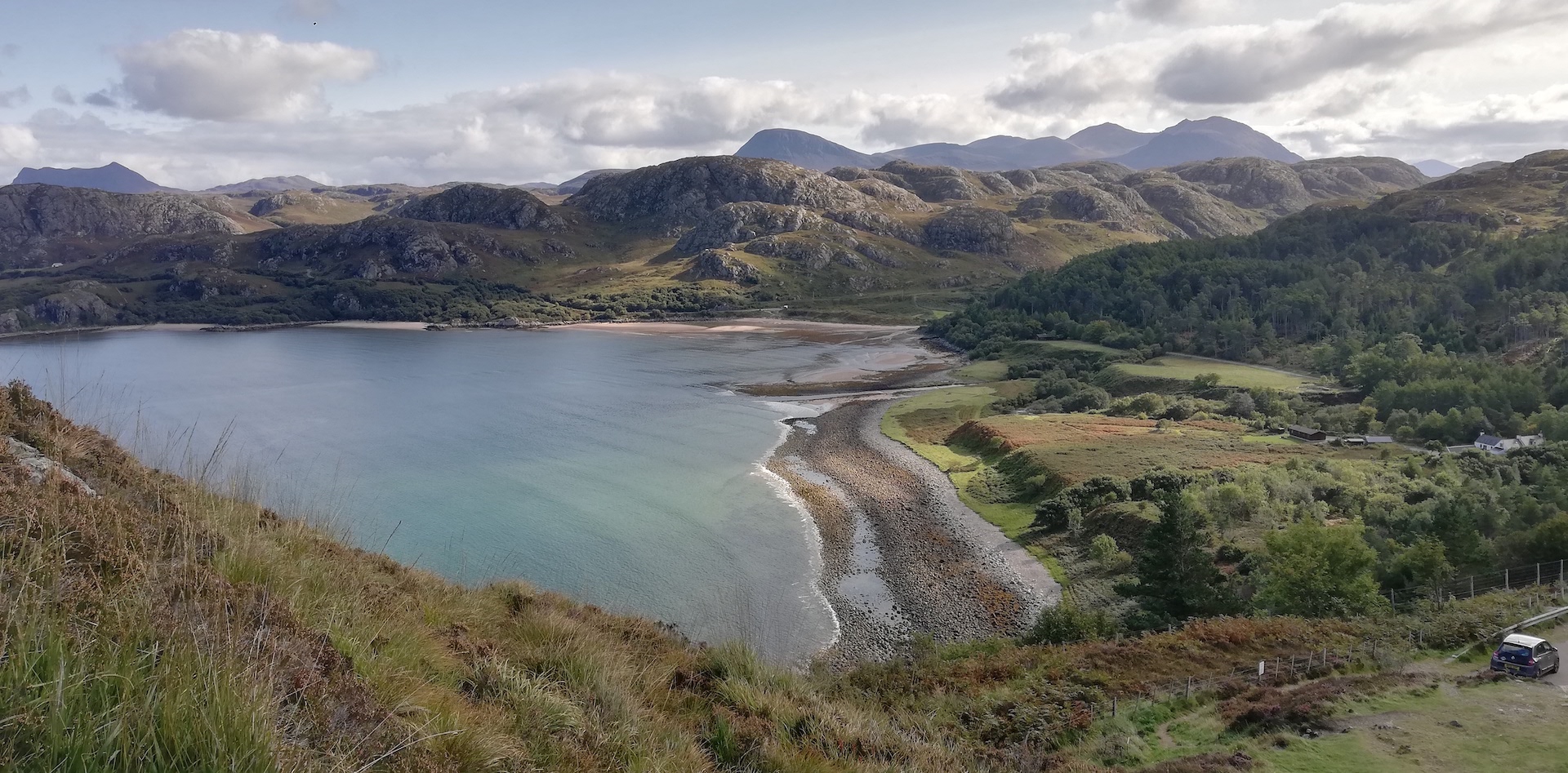
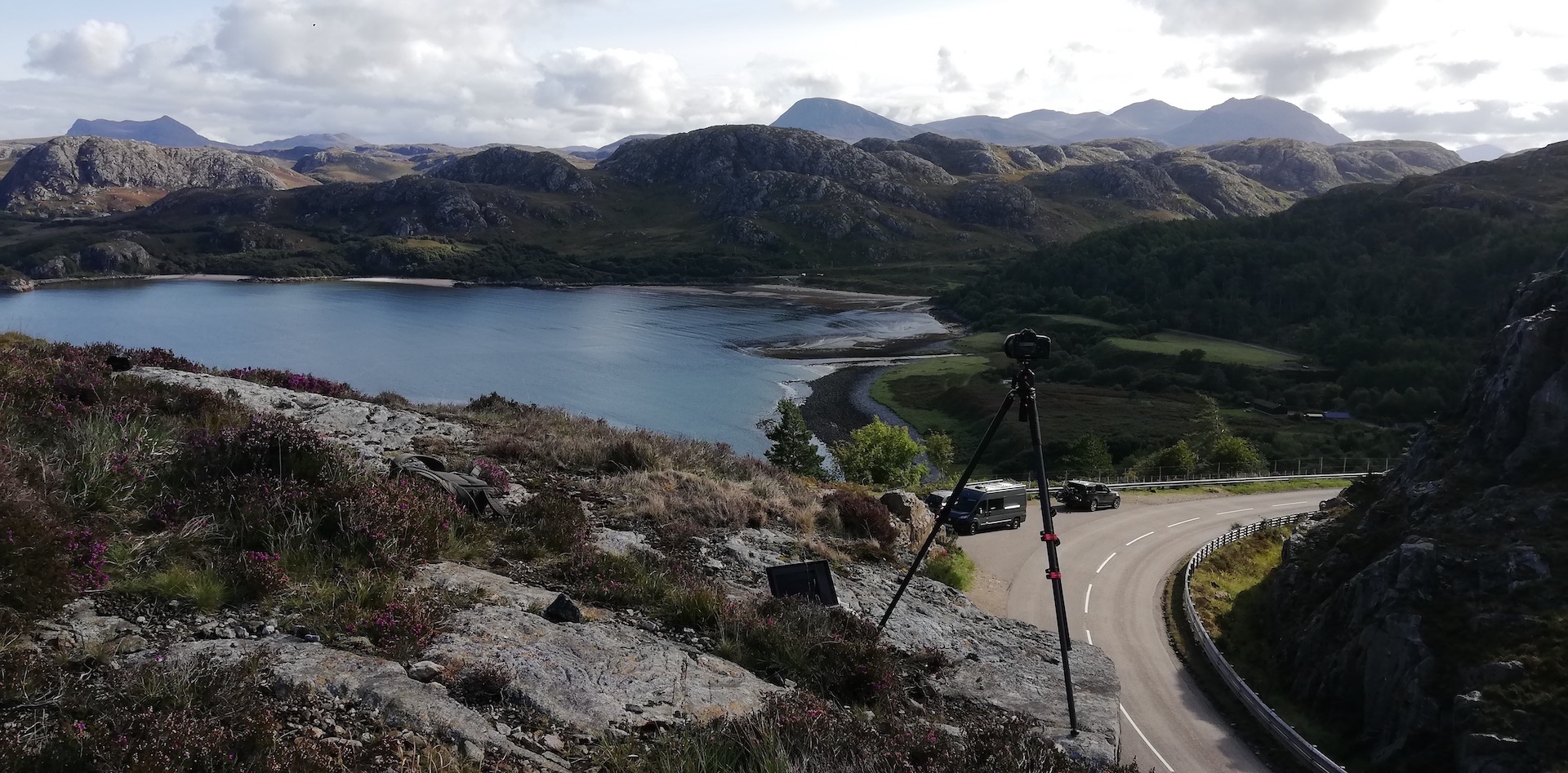
The road was altered and widened a few times during the past century. At the end of the 19th century, there was still a 90-degree angle in the road. The bend was smoothened out in the first half of the 20th century. About 60 years ago – after Thomson took his photographs in the late 1940s – drastic actions were taken to widen the road and remove tons of rocks. The latter is why remakes from the same spot where Thomson stood with his camera aren’t possible anymore unless I could float in the air. With a drone, maybe? No, that is not up for discussion. I make a few remakes anyway, standing with my tripod on the edge of the rock, with a 30-foot drop at my right. I am more than cautious in such circumstances. The home front is not very keen on knowing actions like these.
Further on, then to Badcaul, but before arriving, I take a lunch break at the spacious car park with a spectacular view over Little Loch Broom and the Beinn Ghobhlach mountain on the peninsula opposite. A purpose-built garage was constructed as the set for Shell, a 2012 independent drama film directed by Scott Graham. It is a film with a lot of solitude, about the story of Shell, a girl who lives with her father Pete in a remote gas station in the Scottish Highlands, and their struggle against the elements and the impossible love they feel during the last winter that she will be in that place.
For the Badcaul photograph, I park my car in a lay-by in front of a Scottish Water site.
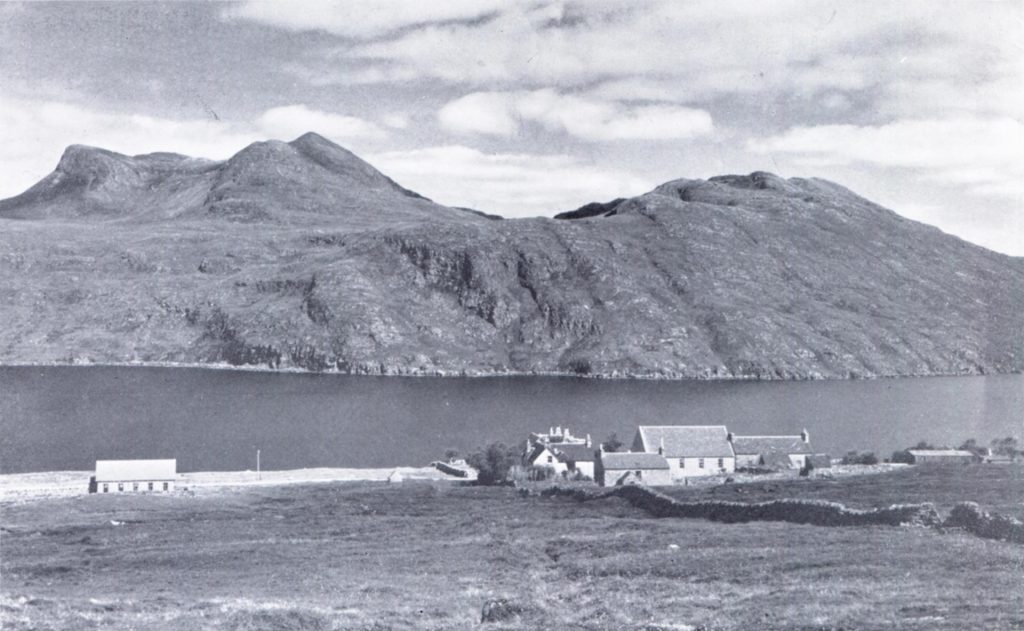
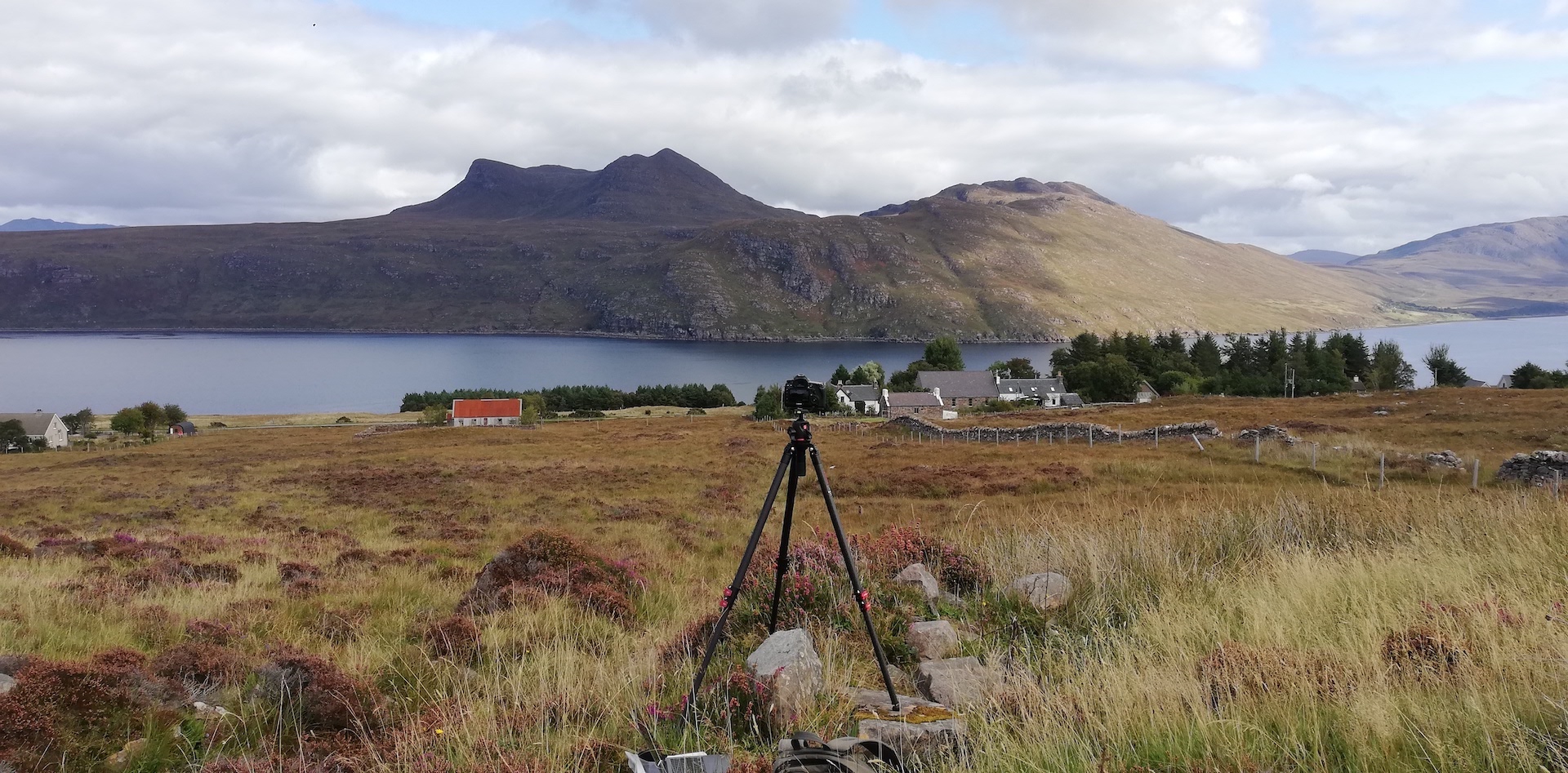
Everything in the picture is still present. The result is a close match. The schoolhouse on the left is derelict. A remarkable feature is the dry stone on the left of the image. Every stone is still in place, gaps and tumbled-down parts included.
Although the weather is still summer-like, I drive to Ullapool, enjoying the barren landscape surrounding the Destitution Road. My tent broke last week, and I need a new one. The Ullapool Outdoor shop provides a small selection of tents – I checked it online – and having a new tent is essential to my venture. With a new green tent in the car, I wheel on to Ardmair, about 10 minutes north of Ullapool, with the Summer Isles in the distance. The Summer Isles is the title of an adventurous book by Philip Marsden about a sailing boat trip from the west coast of Ireland to the Summer Isles. I have never sailed, and it will never become a passion, but I would like to make a long sailing trip in the west Scottish sea waters.
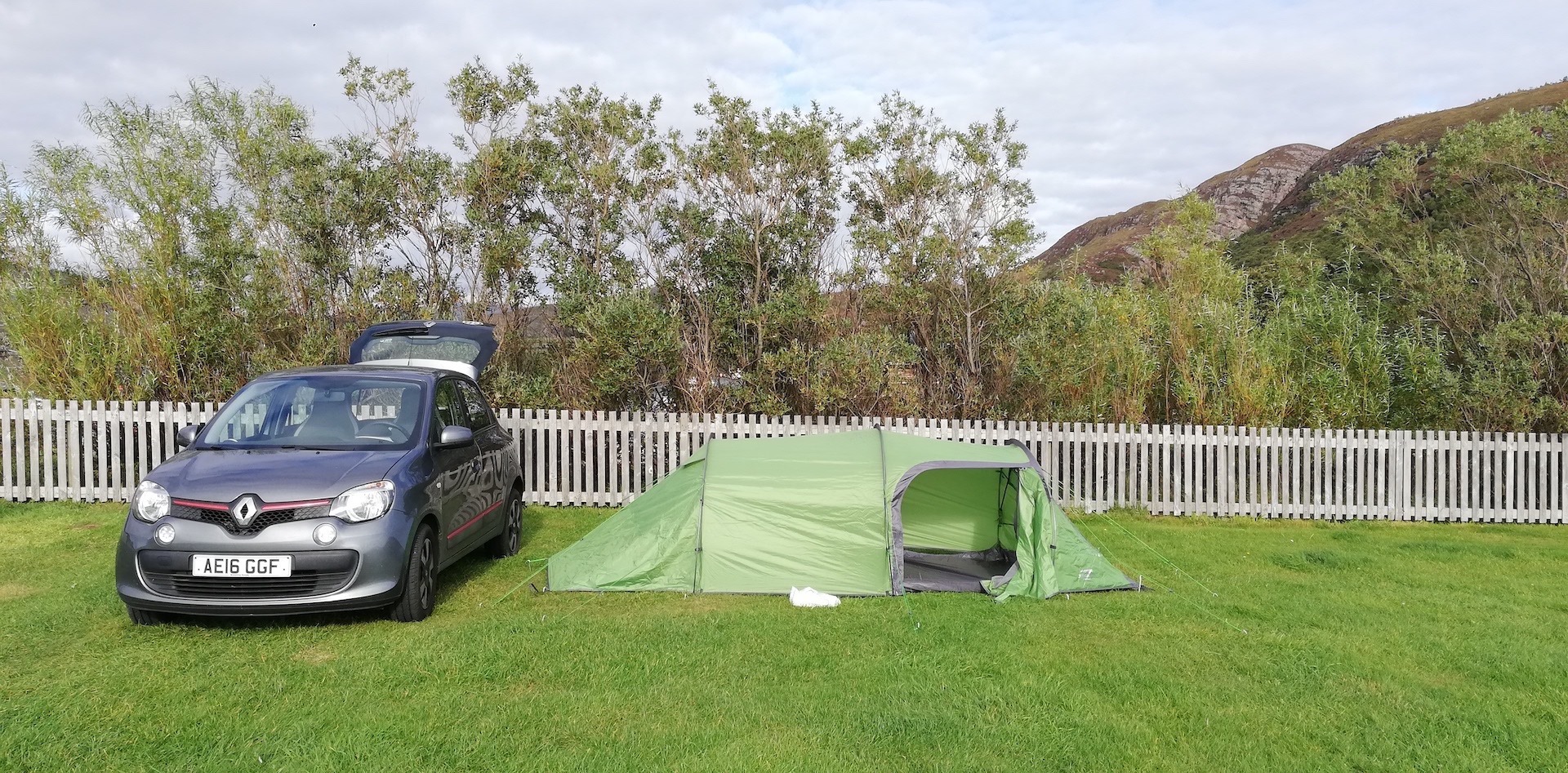
Pitching the tent – a generous-sized two-person tunnel tent with a porch area – at the Ardmair Campsite takes about an hour. Reasonably, because it is all new.
I take a lazy late afternoon and enjoy a coffee and lemon cake in Ullapool with a view of the harbour, the marina and Loch Broom.
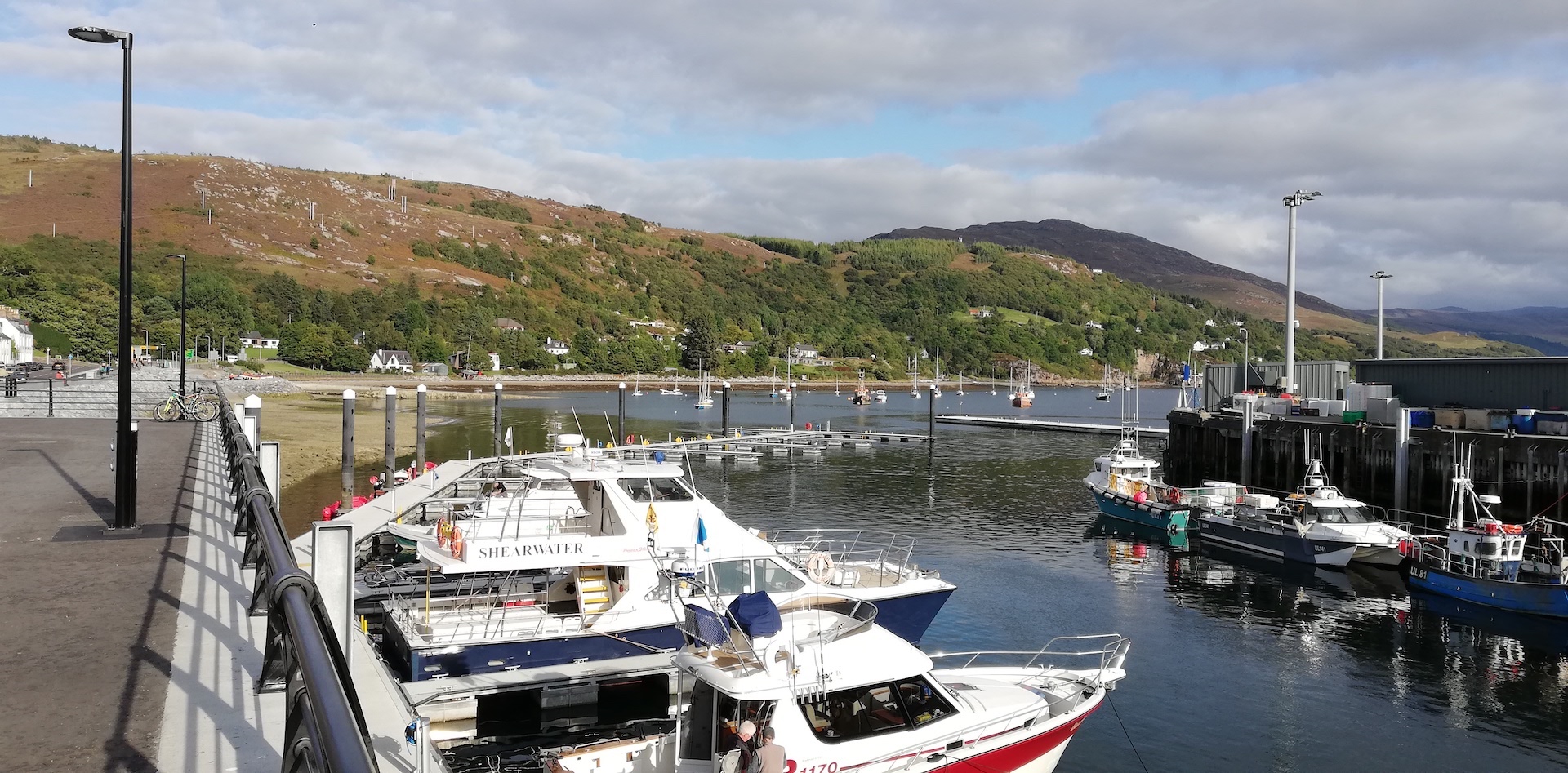
Ullapool is a busy village full of tourists. A large cruise ship – I can imagine as many people are on board as inhabitants in Ullapool, about 1500 – floats in the loch. Smaller vessels bring cruise holidayers back and forth. Like Mallaig in Lochaber, Ullapool was founded as a herring port and designed by Thomas Telford, the father of the Caledonian Canal, in a gridiron pattern.
I buy fresh shrimp and with the supermarket food for the following days. I cook dinner at the campsite. Armed with my camera, I stroll on the beach covered with large, rounded, light grey stones. A textbook sunset is coming along.
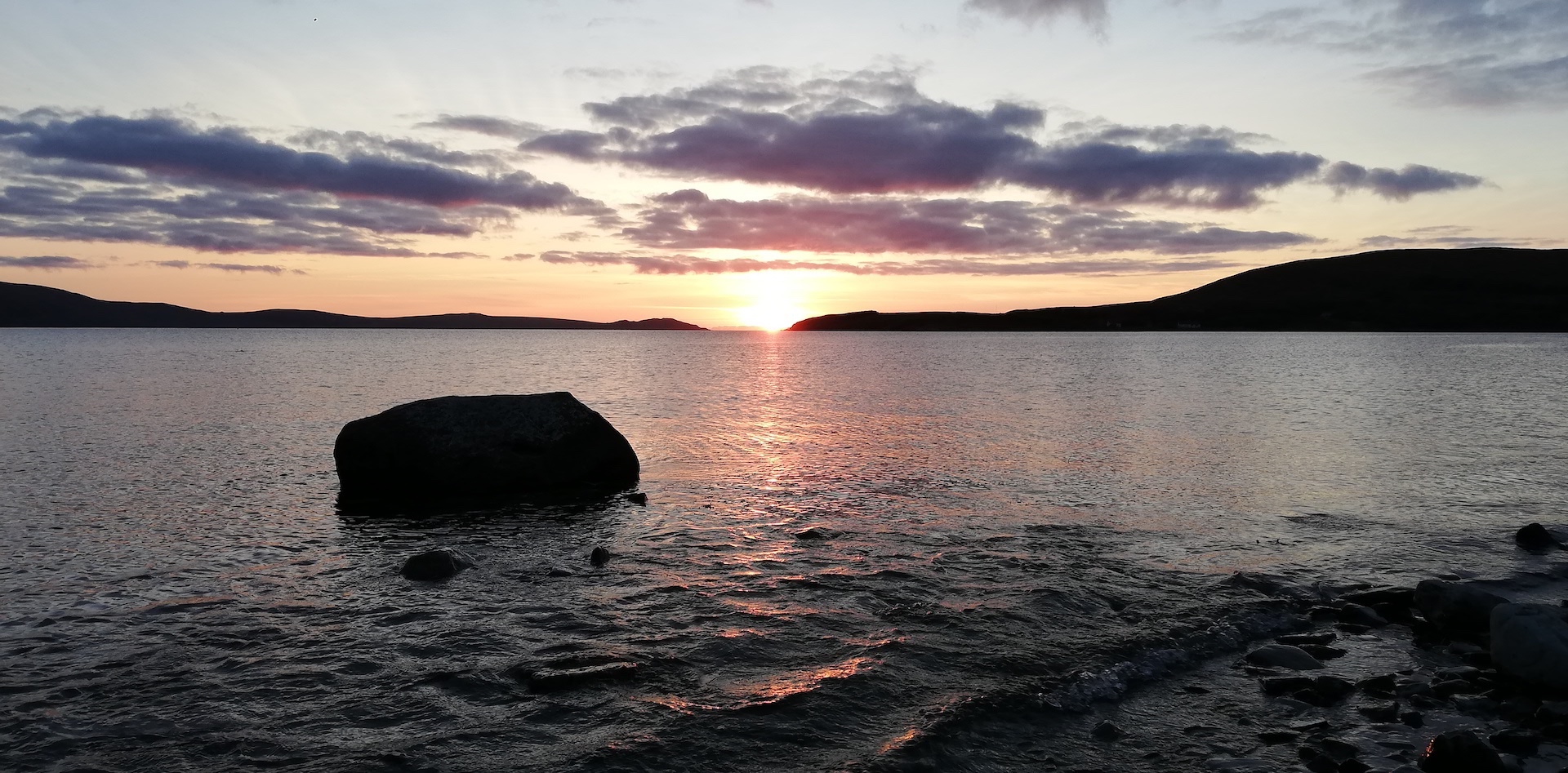
After sunset, I spend a few hours writing and go out again with my camera for a shot of the upcoming Northern Lights and the thousands of stars in the sky. Again, it makes humans insignificant in this vast void of the galaxy.