
To Gairloch
Another early start, at 7 am, all packed, the sky filled with thick grey clouds, knowing it can change every minute. The self-chosen death of a friend and colleague, when I was still living on the continent, on a very bright and sunny summer Friday in Belgium last week, surrounded by her family, suddenly hit me in the face. She had already made the decision some weeks ago, after a long sickness, which recently became unbearable. I don’t have the desire to type the c-word in full. Why now? Why so suddenly? Do these things take time to filter through your brain and hit the awareness spot? I am making coffee at a small car park in the mighty Glen Torridon.
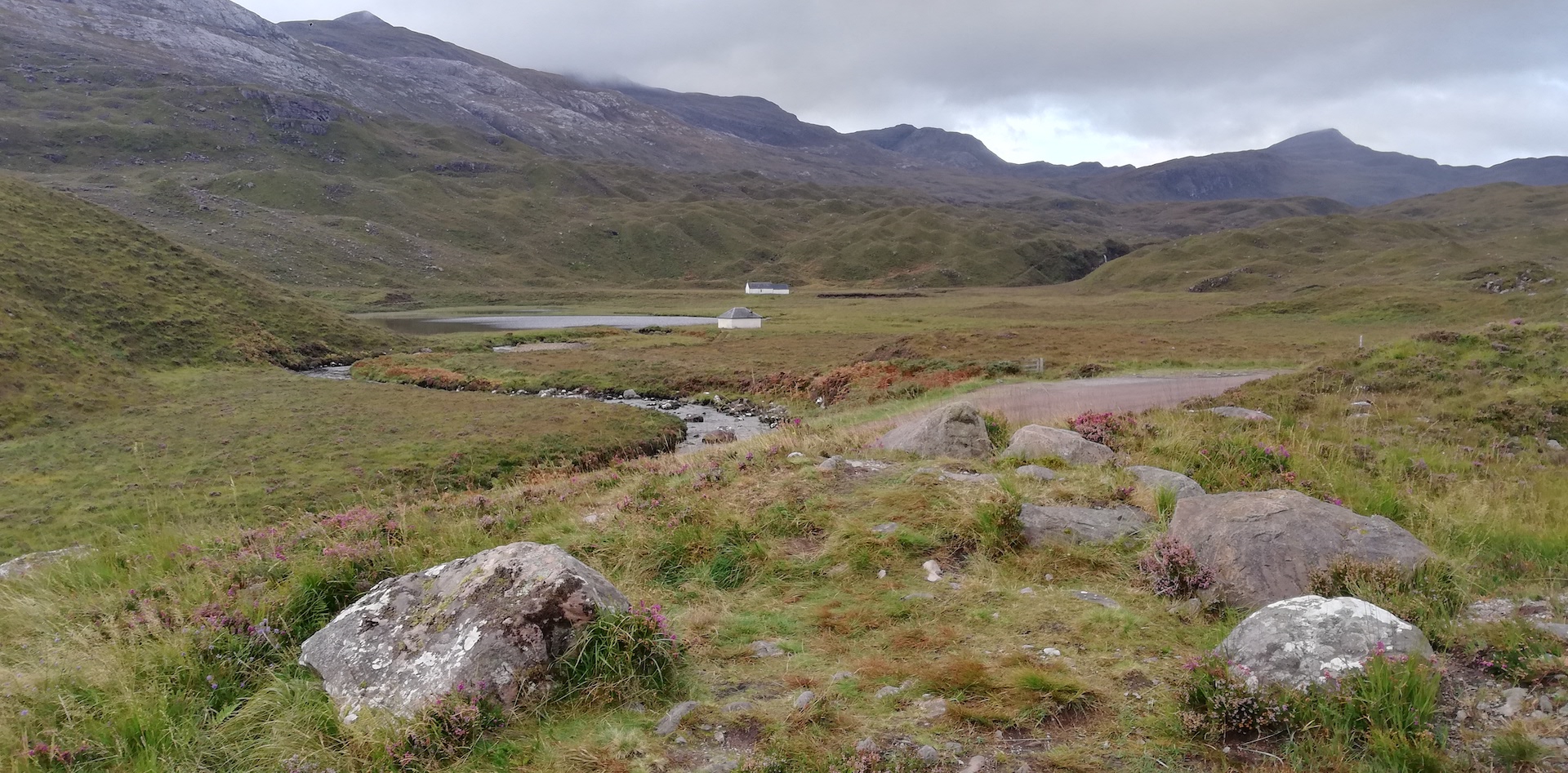
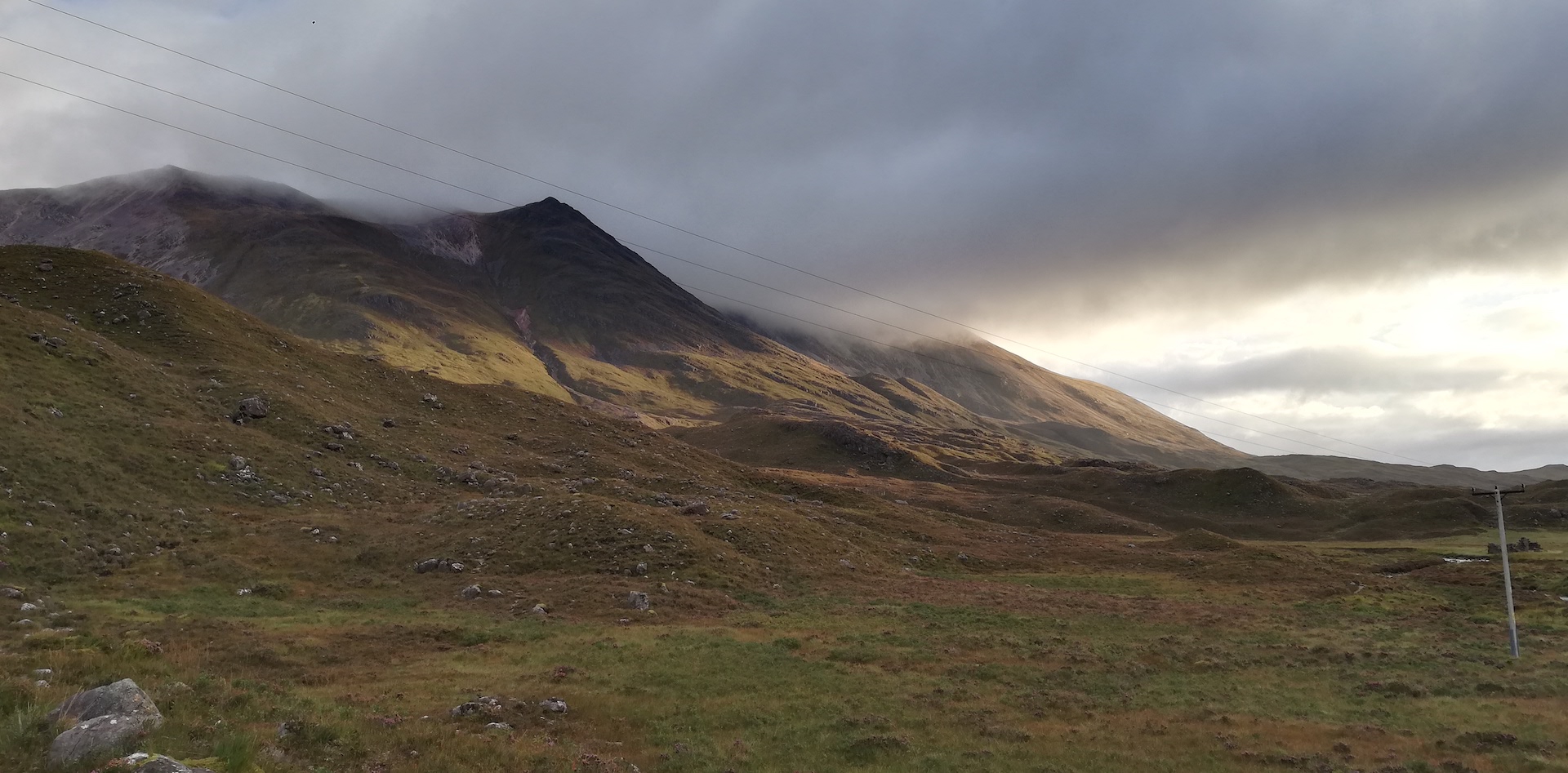
That friend was an archaeologist, and this is an area steeped in geology. Her soul is wandering around here, although her work interest was mainly focused on the archaeology of the so-called Zwin region between Bruges in Belgium and the coastal towns near the Belgian-Dutch border. She was unique in many ways. Gosh… I have breakfast in silence – I usually do when alone – and my eyes wander around to both sides of the glen. When I am finished and take some snapshots because the sun starts to win the battle with the clouds, I chat with a couple going for a hike on the Beinn Eighe, a mountain with several Munro peaks. The car park lies in the shadow of the Liathach, which lies more to the west as part of the Torridon Hills.
Back in the car, I have a pit stop at the car park to start hiking on the shores of Loch Clair, several times photographed by Thomson. I have already made a remake of one of the photos in October 2021, when I first visited Wester Ross.
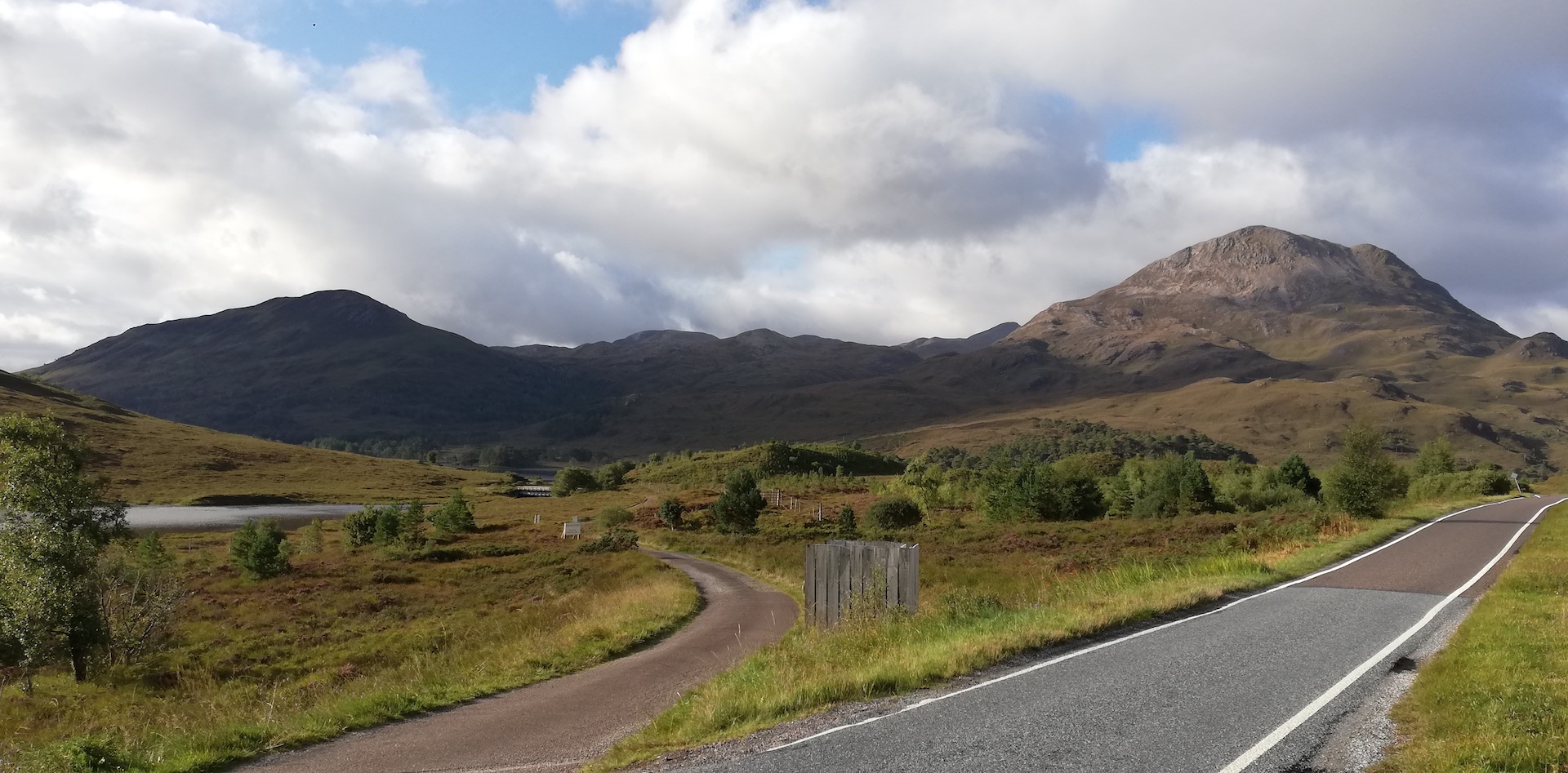
In Kinlochewe, at the head of Loch Maree, I fill up the car.
In Thomson’s time, at the end of the 1940s and the early 1950s, Glen Torridon was only accessible by road from Achnacheen. In the Let’s See Wester Ross booklet, I read: “From Kinlochewe a branch road to the left goes down Glen Torridon. A mail bus runs daily, connecting with the one from Achnasheen to Gairloch. From the head of Loch Torridon the motorist can go several miles further, high above the north shore of the loch, to the charming little village of Diabaig, but the road is narrow and precipitous [see yesterday’s tavelogue]. Cottage accommodation is possible at the head of the loch at Torridon or Annat and there are delightful walks. For a mile up the hill on the Diabaig road there is an excellent path up the Coire Mhic Nobil between the western peak of Liathach and Alligin to the west. In the vicinity, one can find relics of very ancient beehive dwellings, embedded in the moor to the west of Alligin, or as we found one on the high corrie between Alligin and Beinn Dearg to north of it.”
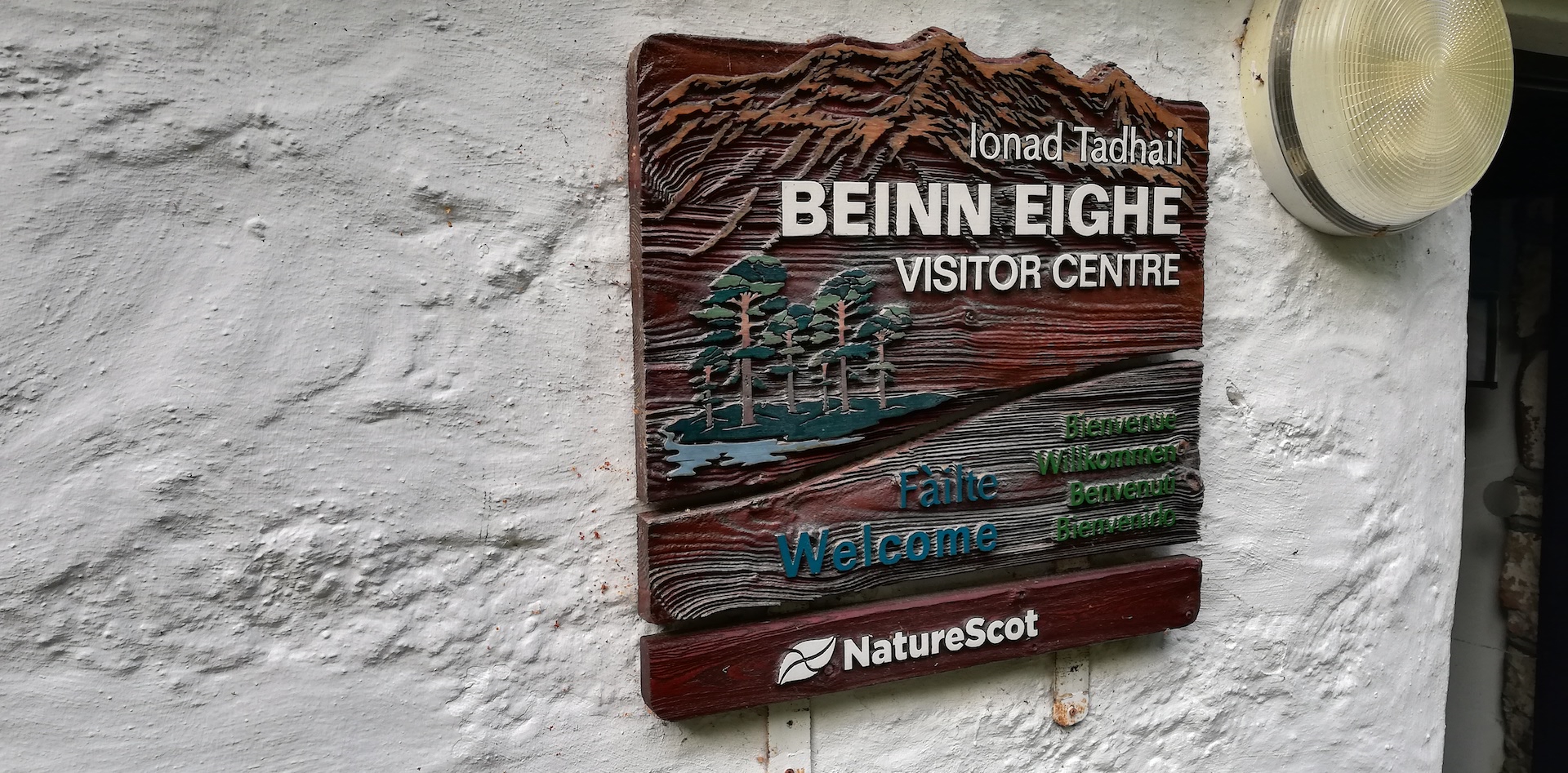
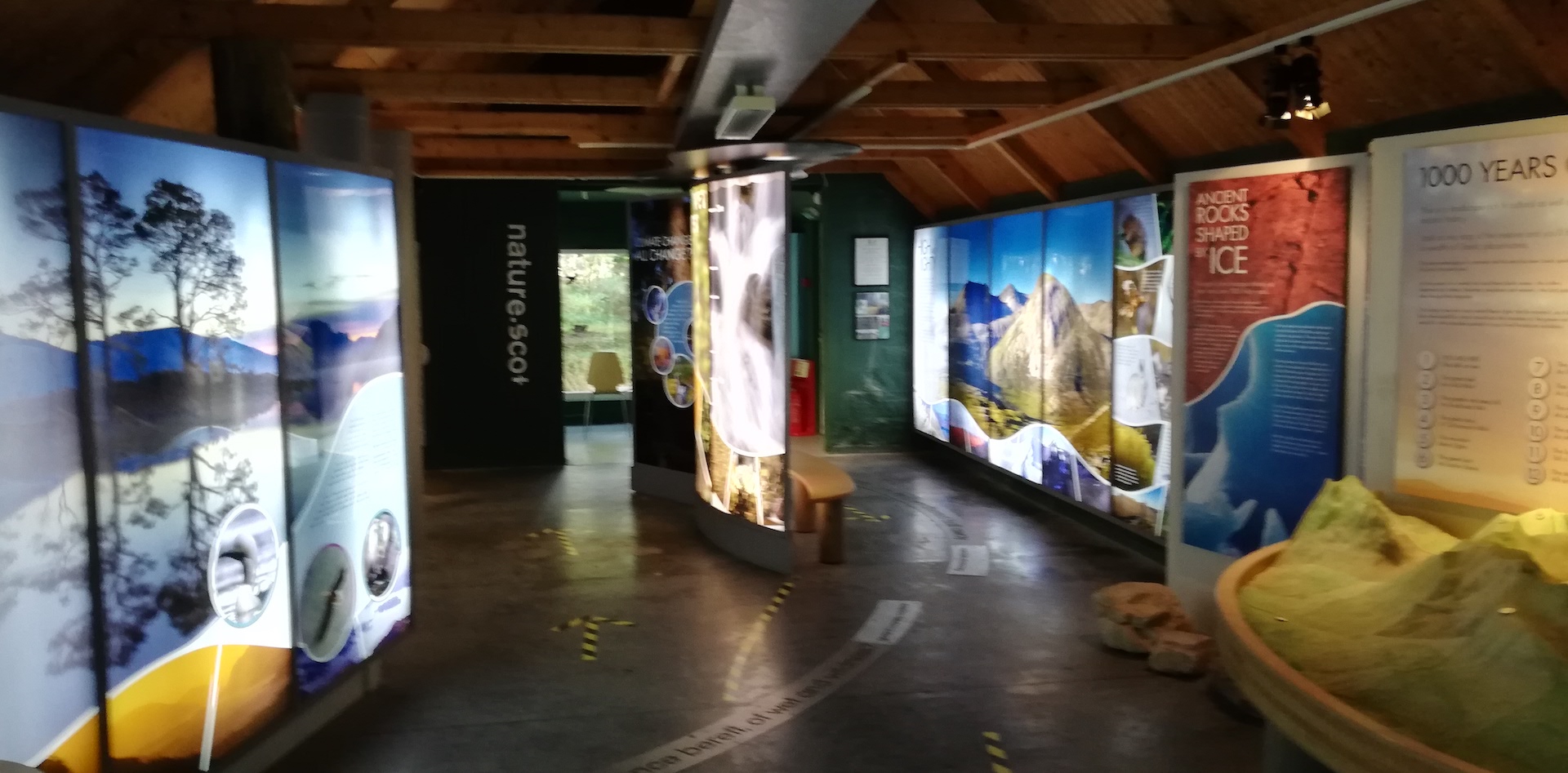
A few miles down the road, I visit briefly the Beinn Eighe Visitors Centre, an old cottage presenting basic info on the history and nature of the area, accompanied by large backlighted photographs. The area became the first nature reserve in the UK.
I cruise further to the northwest on the road following the south shore of Loch Maree, also a Thomson hotspot with a view on the Slioch. In the Let’s See Wester Ross booklet published by Thomson, when living in Corpach (1951 to 1961), the unnamed author, who is travelling by mail bus, describes Loch Maree and Glen Torridon as “the heart of Wester Ross and the most beautiful of the many Scottish lochs.” In the booklet, the writer starts in Achnasheen: “Leaving Achnasheen by the righthand road past Loch a’ Chroisg (or Rosk), the road crosses a low pass and the view opens out to the north-west down Glen Docherty and along the full length of Loch Maree, a beautiful vista. Nor does the preview lack fulfilment as we continue, passing the little village of Kinlochewe, after which the road soon skirts the southern shore of the loch for about 9 miles. The mountain group of Ben Eighe on the southern side is seen on approaching Kinlochewe, and across the water on the north side is the grand rocky cone of Slioch (3217 ft.), and farther west are the islands, several of them rich in history and old legends. The area between Loch Maree and Glen Torridon is partly a national forest park, but much old forest was cut down in earlier years.”
Arriving early in Gairloch, I park the car at the museum, to meet a nephew from Belgium who is on holiday in the northwest and to see Roy Macintyre of the museum to talk about the project, his recollections of Thomson as a child and ask who I can contact in the area to interview for the Travel in Time Wester Ross series. Because I haven’t been to the continent since my latest visit in June 2021, and I haven’t seen most of the family since leaving for the UK almost five years ago, it feels a bit strange to meet a family member in the Northwest of Scotland, myself living in Leicestershire in England. My late mother was the godmother of my nephew Hans, which makes it, in a way extraordinary. We both miss my mother, who died 32 years ago. It still hurts sometimes.
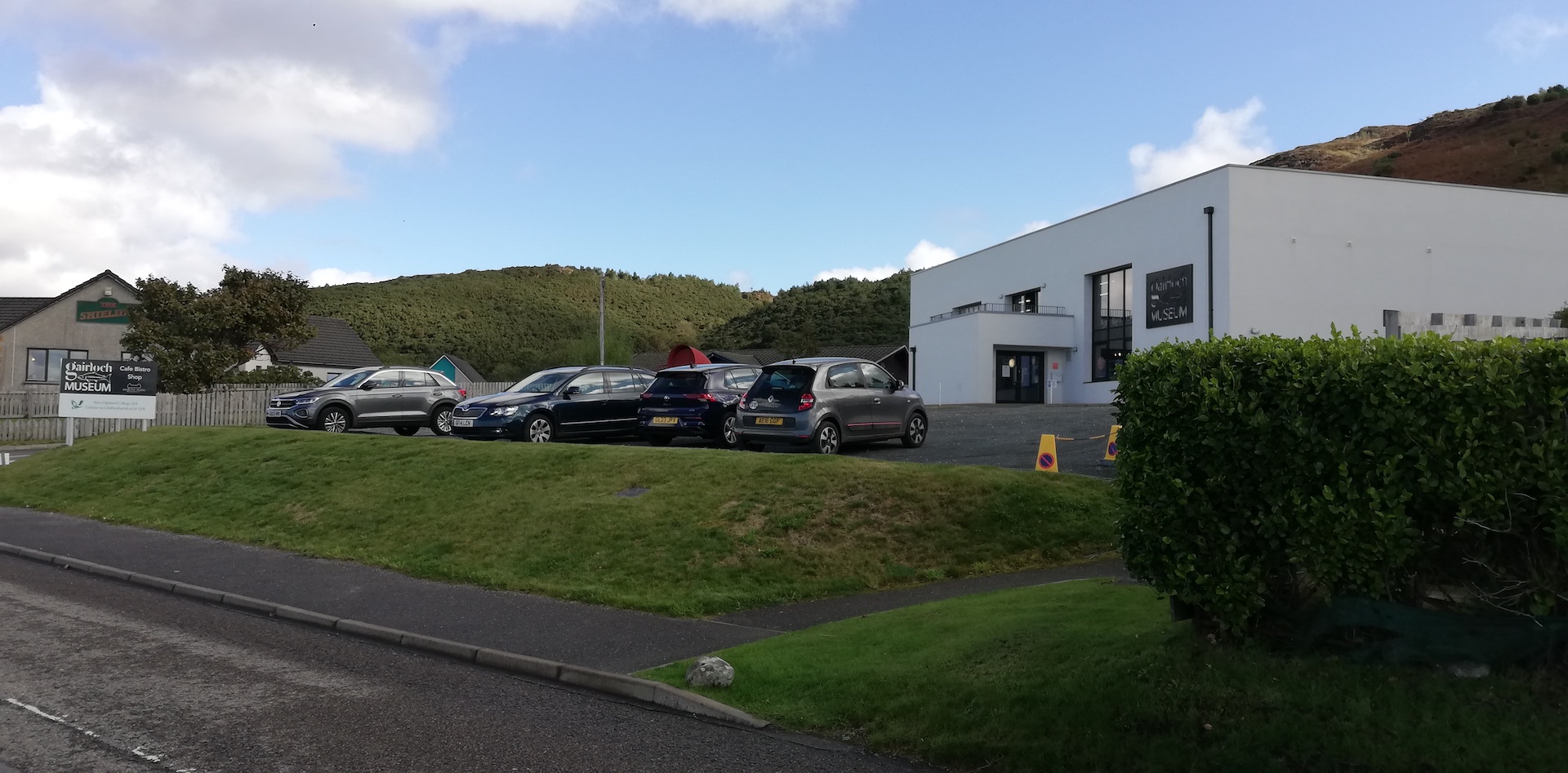
Hans and I have lunch in the museum’s Am Bàrd Cafe. I read on the museum’s website: “Am Bàrd means the bard or poet. The Gairloch area has a longstanding bardic tradition. The famous Gaelic poet William Ross, known as the Rabbie Burns of the Highlands, lived and died in Gairloch. He and the many other local bards can be discovered in the Museum galleries. Whilst enjoying a refreshment in Am Bàrd Cafe, visitors can read words of the Gairloch bards and see images of the stunning landscapes that inspired their poetry both on the walls and through our picture windows.”
We talk about many topics, the conversation going in all directions, like a good conversation should be. At 2 pm we bid goodbye. He continues his trip to Torridon and Shieldaig, and I meet Roy in the museum’s library. Also, the conversation with Roy is most interesting. He is the board chair and knowledgeable about the area steeped in history. He and a friend met Thomson as youngsters, helping the photographer to carry his camera equipment up one of the slopes towards the Beinn Eighe for a picture of Loch Allt an Daraich. As Roy tells, Thomson returned without taking a photograph because the conditions weren’t good and the light was not right. Roy also identified the man in a Thomson photograph posing on the south shore of Loch Maree with the Slioch in the background. It is George Kirk, who was a friend of Thomson and also his Gairloch connection. George ran a petrol station, a shop and a cafe called The Wild Cat where the Morrisons is doing business now. His wife Christine, also named Kirsty, ran a weaving shop on the road to Strath, where the Buddha by the Sea shop was established. The shop is closed but owned by the people who run The Mountain Cafe in Strath, and an excellent bookshop. Roy told the whole story and many more other stories. He worked as an engineer around Scotland constructing roads, dams, hydro schemes, etc.… Roy also gave a series of names of people to contact in the following days for an interview.
By 5 pm, I drive to the Sands Camp and Caravan site on the road to Melvin on the Melvaig Peninsula to pitch my tent and prepare to scout the area for a four-day stay. I make dinner, take photographs of a textbook sunset at sea, do some writing and other work and explore the sky around 22.30 pm with my camera for some Northern Lights in the northeast and the Milky Way and ten thousand stars.