The Green – 1920s
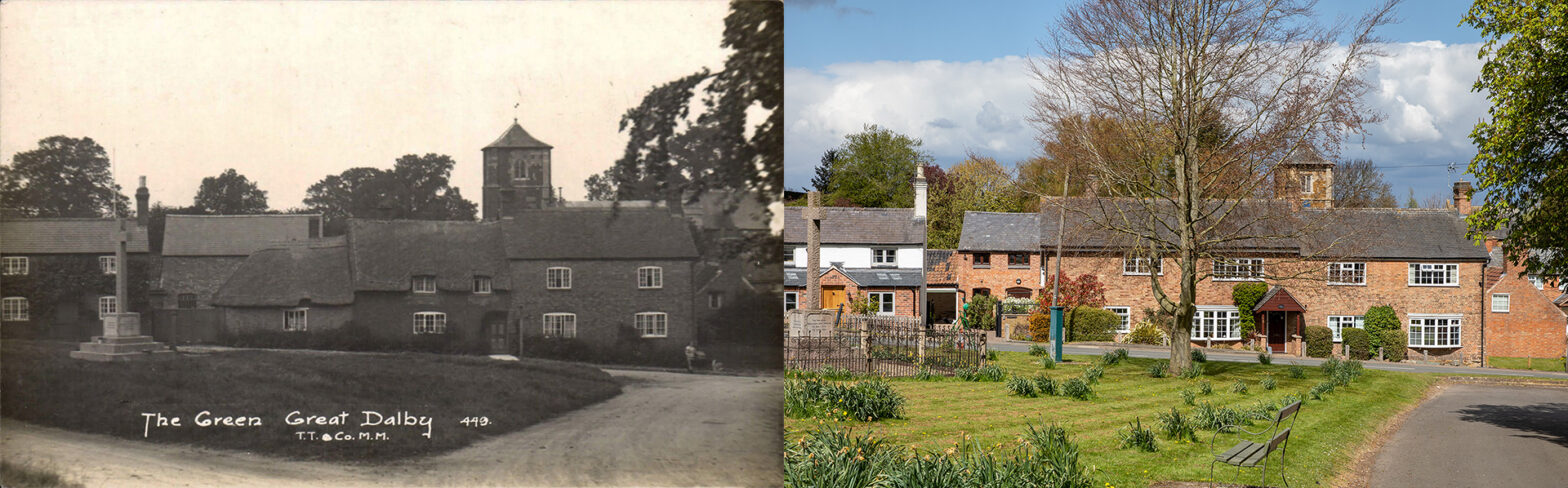
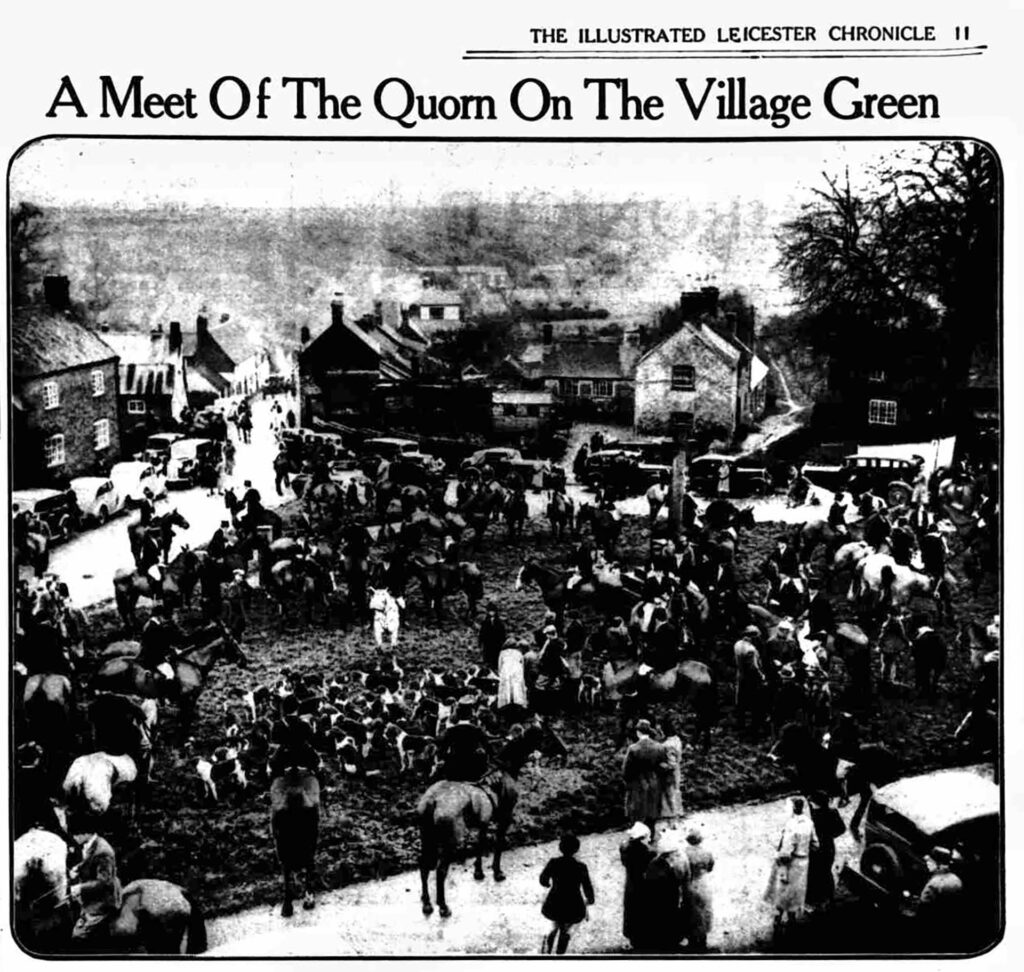
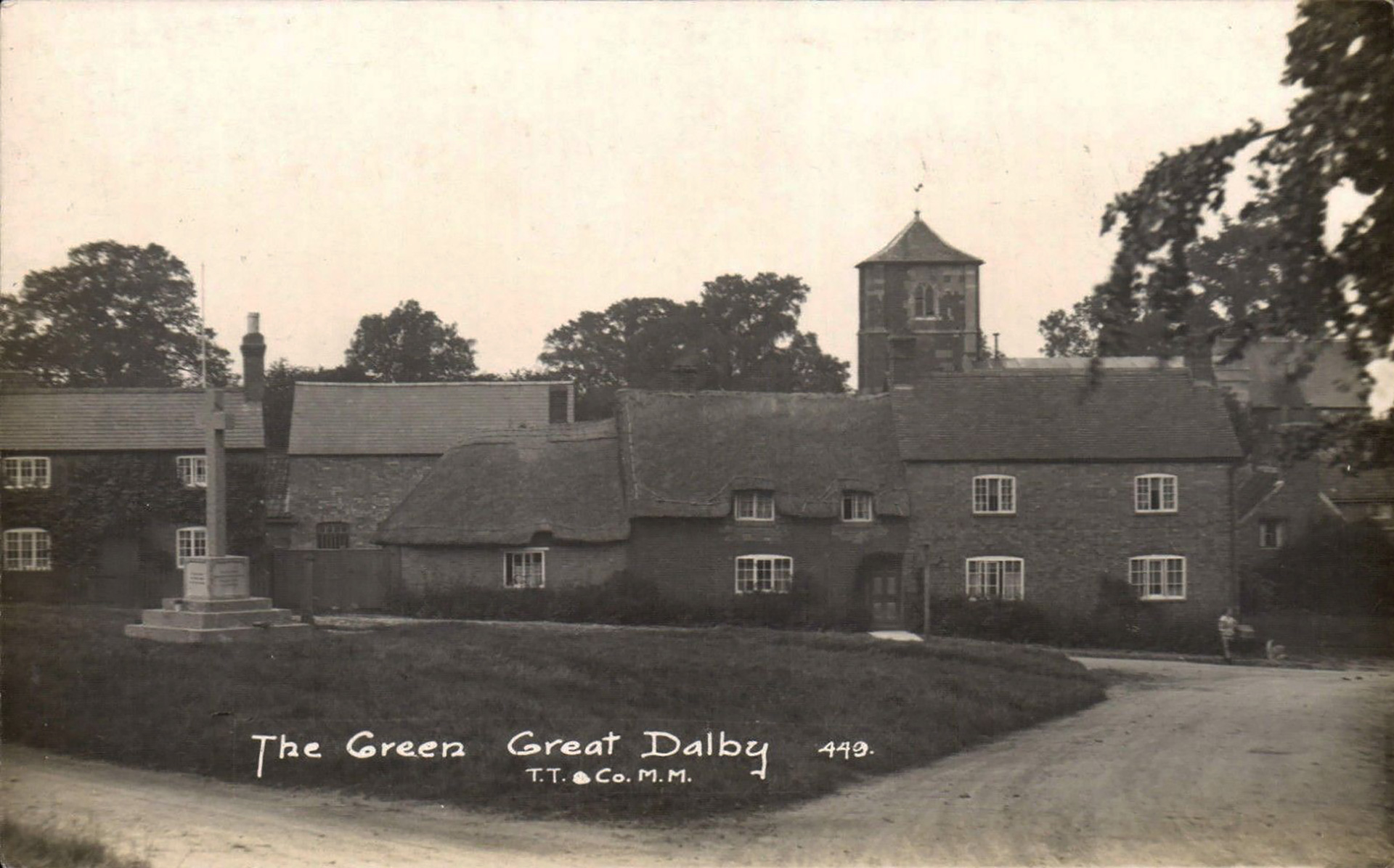
The First World War memorial on the village green gives the main clue to the picture which was taken after 25 July 1920, when the monument was unveiled by ex Private Harry Bonshor and Vicar Reverend R.C. Dashwood. “Harry Bonshor is my grandfather and he has a special place in my heart”, says Jacqui Bonshor-Farrow. “Actually I never knew him, as he died when my father was a young child. My father told me Granddad Harry was wounded in World War I, lost a leg and was gassed. So I don’t think he ever really recovered.” The iron railings surrounding the memorial were a later addition, possibly in the mid 20th century. On a picture of a meeting of The Quorn, printed in The Illustrated Leicester Chronicle no railing can be seen. The caption below the picture reads: “This unusual photograph shows the meet of the Quorn Hounds at Gret Dalby. Hounds, huntsman and followers can be seen on the village green.”
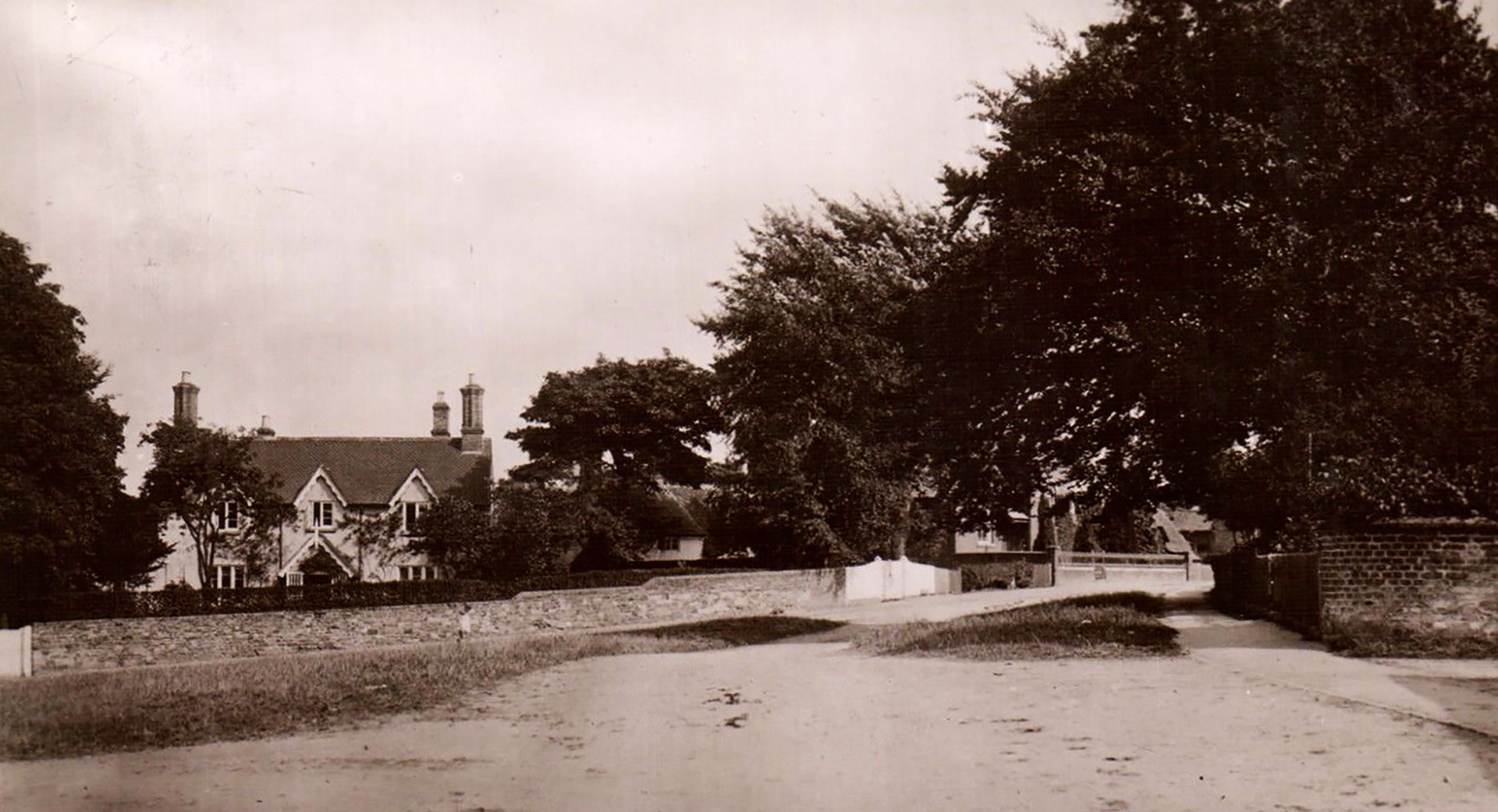
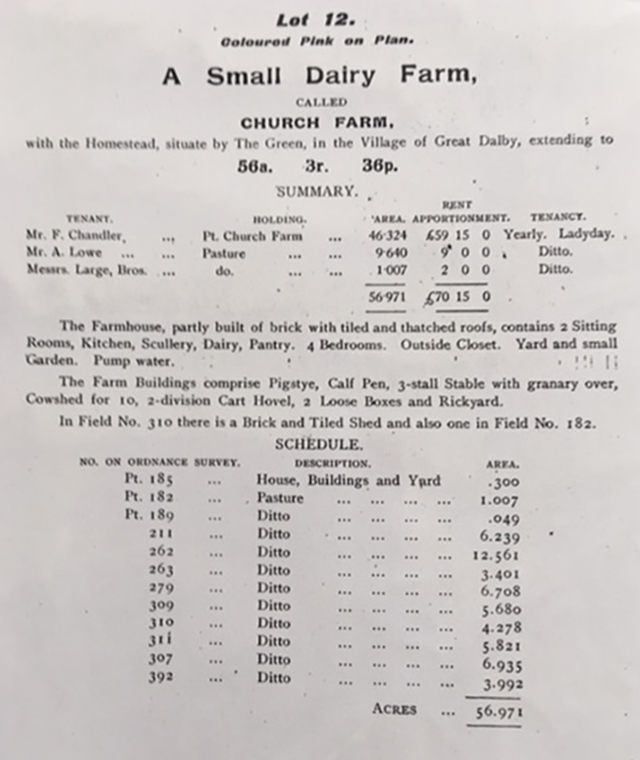
In front of the church lies Church Farm House where the Dixons live. Two of the three roofs were thatched until the corrugated tin roof came into fashion. In the 1950-1960s the Johnsons owned the property. Pam Dixon tells: “The farm and the land appear to have been divided up the late 1960s, early 1970s following family deaths. Frank Haynes bought the derelict property and sold it after renovating to the Warburtons, who sold it to us in 1984.”
The Church Farm went up for sale as a lot of the Burdett Estelle sale in 1921. It was a small dairy farm with a homestead – Church Farm House – by The Green and more than 50 acres of land in the village.
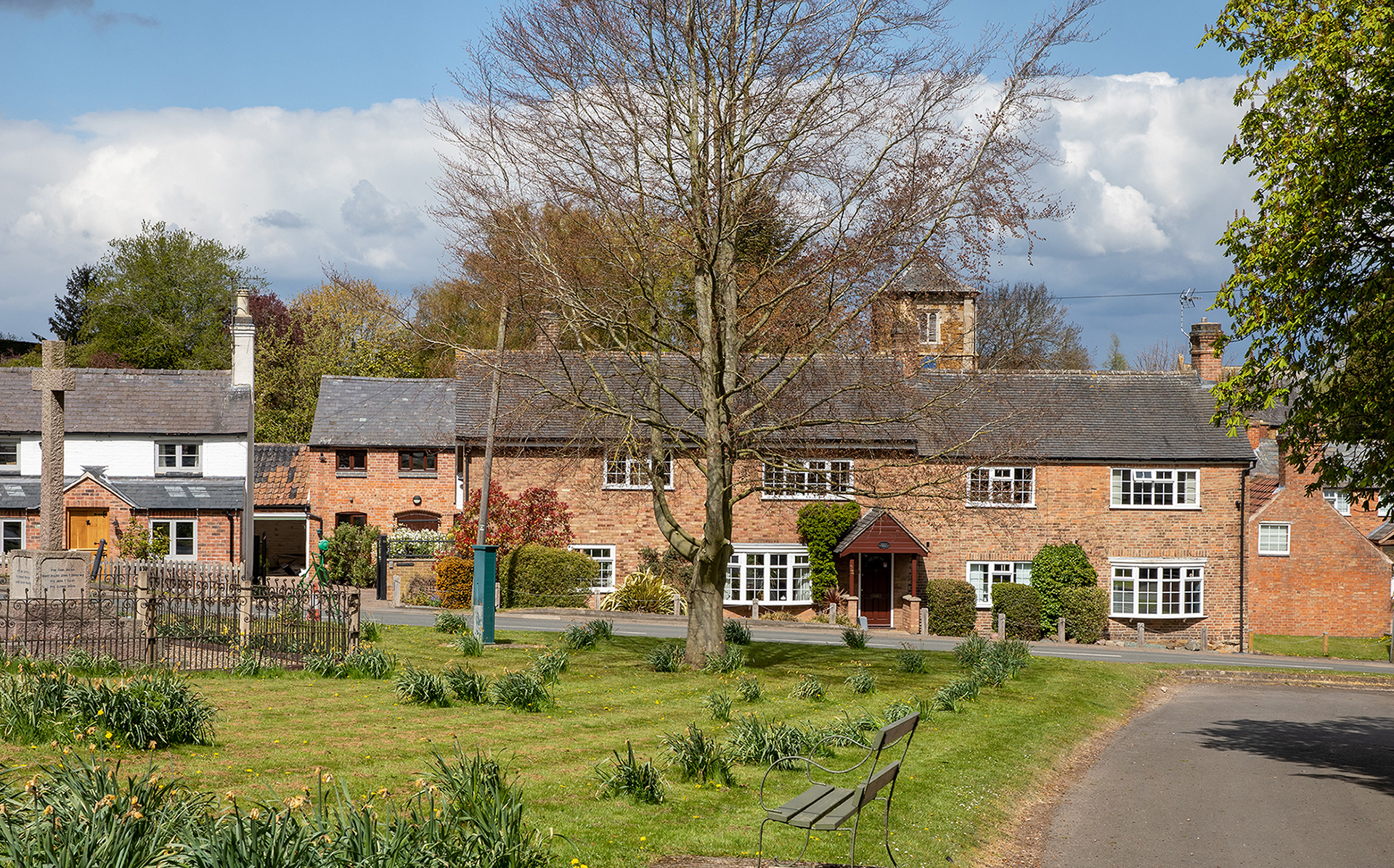
In the 1920s Great Dalby’s village green was mainly grass. Nowadays a tree joins the memorial. “The copper beach tree was planted at the end of the 1980s, beginning of the 1990s”, says Annie Johnson. “I was Parish Clerk at the time and three trees were planted. Only this one survived.” And let’s not forget the water pump, which can be found on the old postcard, close to the memorial. Annie: “It was rebuilt by Roy Fisher about 20 years ago and was probably moved.” “I remember going to Great Dalby with my Mum to visit Auntie Dorrie and Roy Fisher”, says Maureen Dziura. “It always seemed so exciting to go to the pump for water!” Annie adds: “There were and still are lots of wells in the village, fed by springs.” Rolf Schlemmer remembers the one in Newton Leys field entrance as he used to go to school. Annie: “Village people had to walk or travel miles by pony and trap or cart to get to wherever they needed to go. Auntie Madge Sharp (nee Johnson) of Ford Farm would collect her ‘kettle’ water from a source at Brook Farm on Nether End which was said to be high in magnesium and ‘good for your health’”.
At the backdrop the tower of the 13th century St Swithun Church built of ironstone and limestone ashlar with Swithland slate roofs is visible.
The Vicarage

On the left side, you can see a Victorian house, The (Old) Vicarage. On the right is the Methodist Chapel built in 1846. Both buildings are of townscape interest.