
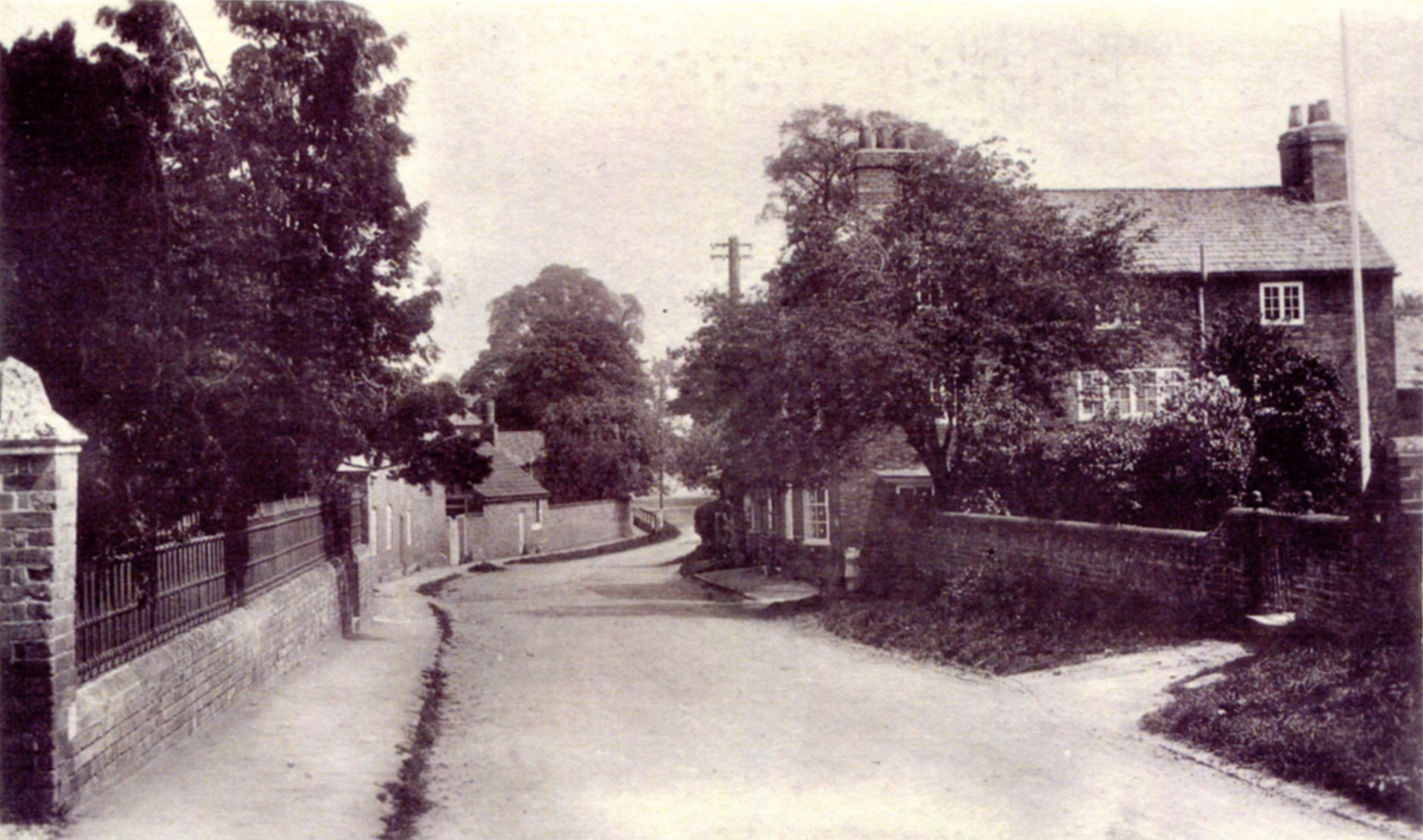
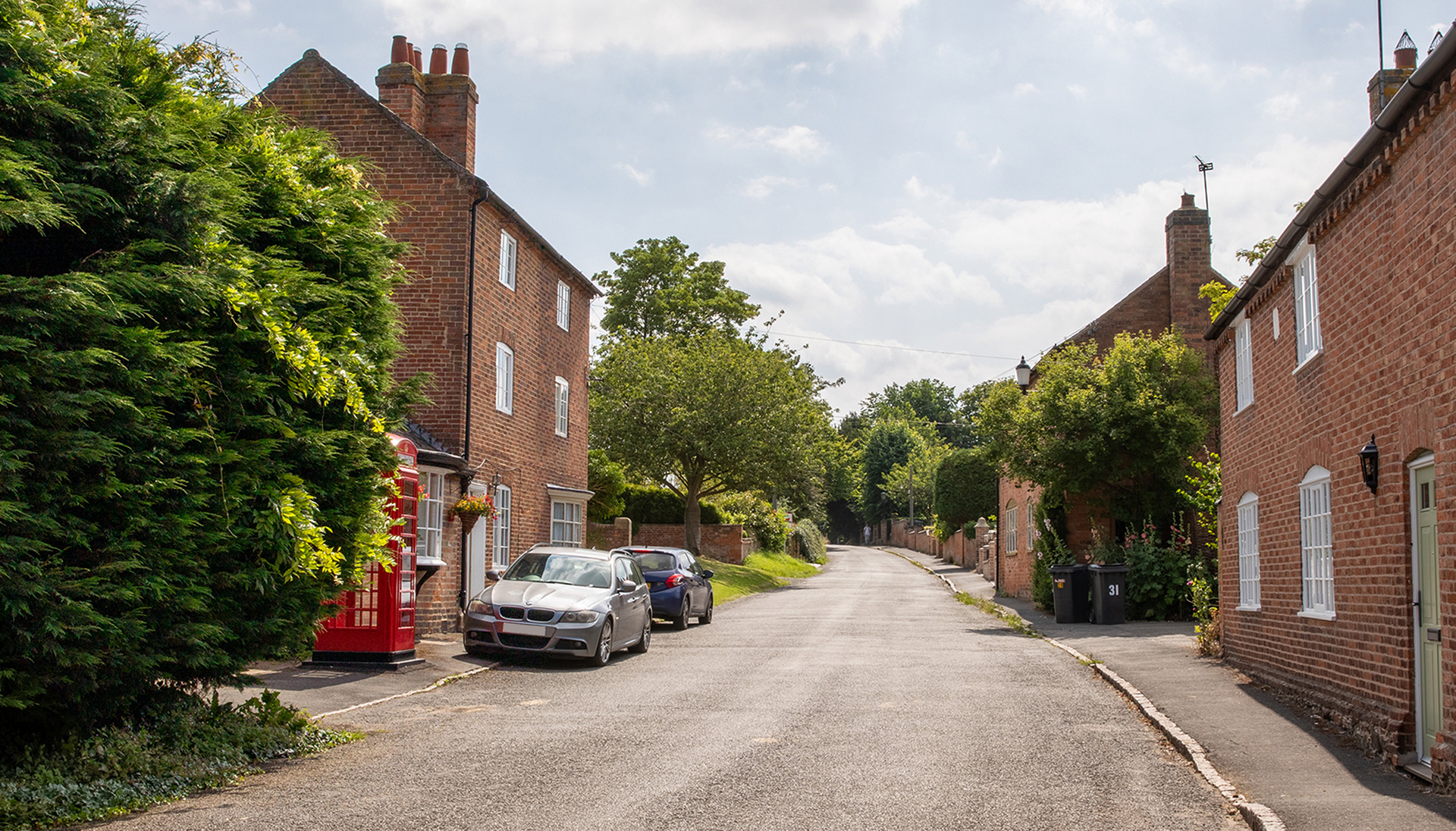
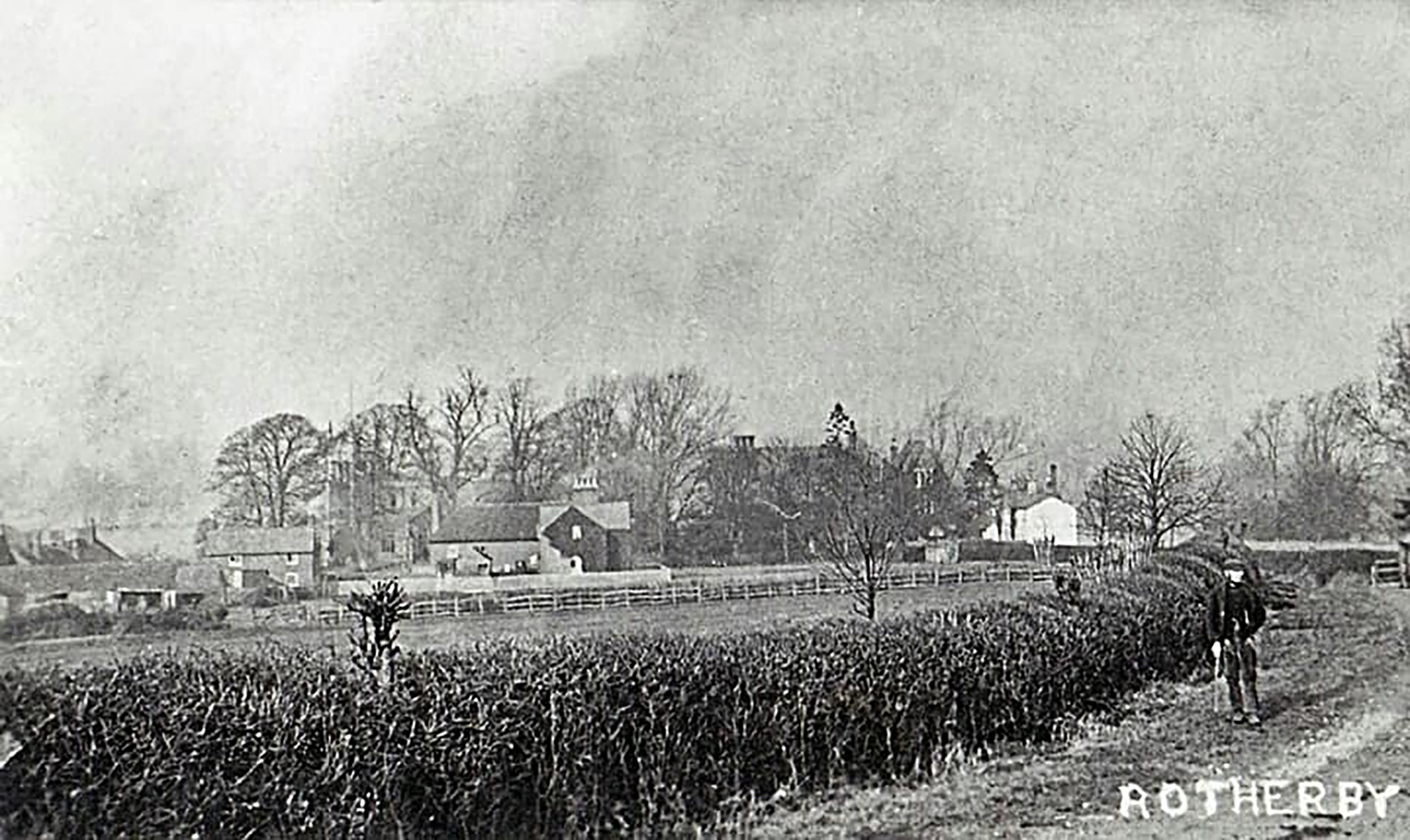
Main Street – All Saint Church – 1920s
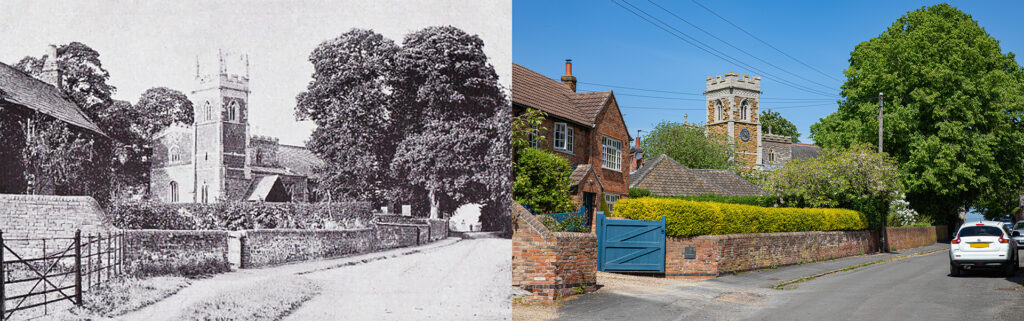
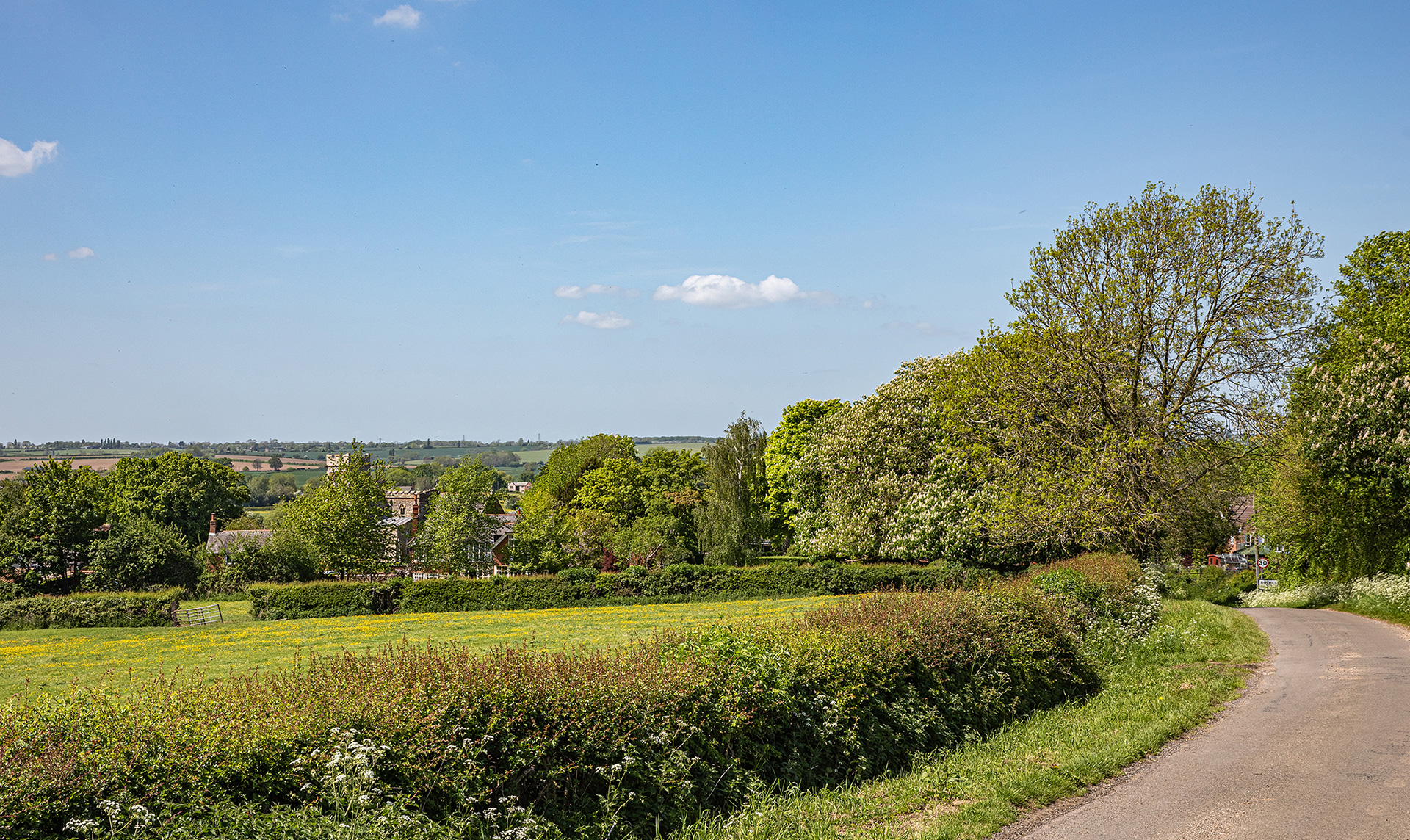
At first sight, the three main subjects in the old postcard – cottage, church and trees – still dominate the remake. Although there are some changes. Rose Cottage on the left-hand side got a front gable extension, and a car-wide entrance replaced a small single porch, keeping most of the front and side wall intact. A bungalow was built between Rose Cottage and All Saint Church. The church’s pinnacles on the embattled perpendicular tower disappeared. And the three lime trees, already there for a long time about a century ago, look unified.
When I walked down from the Melton to Leicester road on a steep single-track leafy lane into Rotherby, I discovered a prime example of the ‘quiet English village’, nestled on the south side of the Wreake Valley. You get the feeling that you have just discovered a place, like a restrained beauty that has been hidden away for a long time. Turning left on Main Street, trees and shrubs still create the tunnel-like feeling of the past. Arthur Mee describes a matching scene in his book ‘Leicestershire and Rutland’ (1937). “Trees with massive trunks and spreading branches lean over the stone wall of its curving street, and others screen its pretty 14th-century church as they soar above the pinnacled tower and the traceried clerestory.”
A church register’s entry in 1562 – record-keeping started in 1561 – highlights the name of ‘George, son of William and Elizabeth Villiers’ as one of the baptisms. The Villiers lived in nearby Brooksby Hall for more than 400 years and the baby, who was baptised in Rotherby Church on June 18, became the father of the first Duke of Buckingham, also named George, born in 1592 in Brooksby. This young gentleman was the handsome favourite and possibly the lover of King James I of England (1566-1625). George’s nickname was ‘Steenie’, after St. Stephen, who was said to have had ‘the face of an angel’. Villers, also a favourite of King James I successor, King Charles I, became one of the country’s wealthiest, most powerful men. A disgruntled army officer assassinated George Villers in 1628.
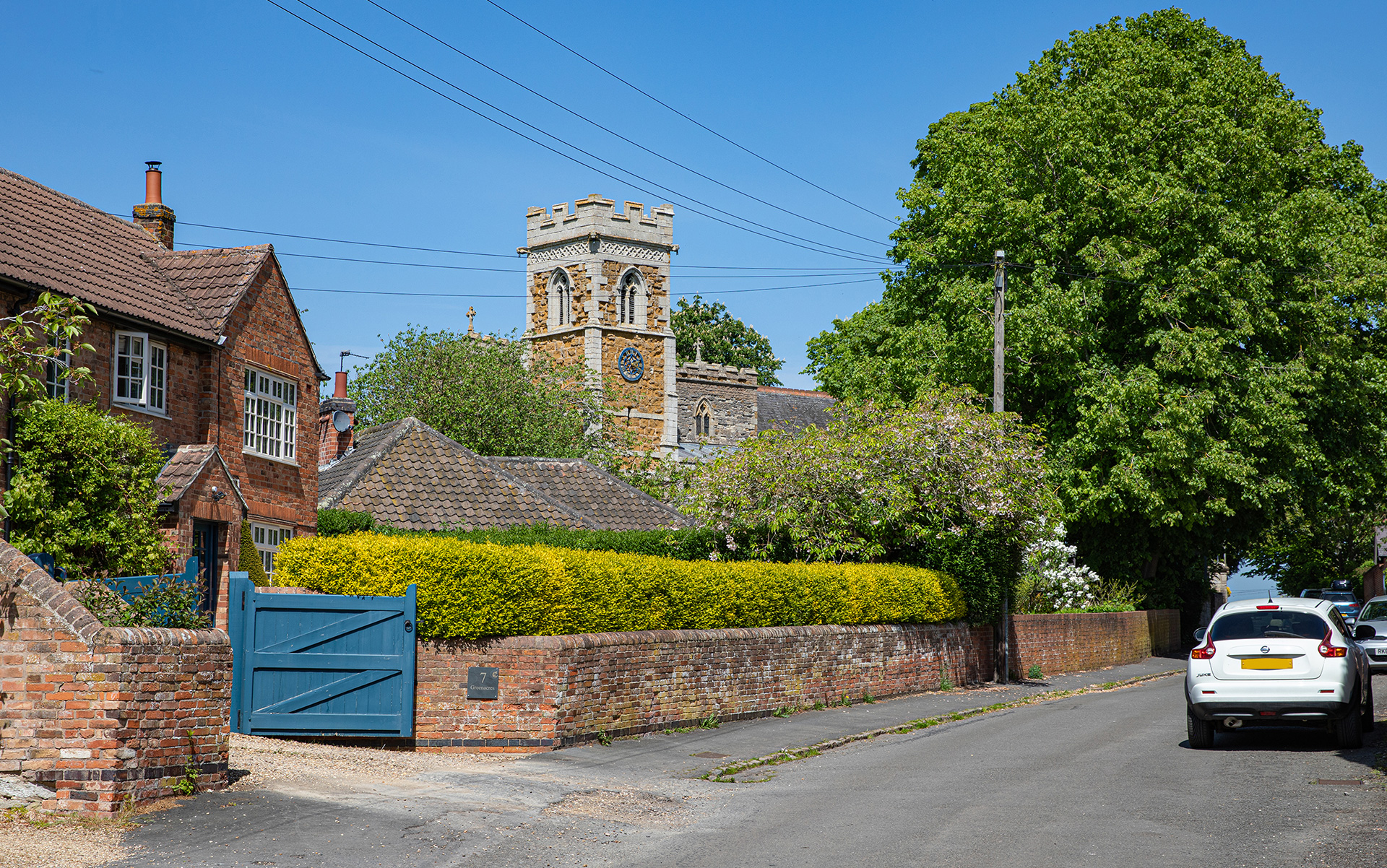
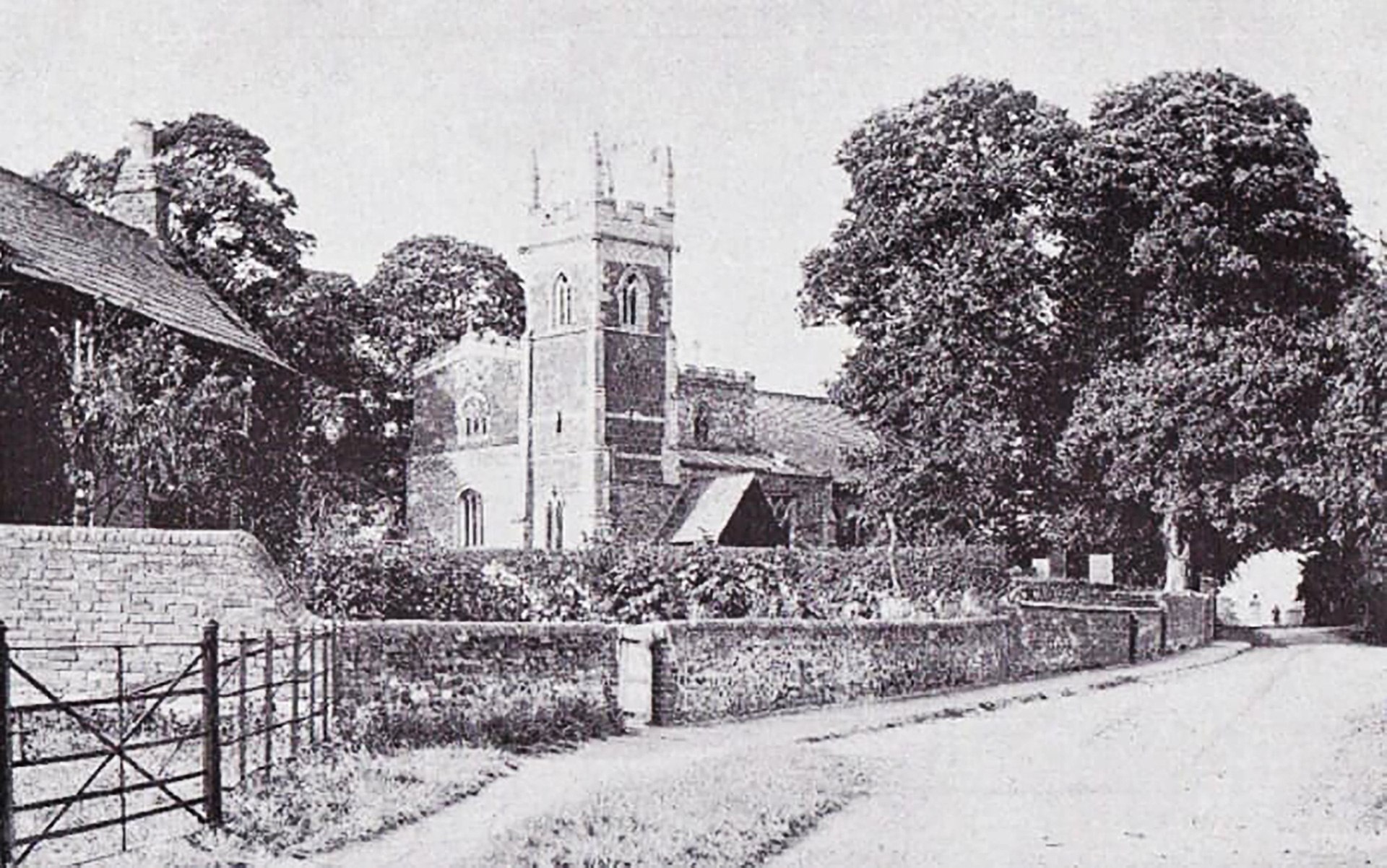
Main Street

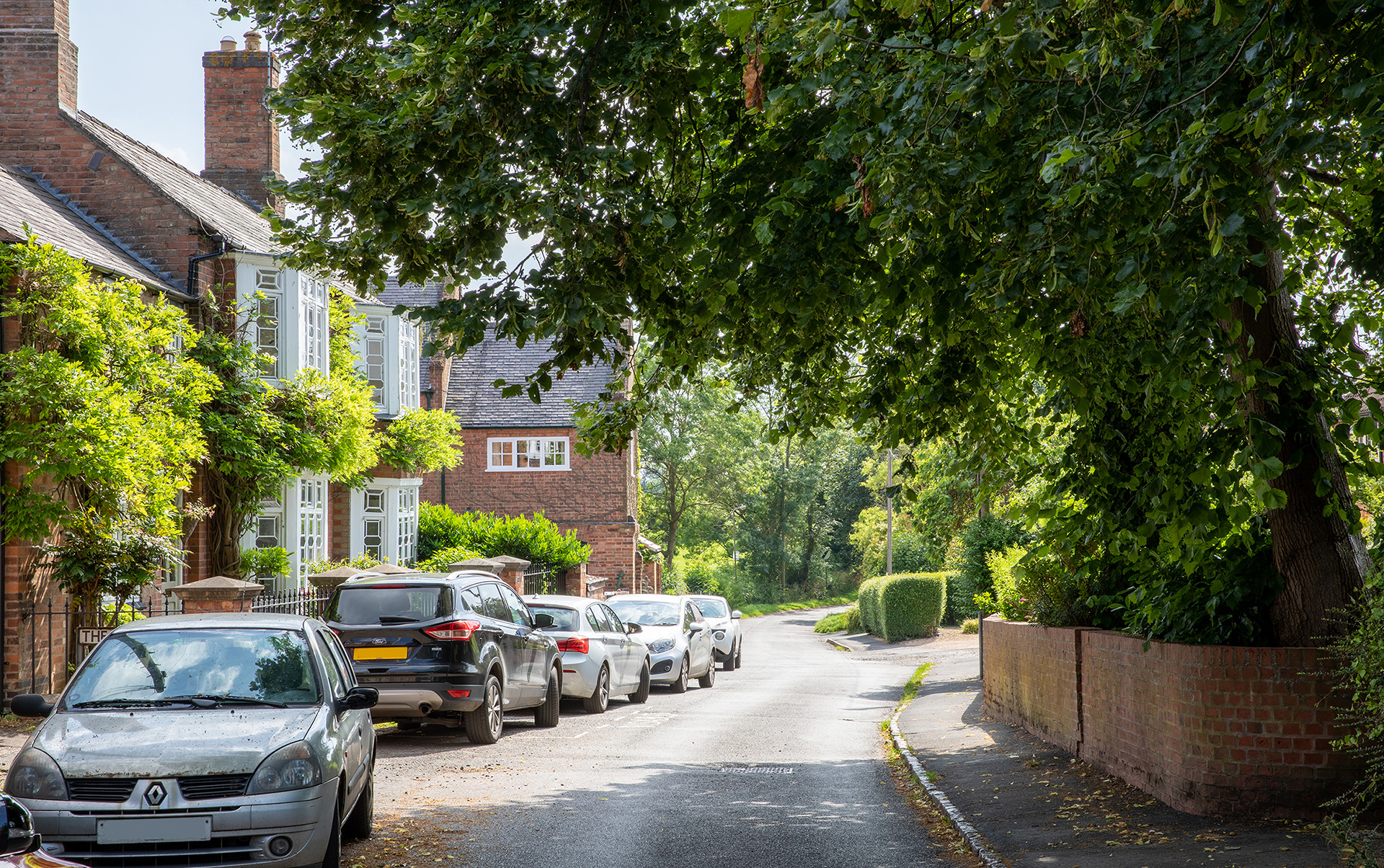



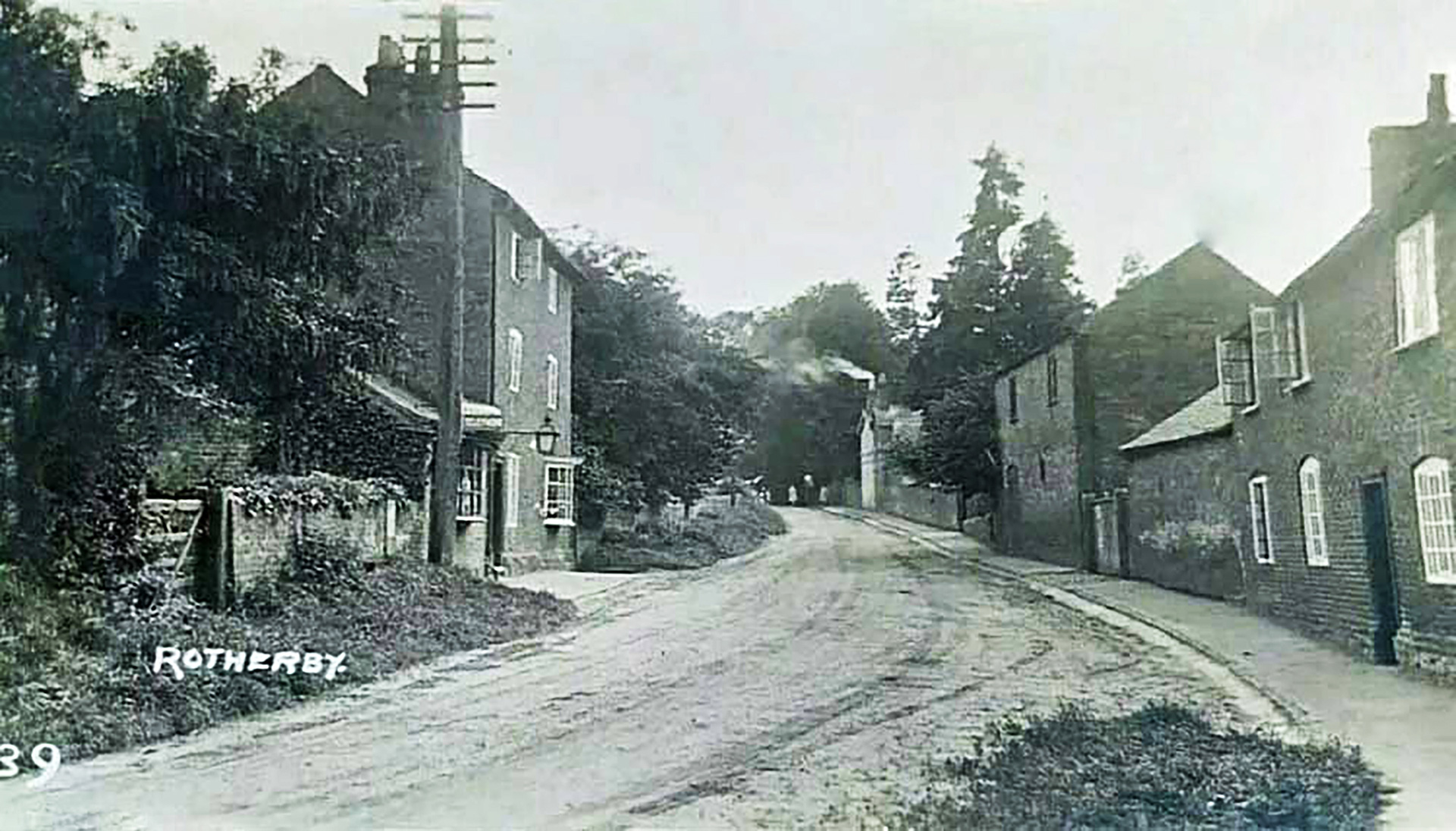
Gaddesby Lane
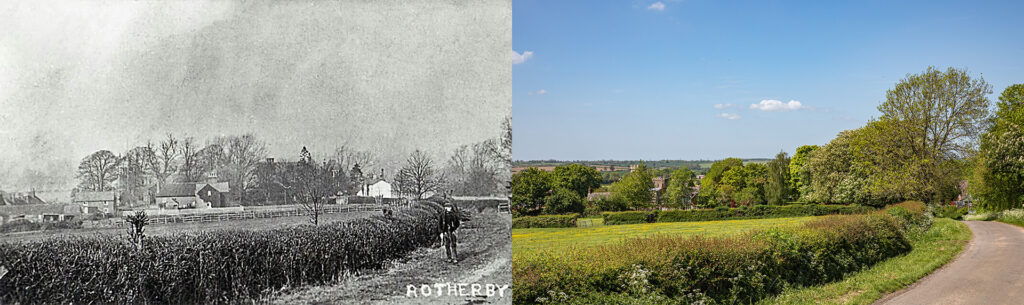
On the village
Would you like to add your story and recollection? Leave a comment at the bottom of this page or send a message.
More pictures
Would you like to add pictures? Send a message.
Domesday Book
Rotherby was a settlement in Domesday Book, in the hundred of Goscote and the county of Leicestershire.
It had a recorded population of 10.7 households in 1086, putting it in the smallest 40% of settlements recorded in Domesday (NB: 10.7 households is an estimate, since multiple places are mentioned in the same entry).
Land of Earl Hugh (of Chester)
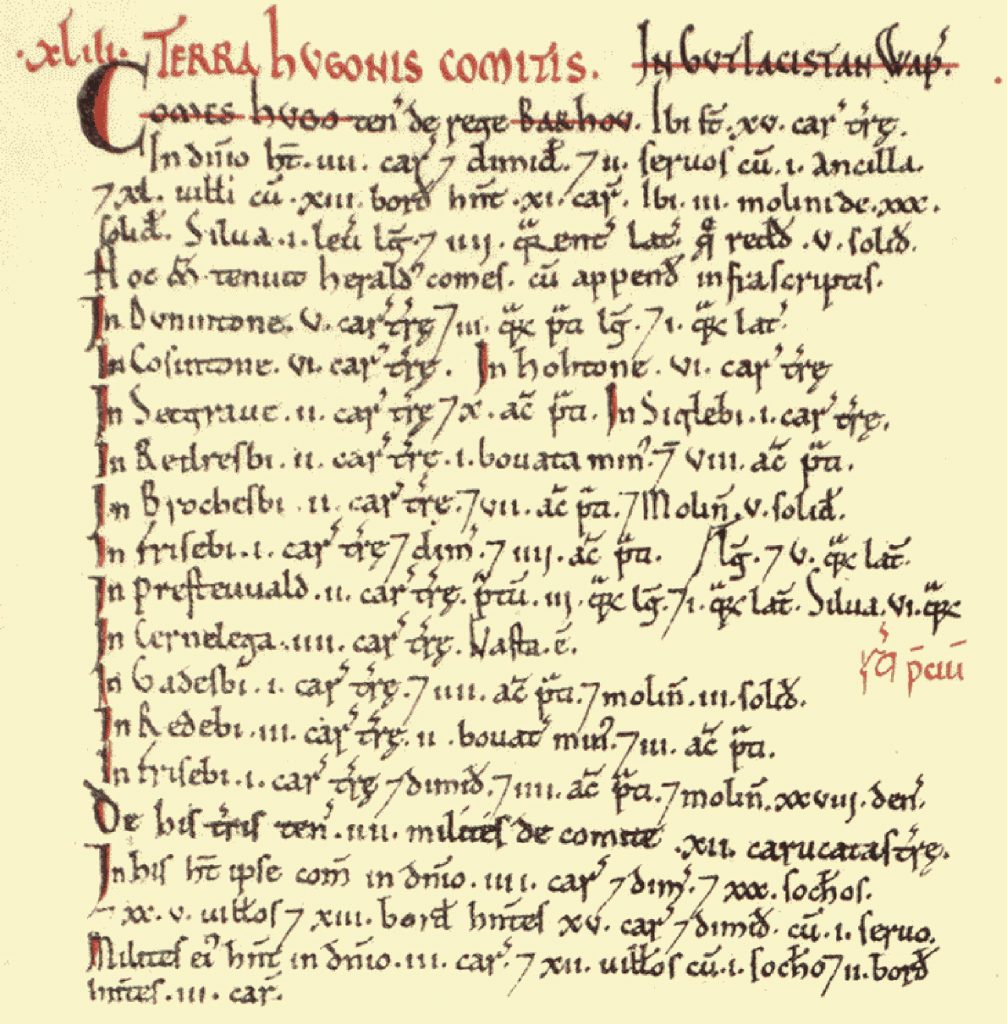
- Households: 77 villagers. 31 freemen. 28 smallholders. 2 slaves. 1 female slave.
- Ploughland: 12 lord’s plough teams. 29.5 men’s plough teams.
- Other resources: Meadow 40 acres & 3 * 2 furlongs mixed measures. Woodland 6 * 9 furlongs. 6 mills, value 2 pounds 12 shillings and 2 pence.
Owners
- Tenant-in-chief in 1086: Earl Hugh (of Chester).
- Lords in 1086: Earl Hugh (of Chester); men-at-arms, four.
- Lord in 1066: Earl Harold.
Links
Would you like to add a link? Send a message.