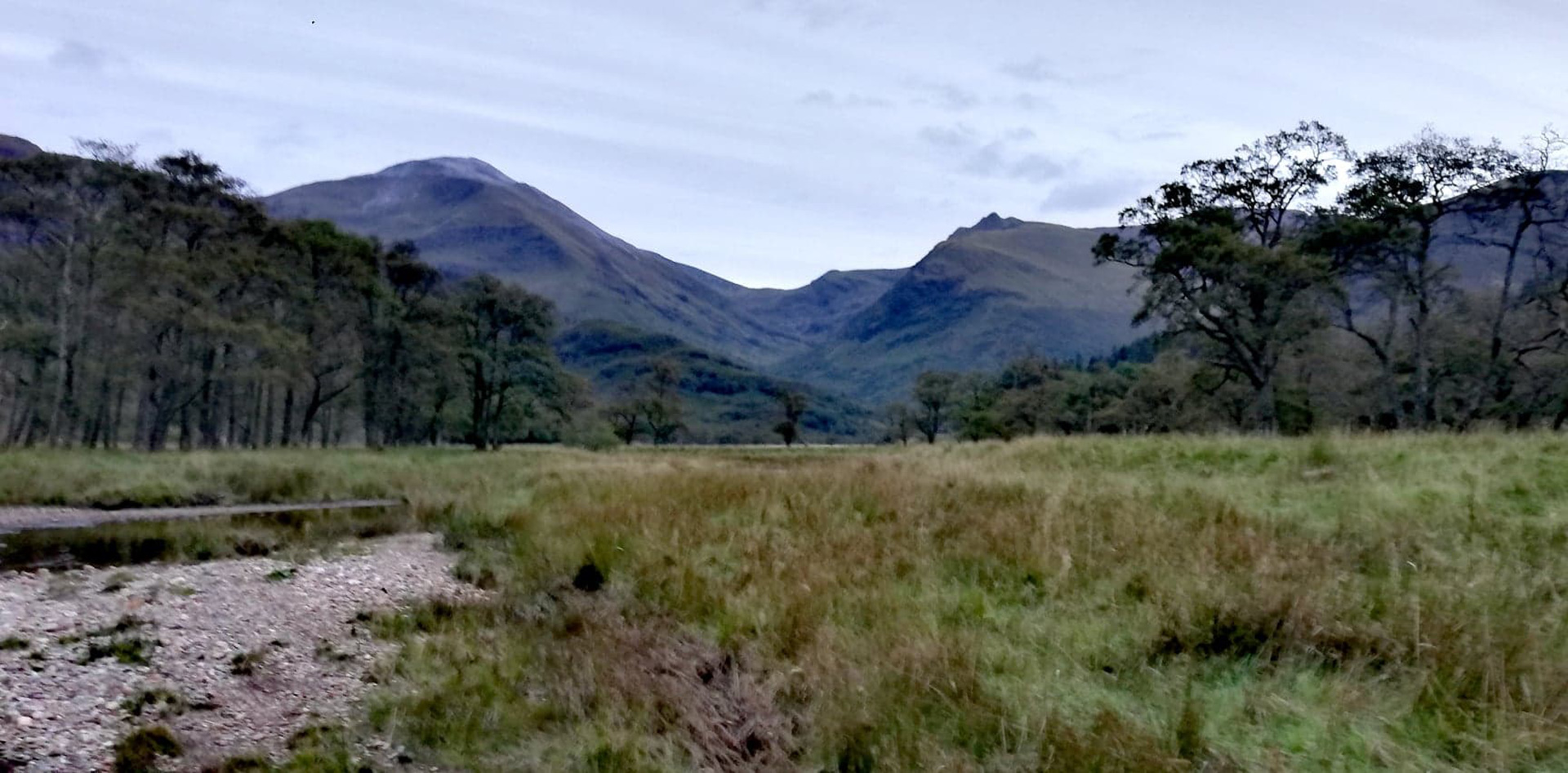
When awake, I look outside. The landscape is covered in mist, and the rain has stopped. It feels like autumn, just missing the changing of colours. I pack my soaked tent, leaving the campsite at 7 am and drive up the road, halfway to Polloch, to scan the mined landscape. The higher hills are bathing in the morning sunlight, but the sun still has to rise above the mountains in the east. I locate where I took the remake of Thomson’s picture of the mines. Nearby barracks, men-sized containers and machinery give the impression work is still going on, but the mines are closed. I still am intrigued by the change since 70 years ago, and on my way down the road back to Scotstown, I stop twice to find out where the old road was going, taking some snapshots with my phone. It helps me write the story that will accompany the then and now photographs.
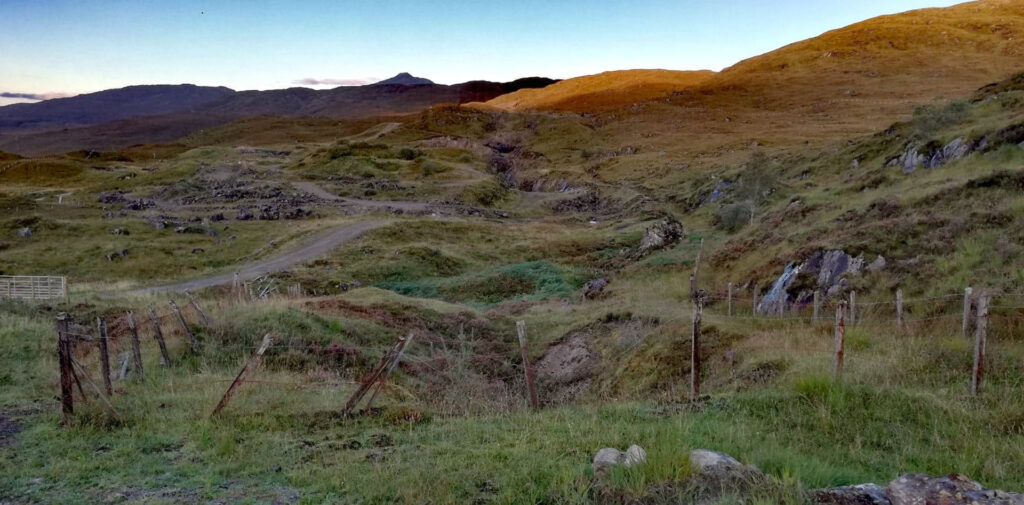
At 8 am, I enter Ariundle Centre for breakfast. The group of about 20 people staying in the bunkhouse I met yesterday are having breakfast. I can already have coffee, but I have to wait for breakfast. Although on a schedule for meeting people, I do not want to be in a hurry. It is what it is, notifying Alistair and Mary I will be 30 minutes late to meet them at their home in Strontian. We talk for a long time with a cup of tea, absorbing the stories they tell and leafing through the old smaller booklets they dig out of their archive. For a few weeks, Alistair and Mary are sorting many boxes of newspaper clippings about Strontian and the surrounding villages and hamlets of Ardgour and Ardnamurchan. It reminds me of my office being buried in papers concerning the local history to sort out when running a museum on the Belgian coast. Before returning to Fort William, I leave copies of my booklet at the Oakwood Tourism and Craft shop.
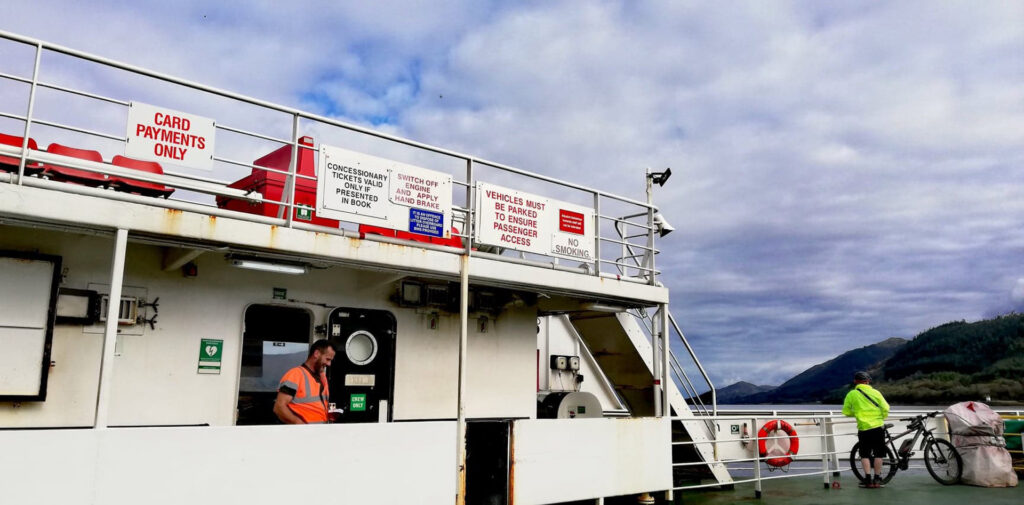
Crossing Loch Linnhe with the Corran Ferry from Ardgour to Corran, which only takes 5 minutes, marks leaving the West Highland Peninsulas back to a more populated area with many tourists.
Arriving at the West Highland Museum, I miss Vanessa, the curator. Time for lunch in The Old Deli with a front window view on High Street, observing lots of people walking the pedestrian street. Later in the afternoon, I briefly catch up with Vanessa and bid her goodbye. My second last stop for the day is a visit to David and Liz in Spean Bridge to give them a booklet for their help on the Travel in Time Lochaber Series.
The final stop is Glen Nevis Caravan and Campsite to stay for the night. When checking in, I am pleased to see my booklet displayed at the reception desk. After pitching my tent, I have a last encounter with the Glen Nevis landscape by visiting the vicinity of the old burial ground featured in one of the Thomson photographs.
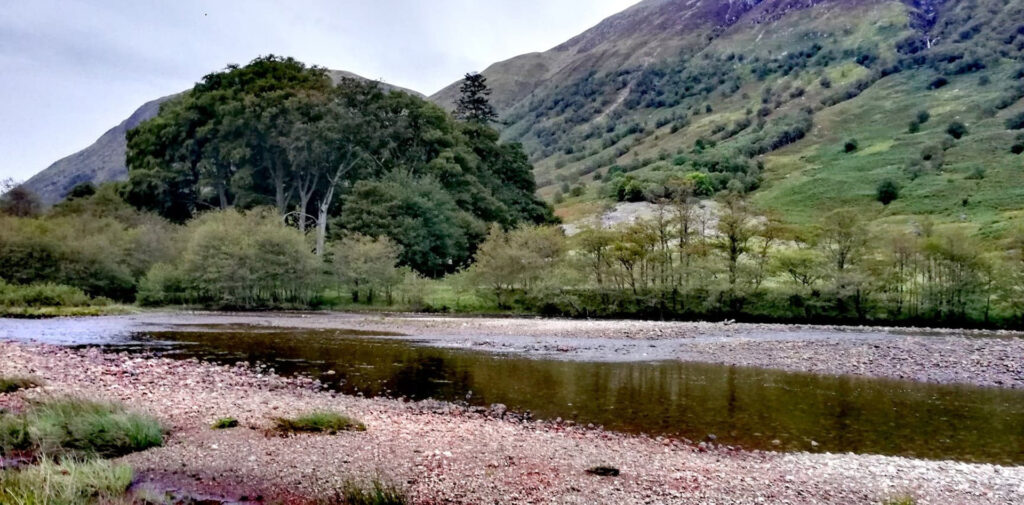
I hope the sun will create a magical glow on the glen hills, but nothing happens. It only gets pitch-dark. Back at the campsite, clouds party disappear, and stars get visible. On the mountain track of Cam Dearg and Ben Nevis, leading to the top of the UK’s highest mountain, torchlights of descending people produce an additional magical atmosphere. Tomorrow I pilot back Down South.