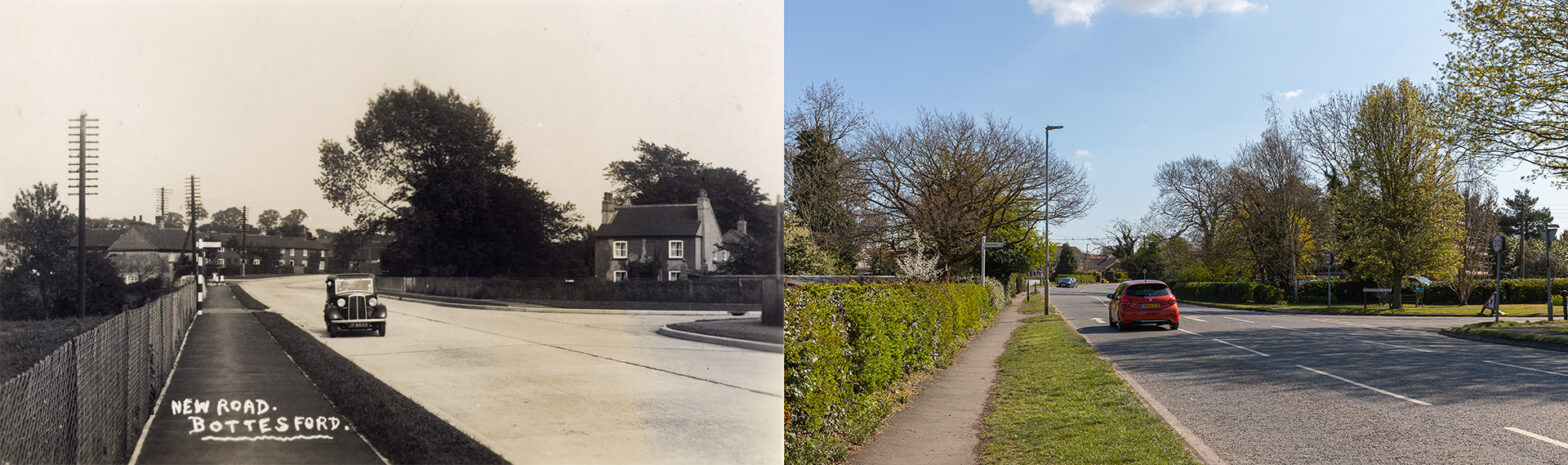
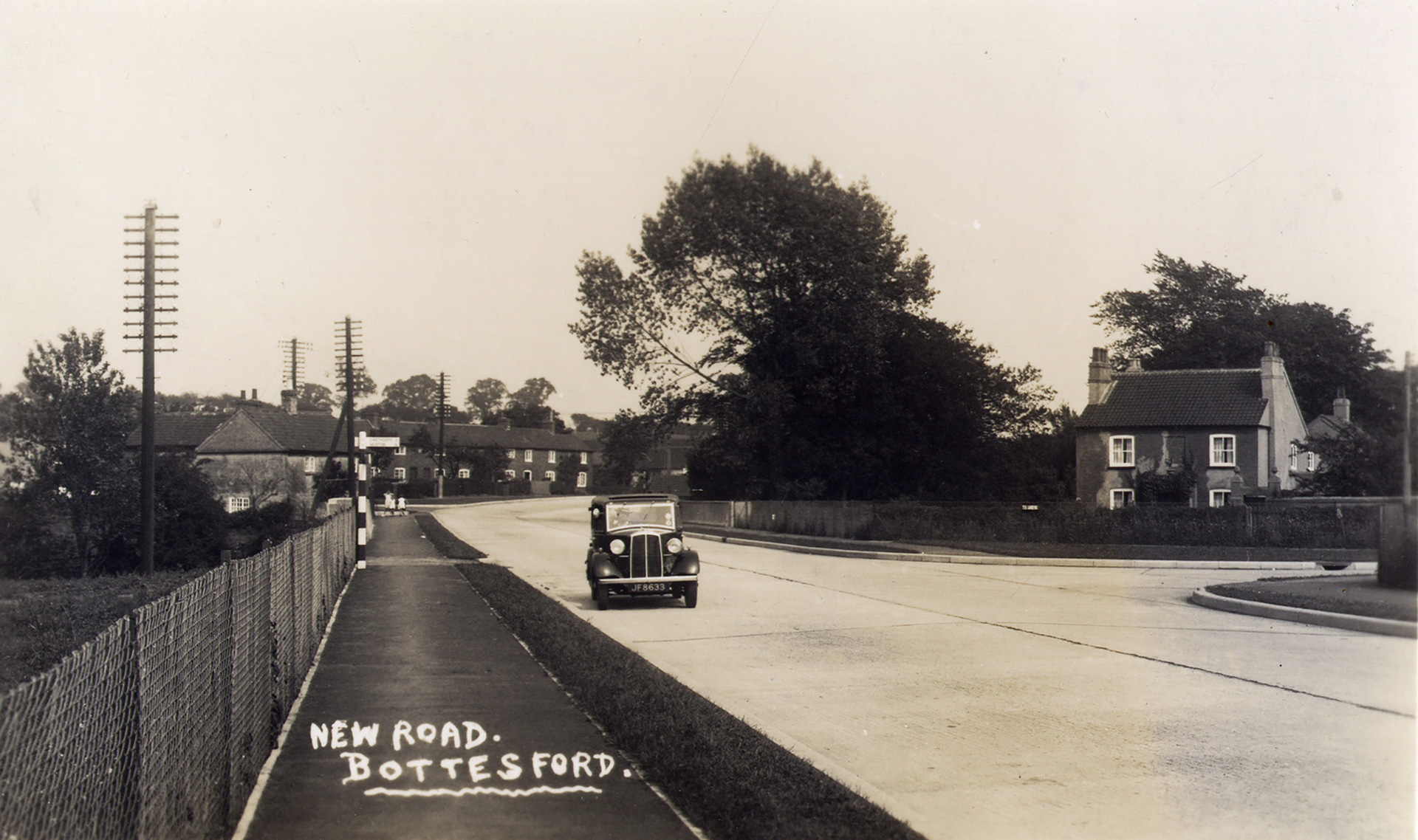
Grantham Road – 1934
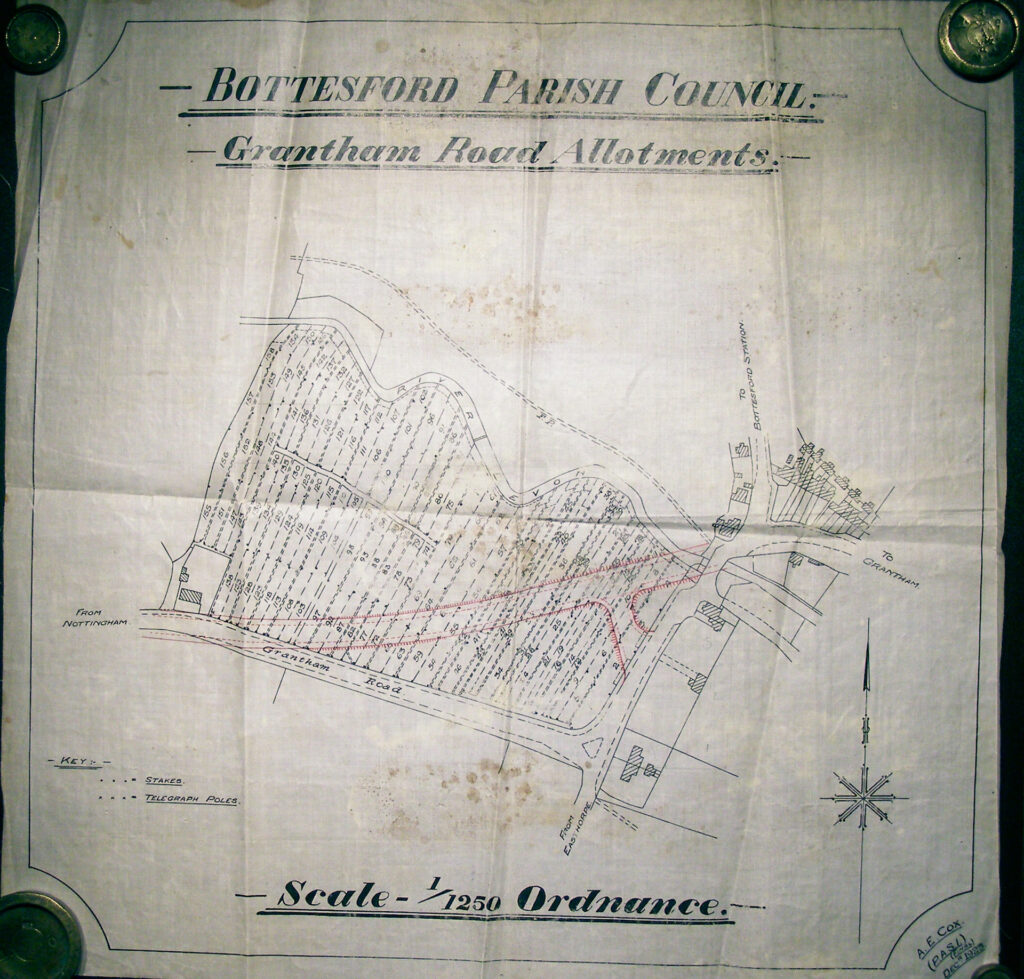
A car driving on the wrong side of the 1930s newly built Grantham Road! Did the driver spook the photographer or deliberately stage the picture? “The car looks like a pre-series Morris 8, known as the first batch of the 1935 model, launched in 1934”, says Berni Carey. A hatted man is behind the wheel. The car’s registration plate starts with the letters PL, meaning it was registered in Leicester. On the left, a spacious footpath lies between a new fence and a concrete road. In the past 80 years, the verge has crept closer to a flowery hedge. The Bottesford Local History Archive holds a digital copy of an oilcloth plan, dated December 1923. It shows the new road cuts through a very large pre-1930s allotment area. A slice is still allotments, other parts became the village green and the play area. The original Grantham Road made a strange curve, now a short stretch of Rutland Lane and Easthorpe Road.
Emma Kay comments on the row of cottages at the top of the old photo: “These were houses built for the poor. They were partly knocked down, with only 5 or 6 remaining.” On the right is Bridge House, currently being restored, out of sight hidden by trees in spring foliage. Michelle Topps has happy memories: “My mother used to live there with her mum, sister Madge and brother-in-law Robin Spick.” Katie Dawson added: “My granddad Charlie and his brothers together with Robin ran the nearby scrapyard. It was my great-grandfather Charles, a successful and respected man, who moved the business from Grantham to the site in Bottesford.” Rosie Taylor remembers the noise that came from the scrapyard. She reflected: “Stuff being burned there caused thick black smoke.” I can only imagine such a business now would fuel neighbour and village protest.
Although now the A52 south of Bottesford takes most of the Grantham-Nottingham traffic, Grantham Road is still busy. I hit the button of my camera when a car is at the same spot as the Morris 8. At least the red one is driving on the proper side of the tarmac road.

The Cross and Stocks
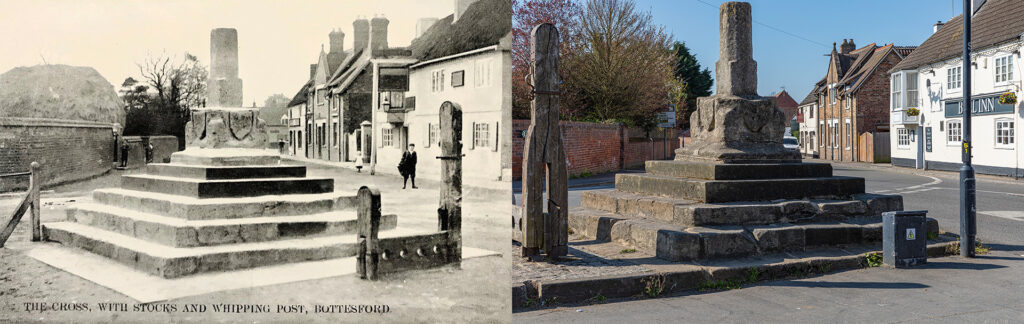
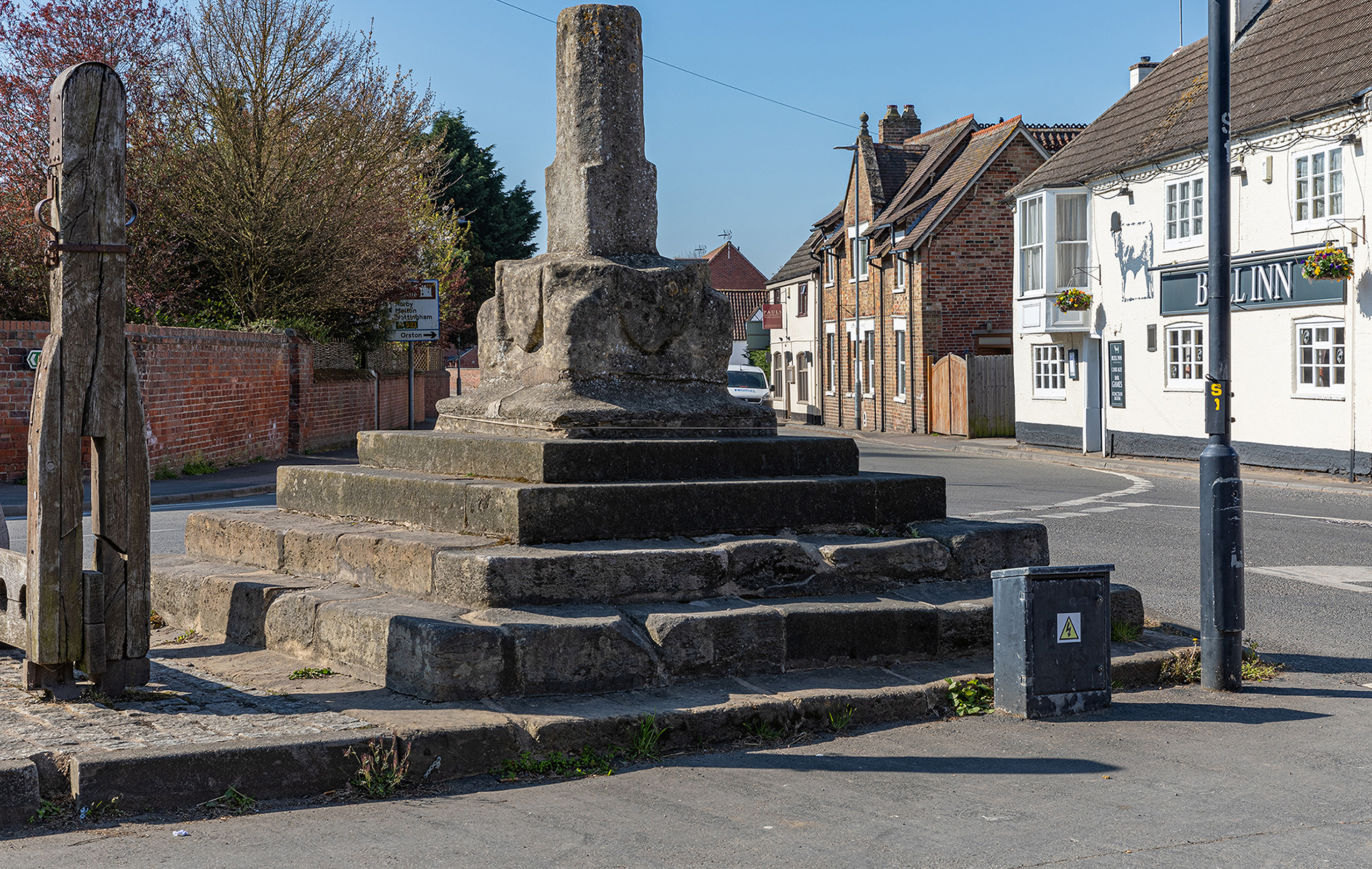
An article on the Bottesford Living History website published in August 2012 asked the question if a nightly accident marks the end of the Grade II listed stocks and whipping post in Bottesford. During the dark hours from Saturday 4th and Sunday 5th, the local stocks and whipping post fell victim to a runaway car, that ran straight into the cross, and also damaging the steps of the 15th-century monument. The stocks were restored, but the whipping post wasn’t placed back.
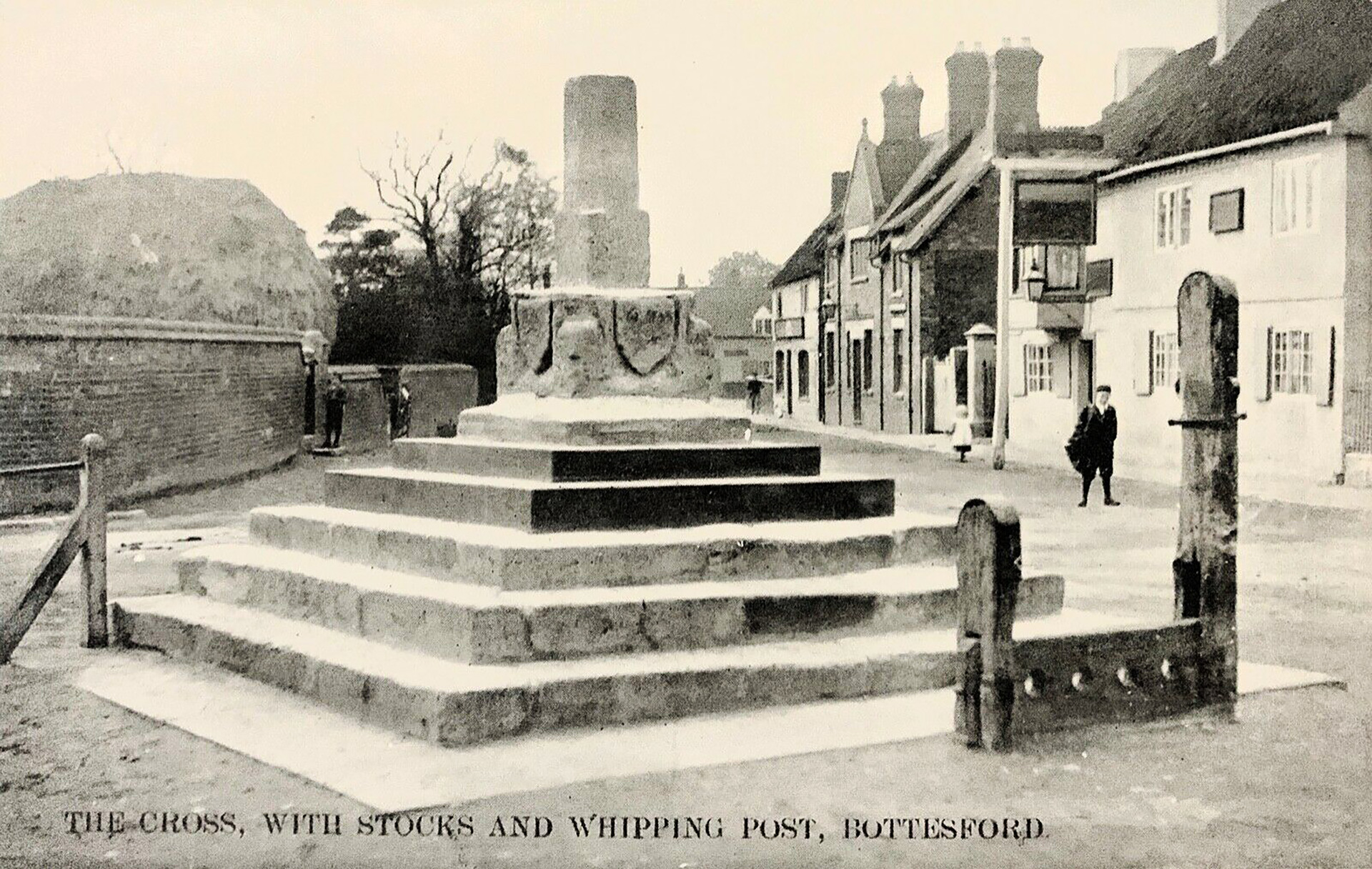
The stocks and whipping post had the purpose of public punishment of offenders, mostly the centra market place. The stocks and whipping post demolished by the car accident were not original, probably going back to the 18th century. As shown on the old postcard the stocks originally stood on another (northern) side of the cross. In the 1960s they were moved to the eastern side of the cross.
Taking the picture of the cross I stand with my back to the small butcher’s shop of the Taylor family, who have been butchers in Bottesford for over 100 years. The gate with a view of the butcher’s yard is opened. I have to move my tripod because a four-wheel drive with a small trailer to transport livestock is leaving the yard.
For John Shipman Taylor’s butcher, Moulsher’s shop (to the right of The Bull Inn) and Deacon’s hairdressing salon are all distant memories. “As school children aged 13, we were marched down to Taylor’s from the school to witness our school reared pig stunned, slaughtered, shaved and butchered. We then cured the meat in a salt pan back at school. Mr Deacon used to say to me “how much shall I take off or shall I just make a noise with the scissors?” It was all part of the curriculum. Some of us lived on farms or had relatives who farmed. At school, we had to do all of these jobs. We had to feed the pigs with boiled swill, muck them out and watch the vet castrate the male piglets. We had to debeak the chickens, to stop them pecking each other as they lived in a deep litter shed, and inject the male chickens with a hormone, I think to reduce their aggression, kill the chickens and pluck them. We were given some salted pork which was very nice. It’s good to know where your food comes from before it reaches the supermarket. It did not put me off.”
Facing Market Street on the right of the cross the small white building (Market Street 1) was at the beginning of the 20th century a butcher (first run by J.D. Robinson and then the Goodson family). Next door is The Belvoir Coffee House, built in 1881, serving tea and coffee for more than 30 years. At the right, the white building, dating 1726, is The Bull Inn.
Left of the cross the old picture shows a haystack in the yard at the back of the old school building (now the library) on Grantham Road.
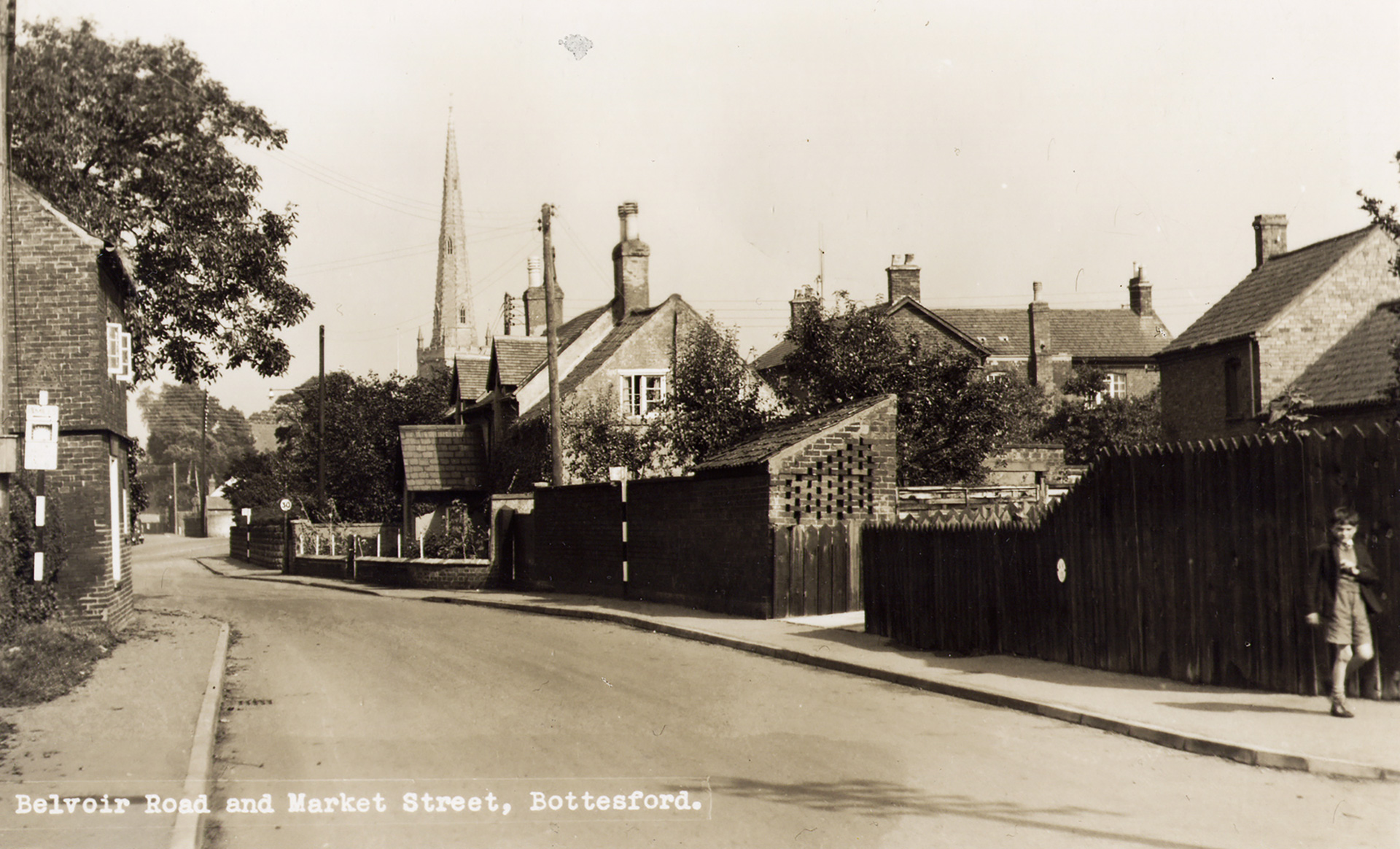
Belvoir Road
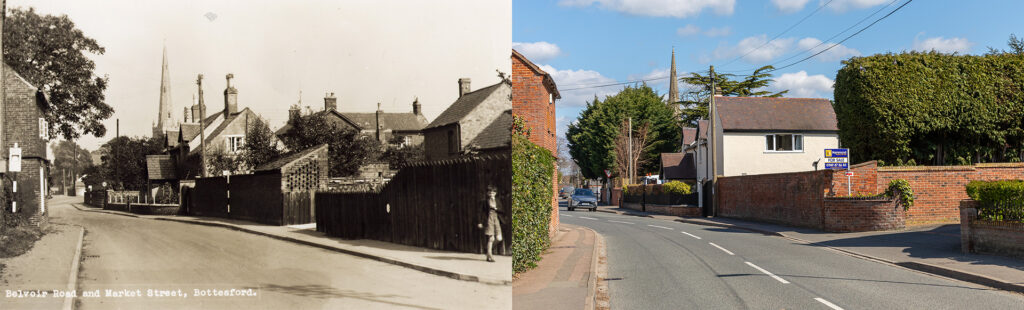
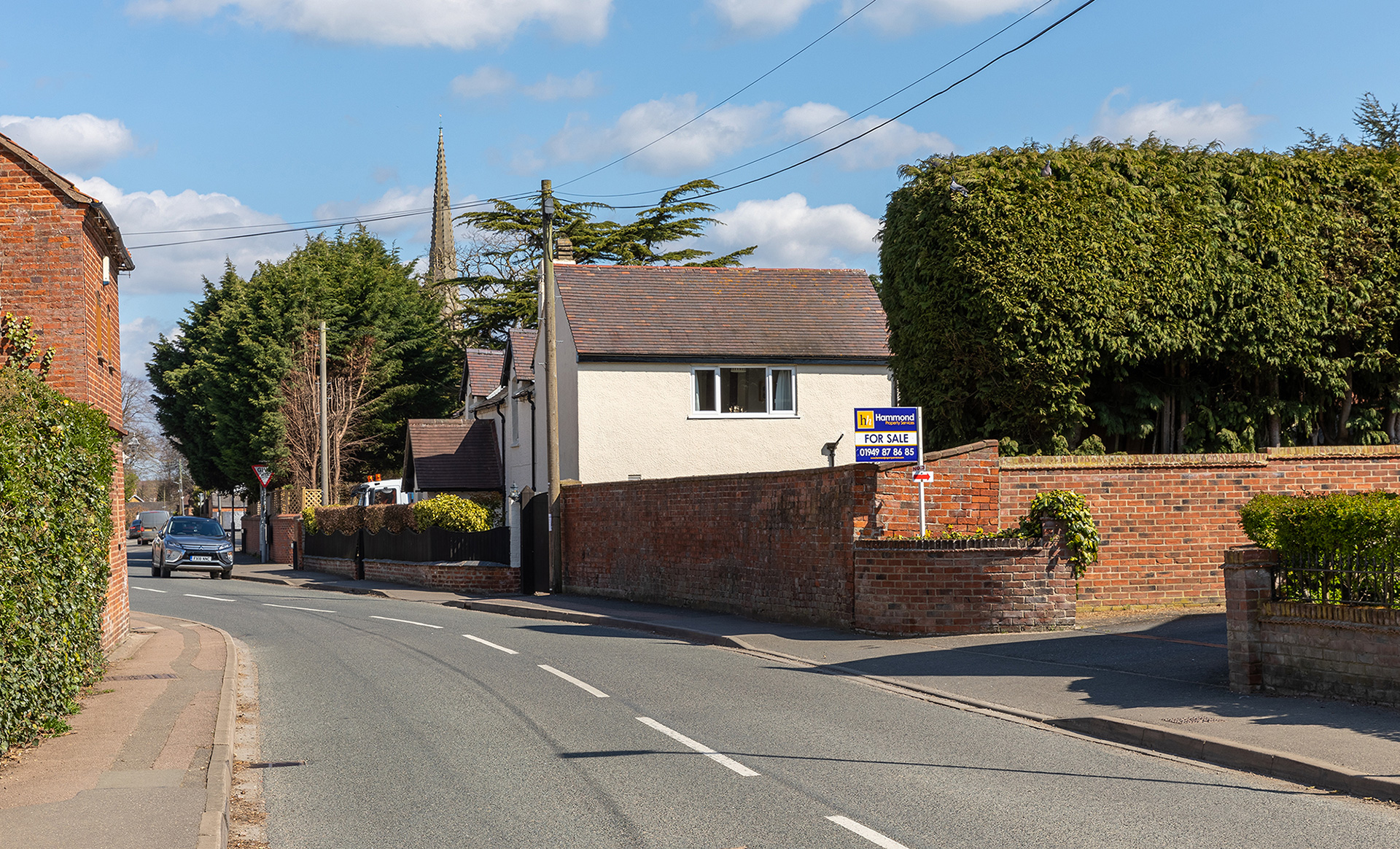
The old postcard shows Belvoir Road where it joins Market Street. The house on the right of the road is called Three Ways. Behind it, now hidden by the high hedge, is the roof and chimneys of Acacia Farm and Acacia House, the home of the Marsh family. The house on the left seems still untouched. Janet Greenhalgh: “I remember Mr and Mrs Pacey, the hairdressers being there.”
Links to this article and Bottesford’s history