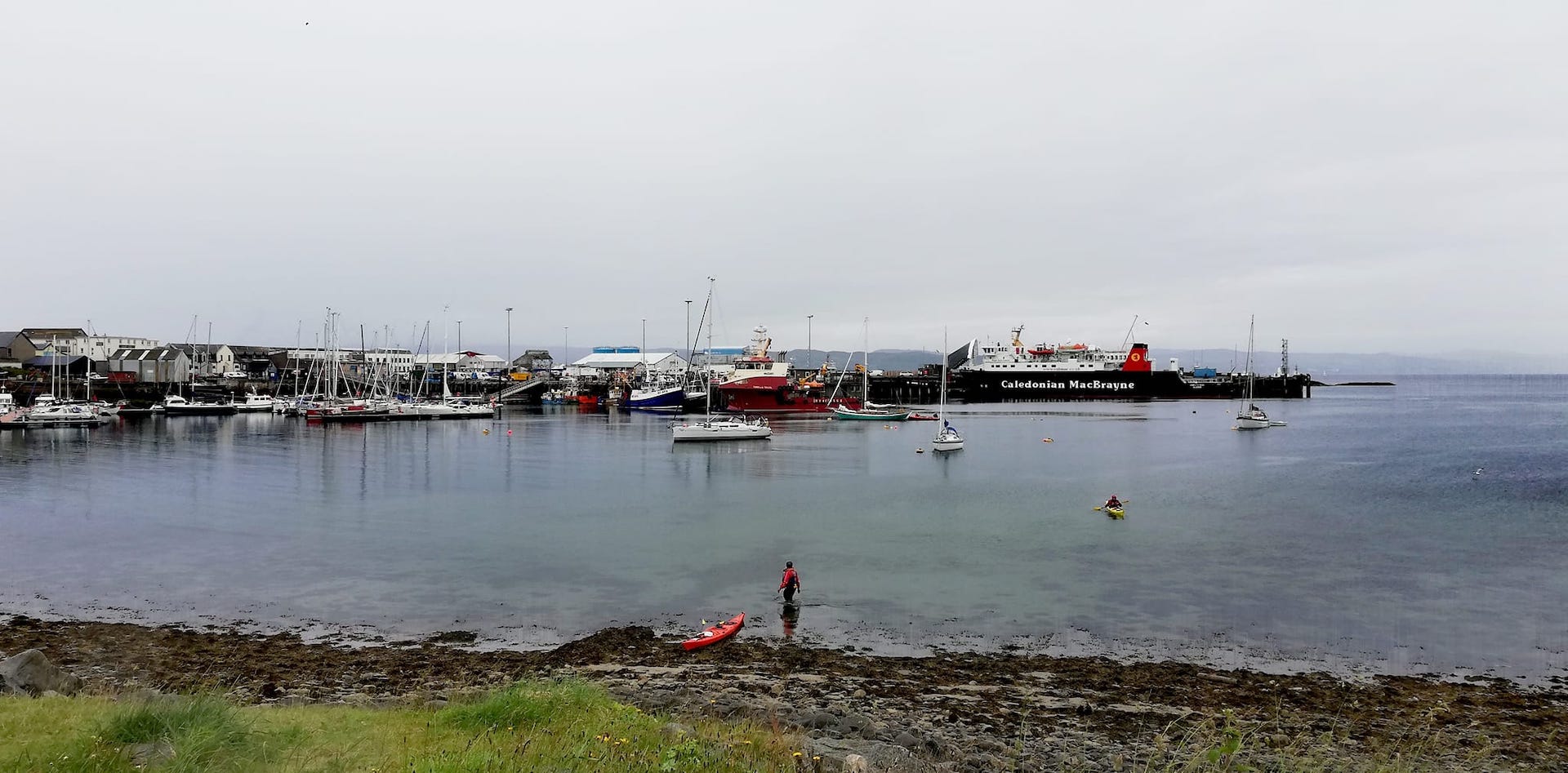
Wednesday 15 June 2022 | Back of Keppoch, like most other places I stayed during this travel, has a cuckoo, even two, at this End of the World. Both birds, accompanied by a series of other birds, and the tent clattering in the wind and hit by raindrops, create a morning stereophonic soundscape. It is breakfast time with a nice cup of fresh coffee, yoghurt, fruit, oat flakes and milk. This is to start the day that doesn’t look too bad.
In the morning, I drive to Morar, a few miles north, and talk to Pete and Sue, who did come and live in the village 20-odd years ago. Being fond of sailing, they visited the Scottish West Coast regularly, and because a world trip on a larger sailing boat was cancelled, they decided to move up north and ended up in Morar by accident. Although not ‘indigenous’, they know a lot about the area and can’t stop telling stories because they both emerged in the local history. Pete is interested in trains, particularly the Fort William to Mallaig railway line. They live next door to Morar Hotel, pictured in the backdrop of Thomson’s black and white picture of the white sands of Morar. I pinpointed the place when first visiting the area last April and, like the past days, hope for better weather for the remake.
Then I got further up to Mallaig, where it is always a challenge to find space to park the car. Luckily the village is not that busy, and there are some available parking spots at East Bay, outside the harbour on the way to Mallaigveg. I want to speak to Pimmy MacClean, the Harbour Master, who I do find at his office overlooking the harbour from his first-floor office.
He isn’t in, but his secretary gives him a call, and a few minutes later, his office desk is scattered with the prints of Thomson’s pictures of Mallaig. We start with an unusual Thomson photo about the night’s fish catch displayed near the fishing pier with about 20 locals pictured. Pointing his pencil to identify some of the people and starts talking about Mallaig being the most important herring port of Scotland in the past. Mallaig is a harbour with a CalMac ferry to the Isles, a smaller company bringing people and goods to and from Knoydart (there is no road), about five commercial fishing boats and, of course, The Jacobite steam train running twice a day during the holiday season. The ‘Harry Potter’ tourists are easily spotted, enjoying ice cream and going in and out of the local souvenir shops. Surprisingly Mallaig in the past was only a price with four crofts. It took Pimmy five seconds to identify where Thomson took the harbour picture, pointing to the place from his office windows.
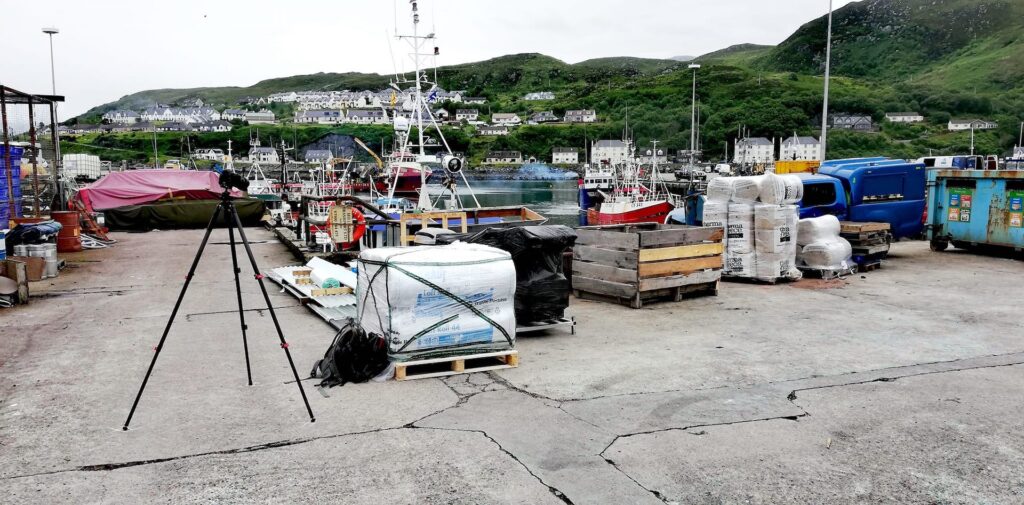
After the interview, I fetch my tripod from the car, and because the weather wasn’t that bad and the hills as a backdrop at East Bay are visible, I give it a try. I have been warned some goods – shipped to or from the isles and Knoydart – could block the view. I ask a lift truck driver to move an empty crate to unveil the view. Where the fish was displayed and sold in the past, now broken goods and a seriously damaged dark blue car are waiting to be taken away. With a bit of sunshine, this picture will be even better, but it is what it is… I am happy with the result.
When I am back in the car, rain arrives, and grey clouds mystify the landscape. Looking from higher up the village Mallaig, with a view north of the harbour, where Thomson also took two photos, Knoydart, Skye, Rum and Eigg have vanished in the rainy mist. Exploring other places is not much of use because the skyline is a significant help in identifying the locations. I buy some food in the local Arisaig shop and finish my day at the campsite, cooking dinner, doing some writing and handling my emails. Somewhat worried about the rain, and much more is to come tomorrow night. The forecast is good for Friday afternoon, Saturday and also Sunday.