
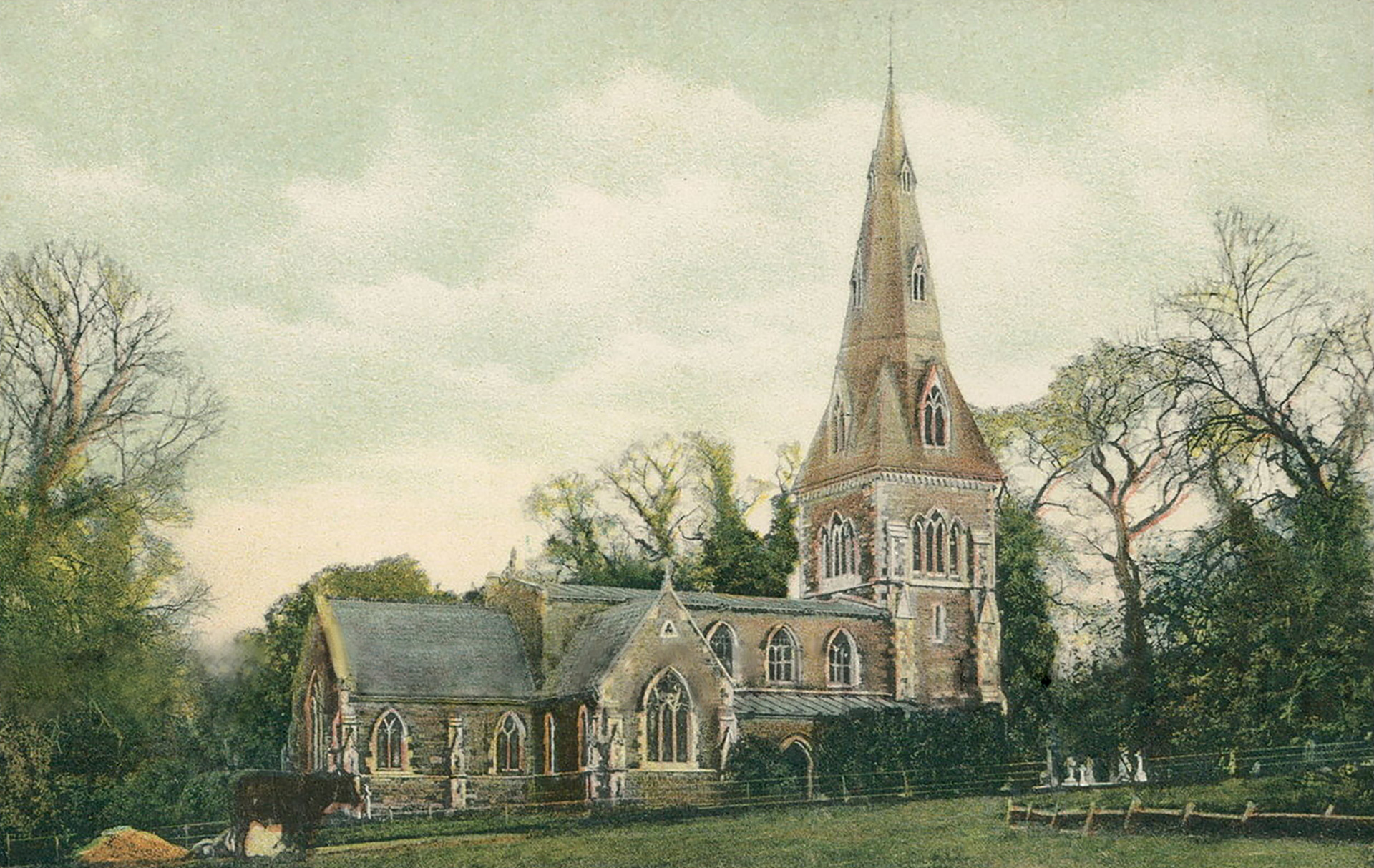
Church of St James – 1910s
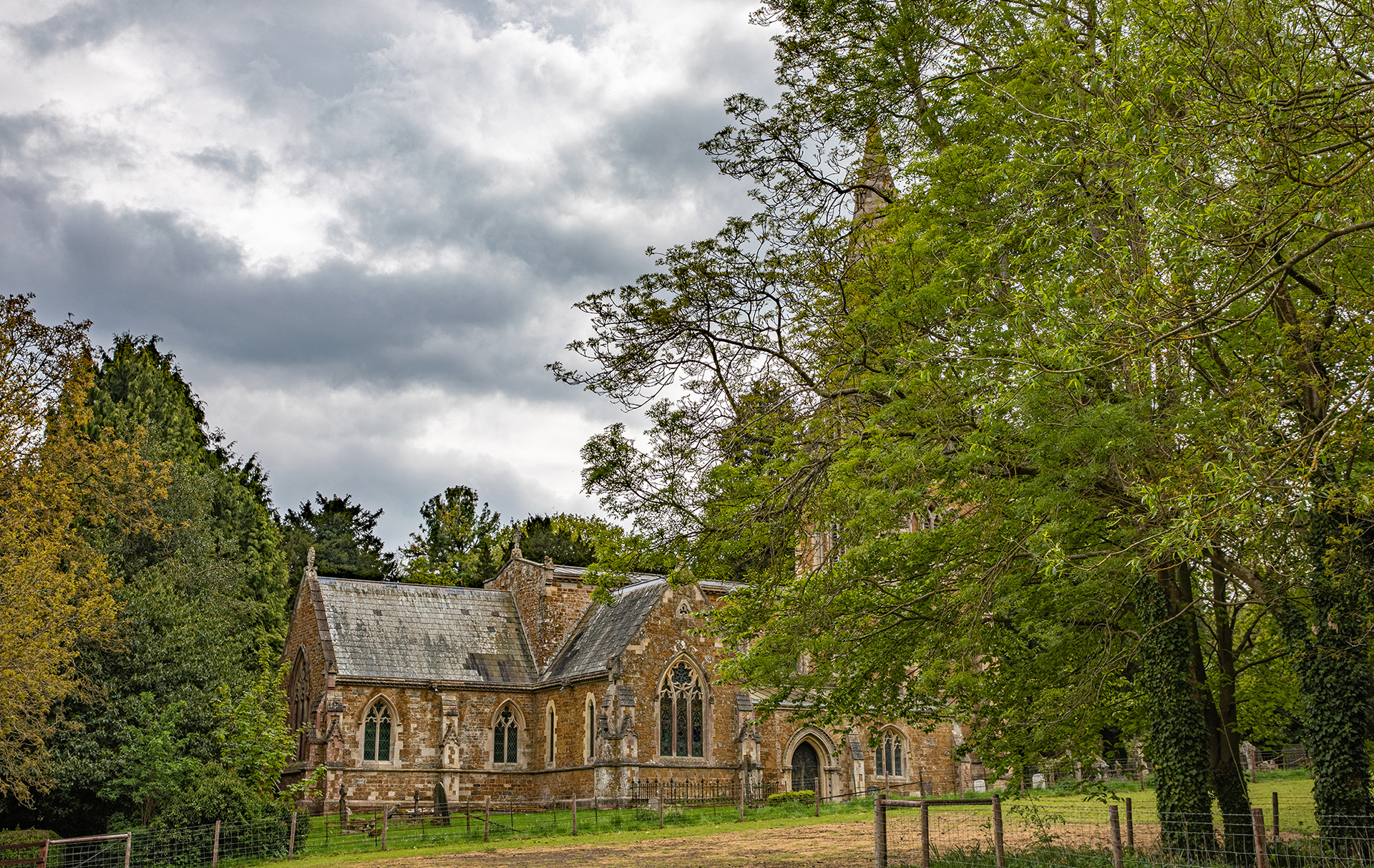
Halfway up the road, Church Street becomes somewhat steep and bumpy. I leave my car and continue on foot. Nature is in full spring with the sweet smell of hawthorn and cow parsley. My destination is Little Dalby’s Church of St James, standing isolated on a crisp green wooded hillside surrounded by pastures dotted with flocks of sheep. When making the remake of the Grade II listed church, one of the villagers, on a walk with her dog, asks what I am doing. After explaining, she said: “A few days ago, we had a spring clean in the church, now far too big for our community. Little Dalby counts only 16 properties. But there is evidence of a larger population in medieval times shown by the site of a village and a church.”

Lord of the manor Edward Bouchier Hartopp ordered in 1852 the rebuilding of the church with optimistic grandeur and seatings for 200 persons with a total parish population of seldom much more than half the number. Three crosses are erected as memorials to the late Captain W.W. Hartopp, his brother and son in the churchyard.
South of the church lies Little Dalby Hall, an Elizabethan manor house that has gone up and down in size during a long history. The Hartopps were seated at Dalby in the first Queen Elizabeth’s time, and one of that day was made a baronet by James I.
“If I wanted to show a foreign visitor a piece of gracious England with a typical English garden and a historic English house, I would take them to Little Dalby,” wrote Pamela Bragg in the Leicester Advertiser of 16 August 1968. “This neat estate of flower gardens and rolling lawns is situated in the midst of farming land and twisting muddy lanes. The contrast between the slightly untidy rural scene and the typical order of an Elizabethan home is something which hits your eye.”
The centre part of the building, contained within the present structure, was constructed in the late Elizabethan days by the Burns-Hartopp family. The west wing was added in 1682 and an east wing in 1816. The centre was rebuilt in 1838.
“In the heady days of the hunting era, some of the more well-to-do local residents, living with family and friends, followed more acceptable past-times than those less civilised pursuits entered into by the brach unmarried men purely came for the winter hunting season,” stated Jenny Alsop and Mary Hatton, local historians and members of the Melton Fieldworkers in the Leicester Mercury at the last day of 1996. “Wealthy families in the 18th and 19th century often played in amateur theatricals and went to great lengths, in time and money, to perform for their friends.” One of the most ambitious efforts and an excellent illustration of the provision of a permanent rural venue for theatrical performances were made by the Hartopp family at Little Dalby Hall, where many performances were given to the whole neighbourhood. “The tradition lasted from the 1770s until the late 19th century. In 1796 the theatre was in the main hall at Little Dalby. A green front curtain was installed by George Bunny. He also made the scenery and bags to store the clothes and covered the seats. In the same year, a builder, Richard Johnson, worked on the theatre with an assistant. The rooms were redecorated, and the music room became the dressing rooms.” In July 1801, the press reported a beautiful theatre built by Mr Hartopp, containing 300 (to) 400 people. The amateur performers were the two Hartopps, Mr Bundy and Mr Bilsborrow, assisted by Mr Hamilton’s Company and detachments from the Cheltenham, Stamford and Drury Lane Theatres. Cold collations were provided after each night’s performance, followed by gay and sprightly dances. “By 1847, the theatre was demolished. Plays were, once again, housed in temporary accommodation – the entrance hall.”
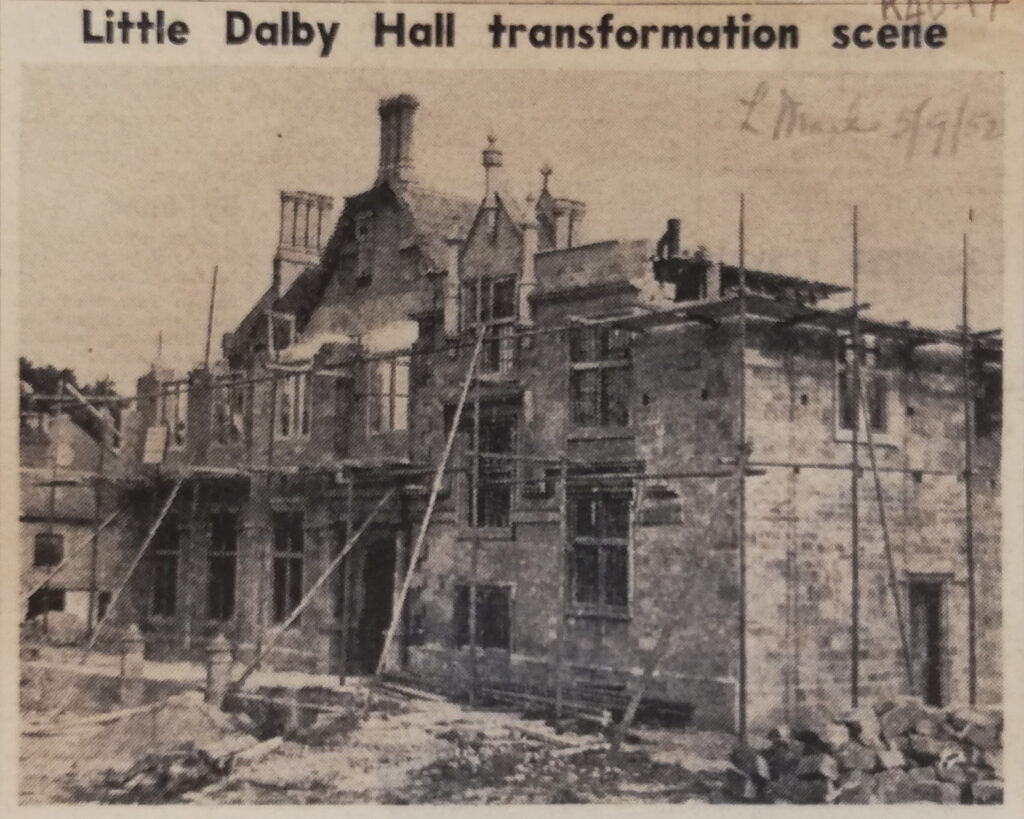
On 4 July 1952, the Leicester Evening Mail titled: “Victorian mansion becomes Elizabethan farmhouse.” The article described the ongoing transformation from “a majestic mid-Victorian, 28-bedroom mansion, into a five-bedroom Elizabethan farmhouse. The alteration is that the house, apart from the centre, is of no architectural importance and has no useful present-day purpose. Some of the inner walls have become outer walls, and stone from the demolition is being used to reface them. It is expected that the extensive alterations to the roof will be completed by the end of September. The second floor has been scrapped.”


On the death of Colonel Burns-Hartopp, Little Dalby Estate was bought in 1938 by Ernest E. Cook, of Bath, a grandson of the famous Thomas Cook, of Cook’s Tours, who ran his first tour from Leicestershire to Loughborough in 1841. In the 1950s, the house was on lease to Mrs Joan Kimball. From the 1960s, Little Dalby Hall was the home of Sir Albert, an ex-Olympic oarsman and the British representative of the World Health Organisation, and Lady Thelma Martin, the first woman alderman and later first woman chairman of the Rutland County Council. Sir Albert died in a road accident in 1968.
“In 1977, raiders stole an estimated £15,000 worth of silver (later said £21,000) from Little Dalby Hall. The haul consisted of a wide range of silver items dating from 1700. Most were treasured family possessions,” wrote the Leicester Mercury on 8 October 1977. Lady Martin said, “she always kept a policeman’s truncheon near her, and would have loved to have had a go, at least at one of the intruders.” A few days after the raid, a local youngster, Amanda Mould, found a silver candle holder near East Lodge while out blackberrying.
East Lodge is located at one of the entrances to Little Dalby Hall. It is a Grade II listed charming little stone gatehouse built around 1837, probably designed by T. L. Donaldson for Edward Bouchier Hartopp. Also, the original gate piers and walls are kept.
All are part of the Little Dalby Estate, the most complete estate of the Ernest Cook Trust, formed in the 1930s. The estate now extends to 5,600 acres and was bought in two parts by Ernest Cook: the northern half from the Burns-Hartopp family in 1938 (4,557 acres) and the southern half from Brasenose College in 1940. A further 480 acres comprising Grange Farm in Leesthorpe were purchased in 1977, with an additional 280 acres forming Jericho Farm in 2000. The estate includes Burrough Hill hillfort.
Returning to the hamlet, the view north is glorious and tranquil. I take a narrow asphalt footpath through one of the pastures to Little Dalby village.
On the village
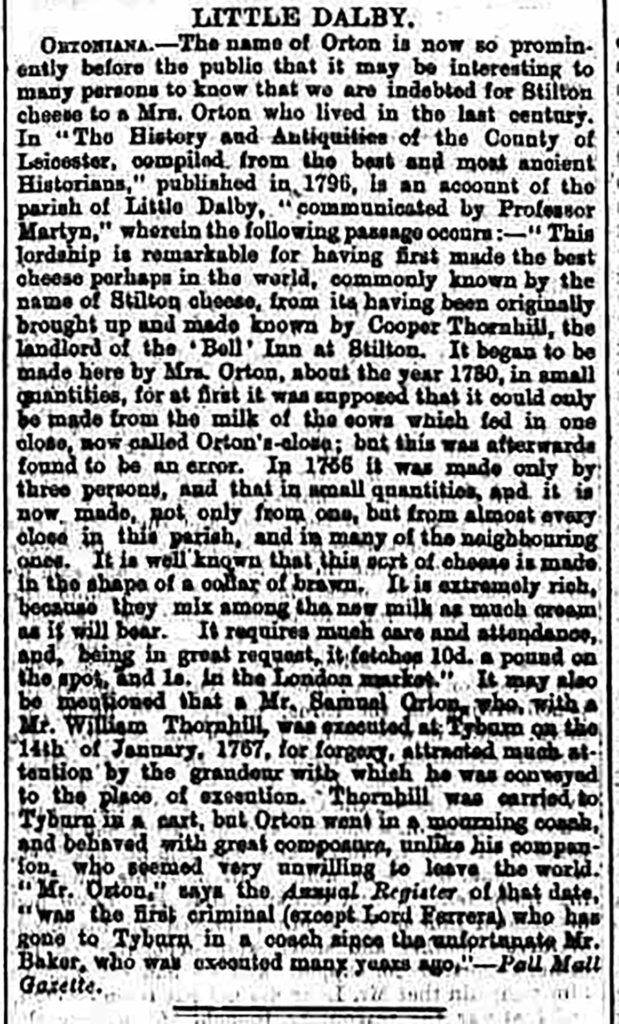
Manor Farmhouse is said to be where the story of the Stilton cheese started. “Little Dalby has one outstanding claim to fame,” wrote Arthur Mee in The KIng’s England. Leicestershire and Rutland. “It was the birthplace of Stilton cheese.” An article published in the Grantham Journal on 7 June 1873 refers to an account in the History and Antiquities of the County of Leicestershire compilated in 1796 by Leicestershire historian John Nichols. “[Stilton] began to be made here [Little Dalby] by Mrs Orton, about the year 1780, in small quantities, for at first it was supposed that it could only be made from the milk of the cows which fed in one close, now called Orton’s Close. But this was afterwards found to be an error. In 1756 it was made only by three persons, and that in small quantities, and it is now made, not only from one, but from almost every close in the parish, and in many of the neighbouring ones.” It was called Stilton cheese because it first became known through Cooper Thornhill, landlord of the Bell Inn at Stilton in Huntingdonshire.
Several of the houses in Little Dalby were built in the middle of the 19th century when the building zeal of the lord of the manor Edward Bouchier Hartopp. There was a Public Elementary School for 30 children (mixed) at the end of the 19th, supported by Mrs Burns-Hartopp. In 1877 Miss Sara Jones was the schoolmistress. In 1904 Miss Jane Garland had that role. That year Mrs Elizabeth Mantle was the shopkeeper and postmistress, preceded by Mr Mills Mantle, the tailor and the postmaster in 1877 in Little Dalby village.
Would you like to add your story and recollection? Leave a comment at the bottom of this page or send a message.
More pictures
Would you like to add pictures? Send a message.
Domesday Book
[Little] Dalby was a settlement in Domesday Book, in the hundred of Farmland and the county of Leicestershire.
It had a recorded population of 25.5 households in 1086, putting it in the largest 40% of settlements recorded in Domesday, and is listed under 3 owners in Domesday Book.
1. Land of Henry of Ferrers
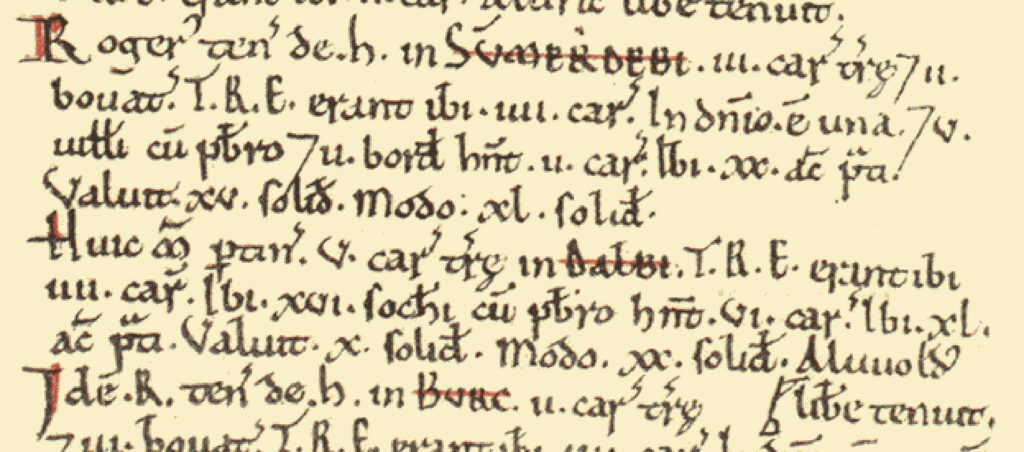
- Households: 5 villagers. 16 freemen. 2 smallholders. 2 priests.
- Ploughland: 8 ploughlands. 1 lord’s plough teams. 8 men’s plough teams.
- Other resources: Meadow 60 acres.
Valuation
- Annual value to lord: 3 pounds in 1086; 1 pound 5 shillings when acquired by the 1086 owner.
Owners
- Tenant-in-chief in 1086: Henry of Ferrers.
- Lord in 1086: Roger (of Livet).
- Lord in 1066: Alwold.
2. Land of Geoffrey of la Guerche
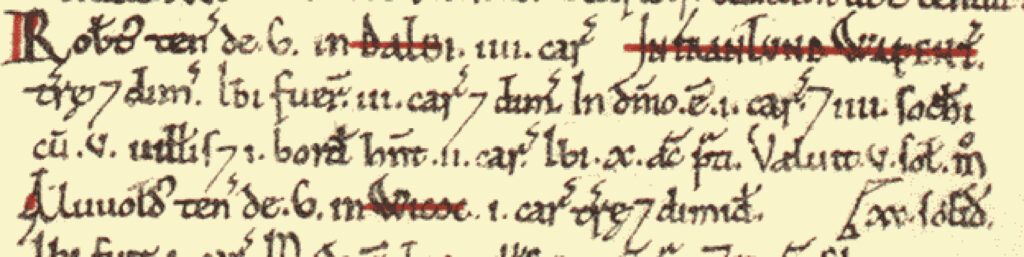
- Households: 5 villagers. 4 freemen. 1 smallholder.
- Ploughland: 3.5 ploughlands. 1 lord’s plough teams. 2 men’s plough teams.
- Other resources: Meadow 10 acres.
Valuation
- Annual value to lord: 1 pound in 1086; 5 shillings when acquired by the 1086 owner.
Owners
- Tenant-in-chief in 1086: Geoffrey of la Guerche.
- Lord in 1086: Robert <of Bitteswell>.
- Lord in 1066: Alwold.
3. Land of Geoffrey of la Guerche

- Households: 3 freemen.
Valuation
- Annual value to lord: 10 shillings in 1086.
Owners
- Tenant-in-chief in 1086: Geoffrey of la Guerche.
- Lord in 1086: Buter <of Pickwell>.
Links
- Historic England – Architectural Red Box Collection – Burton and Dalby
Would you like to add a link? Send a message.
3 responses to “Little Dalby”
My grandmother, Joyce Liddell Hartopp was born in Dalby Hall. Her father was Edward Hartopp.
I hope to visit & discover family members.
Hello Jane,
Thank you for your comment on the Little Dalby article.
I am not sure you can visit the site of Little Dalby Hall.
Maybe a good idea to get in touch with the clerk of Burton & Dalby (including Little Dalby) Parish Council… https://www.burtonanddalbypc.org.uk/contact-us
Estelle
Hi Jane,
We run a flower farm from the walled garden next to the hall and would love to speak to you if you ever come this way. Were looking for more history on the hall and gardens. Any photographs you may be happy to share would be wonderful too. If you have anything to share please email me. Thank you!
Lovely article, Estelle!