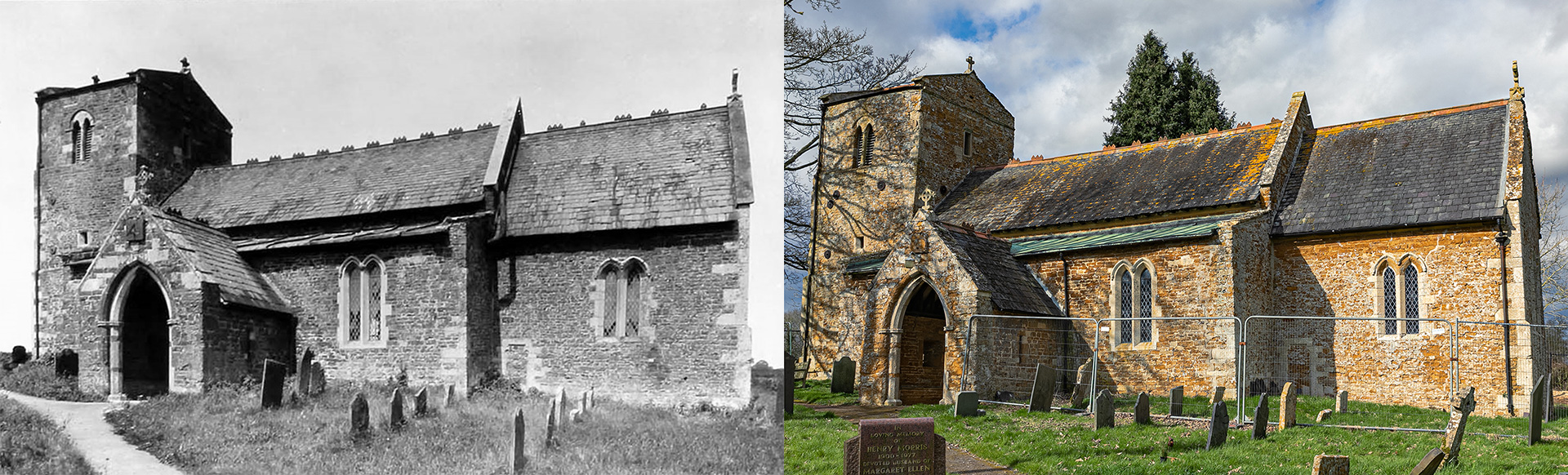
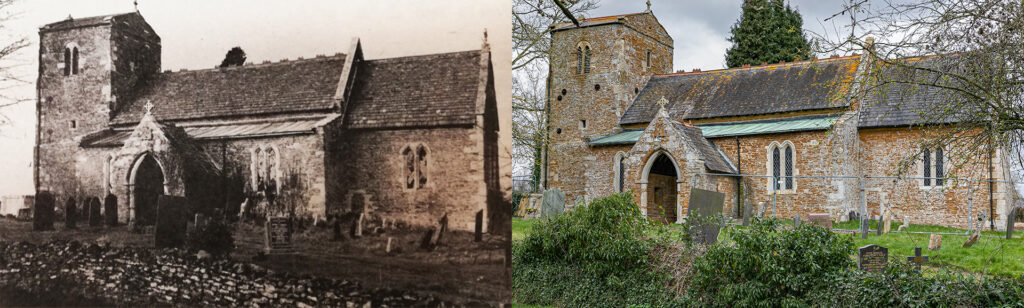
Church of St Mary – 1910s
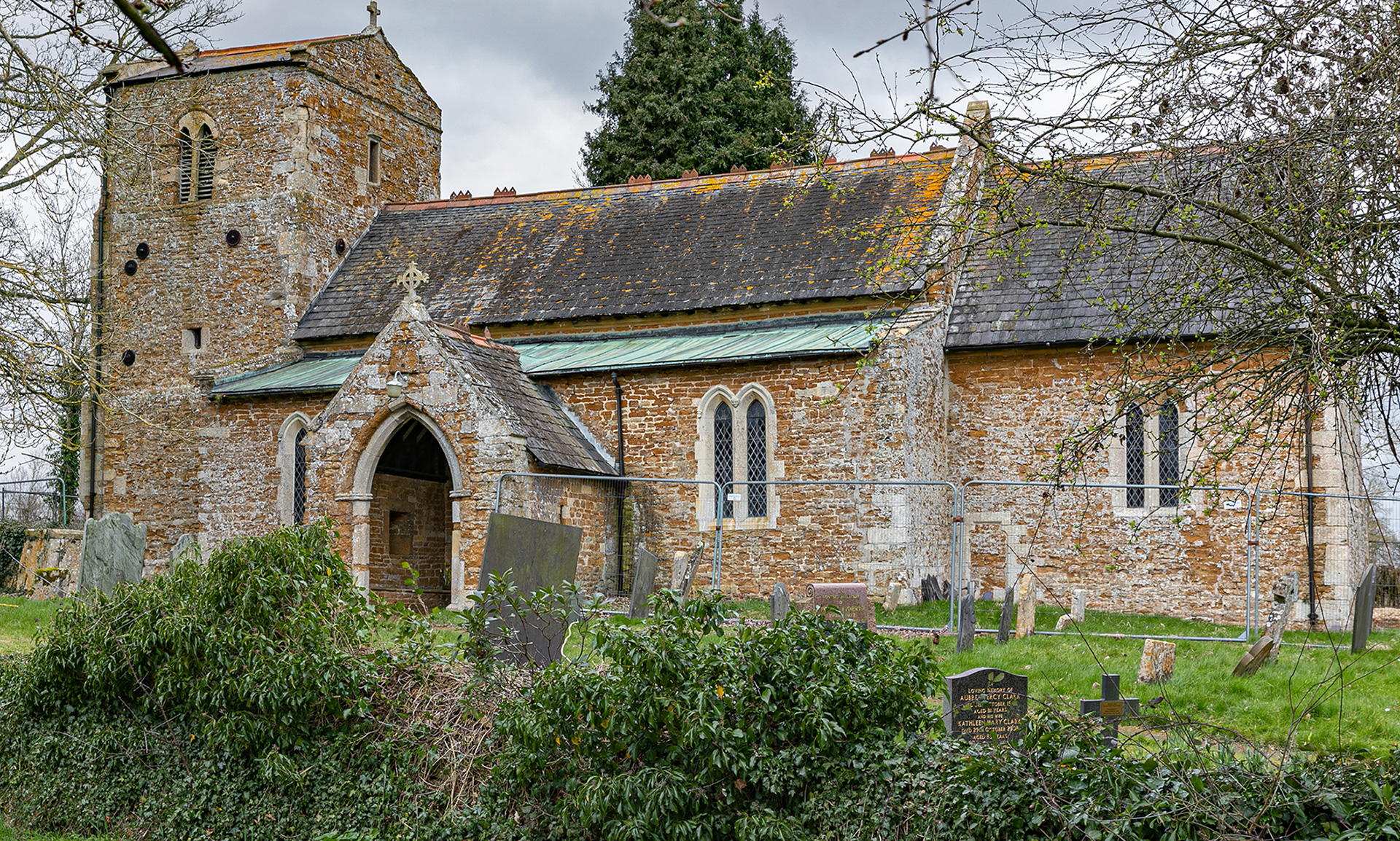
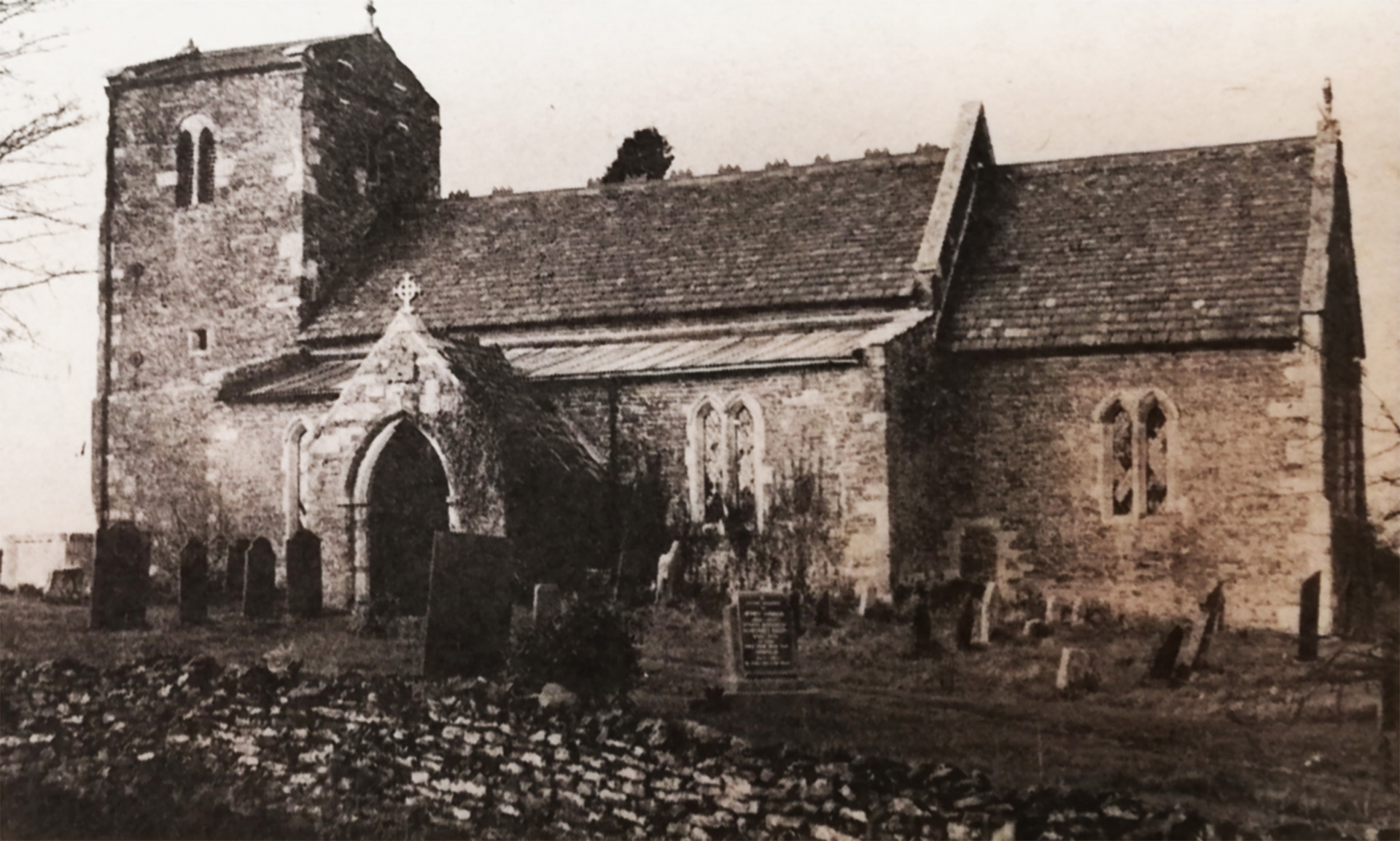
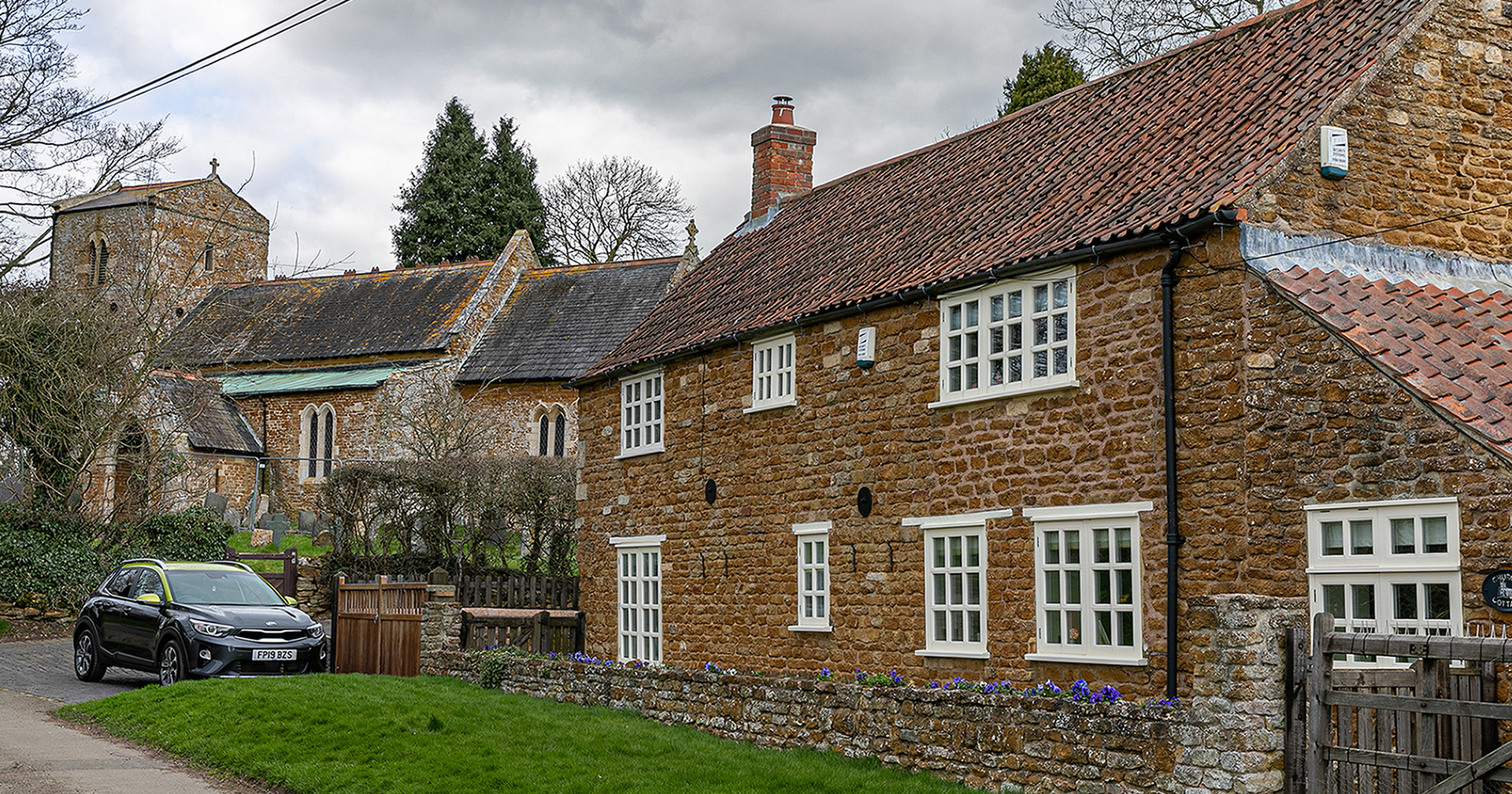
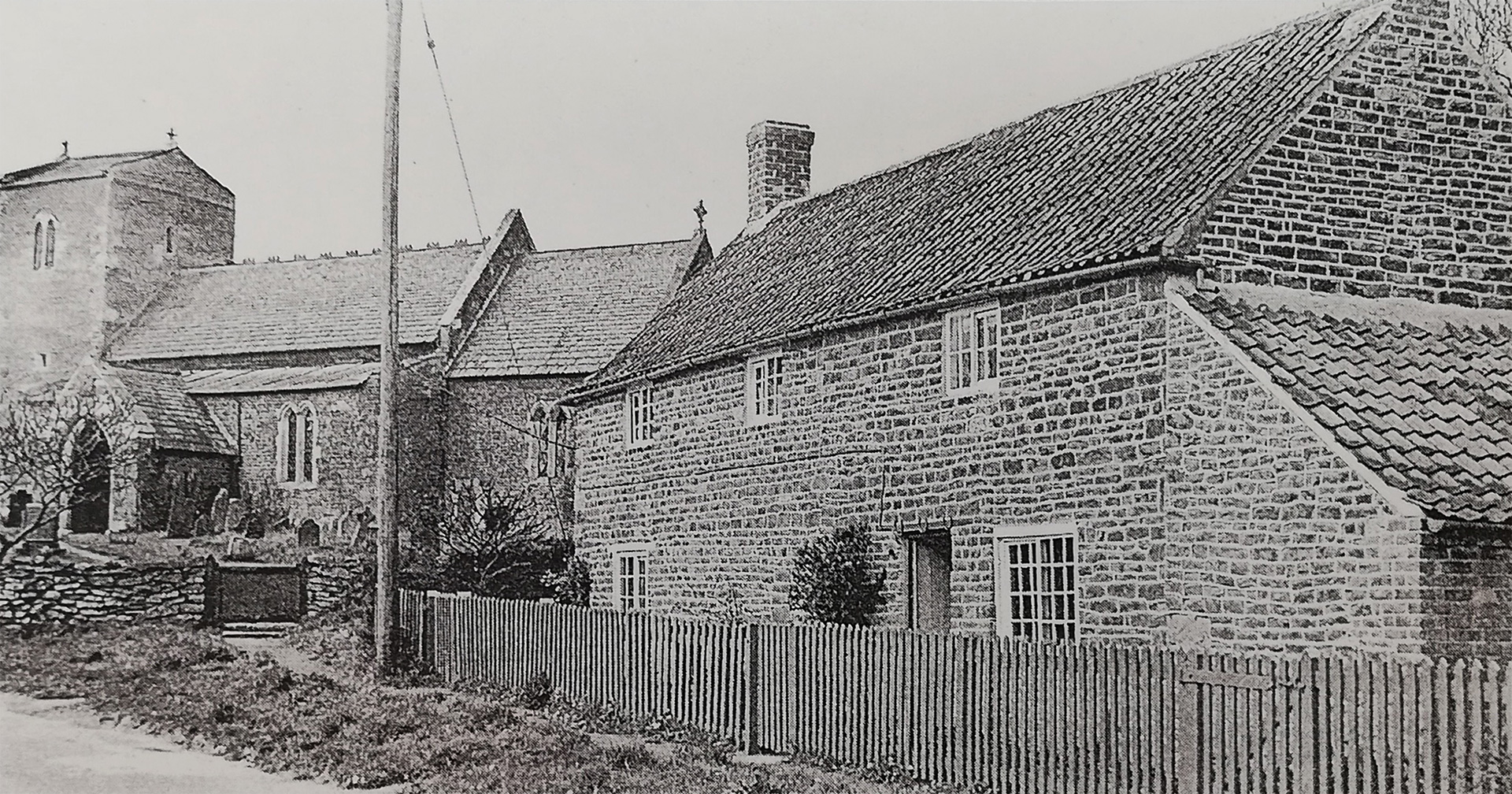
On arrival, I was surprised to see the lovely church of St Mary surrounded by a safety fence. Most of the graveyard and the path to the church’s porch entrance are still accessible. A pinned note at the closed wooden door, printed in capital letters, reads: “St Mary’s building is not safe, and you are asked to keep away from the structure.” It makes me sad. As part of the Heritage England picture collection, the old photograph was taken by G. Granville Buckley, probably around the 1910s. Since then, hardly anything has changed; only more headstones are scattered around. In the remake, the early spring sunshine brightens the lovely honey-coloured building. “Much of the attractive ironstone church of St Mary at Chadwell dates to before 1300 with architectural features from both the Norman and Templar period,” wrote the late local historian and member of the Melton Fieldwalkers, Jenny Allsop, in an article published in the Leicester Mercury of 2 March 1999.
About 3 metres from the church’s porch stands a limestone and slate chest tomb, dated 1779, with a worn inscription. The tomb commemorates Mary, daughter of John and Frances Adams, who died in 1798. Both the tomb and the church are Grade II listed. In 1870, records state that 110 people were in the church for one particular service.
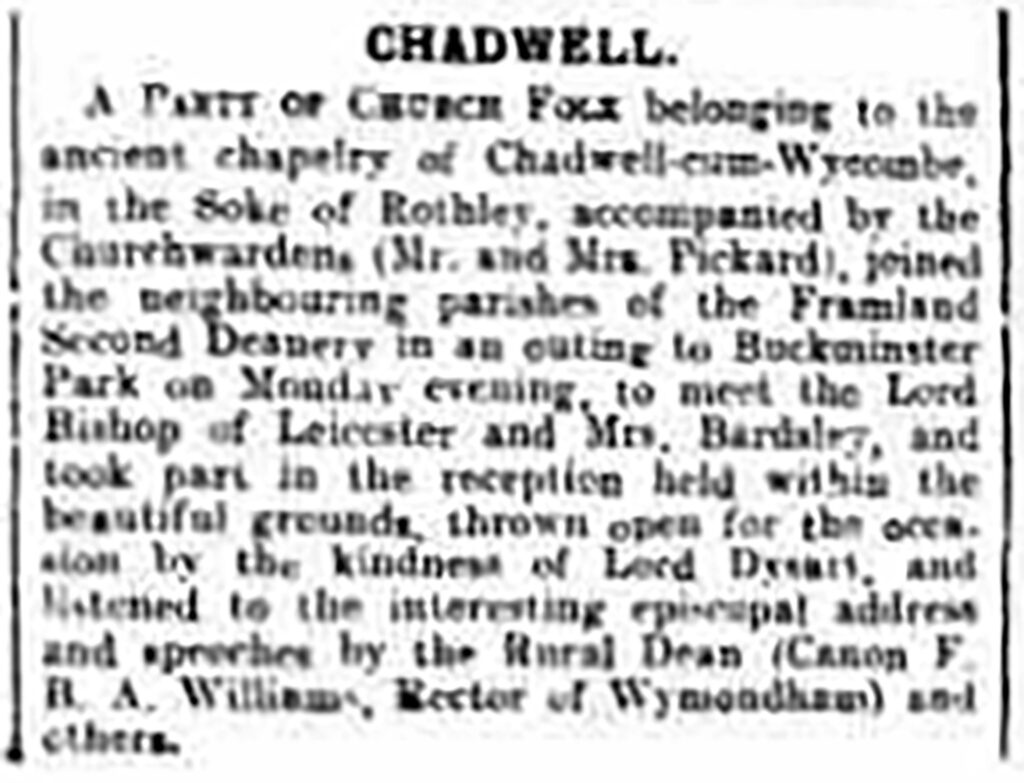
An article in the Melton Times of 19 October 1984 wrote: “Chadwell village has only 23 adult residents. Small though, the village may attract plenty of visitors in the shape of the parties of historians who regularly land to examine St Mary’s church.”
Anno 2022 Chadwell counts 11 homes. If every soul attended the church, it would only be a quarter full. Chadwell is a textbook example of a church in need in a tranquil village. A report of its current state will be finalised in April 2022, and then the real hard work can start, setting up an official committee for raising a lot of money. A few long-standing residents do hope for a miracle. Also, the relatively newer residents will be asked to join the battle to save the second-oldest church in Leicestershire.
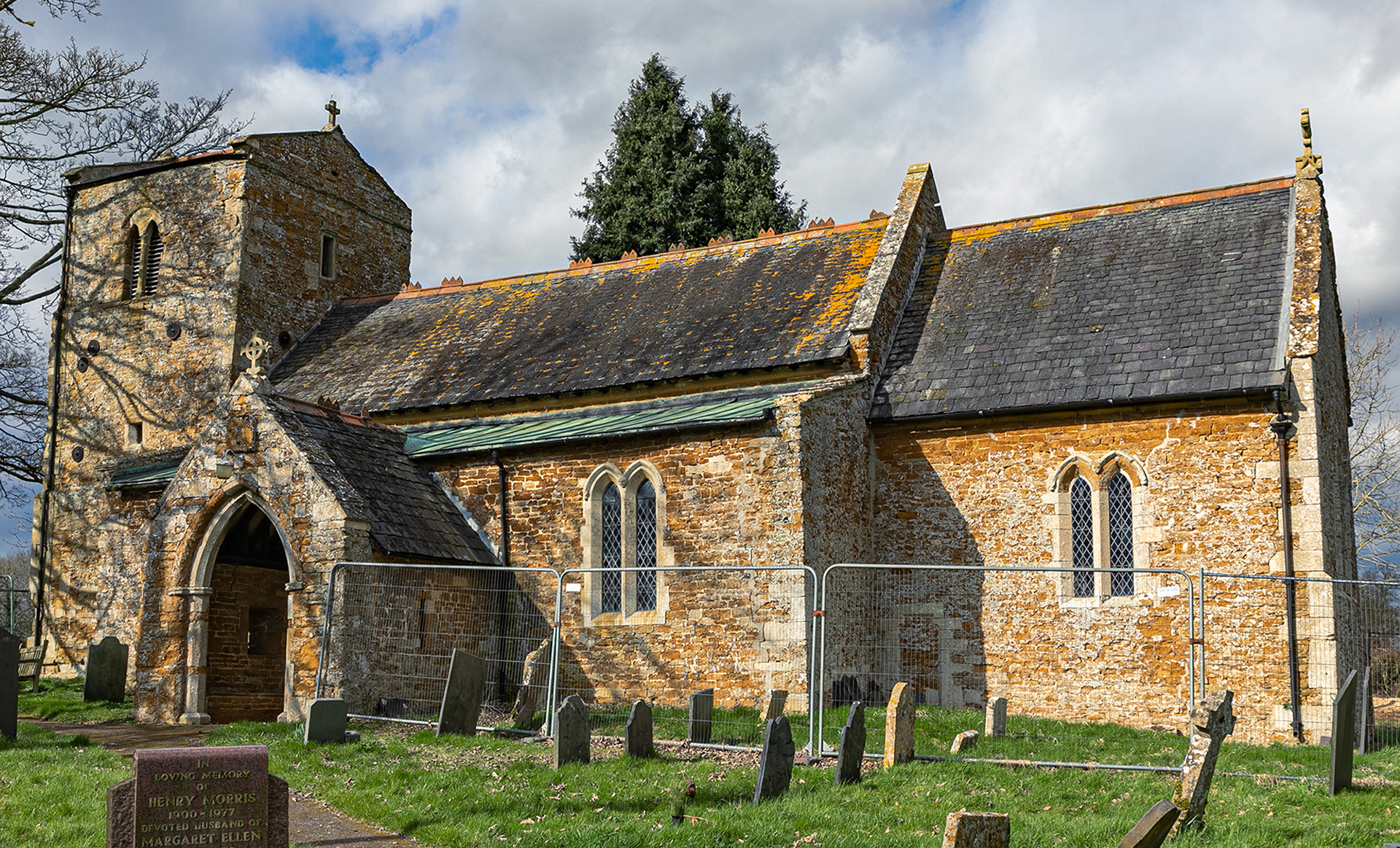
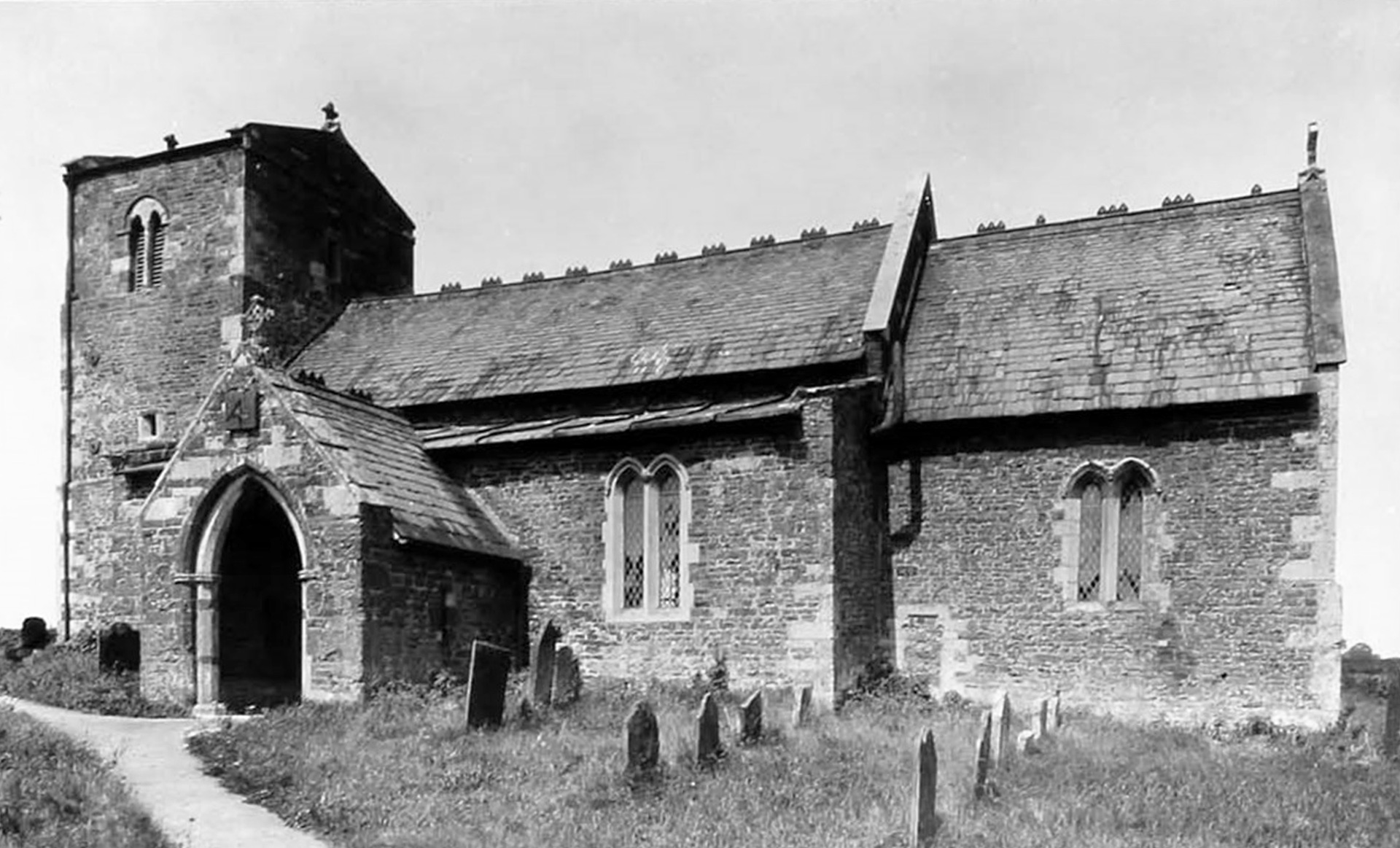
The church is often described as completely Norman, but the tower, with its long and short work quoins and pilasters of its three windows, gives it an even earlier look. The church was built in about 1180 by the Knights Templar. Chadwell’s fortune has been linked to Rothley for over 1,000 years, rooted in the Midlands’ Danish invasions and settlements in the 9th and 10th.
In 1231, the Manor of Rothley and its outlying possessions were granted to the crusading Order of the Knights Templar by Henry III. Chadwell had also passed into the hands of this religious order. By 1240, a preceptory or regional headquarters was set up at Rothley to control its scattered land holdings, and soon after, it held the advowson of six chapels, one of which was in Chadwell. The powerful and wealthy Templar Order was suppressed in 1312 by order of the Pope and Rothley, with its outlying lands passed to the Order of the Knights Hospitaller. The status quo continued until the Dissolution between 1536 and 1541.
The administrative influence of Rothley and the East Goscote Hundred over Chadwell continued until the 19th century. Even at the start of the 20th century, Rothley still levied a fee from ‘outsiders’ buying into the parish, making land comparatively more expensive than the surrounding villages. But, various Acts of Parliament heralded the end of the special status of Chadwell. Until 1935, Chadwell was tied to Rothley as part of the medieval Soke of Rothley. That year, Chadwell was incorporated into Scalford Parish.
On the village
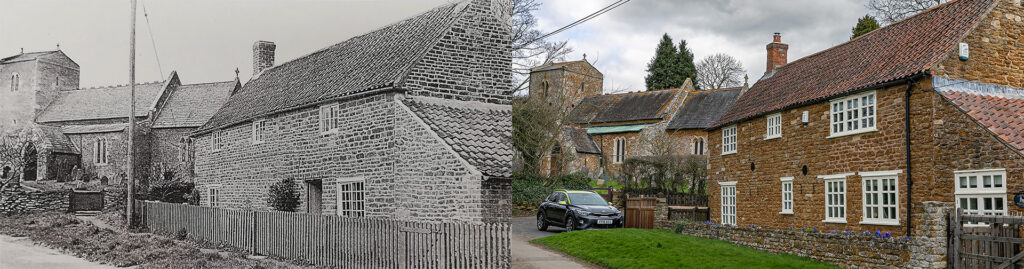
For over 1,000 years, Chadwell and nearby Wycomb held a special place in north-east Leicestershire, owing allegiance to distant Rothley – a legacy from the Danish invasions and settlement of the 9th and 10th centuries. Surprisingly, perhaps, these two villages retained Saxon names. Wicham, derived from the Latin ‘vici’, indicates its proximity to a Roman town – Goadby Marwood. Caldwell (later Chadwell) is Old English for a ‘cold well’ or spring.
Chadwell is a ‘shrunken’ village, but the reasons for the drastic decline of residents over the past 500 years are unclear. Archaeological research detected a series of home foundations down near the brook. The early settlers built homes near the water supply but were driven back by the persistent floods. In the 1980s, various medieval earthworks were recorded: an enclosure, a fishpond and several hollow ways. An archive reference at the time of King John also indicated a watermill and mill pond were located along the brook.
There remain signs in the middle of the village where the pound – an enclosure for straying animals – used to stand. Every village would have had a pound where straying animals were taken to prevent them from walking over everyone’s crops. Any farmer who came to retrieve his lost stock would have to pay a fine. It would probably have been there until the late 18th century, and memories of where pounds were tended to be passed on to later generations and can be very accurate.
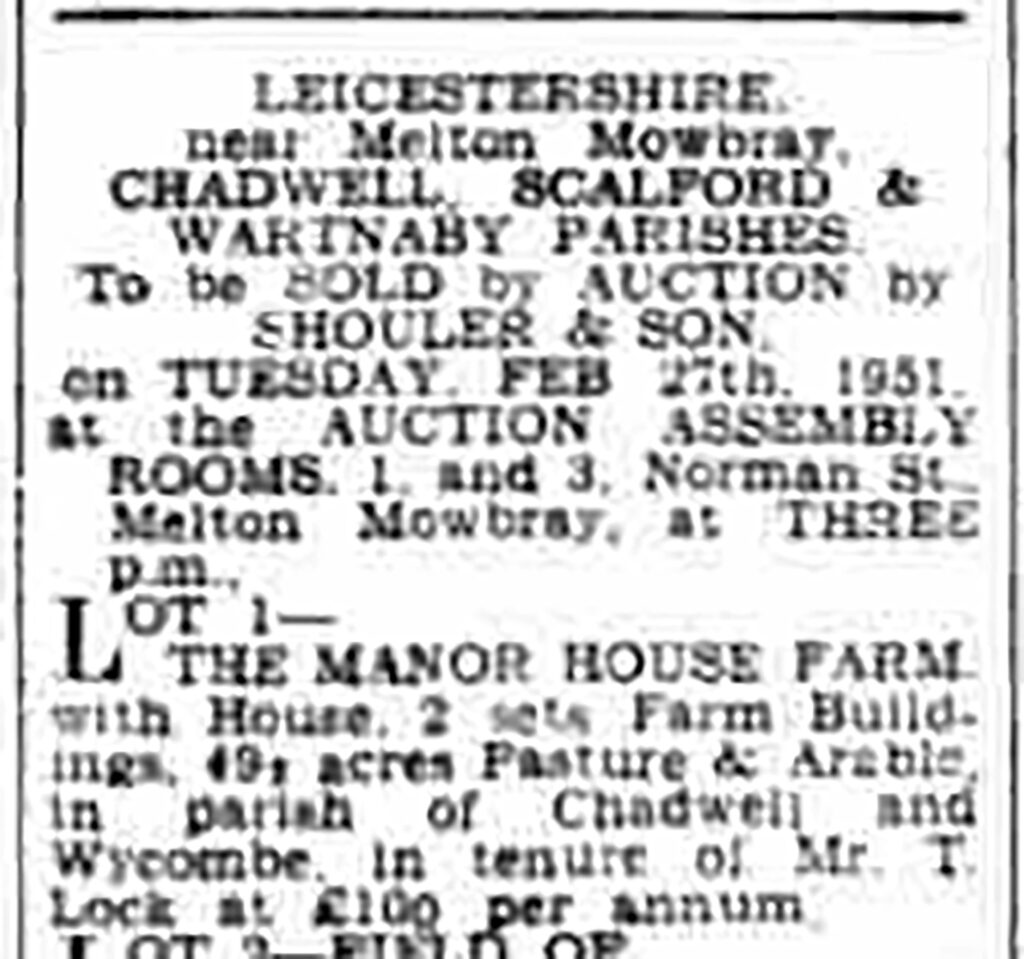
There are two more Grade II listed buildings in the village, Manor Farm House and Spring Cottage. Most parts of Manor Farmhouse are late-18th century with older origins, altered in the 20th century. Spring Cottage was built in the 18th century and altered in the 20th century.
Ringlethorp
Chadwell once had another adjacent village following the brook downstream to Melton named Ringlethorpe. The site became deserted when a grange of Garendon Abbey was established, the moats presumably belonging to the grange. Ringlethorpe Grange was a Grange of Garendon Abbey. It was in existence by the late 12th century. The foundation of the grange led to the desertion of the village of Ringlethorp. People possibly packed up and moved because the emphasis was changed from corn farming to grass for sheep. Later, the grange was renamed Goldsmith’s Grange after John Goldsmith, who held it in 1467. In 1539, the Grange was granted to John Wiseman, an auditor in the Court of Augmentations. Much of the earthwork site has been destroyed. Only the area of closes south of the modern farm, called Goldsmiths Grange, survives. The present farm still retains that name.
Read here two texts written by Richard Snodin on the Ringlethorp topic:
- The Lost Village of Ringolthorp – Richard Snodin
- House of Cistercian Monks – The Abbey of Garendon – Richard W. Snodin
Chadwell in 1984
A transcription of a Melton Times article published on 19 October 1984 gives an idea of the village life nearly forty years ago.
St Mary’s does not have a permanent vicar. The man filling in is the Rev Edward Carlile, who lives with his wife, Elizabeth in Chadwell. Mr Carlile used to treat Chadwell as therapy from his demanding job in the city. “For 15 years, we came out here 24 hours a week to escape to the peace,” says the man who formerly had a church in Highfields, Leicester. “It is as big a contrast as you can imagine, which is, of course, what we were looking for. We looked for years before we found this place. “When I am buzzing around the country lanes in my car, I just think how idyllic this all is.” The Carliles moved to Chadwell permanently and found that the regular vicar was leaving. So now Edward Carlile does all the duties for St Mary’s and the neighbouring churches at Goadby Marwood, Eastwell, Eaton and Scalford.
The oldest man in the village today is Aubrey Clark, who is 81. Aubrey was born into a farming family at Easton, near Grantham and later spent 15 years as an engineer in the merchant navy. He moved with his wife Kathleen and son Eric to Chadwell 29 years ago. “Chadwell used to be so different then,” remembers Aubrey. “Every house has been altered. What were once workers’ cottages are now respectable residences. “And the village was at one time two or three times as big as it is now.” Mr Clark has been in Chadwell for 29 years but still does not consider himself a local. He lives in Easton Cottage, named after his birthplace.
At that end of the village lives company managing director Ivor Vaughan at the Springfield Farm. On Mr Vaughan’s land are several old and vintage cars, which he has restored to working order.
At the top end of Chadwell – the village has no through road – lives Laurie Smith, a man who lectures in ceramics at Leicester Polytechnic. Mr Smith has designed a series of cards that show St Mary’s Church in all its glory.
Sandwiched between Mr Smith’s home and the Springfield Farm is the only working farm in the village. Eric Clark, son of Aubrey Clark, his wife Anne and young son Edward are the inhabitants of Manor Farm. “We are now the only farmers in the village,” says Eric, whose dairy herd roams over 100 acres of land. “When we first came, there were three farmers. When I first came, as a child, it was virtually all farm workers and retired people who lived here, but now it is virtually all professional people. But it is still as beautiful now as when I first came.
The Danish invasions
Transcription of an article published in the Leicester Mercury of 2 March 1999 interviewing Mary Hatton and Jenny Allsop, two local historians and members of Melton Fieldworkers.
The Danish invasions and settlements of the Midlands in the 9th and 10th centuries must have been a traumatic time for the local inhabitants.
Place names are often the sole legacy from this time. However, the administrative network of the Danelaw in the Midlands was to last for over 1,000 years. Villages such as Chadwell were destined for an extraordinary legacy from this period. The Viking settlement of Northern England was not as disorganised as Hollywood would like us to imagine! After the initial incursions, the Midlands came under the rule of the Danelaw and was divided up into Wapentakes (Hundreds) from which the Danegeld (tax) was collected.
Melton was the centre of the Framland Hundred and very similar in size and administrative area to the modern town. ‘Framland’ meaning ‘Fraeni’, a personal name, and ‘Lundre’, a sacred grove which may well have been the moot or meeting place of the Hundred Court. The Boroughs at Leicester, Stamford, Nottingham, Lincoln and Derby would later become the County administrative centres. However, there were anomalies within this system. The Danish overlords set up their headquarters in Sokes, such as Rothley and Melton, to which outlying settlements or Danish freemen owed their allegiance. These outlying villages were not always located within the same Wapentake as their allied Soke.
And Chadwell, located in the heart of the Framland Hundred, was attached to and owed allegiance to the Soke of Rothley, 12 miles away in East Goscote Hundred.
While the Manor of Medeltune (Melton) remained the centre for the Framland Hundred, William I retained the Manor of Rodelei (Rothley) for himself, with its associated lands still encompassing the villages of Wycomb and Chadwell.
There seems to be a high proportion of freemen (sokemen) in towns like Melton and Rothley in the Sokes – a legacy, perhaps, from when the Danes enjoyed a higher status than the local population.
Would you like to add your story and recollection? Leave a comment at the bottom of this page or send a message.
More pictures
Would you like to add pictures? Send a message.
Domesday Book
Chadwell was a settlement in the Domesday Book, in the hundred of Framland and the county of Leicestershire.
It had a recorded population of 22.9 households in 1086, putting it in the largest 40% of settlements recorded in Domesday (NB: 22.9 households is an estimate, since multiple places are mentioned in the same entry).
Land of King William
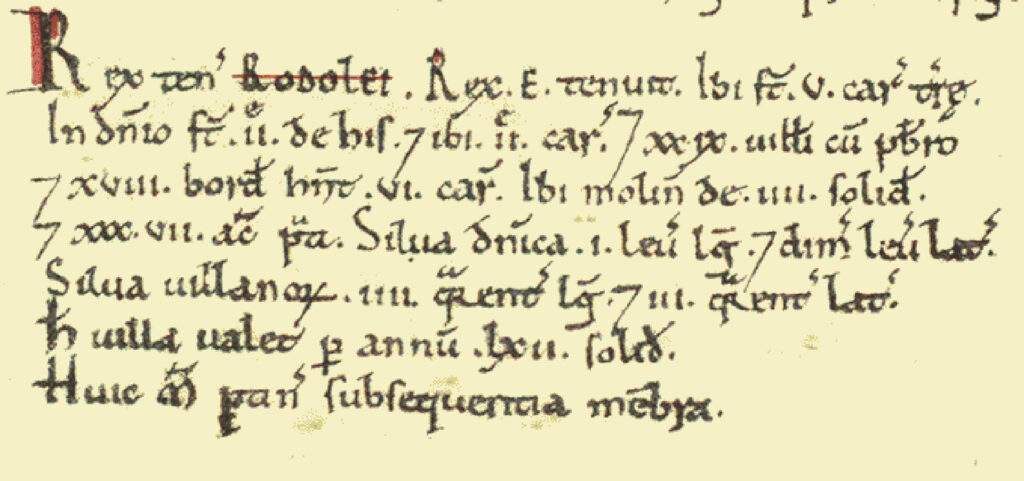
- Households: 186 villagers. 204 freemen. 112 smallholders. 1 priest.
- Ploughland: 2 lord’s plough teams. 88 men’s plough teams.
- Other resources: Meadow 176 acres & 3 * 1.5 furlongs mixed measures. Woodland 3 * 3 furlongs & 5 acres; 1 * 0.5 league & 4 * 3 furlongs mixed measures. 6 mills, value 17 shillings.
Valuation
- Annual value to lord: 34 pounds 10 shillings in 1086.
Owners
- Tenant-in-chief in 1086: King William.
- Lord in 1086: King William.
- Lord in 1066: King Edward.
Links
- Architectural Red Box Collection of the Historic England Archive – Chadwell
- Medieval Rothley: Manor, Soke, and Parish – Vanessa McLoughin
- British History Online – House of Knights Templar: Preceptory of Rothley in A History of the County of Leicestershire: Volume 2. Originally published by Victoria County History, London, 1954.
- The Lost Village of Ringolthorp – Richard Snodin
- House of Cistercian Monks – The Abbey of Garendon – Richard W. Snodin
Would you like to add a link? Send a message.