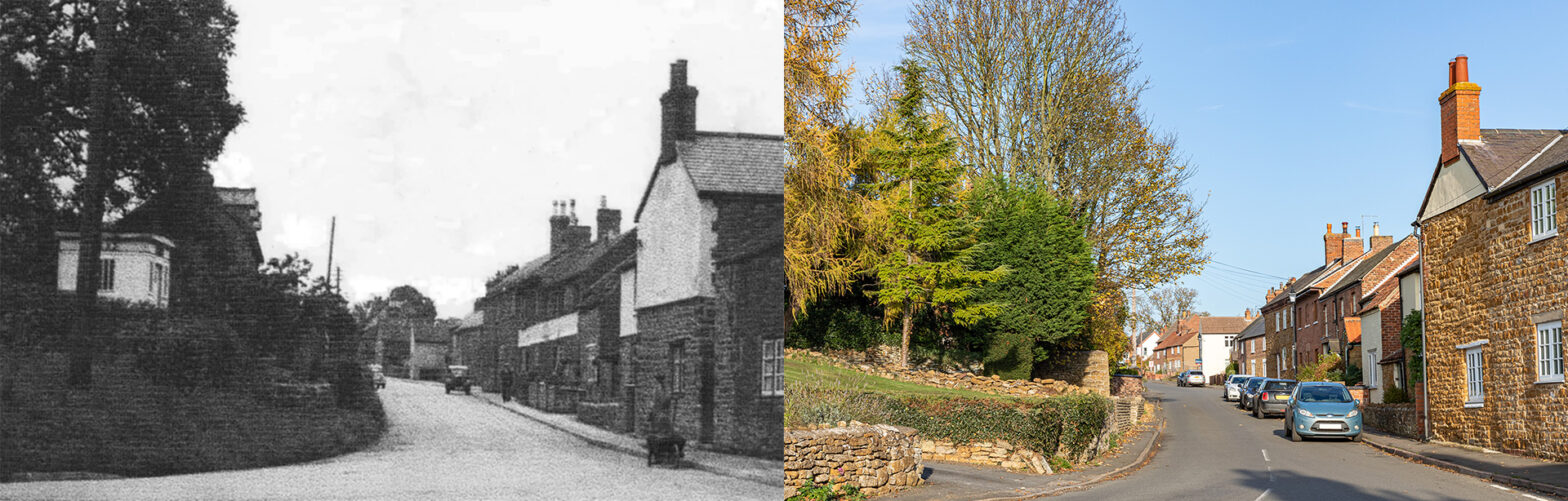
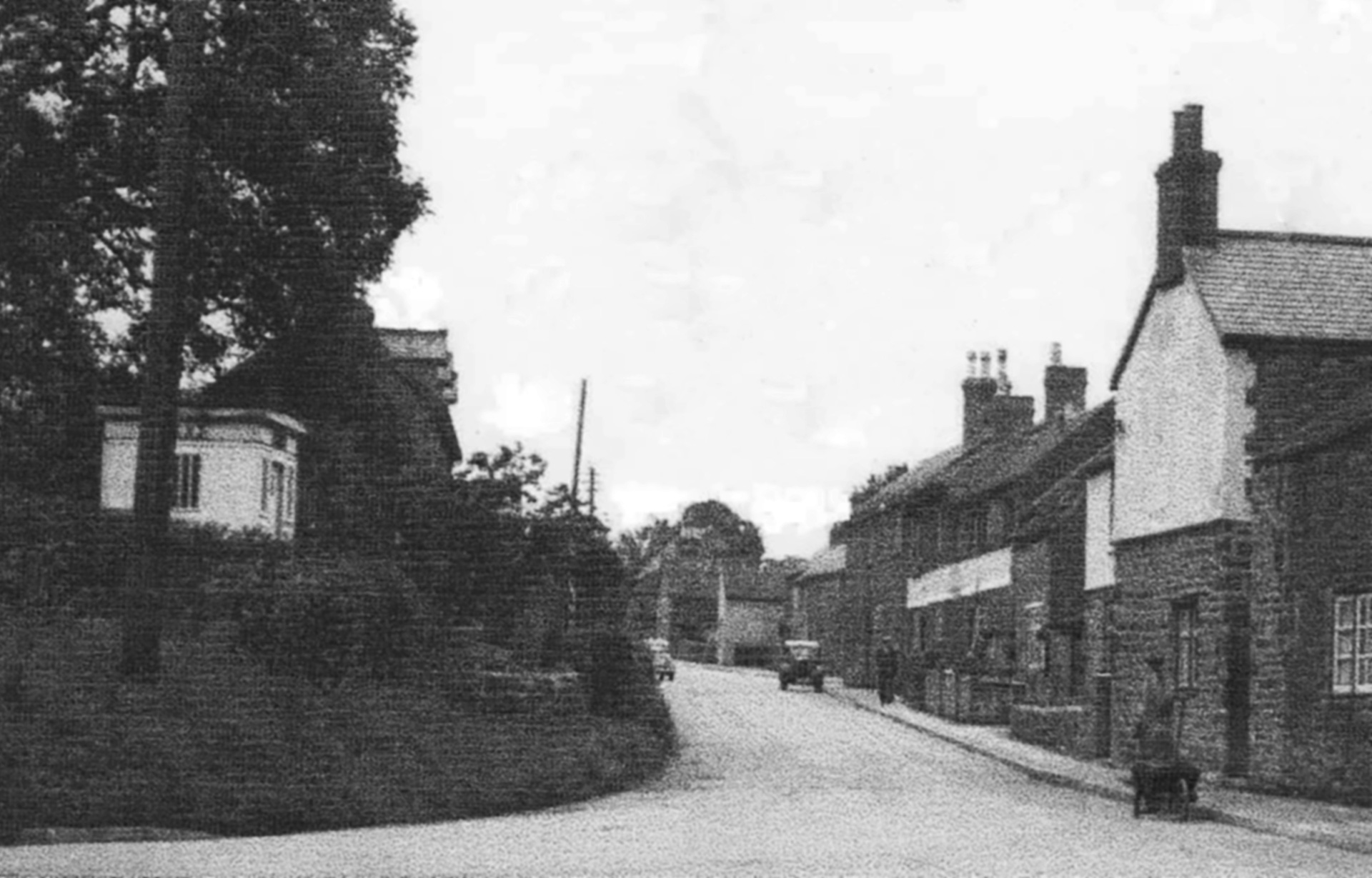
King Street – 1930s
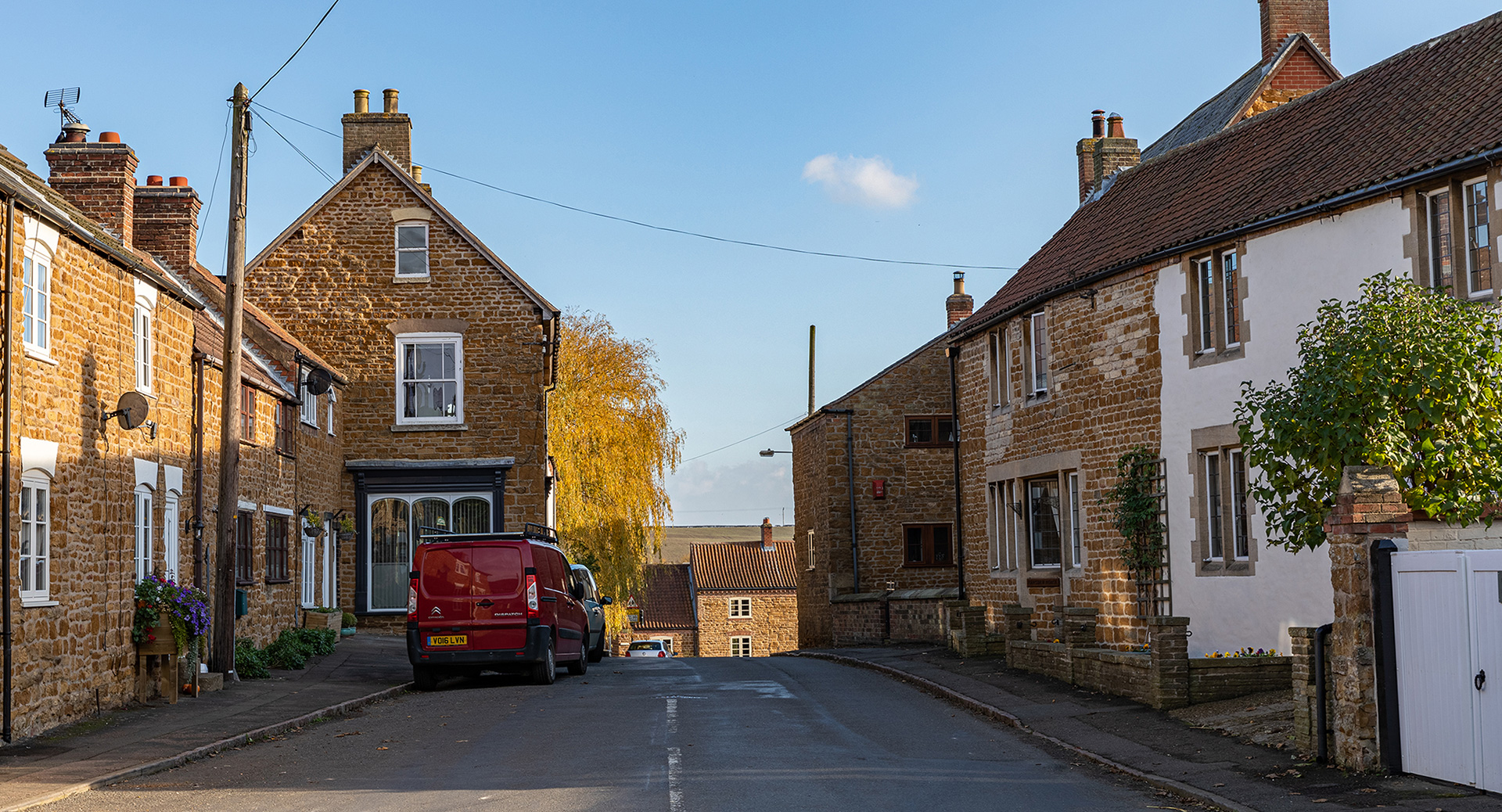
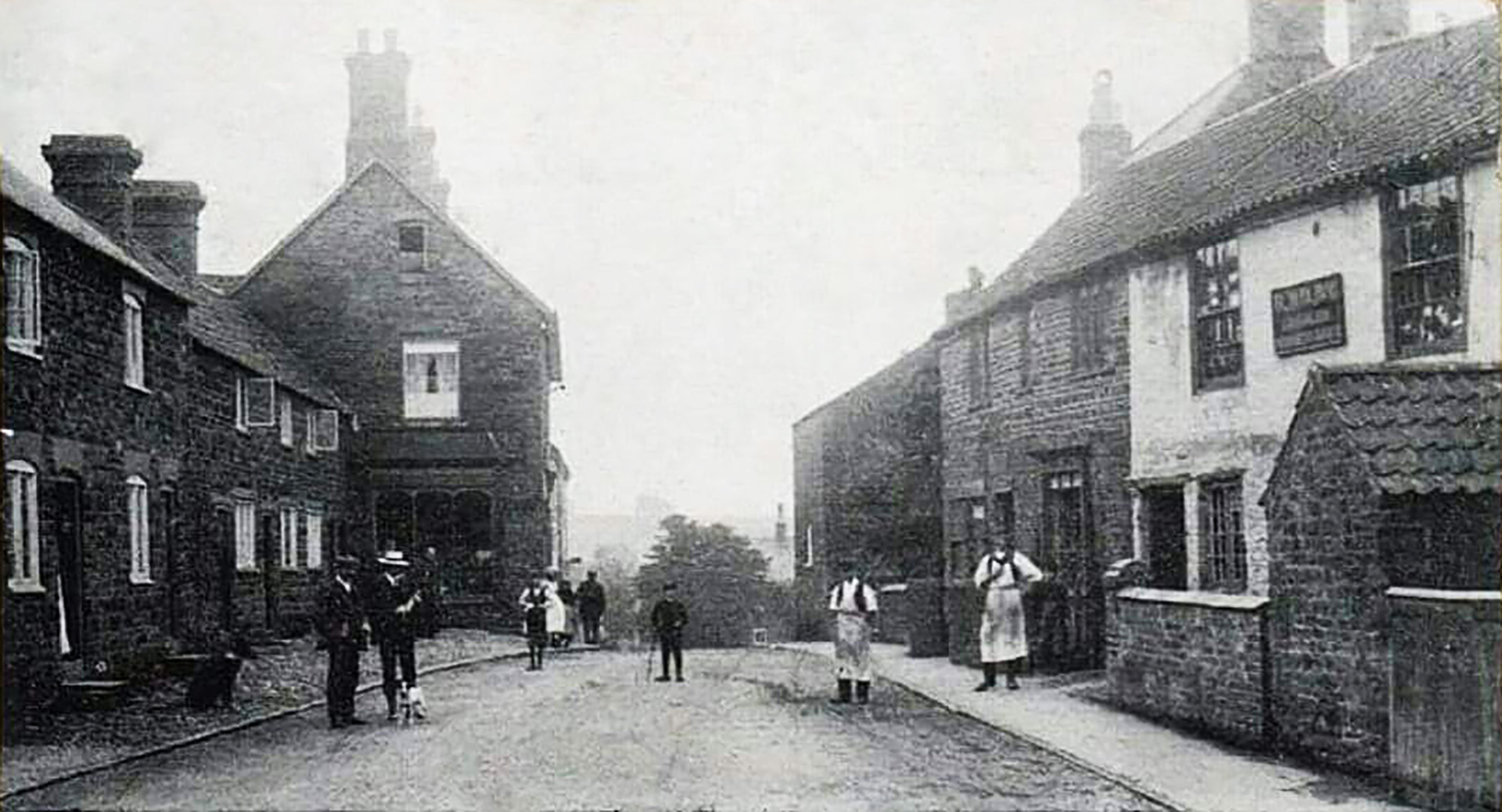
When Pam Tripp (née Machin) had a look at the old postcard of King Street taken from South Street, she started leafing through an 1894 Leicestershire edition of the Wright’s directory. She pointed her finger at ‘Mrs Fanny Machin, Black Horse’ and said: “That is my great-grandmother who ran the oldest public house in the village dating back to 1747.” The Black Horse is the house with the light gable on the right-hand side of the postcard, with adjacent an outhouse at the corner of Church Street. “In that outhouse, my great-grandmother used to brew her beer. When she died, my grandfather, Robert Machin, took over as the publican until he gave up his license before WW1 and started farming on Wycomb Road. For years after the pub closed, my grandfather got his spirits and beer from Warwicks & Richardsons in Newark on Trent. For me, he ordered lemonade. It came in crates and bottles with a screw cork. When empty, we put the corkscrew back on the bottle and tipped it upside down in the crate. When the dray came, they took the empty ones back and brought new ones.” The former pub, now the Black Horse Cottage, was the place where Pam grew up. “The kitchen was the pub’s cellar where the beer was stored. The living room was the Black Horse’s kitchen. And the sitting room, the best room, was the pub’s parlour.”
Further on, at the same side of the road, lies the Old Bakery, where the Allens ran the village bakery from 1906 until 1997. “The bakery was opened in 1906 by George Allen, a master baker and confectioner, and his wife Emma”, wrote Robert Ingels in A History of Scalford. The Allens came to Scalford from Long Clawson and had two sons Charles and Ernest. “Charles remained in the village and worked with his father, Ernest went back to work in Long Clawson. Charles had two sons Charles and George who also became bakers in the village. They were followed by Charles’ son Charles who was the one continuing the business until 1997.” In its heyday, the bakery supplied Belvoir Castle, the shop in Waltham on the Wolds and Eaton Post Office, and had rounds in more than 12 surrounding villages. The rounds were completed on a dog-cart and a Model T Ford for local deliveries.
Opposite, The Grange, one of the former prominent farms in the village, reigns over King Street and has been extensively restored including the bay-windowed façade. Now, 90 years later, from where both, the old and the new pictures are taken, mature trees obscure the 18th-century ironstone house.
Also on the left, the small white building is the village’s police box. Pam recollected: “Every village had a police box. It was a tiny office that stood on my father’s ground. Police sergeant Rickets, in charge of the area, used to come from Waltham on the Wolds, where he lived, to meet the local constable for their daily business. In a letterbox, you could post papers if you wanted licenses of any kind or drop a message. Also outside, on both sides, there was a glass box with a key. In case of emergency, you had to break the glass. Once inside, you could use the telephone.”
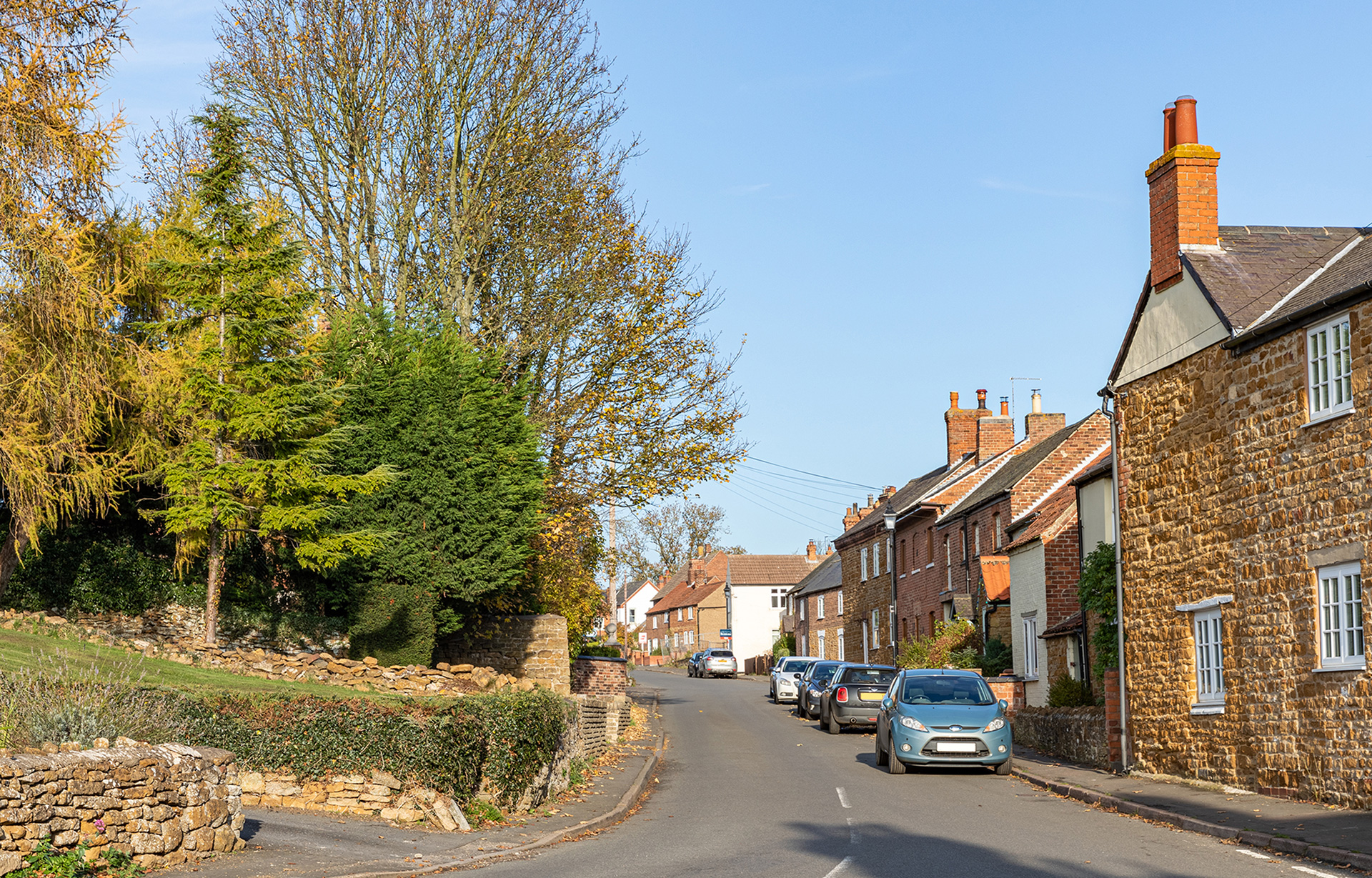
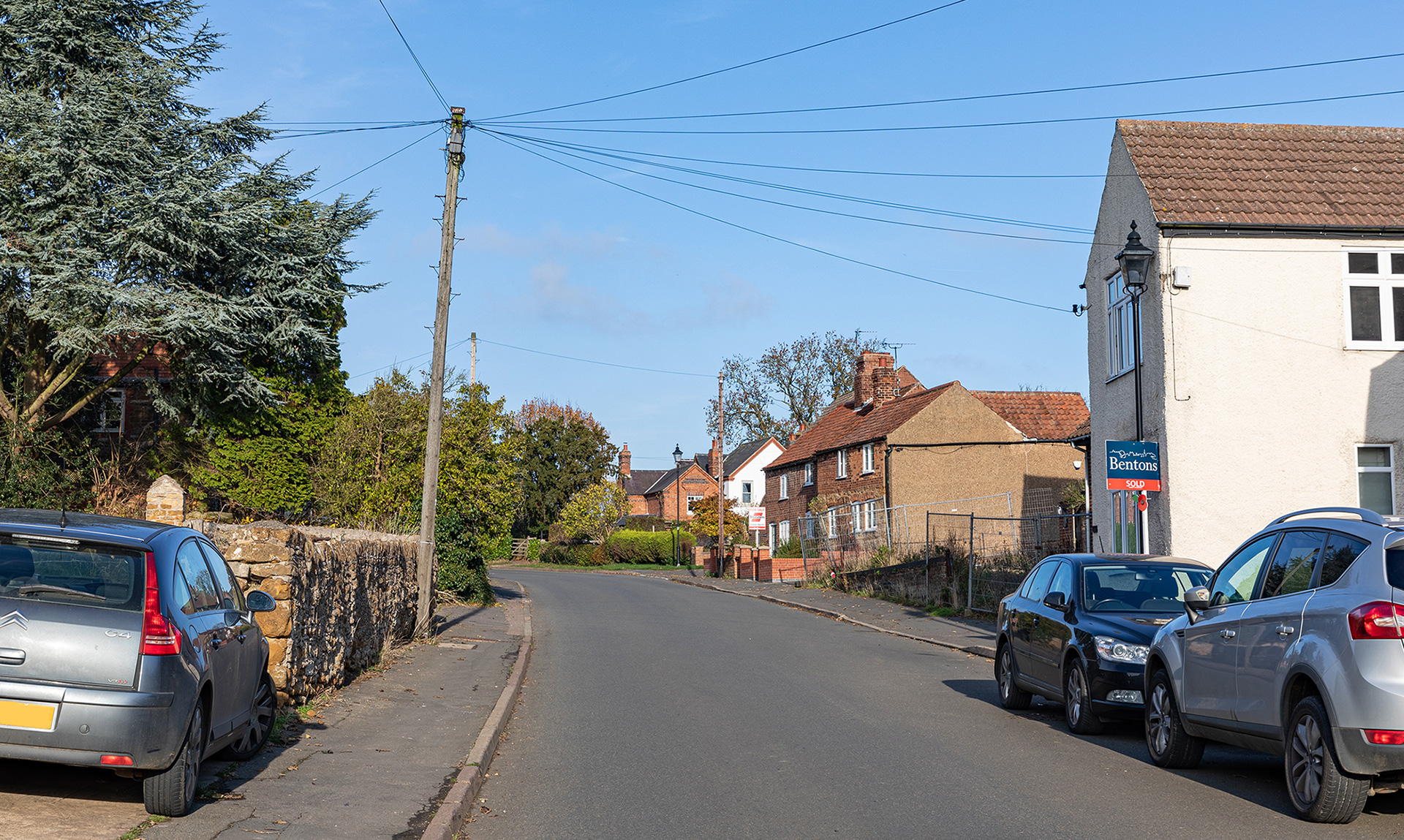
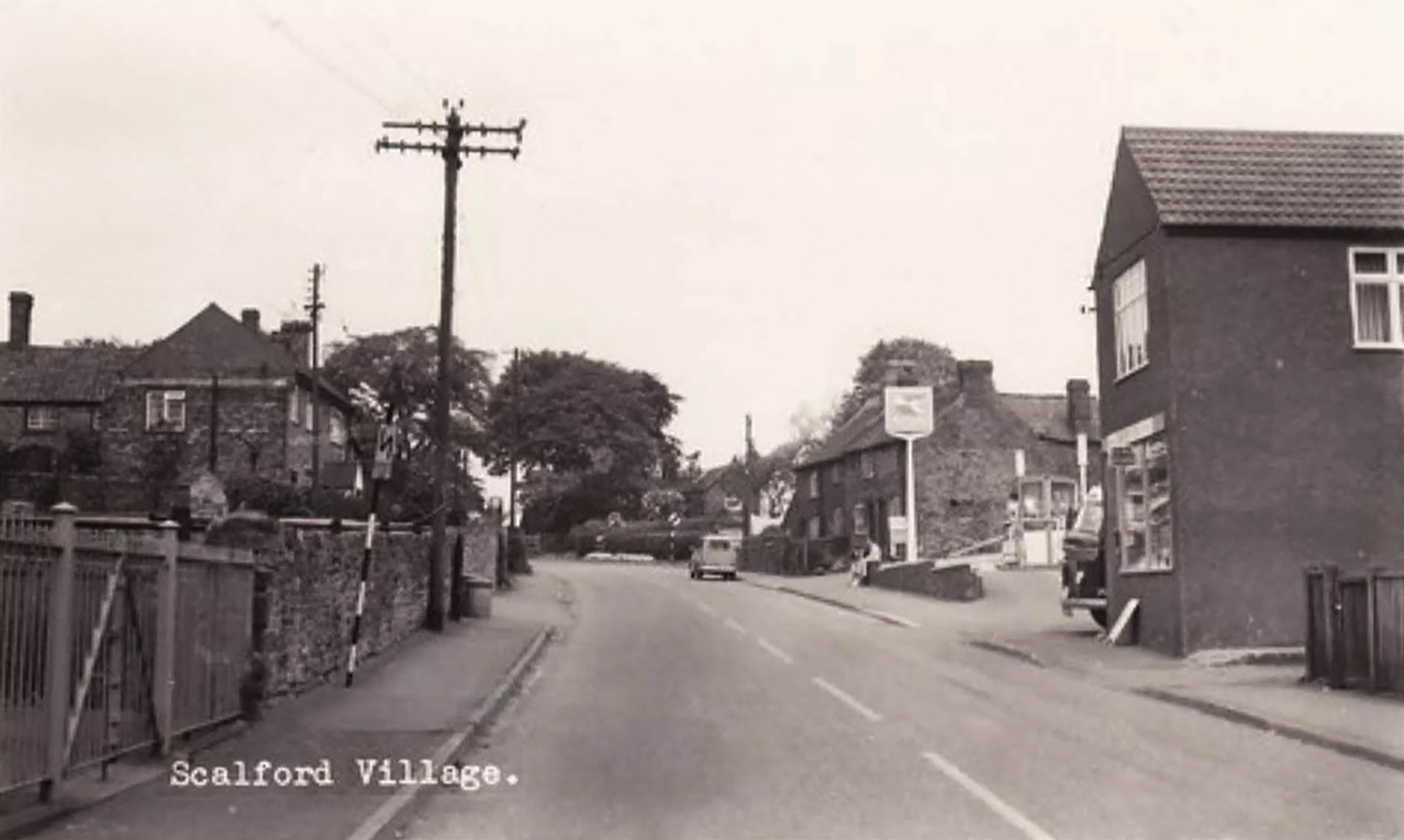
King Street – 1950s
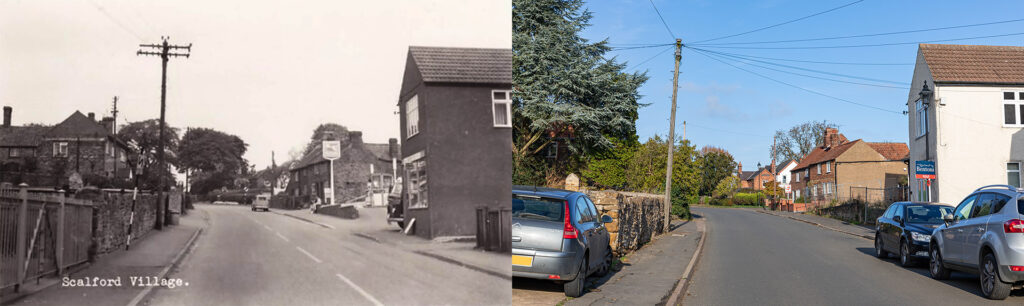
On the right, the original iron railing of the Primitive Methodist Church is still just visible. The Church, now a private dwelling, was first built in 1835. A new and bigger building, to accommodate 150 people, was constructed in 1870. For abstaining Primitive Methodists, it was conveniently located next to the Kings Arms. The congregation flourished well into the twentieth century.
Opposite the street was Mick Waley’s garage with two petrol pumps. Another name that pops up about the village’s garage is Michael Bailey, living at Welby Lane in Melton Mowbray.
Kings Arms
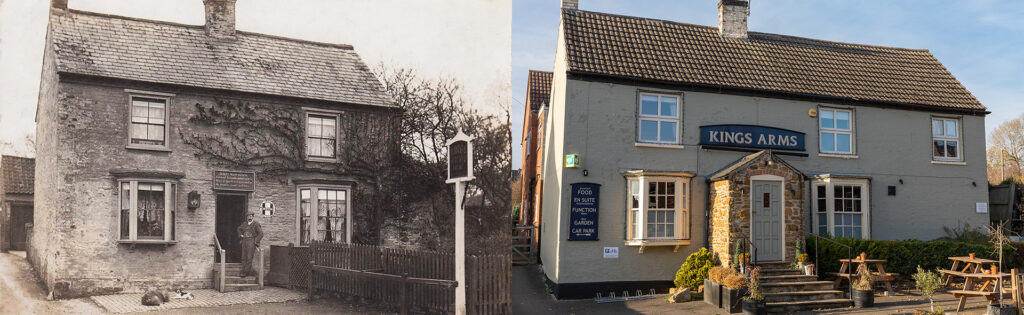
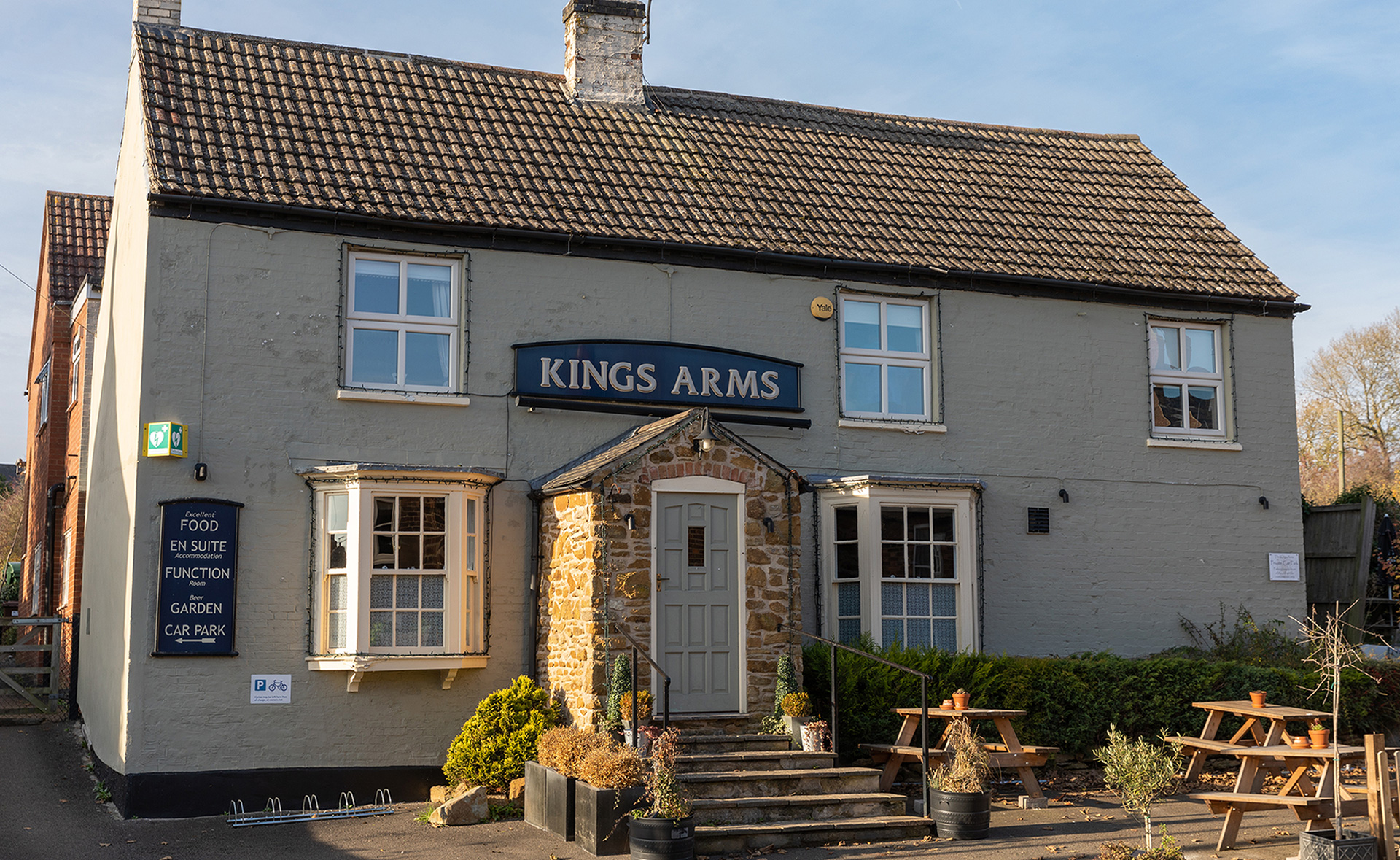
Like most villages in the Melton Borough area, Scalford had several public houses. Wright’s Directory of 1894 mentions three pubs: the earlier mentioned Black Horse, the Kings Arms, in the beginning also named the King’s Head, with Mrs Frances Hall as the landlady, and Rd. Greaves Pollard as the publican for the Plough.
In the old picture of the Kings Arms, James Watchorn is mentioned on the board above the pub’s entrance. It is probably him standing on the inn’s doorsteps. The picture is taken at the beginning of the 1900s. In 1894 James Watchorn was the village’s baker and miller, running the Manor Bakery with his brother Michael. Pam Tripp remembered: “In the 1930s Mr and Mrs Seagrave were the Kings Arms’ publicans. I held my wedding reception there.”
The third pub, the Plough, was at the corner of South Street and King Street. Originally its size was no more than two old cottages and was extended before the 1930s. The Plough finally closed about 10 years ago and was converted into a private dwelling.

Church Street
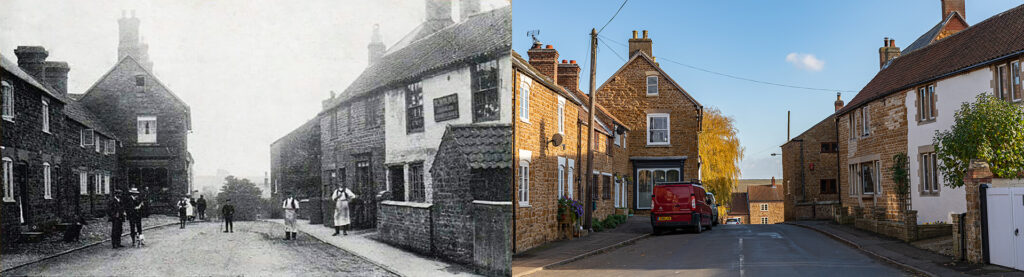
The rather impressive building in the back at the left of the pictures was the Post Office. By 1912, the post services were incorporated into William Wright’s grocery and drapery store, which he had built in 1879. The village post office was also a money order office and a telegraph office. William Wright remained the sub-postmaster and a grocer until at least 1928. Pam remembered: “His two daughters, the Misses Wrights, who got never married, carried on after their father died. As a child, I went to the shop to get a 6 penny pack of Persil on washing day. When I walked into the shop they used to say: ‘Hello little Pam’. They lived until the late 1940s. Then it was taken over several times until it became a private dwelling. Opposite the post office was Roberts Farm.
Village view and Dairy

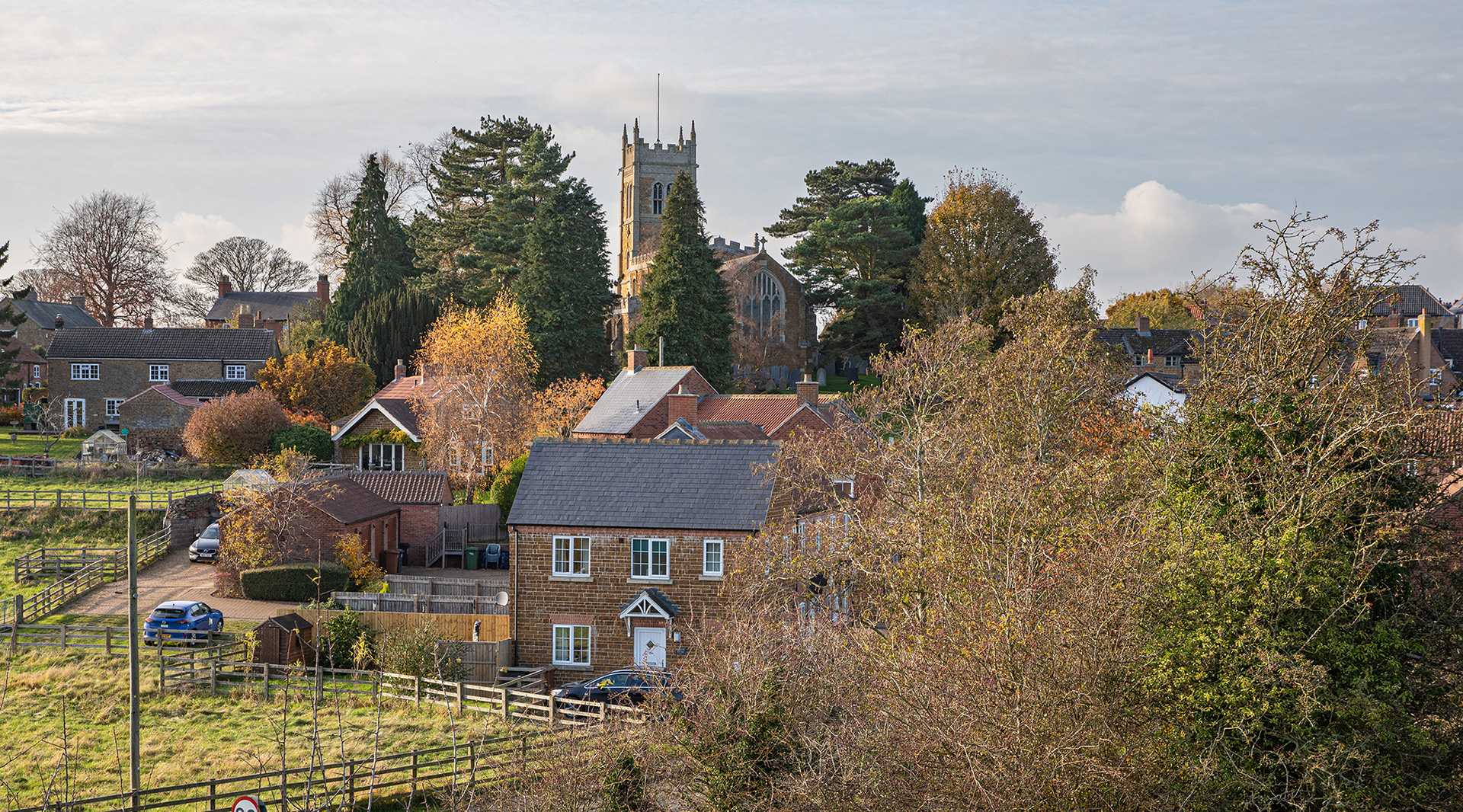
The old postcard of the village view from a pasture near Thorpe Side had two distinctive features, both in the centre of the picture: front-centre Scalford Dairy and in the back the church.
The Scalford Dairy closed down in May 1996 after 90 years’ trading. Tim Healy of the Melton Times wrote: “Officials from the owner’s Diary Crest dropped the closure bombshell on the workforce at a meeting on Monday [29 April 1996]. They said the company was not prepared to modernise the creamery to bring it up to European Union hygiene standards. Production will be transferred to the company’s other Stilton creamery in Hartington, Derbyshire.” After shutting down the buildings became derelict. The site was redeveloped with new housing.
The dairy produced Blue Stilton since it was established by the Scalford Farmer’s Co-operative in 1906. Pam’s grandfather, Robert Machin, was one of its members. “My grandfather and all the farmers around used to take their milk to the dairy every morning. My father, Cyril Machin, had a milk round and often I used to join him. When I got older, I sometimes did the round on my own. My father used a specially made milk bucket with two measures, a pint and half a pint. He poured the fresh milk into people’s jugs they kept in the kitchen. Sometimes he used to stop to have a chat with people and other times it was a rush in and out.”
Pam also recollected a story about Scalford Hall: “If Lady Irene Clark of Scalford Hall had a dinner party, she wanted cream. We used to have a separator in our cellar, fastened to one of the tables. It had a big bowl thing at the top, where you poured in the milk and it had a great handle my mother had to swing. The cream used to go into cardboard cartons you pressed on, but not too hard. When my dad delivered the mild and the cream I went along. The cook at Scalford Hall sometimes made butterballs.”
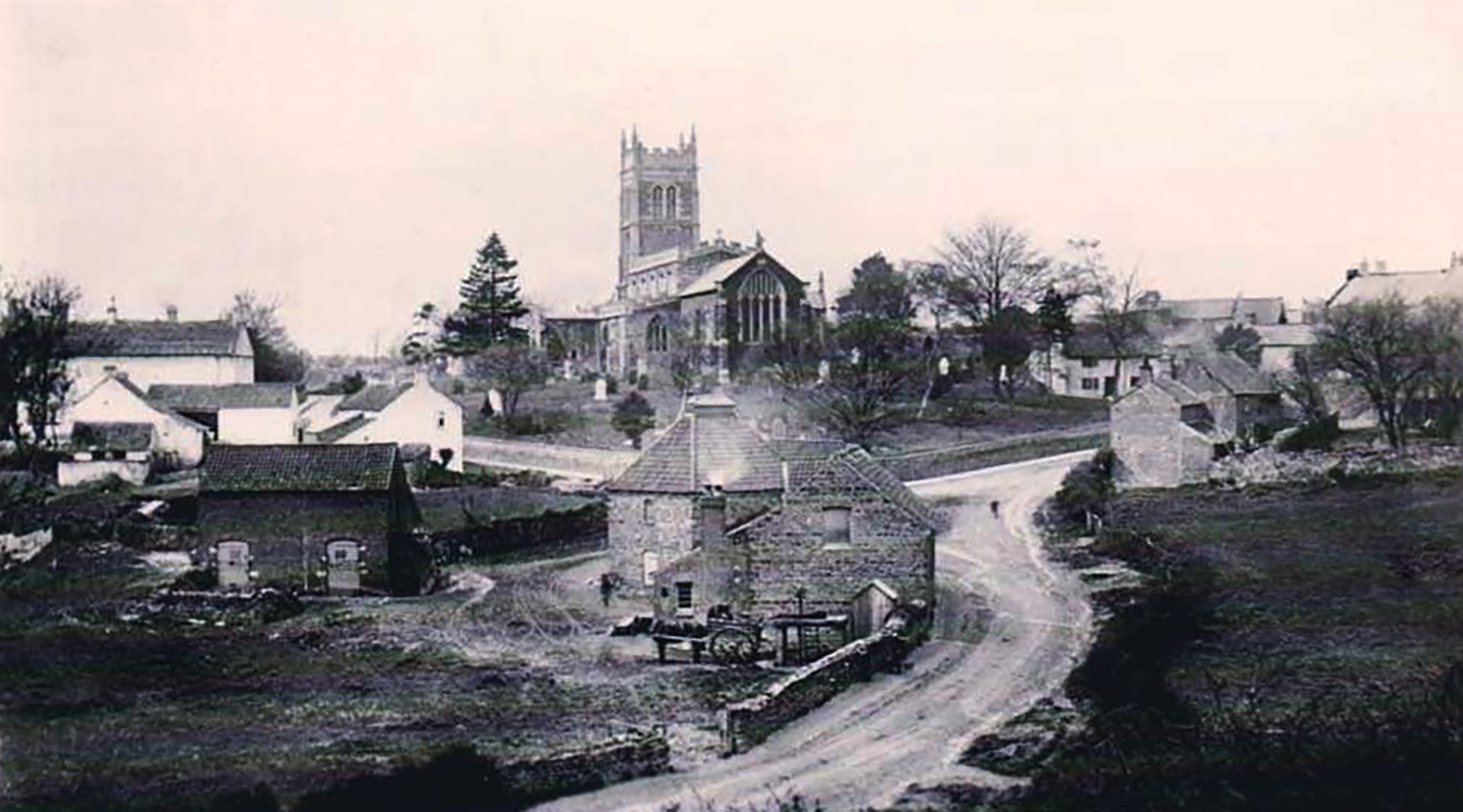
Church of St Egelwin the Martyr

The Church of St Egelwin the Martyr is built on a small hill in the centre of the village and has 13th- and 15th-century features. “The Church originally had a spire, the fourth-highest in Leicestershire, but it fell down on the 19th January 1636 taking part of the vicarage with it”, wrote Robert Ingles in his booklet A History of Scalford. “Fortunately no one was hurt and the tower, without its spire, was rebuilt in 1639.” The chancel was rebuilt in 1845 and Millican and Smith restored the church in 1858.
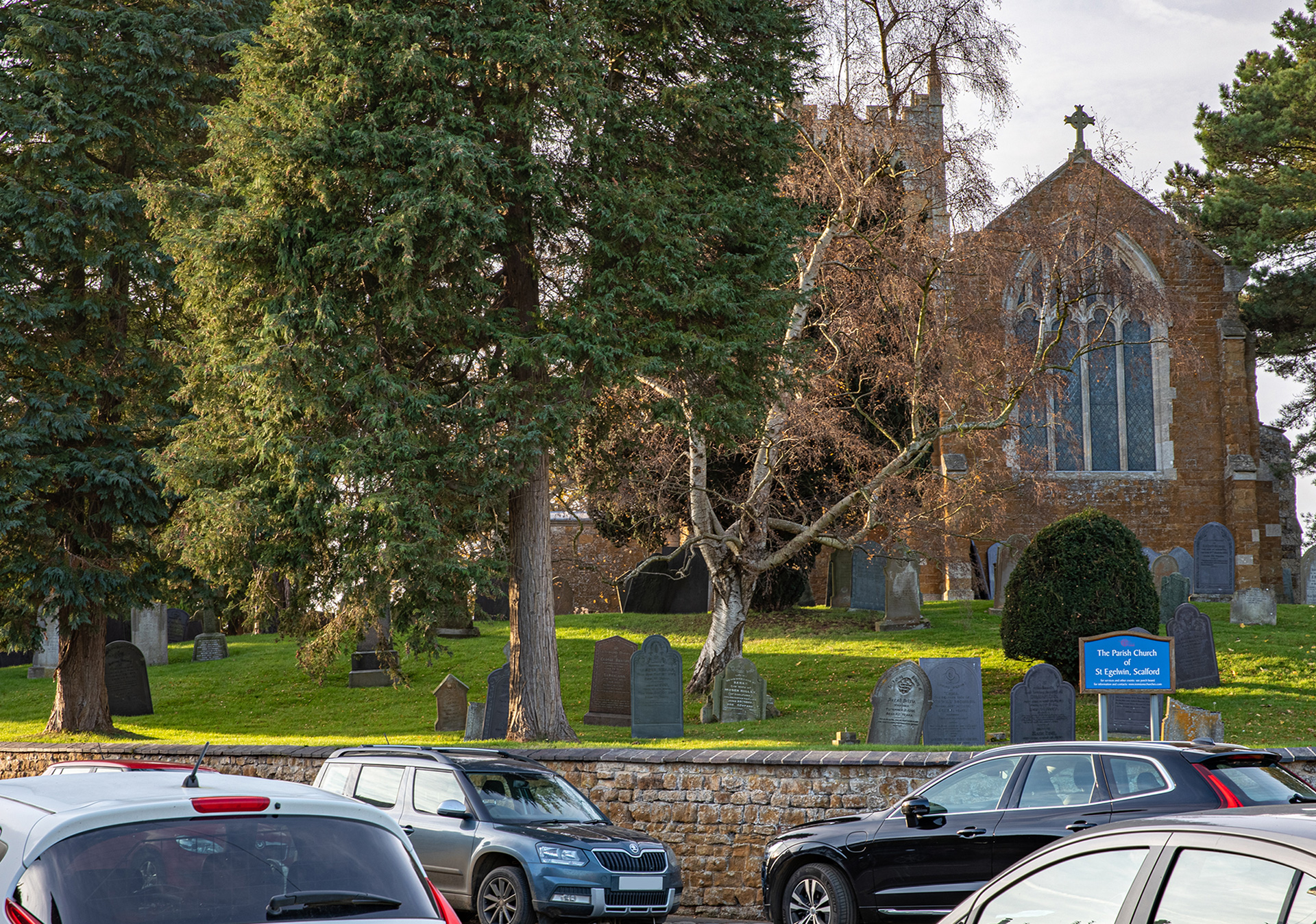

On the village
The name of the village is derived from Old English and originally meant shallow ford. It has retained its current spelling for at least 440 years, is shown as Scalford on the map of Warwickshire and Leicestershire produced (in Latin) in 1576 by Christopher Saxton as part of his Atlas of England and Wales.
Pam Tripp: “There is a spout near the church. That was our source of water. People used to have a yoke and two buckets and walked onto the spout to get their drinking water. A lot of people had their own pump. There was also a pump in our yard. It wasn’t working, but at the bakehouse, they had a pump and we were always allowed to get out to the bakehouse to get our drinking water.”
More pictures
Would you like to add pictures? Send a message.
Domesday Book
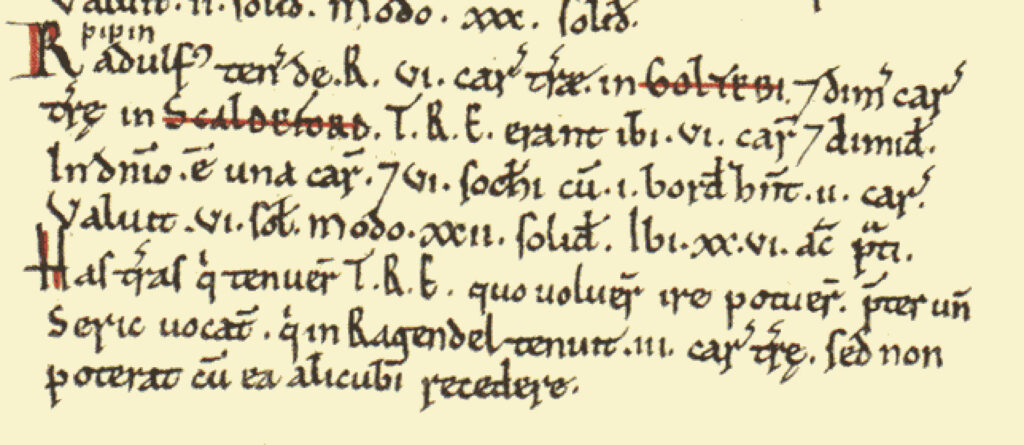
Scalford was a settlement in Domesday Book, in the hundred of Framland and the county of Leicestershire.
It had a recorded population of 32.5 households in 1086, putting it in the largest 40% of settlements recorded in Domesday, and is listed under 2 owners in Domesday Book.
- Land of Robert of Bucy
- Households: 6 freemen. 1 smallholder.
- Ploughland: 6.5 ploughlands. 1 lord’s plough teams. 2 men’s plough teams.
- Other resources: Meadow 26 acres.
Valuation
- Annual value to lord: 1 pound 2 shillings in 1086; 6 shillings when acquired by the 1086 owner.
Owners
- Tenant-in-chief in 1086: Robert of Bucy.
- Lord in 1086: Ralph Pippin.
Other information
- This entry mentions multiple places: Goadby [Marwood]; Scalford.
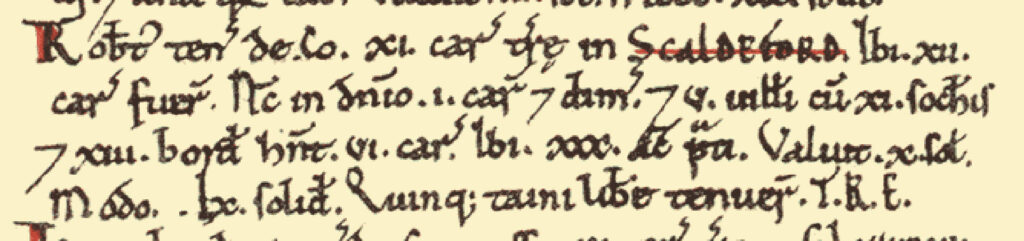
2. Land of Countess Judith
- Households: 5 villagers. 11 freemen. 13 smallholders.
- Ploughland: 12 ploughlands. 1.5 lord’s plough teams. 6 men’s plough teams.
- Other resources: Meadow 30 acres.
Valuation
- Annual value to lord: 3 pounds in 1086; 10 shillings when acquired by the 1086 owner.
Owners
- Tenant-in-chief in 1086: Countess Judith.
- Lord in 1086: Robert (of Bucy).
- Lord in 1066: thanes, five.
Thank you to Sarah Lambert for most of the old postcards and pictures.
6 responses to “Scalford”
My ancestors were Orridge and Todd’s who lived in Scalford. Would love to hear from anyone with any links or knowledge of these families
Please comment if you can help Julie.
My father Albert Ladlow was born in Scalford in 1903 to Emily and Charles Ladlow. He emigrated to Australia with Fred and Nell Longson who had a butcher in Scalford. I visited Scalford twenty years ago and in the choir seat of St Egelwin Church he had etched his name. I found it very moving. Such a magnificent church and I hope that it is still being used as numbers were very low at that time.
Thank you for sharing your wonderful recollection.
Yes, there is still a lively church community in Scalford.
My name is Deborah Knight (neé: Hudson) does any one have any details of my family? We lived opposite The Plough pub, now a private residene at the corner of South Street and King Street.
We have recently moved to Scalford, Clayfield farm, king street. Would love to find out more history on who lived there over the years or perhaps old photographs. Research shows that The Marston family lived here early 1900s.
Thank you George