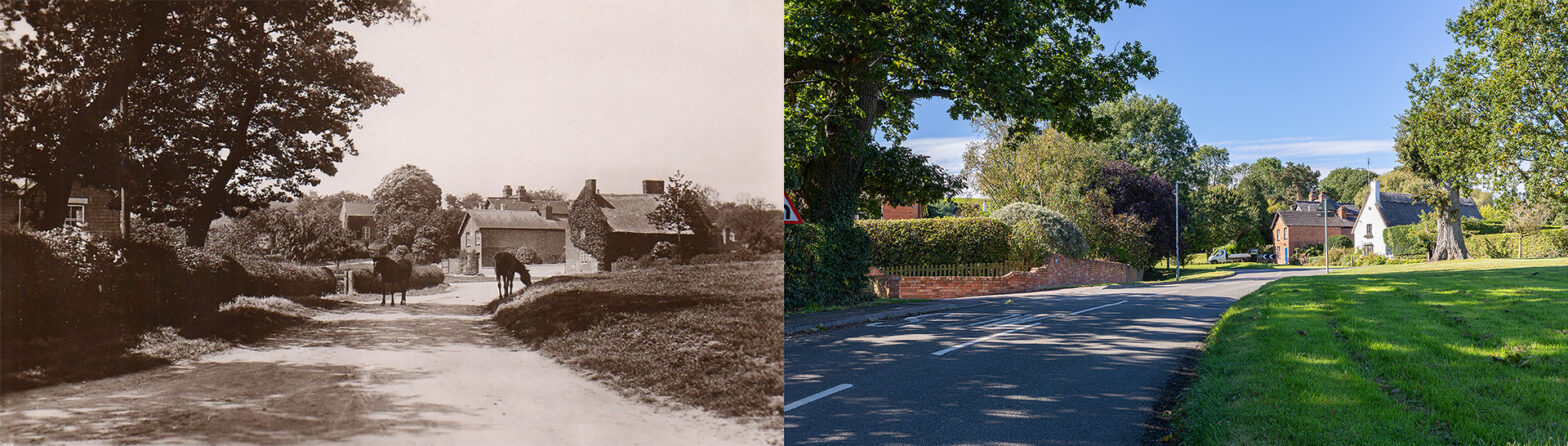
The Green – 1902-1905
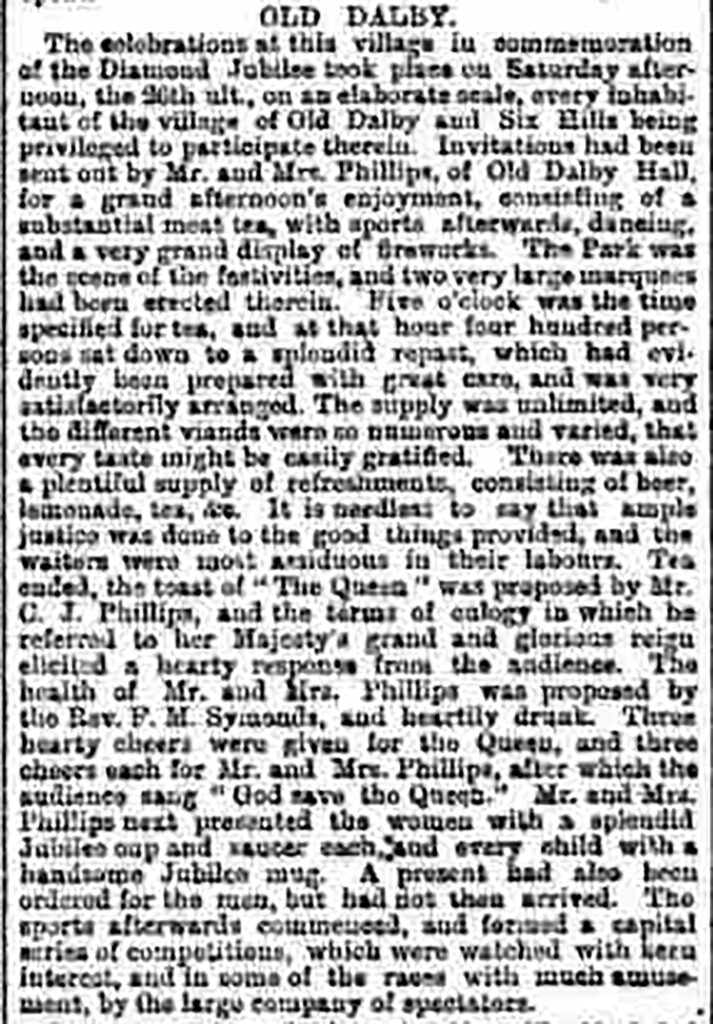
A postcard always becomes more interesting when it is used and posted. And a postage stamp narrows down the time the picture was taken and printed. Unfortunately, the stamp is missing. A stamp collector must have got hold of the postcard. When seeing the picture, Denise Tewson asked: “Do you know the date of the postcard?” The smaller tree on the right in front of The White House is most helpful. “That tree is the Turkey Oak”, said Ann Schmidt, “which, I have always understood, was planted in recognition of Queen Victoria’s Diamond Jubilee in 1897.” However, a reference in the Old Dalby Digital Archive of the local heritage group states that the oak was planted to celebrate the coronation of King Edward VII in 1902. Ann asked for proof, which was found searching the British Newspaper Archive. The Grantham Journal published an article on the Queen Victoria’s Diamond Jubilee celebrations on Saturday 3 July 1897, and the festivities for King Edward VII’s coronation on Saturday 16 August 1902. The latter wrote: “At seven o’clock in the evening, a considerable number of parishioners, both old and young, assembled on the village green to witness the interesting ceremony of planting the King Edward VII oak. Before this took place, a short address was delivered by the Rev. W.H. Pritchard. Mrs. Phillips, of Old Dalby Hall, had originally been chosen to plant the oak, but was in London with Mr. Phillips, for the Coronation festivities. By Mrs. Phillips’ wish, the pleasant duty was performed by Mr. G. Watts, the head-gardener at the Hall, and the work was done in a thoroughly practical manner, the ground having been previously prepared under Mr. Watts’ personal supervision.”

To pin down the date the picture for the postcard was taken, an additional question is how big was the tree when it was planted. Considering the two horses, the young tree was about 10 feet high. So the the photograph must have been taken in 1902, fairly quick after the planting or up to a few years after.
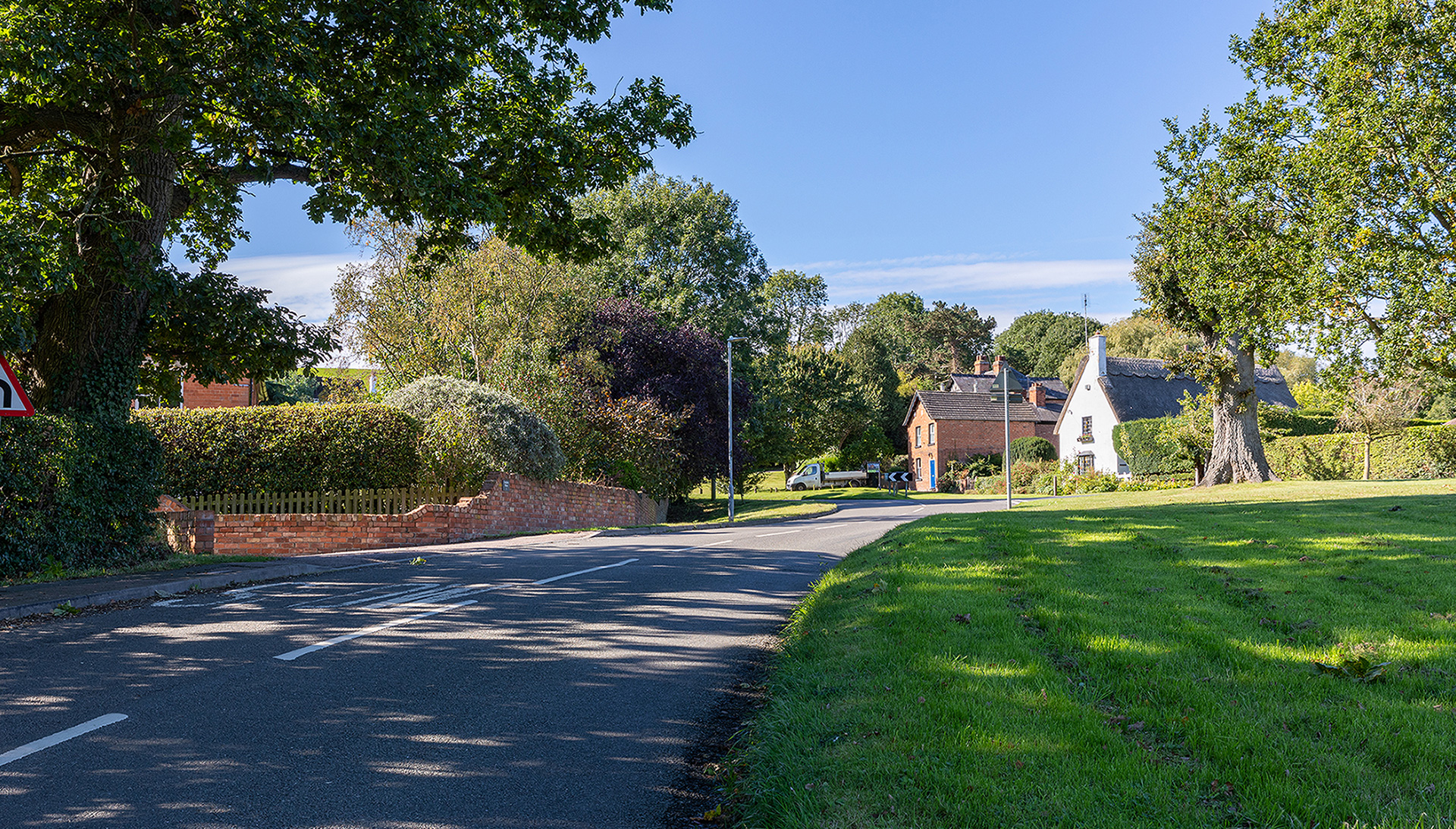
Upon today the oak has been an important feature on Old Dalby’s village green. In 2019 the prominent oak was found to be diseased and has been pollarded rather than felled outright. And the treatment worked because the tree is still alive, growing some branches. The branches of the tree on the front right side is another oak planted in 1977 to commemorate Queen Elizabeth’s Silver Jubilee, with about sixty villagers, from toddlers to octogenarians, attending. On the left side at the back is the 1902 oak and The White House.

In both pictures, the most distinctive dwelling is The White House, more than 120 years ago partly covered in Virginia creeper or ivy and now whitewashed. It is a Grade II listed thatched 17th-century or early 18th-century cottage built in Elizabethan style. An extended article about the village in the Leicestershire Advertiser, published on the brink of 1960-1961, pictured Caroline Norris, aged 76. She was born in the house her grandfather, Robert Goodacre had when he was the village tailor. Caroline’s father, Robert Peel, a grazier, married a daughter of Robert Goodacre. Only 18 months after the article was published, The White House was auctioned after Mrs Norris died. Mr Seeman bought it for £1,750.
Adjacent to The White House stands a smaller house, now named Resthaven. In its front gable wall, a stone is engraved “RAH 1884”, which in all likelihood stands for Robert Allen Howard, an Old Dalby builder, and the year he built this dwelling. The Grantham Journal of Saturday 10 March 1883 mentions that Robert Allan, a builder and wheelwright in the village for 50 years, had handed his business to his grandson Robert Allen Howard.

Chapel Lane
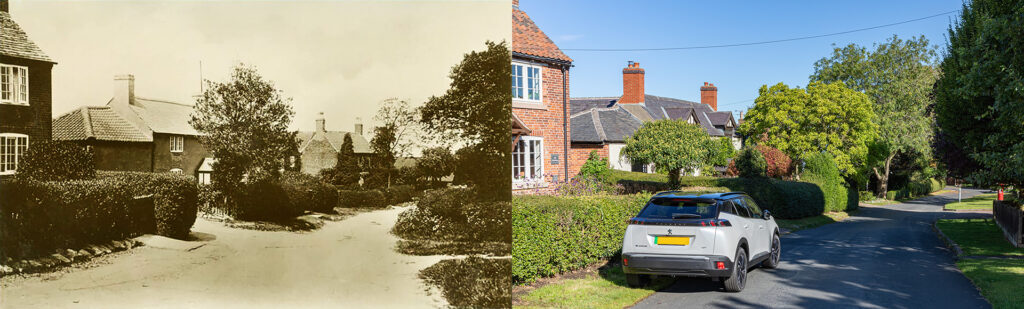


Wood Hill
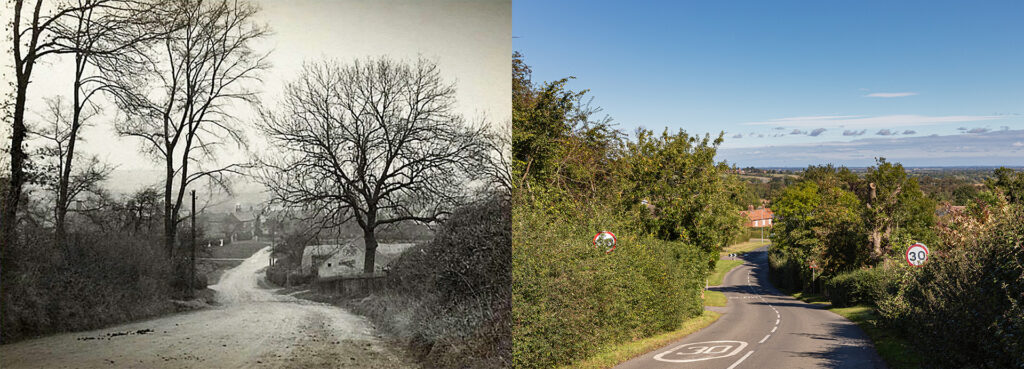
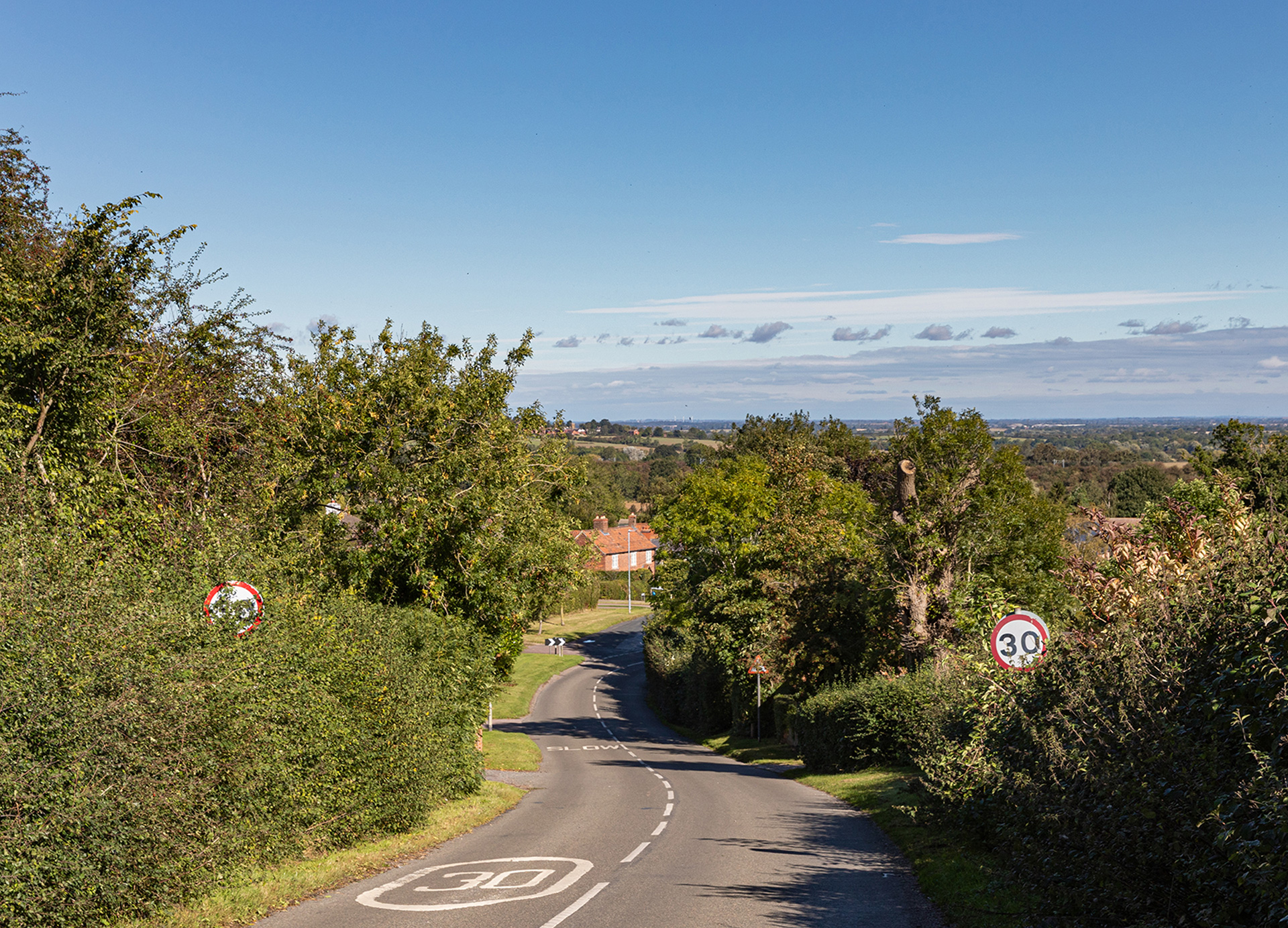
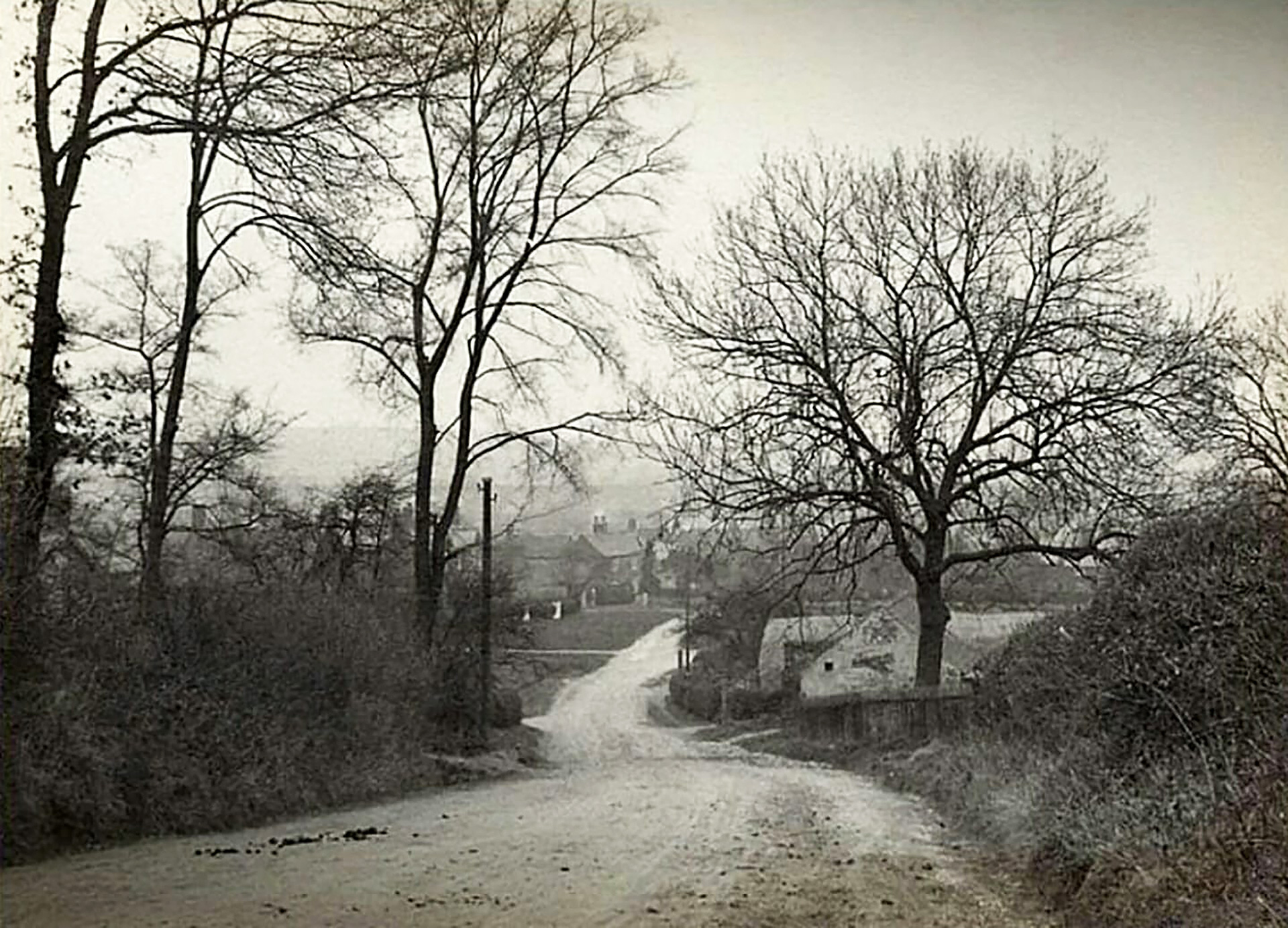
On the village
In the past, Old Dalby was named Dalby-on-The Wolds, also known as Wolds Dalby, in line with neighbouring villages which still bear the Wolds tag.
More pictures
Would you like to add pictures? Send a message.
Domesday Book
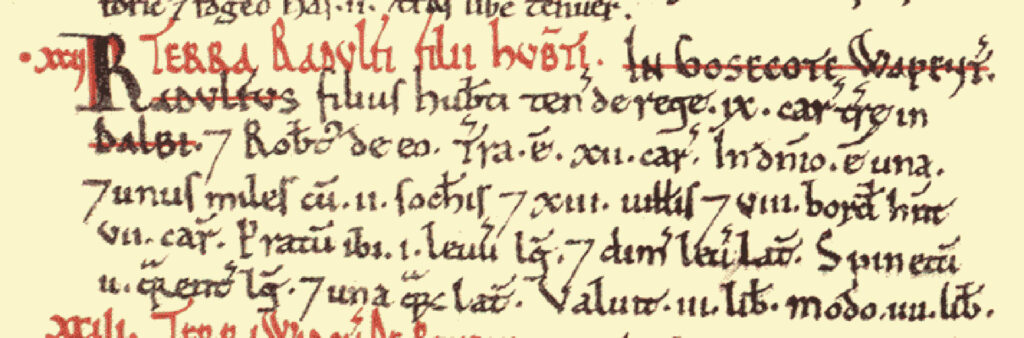
[Old] Dalby was a settlement in Domesday Book, in the hundred of Goscote and the county of Leicestershire.
It had a recorded population of 24 households in 1086, putting it in the largest 40% of settlements recorded in Domesday.
Land of Ralph son of Hubert
- Households: 13 villagers. 2 freemen. 8 smallholders. 1 men-at-arms.
- Ploughland: 12 ploughlands. 1 lord’s plough teams. 7 men’s plough teams.
- Other resources: Meadow 1 * 0.5 leagues. Woodland 2 * 1 furlongs.
Valuation
- Annual value to lord: 4 pounds in 1086; 3 pounds when acquired by the 1086 owner.
Owners
- Tenant-in-chief in 1086: Ralph son of Hubert.
- Lord in 1086: Robert.
Links
- Old Dalby Digital Archive
- British History Online – House of Knights Hospitallers: Preceptory of Dalby and Heather in A History of the County of Leicestershire: Volume 2. Originally published by Victoria County History, London, 1954.
4 responses to “Old Dalby”
Great collection and article. I would like to know the reference for the tree being planted in 1902 – only five years different to my date? I found this information in Trevor Hickman’s book Around Melton Mowbray (1992), albeit also unreferrenced. Either way it would be good to find a definitive article/newspaper cutting that confirms something 😊
Thank you, Ann. The link to the 1902 date is in the article. It is a reference in the Timeline of the Old Dalby Digital Archive: https://olddalbydigitalarchive.omeka.net/items/show/125. Triggered by your comment I searched the British Newspaper Archive and found two articles in the Grantham Journal. One of the 1897 celebrations for the Queen’s Diamond Jubilee, and one about the 1902 King Edward VII ceremony. It confirms the oak was planted in 1902. So the picture of the postcard was also taken after 1902. Both clippings can be found in the article. Hence I also changed the possible date of production of the postcard to “1902 or just after 1902”. Estelle
Many thanks – I found your update on FB minutes after I had located the 16/8/1902 article in the Granthan journal – totally satisfied now. I wonderwhere Trevor Hickman got his information?
No idea about Hickman’s sources. He probably asked around when looking for postcards and pictures for his book.