
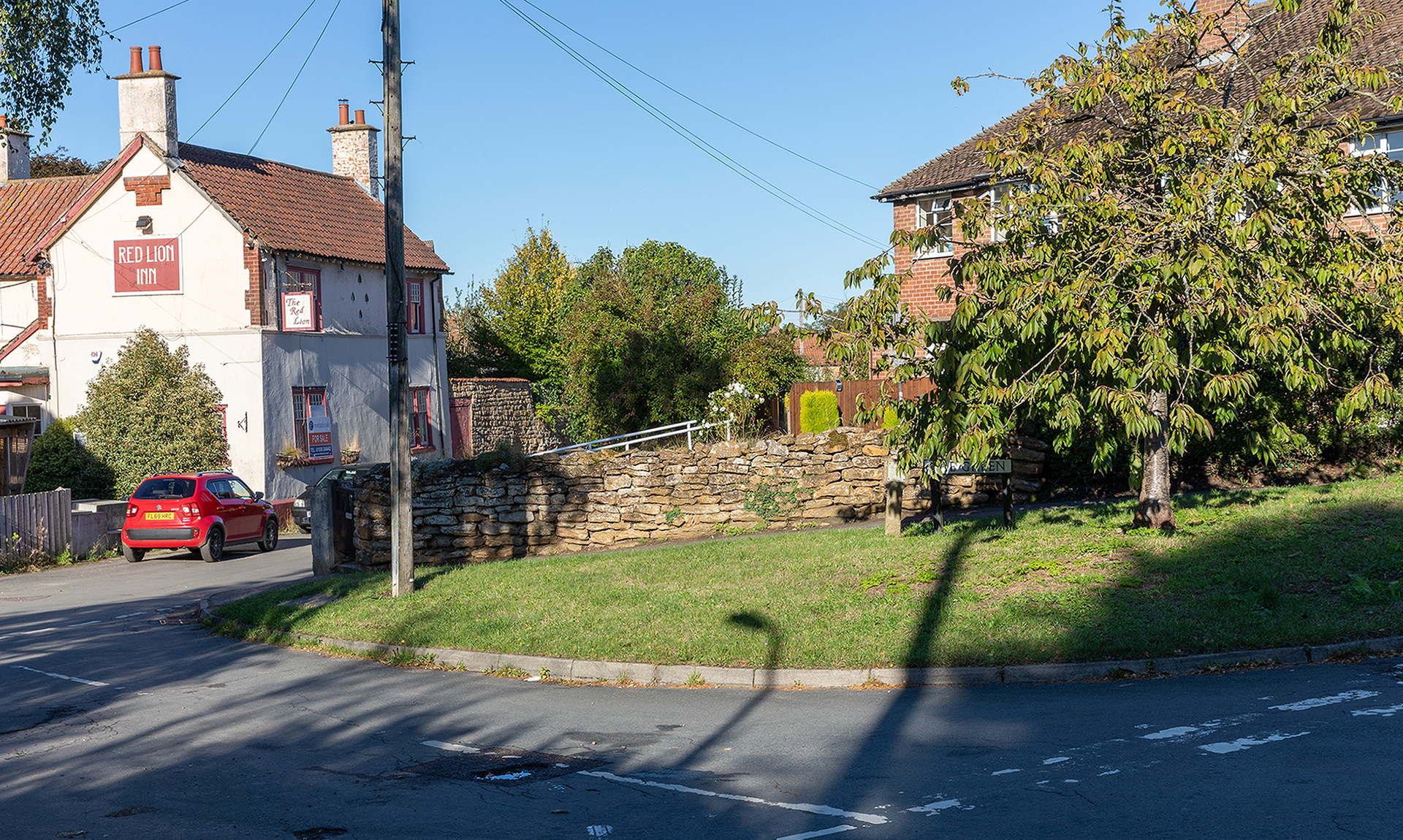
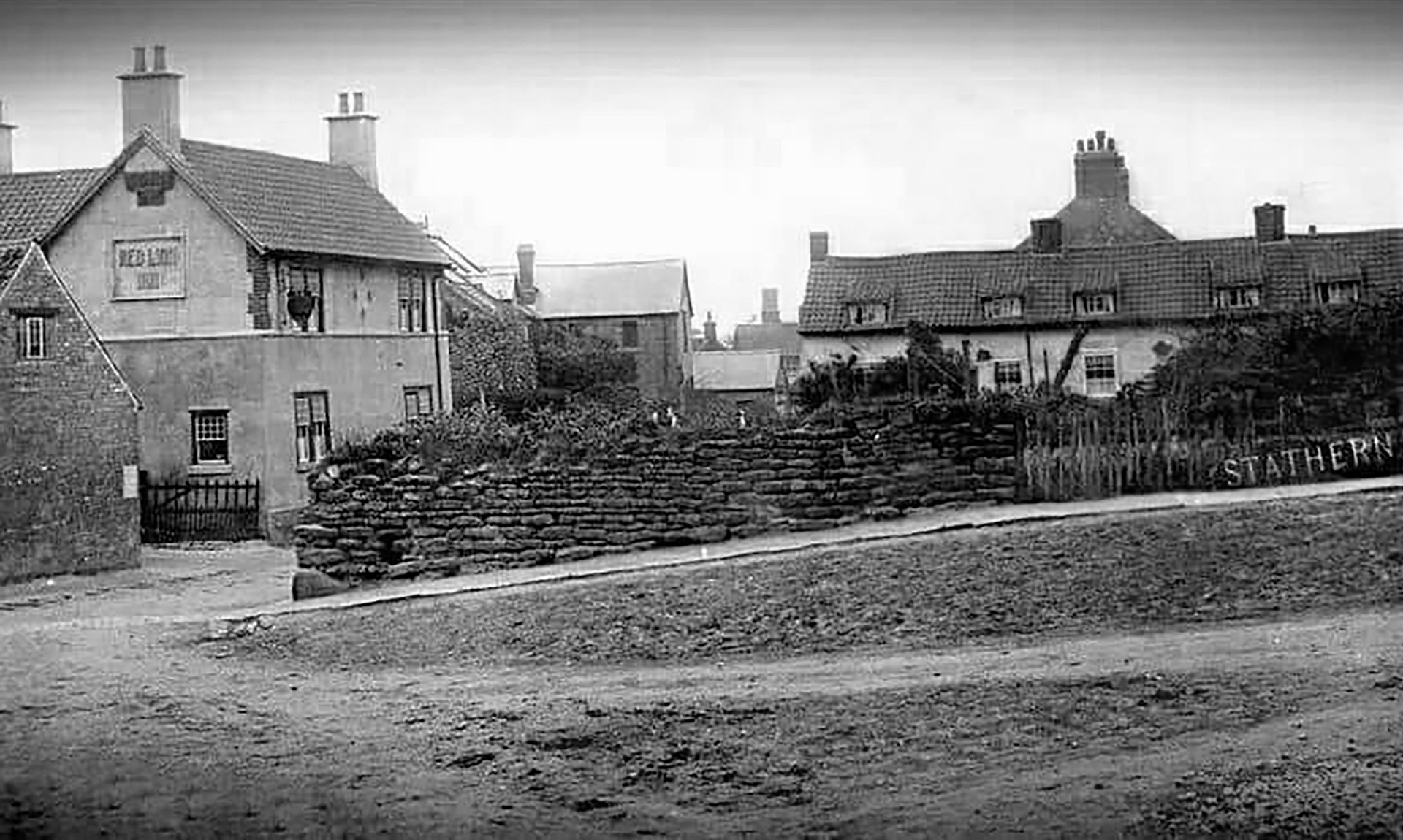
Red Lion Street – Early 1920s
When Rachel, Freda Tinkler’s daughter, found out Stathern was next on the list for this series, she told me: “My mum has been an avid Melton Times reader for years, and your articles are the highlight of her week.” So, a few days later, sitting at Freda’s kitchen table, she started telling her story of the village. Freda, the daughter of an army man, was born in 1935 and first came to live in Eaton with her grandma before the war, then moved to Stathern in 1948 with her mum, dad, and two sisters. Freda recollected: “The building on the left was Hall’s butchers. They had a slaughterhouse on Toft’s Hill. It was one of two butchers in the village.”
The Red Lion Inn has been closed since 2017, much to the villagers’ surprise, about a year after Wayne and Karen Hammond took over the reins from the outgoing proprietors Ben Jones and Sean Hope. Freda continued her story: “The Red Lion Inn was the best pub in the world. When we moved to Stathern, It was a real village pub run by an old lady, Annie Baker. After we were married, we used to go there on a Saturday night to play darts. And every Saturday at lunchtime, the men who had an allotment nearby left their spades and went into the pub.” “My grandparents, Tom and Floss Hodgson, were the publicans from January 1976 to September 1980”, told Helen Jackson. Laura Henson-Wood added: “My parents took over from 1980 to 1989 when Home Ales sold the pub. When my parents left I was six years old.” The villagers formed the Red Lion Community Group to fight residential housing developers and try to buy the property to reopen the pub.
Pointing to the building adjacent to the pub Freda recalled: “That was Poultry Packers. Lorry drivers delivered loads of chickens. In the building, they were killed, plucked, cut up and frozen. Ready to be shipped out of the village again.” Opposite the street was Mud Row. Freda continued: “The terraced houses were, two up two down, occupied by single people, no families. Mud Row was demolished when I was in my teens and replaced by council flats.” The old stone wall is still there.
Post Office
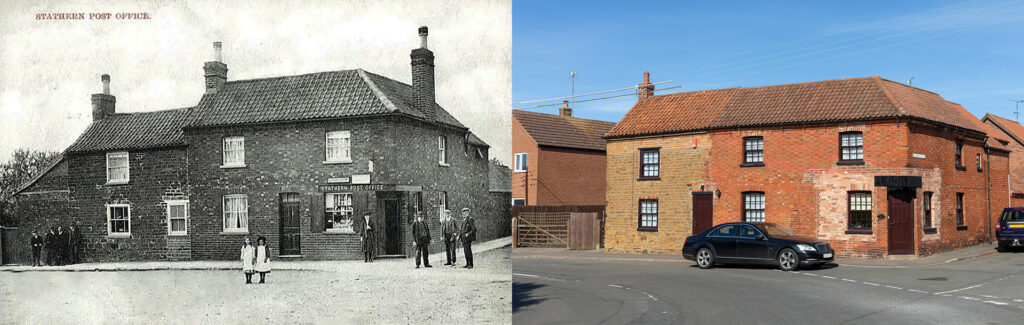
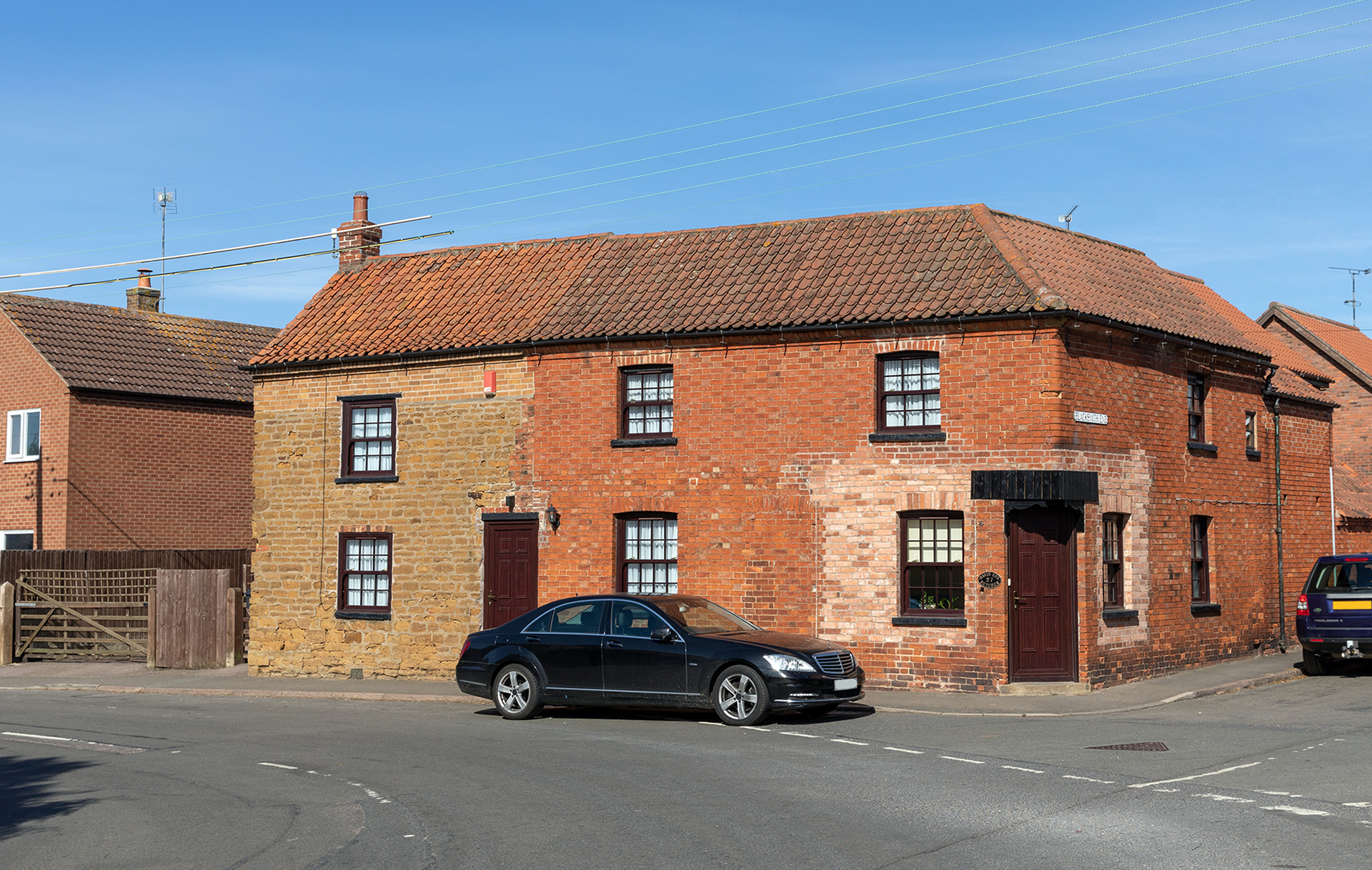
In 2020 the last butcher, David Cox, closed his shop after 46 years in business. “Cox made delicious sausages. Like a lot of villagers, I used to go there every week for some fresh meat rather than from the supermarket.” Also some of the village dogs knew their way to to Cox. Laura Henson-Wood recollected: “In the early 1980s our dogs used to take them selfs down there to get a bone from the butcher. The dogs slowed the traffic down.” Miller, another butcher, preceded Cox. Before that, the building was the Post Office.
There was another factory in Stathern, Freda told: “When I left school we had a big hosiery factory down Blacksmith End, the street that runs from the right of the old Post Office out of the village. About 40 people worked there. Girls from Stathern and from the villages around. It was a Leicester firm. Quiet a big concern it was.”

The Plough Inn
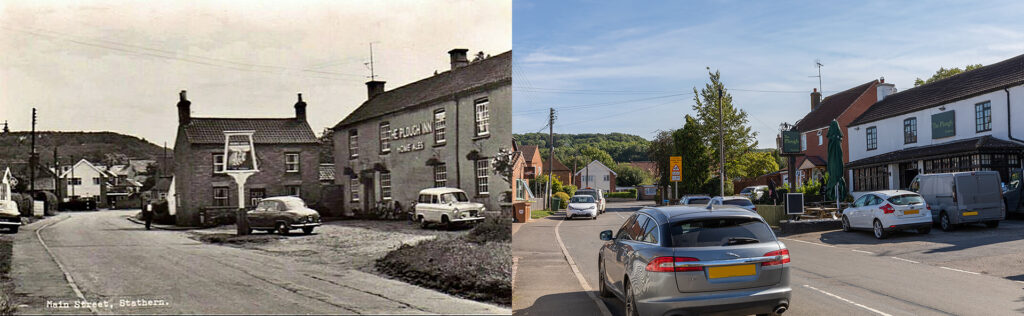
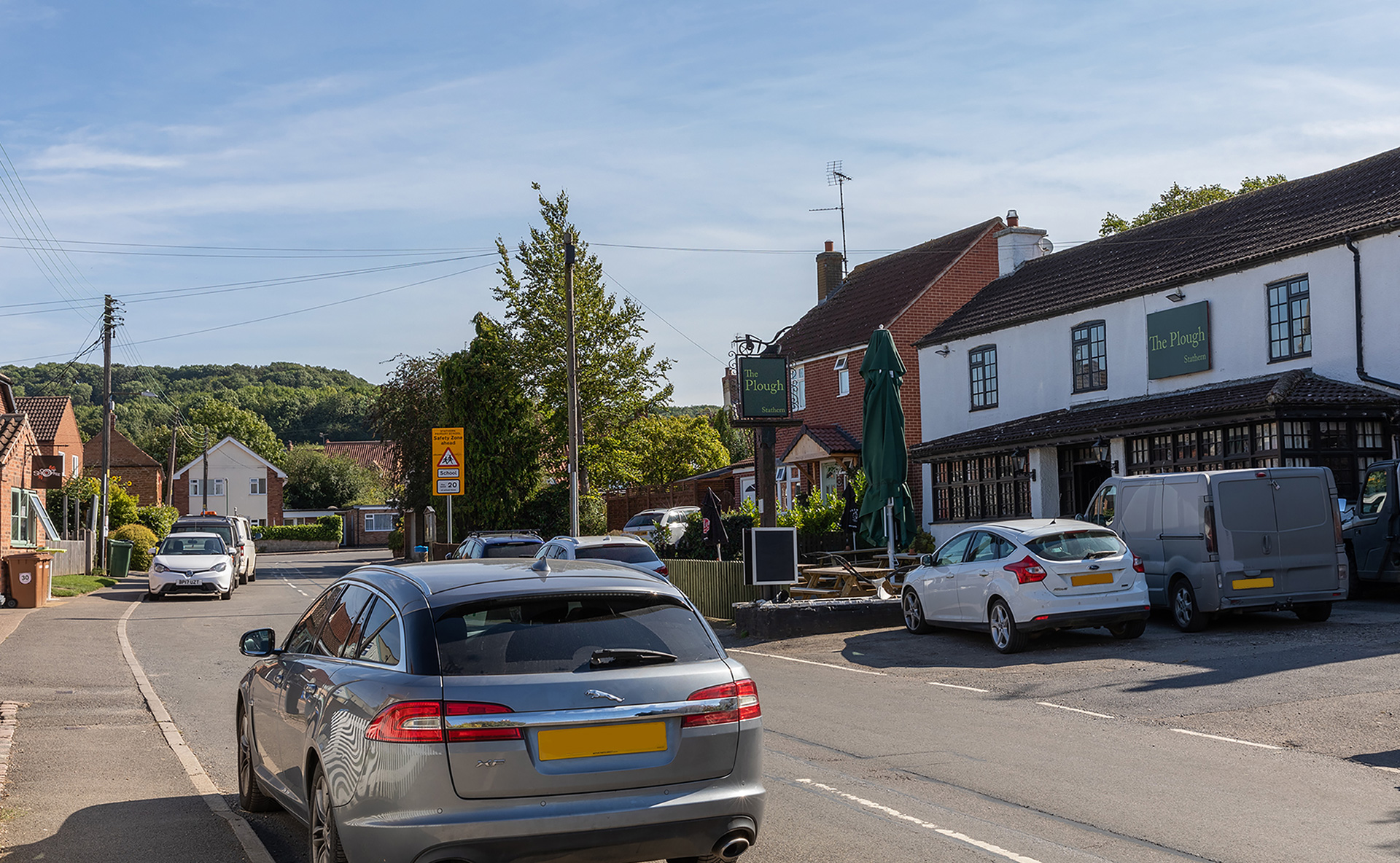
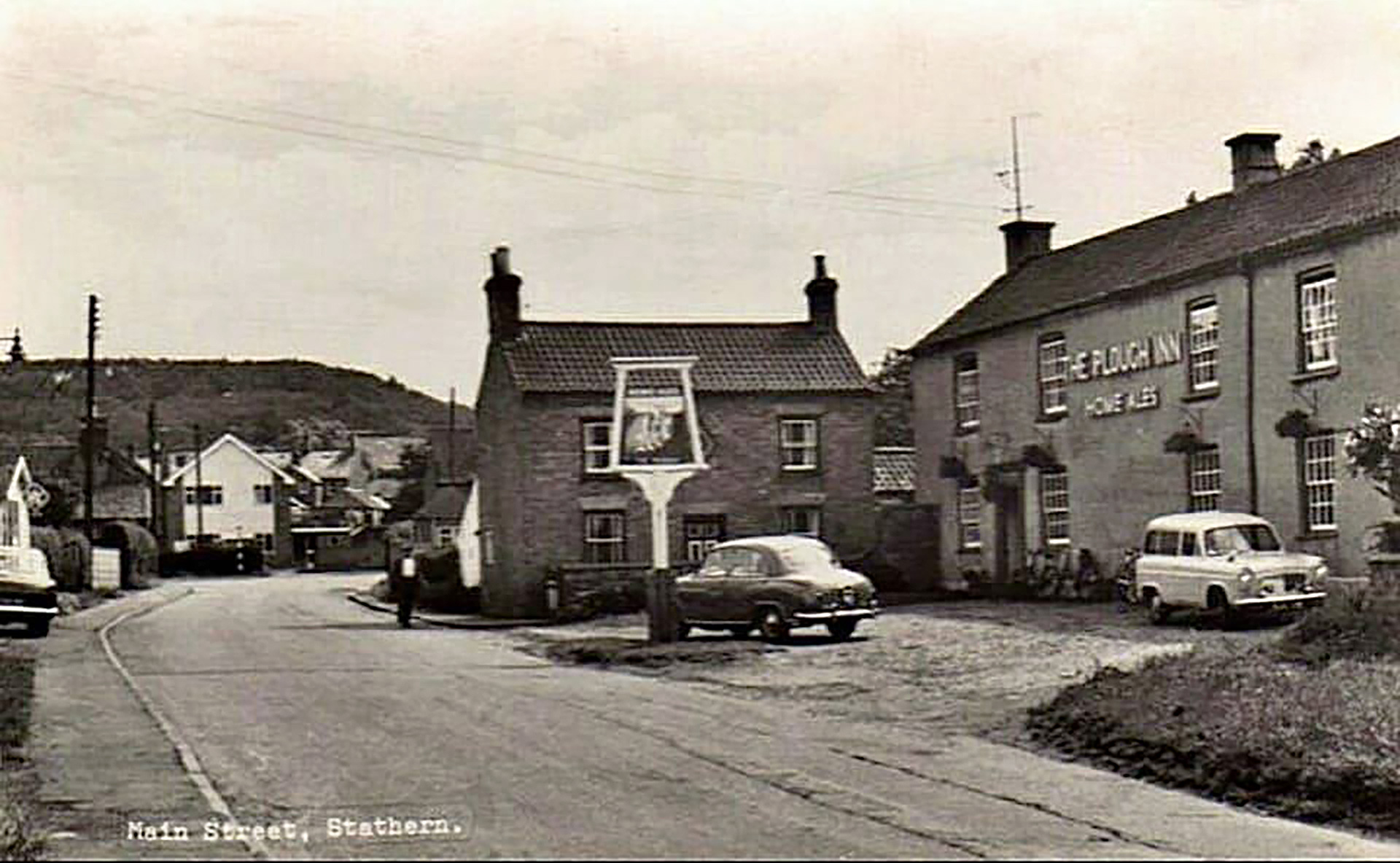
For now, The Plough Inn, in Main Street, is Stathern’s only operating pub. “Can it be right the house on the left of The Plough Inn sold ice creams in the late 1950s and the 1960s?” asked Jeanene Hill. It is a question still to answer. “The man that lived in the old house on the left of the pub was Mr Sinlgeton, the chapel superintendent. I can’t remember his Christian name”, recollected Freda Tinkler. “When we used to go to Chapel Sunday School, he ran it. The Methodist Chapel is now a dwelling and lies in Chapel Lane a street on the right-hand side of The Plough Inn.” In the new house adjacent to the pub now the former publicans are living. In the back of the picture, you can see the uphill woodlands of the Belvoir Estate, accessible ascending Toft’s Hill.
There was a third public house in Stathern, The King’s Arms with William Greensmith as the publican during Victorian times.
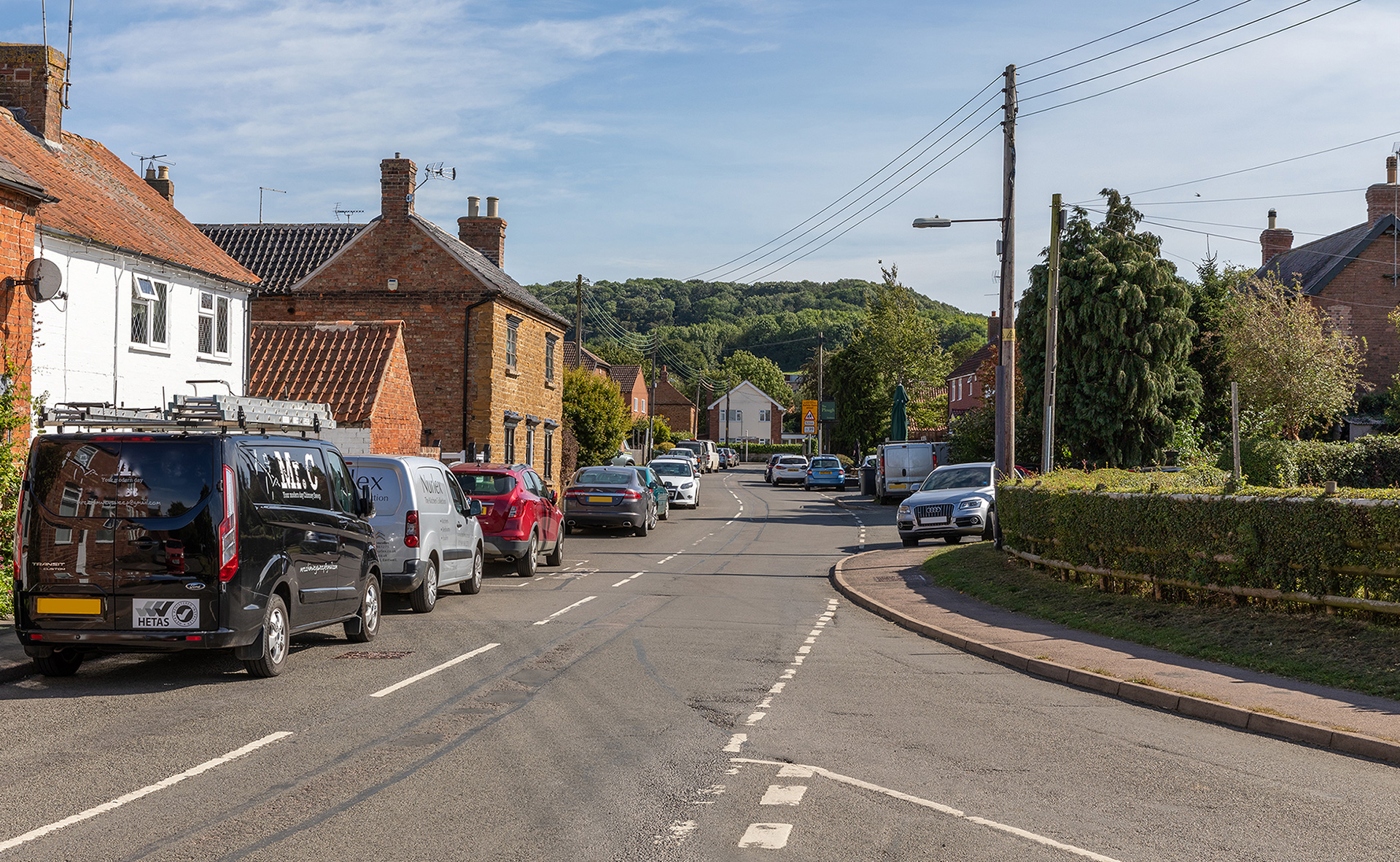
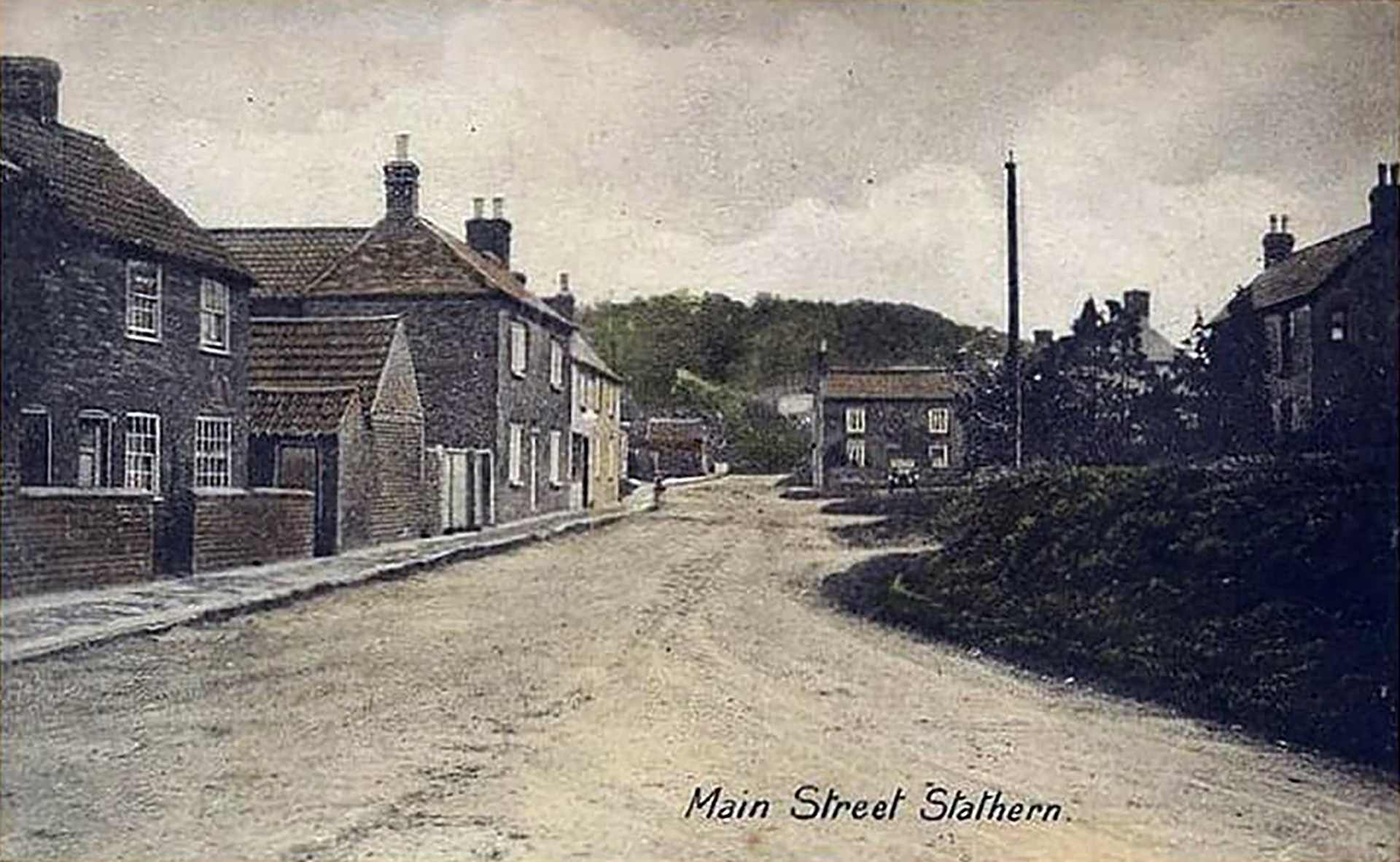
Main Street
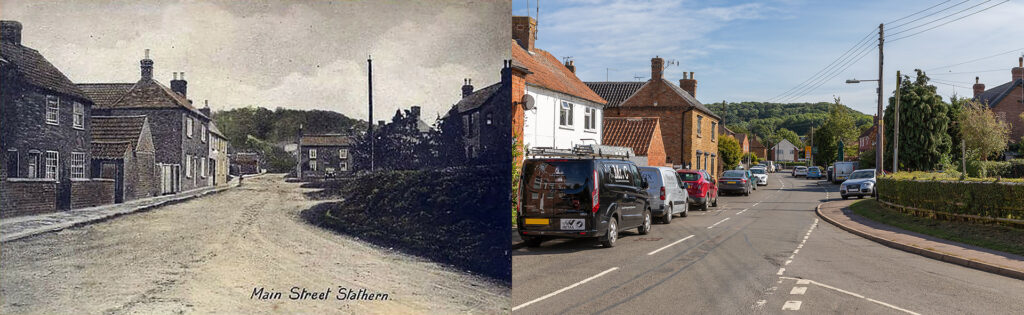
When Freda Tinkler was in her teens there were four grocery shops in the village. “One of them was in a little cottage down on Main Street. It is just to the left of this picture taken from the junction of Harby Lane and Main Street. It was the Goddarts family.”
Chapel Lane
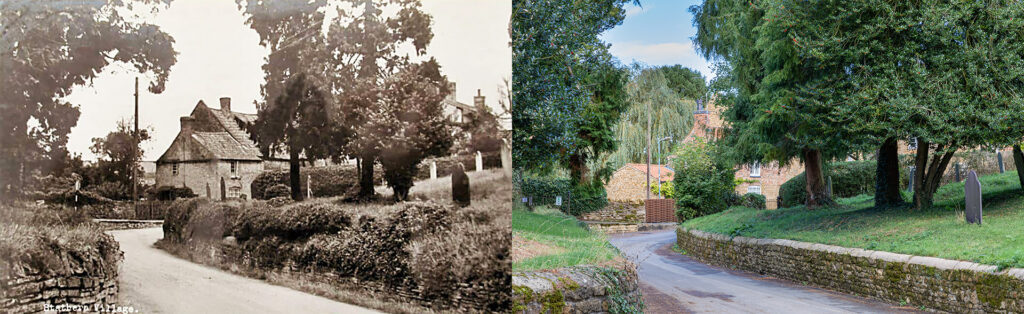
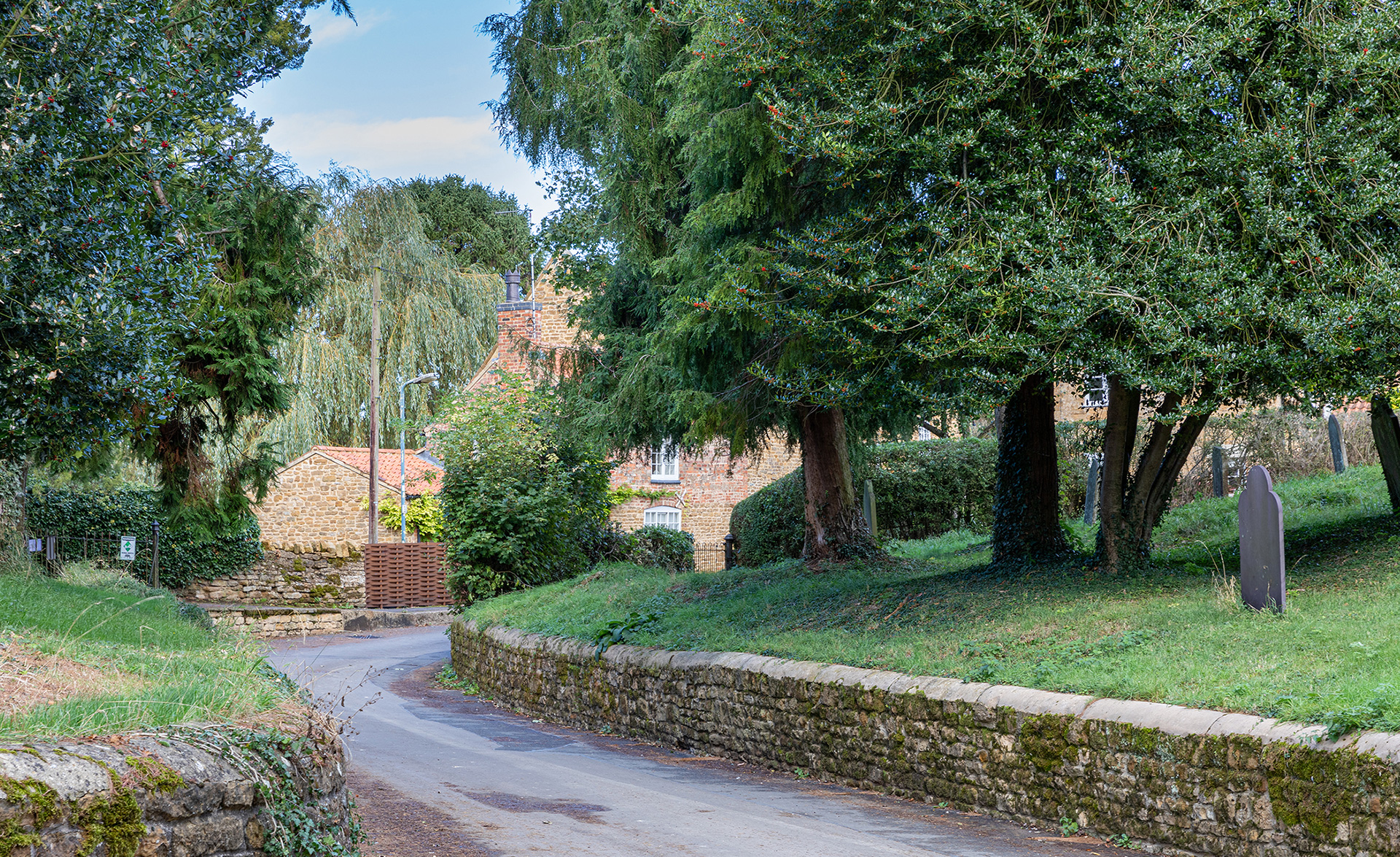
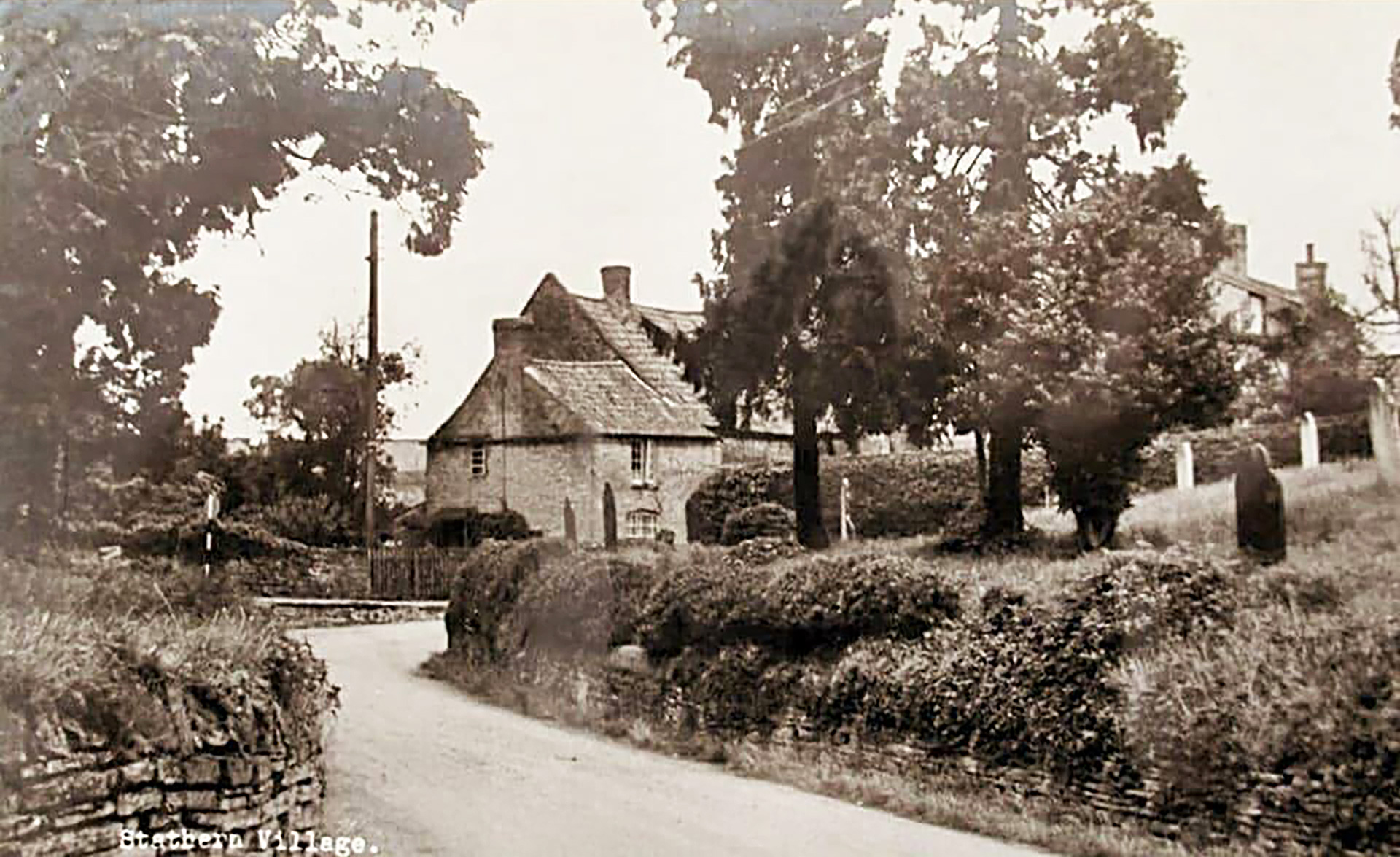
Church Lane is a snakelike narrow road going from Mill Hill to Toft’s Hill. Although being an older part of the village there are not that many houses. The churchyard is along both sides of the road. From The Vale Engineering Works building you get a view on a house with on the left side what was a one up one down dwelling. Freda told: “A chap used to live there. I think his name was Johnny Murphy. The Engineering Works building used to be a lace factory. My mum’s cousin worked there. My mum was born in 1908 and this cousin was born around 1905. So it must be in the 1910s, 1920s. She lived in nearby Eaton and cycled or walked to work. Now they make parts for machinery. The street floods sometimes. And the stone wall and the yew trees are still there.”
East End
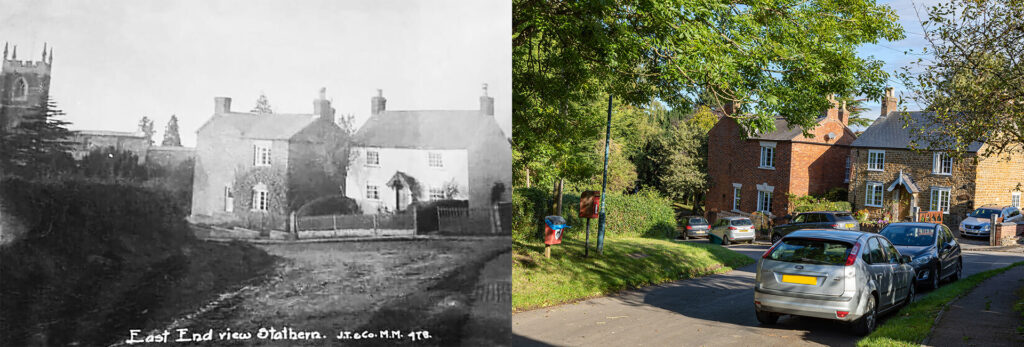
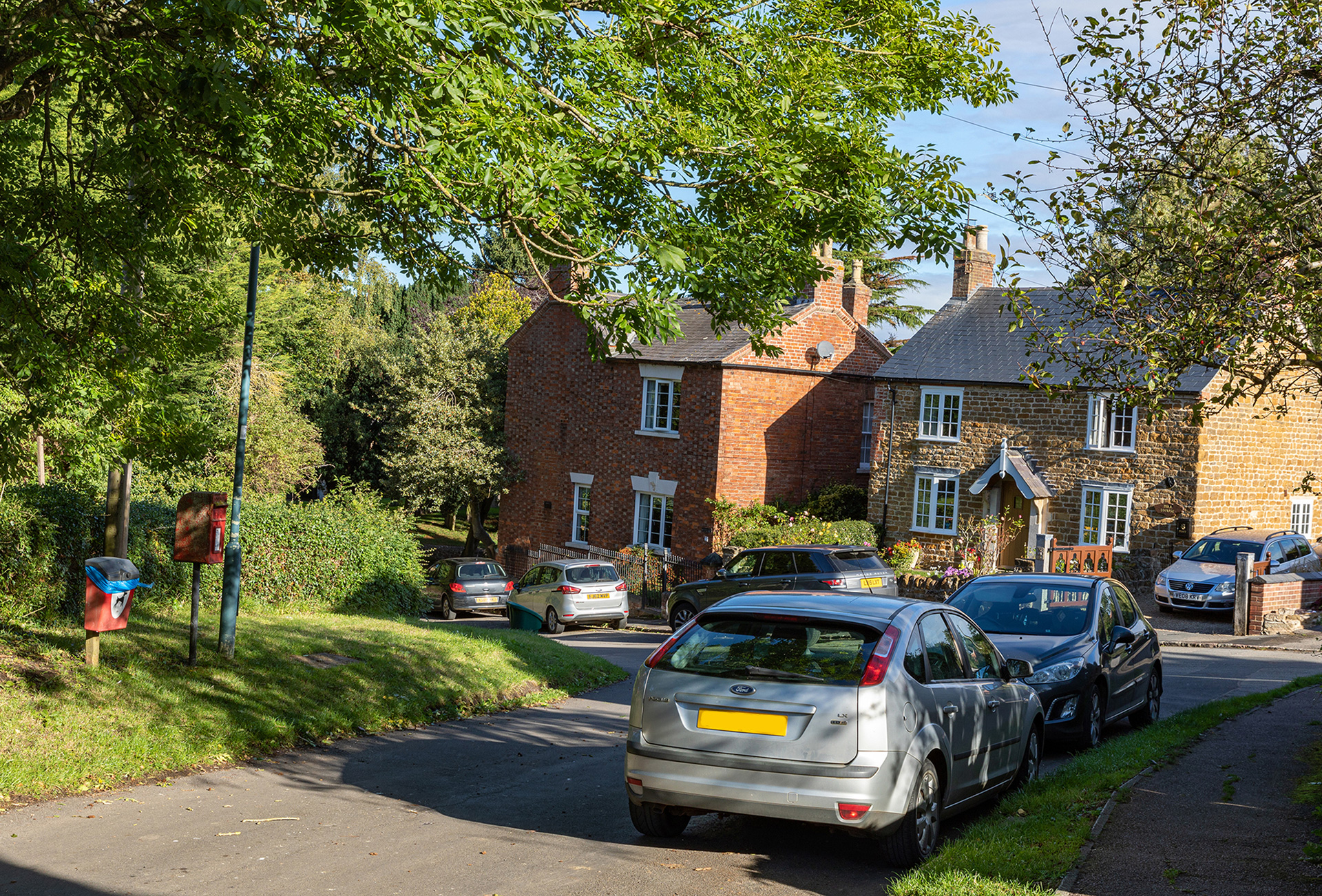
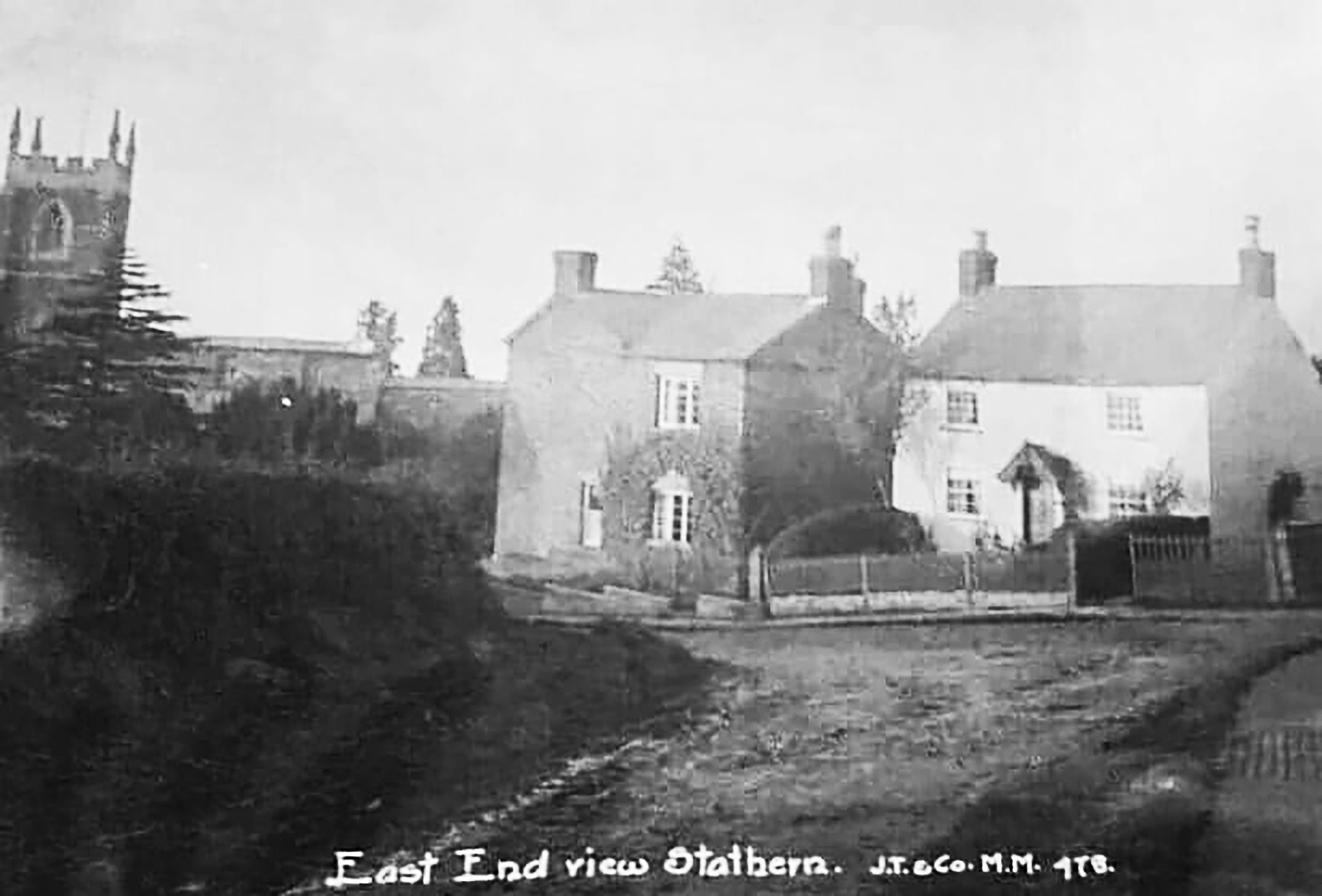
The picture of East End, named like this because this is east of Stathern’s St Guthlac’s Church, is taken from Ivy House. Left is Laburnum House, named after a tree. Freda recollected: “Emily Joplin lived there. It is a real pity she isn’t there anymore, because she knew everything about Stathern.” Adjacent to the right is Mill House. “The Kings lived in it when I came first here. Mill House is a lovely little cottage. This is also the view I have got from my window”, said Freda smiling.
Primary School
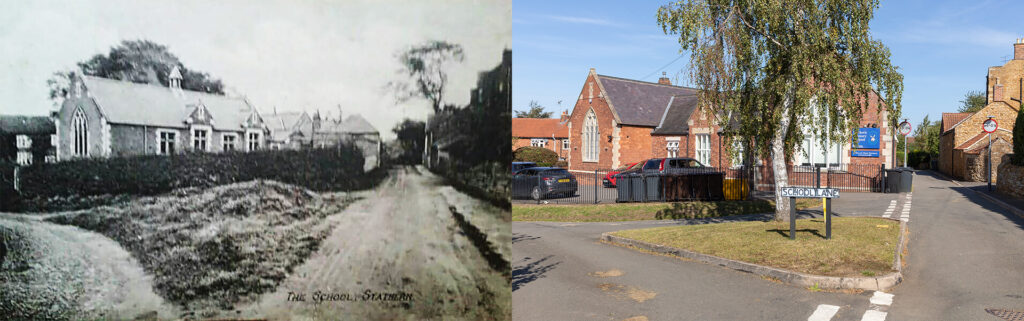
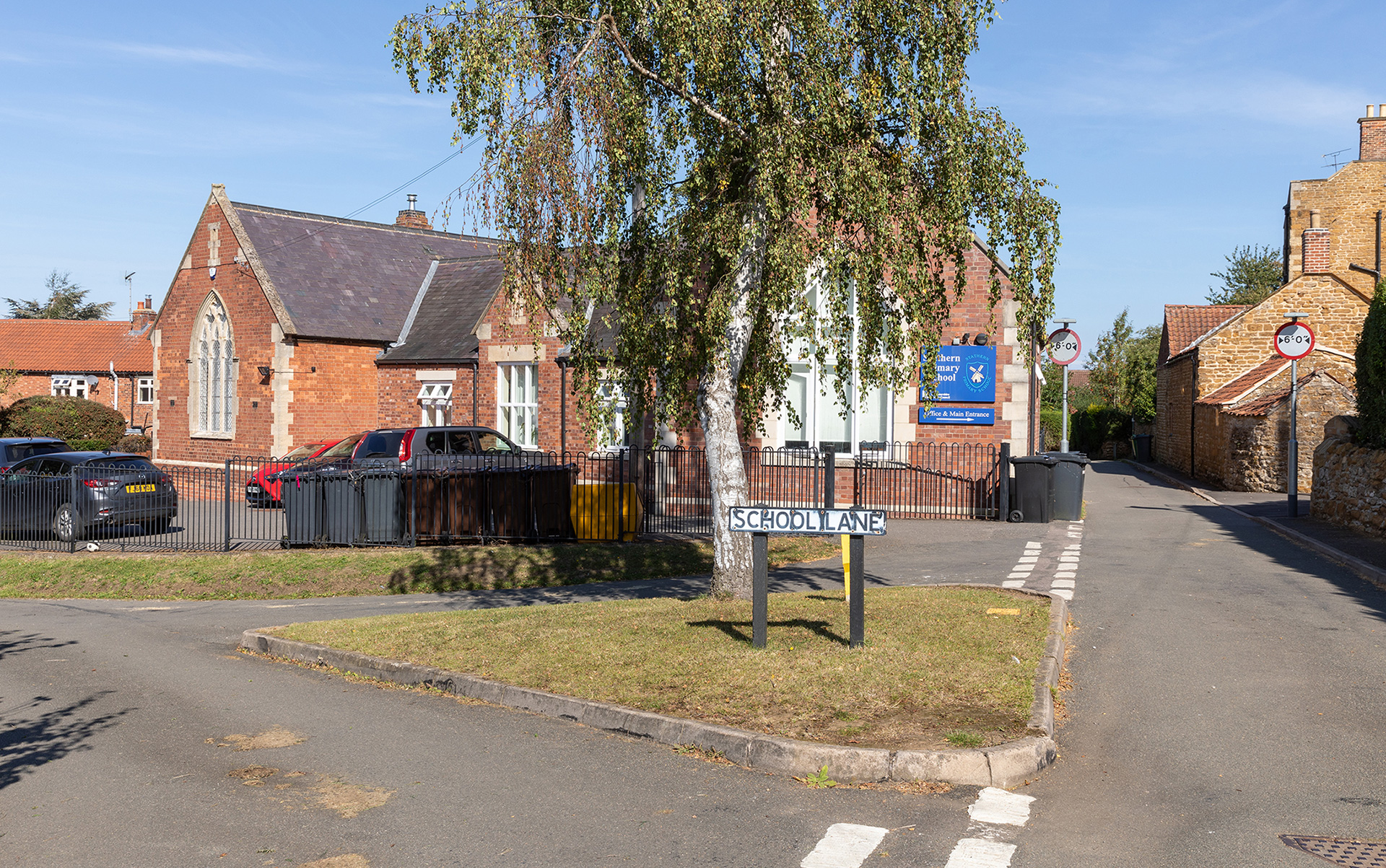
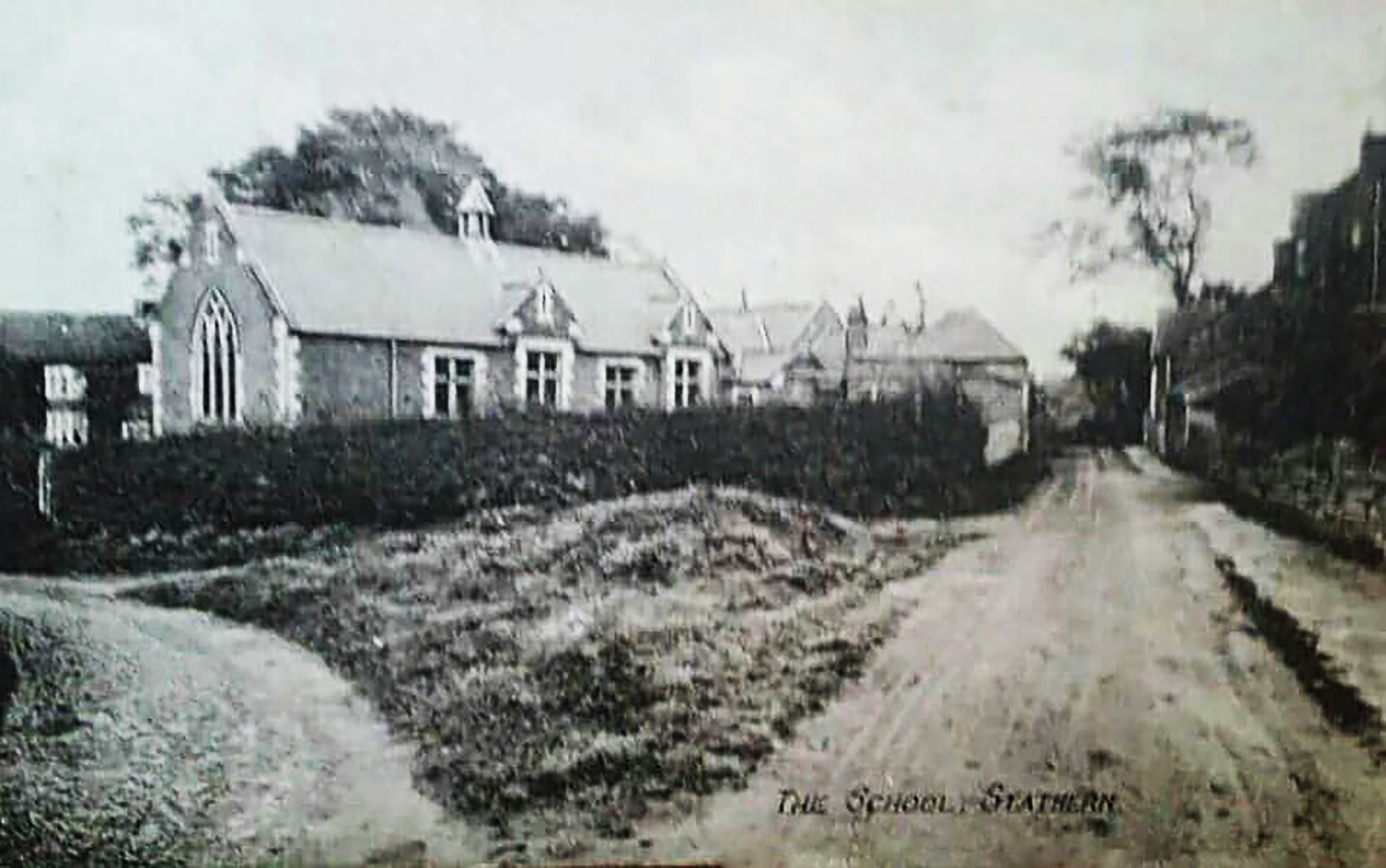
“I worked at the primary school for 23 years as the caretaker, from 1975 to 1998”, said Freda Tinkler. “At the beginning the toilets were along Water Lane, the street on the right, separate from the building. They were demolished first and they built toilets and sanitary onto the building. My three children went there when that was done. It was the late 1970s. I think there about a hundred children now. That time there were about seven infants. Now it is about 40 or so. And in total about 100 children, the juniors included “House on the left was where the infant teacher lived.”
She continued: “I had to go every morning and make sure the school was warm. It was oil central heating. I also had to get things ready for when the children arrived. I used to come home when the children arrived and went back again when they came out. After they left I sweeped and washed the floors and cleaned up. After locking up, my work was done.”
Looking back at all these years Freda said: “When I was told the first time we would move to Stathern, I didn’t want to move, because we loved Eaton. But we got used to Stathern. There is more going on in Stathern than in the other villages. We made some lovely walks in the woods and to Belvoir Castle. Coming down from Mill Hill it is all about the view. It is panoramic.” “I had lovely teenage years in Stathern”, said Freda, and she concluded: “We used to all join in together. They don’t seem to do that now. A bit of a pity.”
More pictures
Would you like to add pictures? Send a message.
Domesday Book
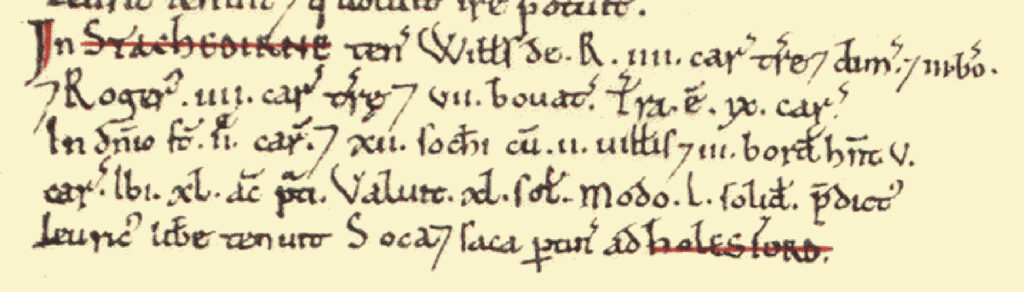
Stathern was a settlement in Domesday Book, in the hundred of Framland and the county of Leicestershire.
It had a recorded population of 35 households in 1086, putting it in the largest 20% of settlements recorded in Domesday, and is listed under 2 owners in Domesday Book.
- Land of Robert of Tosny
- Households: 2 villagers. 12 freemen. 3 smallholders.
- Ploughland: 9 ploughlands. 2 lord’s plough teams. 5 men’s plough teams.
- Other resources: Meadow 40 acres.
Valuation
- Annual value to lord: 2 pounds 10 shillings in 1086; 2 pounds when acquired by the 1086 owner.
Owners
- Tenant-in-chief in 1086: Robert of Tosny.
- Lords in 1086: Roger (of Bosc-le-hard); William (of Bosc-le-Hard).
- Lord in 1066: Leofric <of Bottesford>.
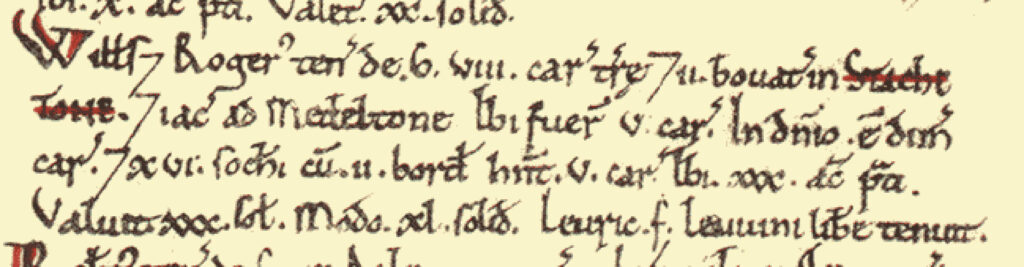
2. Land of Geoffrey of la Guerche
- Households: 16 freemen. 2 smallholders.
- Ploughland: 5 ploughlands. 0.5 lord’s plough teams. 5 men’s plough teams.
- Other resources: Meadow 30 acres.
Valuation
- Annual value to lord: 2 pounds in 1086; 1 pound 10 shillings when acquired by the 1086 owner.
Owners
- Tenant-in-chief in 1086: Geoffrey of la Guerche.
- Lords in 1086: Roger (of Bosc-le-hard); William (of Bosc-le-Hard).
- Lord in 1066: Leofric (the noble) son of Leofwin.
2 responses to “Stathern”
The Old Rectory in Stathern is where my father lived in the first half 1948 when it was used as a hostel for farm workers, and he was the cook and wrote his letters that I published in “Sending Sunday greetings” and “In search of home”
Hello Angela,
Are these books still for sale? People who read this maybe interested.
Regards,
Estelle